Cabbie’s Curios: Rotherhithe’s Royal Ruins
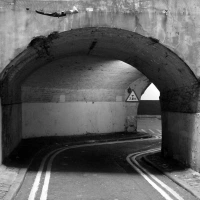
Tucked away close to the peaceful Cherry Garden Pier in Rotherhithe, there lies a modest, medieval ruin.

These remnants are all that is left of a royal manor house, originally commissioned by King Edward III around the year 1350.
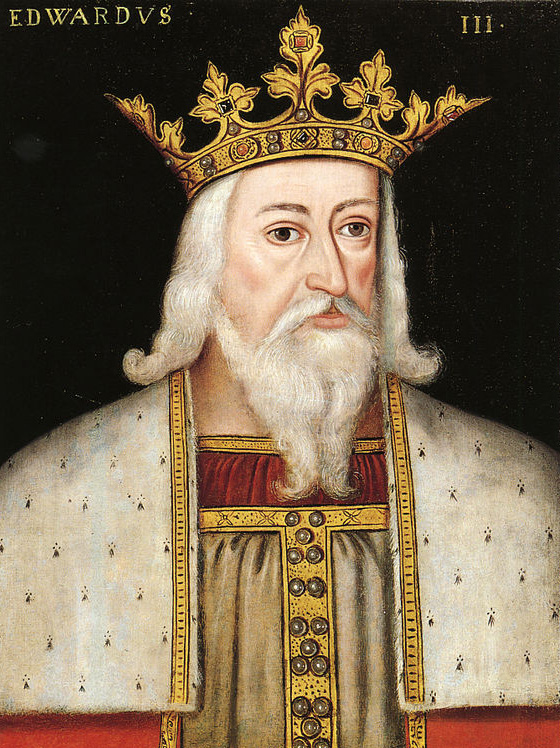
King Edward III (Reigned 1327-1377)
At the time, the land upon which the king chose to base his Rotherhithe mansion was in fact a marshy island, lying a short distance from the southern shore of the yet to be tamed Thames.

Satellite view of the site occupied by Edward’s manor house. In medieval times, the Thames was far wider here, thus creating a small island (Image: Google).
The small palace was well equipped for royal visitors, boasting private chambers, a kitchen and a large hall with ample room for a big, crackling fireplace.
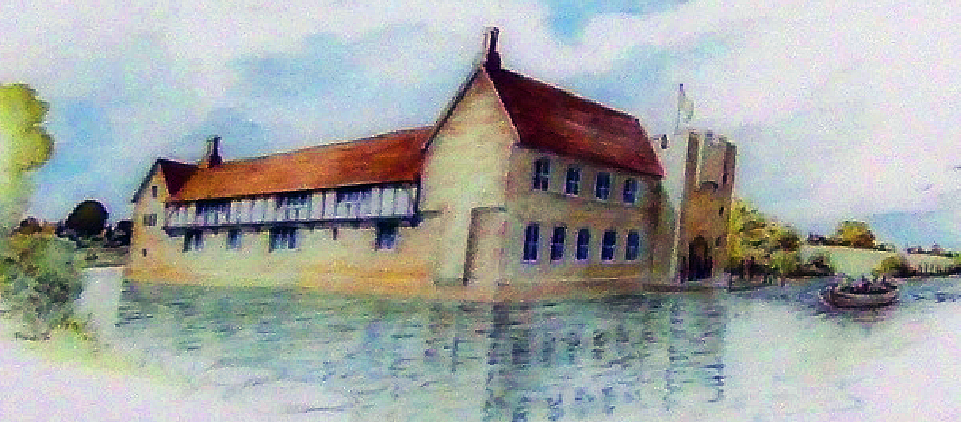
Artist’s impression of King Edward’s Rotherhithe retreat.
Accompanied by his entourage, King Edward would travel to Rotherhithe by boat, sailing across the Thames from the monarch’s main home at the Palace of Westminster, a journey of approximately three and a half miles.
It is generally understood that Edward used the country retreat as a place to indulge in his love of falconry; a sport in which he was highly accomplished.

Medieval falconers (Image: aboutfalconry.com)
A few years after Edward’s death, his grandson, Henry IV spent much time as a recluse at the lonely manor house. Suffering from a dreadful skin disorder believed to be leprosy, tragic Henry is said to have spent his time at the Rotherhithe retreat swathed in bandages.

Henry IV who, suffering from ill health, spent much time in Rotherhithe towards the end of his life.
By the 16th century land reclamation meant the small island was able to merge with the mainland. The receded water of the Thames was replaced by a neat moat; a feature which led to Edward’s old palace becoming known as the ‘moted place’.

The ruins of King Edward’s palace, looking towards London’s financial heart.
Sold by the Crown, the buildings were converted into a pottery works in the 17th century and, as London’s docks expanded, the building disappeared for good beneath clusters of hulking warehouses.
In 1839, the artist J.M.W Turner sat just in front of this spot, peering out across the Thames to paint The Fighting Temeraire.
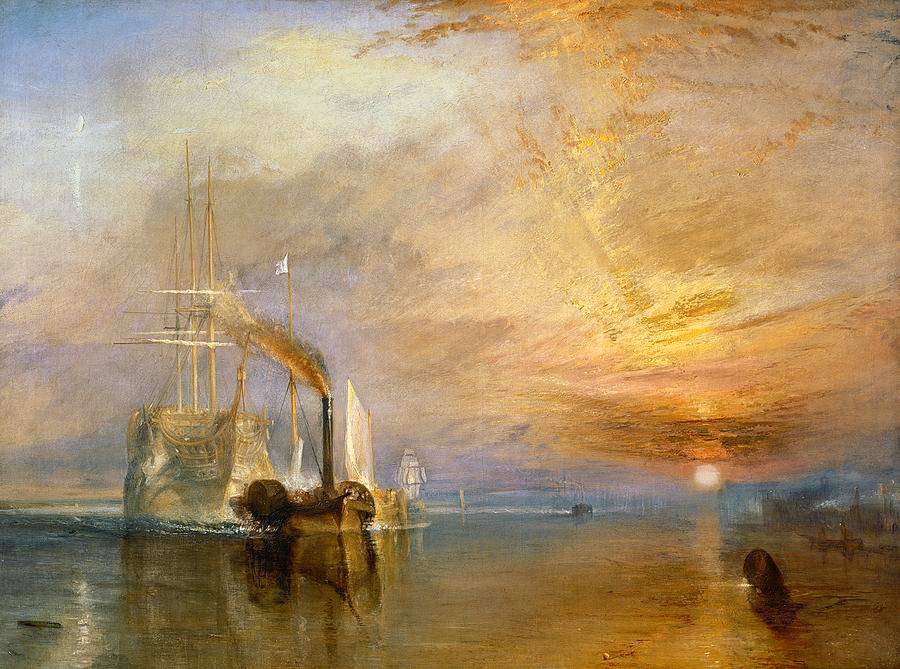
‘The Fighting Temeraire’ as seen from Cherry Garden Pier, Rotherhithe. Turner, 1839.
Rather like Edward’s old palace, this once mighty ship (which had fought in the Battle of Trafalgar) had seen better days, and was being towed to Rotherhithe to be broken up. The painting is now part of the National Gallery’s collection.
*
What was left of Edward’s manor house remained buried and forgotten until 1985 when the derelict docklands were undergoing extensive redevelopment. At Cherry Gardens Pier, it was the construction of a new housing estate which unearthed the ruins.

Sadly, due to bouts of vandalism, much of the historic structure has been purposely reburied for protection.
Such mindless behaviour has also soured a beautifully moving artwork known as Dr Salters Daydream which once stood opposite the palace ruins. I have devoted an earlier post to this sculpture; please click here to read.
From Prayer to Palestra: The Ring at Blackfriars
“In the clearing stands a boxer
And a fighter by his trade
And he carries the reminders
Of every glove that laid him down
Or cut him till he cried out
In his anger and his shame
‘I am leaving, I am leaving’
But the fighter still remains…”
(From ‘The Boxer’, Simon and Garfunkel, 1968)
*
From the ancient Roman amphitheatre to the recent 2012 Olympic village, London has been home to an impressive array of sporting venues over the centuries.
One such arena, now sadly long vanished, was ‘The Ring‘; a boxing stadium which once stood on Blackfriars Road in Southwark.

The Ring, Blackfriars (Image from ‘Wonderful London’, 1926)
Although established as a boxing venue in 1910, the actual building dated all the way back to 1783; originally designed as a chapel by the Reverend Rowland Hill- who reportedly opted for the unusual, circular design so that there would be no corners in which the devil could hide….
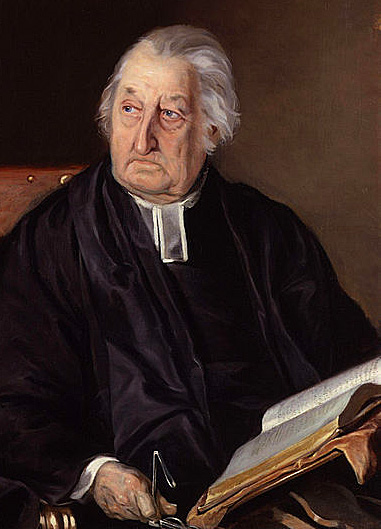
The Reverend Rowland Hill (Image: Wikipedia)
Decades later, the man responsible for overseeing the chapel’s conversion from prayer to pugilism was Dick Burge, a former English Middleweight champion who hailed from Cheltenham in Gloucestershire.
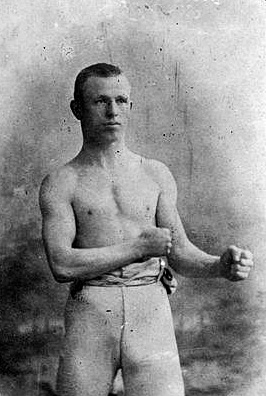
Dick Burge in his prime.
Dick retired from the noble art in 1900 but, whilst living on Wiltshire Road in Brixton, he soon found himself encountering financial difficulties.
Foolishly, he sought to remedy his woes by participating in a huge Liverpool-based bank fraud which involved a risky mixture of cheque forgery and high-stakes racecourse gambling.
The scam was soon rumbled and Dick was arrested in October 1901; just one month after he’d married his wife Bella at Brixton registry office.
Tried and found guilty for his part in the crime, the former boxer was sentenced to ten years hard labour.
*
Eight years into Dick’s sentence, a violent prison riot erupted.
During the chaos, Dick- who had already proved himself to be a well behaved, model prisoner- courageously risked his neck in order to save a guard whose life was under threat from the rampaging mob.
Thanks to this commendable redemption, Dick was released from prison two years early and promptly vowed to return to a more law-abiding life.
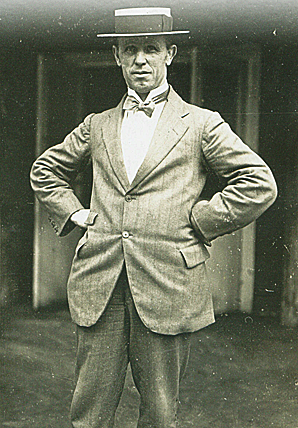
Dick Burge (image: The Ring website)
Supported by his wife Bella, who had stuck by her man throughout the prison term, Dick succeeded in renting out the old, circular chapel on Blackfriars Road.
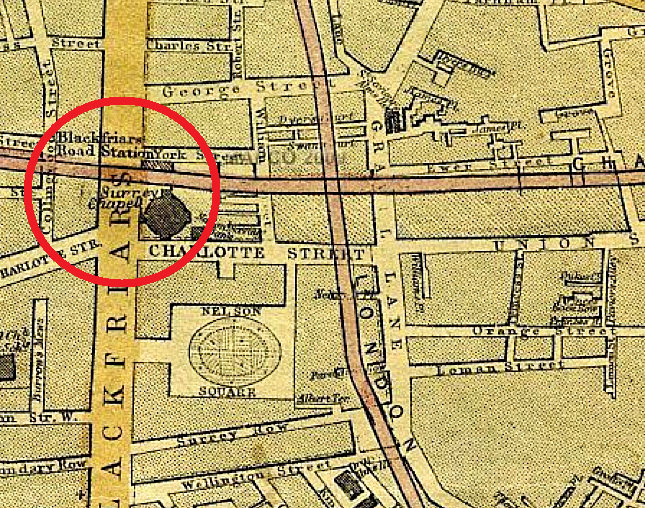
1860s map depicting the chapel which would later become The Ring boxing venue. Charlotte Street is now known as Union Street.
By this point, Rowland Hill’s old place of worship had fallen into use as a warehouse and was in a very sorry state.
Undeterred by the task ahead, Dick and Bella enlisted the help of local homeless people to clean out the building and transform it into a state fit for presenting boxing to the public.
The Ring opened on the 14th May 1910, quickly attracting keen crowds- and with the Blackfriars arena staging events four to five times a week, there was certainly plenty for fight fans to indulge in.
Not forgetting the help they’d received from London’s homeless, Dick and Bella set up a soup kitchen which they ran from the building during the quieter daytime hours.
*
Just four years after The Ring opened, The Great War erupted and Dick, never one to shy away from a fight, enlisted with the First Surrey Rifles.
Tragically, the former boxer contracted pneumonia in 1918 and died a few months short of the war’s end.
By this point, he had become a very popular character and some 2,000 mourners attended his funeral at St Marylebone Church. Following the ceremony, Dick’s body was taken to Golders Green for cremation.

St Marylebone Church (image: Google Streeview)
The death of Dick Burge however didn’t spell the end of the boxing venue.
On his death bed, Dick had asked his beloved Bella to ensure that she kept their business going. Not wishing to let her husband down, and having practically run the venue since Dick’s enlistment in 1915, Bella promised her husband that she would do so; a vow which essentially resulted in her becoming the world’s first female boxing promoter.

Bella Burge (image: The Ring website)
Bella was a tough cookie; a New Yorker by birth who, aged four, had come to London with her mother following the death of her father.
Like her late husband, Bella knew how to put on a good show- she’d worked on the stage and had also been the dresser to one of music hall’s greatest performers; Marie Lloyd; a star with whom Bella became close friends.
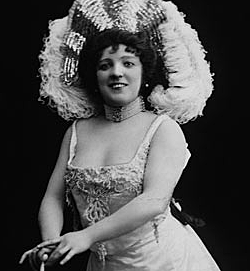
Marie Lloyd
When it came to running the Blackfriars boxing arena, Bella was purely hands on, involving herself in every aspect of the venue’s smooth running- right down to personally booting out drunken troublemakers.
Much loved by the local community, the pioneering promoter soon earned an affectionate nickname; ‘Bella of Blackfriars’.
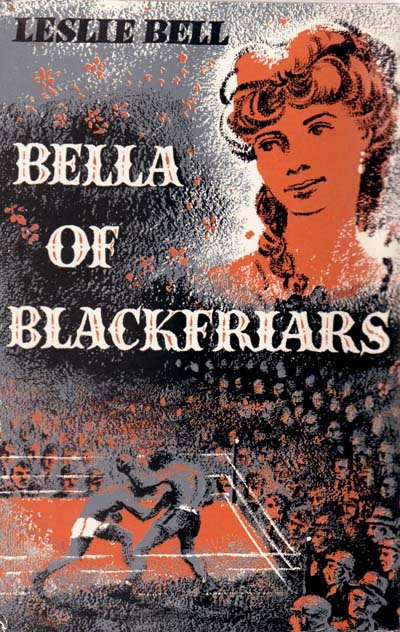
‘Bella of Blackfriars’- cover of a 1961 book detailing the life of Bella Burge.
So successful was The Ring under Bella’s leadership that, in 1928, the Prince of Wales- who was a keen fan of the noble art- decided to pop by and enjoy an evening’s boxing at the Ring; the main fight that night being between two highly regarded fighters; Manchester’s Len Johnson and Birmingham’s Jack Hood.

Jack Hood (left) and Len Johnson (right) who boxed at The Ring in the presence of the Prince of Wales.
During his visit, the Prince was greeted by loud chants of “for he’s a jolly good fellow!” which was rather ironic considering he would later go on to become King Edward VIII; the monarch whose 1936 abdication threw the monarchy into crisis…
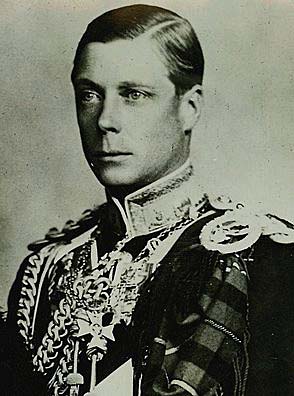
The controversial King Edward VIII who enjoyed a night at The RIng in his more carefree days…
In 1932, The Ring added more strings to its bow when it added wrestling to the bill…. and the odd Shakespeare play, performed by the local Bankside Players drama group.

A 1930s London Transport advert listing wrestling at The Ring.
By by the late 1930s however and with the clouds of WWII looming, The Ring began to experience fiscal problems which soon became so tough, Bella was forced to pawn her jewellery and other valuables in order to pay the venue’s staff.
Sadly, her stoic attempts would prove to be in vain.
At the height of the Blitz, one night in October 1940, The Ring suffered a direct hit.

The Ring in ruins (image: Nickel in the Machine website)
The 18th century building, which Bella had steered to greatness after a promise to her dying husband years before, was wiped out in a flash.

Smashed trams on Blackfriars Road, a few yards away from the bombed Ring (image: Nickel in the Machine)
To this day, substantial damage from the raid which blasted the popular boxing venue, is still clearly visible beneath the railway bridge spanning Blackfriars Road.
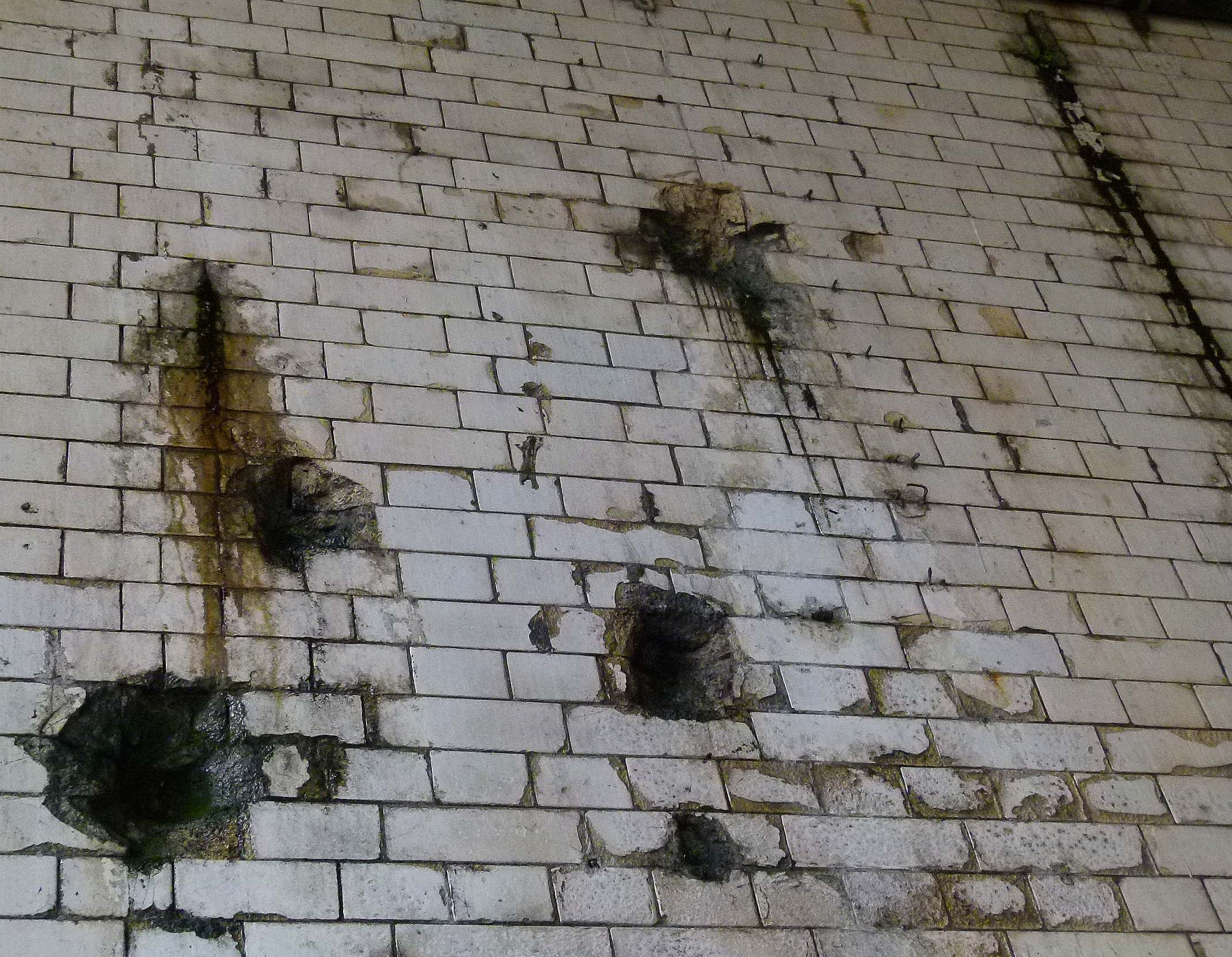
Blackfriars bomb damage, just across the road from the former Ring venue.
*
Years later in 1958, Bella Burge was invited onto an early episode of This is Your Life and, in 1961, a book about her entitled ‘Bella of Blackfriars’ was published and serialized in newspapers (the cover of the book can be viewed earlier in this article).

Bella Burge on ‘This is Your Life’, 1958 (image: Big Red Book website).
The formidable lady died in 1962, aged 85.
*
The Ring bombsite remained in tatters until the 1960s when a modern office block named ‘Orbit House’ was constructed over the ruins. Orbit House became home to the India Office’s library and archive (now housed in the British Library).
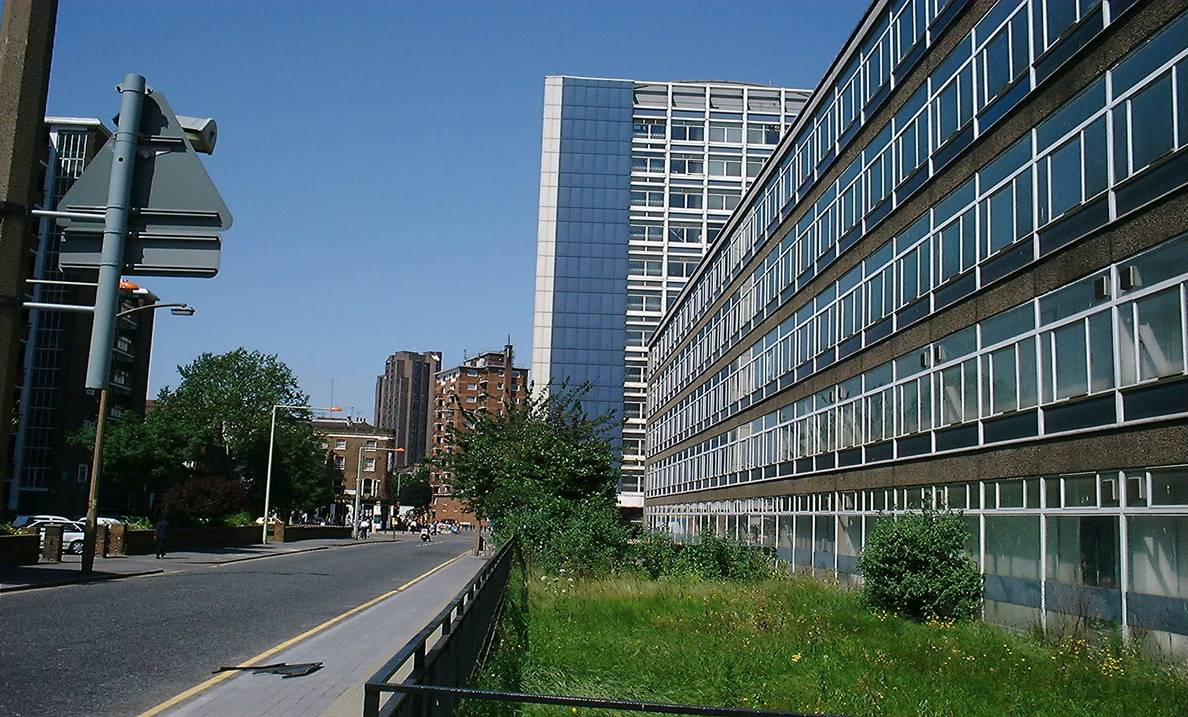
Orbit House (right of picture) as seen from Union Street (image: Rebecca Allen).
By 1998 this block had also plunged into ruin and, in the first decade of the 21st century, Orbit House was demolished and replaced by an ultra-modern structure called ‘The Palestra’.
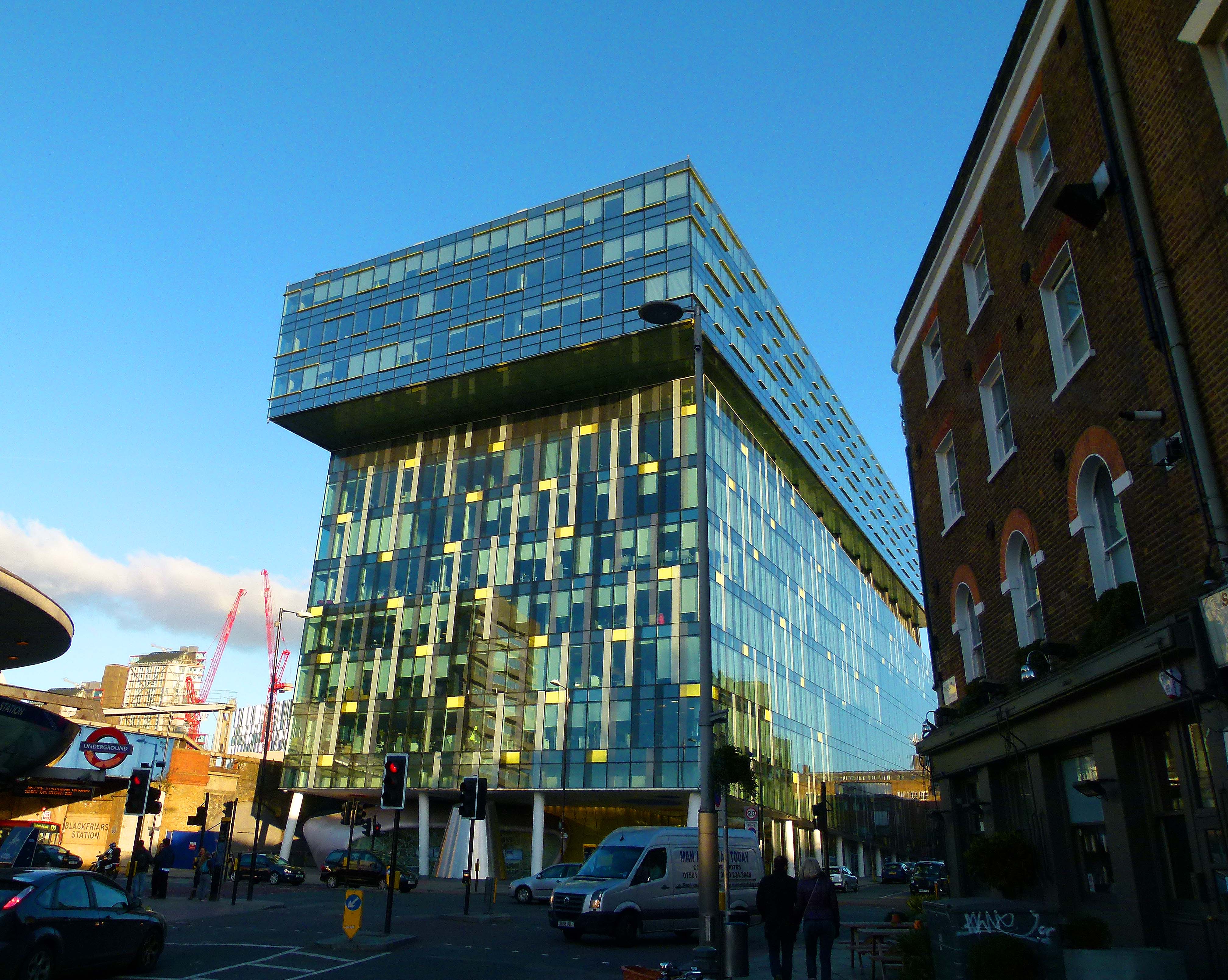
The Palestra
Quite fittingly, Palestra is an Ancient Greek term denoting a public arena for wrestling.
The futuristic office complex is now the HQ for Transport for London… something which I’m sure commuters will appreciate considering how much of a fight it can be contending with tubes and buses during the height of the rush hour!
As the base for Transport for London, the Palestra is also the venue where those studying The Knowledge of London (the intense training course you must pass in order to become a London cabbie) attend their ‘appearances’; verbal examinations which are a true wrestle for the mind!
To find out more about my own experience of this process, please click here.
As well as the Palestra’s referential name, a few subtle reminders of Dick and Bella’s much beloved arena can be found nearby.
About half a mile away, in a rather forlorn, windswept section of the Southbank complex (just off of Belvedere Road, near the Purcell Room), a simple mosaic of Bella Burge can be seen embedded into the pavement.
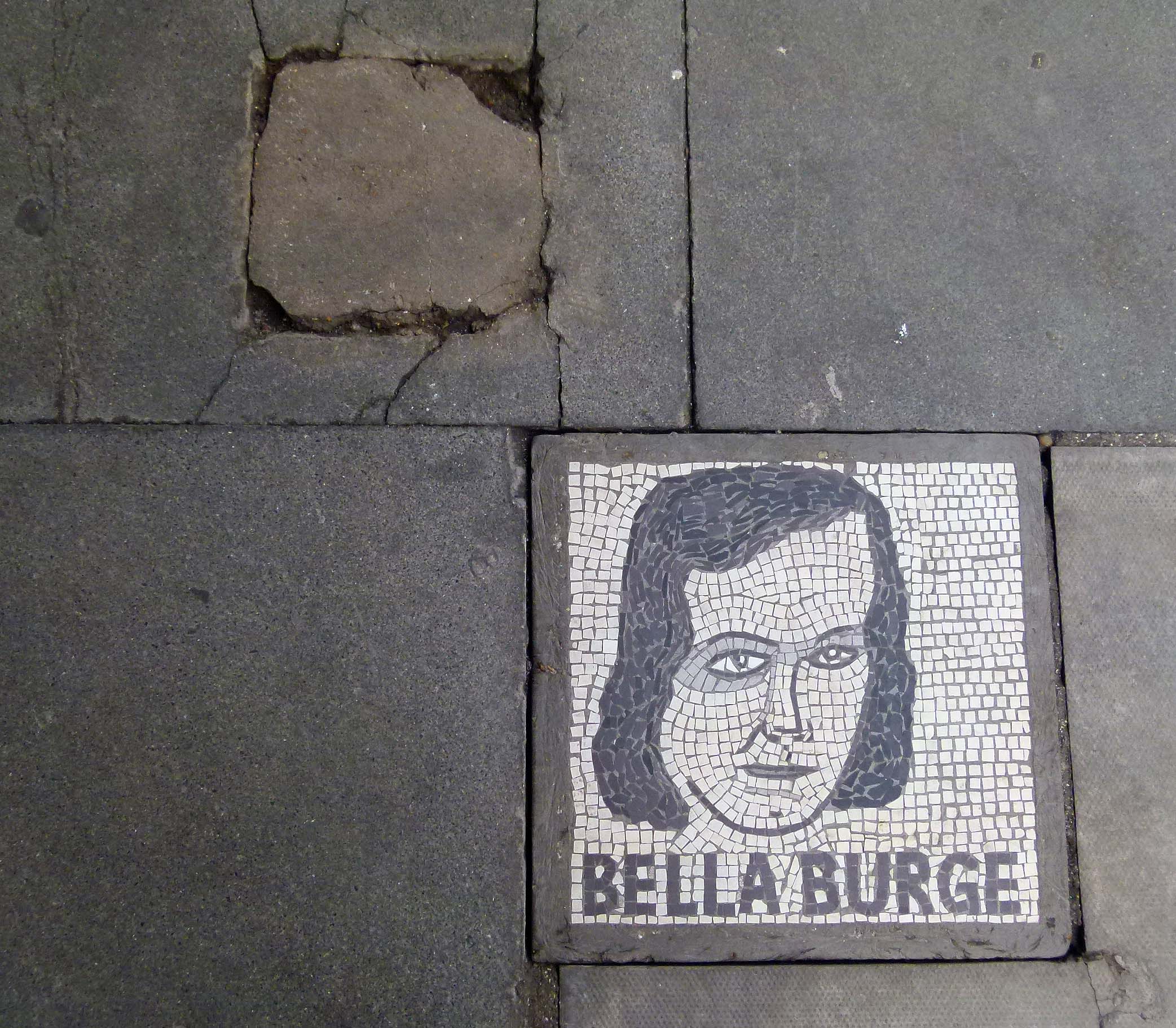
Bella Burge Mosaic, Southbank.
Another mosaic in the set depicts Ernie Izzard; a boxer who lived in Herne Hill and cut his teeth at the Blackfriars ring. Other local heros- including Daley Thompson and Kevin Spacey- can also be glimpsed on this understated walk of fame.

Ernie Izzard mosaic
Closer to the Palestra itself, you’ll find The Ring boxing gym on Ewer Street and, right across the road from where the legendary arena once stood, there’s The Ring pub; a boozer which boasts an array of boxing memorabilia… the perfect place to raise a toast to one of London’s most fascinating, lost sports venues.
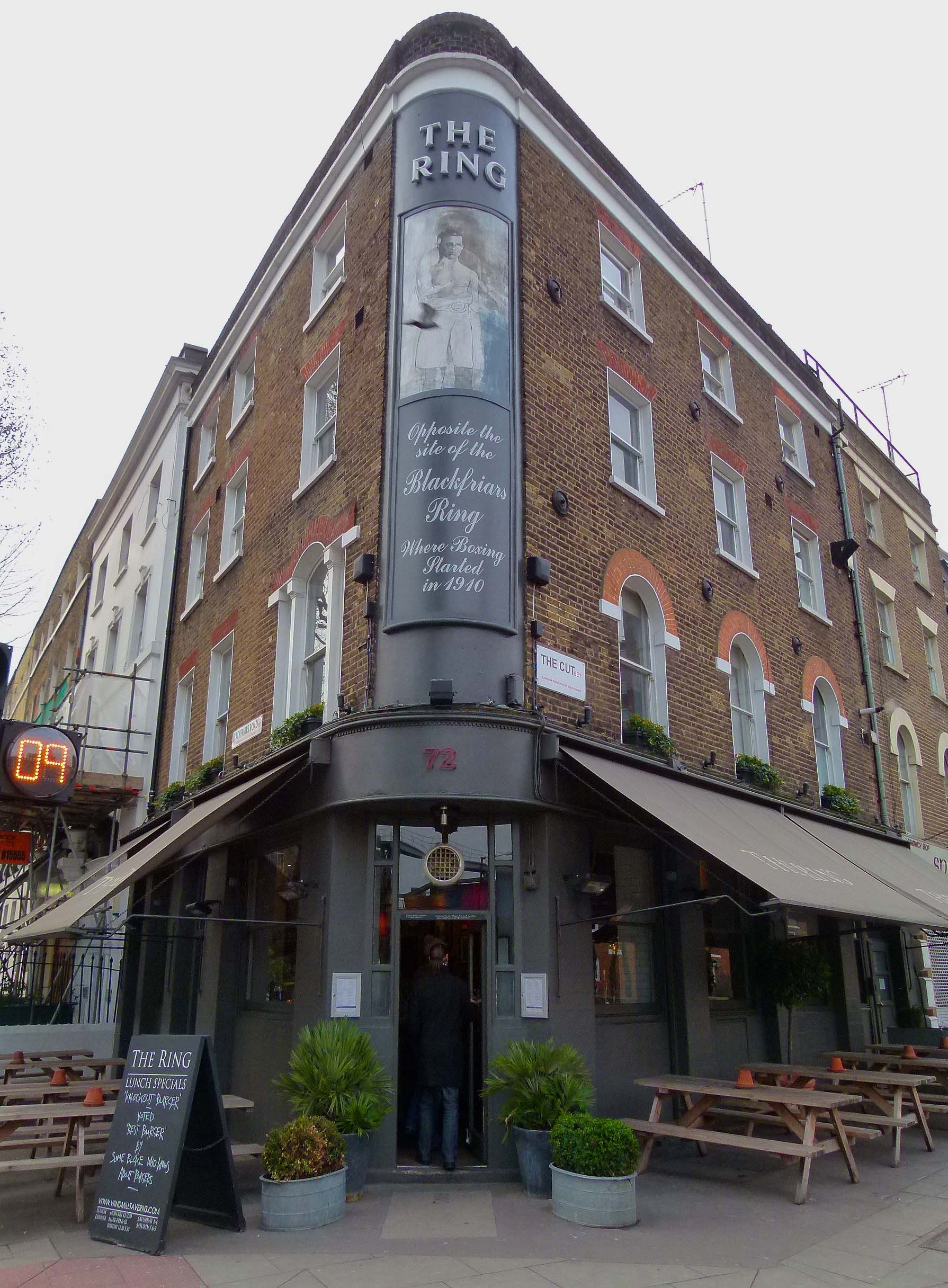
The Ring pub
To see The Ring in action, please click the short clip below, which includes footage of a 1930 bout between Charles Desmet and Jim Shippen.
Cabbie’s Curios: A Quack in Hatton Garden
Back in the days when medicine was messy, painful and still in its infancy, ‘Quack Doctors’ were big business.

‘The Visit to the Quack Doctor’ by William Hogarth, 1743.
Exploiting the public’s medical naivety, these roguish characters promised a staggering array of seemingly miracle cures- all for a tidy sum of course.
In 18th century London, one of the more brazen quacks appears to have been a certain Doctor Sangrado who, in the summer of 1788, established a practice on Hatton Garden (home today to the capital’s jewellery quarter).

Hatton Garden today (image: Google)
Arriving from a spell in Jamaica where he claimed to have forged a lucrative career as a veterinary surgeon, Doctor Sangrado took out a lengthy advertisement in The Times, claiming that he had now “turned philosopher” and intended to “cure all kinds of disorders.”
In the marketing stunt, Doctor Sangrado listed his catalogue of apparent skills, including the supposed ability to “restore reason to a mad-man in three minutes”, “to make a new leg grow out of the stump from which the former had been amputated”, “to recover a person drowned after he had lain six weeks in the water” and, in a boast which was surprisingly ahead of its time, to “change the male into the female sex” and vice versa- a procedure which he stated would take a mere “one hour thirty three minutes and a half”!
*
Ludicrous as all this may sound, some gullible Londoners with more money than sense appear to have been willing to entrust their bodies to Doctor Sangrado.
On the 5th June 1789, another edition of The Times printed the contents of a mysterious medical bill which had been discovered abandoned on Hatton Garden.
Although the patient and practitioner were never identified, it is highly likely that, due to the location in which it was found, the bill was drawn up and accidently dropped by the Hatton Garden quack.
The baffling receipt detailed work conducted between 1788 and 1789 and read thus….
Aug 2nd. Taking your right arm off, repairing and fitting the bone below the shoulder.
Aug 6th. Three new fingers to your left hand.
Aug 10th. A new knee-pan to your left knee, replacing your thigh bone…and one new toe nail.
Aug 19th. A new foot to your left leg.
Oct 20th. Taking out three of your old ribs, and putting in three new ditto, and stitching your sides.
Oct 30th. Taking out your guts, untwisting them; turning, cleaning and putting in ditto.
Nov 1st. Filling your old bones with hog’s marrow.
Nov 12th. Filling your veins with goat’s blood.
Nov 20th. Mending your skull and putting in some…brains, altering your face and reparing the bridge of your nose.
Jan 20th. A new eye and brigtening the other.
Jan 31st. A new toungue, new lining for your mouth and widening ditto, the old parts being put repair.
March 10th. Cleaning and reparing the foul parts of your heart.
March 11th. Rubbing up your bad memory and sundry other repairs done to your person.
March 12th. A new cheek and mending your wind pipe.
March 13th A complete set of new lungs… and some repairs done to the stomach….

‘Hymn’ by Damien Hirst, exhibited outside the Tate Modern in 2012.