Jimi Hendrix’s London (Part One)
Incredibly, it is almost fifty years since legendary musician, Jimi Hendrix’s sublime guitar skills became known to the world.

Jimi Hendrix
Born in Seattle, Washington on November 27th 1942, Jimi Hendrix obtained his first guitar- an acoustic model costing a mere $5- when he was fifteen years old.
In 1961 he enlisted in the army where he trained to be a paratrooper.

Jimi Hendrix during his army days
Military life wasn’t for Private Hendrix- perhaps most clearly demonstrated when he was caught dozing whilst on duty!
He was discharged in 1962 and, eager to forge a career in music, began touring clubs across the United States.
Over the next few years Jimi perfected his craft but despite his talent, he struggled to make a wage, remaining undiscovered and creatively stifled.
His luck changed in May 1966 whilst playing at the Cheetah club in New York.
Here he was spotted by Linda Keith– girlfriend of the Rolling Stones’ Keith Richards– who recommended the dazzling guitarist to Chas Chandler– former bassist for The Animals who was looking to establish himself as a manager.

Linda Keith and Chas Chandler
Like Linda, Chas Chandler could see that Jimi Hendrix was indeed a very rare talent… and so decided to whisk him to London which, during the swinging 60s, was the place where Jimi Hendrix would flourish and make his name.
Tragically, it was also the city in which he would lose his life.
*
In tribute to Jimi Hendrix and to celebrate the exciting announcement that one of his former London homes will soon be opening to the public as a museum, I have compiled a list of some of the most notable London locations associated with the late, great performer…

The Jimi Hendrix Experience posing on Westminster Bridge
*
11 Gunterstone Road, W14

Jimi Hendrix first arrived in London on 24th September 1966, flying into London Airport (which officially changed its name to ‘Heathrow’ that same year).

Jimi Hendrix pretending to thumb a lift at Heathrow, 1970
After several years as a struggling musician, Jimi Hendrix had very little to his name. When he boarded the plane in New York his only possessions were a change of clothes, a set of hair curlers, $40 (which he’d borrowed) and of course his beloved guitar.
Upon his arrival in London, Jimi was taken straight from the airport to 11 Gunterstone Road, West Kensington which was the home of British musician, Zoot Money, a major figure on the Soho scene at the time.

11 Gunterstone Road today (inset: Zoot Money)
Whilst at the house, Jimi took part in a jamming session with Zoot’s friend, Andy Summers– who would later go on to play with The Police.
*
Scotch of St James Club, 13 Mason’s Yard W1

On the evening of 24th September 1966, Jimi Hendrix played his first ever UK solo gig at the exclusive Scotch of St James club in Mason’s Yard; a peaceful courtyard which is now dominated by the White Cube modern art gallery.

Mason’s Yard today
A stone’s throw from Buckingham Palace, the club was popular with The Rolling Stones and The Beatles, both of whom enjoyed the luxury of their own private tables. The Who and Stevie Wonder also spent time here.
Immediately after his set, Jimi met Kathy Etchingham and the pair embarked upon a two year relationship.

Jimi Hendrix and Kathy Etchingham
The following month, Hendrix returned to Scotch of St James with musicians Mitch Mitchell and Noel Redding, who together formed The Jimi Hendrix Experience and thus it was here that the trio performed their UK debut.

Jimi, Mitch and Noel…The Jimi Hendrix Experience
*
Les Cousins Club (now Club 49), 49 Greek Street W1

Originally opened in the 1950s as the ‘Skiffle Cellar’, Les Cousins (tucked away beneath the Soho Grill) was at the heart of London’s folk scene by the 1960s

The Soho Grill, beneath which Les Cousins was located (image: John Martyn.com)
After just a few days in London, Jimi Hendrix and Chas Chandler paid a visit to the club as regular guests, paying their own entry fee.
Blues musician, Alexis Korner was on stage that night and Chas Chandler asked if Jimi could join him on stage for a jamming session… needless to say the crowd were gobsmacked by the young American’s flair!

The site today- now known as Club 49 (image: Google)
*
Westminster Polytechnic (now Westminster University, Regent Campus), Little Titchfield Street

On the evening of 1st October 1966, Cream were playing at this London Polytechnic campus when Jimi Hendrix rather audaciously asked if he could get up and jam with Eric Clapton, the UK’s undisputed guitar king.

The site today- now part of the University of Westminster
Jimi’s skill and flamboyant style knocked Eric Clapton for six and, once back stage the Cream guitarist had to ask Chas Chandler if the American was ‘always that good?’!
Despite their guitar duel, Eric Clapton and Jimi Hendrix became firm friends.

Jimi Hendrix and Eric Clapton, 1967
*
Cromwellian Club (now gone), 3 Cromwell Road, SW7

Situated directly opposite the Natural History Museum, the Cromwellian Club was rumoured to have started life as an illegal gambling den.

The Cromwellian Club
By the 1960s, ‘The Crom’ as it was nicknamed had established itself as a popular casino and music venue, witnessing performances from the likes of Georgie Fame, Eric Clapton and a very young Elton John.
Jimi Hendrix played one of his earliest gigs here in October 1966.

Site of the Cromwellian Club today
*
Bag O’ Nails Club, 9 Kingly Street W1

The Jimi Hendrix Experience played a gig at the Bag O’Nails club on 25th November 1966, after which, Jimi remarked, “Britain is really groovy”- not a surprising observation considering the club backs onto the ultra-hip Carnaby Street.

The Bag O’ Nails Club today
At another Bag O’Nails gig on 11th January 1967, Paul McCartney and Ringo Starr were in the audience… it was the first time they’d seen Jimi play live and, naturally, they were entranced.
Later that year, Paul McCartney met his future wife, Linda at the club.

Plaque commemorating the Jimi Hendrix Experience’s Bag O’Nails gig
*
Blaises Club (now gone) 121 Queen’s Gate SW7

Located in the basement of the now demolished Imperial Hotel, Blaises (named after the cartoon character, Modesty Blaise) was a cramped, sweaty club which, according to Melody Maker journalist, Chris Welch, was a venue, “where musicians, agents, managers and writers allowed themselves to be deafened whilst imbibing quantities of alcohol.”

The forlorn site of the former hotel and club in 2014
Jimi Hendrix appeared here on 21st December 1966 which led to one of first rave reviews: “Jimi has great stage presence and an exceptional guitar technique which involved playing with teeth on occasions and no hands at all on others!” (tricks which he’d learnt from old timers whilst on the US circuit).

Jimi Hendrix playing with his teeth
Pink Floyd were another big name to appear at Blaises and the club can be seen in the cult 1967 film, The Sorcerers (in which Boris Karloff uses hypnosis to seriously mess up one cool cat’s mind!)
Please click below to view a clip of the Blaises club in its heyday:
*
34 Montague Square, W1

During the 1960s, the basement of this rather grand address was leased by Ringo Starr.

34 Montagu Square today
Consequently, the home has numerous connections with The Beatles– the song, ‘Eleanor Rigby‘ was developed here for example and in 1968 the racy cover for John Lennon and Yoko Ono’s, Two Virgins album was snapped on the premises.
Jimi Hendrix rented the basement from Ringo between December 1966 and March 1967, moving in with his girlfriend, Kathy Etchingham. Whilst at the address, Jimi composed ‘The Wind Cries Mary’.

Unfortunately Ringo had no option but to evict Jimi Hendrix when the guitarist, whilst under the influence of LSD, splashed paint all over the walls…

Jimi Hendrix on the steps of 34 Montagu Square
One of the most iconic photographs of Jimi was taken just across the road on Montagu Place outside the Swedish embassy. Sadly, the original street sign has since been removed.

Jimi Hendrix posing on Montagu Place

The spot where Jimi stood. Montagu Place today… with Jimi’s sign sadly gone
*
Lime Grove Studios (now gone), W12

Between 1940 and 1991, Lime Grove in Shepherd’s bush was home to a BBC studio where many classic shows including Top of the Pops, Blue Peter, Doctor Who and a 1954 adaptation of George Orwell’s, 1984 (performed live and starring Peter Cushing) were filmed.

Lime Grove’s studio floor (image: BBC)
The Jimi Hendrix Experience filmed their first appearance for Top of the Pops here on 29th December 1966 with a performance of ‘Hey Joe’. Their next shoot took place on 30th March 1967– and can be viewed below.
Sadly, Lime Grove studios were demolished in 1993 and a modern housing development now occupies the site.

Site of the former Lime Grove studios today (image: Google)
*
The Upper Cut Club (now gone), 1-39 Woodgrange Road, E7

Out beyond Stratford and past the former 2012 Olympic Park, this is probably the furthest east Jimi Hendrix ever ventured whilst in London!

The former Upper Cut club as it appeared in 1991 (image: E7 Then and Now)
Based in Forest Gate, the Upper Cut Club was in business for just one year between 1966 and 1967. Despite its short span, the club shone bright playing host to such greats as The Who, Otis Redding, Sam and Dave, Prince Buster, Ben. E. King and Nina Simone.

Otis Redding at the Upper Cut club, 1967
The Jimi Hendrix Experience appeared at the Upper Cut on Boxing Day, 1966…and it was here, whilst resting in the club’s dressing room, that Jimi penned Purple Haze, one of his most definitive hits.

A simple plaque now marks the site.

Plaque installed by Newham Council (image: E7 Then and Now)
*
The Speakeasy Club (now gone), 48 Margaret Street, W1

Opened in 1966 a short distance from the bustle of Oxford Circus, the Speakeasy modelled itself on the illegal drinking dens which flourished during the era of American prohibition.
Visitors entered and signed in via a fake undertaker’s parlour… and were then permitted to enter the main club through a false wardrobe door! Inside, a menacing portrait of Al Capone loomed over the patrons.

Coffins and fake wardrobes… the Speakeasy’s unique entrance… (images: New Musical Express)
This was one of Jimi Hendrix’s favourite London clubs and he could often be spotted hanging out with friends here.

Site of the former Speakeasy club today
Jimi’s first Speakeasy gig took place in February 1967… and it was here that he cheekily tried to chat up Mick Jagger’s then girlfriend, Marianne Faithful!

Jimi Hendrix hanging out at the Speakeasy, 1967
To be continued
Waterloo Wildlife (Waterloo Station: Part 6)
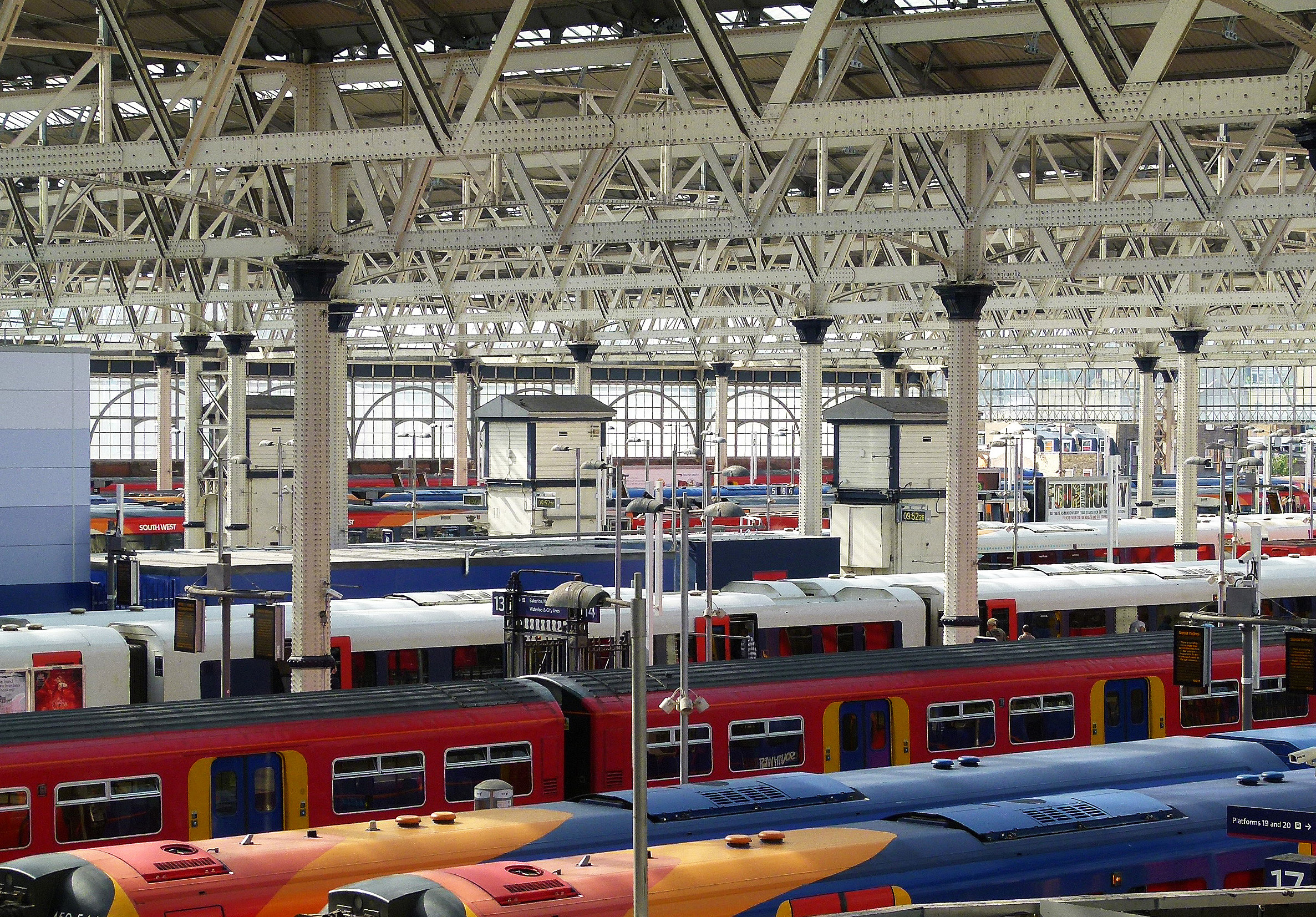
Trains at Waterloo
Despite being a thriving commuter hub, Waterloo station harbours a surprising number of quirky links with the animal kingdom…

Waterloo signal box cat, 1961
Diligent Dogs
During the first half of the 20th century Waterloo was home to a succession of ‘Railway Collection Dogs’; faithful hounds who padded around the station’s concourse with money boxes strapped to their backs, into which charitable members of the public could pop a few pennies.

‘Handsome Boy Prince’; a charity dog who once collected at East Croydon station (image: Old Southeronians Association)
Waterloo’s most celebrated charity dog was ‘Laddie’, an Airedale Terrier who was introduced to Waterloo in 1949 to raise cash for a retired railway workers’ home in Woking, Surrey.

A young passenger at Waterloo pops money into Laddie’s collection tin (image: Old Southeronians Association)
Laddie patrolled Waterloo until his retirement in 1956, by which point he’d raised over £5,000; a very handsome sum for the time (approximate to £87,000 in today’s money).
The faithful dog spent his final years at the Woking retirement home amongst the elderly railwaymen he’d done so much for.

Woking’s retirement home for former railway employees
When Laddie passed away in 1960 he was stuffed and put on display in a glass cabinet at Wimbledon station where he remained until 1990.
Today, he is kept by the National Railway Museum in York, complete with an original collection box.

Laddie today… (image: National Railway Museum)
Waterloo Buzz
As well as dogs, Waterloo was once also home to approximately 40,000 bumble bees… whose hives were located 200ft up on the station’s roof!

One of Waterloo’s bee hives
The bees were kept in the 1950s and 60s by Mr Wilfred Green, a railway worker who used the hives to make jars of honey for the Southern Railway’s Children’s Home in Woking (allied to the home for which Laddie the dog raised money).

Youngsters at the Southern Railway Children’s Home in Woking, 1960 (image: Pathe)
A video of the hives being tended by Wilfred in 1958 can be viewed below (note the complete lack of protective gear!)
Waterloo Pride…the Coade Stone Lion
For almost 180 years, a fearsome, stone lion has roamed the vicinity of Waterloo…

The Coade Stone Lion
Weighing 13 tonnes, the lion dates back to 1837 when it was created by Warwickshire born artist, William Frederick Woodington as a grand mascot for the ‘Lion Brewery’; a distillery which once stood on the Southbank’s Belvedere Road.
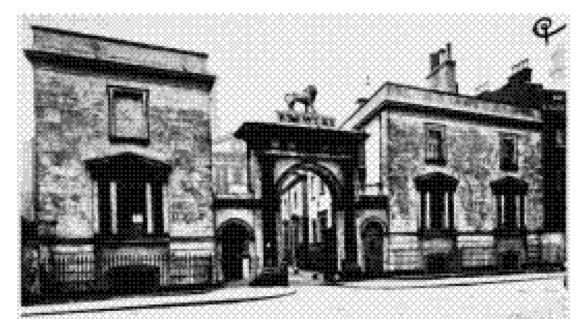
The Coade Stone Lion at its first home; the Lion Brewery, pictured here in 1930 (image: British History.ac.uk)
The lion is forged from ‘Coade Stone’; an artificial material which was perfected by Eleanor Coade in the late 18th century.
Fired in a kiln over a period of several days, Coade stone is a very tough substance, famously immune to the onslaught of pollution… which means it always looks sparkling clean.

Coade Stone… as good as new
Like the Lion Brewery, Eleanor Coade’s factory was also located on the Southbank- the site today is now occupied by the Royal Festival Hall.
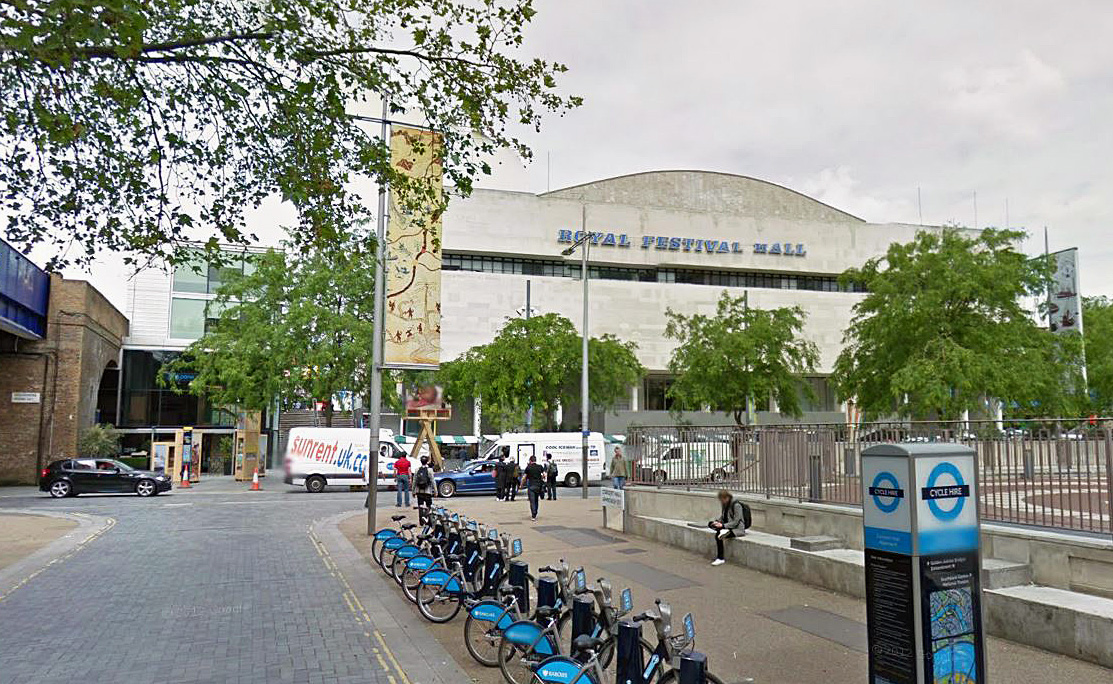
The Royal Festival Hall… where Eleanor Coade’s factory once stood
Holding pride of place above the brewery’s main entrance, the mighty lion was originally painted red as the mock-up image below illustrates…

The Coade Stone Lion, back in red as it once appeared…thanks to the wonders of photo manipulation!
An early admirer of the sculpture was French writer, Emile Zola who was delighted to see the hefty statue “poised in mid-air” atop its high arch.
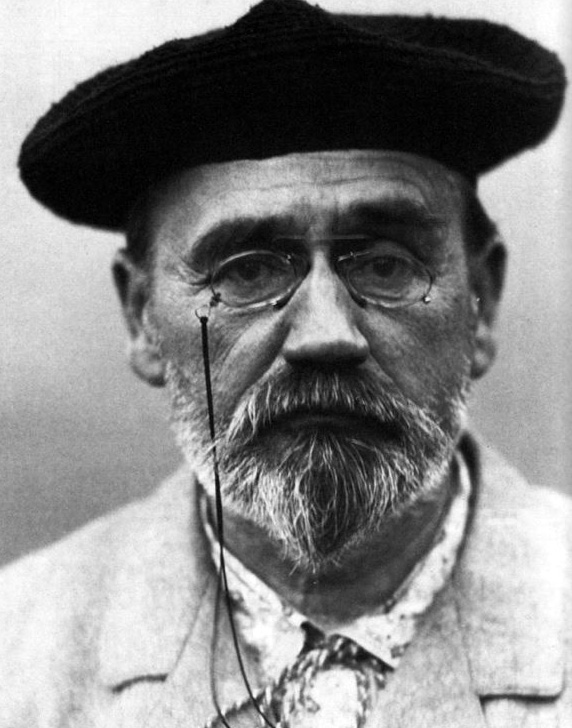
Emile Zola, the legendary French writer who was a great admirer of the Coade Stone Lion
Years later, Zola made a special return visit to the site to view the statue- which he affectionately referred to as “my lion”- one last time.
*
In 1949, the Lion Brewery was demolished and the land passed over to the development of the 1951 Festival of Britain.
At the request of King George VI himself the lion was saved… and adopted by Waterloo Station where, with its red coat (the colour then associated with the newly nationalised British Railways) it was able to continue as a corporate mascot.
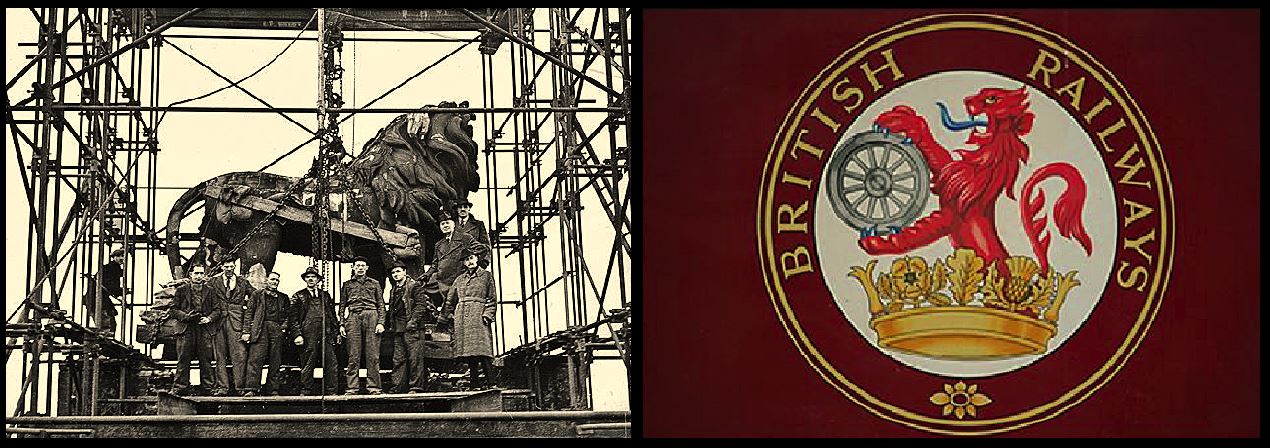
The Coade Stone Lion being removed from the brewery in 1949 (left) and the symbol for British Railways (right)
During its time at Waterloo, the lion stood outside the York Road entrance, a short distance from the station’s Victory Arch entrance.

The Coade Stone Lion at its second home- outside Waterloo station, pictured here in 1958 (image: copyright Lambeth Government)
The lion guarded the station until 1966 when it was sadly forced to make way for the ‘Tower Building’; a looming 1960s office block which squeezes right up to Waterloo’s 1920s façade in a pretty thuggish way…

The 1960s Tower Building which stands on the site of the Lion’s second home
After being displaced by the modernist office slab, the Coade Stone Lion (also known today as the ‘Southbank Lion’) had its red paint removed and was shifted to its current site… the north-eastern foot of Westminster Bridge, right between the Houses of Parliament and the London Eye.

The Coade Stone Lion being moved to Westminster Bridge in 1966 (left) and the sculpture today (right)
The lion has a twin which once also adorned the former brewery… this partner can now be found at Twickenham rugby stadium’s west gate, standing proud in a coat of gold paint.

The Southbank Lion’s twin at Twickenham Stadium (image: Geograph)
Elephant in the Room
Looming above the escalators that lead down to Waterloo’s connection with the Jubilee Line stands this rather fine elephant:

Waterloo’s Elephant
The piece was created in 2000 by Kendra Haste, a renowned artist who specializes in creating animal sculptures from wire.
Cheeky Mice

A cheeky wee mouse…
The little fellow pictured above can be found hiding behind a cheerful statue of the artist Terence Cuneo which stands close to Waterloo’s Victory Arch entrance.

Terence Cuneo statue, Waterloo station
Born in London in 1907, Terence Cuneo studied at the Slade School of Fine Art and began his career as an illustrator for books and magazines.
In WWII, he served with the Royal Engineers and also carried out work for the War Artists’ Advisory Committee, creating a number of works depicting scenes from the conflict.

War scene by Terence Cuneo, 1944
Cuneo was an expert at capturing fleeting moments in painstaking detail, a skill which led to him being appointed the official artist for Queen Elizabeth II’s coronation in 1953.

Coronation Luncheon at London’s Guildhall, Terence Cuneo, 1953 (image: Cuneo Estate)
As well as his wartime paintings and Royal commissions, Terence Cuneo was especially renowned for his paintings of railways… a selection of which can be viewed in the slideshow below.
Terence had a very playful personality and crafted many fine toys for his two beloved children- including a full-size roundabout and a miniature railway which trundled around the garden.
His sense of mischief extended to his paintings, which are famous for their inclusion of a trademark little mouse, often very well hidden….rather like an early version of ‘Where’s Wally?’… hence the wee rodent included in the Waterloo statue.
Spotting the mice within his paintings can be quite a challenge!
Terence Cuneo passed away in 1996 and his statue, sculpted by Philip Jackson, was unveiled at Waterloo station in 2004.
A short film documenting Terence at work in 1960 can be viewed below:
More Waterloo trivia to follow soon….
The Pride of Poplar… A New Statue Comes to Town
On May 16th 2014, East London will be blessed with a brand new statue of former boxer, Teddy Baldock; one of the area’s most remarkable sons.
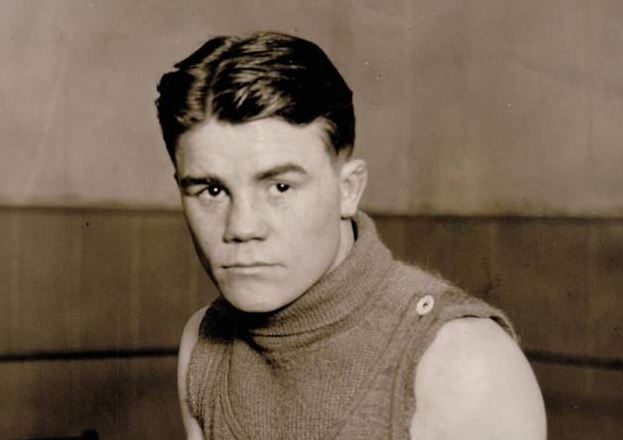
Teddy Baldock
Born in Poplar in May 1907 Teddy’s life was marked by triumph and tragedy.
In 1927 aged just 19 he fought his way to become Britain’s youngest ever boxing world champion; a record which remains to this day. In his rise to fame, Teddy amassed a fortune and became known as the ‘Pride of Poplar.’
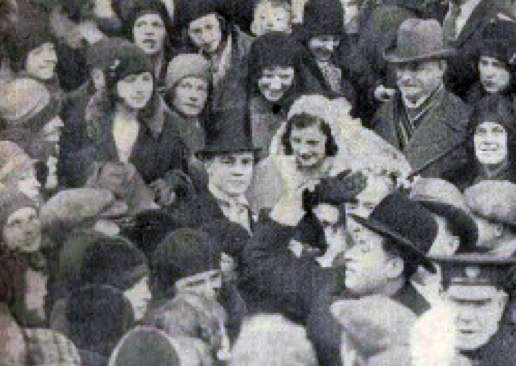
Teddy mobbed by fans on his wedding day (image: The Daily Sketch, via London Ex-Boxer’s Association).
However, after suffering injury to his hand in the ring, the young boxer’s luck quickly began to diminish.
Although he managed to forge a second career as a bookmaker, Teddy had a generous nature which was exploited as he gave away thousands of pounds to people whom he thought were friends.
During WWII the former boxer served with the RAF. Whilst he was away, his finances suffered further as a number of properties he’d invested in back in London were destroyed by air-raids.
As the years progressed, Teddy began to drink and gamble heavily. His marriage collapsed and by the time he died in March 1971, Teddy was penniless and long forgotten, an elderly vagrant shivering out his final days on cruel streets and in stinking doss-houses.
In recent years, Teddy’s legacy has been revived with the publication of a biography and a campaign by his grandson, Martin Sax to have a statue erected.

Sculpture of Teddy in his prime.
After a successful campaign to raise funds, Martin’s dream has thankfully come to fruition.
Sculpted by Carl Payne, Teddy’s tribute will stand outside Langdon Park Community Sports College, Hay Currie Street where it is hoped it will inspire local youngsters. The site holds extra importance in that the college stands on the site of Teddy’s former childhood home.

Minature of Teddy’s Statue (image: London Ex-Boxer’s Association).
The unveiling is scheduled to take place between 3-6pm on May 16th 2014 and at the time of writing, actor Ray Winstone (himself a boxer in his younger days) is pencilled in to do the honours. Photos will appear on this site after the event if you can’t make it!
A detailed account of Teddy’s life can be found on his grandson Martin’s excellent website. Please click here for the link.





 View from the Mirror