Droogs About Town: London Locations Featured in ‘A Clockwork Orange’
Released in 1971 and directed by Stanley Kubrick, A Clockwork Orange was by far one of the 20th century’s most controversial films.

Poster for A Clockwork Orange
Based on Anthony Burgess’ 1962 novel of the same name (the title being inspired by the old Cockney phrase “as queer as a clockwork orange’), the story is set in a dystopian London of the near future and centres on Alex DeLarge–a sadistic youth with a passion for Beethoven- who leads his gang of ‘droogs’ through the city on nightly sprees of ultra-violent mischief.
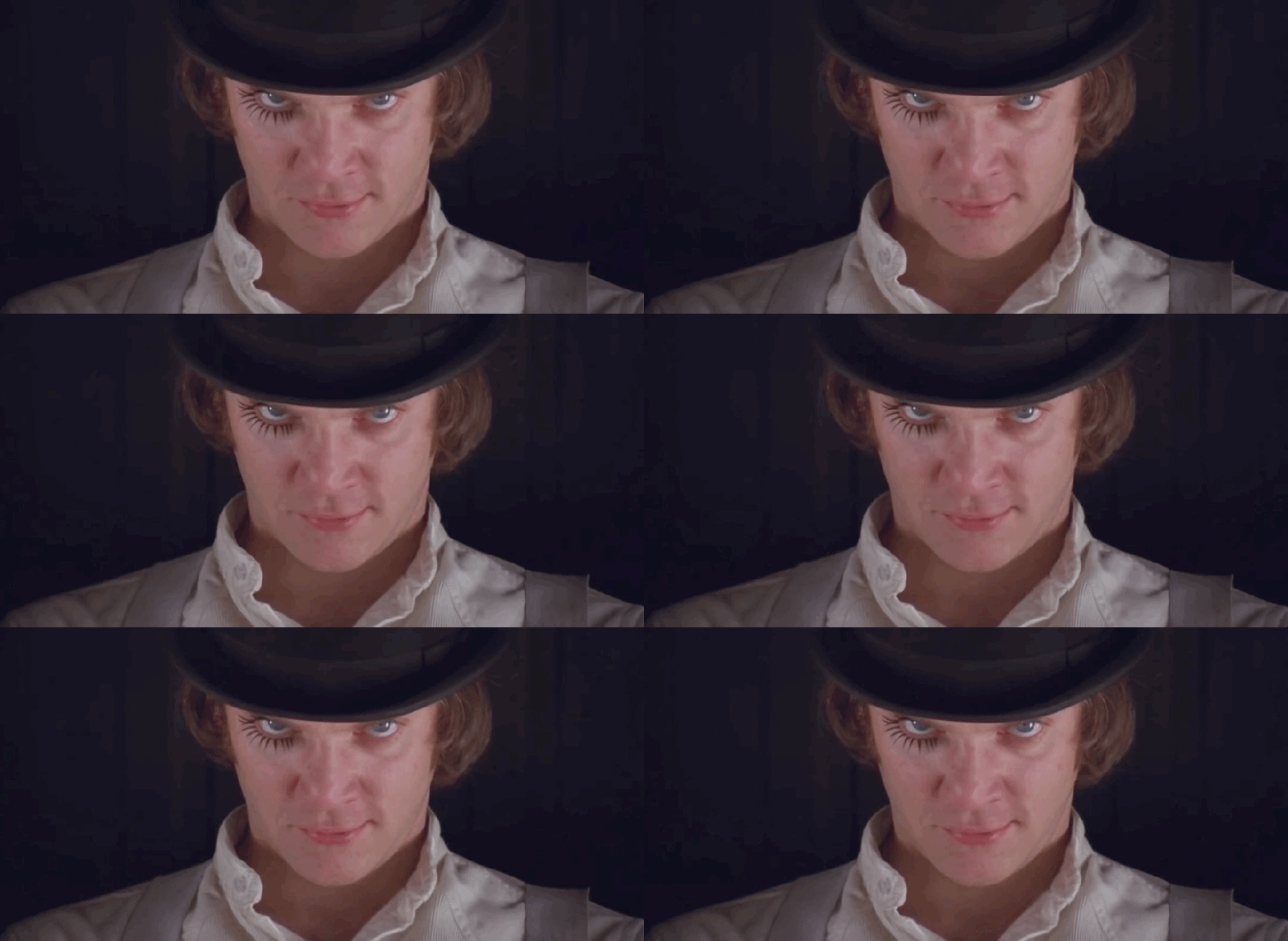
Alex De Large stares at the camera in the film’s iconic opening shot…
After committing murder, Alex is finally locked up… but is soon offered a quick way out when he agrees to act as a guinea pig for the Ludovico Technique; a controversial brain-washing programme designed to suppresses the desire for violence (and something which caused actor Malcolm McDowell great pain and discomfort when it came to portraying these disturbing scenes).

Alex undergoing the Ludovico Technique
In Britain, thanks to high levels of upset whipped up in the press, the film version of A Clockwork Orange gained such an intense notoriety that Stanley Kubrick himself withdrew his work from circulation; a self-imposed ban which remained right up until 2000.
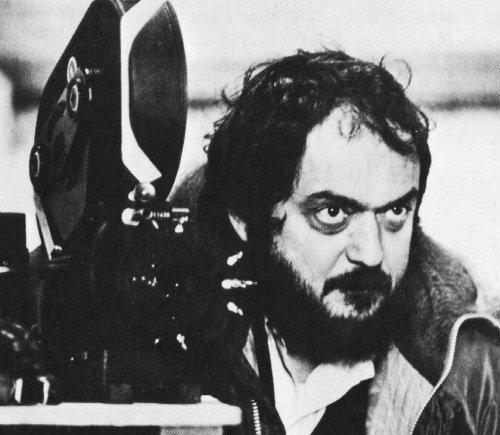
Stanley Kubrick
So strict was this embargo that, in 1993 when the Scala Cinema in Kings Cross attempted to screen the film, Warner Brothers took the owners to court; an action which led to the cinema going bust thanks to the immense legal costs involved.


Considering A Clockwork Orange was filmed entirely around London and the Home Counties (including areas such as Borehamwood, Kingston-Upon-Thames, Elstree, Radlett, Brunel University, Bricket Wood and Wandsworth prison) it’s rather ironic that British audiences were forbidden from viewing Kubrick’s film for so many years.
Here are some of the film’s most prominent London-based scenes:
The Chelsea Drugstore
Whilst Alex’s nights are spent committing all manner of horrific acts whilst tanked up on drug-laced milk, his days are rather more civil… devoted to indulging his love of classical music; especially that of the “lovely, lovely Ludwig Van” Beethoven.
In one of the film’s scenes, we follow Alex, decked out in his dandiest threads as he peruses his favourite record shop (click below to view):
This scene was filmed in the basement of the Chelsea Drugstore; a modern building fashioned from glass and aluminium which opened on the King’s Road in 1968.

The Chelsea Drugstore (Image: Royal Borough of Kensington and Chelsea)
Open 16 hours a day, 7 days a week, the Chelsea Drugstore was an avant-garde, mini shopping mall, its three floors boasting eateries, boutiques, a record shop, bar, newsagent and chemist.
It also boasted its own ‘Flying Squad’… an exclusive team of women clad in purple castsuits who were employed to make unconventional home deliveries on their fleet of motorbikes. Groovy!
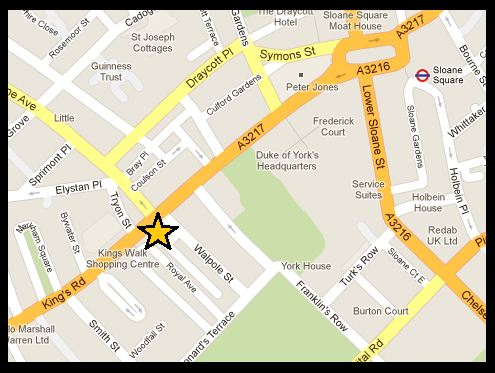
Map showing the location of the former Chelsea Drugstore.
The Chelsea Drugstore was also name checked in The Rolling Stone’s 1968 hit, You Can’t Always Get What You Want.” (Speaking of The Stones, Mick Jagger was once earmarked to play Alex DeLarge in an earlier proposed adaptation of Burgess’ novel which never came to fruition…)
Although the Chelsea Drugstore ceased trading in 1971, the shops in the basement (as featured in A Clockwork Orange) remained in place until the late 1980s whilst the rest of the building became a wine bar.
Today, the building is occupied by the Chelsea branch of McDonalds.
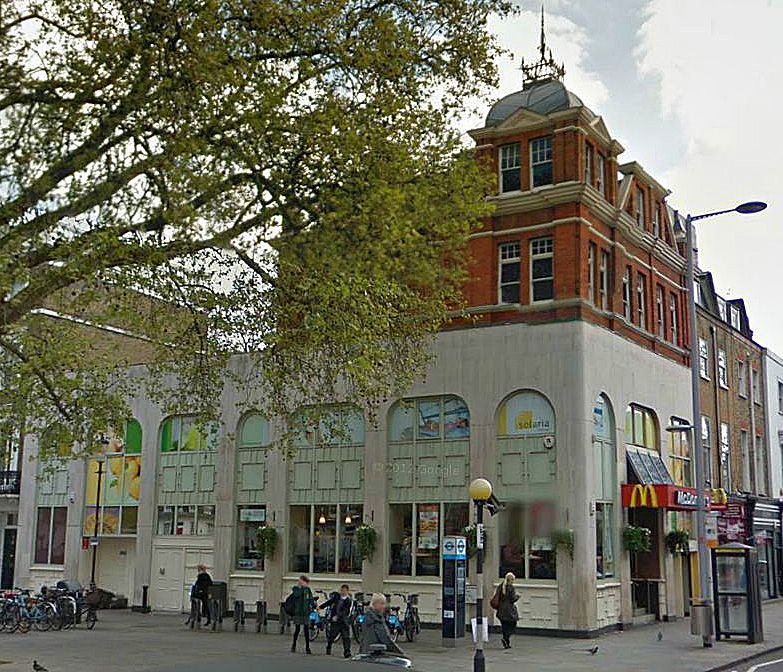
The building which once housed the Chelsea Drugstore… now a McDonalds. (Image: Google Streetview)
*
Thamesmead
Despite the inclusion of the psychedelic Chelsea Drugstore, A Clockwork Orange is mostly set against a cold, dystopian backdrop; a precedent set in Burgess’ original novel as the following excerpt, in which Alex and his gang are evading the police, atmospherically illustrates:
“Just round the next turning was an alley, dark and empty at both ends, and we rested there, panting fast then slower, then breathing like normal. It was like resting between the feet of two terrific and very enormous mountains, these being flatblocks, and in the windows of all the flats you could viddy like blue dancing light. This would be the telly. Tonight was what they called a worldcast, meaning that the same programme was being viddied by everyone in the world that wanted to… and it was all being bounced off the special telly satellites in outer space.”
In order to realise Burgess’ bleak, futuristic vision Stanley Kubrick turned to the modern, Brutalist architecture which was sprouting across London during the era in which the book and film were created; architecture which, as early as 1962, Anthony Burgess was already predicting would provide fertile ground for many unforeseen social ills.

1962 first edition for ‘A Clockwork Orange’ by Anthony Burgess
In Burgess’ novel, Alex lives in “Municipal Flatblock 18a”, a block daubed in obscene graffiti and plagued by vandalism.
To represent this domestic seediness, Kubrick took his film crew to the newly built Thamesmead Estate; a vast, sprawling development near Woolwich in South East London.
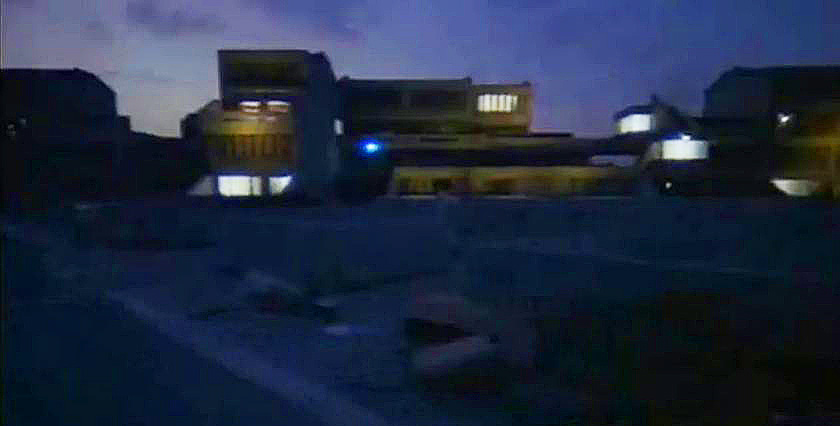
Screenshot of the Thamesmead as depicted in A Clockwork Orange…
Built on a former military site, the Thamesmead Estate, which was optimistically promoted as being the “town of the twenty-first century”, was built piecemeal between the 1960s and 1980s.

Thamesmead’s Binsey Walk, as featured in ‘A Clockwork Orange.’ (Image: Wikipedia)
One of the film’s most famous sequences takes place on Thamesmead’s Binsey Walk.
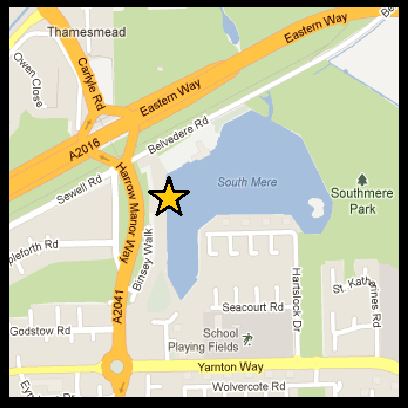
Map depicting location of Binsey Walk.
Walking alongside the man-made Southmere Lake Alex, whose leadership has just been challenged, decides to show his droogs whose really in charge (click below to view):
In recent years, the Thamesmead Estate has been used as a set for the E4 comedy, ‘Misfits‘.
*
York Road Roundabout, Wandsworth

Map depicting York Road Roundabout.
One of the most notorious scenes in Kubrick’s adaptation takes place at the very beginning of the film and involves a vicious assault on a hapless down and out as he lies drunkenly in a grimy, pedestrian subway.
The scene was filmed in the warren of walkways beneath York Road roundabout, which sits at the southern foot of Wandsworth Bridge.
Typical of the architecture of the time, York Road roundabout was laid out in 1969 and was pretty much brand new when Stanley Kubrick set up his cameras.
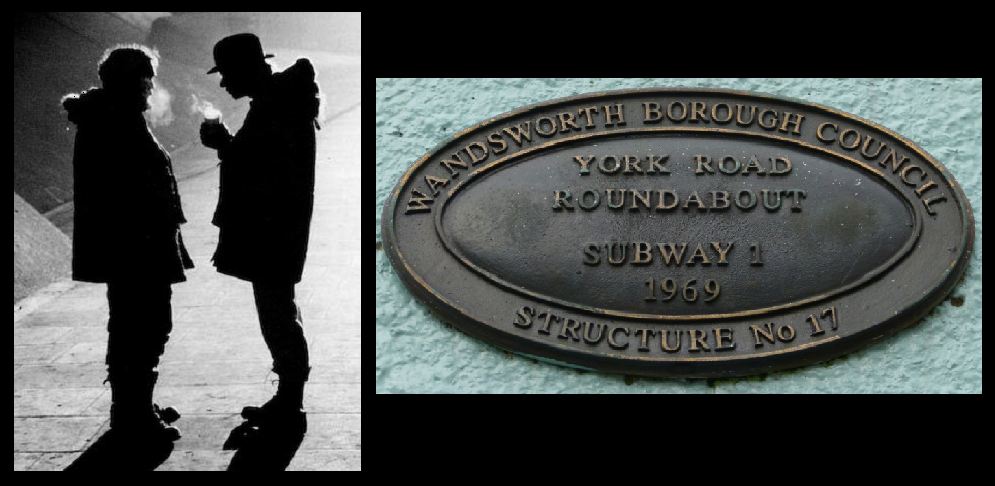
Stanley Kubrick with Malcolm McDowell on set below York Road roundabout, 1971 (image: Stanley Kubrick Archive).
Today, the labyrinth beneath the roundabout is just as bleak and unwelcoming as it was some 40 years ago…

The subway today…

Modern Droogs? York Road Roundabout subway, November 2012…
More recently, a large atom-esque sculpture of sorts has been plonked down on the roundabout, becoming something of a local landmark.
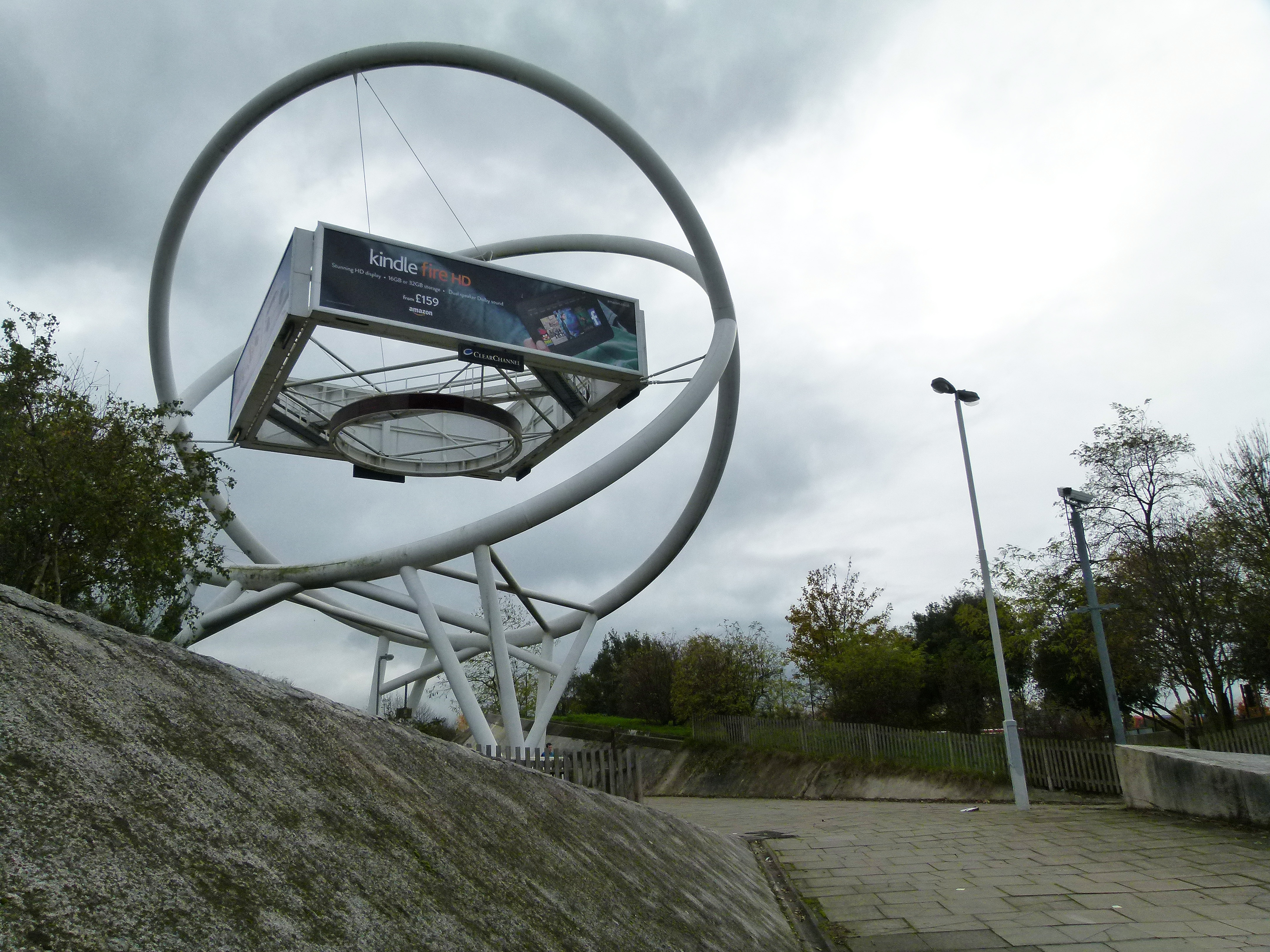
York Road roundabout’s atom sculpture.
Apparently inspired by the 1950’s Atomium sculpture in Brussels, but kitted out with a bulky and intrusive advertising gantry, the tangle of metal doesn’t really do much to beautify the 1960s concrete…
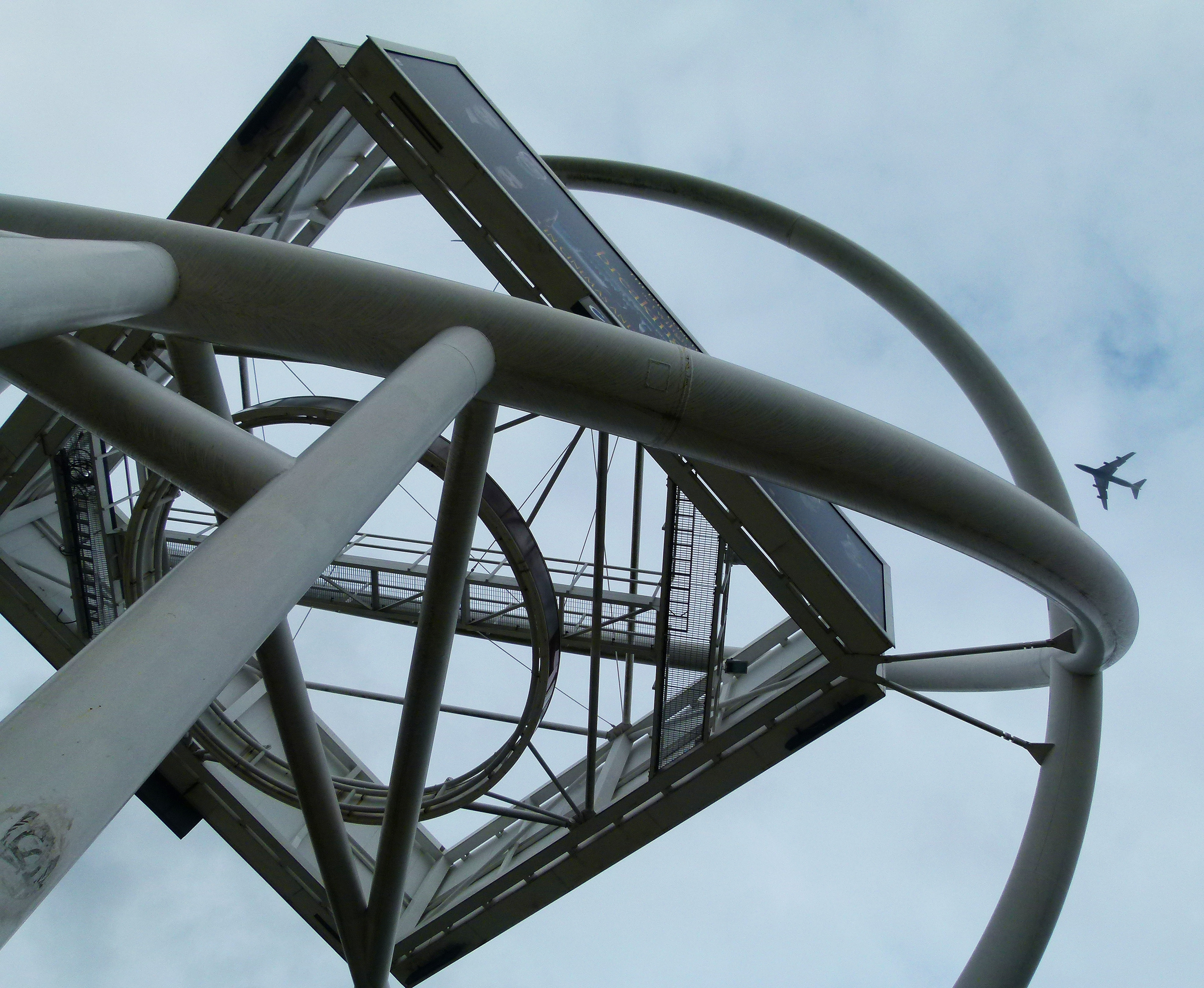
Looking up at the gantry.
*
Albert Bridge
As for the unfortunate tramp who was attacked by Alex and his droogs below Wandsworth’s grimy roundabout… don’t worry, he gets his own back…

Map of Albert Bridge
After recognising the recently released (and now, thanks to his treatment, defenceless) Alex DeLarge glumly contemplating a view of the Thames, the tramp leads his own rabble in a revenge attack on the former and now defenceless yob, right beneath Albert Bridge; one of London’s most beautiful river crossings (click below to view):
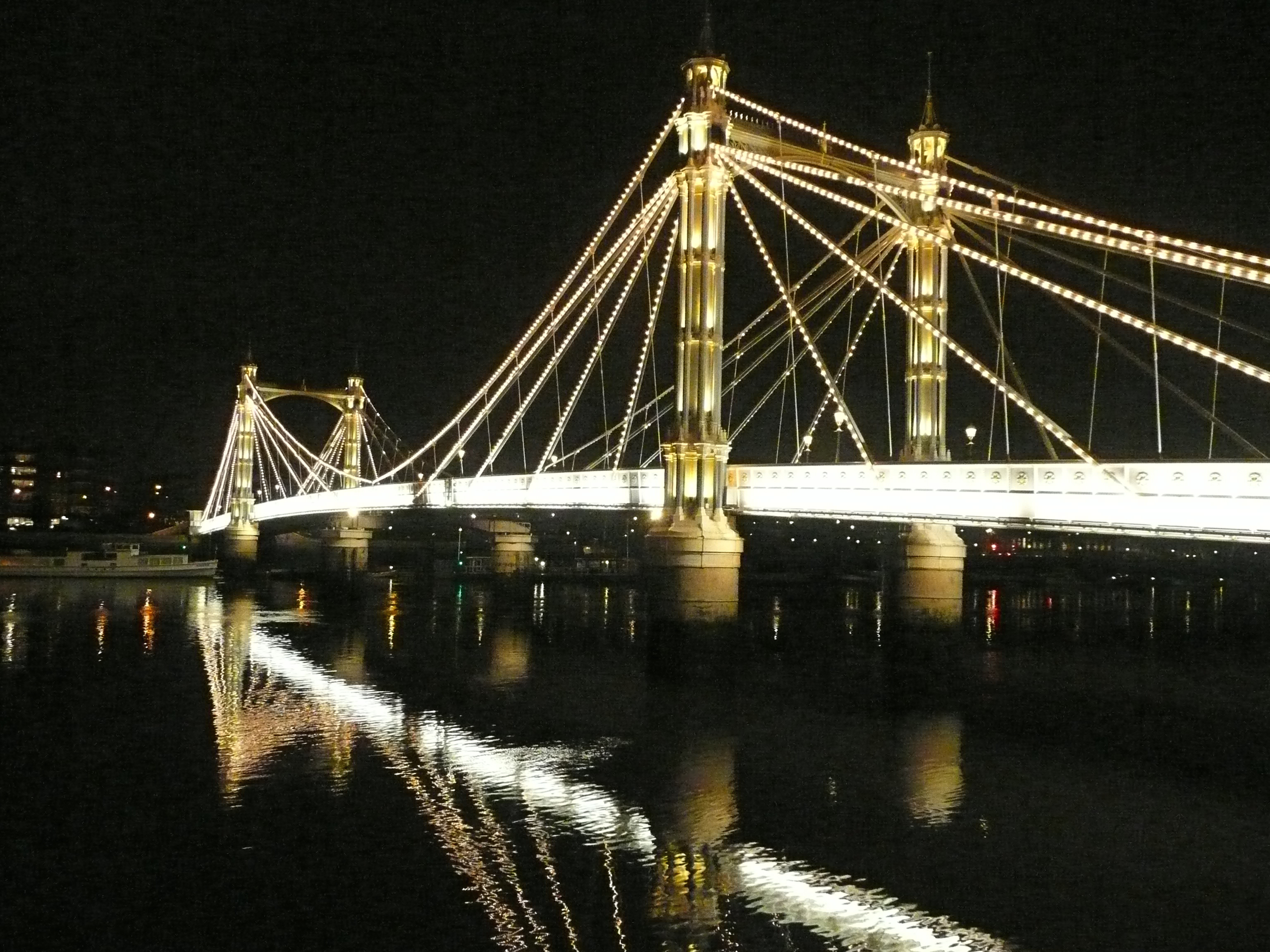
Albert Bridge… one of the more traditional sites uses in ‘A Clockwork Orange.’ (Image: Wikipedia)
*
Want more on Stanley Kubrick’s London? Then check out this post: A Monolith in St Katherine Docks…
***
Christian the Lion: A Big Cat in Chelsea
Recently, there have been a number of somewhat alarming reports that a lion is on the loose in the Essex countryside….
Whether or not this turns out to be true, it’s certainly makes a dull bank holiday a little more interesting… I wonder if the scary carnivore will manage to find its way into the centre of London…
*
During the 1960s, one place you would certainly have been able to spot a real, live lion was within one of the capital’s most prestigious department stores: Harrods.

Harrods Department Store (photo: Wikipedia)
In those carefree days, the world famous shop on Brompton Road boasted its very own Zoo department.
First opened in 1917, the exotic floor space sold all manner of beasts; everything from chickens to goats to alligators and elephants. (Today, the area has now been handed over to the far tamer ‘Pet Kingdom’).
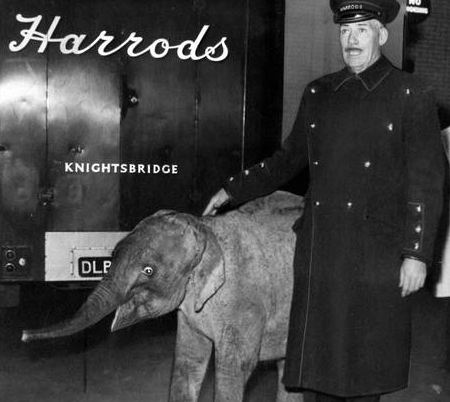
A baby elephant, purchased from Harrods’ Zoo Department in 1967
In November 1969, two young Australians- Anthony Burke (nicknamed ‘Ace’) and John Rendell– arrived in London.
As part of their obligatory sightseeing tour, the excited newcomers popped into Harrods where they were amazed to discover the store’s commercial menagerie.
What most caught their eye was a small cage… in which there sat a forlorn looking lion cub. Saddened to see the creature confined to such cramped conditions, the two Aussies vowed to rescue the lion, whom they would soon name ‘Christian’.
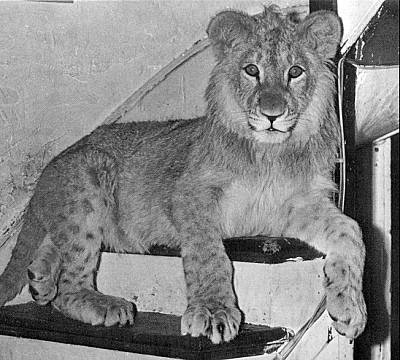
Christian the Lion
Boasting a price tag of 250 guineas (£3,500 in today’s money), Christian didn’t come cheap. However, this didn’t deter Anthony and John and they quickly managed to raise the necessary cash.
It turned out that the staff at Harrods were more than happy to see the back of Christian- the night before the pair came to collect him, the cheeky young lion had escaped from his cage and run amok through the carpet department, ripping apart several valuable goatskin rugs in the process!

Christian with Anthony Burke and John Rendell (photo: Evening Standard)
By now, Anthony and John were living in a small flat on the King’s Road, down in swinging Chelsea and, in a unit below their apartment, they ran a pine furniture shop called Sophiste-Cat.
Once Christian moved in, the little lion cub quickly became a local celebrity, attracting a number of 1960s luminaries such as Dina Rig and Mia Farrow to the shop.

Map showing approximate location of the ‘Sophiste-Cat’ shop on the King’s Road, which was home for a time to Christian the Lion. Today, the shop has been replaced by a modern parade of buildings.
Fed on raw meat, bone-meal and eggs, Christian quickly made himself at home. As Anthony and John said in their book, ‘A Lion Called Christian‘, their new pal was pretty demanding:
“We had to buy him hardy toys, for the average life of a normal teddy bear was about two minutes… He demanded our constant attention and it was impossible to ignore him. If one of us was reading a newspaper, or on the telephone, Christian would immediately climb up on to his lap.”

During Christian’s time in Chelsea, a documentary was made entitled, ‘The Lion at World’s End’ which was released in 1971. (The title refers to the southern part of the King’s Road which, taking its name from a local pub, is known as the ‘World’s End‘).
During his time in Chelsea, a local church allowed Christian to be exercised every morning on one of their cloisters which had once been an ancient Moravian burial ground.
The ground is located between Milman’s Street and Beaufort Street and Christian can be seen frolicking there in the following clip:
Within four months, Christian had grown so much that his size was becoming a hindrance.
No longer a cute, wee cub, his more mature appearance was beginning to scare customers away.
Anthony and John knew that it would soon become impossible for Christian to stay with them in London.
One couple who were not intimidated by Christian’s blossoming size were Bill Travers and Virginia McKenna; an acting couple who had starred in the 1966 film, Born Free, a true story in which they played George and Joy Adamson; the pair of British conservationists who had cared for Elsa, an orphaned lioness.
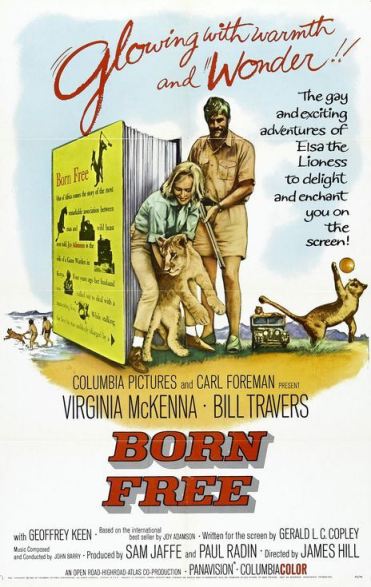
Poster for ‘Born Free’, 1966
Using their connections, Bill and Virginia helped the two young Aussies arrange for Christian to be flown out to Kenya, the departure from Heathrow taking place in the summer of 1970.
Once in Africa, Christian was taken under the wing of George Adamson who was now working at the Kora National Reserve. George’s Swahili nickname was ‘Baba ya Simba’; which translates as the father of lions.
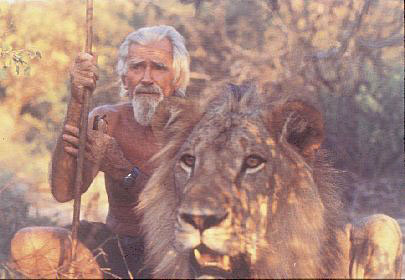
George Adamson whose life and work was portrayed in ‘Born Free’
*
Once on the reserve the urban cub was introduced to a natural pride of lions, leaving Anthony and John to bid a sad farewell to their extraordinary pet.
Unsurprisingly, the two Australians could never forget Christian and were given regular updates by George Adamson. A year later, in July 1971, the pair decided to return to Kenya to have a peek at how their old feline flatmate was faring in his new terrain.
Escorted by George Adamson, the pair were taken out into the Savannah where Christian’s pride were roaming… the recording of what happened next has become the stuff of legends:
Tragically, George Adamson, who had overseen Christian’s return to nature, was murdered by poachers in 1989.
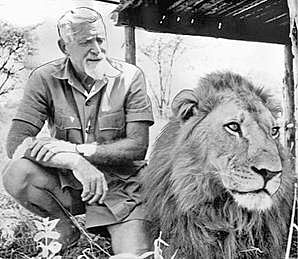
George’s last recorded sighting of the famous lion was in 1974, by which point Christian had fathered cubs of his own… who knows, maybe today the descendants of the lion cub from Harrods are out there somewhere in Kenya, still roaming free….






 View from the Mirror