Eerie Enfield… A Poltergeist Comes to North London
A Halloween Special
With Halloween upon us, I think now would be the ideal time to indulge in one of London’s most perplexing ghost stories…

What you are about to read is far removed from traditional tales of headless spooks and Victorian séances… this account is very much a modern-day haunting; a deeply disturbing series of events which occurred at a modest, north London council house during the late 1970s…
The Enfield Poltergeist
Green Street is an unassuming residential road in an area called Brimsdown; part of the London Borough of Enfield.

Map depicting location of Green Street, Enfield- please click to enlarge.
If you’ve ever ridden the Stanstead Express, you will have passed Brimsdown without even knowing it- at the eastern end of Green Street there is a level crossing, through which trains regularly whisk between Stanstead airport and Liverpool Street station.
Blink and you’d miss it…
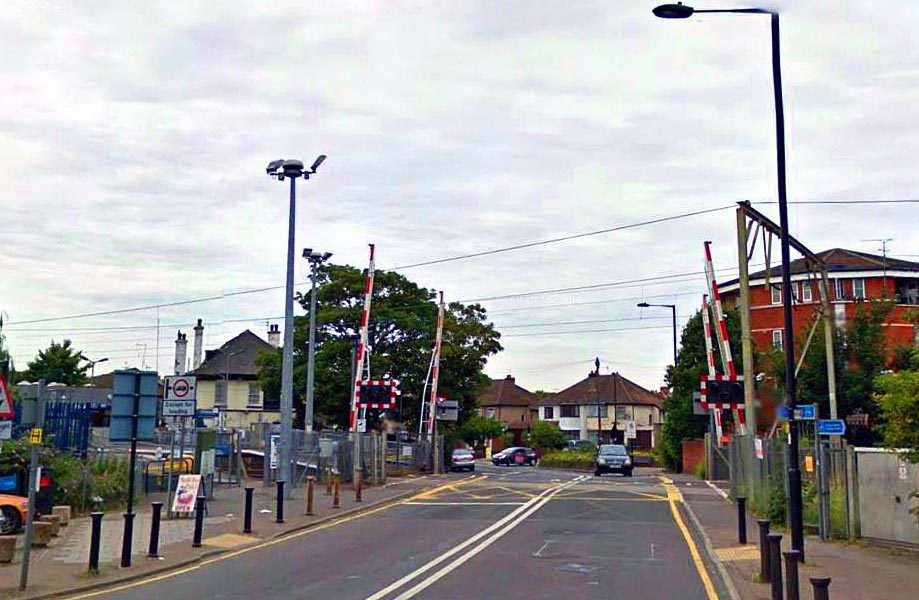
Green Street’s level crossing (image: Google).
In the 1970s, Green Street was home to Peggy Hodgson; a single mum with four children: Margaret (aged 12), Janet (11), Johnny (10) and Billy (7).
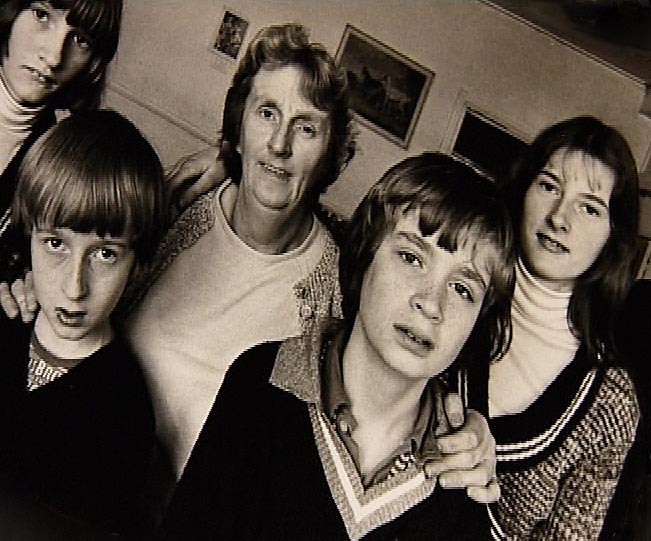
The Hodgson Family.
It was on the evening of August 30th 1977 that weird things began to happen in the Hodgson’s Enfield residence…
Upstairs, in one of the bedrooms, the children were alarmed to feel their beds wobbling.
Janet called down to her mum- but Peggy, understandably, suspected that her kids were mucking about and shouted back up at them to settle down and get to sleep.
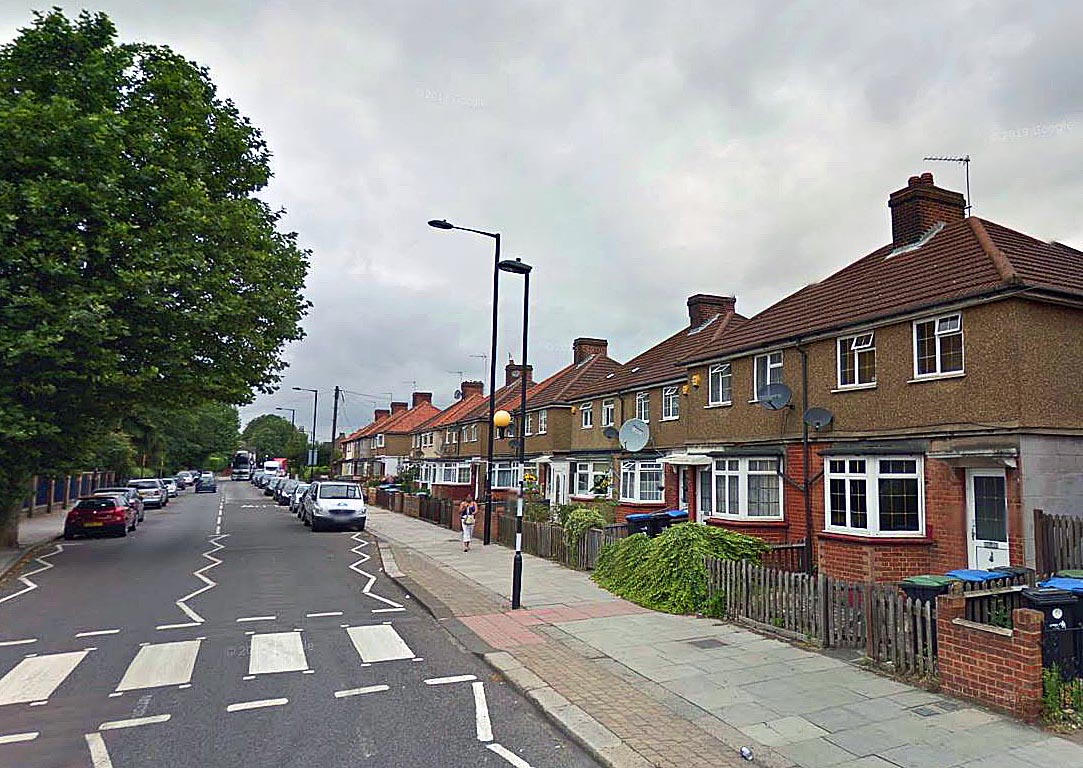
The section of Green Street which was home to Peggy Hodgson and her children (image: Google).
The following night at around 9.30pm, Peggy heard a loud crash.
Assuming her children were once again up to mischief, she stomped upstairs to administer a scolding.
As she entered the bedroom with orders to “pack it in”, Peggy spotted a chest of drawers being hauled forward by its own accord.
Instinctively, she attempted to force the furniture back- but was thwarted by an unseen force, which appeared to be pushing its might against her- rather like two opposing magnets.
Next came the noises; odd knocks and taps which started to rap around the house.
Scared witless, the family hastily donned their dressing gowns and slippers and fled, seeking refuge with their next door neighbours, the Nottinghams.
Head of the Nottingham household was Vic; a roofer by trade whose tough demeanour and practical nature made him the ideal candidate to inspect the strange goings on.
Hoping to calm his terrified neighbours, Vic ventured into the house- he later described his experience in a 1978 radio documentary:
“All I could here was this knocking… and I didn’t know what it was; no idea what it was; just a strange knock on the wall.
I went up the stairs and this knock followed me; three distinctive knocks on the wall. I carried on up the stairs into the front bedroom and there were three knocks on the wall again… strange I thought to myself. I’m beginning to shake.
I go into the back bedroom… same thing again; the knocks followed me.
Anyway, being in the building game I thought to myself, well I’ve got to have a look around the house; be brave like to try and find out what it is. So I go through all the pipes- no airlocks, nothing like that- and it wasn’t a knock like that anyway; it was a distinctive knock on the wall.”
Vic popped back next door and fetched his son and grandfather.
The three men positioned themselves at different rooms within the house- and each reported the distinctive knocks at their separate locations.
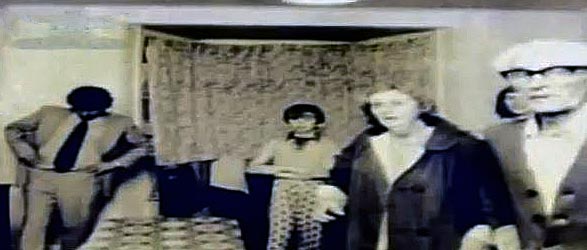
With even Vic spooked, the Green Street residents decided to phone the law- whose first question was “have you been drinking?”
Reluctantly, the police sent a squad car with two constables from nearby Ponders End.

The two police officers who visited 284 Green Street during the early hours of September 1st 1977.
The police too heard the distinctive knocking and, downstairs, WPC Carolyn Heaps witnessed a chair move unaided across the floor; something which she testified to in an official document- a brave move considering the possible ridicule from her friends and colleagues:
“On Thursday, 1st September 1977 at approximately 1am I was on duty in my capacity as a police woman when I received a radio message to Green Street, Enfield.
I heard the sound of knocking on the wall… there were four distinct taps on the wall and then silence.
Within a few minutes the eldest son pointed to a chair which was standing next to the sofa. I looked at the chair and noticed it was wobbling slightly from side to side. I then saw the chair slide across the floor towards the kitchen wall. It moved approximately 3-4 feet and then came to rest.”
Although sympathetic, the police had to inform the family that the ominous situation could not be classed as a police matter- after all, no crime had been committed…
*
The Poltergeist settles in…
Nervously, the Hodgsons returned to their home, but over the following months, the distressing activity would grow far worse… much of it witnessed by friends, neighbours, psychic investigators, council workers and news reporters.

The Hodgson children with a news reporter.
One phenomenon involved Lego bricks and marbles being hurled around the house at high speeds and odd angles- which, even more bizarrely, would stop dead still rather than bouncing when they landed. They were also hot to touch when picked up.
One journalist from The Daily Mirror was hit just above the eye by one of these small missiles- and received a small lump; a testament to the velocity at which the items were being hurled.

Soon, larger objects were being flung.
One reporter witnessed a t-shirt hop off of a table and fly across the room.
The living room sofa was seen to lift above the ground… and then spin around. The bulky television shuffled position and, in the children’s bedroom, a brick was wrenched away from the fireplace.

Aftermath of one of the Enfield Poltergeist’s many bouts of disruptive activity….
Puddles appeared and cups filled themselves with water.
Matches were scorched in their boxes and a pair of oven gloves self-combusted.
A mirror also caught fire… the charred remains of which were later collected by Turner-Prize nominee artist, Cornelia Parker, as part of her 1997 installation, ‘The Secret Life of Inanimate Objects’.
On one particular night, the BBC set up camp at 284 Green Street to capture audio evidence… only to later find that metal components in the machine had been bent and the recordings erased.
Terrified, Peggy and her children took to sleeping in the same room, where they would huddle together with the light kept on.

Billy, Janet and Margaret Hodgson.
*
Who ya’ gonna’ call?
In an attempt to garner some clarity, the editor of the Daily Mirror, George Fallows appealed to the Kensington based Society for Psychical Research to come and see if they could work out what was going on.

For the next 13 months, the Hodgsons and their haunted home were put under intense scrutiny.
The investigation was led by Maurice Grosse, a former military man and veteran of the Dunkirk evacuation.

Maurice Grosse (image: The Fortean Times).
After the war, Maurice had established himself as an inventor- his most successful patent being the rotating advertising board.
Tragically, in August 1976, his 22 year old daughter, Janet was killed in a motorbike accident. It was her death which led Maurice to join the Society for Psychical Research; no doubt as a way of helping to cope with his grief.
Although open to psychic phenomenon, Maurice’s background as an inventor meant that his mind worked in a scientific, methodical manner and as such he was considered the ideal analyst for the Enfield haunting.
He was soon joined by another experienced investigator; Guy Lyon Playfair who published an account of the haunting in 1980.
At first, Guy was reluctant to become involved; convinced that the whole thing was a hoax. However, when he arrived at the house, he soon changed his mind…

‘This House is Haunted’; Guy Lyon Playfair’s 1980 report on the Enfield Poltergeist.
By now, the events at Green Street had become even more intense.
As well as household objects being lobbed around, 11 year old Janet- who appeared to be the poltergeist’s main focus- was herself subjected to apparent levitations.
An example of this, which took place one morning at approximately 3am, was caught by an automatic camera which had been installed by the investigators:

Janet, apparently being hurled from her bed during the early hours of the morning. On a lighter note, a poster featuring David Soul (star of the 1970s cop show, ‘Starsky & Hutch) can be seen on the bedroom wall- he is one of the numerous celebrities I have met in the back of my cab!
On two occasions, two separate witnesses outside the house with a view towards the bedroom window, claimed they spotted Janet floating in the air.
The first sighting, which took place at around lunchtime on December 15th 1977, was attributed to Hazel Short; a lollipop lady who worked on the zebra crossing close to the Hodgson’s home:
“All of a sudden I heard a bang… and saw a book hit the front bedroom window and that was followed by a pillow, then the book, then the pillow again. All of a sudden, I saw Janet going up and down in front of the window- I thought she was jumping up and down on the bed, but when I looked she was horizontal going up and down with her arms and legs going everywhere; I suppose about half a dozen times. It was frightening… I didn’t think it would be, because to be truthful… I was a bit sceptical… well after that I wasn’t.”

Green Street’s zebra crossing, from which lollipop woman, Hazel Short claims to have spotted Janet Hodgson levitating (image: Google).
The second witness was John Rainbow, a baker delivering bread to the school opposite.
“Before that day I would never had believed anything about it although I had heard various rumours about what had been going on in the house.
The child appeared to float around the room- at the same time the curtains were blowing into the room as if there were a draught- although the windows were completely closed… articles and the child appeared to be revolving around the room in a clockwise direction.
The child’s arm banged against the window twice and I was frightened that the force she banged against it- that the window frame would’ve gone- I fully expected her to drop onto the road. I was frightened, there’s no doubt about it.”

Janet slumped over a cabinet following another supposed levitation.
*
Even more disturbingly, the poltergeist was supposedly beginning to talk through Janet…

The young girl, who also suffered from alarming seizures, would often adopt a deep, gruff voice which identified itself as belonging to a mysterious figure called ‘Bill.’
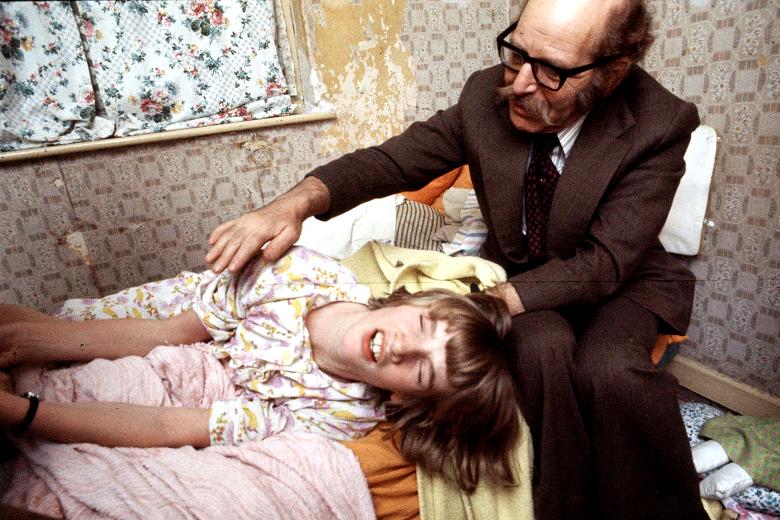
Maurice Grosse attempting to calm Janet as she suffers a seizure.
Janet would speak in the gravelly, menacing voice for hours at a time.
In one experiment, she was made to hold a quantity of water in her mouth… yet the voice still came through.
Further vocal tests were carried out by a Professor from Birckbeck College (now part of the University of London) who concluded that it was next to impossible to speak at length in such a way due to the damage such speech would cause to the vocal cords.
The academic also stated his belief that Janet was not producing the voice consciously.
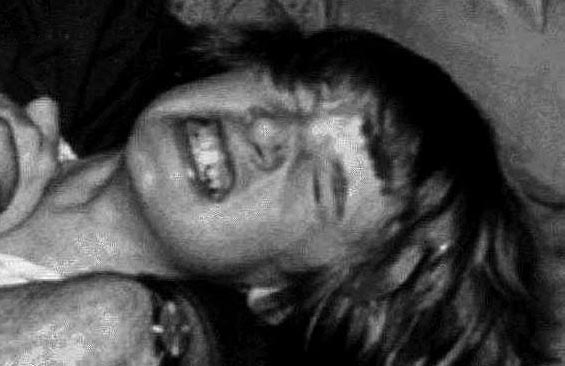
Janet in the depths of a trance…
Unsurprisingly, some sceptics accused the 11 year old of ventriloquism- which led Maurice Grosse to offer a £1,000 reward for anybody who could replicate a similar voice.
There were no takers.
*
With his often foul language and grumpy attitude ‘Bill’ made for a very sinister houseguest.
In one session- which, like many others, was caught on tape- Bill, speaking through Janet, stated that he had once lived and died at the Green Street home.
However you chose to look at it, the description of death which the supposed entity provides is most disturbing when you remember that it is being spoken by an 11 year old girl:
“Before I died I went blind…then I had a hemorrhage and I fell asleep and I died in a chair in a corner downstairs…”
This statement can be heard in the excerpt below… although please be warned, it is likely to send a chill down your spine…
Three years after the main events of the haunting, the Hodgson family were contacted by a man who claimed that his father- William (aka ‘Bill’) Wilkins had indeed lived in the house years before…and had died of a brain hemorrhage whilst resting in an armchair…
*
By the autumn of 1978 the hauntings began to die down.
However, the knocks and taps continued and there was a further burst of activity during the summer of 1980.
Following the haunting, the lives of the Hodgsons were far from blessed.
Johnny died of cancer aged just 14 and Janet lost a baby son to cot death when she was 18.
Speaking in 2007 Janet (then in her early 40s) said in a rare interview;
“I know from my own experience that it was real… it lived off me, off my energy. Call me mad or a prankster if you like. Those events did happen. The poltergeist was with me- and I feel in a sense that he always will be.”

Janet Hodgson today.
*
The presence remains…
In 2003, Peggy Hodgson died and the Green Street home was taken over by Clare Bennet who, like Peggy, was a single mum with four children- although in this case they were all boys.
Of her time at Green Street, Clare said that she frequently felt a presence; as if she were being watched- at first, she had no idea of the home’s dubious history.

284 Green Street…
Her boys would sometimes wake up in the middle of the night, saying that they could hear voices downstairs.
One of the lads; 15 year old Shaka, claimed he was woken up in the middle of one night and confronted by a ghostly vision of a man standing in the room.
The Bennets stuck Green Street for just two months…
*
Inspired Fear
In 1992, the case of the Enfield Poltergeist inspired a controversial BBC drama entitled Ghostwatch which was broadcast on Halloween night that year.

Starring Craig Charles, Sara Greene and Michael Parkinson, Ghostwatch bore many similarities to the Enfield case- it was set in an ordinary council home in suburban London (Northolt in this case) and centred on a single mum and her two daughters who were being tormented by a malevolent poltergeist- the evil spirit of a man who had died in the house years before.
Although a scripted, pre-filmed drama, Ghostwatch was made to appear as if it were an actual investigation, being broadcast live… and many people, thanks to the documentary nature of the show and the presence of the usually reassuring Michael Parkinson, tuned in half way through and believed the events depicted to be very real!

Michael Parkinson, pictured in the ‘live’ Ghostwatch studio, 1992.
The BBC switchboard was jammed with phone calls from petrified viewers… and people across Britain were reduced to nervous wrecks, unable to sleep soundly for many nights afterwards.
Ghostwatch has never been repeated on British television since.
***
An Atrocity at the Adelphi
Located on the Strand and originally dating back to 1806, the Adelphi Theatre (currently hosting a run of ‘The Bodyguard’) harbours a rather sinister story…
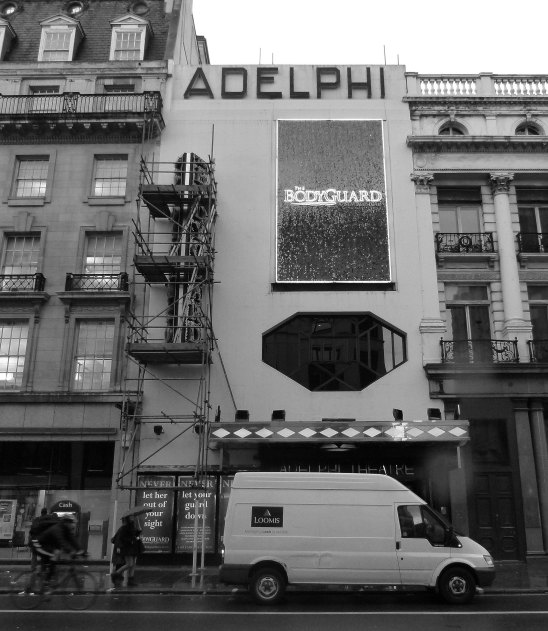
The Adelphi Theatre
At the centre of this drama is William Terriss; a Londoner born in 1847 who was educated at a school attached to Tottenham’s Bruce Castle.
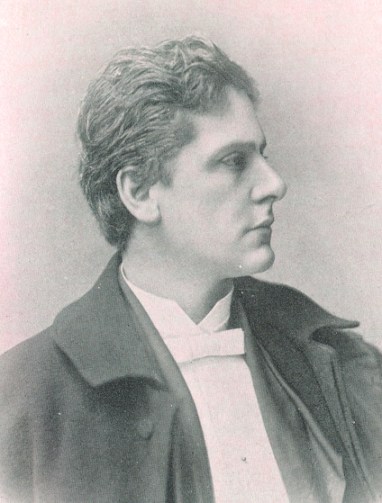
William Terriss pictured in 1896.
William’s early shots at establishing a career were adventurous to say the least, including stints in the Falklands where he farmed sheep, the States where he mined silver and Bengal where he cultivated tea.
After this incredibly varied graft, William eventually returned to London in 1886 where, being a good-looking chap with a dashing manner and harmonic voice, he decided to give the acting game a go.
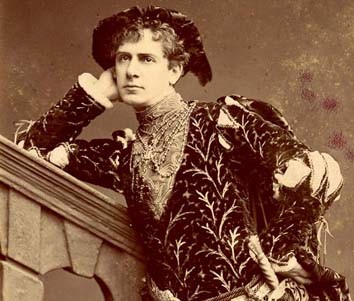
William Terriss in acting mode (image: Wikipedia)
When it came to treading the boards, the former Tottenham lad proved an instant success, quickly achieving a level of fame which was on a par with today’s celebrity culture.
Along with his immense popularity, Terriss was also noted for his tireless generosity and capacity to help others.
An extreme example of this was demonstrated when he turned up for work at the Adelphi one evening dripping wet. William made no mention of why he was in such a soaked state and it was only later that his puzzled colleagues discovered the reason… the actor had plunged into the Thames to rescue a drowning child.
*
One person in particular that William bent over backwards to help was Richard Archer Prince; a young actor struggling to make the big time.
Kind hearted as ever, William Terriss took the wannabe thespian under his wing, lending him cash when required and securing bit-parts in his shows.
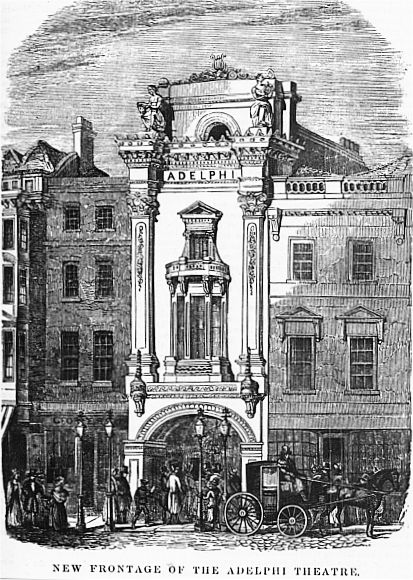
The Adelphi in days of old…
Prince however was an erratic character whom many others steered well clear of. A heavy drinker, his violent unpredictability earned him a dubious nickname…‘Mad Archer.’
Despite the support from his mentor, Prince gradually became extremely envious and fiercely resentful of Terriss. Fantasising that he was the better artist, Mad Archer despised the fact that his benefactor always received top billing.
These dangerous delusions came to a tragic head in the December of 1897…
On the evening of the 16th, a horse-drawn Hansom cab rattled along the cobbles of Maiden Lane, coming to a halt outside the Adelphi’s rear stage door.

Covent Garden’s Maiden Lane…
The punter on board was William Terriss, who stepped out, paid the cabbie and dug the special key out of his cloak which would provide access to the theatre’s private entrance.

The Adelphi stage door on Maiden Lane.
Before he had a chance to unlock the door however, a figure pounced out of the gas-lit shadows… it was Mad Archer himself who, without warning, launched at William, stabbing the Victorian celeb several times.
Following the scuffle, a crowd quickly gathered and the famous performer was rushed inside the theatre.
Doctors were sent for from nearby Charing Cross Hospital (now a police station on Agar Street), but it was to no avail- William Terriss was dead within minutes.

The former Charing Cross Hospital (image: Google Streetview0
Restrained by the growing mob, the murderer made no attempt to escape and sat quietly awaiting his arrest. He was marched off to a cell on Bow Street, apparently telling the cops that Terriss “knew what to expect from me.”
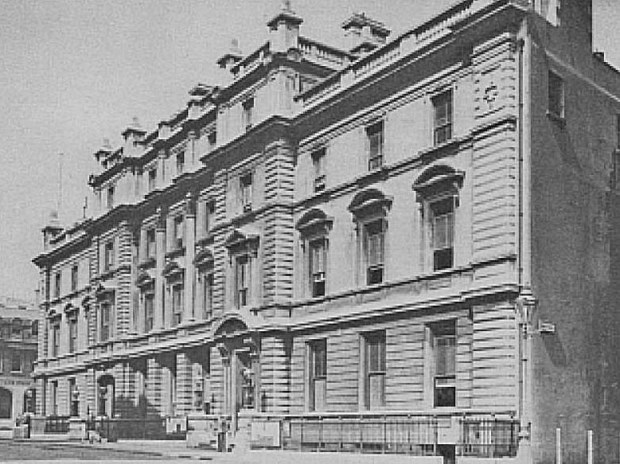
Bow Street court and police station (image: Old Bailey online)
The murder shook Victorian society and, at the trial, Prince made the baffling claim that William had prevented him from advancing his career.
The jury were quick to find the culprit guilty- although he was spared the noose thanks to the conclusion that he was not of sound mind.
The disturbed bit-player spent the remainder of his days incarcerated in the Broadmoor asylum for the criminally insane, where it is said he liked to write and produce plays in which he always placed himself in the leading role…
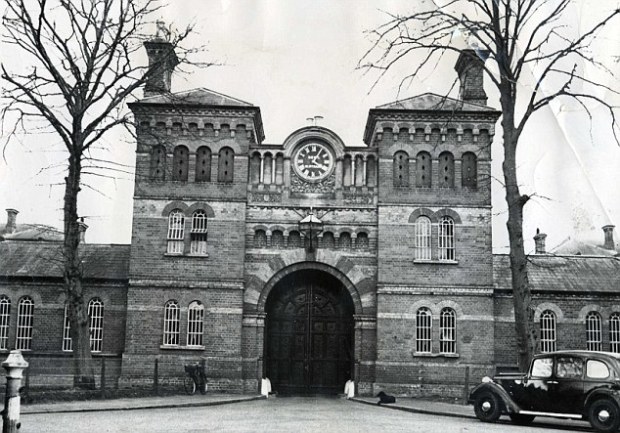
Broadmoor Psychiatric Prison, Berkshire…
*
William Terriss was laid to rest at Brompton Cemetery; the service attracting over 50,000 mourning admirers.
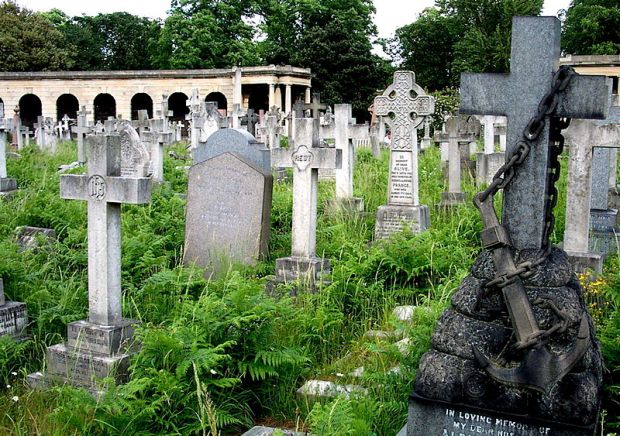
Brompton Cemetery (image: Wikipedia).
Legend has it that his ghost now haunts Covent Garden tube station (in William’s day, his favourite bakery stood on the Long Acre site, the station being built 10 years after the murder).

Covent Garden Tube station, Long Acre.
The first sighting of the phantom was reported in 1955, when a ticket collector allegedly spotted the shimmering actor, donned in an opera cloak with cane In hand, pass through a closed door.
Over the next few years, the ghost was spied on numerous occasions in the staff cafeteria…and, although the last recorded sighting was in 1972, tube workers still sometimes report bizarre, unexplained noises in the dead of night….
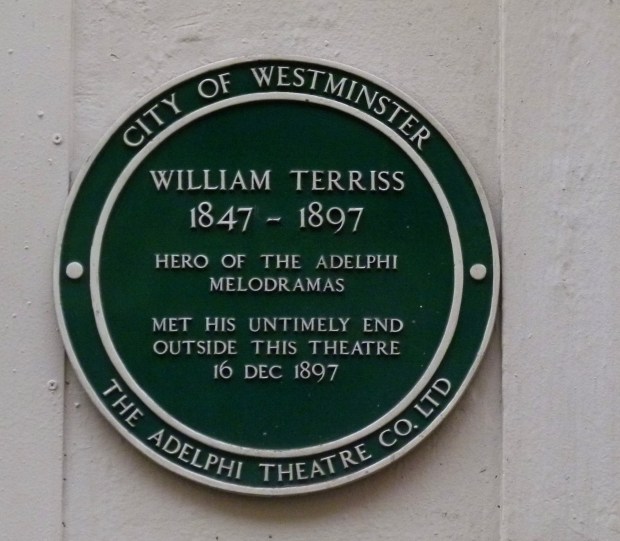
Plaque on Maiden Lane commemorating the murder of William Terriss.
Droogs About Town: London Locations Featured in ‘A Clockwork Orange’
Released in 1971 and directed by Stanley Kubrick, A Clockwork Orange was by far one of the 20th century’s most controversial films.

Poster for A Clockwork Orange
Based on Anthony Burgess’ 1962 novel of the same name (the title being inspired by the old Cockney phrase “as queer as a clockwork orange’), the story is set in a dystopian London of the near future and centres on Alex DeLarge–a sadistic youth with a passion for Beethoven- who leads his gang of ‘droogs’ through the city on nightly sprees of ultra-violent mischief.
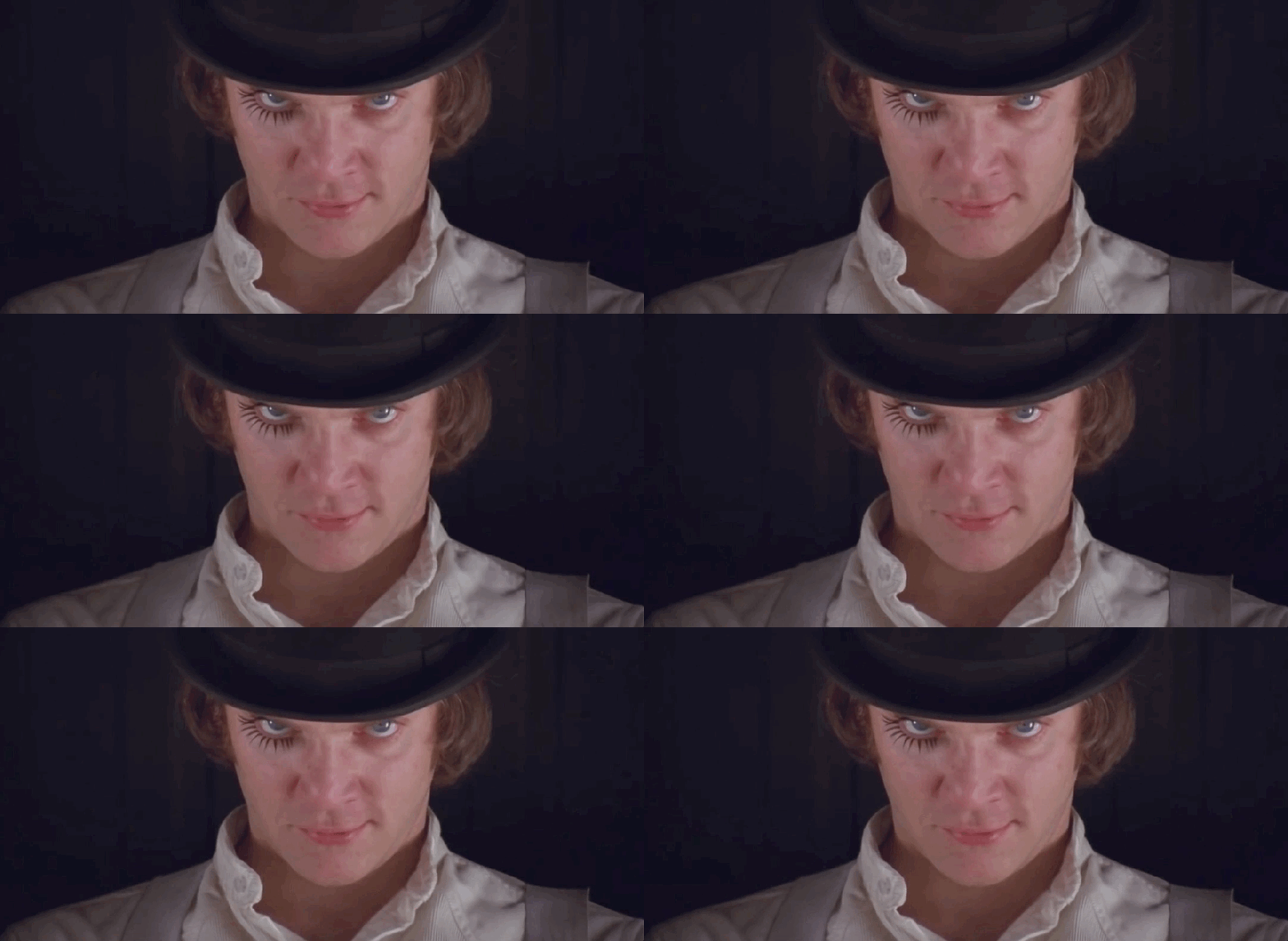
Alex De Large stares at the camera in the film’s iconic opening shot…
After committing murder, Alex is finally locked up… but is soon offered a quick way out when he agrees to act as a guinea pig for the Ludovico Technique; a controversial brain-washing programme designed to suppresses the desire for violence (and something which caused actor Malcolm McDowell great pain and discomfort when it came to portraying these disturbing scenes).

Alex undergoing the Ludovico Technique
In Britain, thanks to high levels of upset whipped up in the press, the film version of A Clockwork Orange gained such an intense notoriety that Stanley Kubrick himself withdrew his work from circulation; a self-imposed ban which remained right up until 2000.
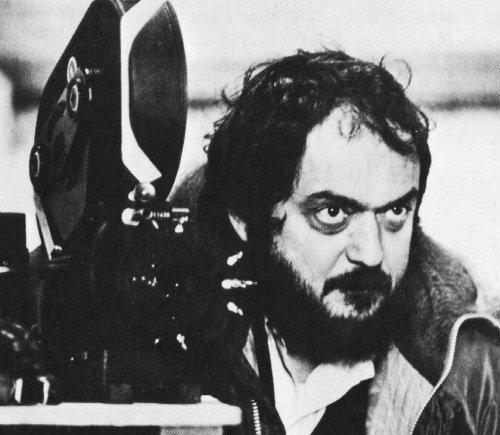
Stanley Kubrick
So strict was this embargo that, in 1993 when the Scala Cinema in Kings Cross attempted to screen the film, Warner Brothers took the owners to court; an action which led to the cinema going bust thanks to the immense legal costs involved.


Considering A Clockwork Orange was filmed entirely around London and the Home Counties (including areas such as Borehamwood, Kingston-Upon-Thames, Elstree, Radlett, Brunel University, Bricket Wood and Wandsworth prison) it’s rather ironic that British audiences were forbidden from viewing Kubrick’s film for so many years.
Here are some of the film’s most prominent London-based scenes:
The Chelsea Drugstore
Whilst Alex’s nights are spent committing all manner of horrific acts whilst tanked up on drug-laced milk, his days are rather more civil… devoted to indulging his love of classical music; especially that of the “lovely, lovely Ludwig Van” Beethoven.
In one of the film’s scenes, we follow Alex, decked out in his dandiest threads as he peruses his favourite record shop (click below to view):
This scene was filmed in the basement of the Chelsea Drugstore; a modern building fashioned from glass and aluminium which opened on the King’s Road in 1968.

The Chelsea Drugstore (Image: Royal Borough of Kensington and Chelsea)
Open 16 hours a day, 7 days a week, the Chelsea Drugstore was an avant-garde, mini shopping mall, its three floors boasting eateries, boutiques, a record shop, bar, newsagent and chemist.
It also boasted its own ‘Flying Squad’… an exclusive team of women clad in purple castsuits who were employed to make unconventional home deliveries on their fleet of motorbikes. Groovy!
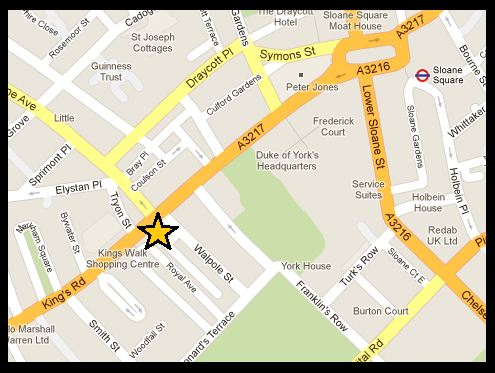
Map showing the location of the former Chelsea Drugstore.
The Chelsea Drugstore was also name checked in The Rolling Stone’s 1968 hit, You Can’t Always Get What You Want.” (Speaking of The Stones, Mick Jagger was once earmarked to play Alex DeLarge in an earlier proposed adaptation of Burgess’ novel which never came to fruition…)
Although the Chelsea Drugstore ceased trading in 1971, the shops in the basement (as featured in A Clockwork Orange) remained in place until the late 1980s whilst the rest of the building became a wine bar.
Today, the building is occupied by the Chelsea branch of McDonalds.
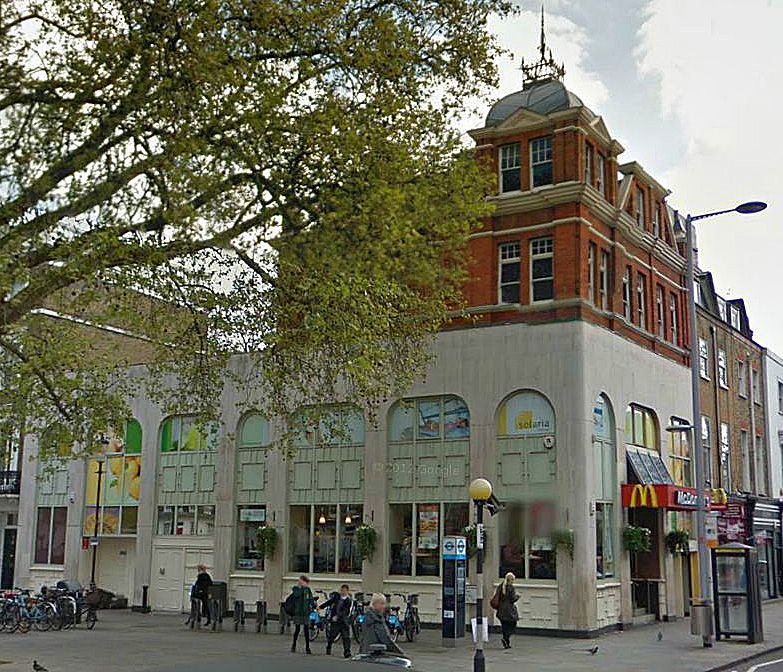
The building which once housed the Chelsea Drugstore… now a McDonalds. (Image: Google Streetview)
*
Thamesmead
Despite the inclusion of the psychedelic Chelsea Drugstore, A Clockwork Orange is mostly set against a cold, dystopian backdrop; a precedent set in Burgess’ original novel as the following excerpt, in which Alex and his gang are evading the police, atmospherically illustrates:
“Just round the next turning was an alley, dark and empty at both ends, and we rested there, panting fast then slower, then breathing like normal. It was like resting between the feet of two terrific and very enormous mountains, these being flatblocks, and in the windows of all the flats you could viddy like blue dancing light. This would be the telly. Tonight was what they called a worldcast, meaning that the same programme was being viddied by everyone in the world that wanted to… and it was all being bounced off the special telly satellites in outer space.”
In order to realise Burgess’ bleak, futuristic vision Stanley Kubrick turned to the modern, Brutalist architecture which was sprouting across London during the era in which the book and film were created; architecture which, as early as 1962, Anthony Burgess was already predicting would provide fertile ground for many unforeseen social ills.

1962 first edition for ‘A Clockwork Orange’ by Anthony Burgess
In Burgess’ novel, Alex lives in “Municipal Flatblock 18a”, a block daubed in obscene graffiti and plagued by vandalism.
To represent this domestic seediness, Kubrick took his film crew to the newly built Thamesmead Estate; a vast, sprawling development near Woolwich in South East London.
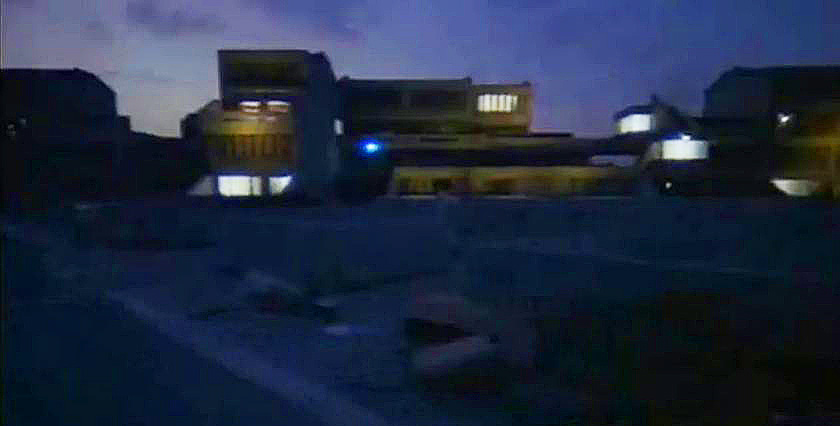
Screenshot of the Thamesmead as depicted in A Clockwork Orange…
Built on a former military site, the Thamesmead Estate, which was optimistically promoted as being the “town of the twenty-first century”, was built piecemeal between the 1960s and 1980s.

Thamesmead’s Binsey Walk, as featured in ‘A Clockwork Orange.’ (Image: Wikipedia)
One of the film’s most famous sequences takes place on Thamesmead’s Binsey Walk.
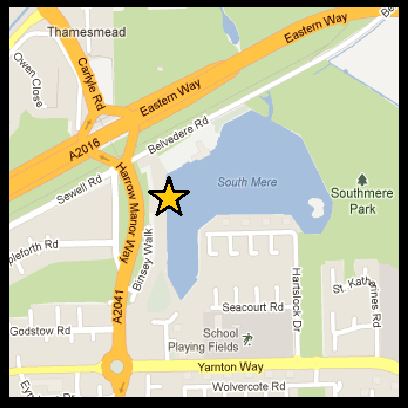
Map depicting location of Binsey Walk.
Walking alongside the man-made Southmere Lake Alex, whose leadership has just been challenged, decides to show his droogs whose really in charge (click below to view):
In recent years, the Thamesmead Estate has been used as a set for the E4 comedy, ‘Misfits‘.
*
York Road Roundabout, Wandsworth

Map depicting York Road Roundabout.
One of the most notorious scenes in Kubrick’s adaptation takes place at the very beginning of the film and involves a vicious assault on a hapless down and out as he lies drunkenly in a grimy, pedestrian subway.
The scene was filmed in the warren of walkways beneath York Road roundabout, which sits at the southern foot of Wandsworth Bridge.
Typical of the architecture of the time, York Road roundabout was laid out in 1969 and was pretty much brand new when Stanley Kubrick set up his cameras.
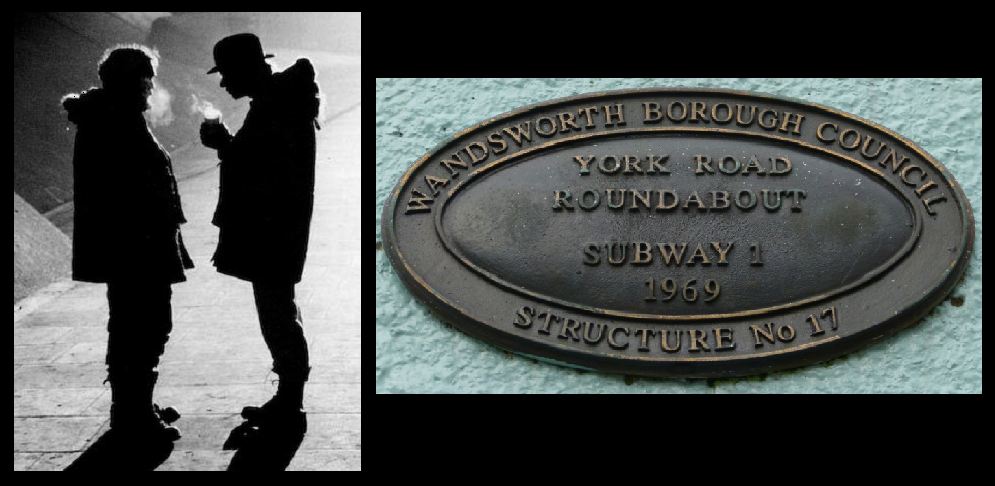
Stanley Kubrick with Malcolm McDowell on set below York Road roundabout, 1971 (image: Stanley Kubrick Archive).
Today, the labyrinth beneath the roundabout is just as bleak and unwelcoming as it was some 40 years ago…

The subway today…

Modern Droogs? York Road Roundabout subway, November 2012…
More recently, a large atom-esque sculpture of sorts has been plonked down on the roundabout, becoming something of a local landmark.
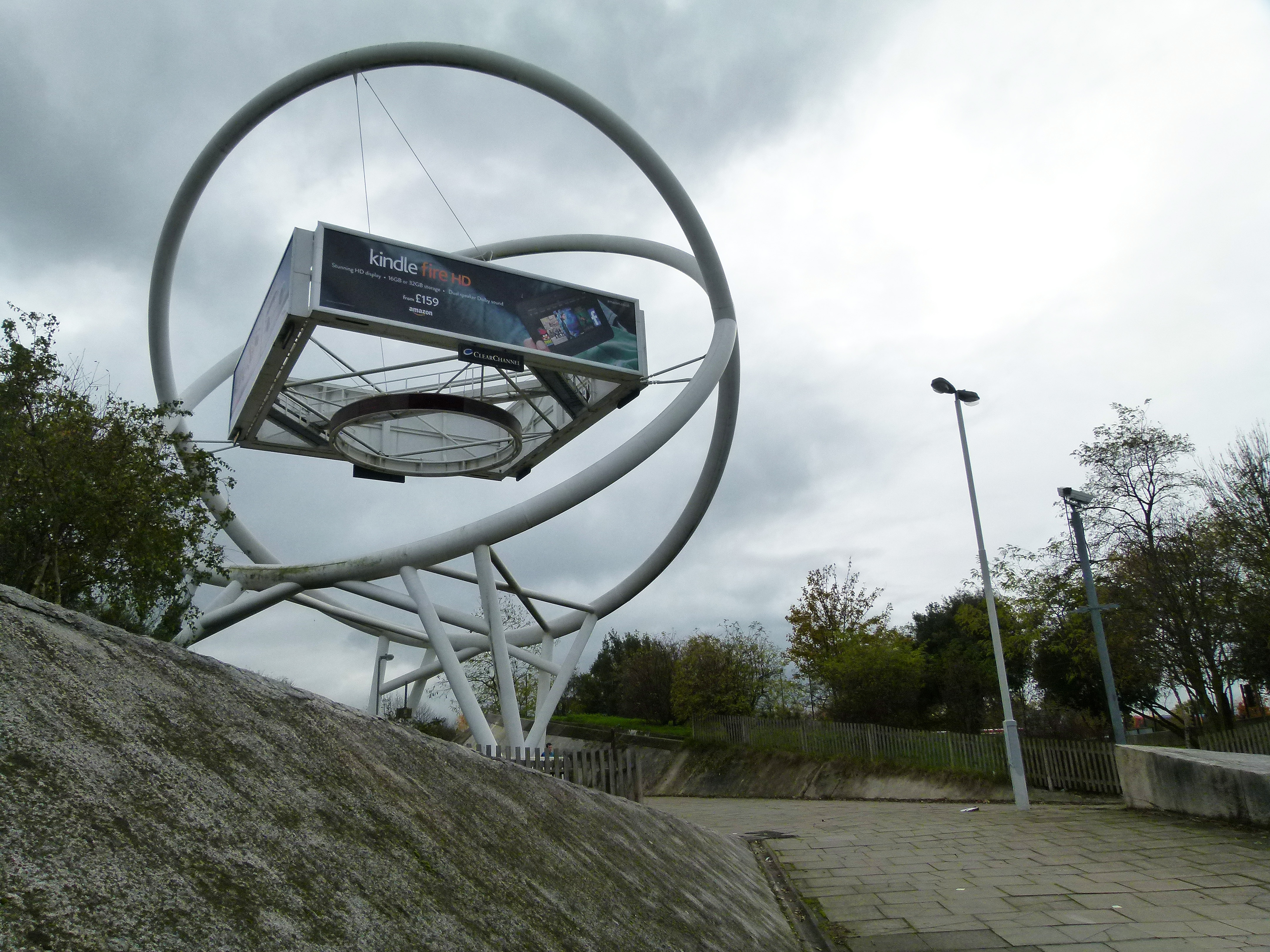
York Road roundabout’s atom sculpture.
Apparently inspired by the 1950’s Atomium sculpture in Brussels, but kitted out with a bulky and intrusive advertising gantry, the tangle of metal doesn’t really do much to beautify the 1960s concrete…
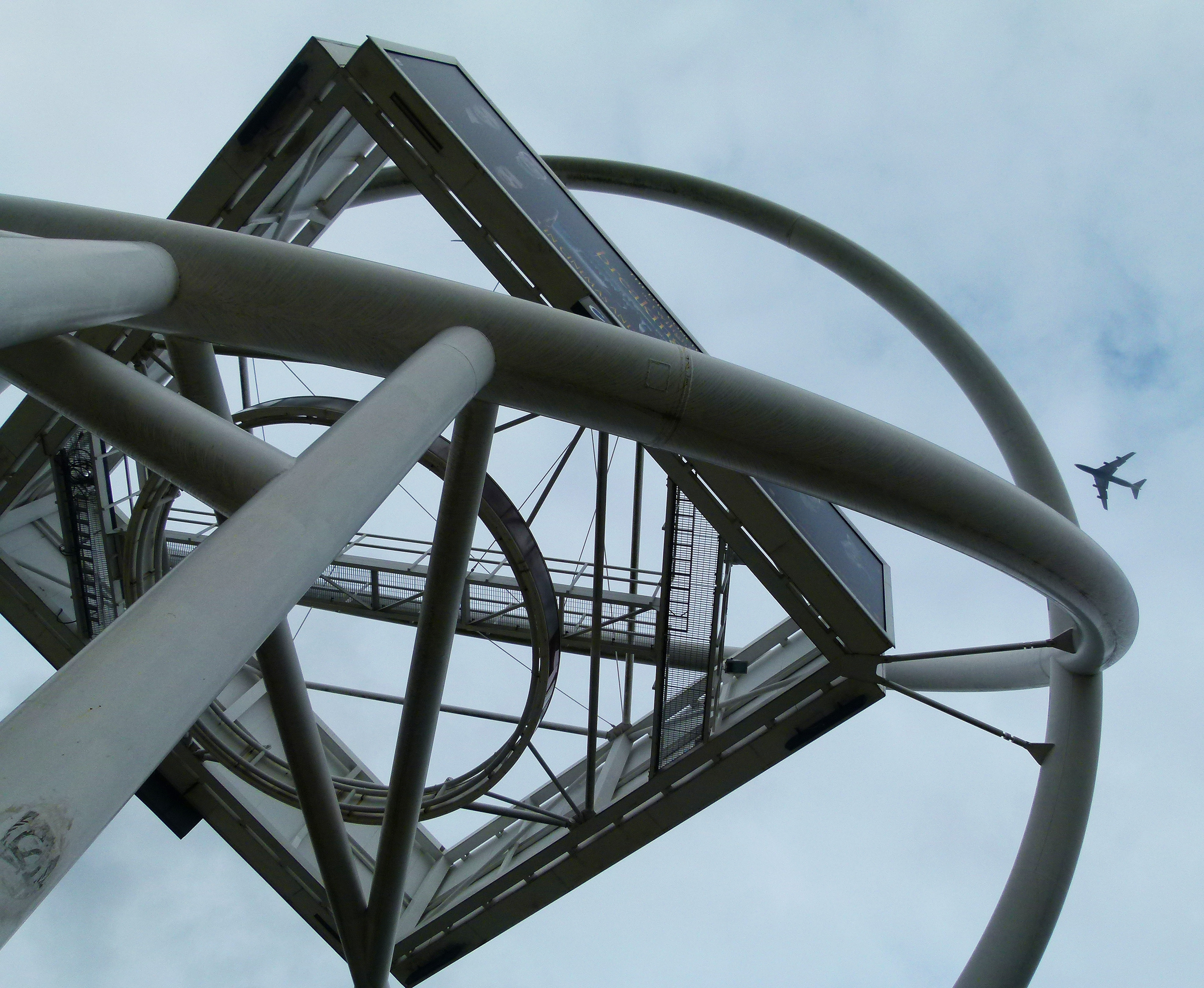
Looking up at the gantry.
*
Albert Bridge
As for the unfortunate tramp who was attacked by Alex and his droogs below Wandsworth’s grimy roundabout… don’t worry, he gets his own back…

Map of Albert Bridge
After recognising the recently released (and now, thanks to his treatment, defenceless) Alex DeLarge glumly contemplating a view of the Thames, the tramp leads his own rabble in a revenge attack on the former and now defenceless yob, right beneath Albert Bridge; one of London’s most beautiful river crossings (click below to view):
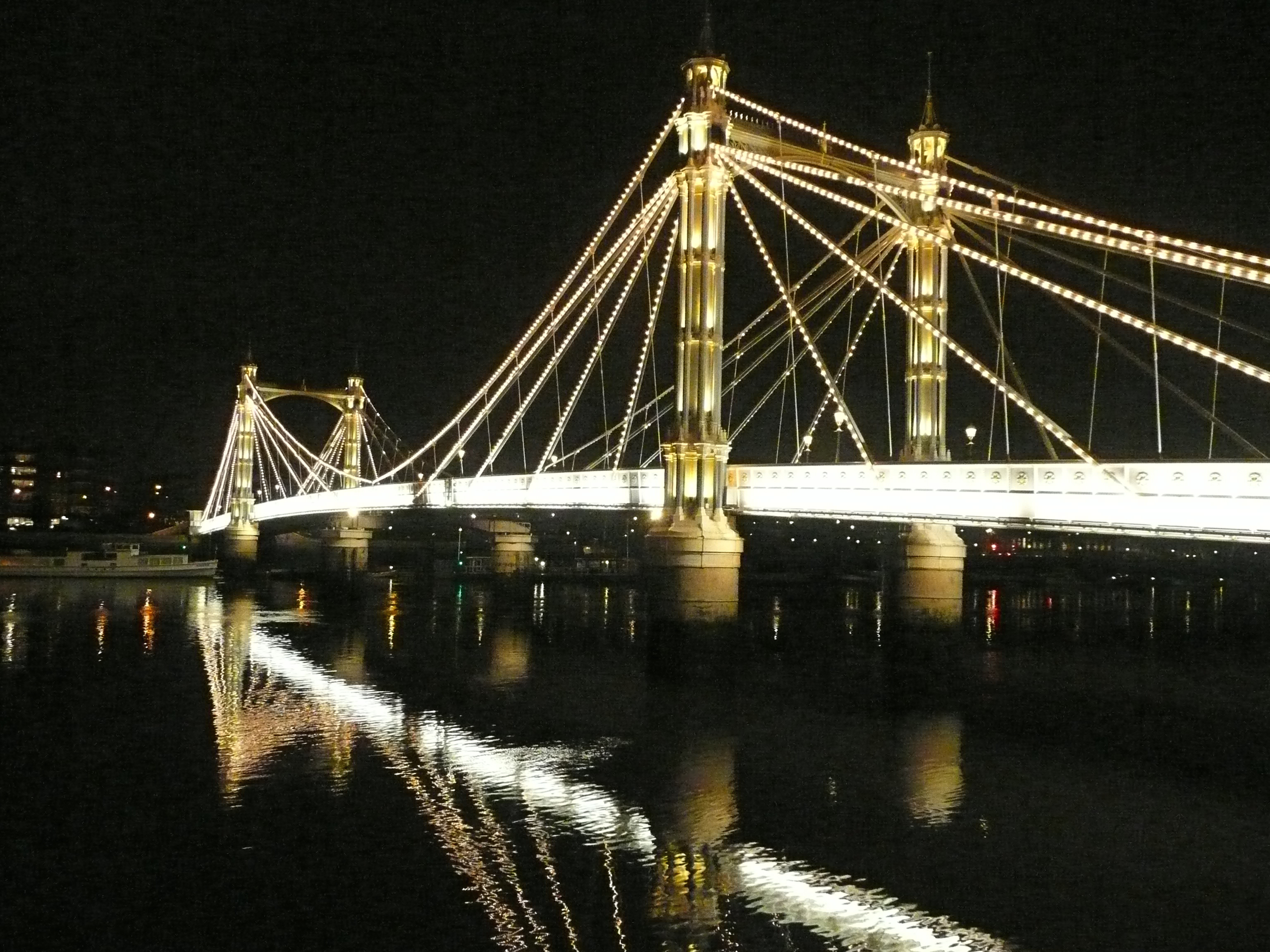
Albert Bridge… one of the more traditional sites uses in ‘A Clockwork Orange.’ (Image: Wikipedia)
*
Want more on Stanley Kubrick’s London? Then check out this post: A Monolith in St Katherine Docks…
***








 View from the Mirror