Cabbie’s Curios: Rotherhithe’s Royal Ruins
Tucked away close to the peaceful Cherry Garden Pier in Rotherhithe, there lies a modest, medieval ruin.

These remnants are all that is left of a royal manor house, originally commissioned by King Edward III around the year 1350.
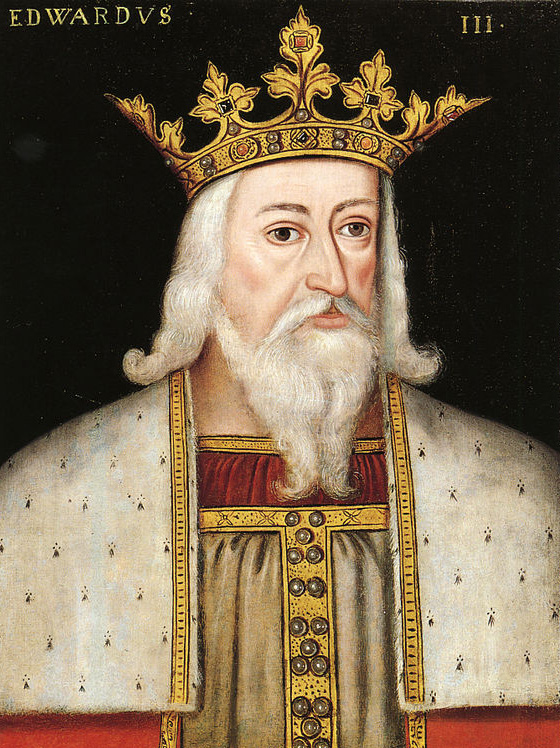
King Edward III (Reigned 1327-1377)
At the time, the land upon which the king chose to base his Rotherhithe mansion was in fact a marshy island, lying a short distance from the southern shore of the yet to be tamed Thames.

Satellite view of the site occupied by Edward’s manor house. In medieval times, the Thames was far wider here, thus creating a small island (Image: Google).
The small palace was well equipped for royal visitors, boasting private chambers, a kitchen and a large hall with ample room for a big, crackling fireplace.
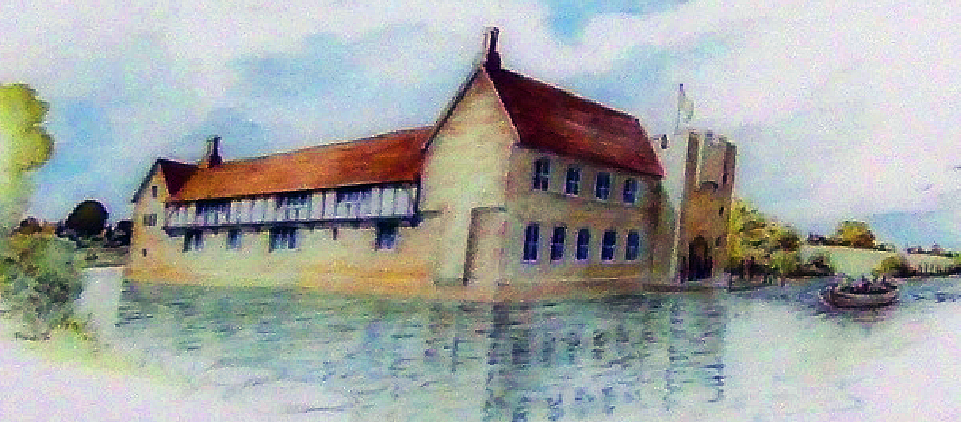
Artist’s impression of King Edward’s Rotherhithe retreat.
Accompanied by his entourage, King Edward would travel to Rotherhithe by boat, sailing across the Thames from the monarch’s main home at the Palace of Westminster, a journey of approximately three and a half miles.
It is generally understood that Edward used the country retreat as a place to indulge in his love of falconry; a sport in which he was highly accomplished.

Medieval falconers (Image: aboutfalconry.com)
A few years after Edward’s death, his grandson, Henry IV spent much time as a recluse at the lonely manor house. Suffering from a dreadful skin disorder believed to be leprosy, tragic Henry is said to have spent his time at the Rotherhithe retreat swathed in bandages.

Henry IV who, suffering from ill health, spent much time in Rotherhithe towards the end of his life.
By the 16th century land reclamation meant the small island was able to merge with the mainland. The receded water of the Thames was replaced by a neat moat; a feature which led to Edward’s old palace becoming known as the ‘moted place’.

The ruins of King Edward’s palace, looking towards London’s financial heart.
Sold by the Crown, the buildings were converted into a pottery works in the 17th century and, as London’s docks expanded, the building disappeared for good beneath clusters of hulking warehouses.
In 1839, the artist J.M.W Turner sat just in front of this spot, peering out across the Thames to paint The Fighting Temeraire.
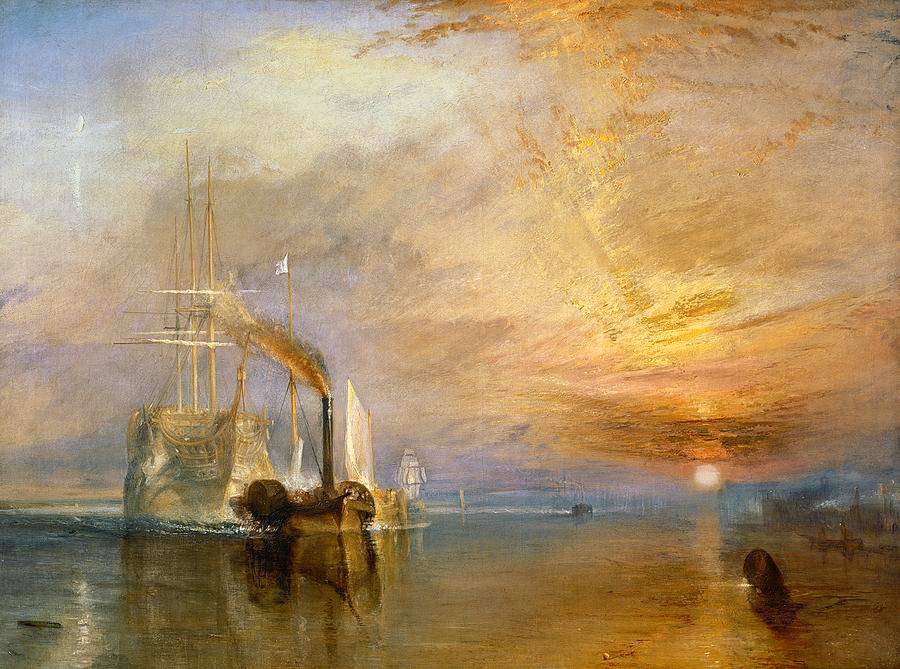
‘The Fighting Temeraire’ as seen from Cherry Garden Pier, Rotherhithe. Turner, 1839.
Rather like Edward’s old palace, this once mighty ship (which had fought in the Battle of Trafalgar) had seen better days, and was being towed to Rotherhithe to be broken up. The painting is now part of the National Gallery’s collection.
*
What was left of Edward’s manor house remained buried and forgotten until 1985 when the derelict docklands were undergoing extensive redevelopment. At Cherry Gardens Pier, it was the construction of a new housing estate which unearthed the ruins.

Sadly, due to bouts of vandalism, much of the historic structure has been purposely reburied for protection.
Such mindless behaviour has also soured a beautifully moving artwork known as Dr Salters Daydream which once stood opposite the palace ruins. I have devoted an earlier post to this sculpture; please click here to read.
Tobacco Dock: Wapping’s Ghostly Mall
Whilst studying ‘The Knowledge’ in order to achieve the goal of becoming a London taxi driver, one of the thousands of locations I noted during my travels was ‘Tobacco Dock’, a sizeable complex located in the historic riverside area of Wapping.

Considering I carried out my explorations late at night, I paid little attention to the fact that Tobacco Dock was locked and gated. It was clearly a shopping mall, and I simply assumed that the place had been secured for the evening.
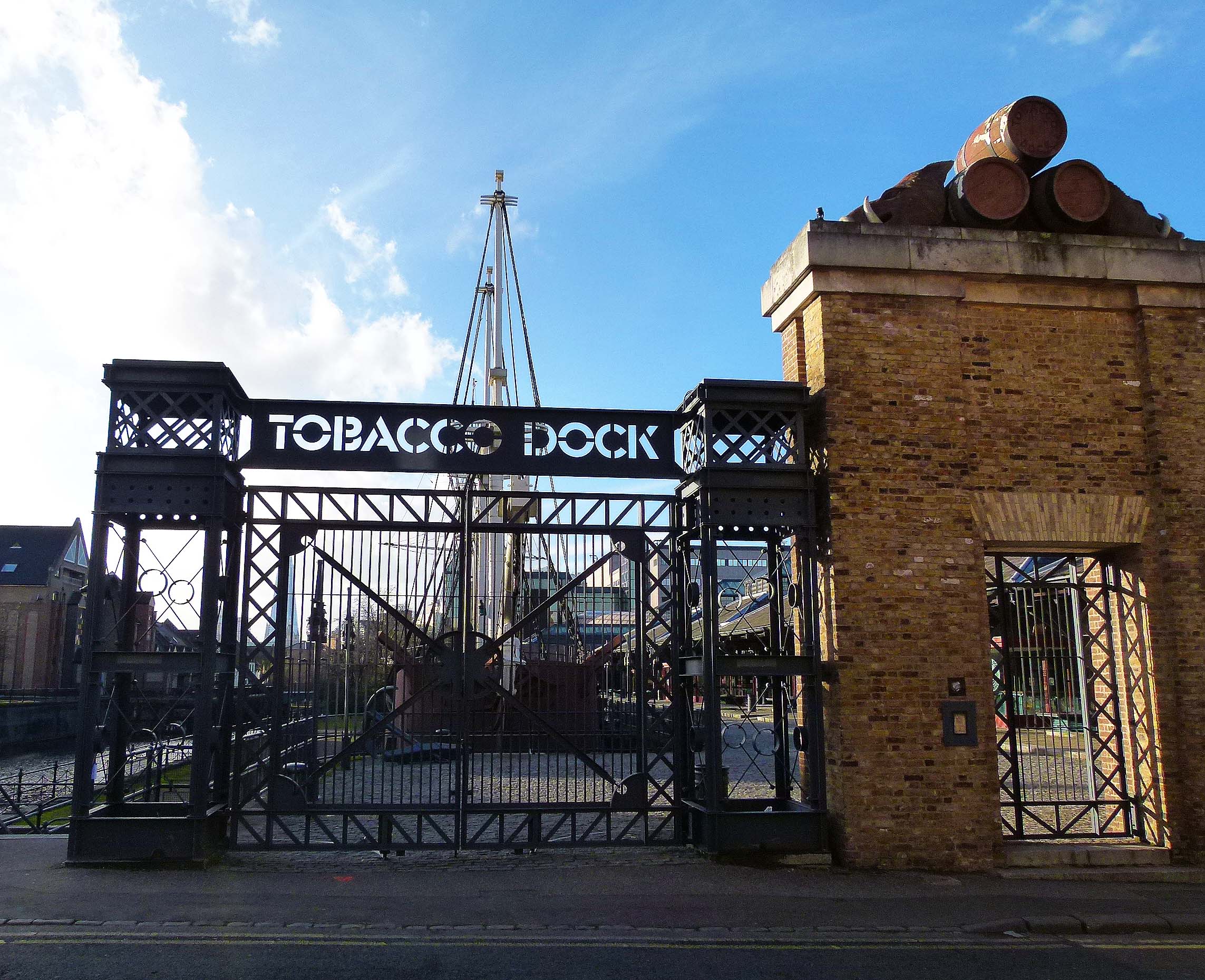
It was only when I became a fully-fledged cabbie that I discovered the unusual truth about the place… Tobacco Dock had lain defunct and eerily empty for many years; its time as a shopping centre having been an almighty flop…
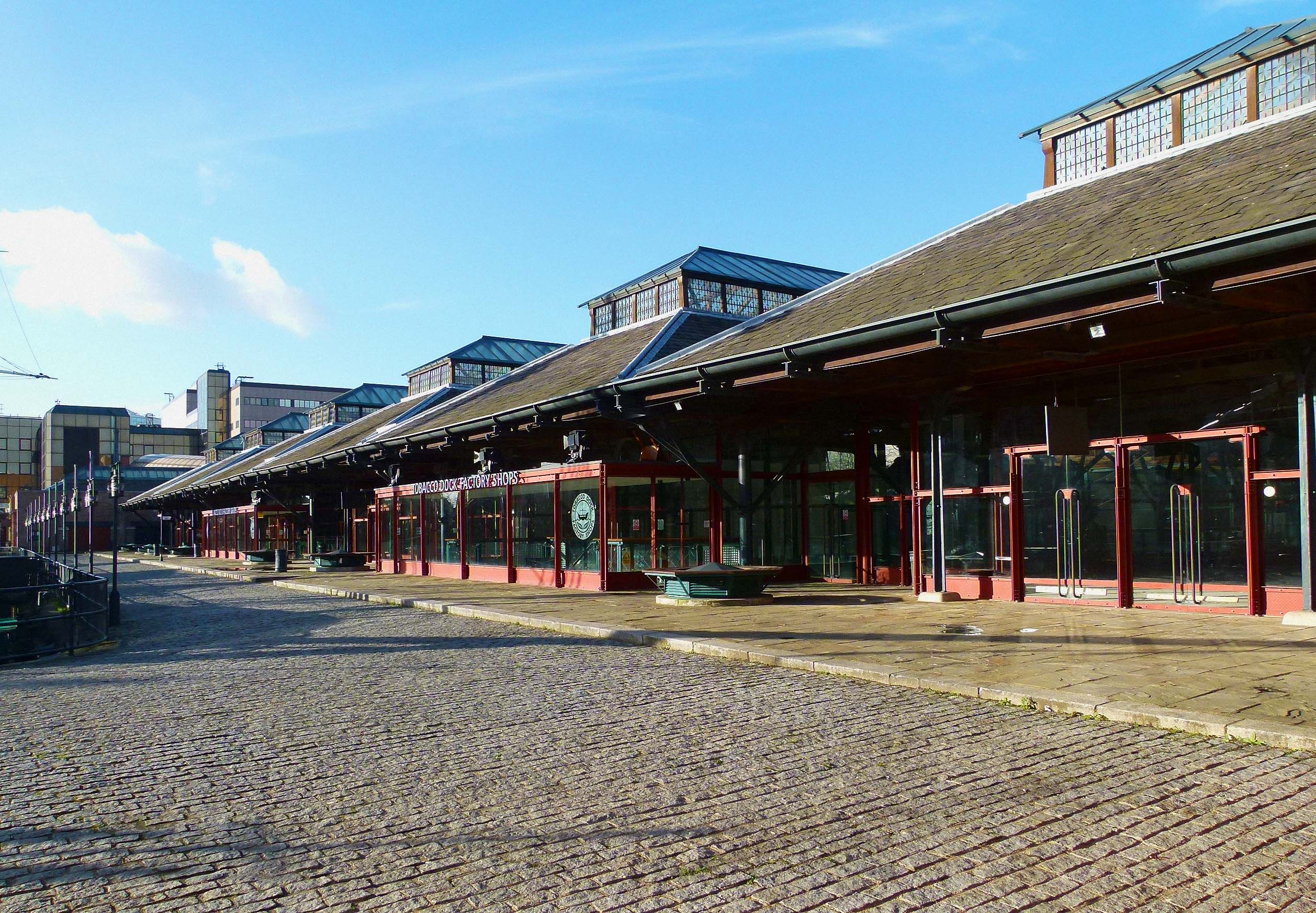
Deserted retail units at Tobacco Dock, photographed in 2013.
*
Tobacco Dock’s Origins
Tobacco Dock’s first incarnation was as a large warehouse, constructed in 1805 to serve London’s vast cargo shipping industry.

A 19th century map indicating the location of Tobacco Dock.
It was designed by Scotsman John Rennie, a specialist in such structures who also helped forge the dockyards of Liverpool, Dublin and Greenock.
Rennie was also the architect behind the pre-1971 London Bridge which now stands in Arizona’s Lake Havasu.

John Rennie and old London Bridge; now situated at Lake Havasu and a distant cousin of Tobacco Dock
As its name suggests, Rennie’s Wapping warehouse was primarily intended for stashing copious amounts of tobacco.
However, other vices- namely wine and brandy- also found a home alongside the stacks of flammable weed. Valuable animal furs- stored on what became known as the ‘Skin Floor’- were accommodated too, the warehouse eventually growing to encompass an area of 80,000 feet.
As was the norm with such riverside facilities, Tobacco Dock was encircled by a mighty brick wall to guard the precious goods from London’s many quick-fingered thieves.

Decay in the Docklands
With the advent of container ships and the deep-water port at Tilbury, Tobacco Dock finally closed its doors to seaborne trade in 1968 and, like the rest of London’s docklands, rapidly slid into ruin.
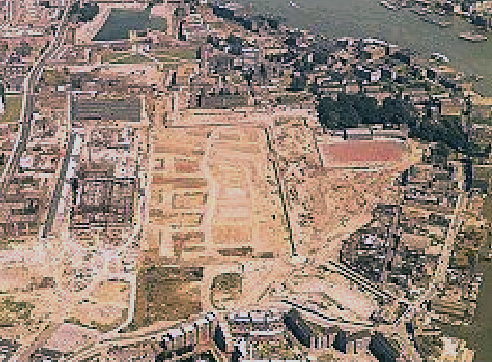
Wapping in 1981 (image: The LDDC)
Despite the dereliction, those in authority recognised the architectural importance of Tobacco Dock, granting it a Grade One listing in 1979 in order to guard against demolition.
Although officially protected, the building still found itself home to squatters, stray dogs and, according to a report from The Times, two dodgy mechanics who used the old dock as a base for an illegal lorry-dismantling scam.
The state of Tobacco Dock as it appeared around this period can be witnessed in the music video, Messages by Orchestral Manoeuvres in the Dark, who shot their promo amongst the corrosion in 1980 (click below to view):
The Covent Garden of the East End
In 1986, a scheme was launched to revitalise Tobacco Dock; to transform it into an exciting shopping destination bravely dubbed the “Covent Garden of the East End”.
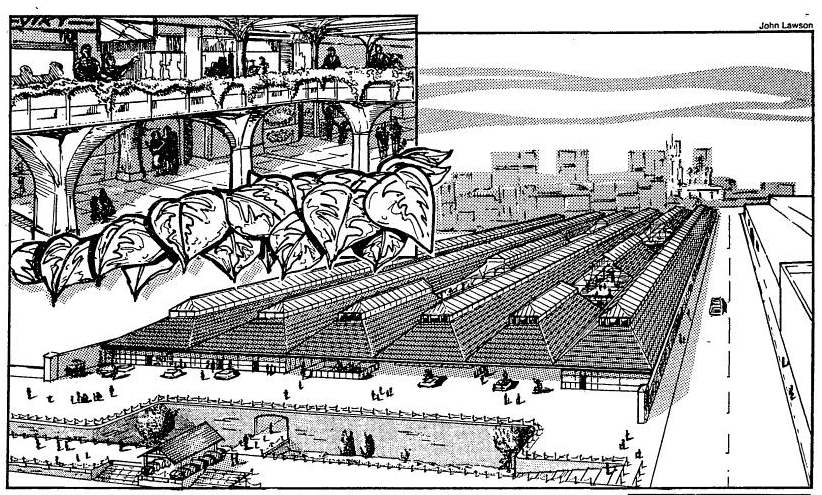
1986 artist’s impression of the Tobacco Dock revamp (image: Copyright Sunday Times)
Over the next few years and under the creative hand of architect, Terry Farrell (whose other projects include the remodelling of Charing Cross station) Tobacco Dock was transformed into a stylish shopping mall at a cost of £17 million, the scheme being greatly influenced by San Francisco’s ‘Fisherman’s Wharf’.

Fisherman’s Wharf, San Francisco (image: Wikipedia)
Thanks to the Grade One listing, the building was required to maintain Rennie’s original iron pillars and subterranean arched-brick vaults (which are believed to have been built by prisoners captured during the Napoleonic Wars).
However, early on in the refurbishment, Tobacco Dock’s owners, Lawrie Cohen and Brian Jackson found their project threatened by Rupert Murdoch who had been granted permission to demolish part of the old dock in order to expand the massive News International HQ which loomed next door.
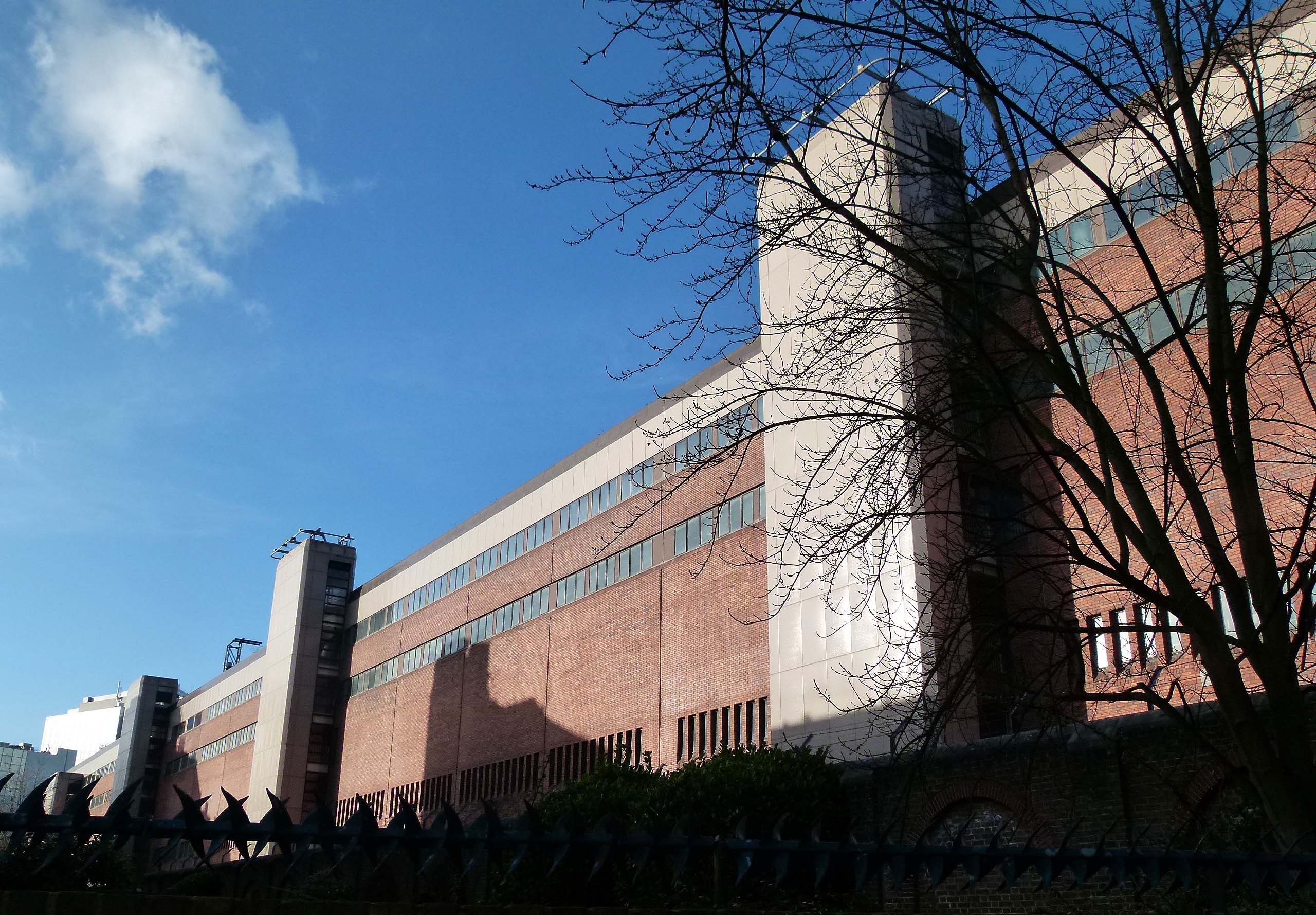
News International’s hulking print works which sit right beside Tobacco Dock.
Given just three months to come up with nearly half a million pounds to secure the threatened area, Lawrie and Brian were bailed out at the last minute by building contractor, Harry Neal.
*
Two years behind schedule, Tobacco Dock opened for business on March 22nd 1989, with units occupied by shops such as Next, The Body Shop, Monsoon and Just Facts (purveyors of Filofax; the ultimate Yuppie accessory!)
There was just one snag…
The shoppers and tourists failed to turn up.
An article published in a 1990 edition of The Sunday Times painted a grim picture:
“Yesterday in Tobacco Dock buskers played to empty vaults and shopkeepers stood in their doorways waiting for elusive customers.
Amjal Chaudhry, 31, who sells exotic jewellery and craftwork from one of the largest shops in the village was pessimistic. ‘In the last few months or so, few people have come by. We get about three or four a day. Today I took £30 in the till and it doesn’t cover the costs’, he said”.
*
Out of Reach
Commentators generally agree that Tobacco Dock’s primary fault was its location.
Although marketed as being a short walk from Tower Hill, the stroll required a promendade along the Highway; a roaring arterial route choked with jams and fumes.

Traffic on The Highway (image: Google Streetview)
Upon its opening as a shopping centre, Tobacco Dock’s nearest stations were Wapping and Shadwell (on the then East London line and newly opened DLR), both of which suffered poor connections with the rest of London’s tube and rail network (a situation which has since changed drastically thanks to the DLR’s expansion and the creation of the London Overground).
A large, multi-story car park for the anticipated crowds was built opposite Tobacco Dock… but this too was a folly, with traffic-weary vehicle owners opting to steer well clear.

Entrance to Tobacco Dock Car Park
Curiously, Tobacco Dock’s car park remains open to this day; the pay and display machines idle, the parking bays forlorn and unsettlingly empty.
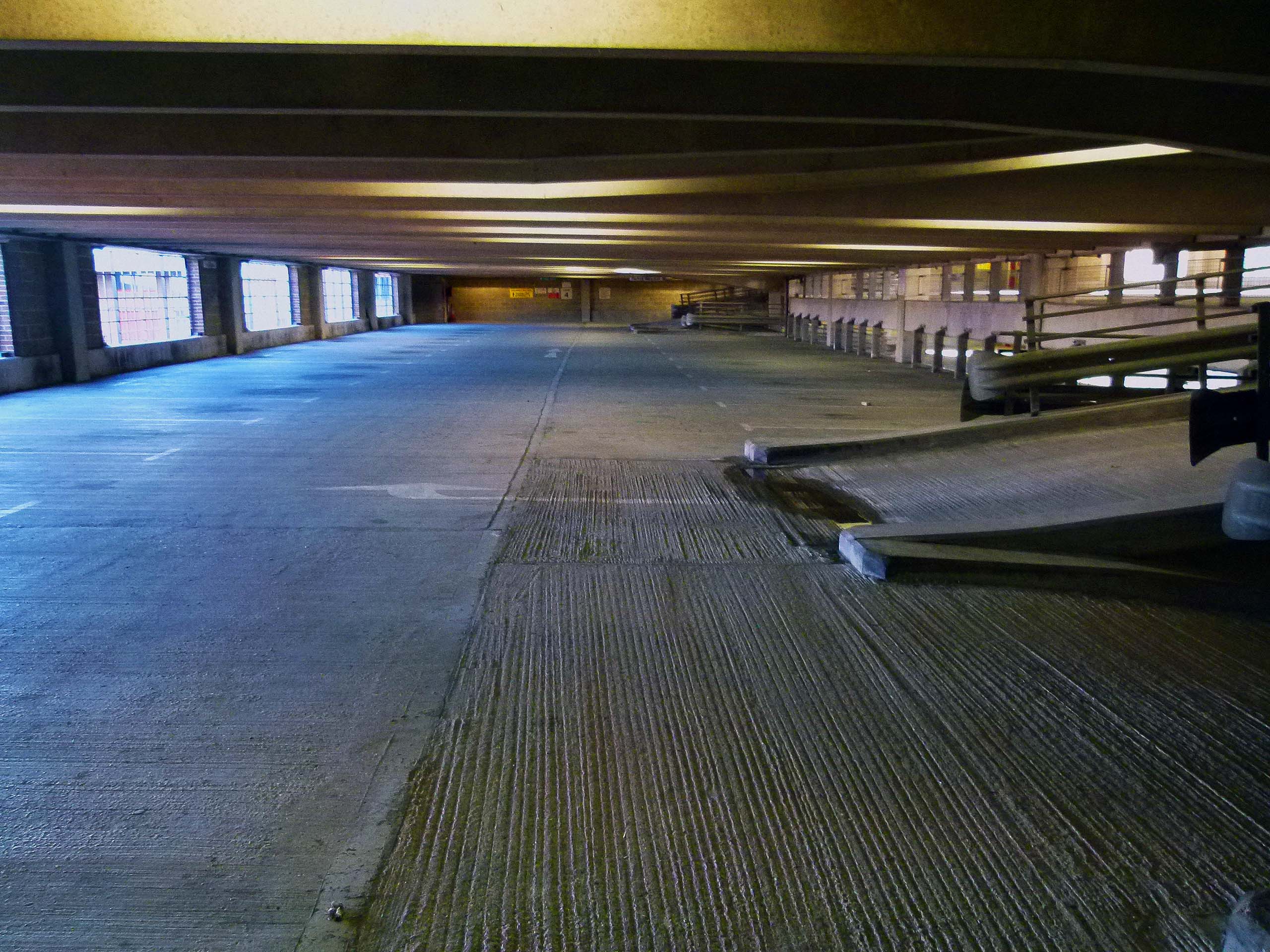
Not a car in sight… Tobacco Dock Car Park pictured in 2013…
*
Following its anti-climactic opening, Tobacco Dock limped on but, by the mid-1990s, it had been pretty much abandoned; the vacant shops and walkways echoing to the sound of light music which was still mysteriously piped into the complex.
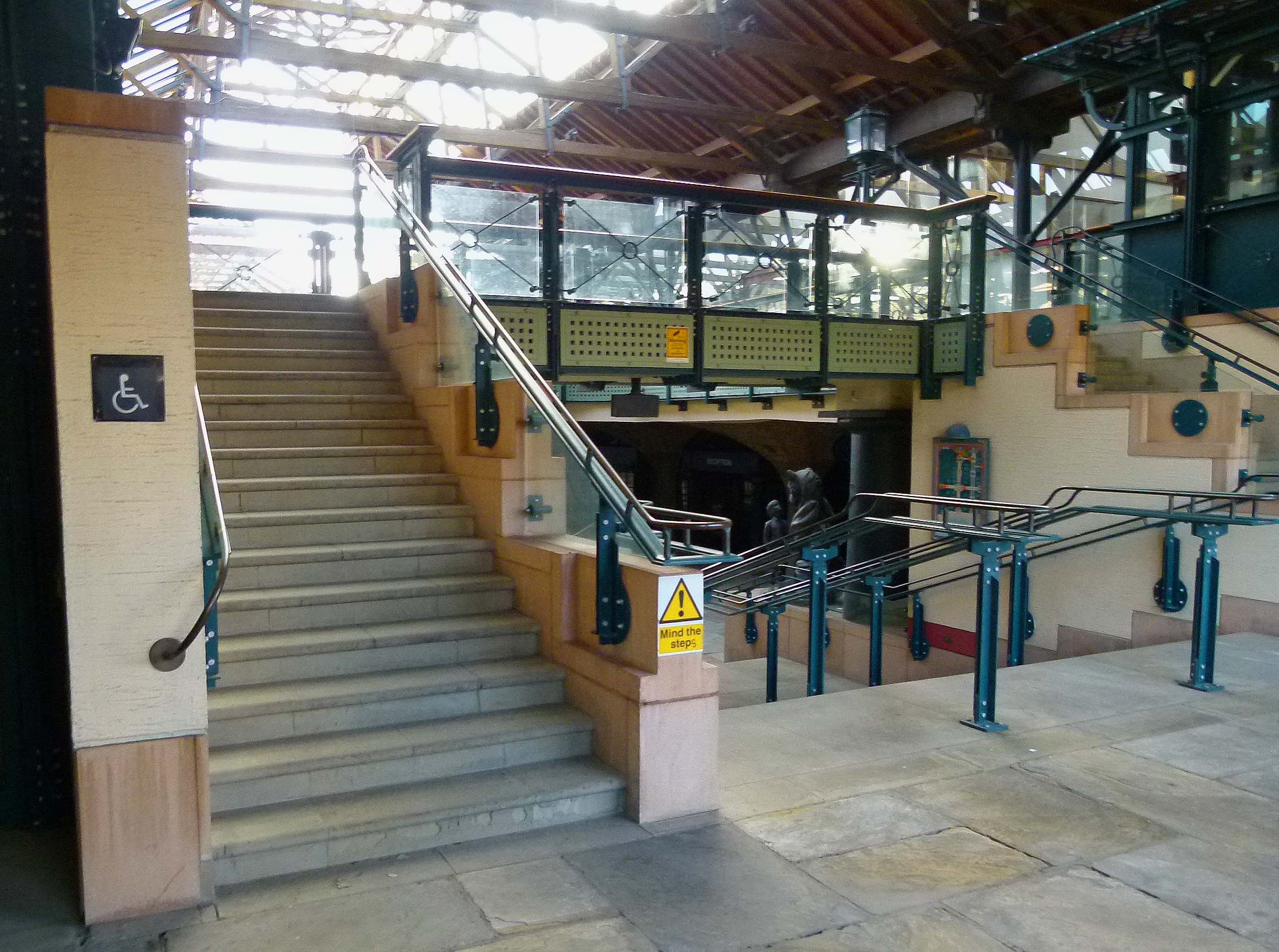
Inside Tobacco Dock… not a punter in sight…
To the odd soul who did manage to stumble across Tobacco Dock during the 1990s, the deserted centre would’ve probably felt akin to the sinister Monroeville Mall; the American shopping centre featured in the 1978 zombie film, Dawn of the Dead! (Click below to view):
A glimmer of hope flickered in 1995 when plans were put forward to convert Tobacco Dock into a factory outlet village.
However, the idea came to nothing- probably not helped by the fact that the concept was mooted by Gerald Ratner, the tycoon who’d disgraced himself by declaring that the jewellery on sale in his shops was “total crap.”
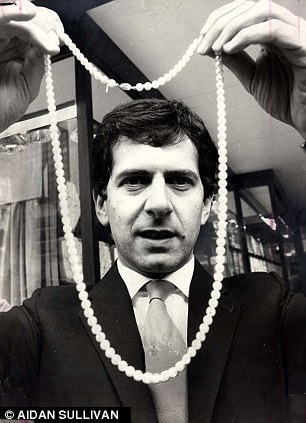
Gerald Ratner… master of bad PR! (Image: Daily Mail)
*
Shutting up Shop
For most of its life as a shopping centre, the only businesses to remain open for any length of time were two eateries; Henry’s Café Bar and Frank & Stein’s.
Henry’s Café closed in 2000, leaving Frank & Stein’s as Tobacco Dock’s only active business; its presence bizarrely requiring the centre’s operators to keep the rest of the deserted complex open and maintained.
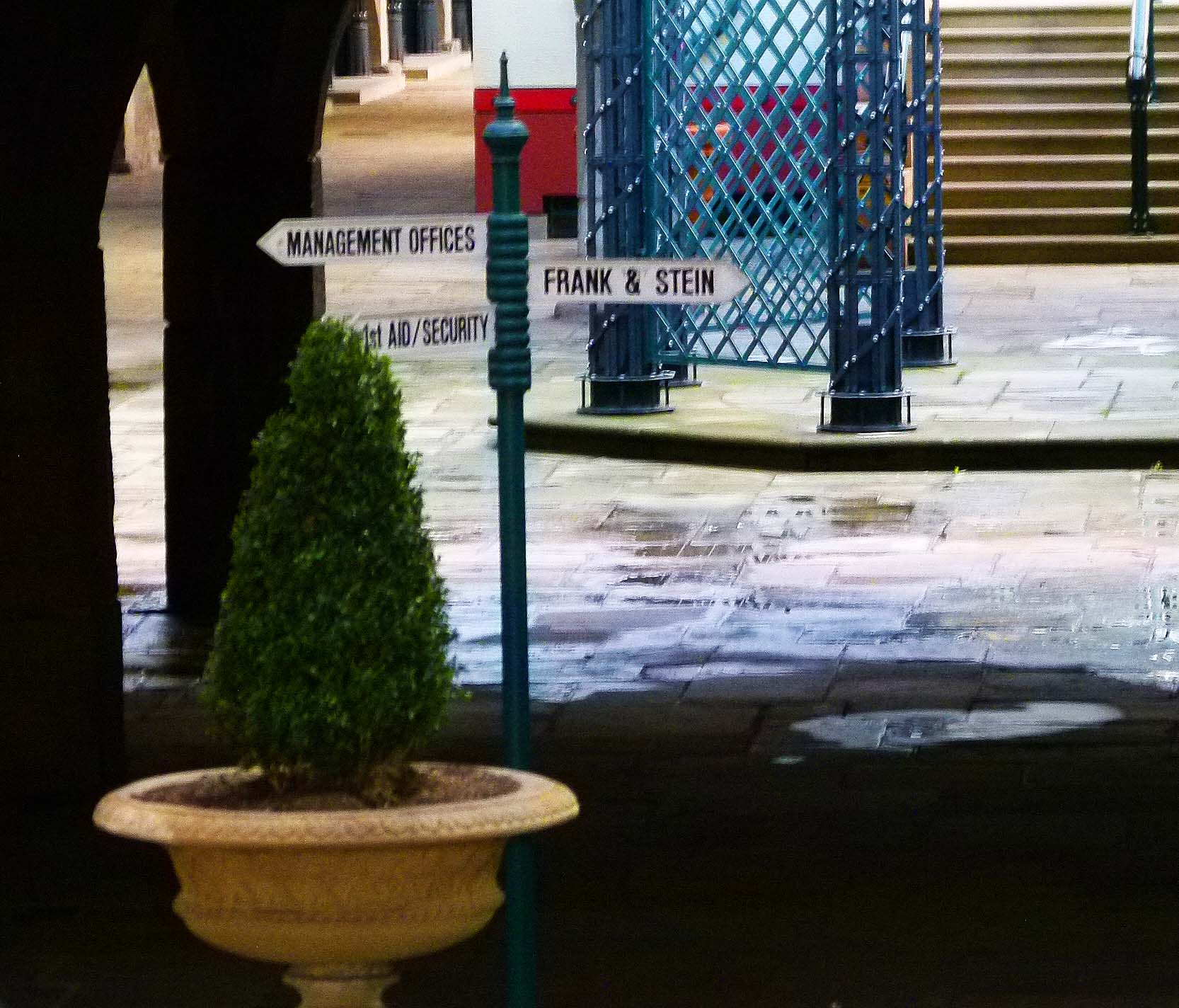
A lonely signpost indicating ‘Frank & Steins’ sandwich shop which, for eight years, was the only business open in Tobacco Dock.
When Frank & Steins finally ceased trading in 2008, the owners of Tobacco Dock were finally able to bar the gates for good.

Tobacco Dock… now off limits.
The failed shopping centre has been a deserted ghost village ever since, viewable only through gates and railings dotted around the perimeter.
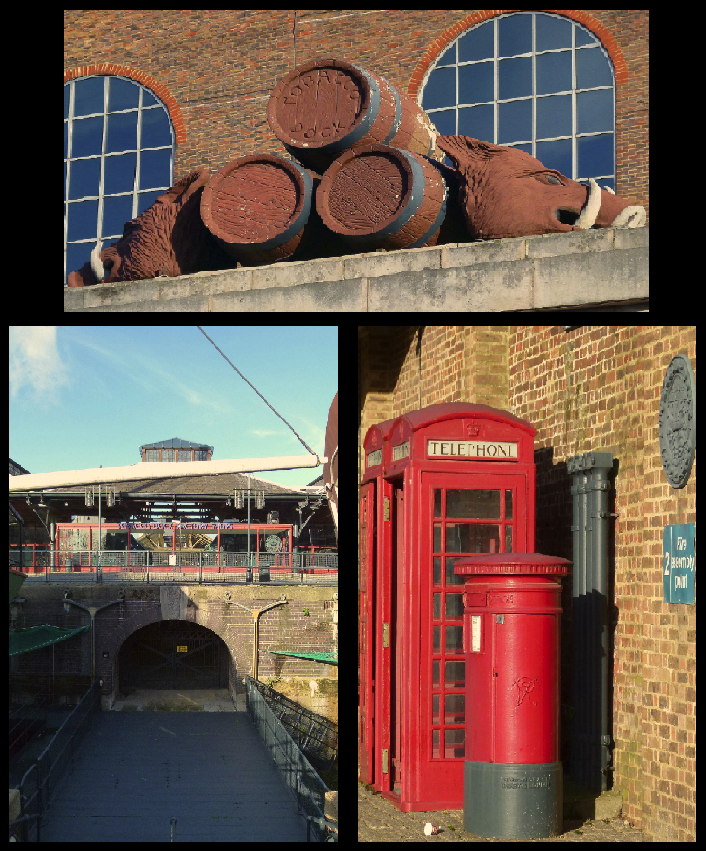
Some of Tobacco Dock’s forgotten corners…
Wapping Lane and Discovery Walk are the most revealing locations, commanding a wide view over the empty shops and two replica ships- the Sea Lark and the Three Sisters.
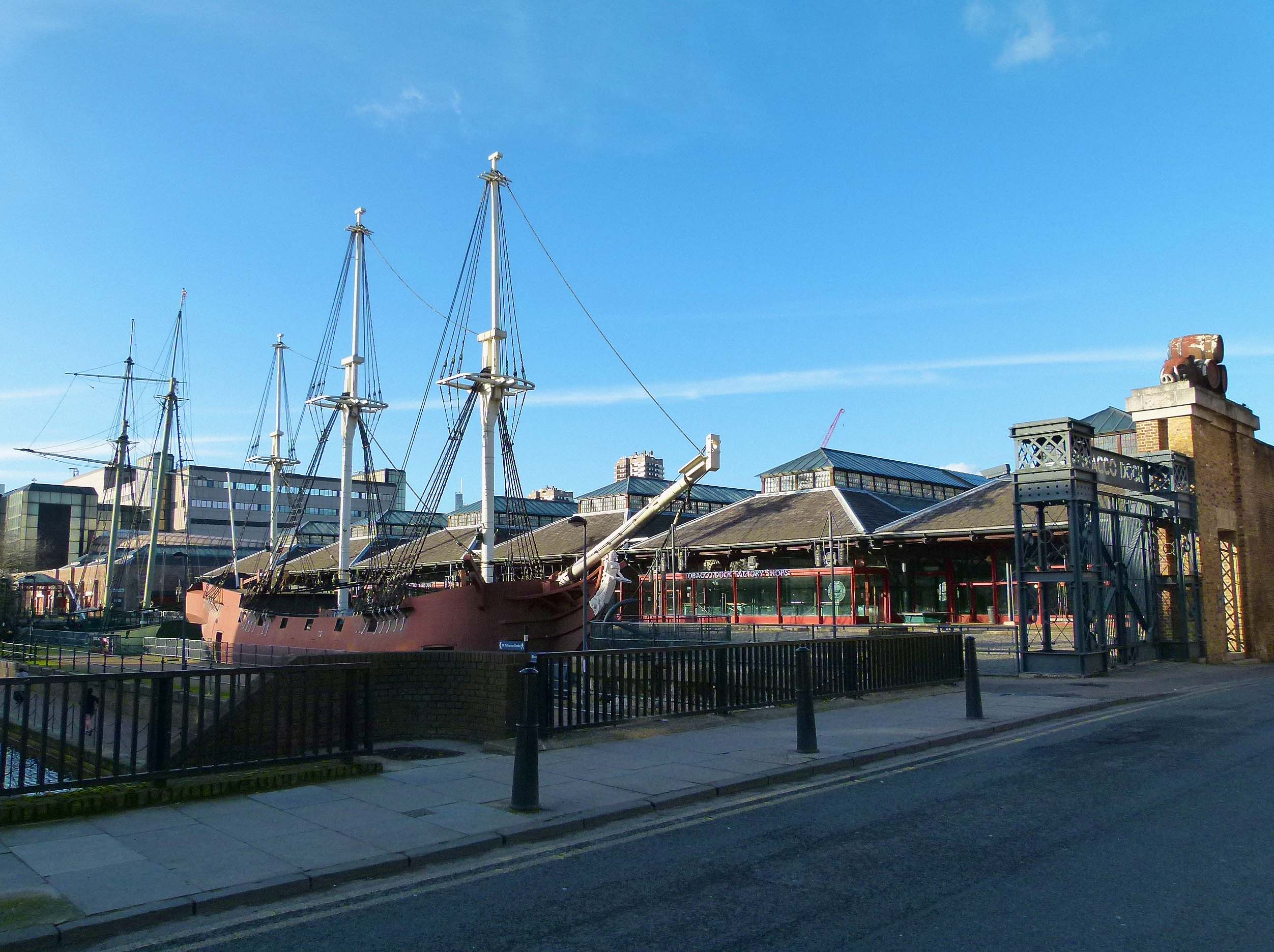
Tobacco Dock as seen from Wapping Lane.
Created especially for Tobacco Dock at a cost of £1.5 million, these showcase vessels were intended to house a bar and small wax museum. They now stand silent and destitute, the most visible reminders of Tobacco Dock’s immense failure.
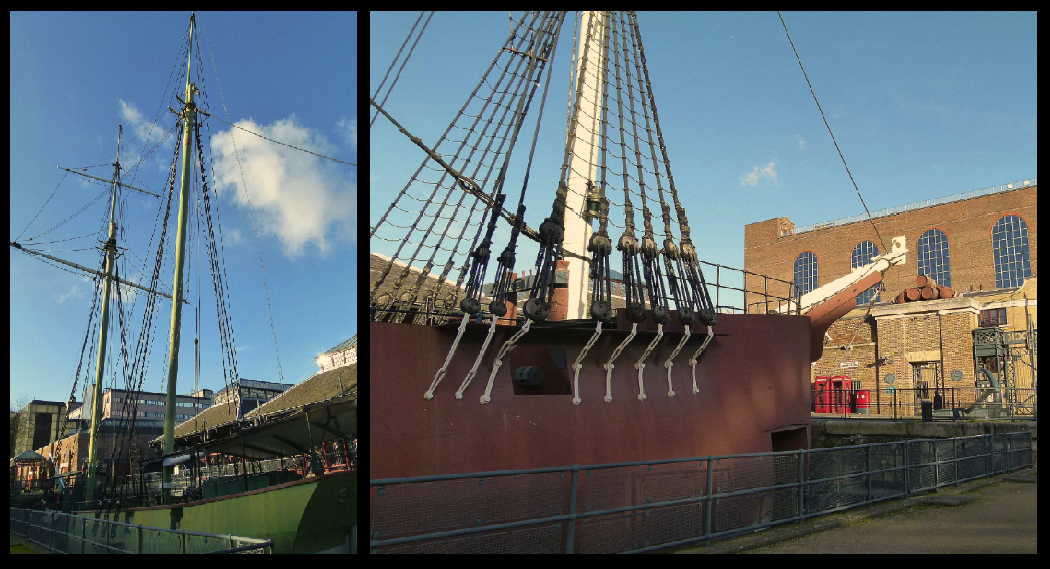
Tobacco Dock’s expensive replica ships; ‘The Sea Lark’ and ‘The Three Sisters’.
Oh well… at least there’s still a ships’ cat!
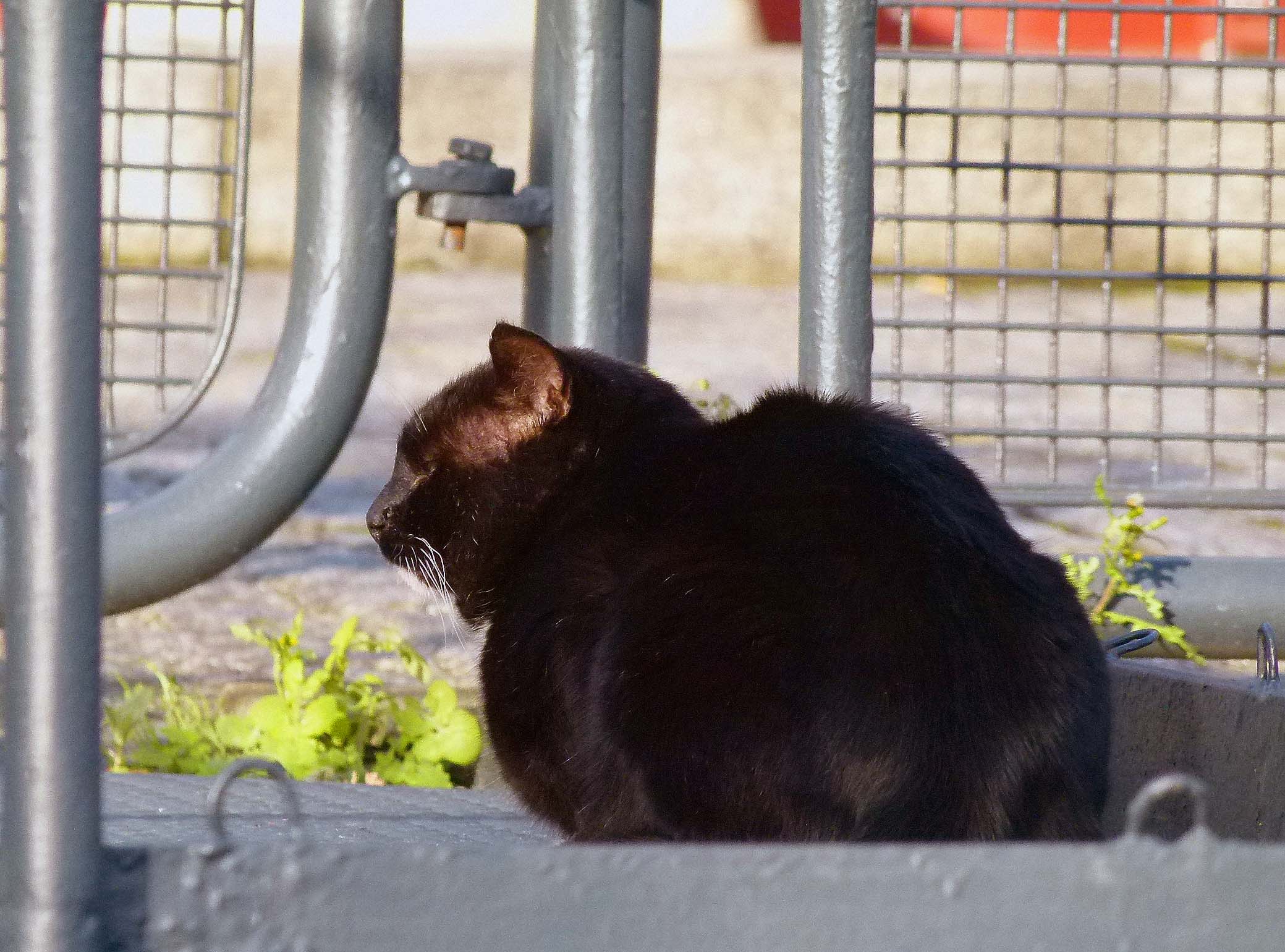
A contented puss… the only sign of life at Tobacco Dock in 2013.
A Local Legend
On the Pennington Street side of Tobacco Dock, it is possible to peer through the gates and catch a glimpse of two cobweb-strewn statues; one of a bear and one of a boy standing before a tiger.

Tobacco Dock’s animal statues.
These models were intended to act as collection boxes for the World Wildlife Fund, although I doubt they raised much considering Tobacco Dock’s average customer turn out!
The bear is a nod to the many animal furs which were stored on Tobacco Dock’s ‘skin floor’, whilst the tiger refers to an incident involving Charles Jamrach; a local legend who, in the 19th century ran a nearby pet shop.
Originally from Germany, Jamrach specialized in exotic creatures, selling to zoos, circuses and noblemen. Thanks to deals done with the crews of the many ships pouring into London from across the globe, the canny pet shop owner ensured his menagerie was always well stocked with enticing beasts.

Contemporary depiction of Charles Jamrach’s shop from the ‘London Illustrated News’. The pet store was located near Tobacco Dock on the Ratcliffe Highway (now known simply as the Highway).
According to legend, in 1857 a tiger newly arrived from Bengal managed to escape Jamrach’s shop. Heading off along Wapping’s cobbled streets, the sharp-toothed tourist encountered a young boy…. who promptly found himself scooped up in the tiger’s jaws.
Luckily, Jamrach had given chase and, having caught up with his prey, proceeded to thrust his arm into the tiger’s throat, thus forcing the creature to drop his reluctant passenger.
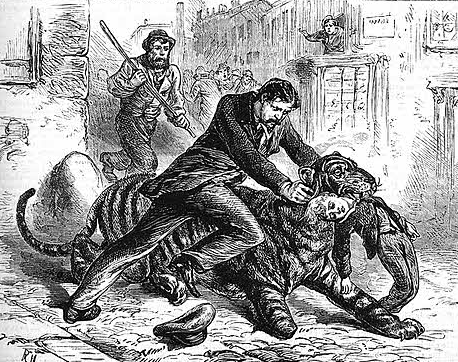
Illustration of Jamrach confronting the runaway tiger. (Image from the ‘Boy’s Own Paper’, 1879).
Amazingly, neither the boy nor Jamrach came to any harm. The mischievous tiger was later sold to Wombwell’s Menagerie for the handsome sum of £300…
*
Fresh Hopes for Tobacco Dock
Despite its dormant status, Tobacco Dock still manages to find an interesting use every now and then.
In 2008, the same year it closed for good, the failed mall was employed as a filming location for the popular BBC series, Ashes to Ashes.
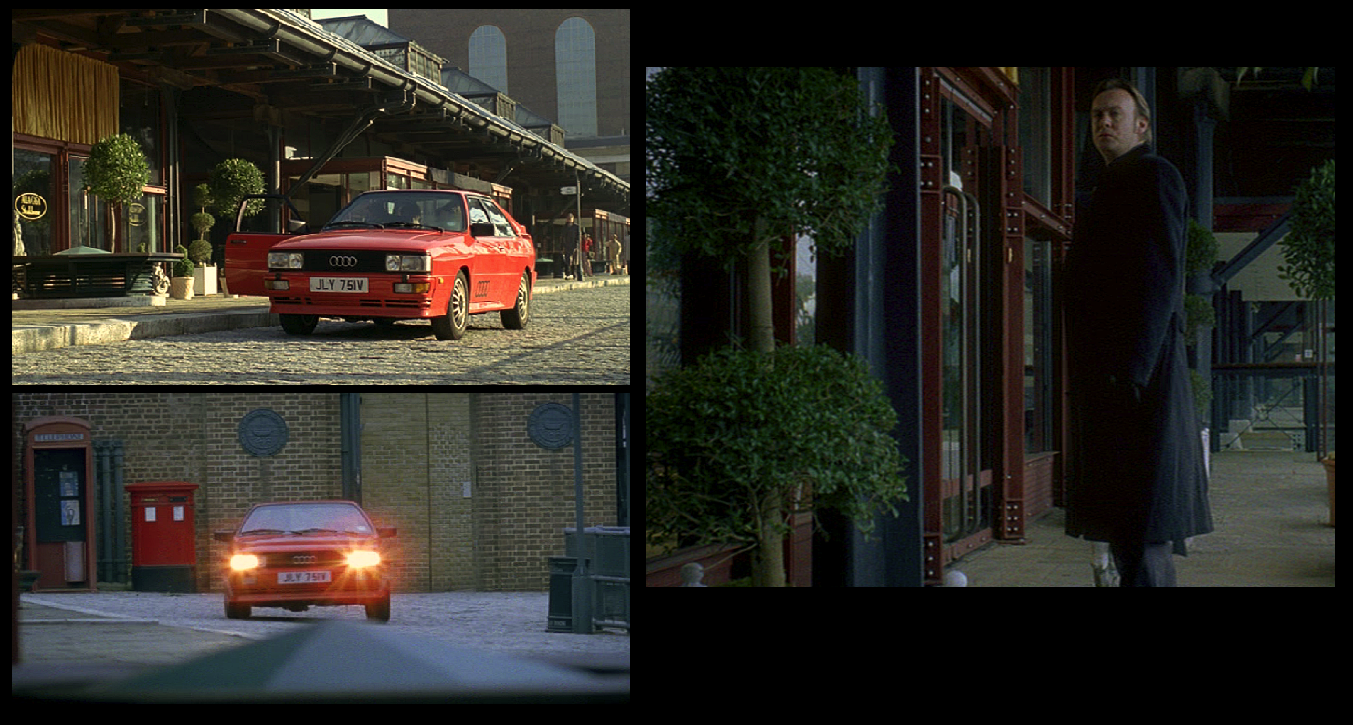
Tobacco Dock as seen in ‘Ashes to Ashes’, 2008.
The mall has also featured in a Ford Ka advert.

Tobacco Dock as seen in Ford’s Ka advert.
During the summer of 2012, Tobacco Dock found itself playing an unexpected key role in the London Olympics.
With thousands of soldiers drafted into provide security for the epic event, the former warehouse and shopping centre was quickly transformed into a large barracks, providing a unique setting for the troops to bed down in.
A video detailing this unusual role can be viewed below. It contains some excellent footage of Tobacco Dock’s now elusive interior.
At present, Tobacco Dock is owned by a Kuwaiti based property company who are looking to turn the neglected site into a thriving conference venue.
More information on this scheme can be found here…. Let’s hope these promising plans don’t go up in smoke!
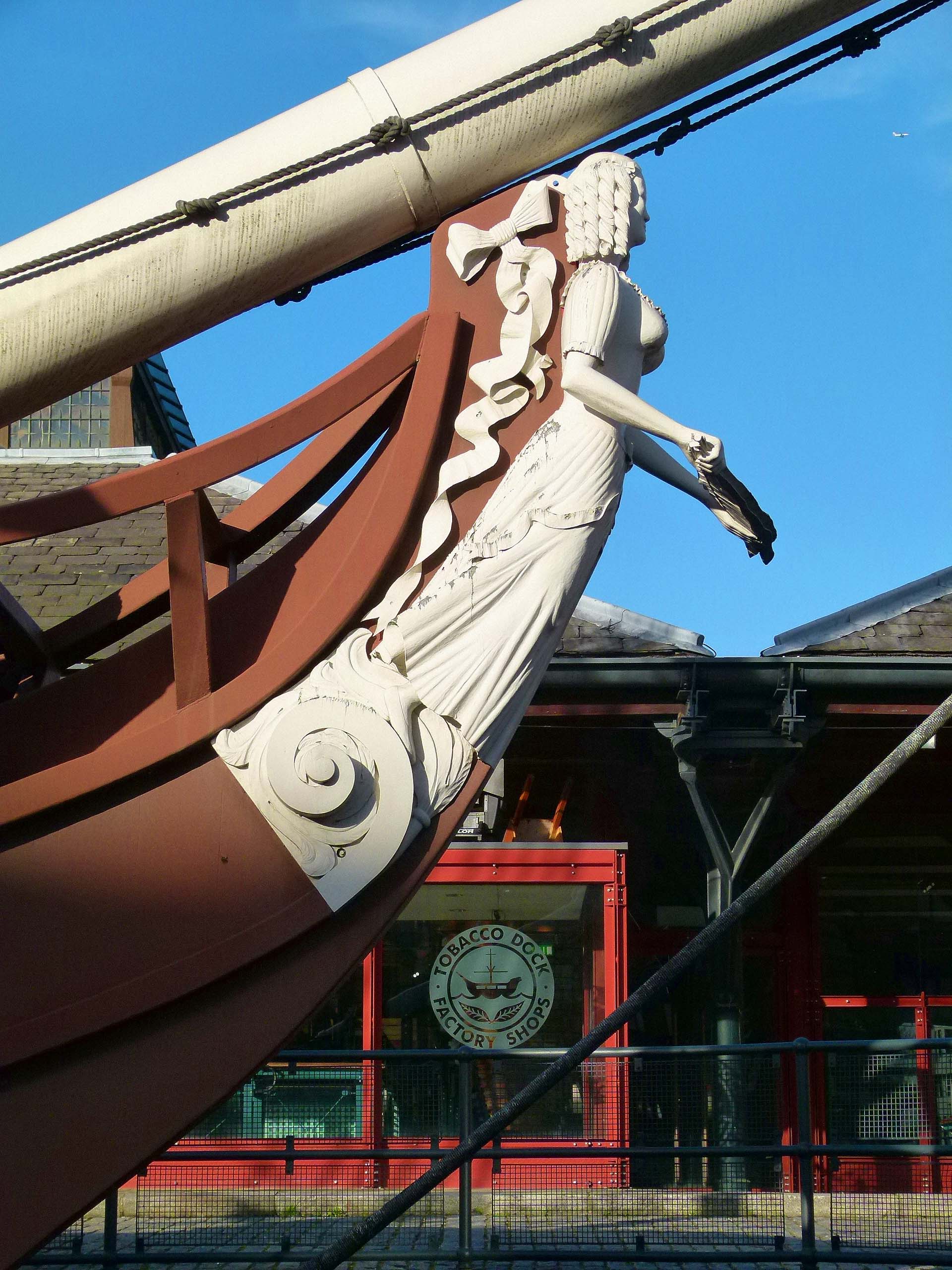
A Tobacco Dock figurehead… looking on in hope…
The Crown in Cricklewood
I originally wrote this piece in June 2012.
I now dedicate it to my Grandfather, Michael Lordan who passed away on the 21st February 2013; the day of his 79th birthday.
*
This is The Crown pub on Cricklewood Broadway, one of the capital’s largest drinking establishments and a well-known, North-West London landmark.
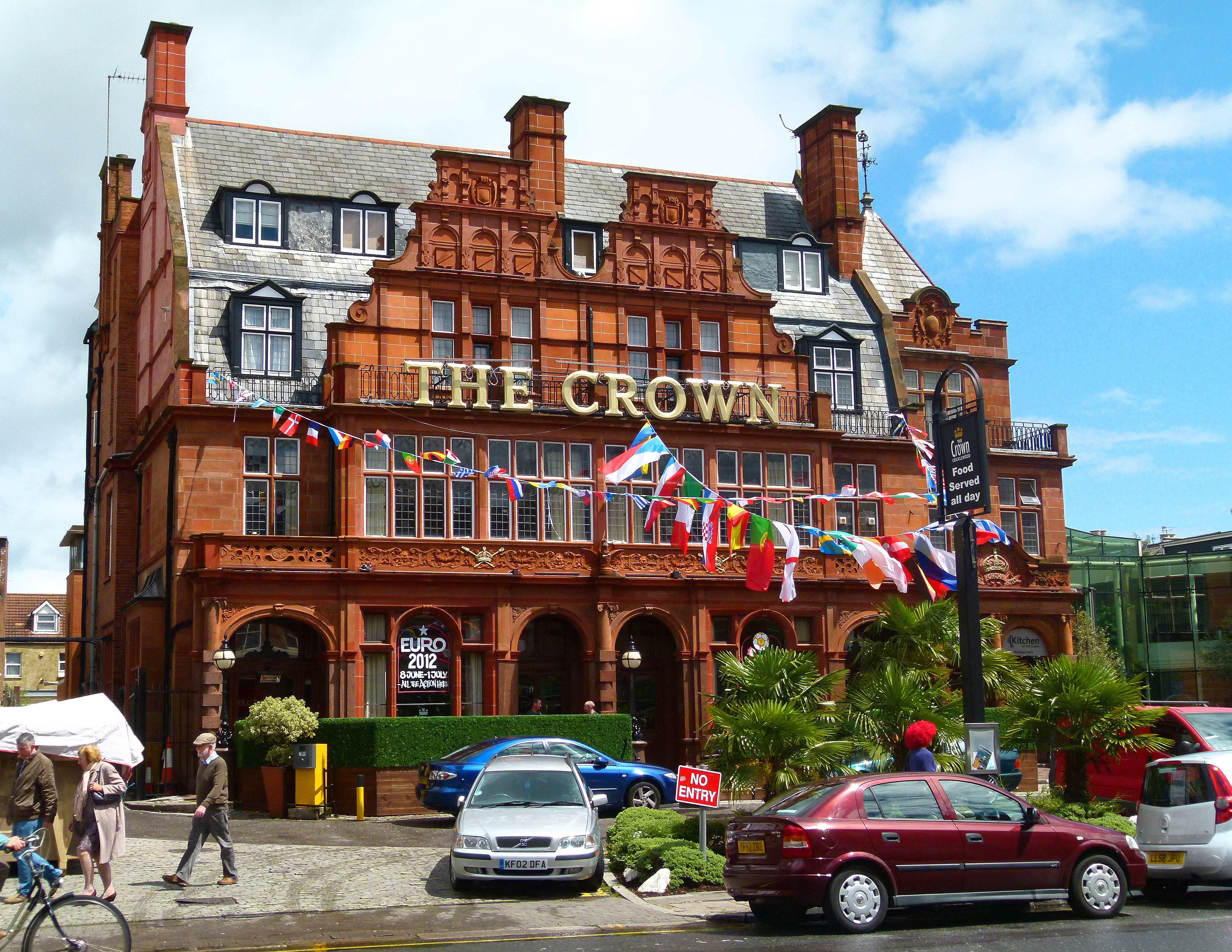
There has been an inn on this site since the 18th century- the first mention appearing in 1751 when the original establishment was described as being “an ivy-clad house with pretty tea-gardens…”
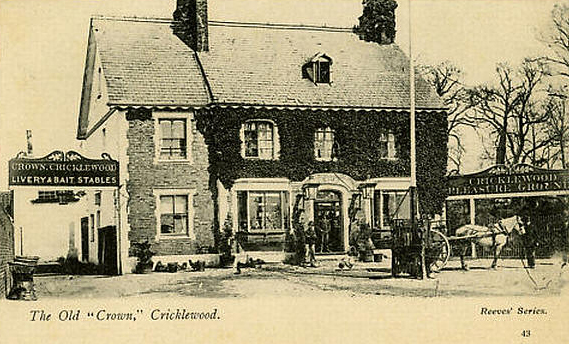
Cricklewood’s first Crown pub
Despite this quaint description, the nearby surrounding fields were still a popular venue for that good old-fashioned pursuit; bare knuckle boxing!
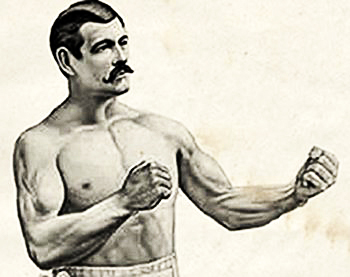
The first pub here also acted as a coaching tavern, lying on a fairly local route which accommodated carriages passing between London, Elstree, Watford and St Albans.
In the 1880s, the London General Omnibus Company selected The Crown as a terminus for their horse-drawn double-deckers operating between Marble Arch and North London.
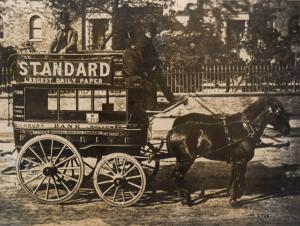
A horse-drawn bus belonging to the London General Omnibus Company (photo London Transport Museum)
*
The current Crown pub was built in 1900; the previous one having been sold in 1898.
Planning permission for the new boozer cost £86,000; a staggering amount for the time.
The developers were encouraged to fork out this huge sum because, although Cricklewood was a rapidly developing industrial district, magistrates had imposed a strict limit on licencing in the area. Consequently, The Crown was the only public house in Cricklewood at the time which was permitted to serve alcohol- it didn’t take a genius to realise that there were great profits to be made from such an arrangement!
The grand pub, which still looks impressive today, was crafted by Henry Rising; an architect who specialised in inns… and churches! Built from red sandstone, The Crown comprises of three levels, each of which boast elegant carvings.
*
For much of the 20th century, The Crown was famous for being at the heart of London’s Irish community which flourished around Cricklewood and Kilburn.
Early each morning, groups of Irish tradesmen and labourers would gather in the forecourt of The Crown for the ‘call on’; the process in which local building contractors would turn up with trucks and vans to recruit a number of men out of the crowd for a day’s casual labour.
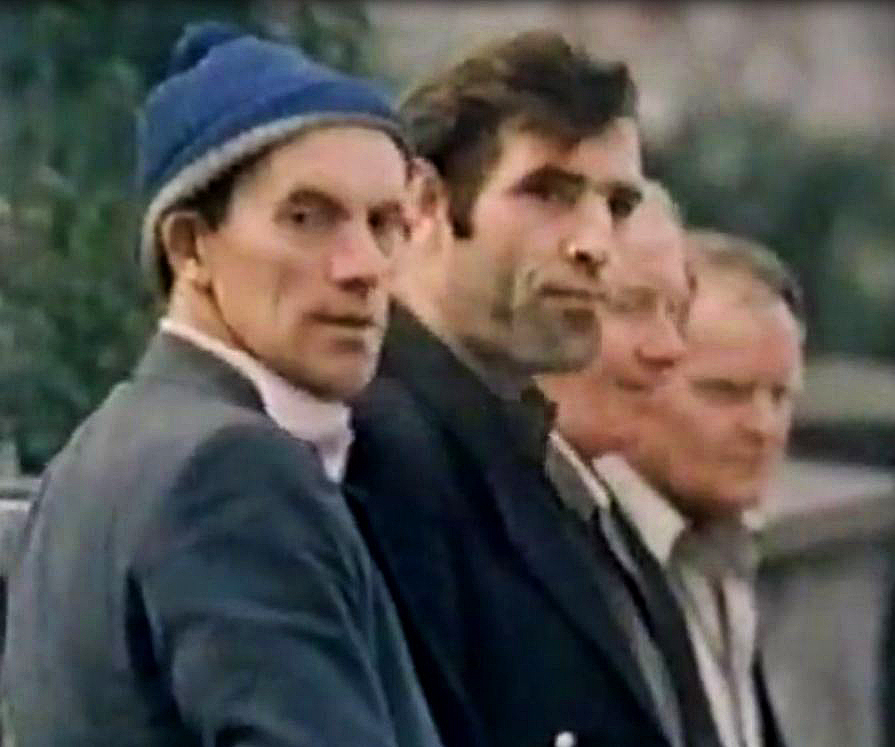
A group of laborers waiting outside The Crown for the ‘call-on’ in 1982. This image is taken from the music video, ‘The Celtic Soul Brothers’ which can be viewed at the end of this post.
The call on (which my own Grandfather- having arrived from County Cork in the 1950s- frequently participated in) was a process fraught with uncertainty- not being picked obviously resulting in not being able to earn a day’s wage.
In the early 1960s Irish songwriter, Dominic Behan wrote a ballad entitled ‘McAlpine’s Fusiliers’ (McAlpine being a major building employer for whom many Irish immigrants worked) which referenced The Crown. Recorded by The Dubliners part of the song went thus:
“Oh, the craic was good in Cricklewood and they wouldn’t leave the Crown,
With glasses flying and Biddy’s crying ‘cause Paddy was going to town
Oh mother dear, I’m over here and I’m never coming back
What keeps me here is the reek o’beer, the ladies and the craic…”
*
The days of The Crown being a spit and sawdust pub where local workers were drafted have now long faded.
Today, the pub has been ‘gentrified’, the only nod to its working-class roots being a painted mural on one wall depicting a group of builders.
A four-star, 116 room hotel has now been incorporated into the pub, part of which includes a large, glass atrium which has been built and linked to The Crown’s existing building.
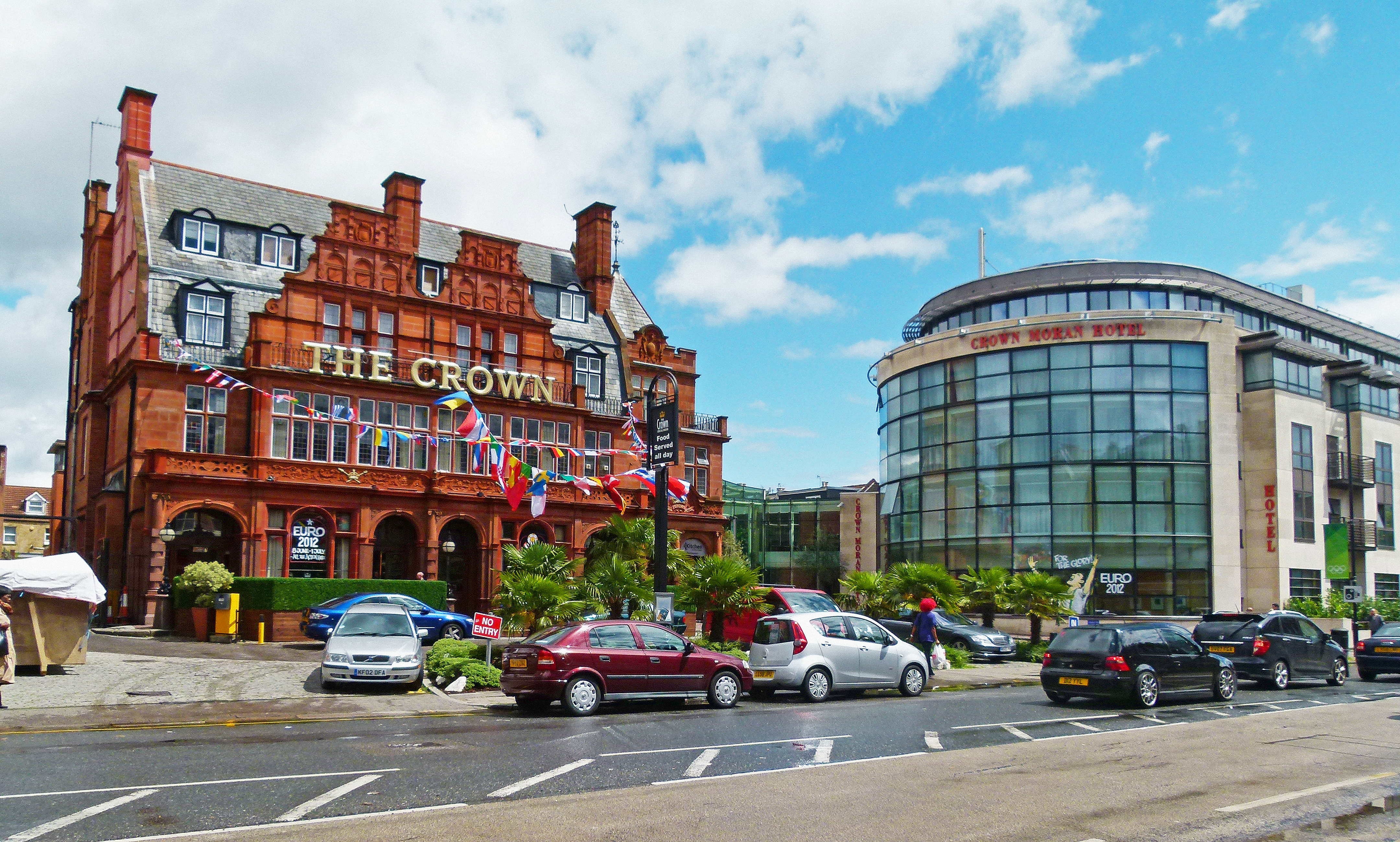
The Crown today; the new hotel atrium can be seen to the right.
The hotel includes a gym, swimming pool, sauna and Jacuzzi- luxuries which the Irish lads who once began their hard days toiling here could only have dreamt of.
The updated North London landmark is now owned by Moran Hotels; an Irish company who also own hotels in Dublin and Cork, so it’s nice to know that The Crown still maintains a strong link with the Emerald Isle.
*
In 1982 pop-group, Dexys Midnight Runners released their single, The Celtic Soul Brothers and much of the accompanying video was filmed in and around Cricklewood and The Crown.
The beginning of the promo depicts the ‘call on’ outside the pub, something which still took place every morning in those days, and towards the end of the video the band can be seen giving a spirited performance inside The Crown itself, followed by a melancholy fadeout as the camera slowly and silently rises over a twinkling Cricklewood Broadway.
In memory of my Grandfather, Michael Lordan.
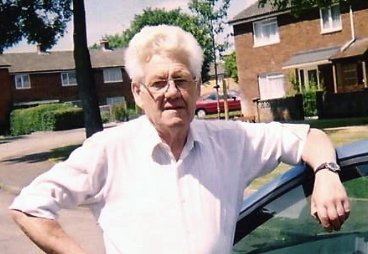
1934-2013




 View from the Mirror