The Pride of Poplar Returns… London’s Latest Statue
On Friday 16th May 2014 London acquired its latest statue… a sculpture of Teddy Baldock, the East End lad who rose to fame in the 1920s by becoming Britain’s youngest ever boxing world champion- an accolade which remains to this day.
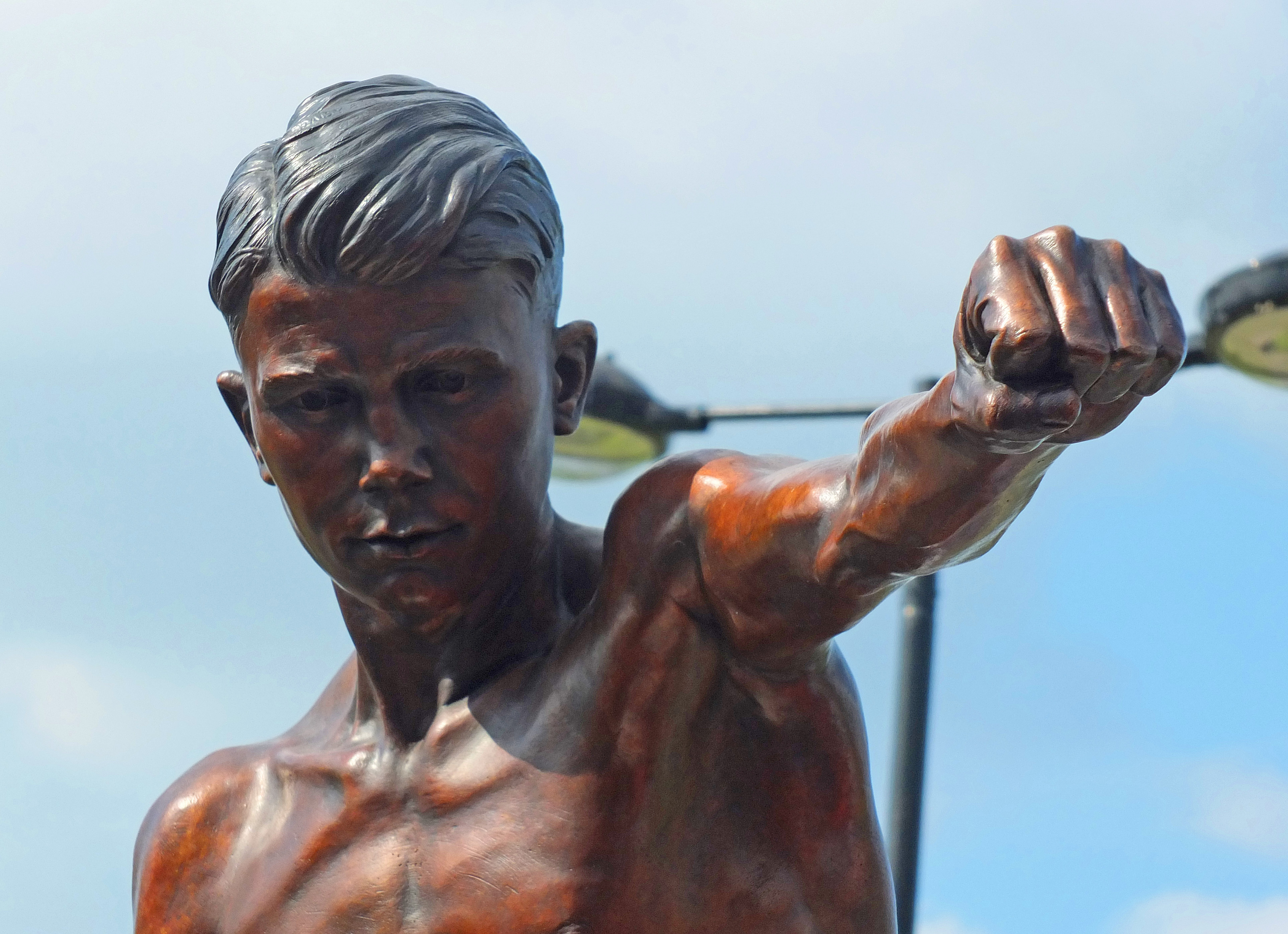
Teddy Baldock… London’s latest public artwork.
As promised in an earlier post about Teddy’s life and career (please click here to read), here are some photographs from the unveiling…
* * *
Teddy’s statue stands directly opposite Langdon Park Community Sports College which is situated beside Landgon Park DLR station.

Langdon Park DLR. Teddy’s statue stands just to the right of this view.
The weather on the day was glorious… and as 3pm approached, a large crowd gathered to witness the ceremony.

A crowd gather to see Teddy’s statue unveiled.
Until the moment arrived, the statue (sculpted by Staffordshire based artist, Carl Payne) was draped in a golden shroud… which threatened to billow off with the wind on more than one occasion!
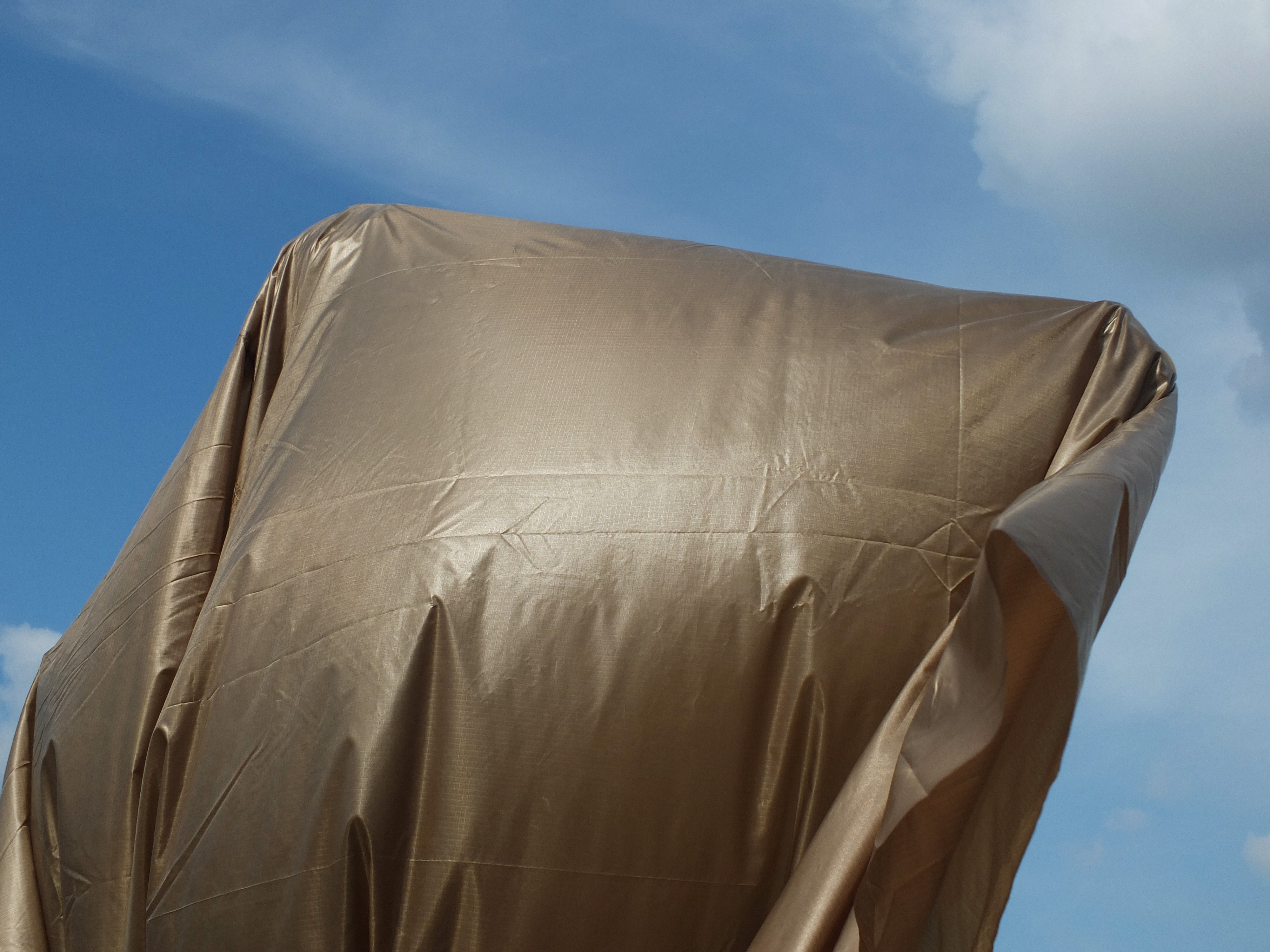
Before the unveiling…
The statue was finally unveiled by Pam Baldock; Teddy’s daughter.

Pam Baldock unveils the statue of her father.
Although wee on first impressions, the statue of Teddy is in fact life-sized…he was a tough little fighter!

Teddy Baldock
A plaque on the statue’s plinth informs the public of Teddy’s achievements.

Teddy’s plaque
After the unveiling, a group of ex-boxers gathered beneath Teddy’s statue for a fun photo-shoot.
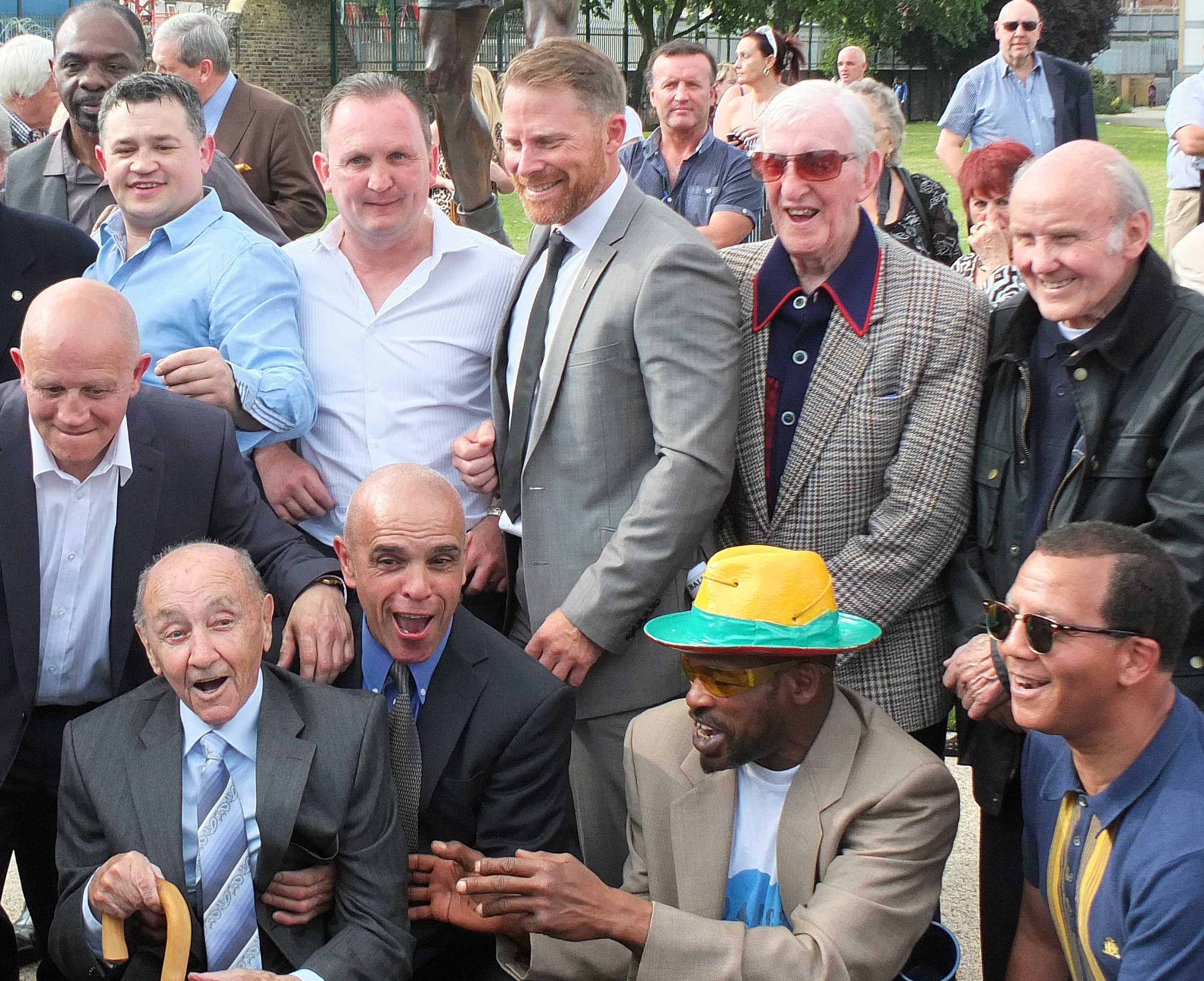
Former boxers gather in honour of Teddy Baldock.
When he died in the early 1970s Teddy was a tragic figure; penniless, homeless and long-forgotten, his funeral poorly attended.
However, thanks to the wonderful campaigning carried out by his grandson, Martin, the legacy of one of the East End’s finest sons has been revived; the huge turnout for the unveiling bearing testament to Teddy’s achievements.
As well as the statue, Teddy’s memory will now live on in the Teddy Baldock Sports Benevolent Fund; a charity which supports former sportspeople who have been disabled by physical or mental injury or are suffering from general hardship. Please click here for more information.

Teddy Baldock, the ‘Pride of Poplar’. 1907-1971.
WW1 100: London’s Memorials… The London & South Western Railway Victory Arch (Waterloo Station, Part 5)
London & South Western Railway Victory Arch
Cab Road, Waterloo Station

Waterloo Victory Arch, Cab Road (map: Google).
As we’ve seen in earlier installments,Waterloo station developed in an extremely haphazard manner throughout the Victorian period.

Waterloo station during the Victorian era.
With the terminal divided into various sub-stations, platform numbers laid out in a manner defying all common sense and a set of tracks running directly across the main pedestrian concourse (a Health and Safety nightmare by today’s standards), it is perhaps no surprise that Waterloo was branded “the most perplexing station in London.”
Realising that their ultimate dream of establishing a grand terminal within the heart of the City was off the cards, the board of the London and South Western Railway decided to completely redesign Waterloo and forge it into a station fit for purpose.
Work on the rebuild began in the late 1890s but progress was slow… with one of the main obstacles being the outbreak of hostilities in 1914.
During the Great War, 585 employees of the London and South Western Railway were killed whilst fighting for their country.
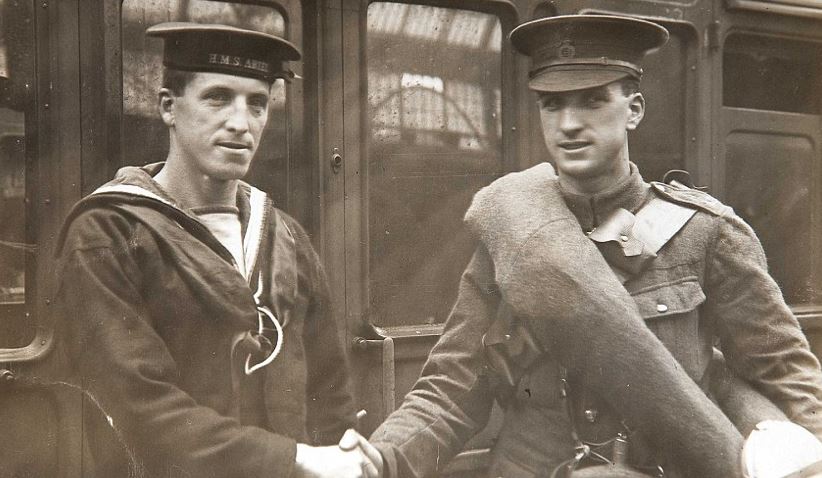
Brothers in Arms… two siblings who served in the Great War; one in the Navy, the other in the Army bid farewell at Waterloo station.
In recognition of this appalling loss, the company decided to incorporate a bold war memorial- a ‘Victory Arch’- into the new station’s entrance in honour of their fallen workers.
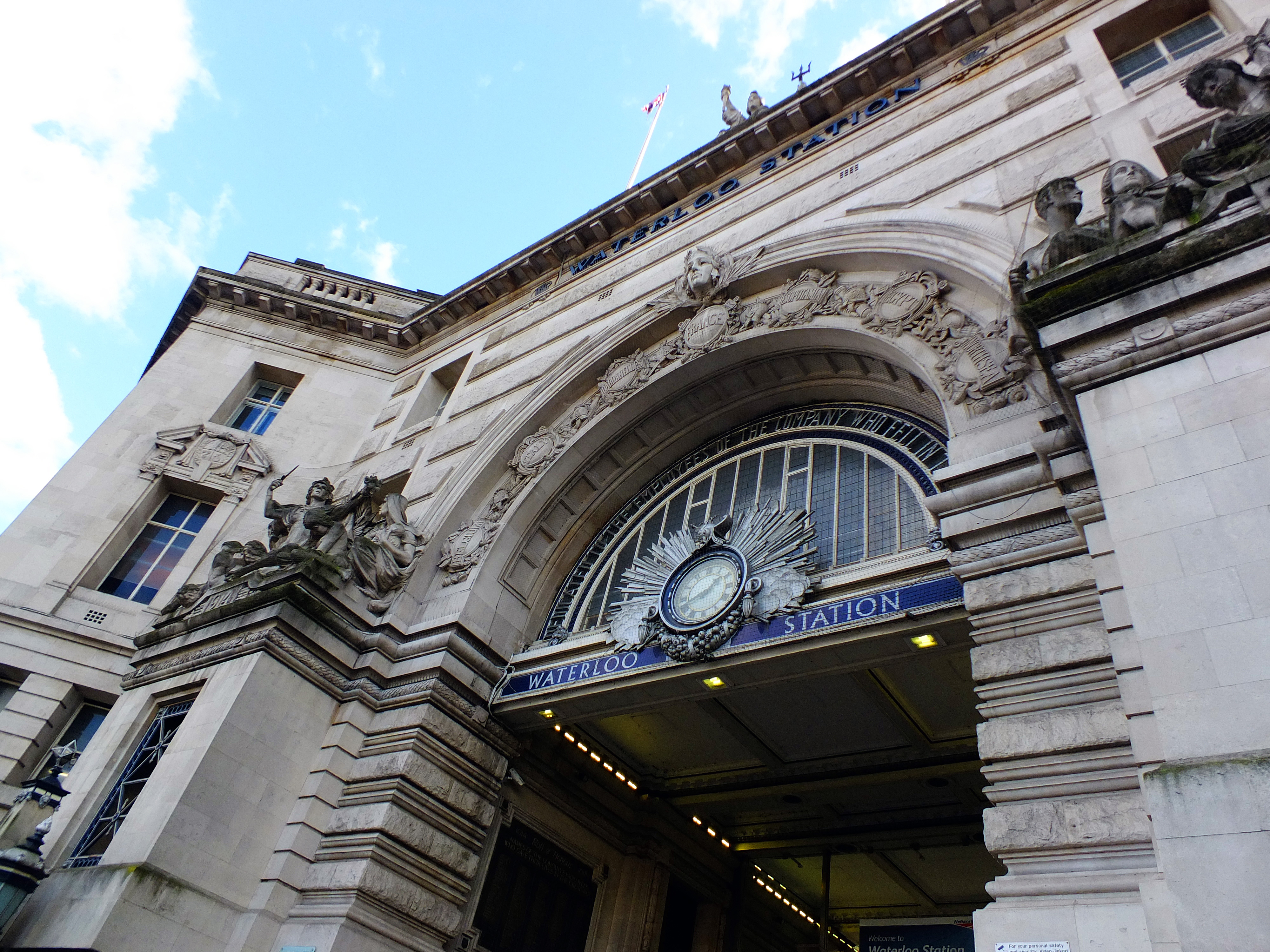
Waterloo station’s ‘Victory Arch’.
The new station- the Waterloo familiar with today’s commuters- was finally completed in March 1922.
King George V was due to conduct the opening ceremony but was forced to bow out due to illness, so Queen Mary stepped in to do the honours.
A number of decorated veterans from the Great War were also in attendance for the grand event… please click below to view footage of the station’s opening.
Although millions of passengers sweep beneath Waterloo’s Victory Arch every year, very little is known about its creator, other than that he is believed to have been a Mr Charles Edward Whiffen, a Cheltenham-born sculptor who lived and died at Altenburg Gardens, Clapham.
When he died in 1929, Charles Whiffen had just £662 and 15 shillings to his name.
*
Waterloo’s Victory Arch is dominated by a sculpture of Britannia bearing the torch of liberty.

Britannia, high over Waterloo’s main entrance.
Below Britannia, the names of the Great War’s major theatres are listed in a carved arc: Belgium, Italy, Dardanelles, France, Mesopotamia, Egypt and the North Sea.

The Great War’s main battlefields…
Either side of the arc stand two further sculptures.

Figures on the left and right representing 1914 and 1918.
On the left, representing the outbreak of war in 1914, squats Bellona; the ancient Roman goddess of war.
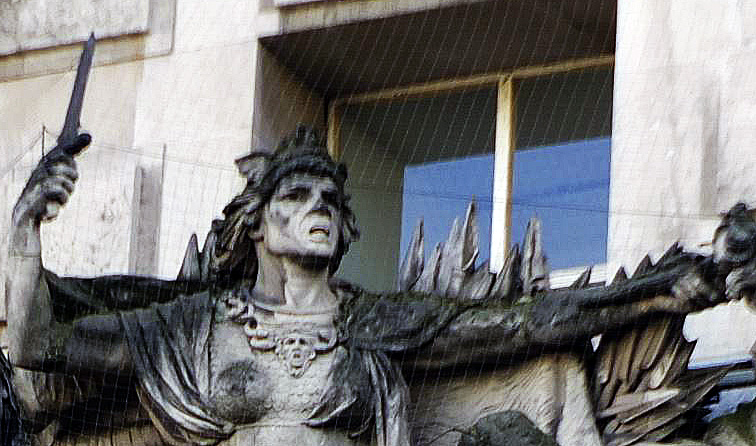
Bellona…Roman goddess of war.
This suitably demonic figure holds court amongst a terrified entourage.

Figures cowering beneath Bellona.
On the opposite side of the arch, representing peace and the 1918 armistice, sits Athena; the goddess of courage and wisdom.
Athena, who is accompanied by a far more relaxed group than the unfortunate bunch cowering around Bellona, is depidted clutching two objects; a palm of peace and a miniature figure of Nike; the winged goddess of victory.

Athena representing peace in 1918.
Solemn plaques, bearing the names of the many LSWR railwaymen lost in the conflict line the interior of the arch.

One of a number of plaques inside Waterloo’s main entrance listing the many men of the London and South Western Railway who died serving their country.
If you are a regular user of Waterloo, please spare a thought for these long lost names… and remember that missing your train by a few minutes is nothing in comparison to the hellish conditions in which these young men met their awful fate.
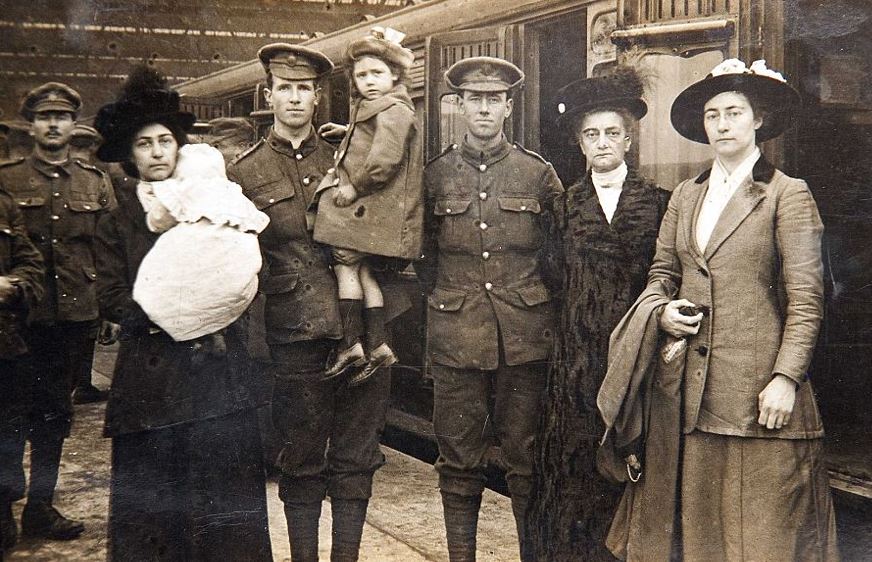
Troops say goodbye to their families at Waterloo Station before heading for battle (image: Christian Broom).
*
The Pride of Poplar… A New Statue Comes to Town
On May 16th 2014, East London will be blessed with a brand new statue of former boxer, Teddy Baldock; one of the area’s most remarkable sons.
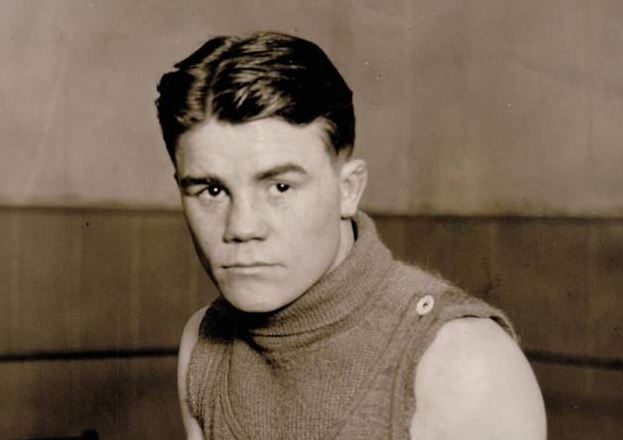
Teddy Baldock
Born in Poplar in May 1907 Teddy’s life was marked by triumph and tragedy.
In 1927 aged just 19 he fought his way to become Britain’s youngest ever boxing world champion; a record which remains to this day. In his rise to fame, Teddy amassed a fortune and became known as the ‘Pride of Poplar.’
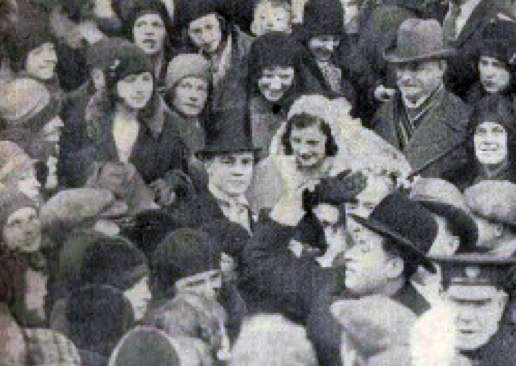
Teddy mobbed by fans on his wedding day (image: The Daily Sketch, via London Ex-Boxer’s Association).
However, after suffering injury to his hand in the ring, the young boxer’s luck quickly began to diminish.
Although he managed to forge a second career as a bookmaker, Teddy had a generous nature which was exploited as he gave away thousands of pounds to people whom he thought were friends.
During WWII the former boxer served with the RAF. Whilst he was away, his finances suffered further as a number of properties he’d invested in back in London were destroyed by air-raids.
As the years progressed, Teddy began to drink and gamble heavily. His marriage collapsed and by the time he died in March 1971, Teddy was penniless and long forgotten, an elderly vagrant shivering out his final days on cruel streets and in stinking doss-houses.
In recent years, Teddy’s legacy has been revived with the publication of a biography and a campaign by his grandson, Martin Sax to have a statue erected.

Sculpture of Teddy in his prime.
After a successful campaign to raise funds, Martin’s dream has thankfully come to fruition.
Sculpted by Carl Payne, Teddy’s tribute will stand outside Langdon Park Community Sports College, Hay Currie Street where it is hoped it will inspire local youngsters. The site holds extra importance in that the college stands on the site of Teddy’s former childhood home.

Minature of Teddy’s Statue (image: London Ex-Boxer’s Association).
The unveiling is scheduled to take place between 3-6pm on May 16th 2014 and at the time of writing, actor Ray Winstone (himself a boxer in his younger days) is pencilled in to do the honours. Photos will appear on this site after the event if you can’t make it!
A detailed account of Teddy’s life can be found on his grandson Martin’s excellent website. Please click here for the link.







 View from the Mirror