Pictured below is Craig’s Court, a tiny dead-end street tucked away off of Whitehall.

Craig’s Court
Although located just yards from Trafalgar Square, this cramped little cul-de-sac is often overlooked by the thousands of tourists and commuters who stream past every day, completely unaware of the site’s quirky history.
*
Little is known about the origins of Craig’s Court, other than it was laid out at some point in the 1690s by Joseph Craig, a vestryman of St Martin’s. When inaugurated, Craig’s Court lay at the northern tip of the Palace of Whitehall, a vast royal residence which had been expanding ever since Henry VIII pinched it from Cardinal Wolsey in the 16th century.

The Palace of Whitehall
The palace was destroyed by a huge fire in 1698. Today, only the Banqueting House on the corner of Horseguards Avenue remains.

Banqueting House, the only remaining section of Whitehall Palace (image: Wikipedia)
Folly
As the remains lay smouldering, one William Stanhope, 1st Earl of Harrington convinced himself that the palace would be rebuilt and so, not wishing to miss out on the opportunity to shack up beside the royal family, purchased a plot of land on Craig’s Court and built the splendid Harrington House which was completed in 1702.
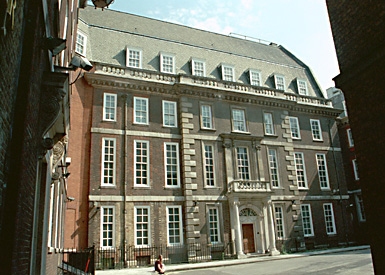
Harrington House, Craig’s Court (image copyright Stephen Hodgson)
Unfortunately Whitehall Palace was never reconstructed. The royals migrated westward, depriving Stanhope of the opportunity to call the monarch his neighbour and rendering his grand home an isolated white elephant (although the family remained there until 1917).
Today, the 18th century building houses a telephone exchange…and allegedly harbours an entrance shaft to a large, top-secret government bunker dubbed ‘Q Whitehall‘- although you didn’t hear that from me…
Paving the way
Despite its diminutive size and association with folly, Craig’s Court can be thanked for blessing London with a major innovation.
In the mid-18th century, the then speaker of the house, Arthur Onslow decided to pop by Harrington House for a visit.
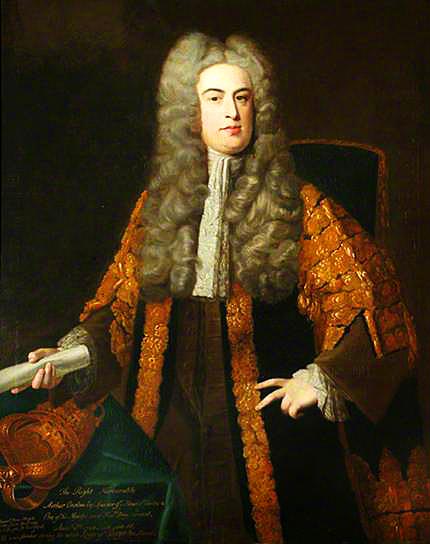
Speaker of the house, Arthur Onslow
In those days London’s streets were not paved, leaving many thoroughfares boggy and treacherous.
Craig’s Court was no exception and the sodden road, coupled with the dead-end’s narrowness resulted in Onslow’s coach becoming lodged as he approached Harrington House. So tight was the squeeze that a hole had to be cut in the coach’s roof so that the flustered and infuriated speaker could drag himself out.
When he returned to Parliament, Arthur Onslow pushed through a bill which required London householders to ensure kerbstones were laid outside their door- thus giving birth to ordered pavements.
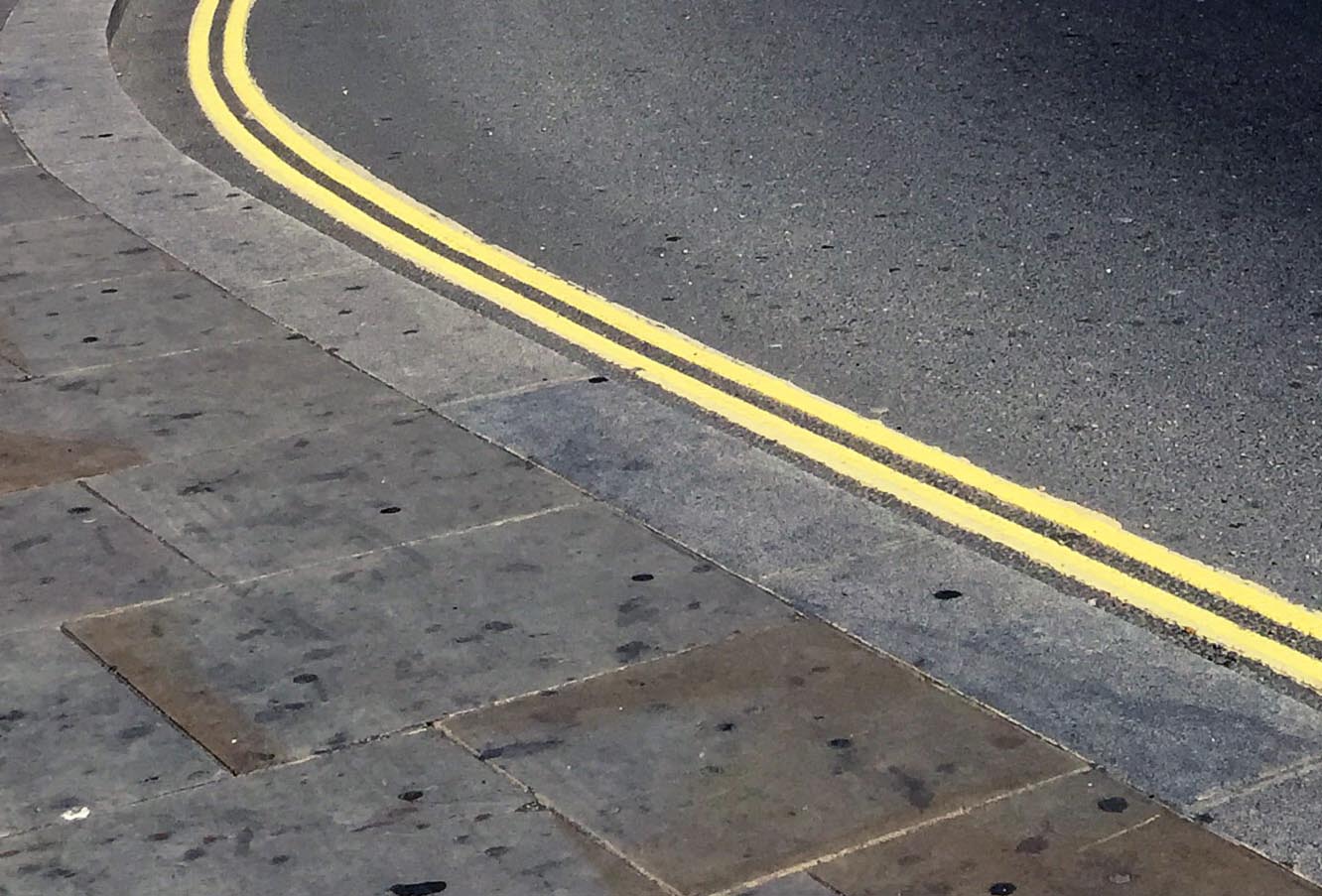
London paving
Scandal
Craig’s Court was also once home to Teresia Constantia Phillips, a woman who caused great scandal in the 1740s when she published shocking series of accounts detailing her numerous affairs.
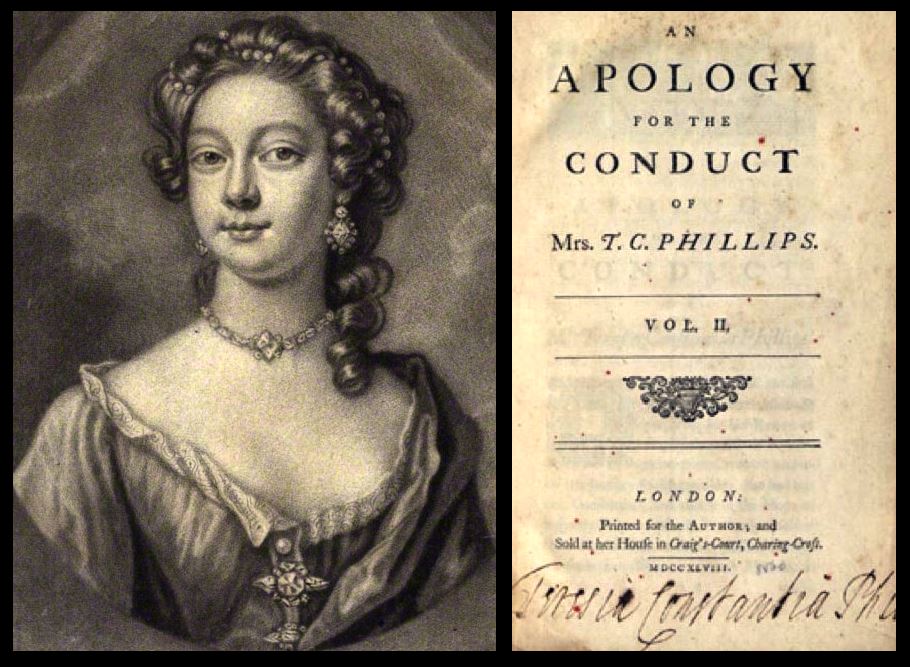
In the 1760s, a fashionable artist named George Romney also set up house here.
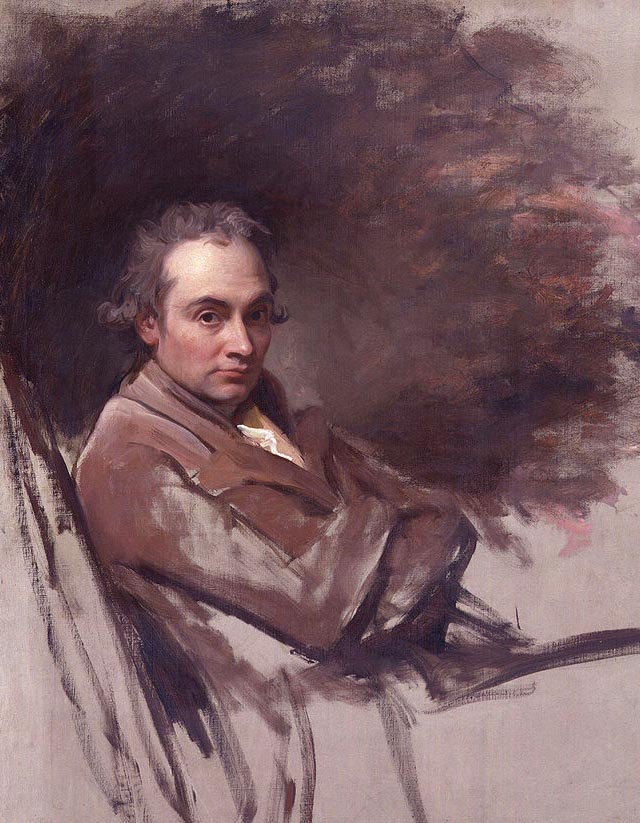
George Romney self portrait.
Romney was noted for his relationship with Emma Hart- the woman who would later become Lady Hamilton and mistress to Lord Horatio Nelson, the celebrated admiral whose infamous memorial stands just around the corner on Trafalgar Square…


*





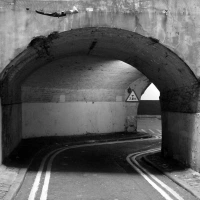




 View from the Mirror
Lovely vision of Onslow being hoisted from his coach!
Amazing isn’t it…inconvenience the rich and powerful and something is done…
Helen, you read my mind! 😀
Excellent, I remember pointing this so great to learn the history of the place.
Nelsons ‘infamous’ memorial? Is there more to come on this?
That’s all I’ve got I’m afraid, Damian… thanks for your kind words though.
An interesting detailed history of one of London’s little-known cul-de-sacs. To add to your wealth of knowledge, I can let you into a little secret. When I worked for the Police, we had an alarm system there, connected to various prominent buildings. I won’t say exactly where it was (and still is), for obvious reasons, but it was a regular check for our systems engineer.
And we used to have our leaving drinks in the Silver Cross, when someone retired.
Best wishes, Pete.
It is indeed true that the building houses one of the access points to ‘Q Whitehall‘. In the ’60s I was one of the GPO technicians who did the maintenance on the lifts there and the other access points, and the water pumps which served to get excess water out of the lift pits.
I’m still bound by the Official Secrets Act so shouldn’t really say any more, but more info in the Public Domain can be found by searching the internet 😉
https://en.wikipedia.org/wiki/Military_citadels_under_London#Q-Whitehall
That’s fascinating…. many thanks for sharing 😉
Thanks for the confirmation on the Q-Tunnels, Ex Tech. I don’t think that it is all as secret as they think!
Thanks, Pete that alarm system sounds intriguing!
Never tire of hearing London tales and you always come up with gems of history that I can then incorporate as I walk the pavements here –
Many thanks, Laura.
Was there on the hottest day so far. I believe the entrance to the secret bunker is via a door on the right as you enter the court, it has Telephone Exchange embossed in the lintle over the door.
Sounds about right, John…. keep it to yourself though, you never know who is listening! ;-D
I worked there, was there for King Georges funeral and the Queens Inauguration had to stay overnight as Whitehall was shut down spooky place at night and yes the secrets act is a scary thing to sign when your 16 but I can tell you the entrance hall for Harrington House is awesome black and white tiles and sweeping staircases on each side All the best love History
i
king
Wow…..! Thank you so much for sharing that Josephine. Incredible.
Great article. Walked past that street so many times, never knew there was a mansion tucked away round the corner!
[…] Craig’s Court: A Curious Cul-de-sac […]
[…] from around 1890. Next our friendly blogging London cabbie takes a look at the curious history of Craig’s Court, off Whitehall. And even further back here’s an alternative view of the Middle Ages. And […]
Just curious but why refer to Nelson’s column as ‘infamous’?
This is an old article- my writing was not as refined back then!
[…] up to Trafalgar Square– in fact, one of the entry points to the system is rumoured to be via Craig’s Court; a tiny alleyway less than 200 feet away from the […]
Parked my £5.0.0 motor cycle there at Coronation ER II. Billeted in Central London Recruiting Depot Great Scotland Yard. Worked in Horse Guards.