Waterloo Wildlife (Waterloo Station: Part 6)
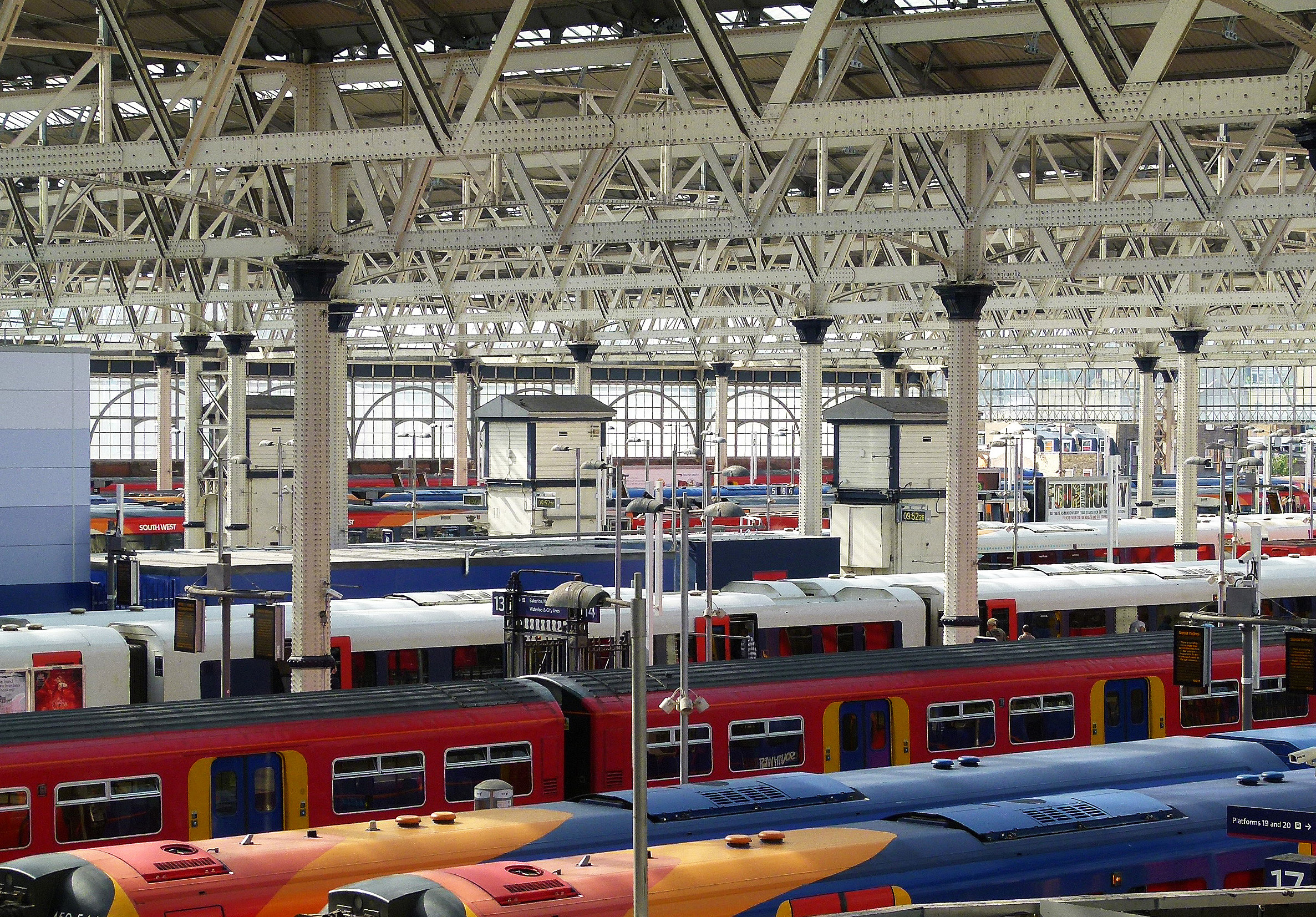
Trains at Waterloo
Despite being a thriving commuter hub, Waterloo station harbours a surprising number of quirky links with the animal kingdom…

Waterloo signal box cat, 1961
Diligent Dogs
During the first half of the 20th century Waterloo was home to a succession of ‘Railway Collection Dogs’; faithful hounds who padded around the station’s concourse with money boxes strapped to their backs, into which charitable members of the public could pop a few pennies.

‘Handsome Boy Prince’; a charity dog who once collected at East Croydon station (image: Old Southeronians Association)
Waterloo’s most celebrated charity dog was ‘Laddie’, an Airedale Terrier who was introduced to Waterloo in 1949 to raise cash for a retired railway workers’ home in Woking, Surrey.

A young passenger at Waterloo pops money into Laddie’s collection tin (image: Old Southeronians Association)
Laddie patrolled Waterloo until his retirement in 1956, by which point he’d raised over £5,000; a very handsome sum for the time (approximate to £87,000 in today’s money).
The faithful dog spent his final years at the Woking retirement home amongst the elderly railwaymen he’d done so much for.

Woking’s retirement home for former railway employees
When Laddie passed away in 1960 he was stuffed and put on display in a glass cabinet at Wimbledon station where he remained until 1990.
Today, he is kept by the National Railway Museum in York, complete with an original collection box.

Laddie today… (image: National Railway Museum)
Waterloo Buzz
As well as dogs, Waterloo was once also home to approximately 40,000 bumble bees… whose hives were located 200ft up on the station’s roof!

One of Waterloo’s bee hives
The bees were kept in the 1950s and 60s by Mr Wilfred Green, a railway worker who used the hives to make jars of honey for the Southern Railway’s Children’s Home in Woking (allied to the home for which Laddie the dog raised money).

Youngsters at the Southern Railway Children’s Home in Woking, 1960 (image: Pathe)
A video of the hives being tended by Wilfred in 1958 can be viewed below (note the complete lack of protective gear!)
Waterloo Pride…the Coade Stone Lion
For almost 180 years, a fearsome, stone lion has roamed the vicinity of Waterloo…

The Coade Stone Lion
Weighing 13 tonnes, the lion dates back to 1837 when it was created by Warwickshire born artist, William Frederick Woodington as a grand mascot for the ‘Lion Brewery’; a distillery which once stood on the Southbank’s Belvedere Road.
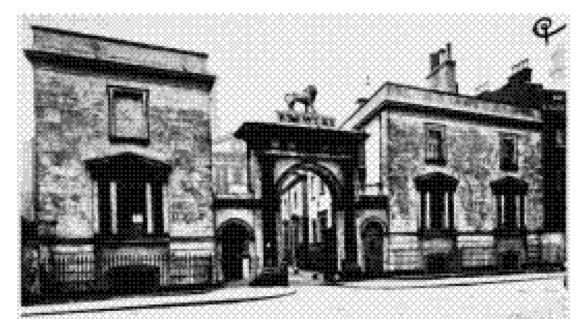
The Coade Stone Lion at its first home; the Lion Brewery, pictured here in 1930 (image: British History.ac.uk)
The lion is forged from ‘Coade Stone’; an artificial material which was perfected by Eleanor Coade in the late 18th century.
Fired in a kiln over a period of several days, Coade stone is a very tough substance, famously immune to the onslaught of pollution… which means it always looks sparkling clean.

Coade Stone… as good as new
Like the Lion Brewery, Eleanor Coade’s factory was also located on the Southbank- the site today is now occupied by the Royal Festival Hall.
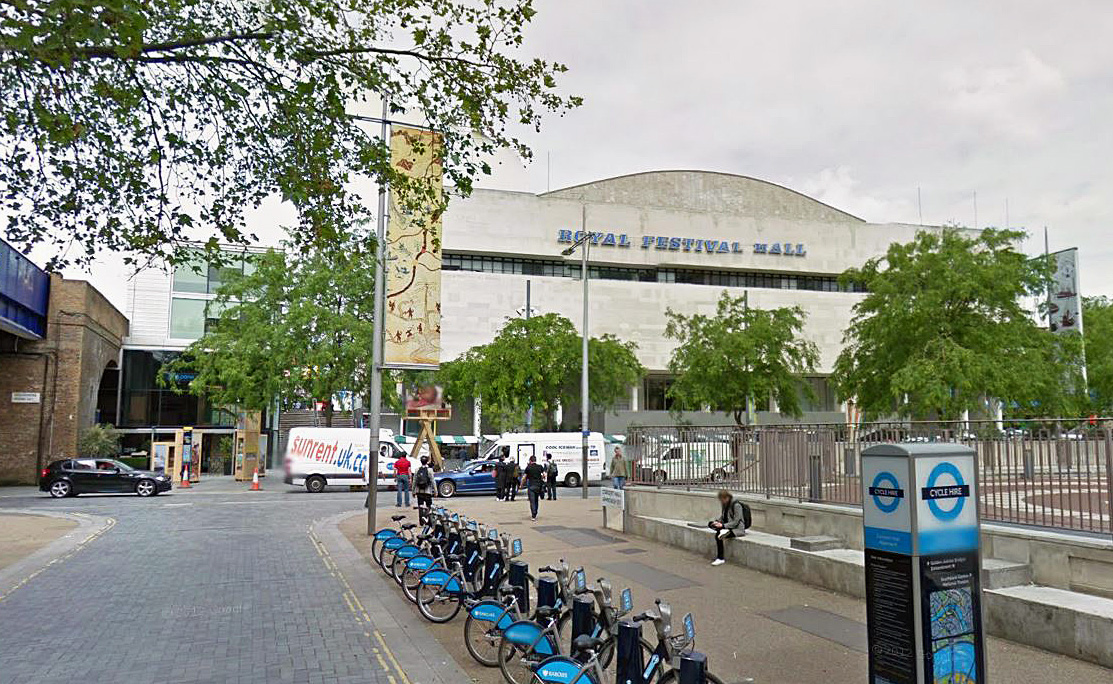
The Royal Festival Hall… where Eleanor Coade’s factory once stood
Holding pride of place above the brewery’s main entrance, the mighty lion was originally painted red as the mock-up image below illustrates…

The Coade Stone Lion, back in red as it once appeared…thanks to the wonders of photo manipulation!
An early admirer of the sculpture was French writer, Emile Zola who was delighted to see the hefty statue “poised in mid-air” atop its high arch.
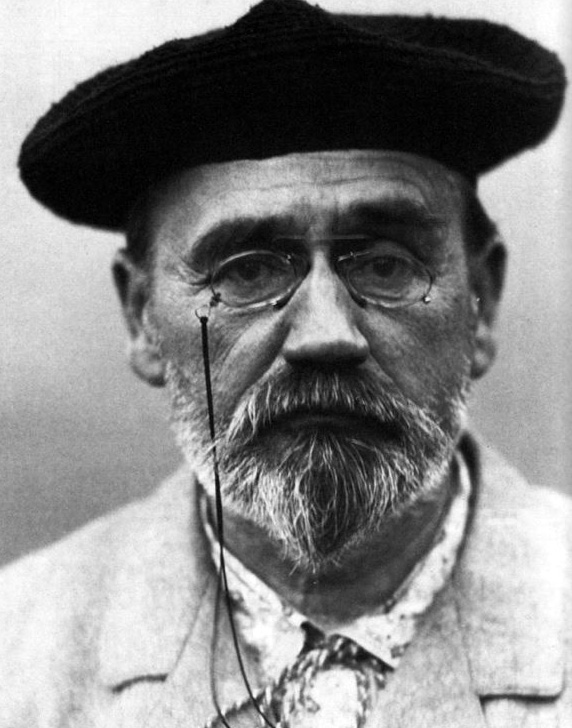
Emile Zola, the legendary French writer who was a great admirer of the Coade Stone Lion
Years later, Zola made a special return visit to the site to view the statue- which he affectionately referred to as “my lion”- one last time.
*
In 1949, the Lion Brewery was demolished and the land passed over to the development of the 1951 Festival of Britain.
At the request of King George VI himself the lion was saved… and adopted by Waterloo Station where, with its red coat (the colour then associated with the newly nationalised British Railways) it was able to continue as a corporate mascot.
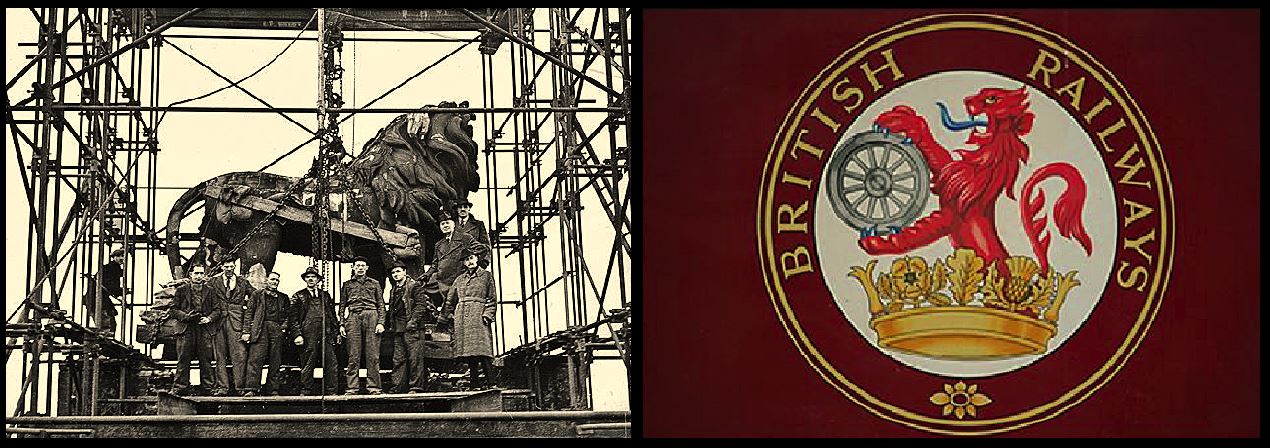
The Coade Stone Lion being removed from the brewery in 1949 (left) and the symbol for British Railways (right)
During its time at Waterloo, the lion stood outside the York Road entrance, a short distance from the station’s Victory Arch entrance.

The Coade Stone Lion at its second home- outside Waterloo station, pictured here in 1958 (image: copyright Lambeth Government)
The lion guarded the station until 1966 when it was sadly forced to make way for the ‘Tower Building’; a looming 1960s office block which squeezes right up to Waterloo’s 1920s façade in a pretty thuggish way…

The 1960s Tower Building which stands on the site of the Lion’s second home
After being displaced by the modernist office slab, the Coade Stone Lion (also known today as the ‘Southbank Lion’) had its red paint removed and was shifted to its current site… the north-eastern foot of Westminster Bridge, right between the Houses of Parliament and the London Eye.

The Coade Stone Lion being moved to Westminster Bridge in 1966 (left) and the sculpture today (right)
The lion has a twin which once also adorned the former brewery… this partner can now be found at Twickenham rugby stadium’s west gate, standing proud in a coat of gold paint.

The Southbank Lion’s twin at Twickenham Stadium (image: Geograph)
Elephant in the Room
Looming above the escalators that lead down to Waterloo’s connection with the Jubilee Line stands this rather fine elephant:

Waterloo’s Elephant
The piece was created in 2000 by Kendra Haste, a renowned artist who specializes in creating animal sculptures from wire.
Cheeky Mice

A cheeky wee mouse…
The little fellow pictured above can be found hiding behind a cheerful statue of the artist Terence Cuneo which stands close to Waterloo’s Victory Arch entrance.

Terence Cuneo statue, Waterloo station
Born in London in 1907, Terence Cuneo studied at the Slade School of Fine Art and began his career as an illustrator for books and magazines.
In WWII, he served with the Royal Engineers and also carried out work for the War Artists’ Advisory Committee, creating a number of works depicting scenes from the conflict.

War scene by Terence Cuneo, 1944
Cuneo was an expert at capturing fleeting moments in painstaking detail, a skill which led to him being appointed the official artist for Queen Elizabeth II’s coronation in 1953.

Coronation Luncheon at London’s Guildhall, Terence Cuneo, 1953 (image: Cuneo Estate)
As well as his wartime paintings and Royal commissions, Terence Cuneo was especially renowned for his paintings of railways… a selection of which can be viewed in the slideshow below.
Terence had a very playful personality and crafted many fine toys for his two beloved children- including a full-size roundabout and a miniature railway which trundled around the garden.
His sense of mischief extended to his paintings, which are famous for their inclusion of a trademark little mouse, often very well hidden….rather like an early version of ‘Where’s Wally?’… hence the wee rodent included in the Waterloo statue.
Spotting the mice within his paintings can be quite a challenge!
Terence Cuneo passed away in 1996 and his statue, sculpted by Philip Jackson, was unveiled at Waterloo station in 2004.
A short film documenting Terence at work in 1960 can be viewed below:
More Waterloo trivia to follow soon….
The Pride of Poplar Returns… London’s Latest Statue
On Friday 16th May 2014 London acquired its latest statue… a sculpture of Teddy Baldock, the East End lad who rose to fame in the 1920s by becoming Britain’s youngest ever boxing world champion- an accolade which remains to this day.
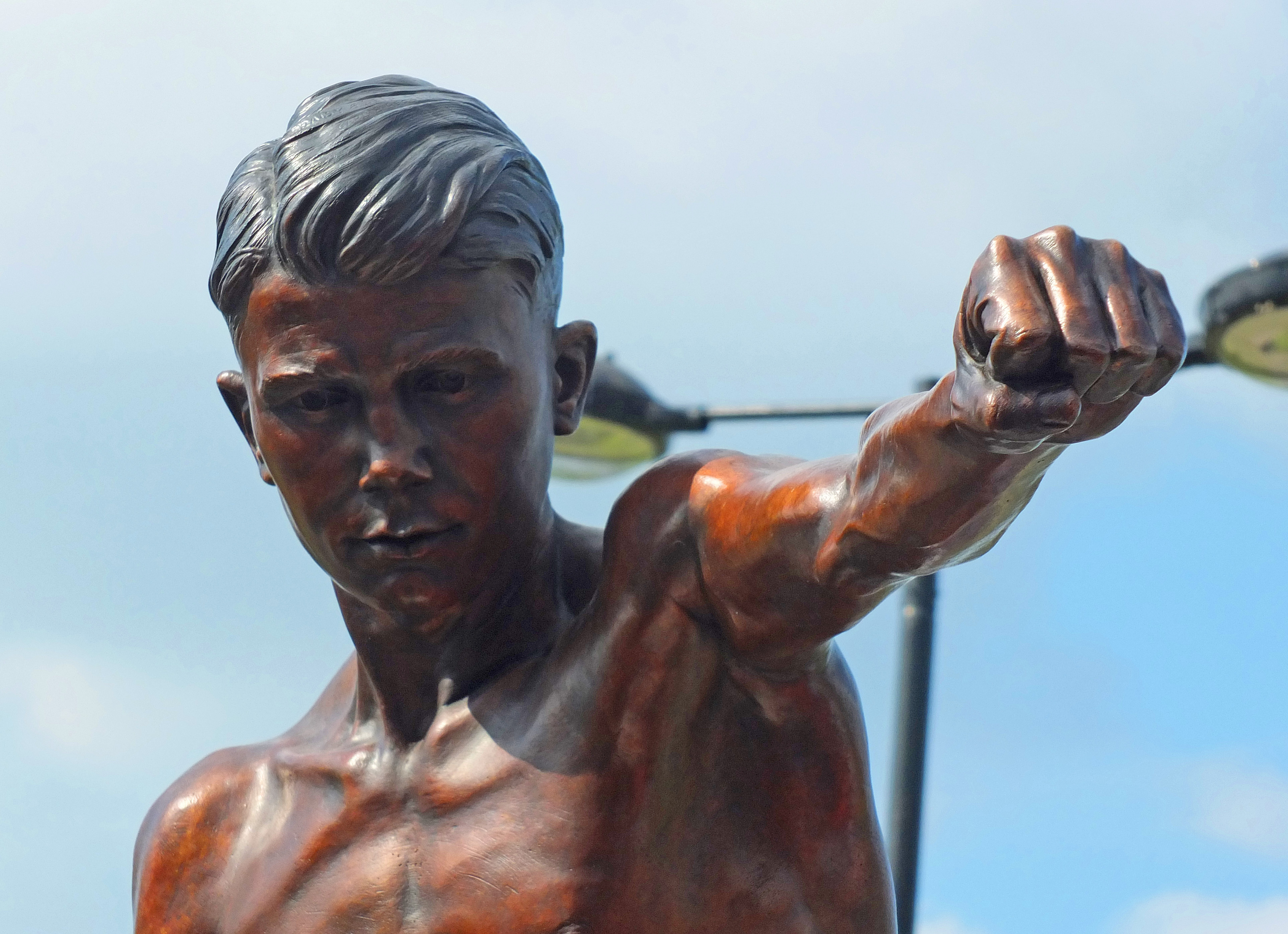
Teddy Baldock… London’s latest public artwork.
As promised in an earlier post about Teddy’s life and career (please click here to read), here are some photographs from the unveiling…
* * *
Teddy’s statue stands directly opposite Langdon Park Community Sports College which is situated beside Landgon Park DLR station.

Langdon Park DLR. Teddy’s statue stands just to the right of this view.
The weather on the day was glorious… and as 3pm approached, a large crowd gathered to witness the ceremony.

A crowd gather to see Teddy’s statue unveiled.
Until the moment arrived, the statue (sculpted by Staffordshire based artist, Carl Payne) was draped in a golden shroud… which threatened to billow off with the wind on more than one occasion!
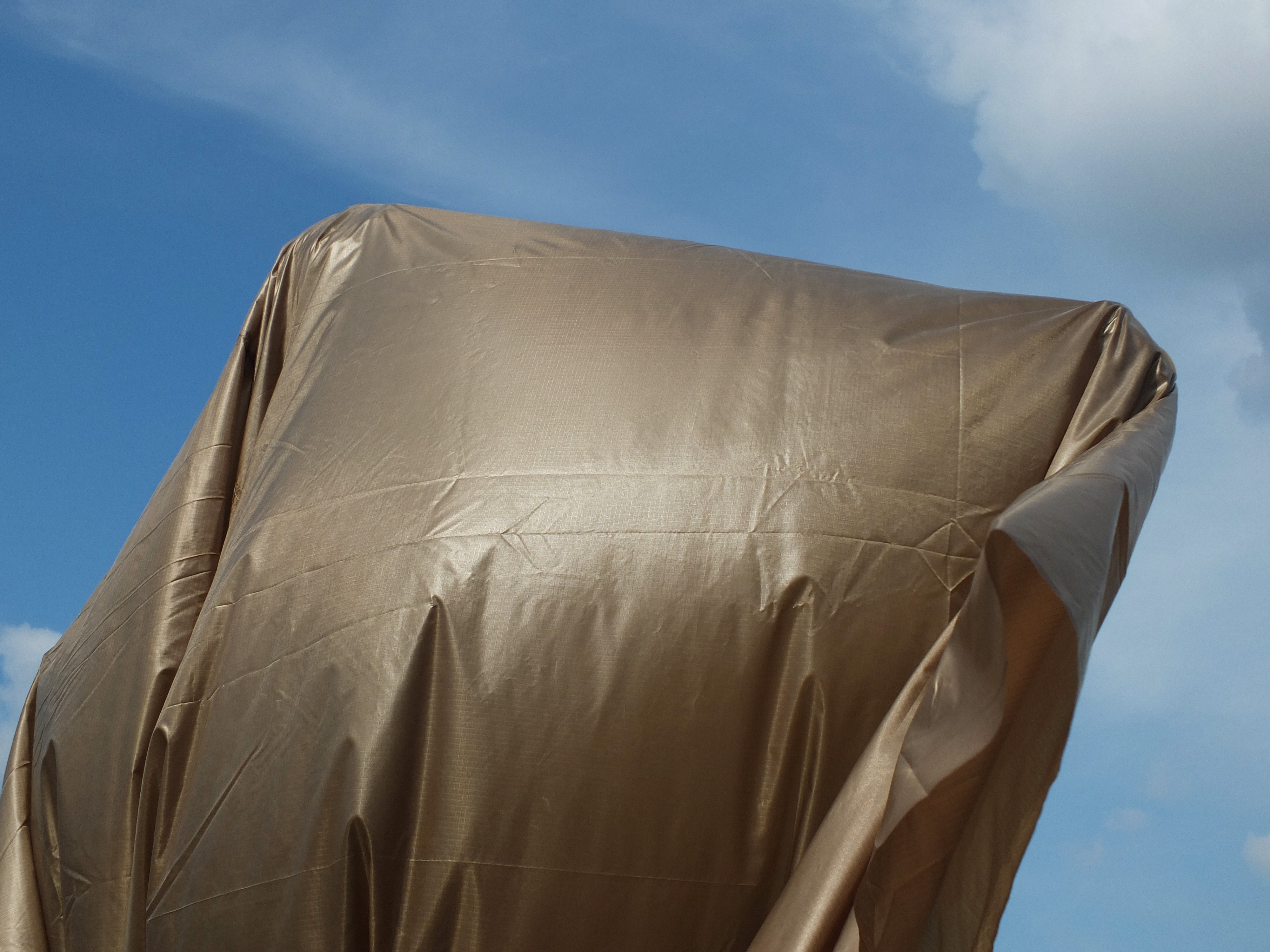
Before the unveiling…
The statue was finally unveiled by Pam Baldock; Teddy’s daughter.

Pam Baldock unveils the statue of her father.
Although wee on first impressions, the statue of Teddy is in fact life-sized…he was a tough little fighter!

Teddy Baldock
A plaque on the statue’s plinth informs the public of Teddy’s achievements.

Teddy’s plaque
After the unveiling, a group of ex-boxers gathered beneath Teddy’s statue for a fun photo-shoot.
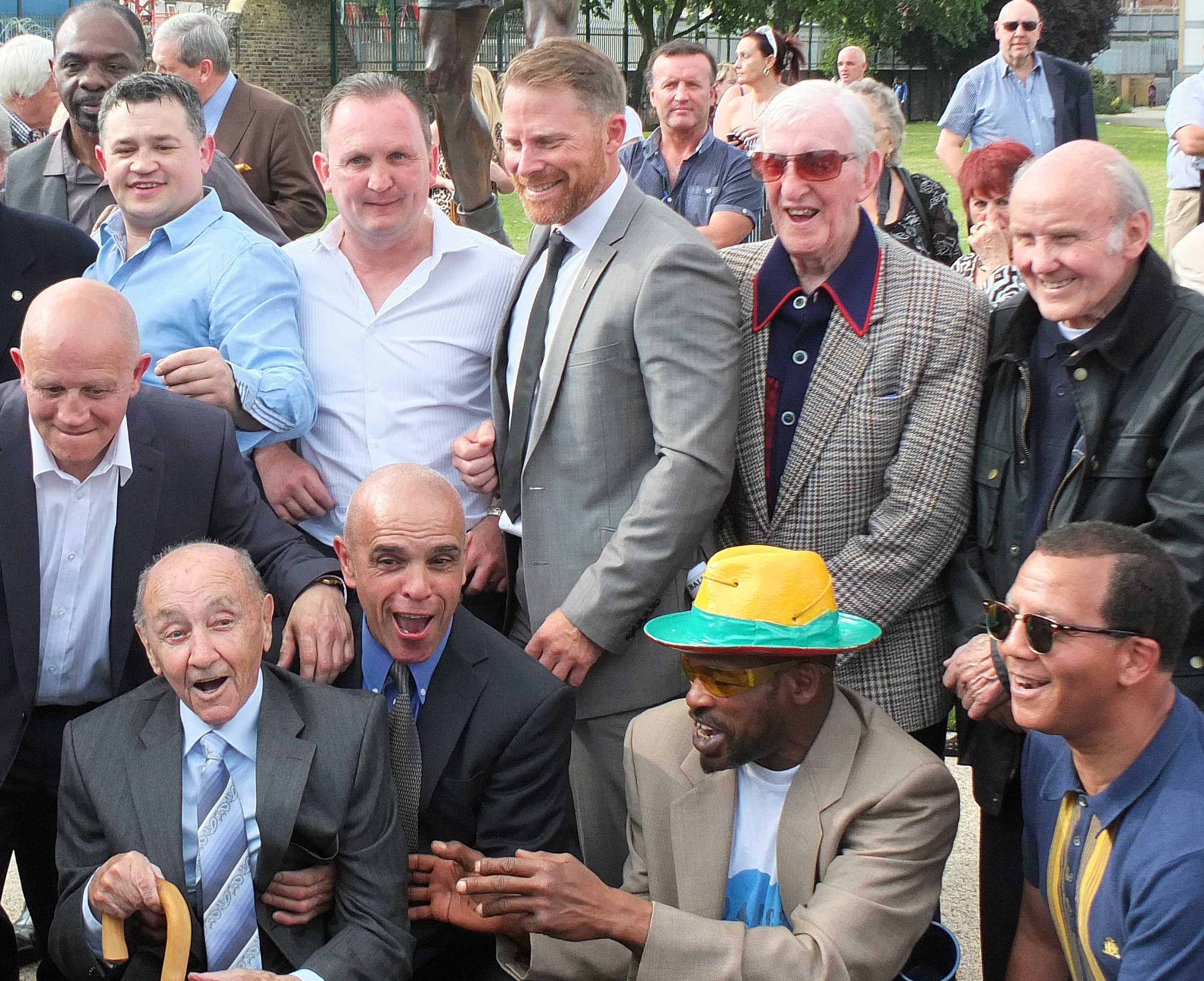
Former boxers gather in honour of Teddy Baldock.
When he died in the early 1970s Teddy was a tragic figure; penniless, homeless and long-forgotten, his funeral poorly attended.
However, thanks to the wonderful campaigning carried out by his grandson, Martin, the legacy of one of the East End’s finest sons has been revived; the huge turnout for the unveiling bearing testament to Teddy’s achievements.
As well as the statue, Teddy’s memory will now live on in the Teddy Baldock Sports Benevolent Fund; a charity which supports former sportspeople who have been disabled by physical or mental injury or are suffering from general hardship. Please click here for more information.

Teddy Baldock, the ‘Pride of Poplar’. 1907-1971.
WW1 100: London’s Memorials… The London & South Western Railway Victory Arch (Waterloo Station, Part 5)
London & South Western Railway Victory Arch
Cab Road, Waterloo Station

Waterloo Victory Arch, Cab Road (map: Google).
As we’ve seen in earlier installments,Waterloo station developed in an extremely haphazard manner throughout the Victorian period.

Waterloo station during the Victorian era.
With the terminal divided into various sub-stations, platform numbers laid out in a manner defying all common sense and a set of tracks running directly across the main pedestrian concourse (a Health and Safety nightmare by today’s standards), it is perhaps no surprise that Waterloo was branded “the most perplexing station in London.”
Realising that their ultimate dream of establishing a grand terminal within the heart of the City was off the cards, the board of the London and South Western Railway decided to completely redesign Waterloo and forge it into a station fit for purpose.
Work on the rebuild began in the late 1890s but progress was slow… with one of the main obstacles being the outbreak of hostilities in 1914.
During the Great War, 585 employees of the London and South Western Railway were killed whilst fighting for their country.
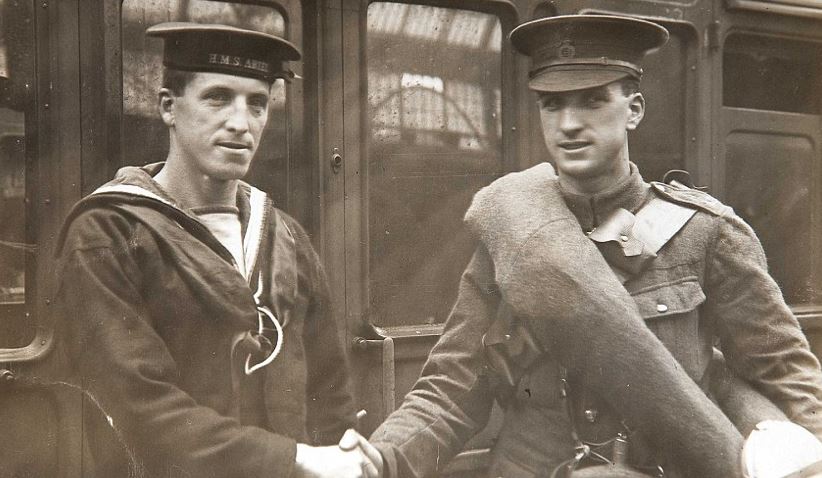
Brothers in Arms… two siblings who served in the Great War; one in the Navy, the other in the Army bid farewell at Waterloo station.
In recognition of this appalling loss, the company decided to incorporate a bold war memorial- a ‘Victory Arch’- into the new station’s entrance in honour of their fallen workers.
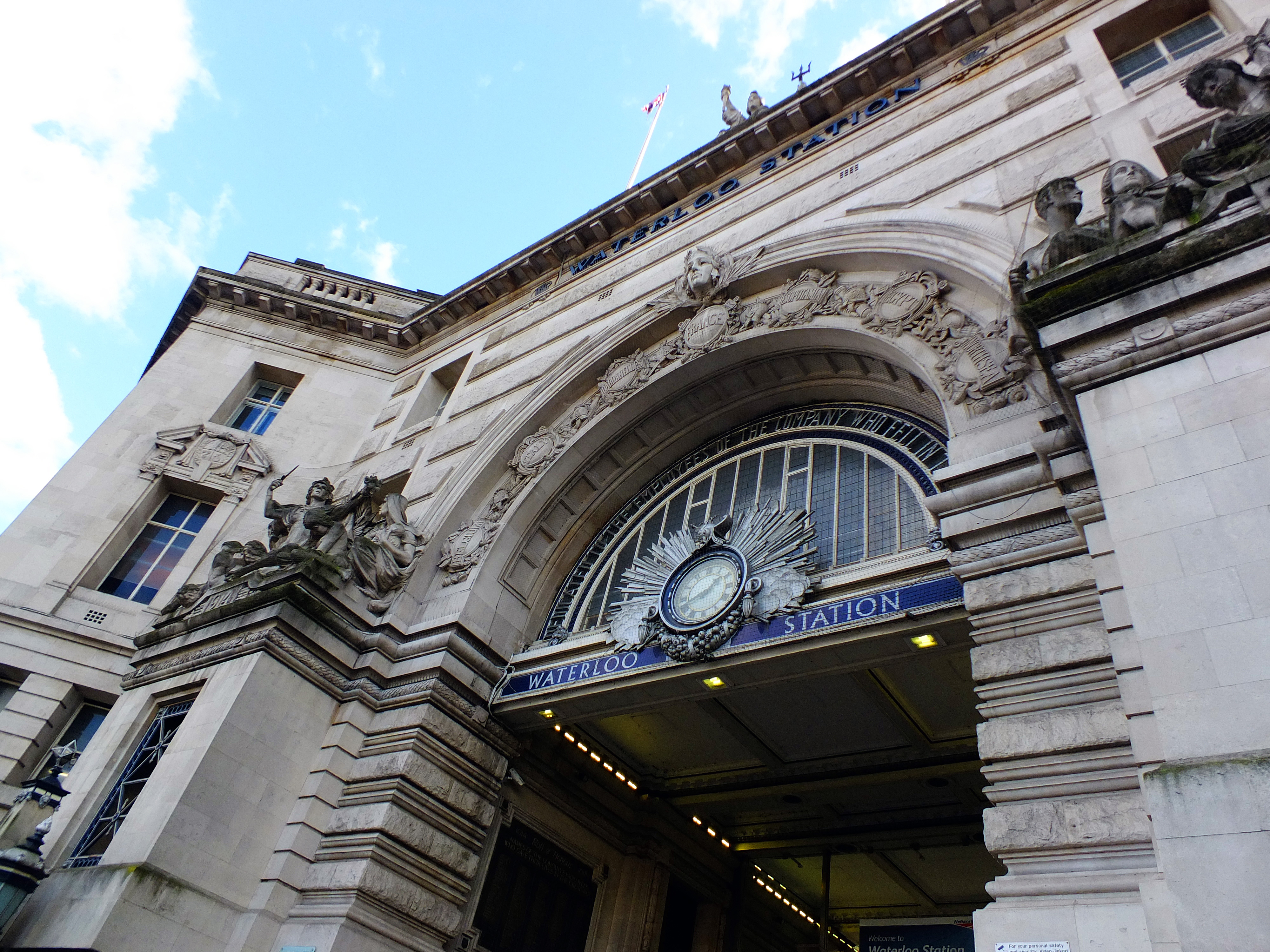
Waterloo station’s ‘Victory Arch’.
The new station- the Waterloo familiar with today’s commuters- was finally completed in March 1922.
King George V was due to conduct the opening ceremony but was forced to bow out due to illness, so Queen Mary stepped in to do the honours.
A number of decorated veterans from the Great War were also in attendance for the grand event… please click below to view footage of the station’s opening.
Although millions of passengers sweep beneath Waterloo’s Victory Arch every year, very little is known about its creator, other than that he is believed to have been a Mr Charles Edward Whiffen, a Cheltenham-born sculptor who lived and died at Altenburg Gardens, Clapham.
When he died in 1929, Charles Whiffen had just £662 and 15 shillings to his name.
*
Waterloo’s Victory Arch is dominated by a sculpture of Britannia bearing the torch of liberty.

Britannia, high over Waterloo’s main entrance.
Below Britannia, the names of the Great War’s major theatres are listed in a carved arc: Belgium, Italy, Dardanelles, France, Mesopotamia, Egypt and the North Sea.

The Great War’s main battlefields…
Either side of the arc stand two further sculptures.

Figures on the left and right representing 1914 and 1918.
On the left, representing the outbreak of war in 1914, squats Bellona; the ancient Roman goddess of war.
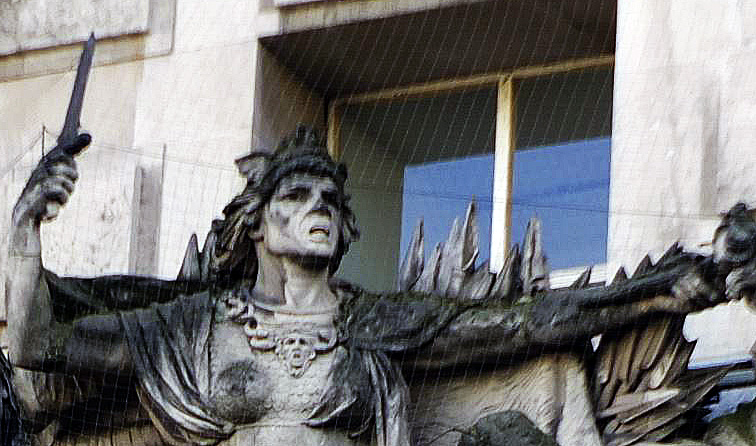
Bellona…Roman goddess of war.
This suitably demonic figure holds court amongst a terrified entourage.

Figures cowering beneath Bellona.
On the opposite side of the arch, representing peace and the 1918 armistice, sits Athena; the goddess of courage and wisdom.
Athena, who is accompanied by a far more relaxed group than the unfortunate bunch cowering around Bellona, is depidted clutching two objects; a palm of peace and a miniature figure of Nike; the winged goddess of victory.

Athena representing peace in 1918.
Solemn plaques, bearing the names of the many LSWR railwaymen lost in the conflict line the interior of the arch.

One of a number of plaques inside Waterloo’s main entrance listing the many men of the London and South Western Railway who died serving their country.
If you are a regular user of Waterloo, please spare a thought for these long lost names… and remember that missing your train by a few minutes is nothing in comparison to the hellish conditions in which these young men met their awful fate.
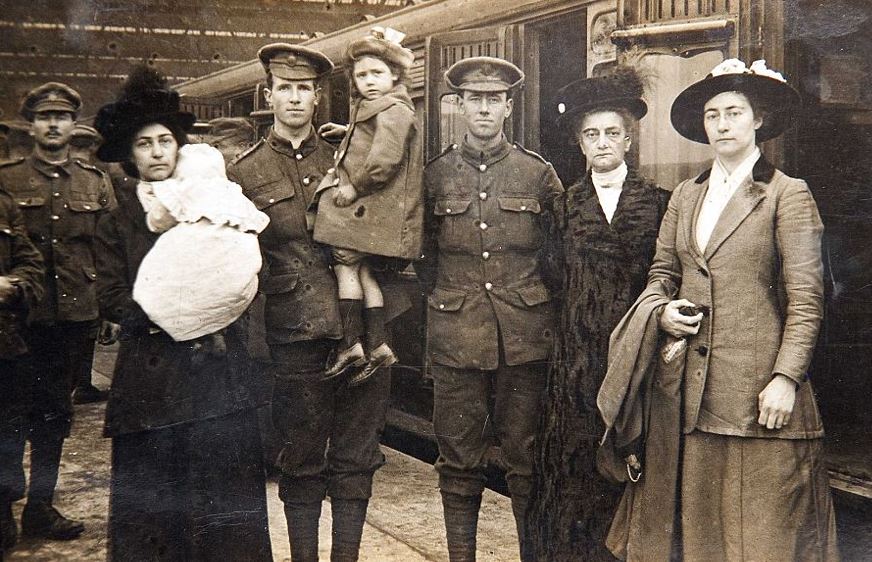
Troops say goodbye to their families at Waterloo Station before heading for battle (image: Christian Broom).
*






 View from the Mirror