Tales From the Terminals: Fenchurch Street
In the next instalment of this series on London’s major rail stations, we take a look at Fenchurch Street which, located on the eastern fringe of the City’s historic square mile and financial district, is one of the capital’s smallest mainline terminals.

Origins of the Street Itself
Fenchurch Street, from which this City terminal takes its name, is one of London’s oldest thoroughfares.
In the midst of the organised chaos that is London’s rush hour, the vast crowds of commuters pouring out of this city terminal every weekday morning probably don’t have time to pause and reflect on the fact that they are treading in the footsteps of ancient Romans…
It is believed the site of Fenchurch Street was originally occupied by a Roman fort, hastily erected to guard Londinium following Boudicca’s brutal, fiery revolt which had been unleashed on the fledgling city circa AD60.
As things settled down, the city’s founders went onto lay out the curved path which Fenchurch Street now follows.
The western end would have linked to the forum; Londinium’s hub of business and commerce, whilst the eastern extent exited the city walls at Aldgate, from where it merged with the main road to Colchester.
Over the years, a considerable bounty of Roman artefacts have been unearthed from beneath Fenchurch Street, including fragments of flooring, gold coins, evidence of workshops, a curios aisled hall and, as recently as 2008, a large, long-forgotten cellar.
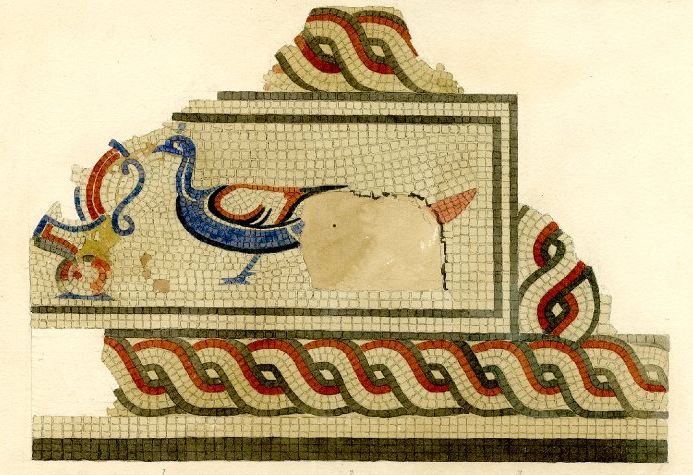
A sketch from 1858 detailing a Roman mosaic fragment found beneath Fenchurch Street
As for the name ‘Fenchurch’ itself, the origins are uncertain, but it is generally believed the term derives from ‘faenum’; the Latin phrase for hay (a market selling hay was once held regularly near what is now the junction of Fenchurch Street and Gracechurch Street).

A bale of ‘Faenum’… Latin for hay & the possible origin of the word, ‘Fenchurch’
Much more recently, Fenchurch Street lent its name to the fictitious ‘Fenchurch East’ police station, around which the 1980s based time-travelling drama, Ashes to Ashes centred!

Fenchurch East… DCI Gene Hunt and Alex Drake, upholding law & order 1980s style!
The Railway Arrives
The origins of Fenchurch Street station lie in the London and Blackwall Railway which was masterminded by Robert Stephenson and began operating in 1840.
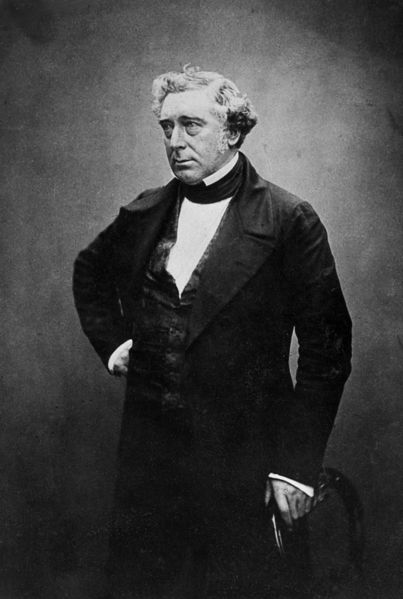
Robert Stephenson (son of railway pioneer George Stephenson), chief engineer behind the line running into Fenchurch Street (image: Wikipedia)
At first, the line was short, running for just 3 ½ miles through the East End and, with stations based at Shadwell, Stepney, Millwall and the Isle of Dogs, the route was essentially created to serve London’s then sprawling dockyards.
Fenchurch Street remained closely associated with the docks for many years; a link which was atmospherically summed up in 1921 by the writer H.M Tomlinson when describing the station in his book, London River:
“Beyond its dingy platforms, the metal track which contracts into the murk is the road to China… it is the beginning of Dockland.”
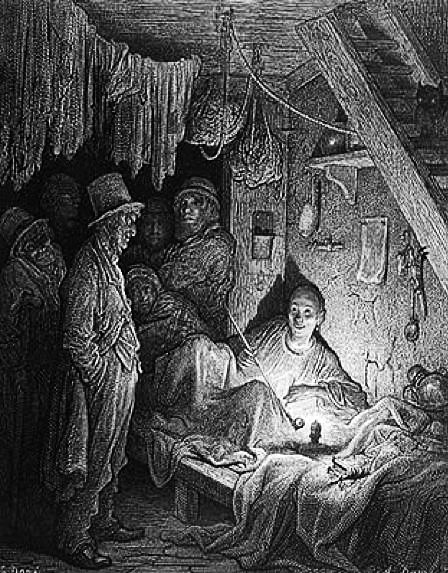
The capital’s vast docks held many links with the Orient and until WWII, London’s China Town centered around Poplar in the East End. This famous Victorian illustration depicts an opium den which would have been found in the area, a short train ride out of Fenchurch Street.
A few years later, Ford Madox Ford described one of the most common types of passenger to be seen at Fenchurch Street; “huskily earringed fellows” donned in “blue-white spotted” neckerchiefs; sailors passing through the station making their way to or from a stint at sea.

Popeye and Bluto… two typically tough sailors!
Today, much of the original harbour-linked route is now traversed by the modern Docklands Light Railway, the Jolly Jack Tars now replaced by smart-suited financial workers.
*
During its first year, the city terminal for the London and Blackwall Railway was located on Minories, opposite the Tower of London and a few hundred feet behind the present Fenchurch Street station.
Today, this historic site is now covered over by Tower Gateway DLR station.
The Minories pub, which can be seen next door tucked away beneath the brick viaduct, occupies a space which was once home to one of the early station’s main entrances.

Site of the former Minories Station
Fenchurch Street station opened in 1841, replacing the temporary terminal which had served the line for one year.
Although it wasn’t London’s first major railway station, Fenchurch Street represented the first time that the railways were allowed to enter the city’s historic heart (earlier terminals, such as Euston and London Bridge, had to make do with sitting on the fringes of what were then the capital’s outskirts).
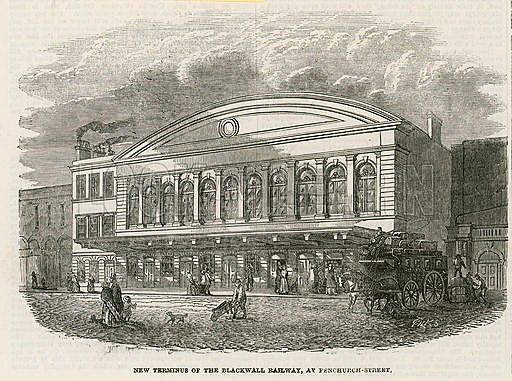
Tracks right into the City… Fenchurch Street, 1853
The building was originally designed by Sir William Tite; the architect behind the Royal Exchange (once a major business centre, now a luxury shopping mall opposite the Bank of England).

The Royal Exchange; another of Tite’s vital City landmarks, pictured here in 1844. (Image: Wikipedia)
Tite also carried out work on railway stations in Windsor, Carlisle and Edinburgh.
A fashionable Chelsea street is named after William Tite… and, for those with a less mature sense of humor, the great architect’s moniker is pronounced as in ‘tight’!

William Tite, father of Fenchurch Street station (image: National Portrait Gallery)
During the first nine years of operation, the London and Blackwall Railway was unusual in that no steam engines ran along its tracks… instead, the trains were hauled by long, sturdy cables, powered by stationary boilers housed in depots at Fenchurch Street and Blackwall.

The London and Blackwall Railway’s early winching system. This machinery was based at Minories, opposite the Tower of London.
On the approach into Fenchurch Street, the carriages would be detached from the rope, relying upon gravity to roll the convoys into their final destination.
When leaving, the cars usually required a slight push from the platform staff!
By 1849 this system was deemed clumsy and impractical. Regular steam trains were introduced and their wheel-less predecessors were auctioned off, fetching the handsome sum of £11,710.
*
In 1854, Fenchurch Street was enlarged by George Berkley who added a vaulted roof and the present day façade. Educated in Hampstead, George Berkley was well qualified, having worked on railways in India and South Africa, as well as the experimental London and Croydon ‘atmospheric’ railway.
Fenchurch Street also became notable for pioneering the first railway bookstall which was the brainchild of William Marshall and has been much emulated ever since.

An 1886 ‘Punch’ magazine sketch depicting an early station bookstall as pioneered at Fenchurch Street staion (image: University of Toronto Library Archive)
Despite its central location and the role which it plays in London’s rush hour, Fenchurch Street is unique in that it is the capital’s only major terminal which has no direct link to the tube network…
*
Britain’s First Railway Murder
At 9.50pm on the night of the 9th July 1864, a Hackney bound service chugged out of Fenchurch Street, embarking on what should have been a straight forward journey.

Steam engines at Fenchurch Street in 1905 (photo: Disused Station.org)
In fact, the service proved to be far from routine and quickly found itself at the centre of one of the most notorious incidents in the history of Britain’s railways…
Being long after the rush hour, the carriages that summer evening were relatively empty and, settled down in one of the first-class compartments, there sat a Mr Thomas Briggs; a 70 year old banker.
At 10.10pm, the train pulled into Hackney Central station.
As two clerks prepared to board, the first class compartment in which Mr Briggs had been sitting was found to be in a complete mess; the plush interior splattered with blood. An abandoned walking cane and an empty leather bag lay amongst the carnage… but the occupant was nowhere to be seen.
Mr Briggs, the unfortunate passenger was soon discovered lying on the tracks, some distance back from Hackney station where the line passed Victoria Park. He had clearly been violently assaulted and robbed before being hurled out of the moving train.
Barely alive, the elderly victim was quickly carried to the Top O’ the Morning pub on nearby Cadogan Terrace… but sadly, it was to no avail and Mr Briggs died in the tavern.
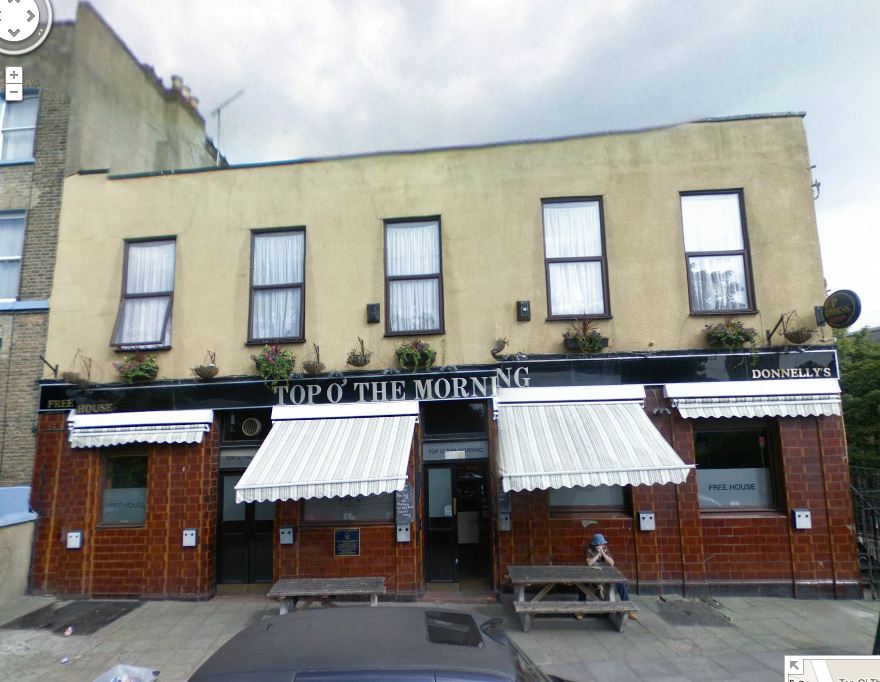
The ‘Top of the Morning’ pub.. still serving pints today (photo: Google Street View)
The suspect was soon identified thanks to information from a London cabbie who had purchased a gold watch chain from a German tailor called Franz Muller… an item which it transpired had belonged to Mr Briggs.

Franz Muller
Backed up by further evidence from a Cheapside-based pawnbroker (known by the rather startling name of John Death), Franz Muller became the prime suspect and a warrant for his arrest was issued.
However, by this point Muller had fled the country and was bound for New York.
Luckily the steamer he was on was rather slow and detectives from Scotland Yard were able take a faster vessel which overtook Muller’s ship… the cops were lying in wait for the killer when he docked in the Big Apple.

The SS City of Manchester… the fast ship upon which detectives in pursuit of Franz Muller travelled to New York.
Upon his arrest, Muller was found to be in possession of Mr Briggs’ gold watch… along with his elderly victim’s hat, to which Muller had made several snazzy alterations.
Franz Muller didn’t have any time for sightseeing in America.
He was taken back to London and tried; the jury taking just 15 minutes to find the culprit guilty.
Unsurprisingly for the time, the sentence was death.
Franz Muller was hung outside Newgate Prison on the 15th November 1864, his execution being one of the last to be held in public. Despite this, there was still a great appetite amongst the public for these gory spectacles… Muller’s dance with the gallows attracted a crowd of 50,000….

A Victorian crowd gather to witness an execution at Newgate….
Franz Muller’s fatal encounter with Thomas Briggs on the commuter train from Fenchurch Street that fateful Victorian evening led to a number of security features being introduced on Britain’s railways, including corridors to connect compartments and the emergency stop cord.
The vicious murder also helped to stoke fears of crime on public transport; a deep-rooted concern which has been with us ever since….
Cabbie’s Curios: Lovely Day for a Guinness on Fleet Street
Fleet Street is home to some of the capital’s most historic pubs- one of which is The Tipperary.
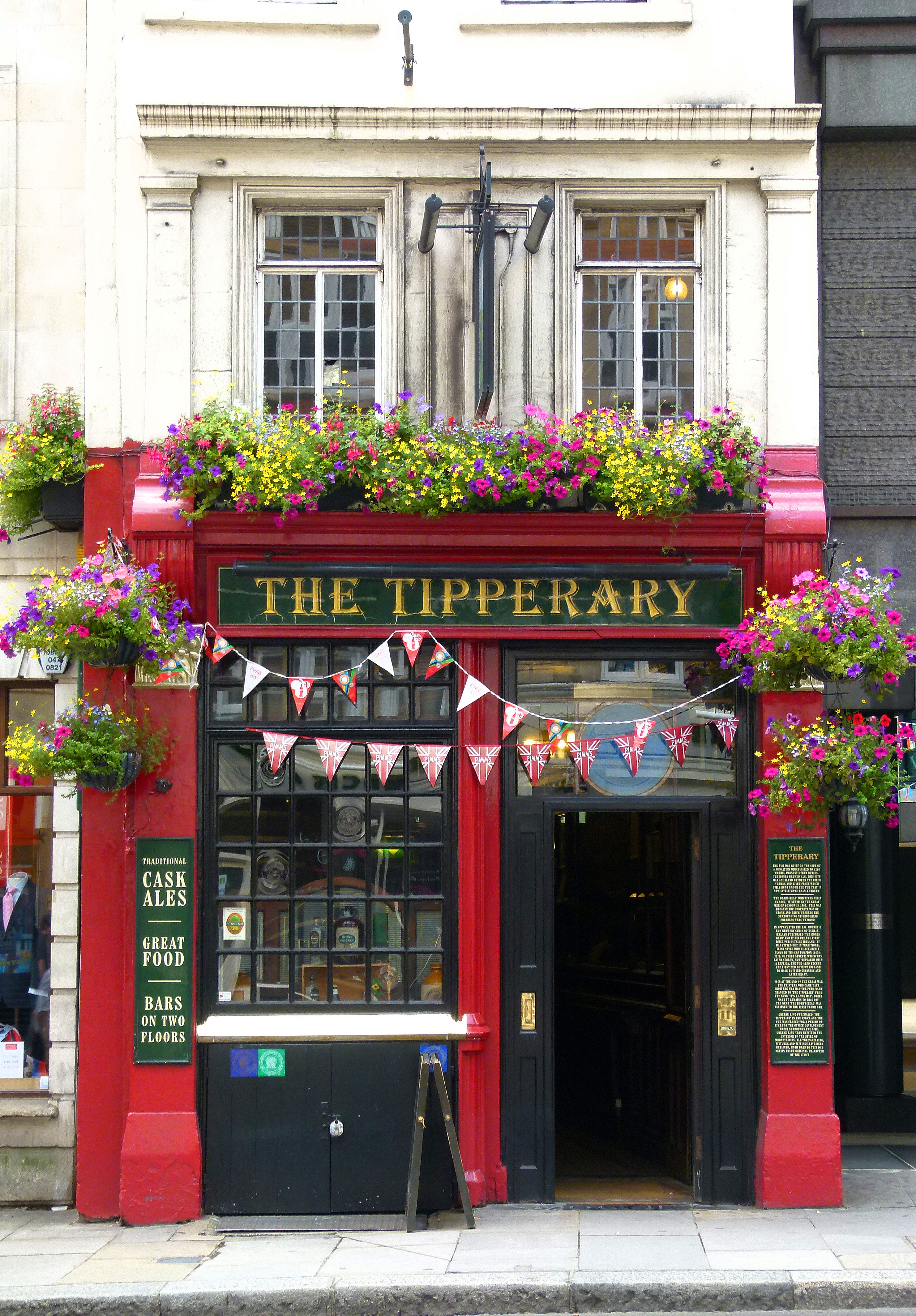
The spot upon which this wee pub sits is a location which has long been associated with boozing.
Way back in the 13th century, the land was occupied by the ‘White Friars’ monastery- where the pious monks spent considerable time and effort brewing ale.
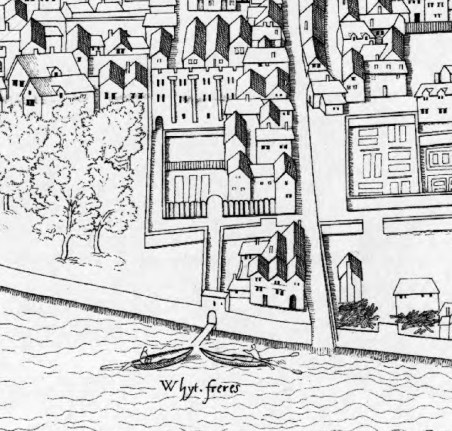
White Friars monastery, as seen on the ‘Copperplate’ map in the 1550s, shortly after the Dissolution.
After Henry VIII kicked up a fuss in the 1530s and 40s, such monasteries were wiped from the landscape and the land upon which they stood was turned over to other purposes.
By the 16th century, the first tavern had appeared on the spot now occupied by The Tipperary.
This forerunner was known as The Bolt-in-Tun (the pub sign outside signalling the name with an image of a lightning bolt stuck through a barrel) which, having been built from tough, flame-proof stones belonging to the former monastery, managed to survive the 1666 Great Fire of London intact.
The Bolt-in-Tun eventually became a popular coaching tavern for those traveling between London and the West Country.

Poster advertising coach services from Fleet Street’s Bolt-in-Tun to the West Country (image: Look and Learn)
In the 1880s, the pub was re-built and renamed The Boar’s Head.
However, a reminder of the previous name can still be found across the road- a small alley called ‘Bolt Court’.
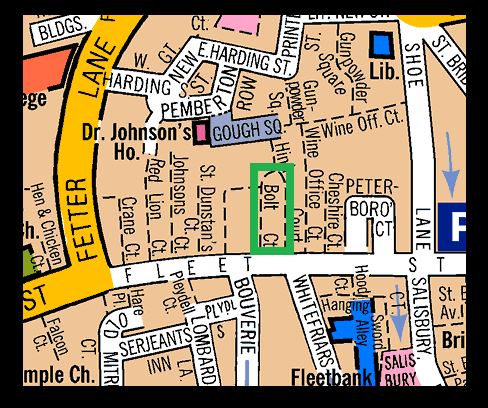
Location of Bolt Court (marked in green) which can be found opposite the present day Tipperary pub (A-Z imaging)
Perhaps the most interesting fact for alcohol aficionados though is that the Bolt-in-Tun was purchased in the 1700s by Mooney’s– a Dublin based company.
Once the pub was in their hands, the new owners decided to introduce a new drink which had recently become popular back on the Emerald Isle… a sturdy, black stout, so rich in iron that it was said to be ‘good for you’… the drink was Guinness, and its introduction at the Bolt-in-Tun made the Fleet Street pub the first ever drinking den to sell the now world-famous drink outside of its native Ireland.
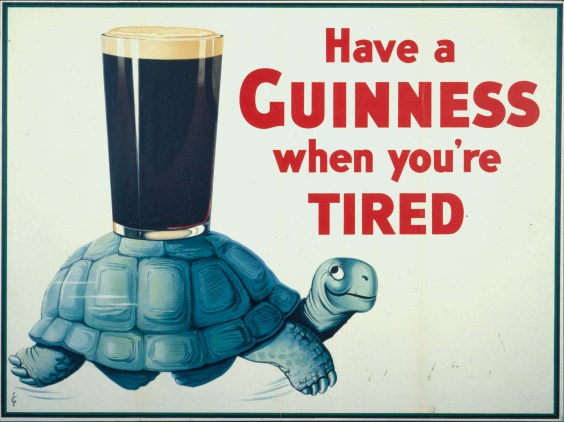
One of Guinness’ many famous, classic posters.
During World War One, what was essentially the capital’s first Irish pub attracted many young Irish soldiers as they passed through London.
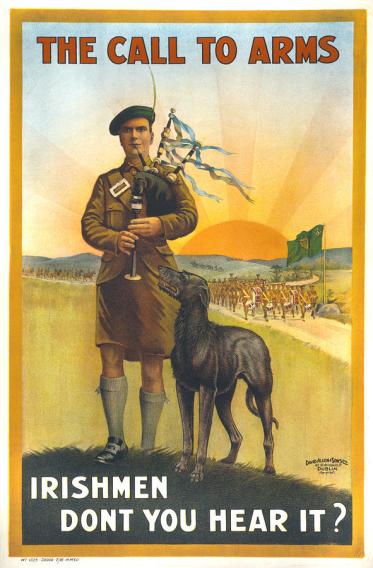
Irish WWI recruitment poster
Such was the popularity with the Irish squaddies who were a long way from home that the pub was re-christened The Tipperary… the name which remains to this day.

The present day sign for the Tipperary on Fleet Street.
304 Holloway Road: Inside the Tortured Mind of the ‘Telstar Man’
At 304 Holloway Road you’ll find a 24 hour grocery store, above which sits a shabby three-storey flat, complete with decaying paintwork and a boarded up window.
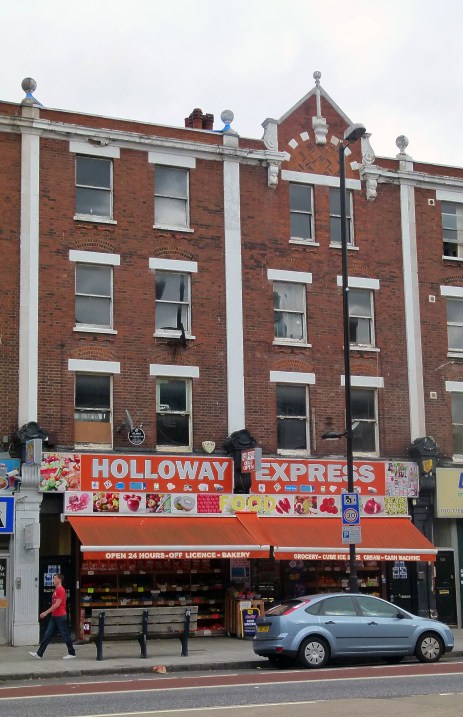
304 Holloway Road
Despite its dilapidated state, the apartment on this north London road actually has quite a tale to tell… a story involving music, madness and murder.
*
Between 1961 and 1967, the accommodation above 304 Holloway Road was rented out by a fellow named Joe Meek.

Joe Meek (photo: Getty Images)
Born in Newent in Gloucestershire’s Forest of Dean in 1929, Joe Meek’s early upbringing was rather bizarre- for the first four years of his life he was raised as a girl thanks to his mother’s intense desire to have a daughter.
Joe Meek first arrived in London in 1954 after landing a job as a sound engineer for Stones; a popular radio and record shop on the Edgware Road.
It was a job which suited him well. From an early Joe had been fascinated with electronics and was always scavenging components with which he could tinker. With these various bits and bobs he would experiment, cobbling together circuits, radios and so on.
Joe Meek was also fascinated by outer space; a passion which was nurtured when he became a radar mechanic for the RAF during his period of national service.

Joe Meek whilst serving in the RAF
After spending time working at Stones, Joe progressed to a new job, becoming a producer at Lansdowne Recording Studios, moments away from his home on Arundel Gardens in Notting Hill.
Confident in his new role, he wrote a letter home to his mother stating, “I’m sure your son is going to be famous one day, Mum.”

Lansdowne Recording Studios (photo: Google Street View)
At Lansdowne, Joe Meek proved to be quite the maverick, frequently ignoring his superiors in order to pursue his quest of developing new sound techniques.
Whilst at the Notting Hill studio, he maintained a strictly guarded ‘secret box of sounds’; a container kept under lock and key which held all manner of unusual objects for creating unorthodox audio effects.
Before long, Joe became tired of working within a large organisation and decided to go it alone as an independent record producer.
In pursuit of his ambition, he moved into 304 Holloway Road where he set about creating a makeshift but innovative studio.
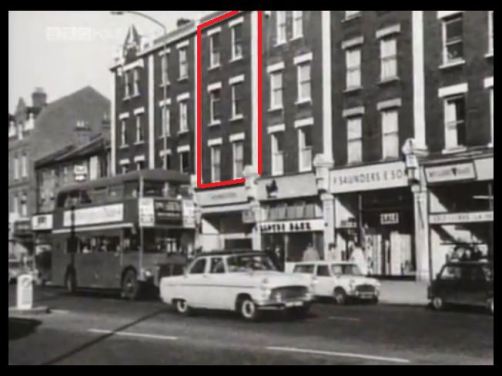
304 Holloway Road (marked in red) as it appeared in the early 1960s (copyright Jim Blake)
The independent label established in Holloway became known as RGM Records (Joe’s full birth name actually being Robert George Meek).
At the time, such a move was revolutionary.
In the late 1950s and early 60s, pop records were the domain of big corporations, tightly controlled by cigar-puffing businessmen. The sound engineers who worked for these companies did so in strict, clinical environments, armed with clipboards and donned in white lab coats.
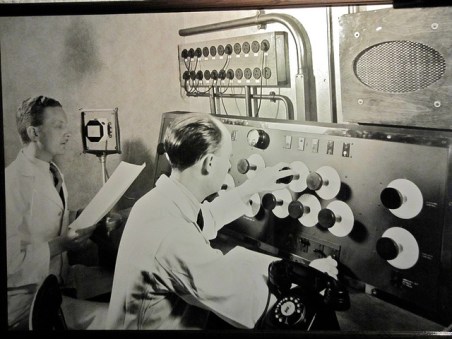
Sound engineering in the traditional way
Joe Meek’s way of working was the complete opposite to this traditional method.
Packed with all manner of improvised equipment, his Holloway Road studio was easy-going and unconventional.
From the stairway to the bathroom, all rooms were made available for recording sessions. Joe would also use seemingly every day domestic items to create all manner of new sounds, the flat itself more or less becoming an instrument in its own right. He was particularly fond of stamping on the upper floors to enhance drumming effects.
As his experiments developed, Joe Meek’s work took on an eerie, futuristic sound; one which he hoped would define an era as the space-age began to grip the 1960s.

Joe Meek at work in his Holloway Road studio
*
The first major hit to be produced at 304 Holloway Road was Johnny Remember Me, a song about a young man haunted by his dead lover. Sung by John Leyton, the single reached UK number one in July 1961.
The success of Johnny Remember Me was followed by an even bigger hit in August 1962… Telstar.

Written and recorded by Joe Meek at 304 Holloway Road, Telstar was an instrumental track created to celebrate the success of the radical new communications satellite which had been launched in July 1962.

The original Telstar satellite under construction
Played by Meek’s backing group, The Tornados, the ode to space technology featured all manner of sci-fi sounds which had been concocted in the unlikely setting of the north London studio.
The record was an instant success. As well scoring a number one in the UK, it became the first single by a British group to hit number one in the United States; a massive achievement.
Telstar is now considered to be Joe Meek’s masterpiece (it can be heard at the end of this article) and such was its popularity that it should have set him up financially for life.
However, a French composer by the name of Jean Ledrut claimed that Meek had pinched the tune from a score he’d written for the Napoleonic film, Austerlitz. This led to a lengthy legal battle which prevented Joe Meek and the Tornados receiving any royalties from their hit.
*
Joe Meek continued to forge extraordinary new sounds in his cramped studio, but the stresses of life and business were beginning to take their toll.

Joe Meek in 1966; photo copyright David Peters (David managed a group called ‘Dannys Passion’ who recorded with Joe Meek. You can read about his memories here: http://www.dannyspassion.webeden.co.uk/)
Joe was homosexual- illegal in Britain at the time and something which led to the producer being blackmailed on numerous occasions.
By the mid-1960s, the music scene was changing rapidly and Joe Meek’s once innovative melodies were beginning to lose favour. The last major hit to be produced at Holloway Road was Have I the Right by The Honeycombs (a band noted for having a female drummer) which was released in 1965.
As the decade pushed on, RGM records began to struggle financially. Convinced he’d win the Telstar case, Joe had been spending heavily, confident that the money would eventually come through. It didn’t though of course.
Friends of Joe Meek noticed a distinct change in his character.
Clearly under stress, he’d developed a short, volatile temper and, more worryingly, had become intensely paranoid, convinced that his Holloway Road flat had been bugged by rival companies in order to steal his ideas.
So paranoid was Joe that he refused to leave anyone alone in the studio for fear that they’d snoop on his work.

Joe Meek outside his Holloway Road studio
He was also becoming deeply obsessed with the occult and took to setting up recording equipment in graveyards, hoping that spirits from the other side would offer him guidance.
One evening, one of these graveyard recorders picked up the sound of a cat mewing- Meek was convinced that a human spirit was trapped in the feline body and that the cat-like noises were in fact desperate calls for help.
He even began to claim that his idol, Buddy Holly (killed in a plane crash in 1959) made frequent visitations to the Holloway Road flat late at night, offering snippets of musical wisdom.

The legendary Buddy Holly… whom Joe Meek claimed would regularly visit 304 Holloway in spirit form…
*
Joe’s mental state was deteriorating rapidly.
in January 1967 things came to a head when the body of a 17 year old youth named Bernard Oliver was discovered in rural Suffolk. The victim had been murdered in a particularly gruesome manner; expertly cut into eight pieces before being packed into a suitcase.
Bernard Oliver had been working as a factory hand in North London and, prior to his murder, had been missing for two weeks.
When the Metropolitan police stated that they would be interviewing all known gay men in London, Joe Meek became terrified. Even though he had absolutely nothing to do with the case, his delusions were pushed to new heights as he became convinced that the police would somehow find a way of implicating him.
*
On the morning of 3rd February 1967 (which happened to be the 8th anniversary of Buddy Holly’s tragic death), Patrick Pink who was a friend and studio assistant, called in to see Joe- who refused to speak and promptly stormed off upstairs.
Patrick mentioned the fact that Joe was in a bad mood to Violet Shenton, the long suffering landlady of 304 Holloway Road who often took to knocking the ceiling with a broom handle when the sound levels became too much.
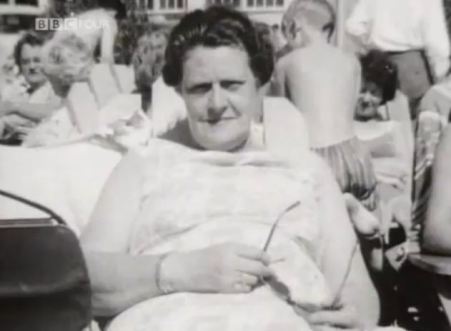
Violet Shenton
In her typically blunt, but motherly and well-meaning manner, Mrs Shenton stubbed out a cigarette and told Patrick that she’d go and sort her tenant out. When she arrived upstairs, the last words Violet was heard to say were “calm down Joe”… a statement which was suddenly followed by two gunshots…
Using a hunting gun which had been left in the flat by singer, Heinz Burt, Joe Meek had committed both murder and suicide within seconds, shooting Violet before quickly turning the weapon on himself.
He was 37 years old.
*
Just three weeks after the lethal shooting, a French court finally brought the Telstar case to a close.
They ruled in Meek’s favour, stating that he couldn’t possibly have plagiarised Jean Ledrut’s work as the film wasn’t released in the UK until 1965; three years after the success of Telstar.
Today, Joe Meek’s former home and studio sits quietly on the Holloway Road, offering little sign as to the creativity and tragedy which played out within decades before.
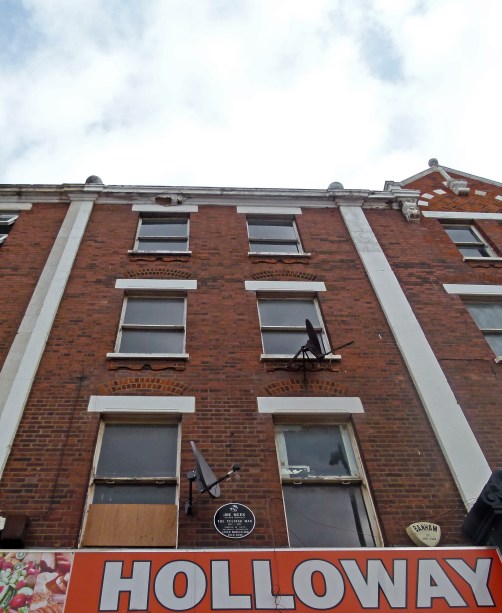
304 Holloway Road… a shadow of its former self
The only reminder of the premises’ former role is a black plaque… which, quite fittingly, is located right beside a derelict satellite dish; an item which Joe Meek would no doubt have taken great interest in.

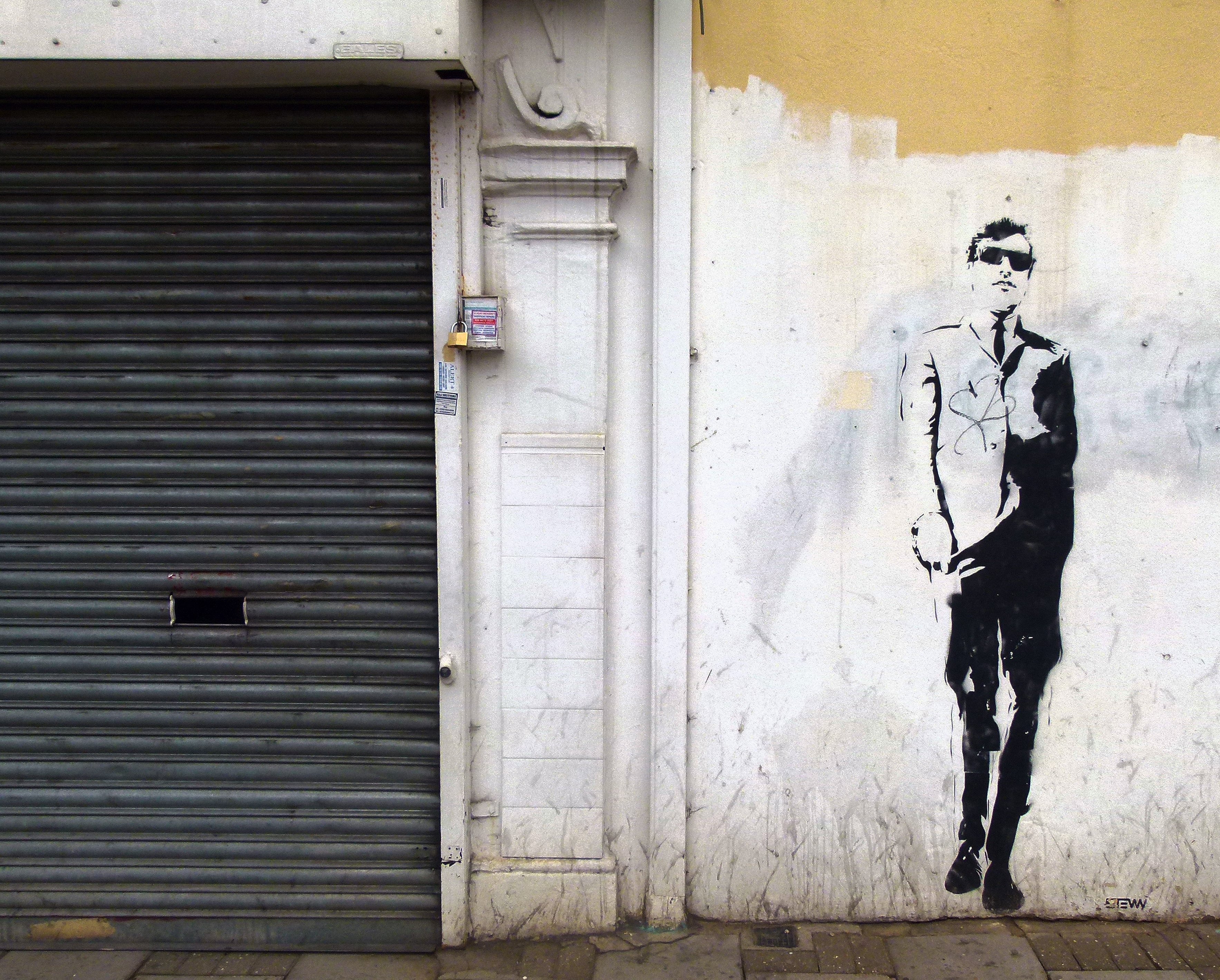
A few hundred yards away, another small reference can be found… a Banksy-esque graffiti mural depicting Joe Meek on a grubby wall opposite Holloway Road tube station.
To listen to Joe Meek’s most famous work, click the clip below:





 View from the Mirror