WW1 100: London’s Memorials… The London & South Western Railway Victory Arch (Waterloo Station, Part 5)
London & South Western Railway Victory Arch
Cab Road, Waterloo Station

Waterloo Victory Arch, Cab Road (map: Google).
As we’ve seen in earlier installments,Waterloo station developed in an extremely haphazard manner throughout the Victorian period.

Waterloo station during the Victorian era.
With the terminal divided into various sub-stations, platform numbers laid out in a manner defying all common sense and a set of tracks running directly across the main pedestrian concourse (a Health and Safety nightmare by today’s standards), it is perhaps no surprise that Waterloo was branded “the most perplexing station in London.”
Realising that their ultimate dream of establishing a grand terminal within the heart of the City was off the cards, the board of the London and South Western Railway decided to completely redesign Waterloo and forge it into a station fit for purpose.
Work on the rebuild began in the late 1890s but progress was slow… with one of the main obstacles being the outbreak of hostilities in 1914.
During the Great War, 585 employees of the London and South Western Railway were killed whilst fighting for their country.
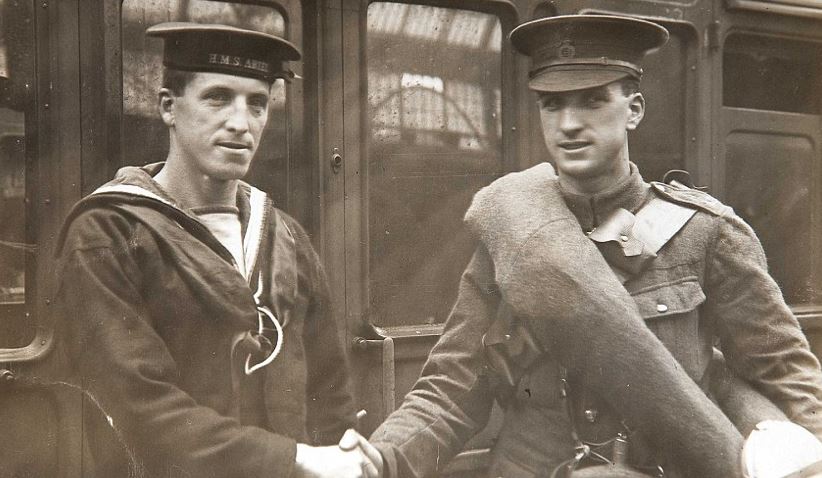
Brothers in Arms… two siblings who served in the Great War; one in the Navy, the other in the Army bid farewell at Waterloo station.
In recognition of this appalling loss, the company decided to incorporate a bold war memorial- a ‘Victory Arch’- into the new station’s entrance in honour of their fallen workers.
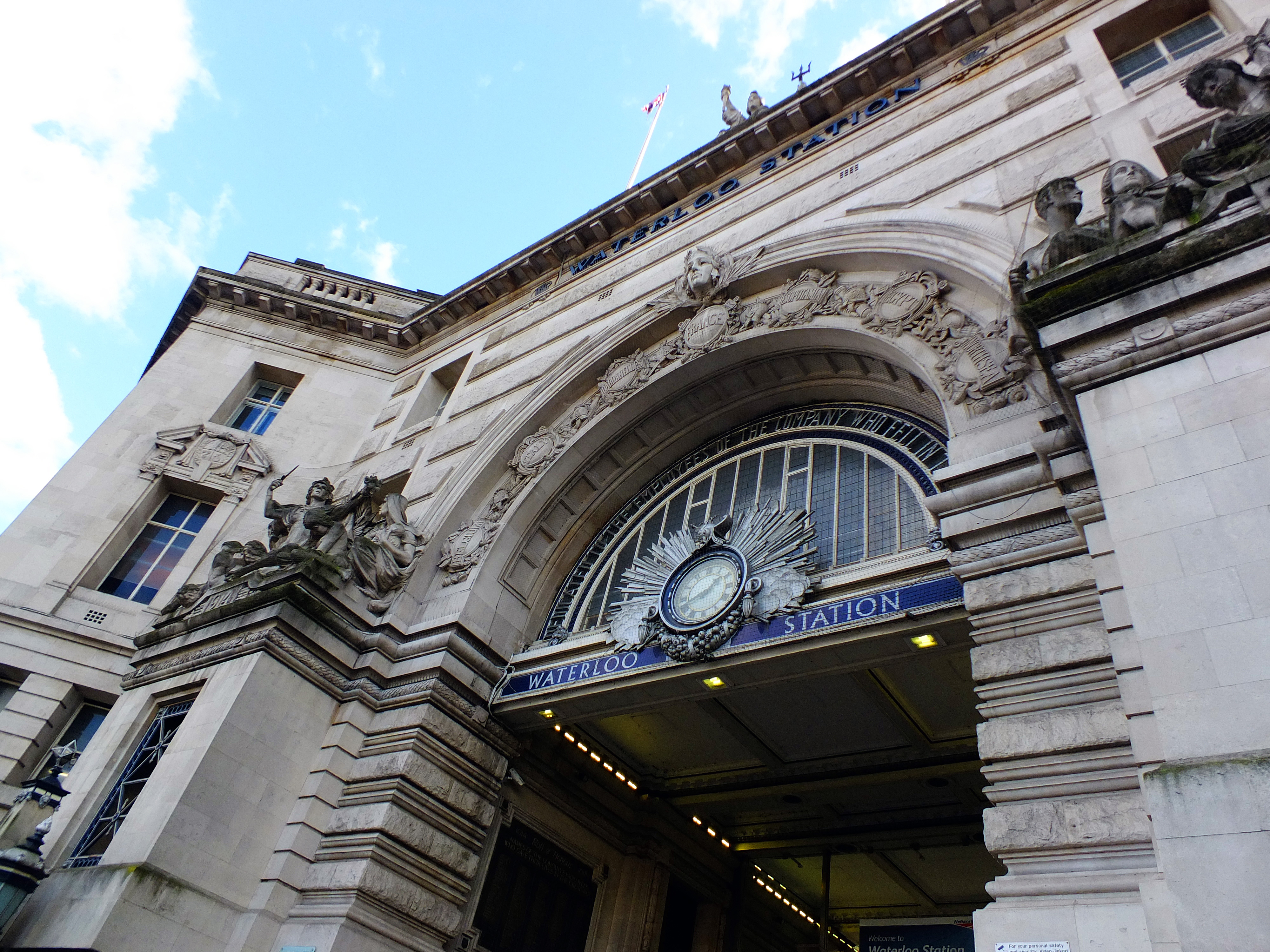
Waterloo station’s ‘Victory Arch’.
The new station- the Waterloo familiar with today’s commuters- was finally completed in March 1922.
King George V was due to conduct the opening ceremony but was forced to bow out due to illness, so Queen Mary stepped in to do the honours.
A number of decorated veterans from the Great War were also in attendance for the grand event… please click below to view footage of the station’s opening.
Although millions of passengers sweep beneath Waterloo’s Victory Arch every year, very little is known about its creator, other than that he is believed to have been a Mr Charles Edward Whiffen, a Cheltenham-born sculptor who lived and died at Altenburg Gardens, Clapham.
When he died in 1929, Charles Whiffen had just £662 and 15 shillings to his name.
*
Waterloo’s Victory Arch is dominated by a sculpture of Britannia bearing the torch of liberty.

Britannia, high over Waterloo’s main entrance.
Below Britannia, the names of the Great War’s major theatres are listed in a carved arc: Belgium, Italy, Dardanelles, France, Mesopotamia, Egypt and the North Sea.

The Great War’s main battlefields…
Either side of the arc stand two further sculptures.

Figures on the left and right representing 1914 and 1918.
On the left, representing the outbreak of war in 1914, squats Bellona; the ancient Roman goddess of war.
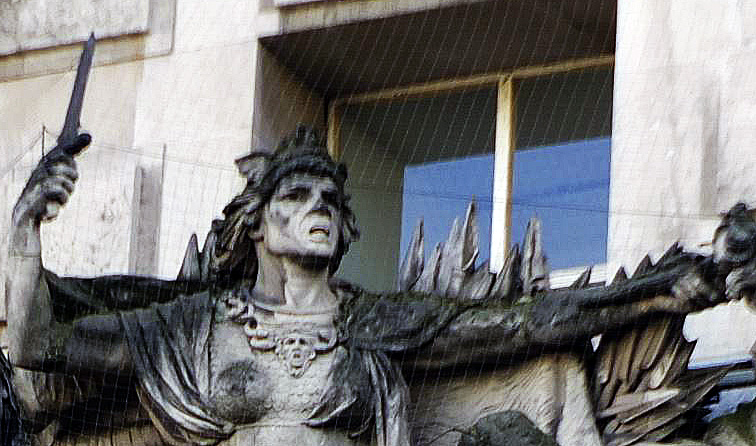
Bellona…Roman goddess of war.
This suitably demonic figure holds court amongst a terrified entourage.

Figures cowering beneath Bellona.
On the opposite side of the arch, representing peace and the 1918 armistice, sits Athena; the goddess of courage and wisdom.
Athena, who is accompanied by a far more relaxed group than the unfortunate bunch cowering around Bellona, is depidted clutching two objects; a palm of peace and a miniature figure of Nike; the winged goddess of victory.

Athena representing peace in 1918.
Solemn plaques, bearing the names of the many LSWR railwaymen lost in the conflict line the interior of the arch.

One of a number of plaques inside Waterloo’s main entrance listing the many men of the London and South Western Railway who died serving their country.
If you are a regular user of Waterloo, please spare a thought for these long lost names… and remember that missing your train by a few minutes is nothing in comparison to the hellish conditions in which these young men met their awful fate.
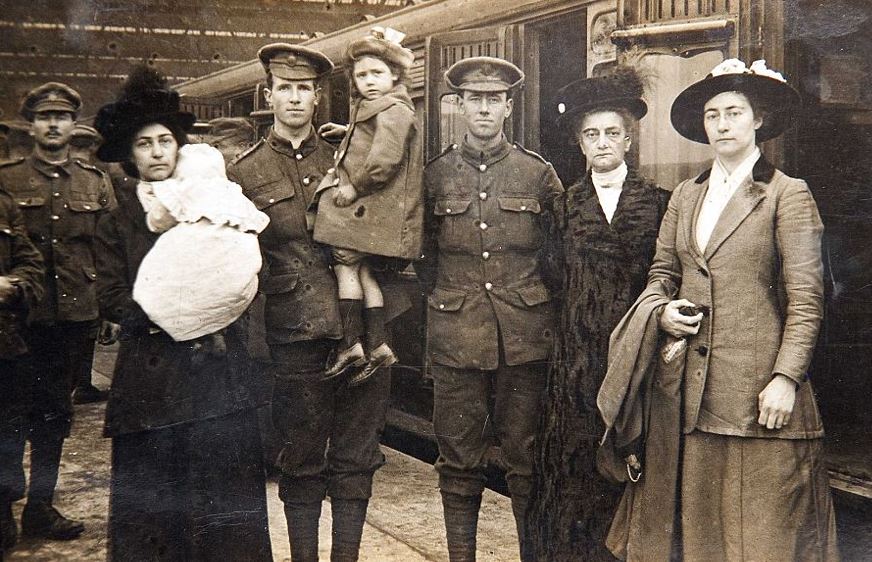
Troops say goodbye to their families at Waterloo Station before heading for battle (image: Christian Broom).
*
Tales From the Terminals: Waterloo Station (Part 4… Death Line… The London Necropolis Railway)
When Waterloo station opened in 1848 the Industrial Revolution was at full steam, nudging the population of London towards an unprecedented 2.5 million people.
As families packed into cramped, decrepit housing amongst appalling sanitation, regular outbreaks of smallpox, cholera, typhoid and various other diseases became commonplace… in 1850, the average life expectancy for those living in the capital stood at just 43.
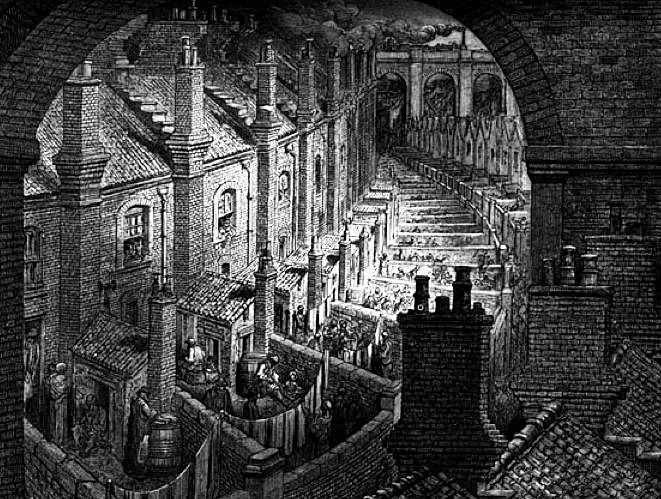
A hellish vision of Victorian London… ‘Over the City by Rail’ by Gustave Dore.
With Londoners dying in such vast numbers the city’s graveyards quickly found themselves overwhelmed and unable to cope. Southwark’s Cross Bones burial site for example was so packed by the early 1850s that there were reports of fresh corpses poking through the thin layer of topsoil.

In response to this burial space crisis an Act of Parliament was passed in 1852 which established the London Necropolis & Mausoleum Company, a group charged with the task of creating a single, massive cemetery- a ‘City of the Dead’- where it was hoped all of London’s corpses could be interred.

A plot for the huge burial site, with the “requisite qualities of solitude and retirement” was secured 25 miles outside of London at Brookwood on Woking Common, Surrey.
At 500 acres, the cemetery was the largest in the world when it opened and is still the biggest in Britain today.
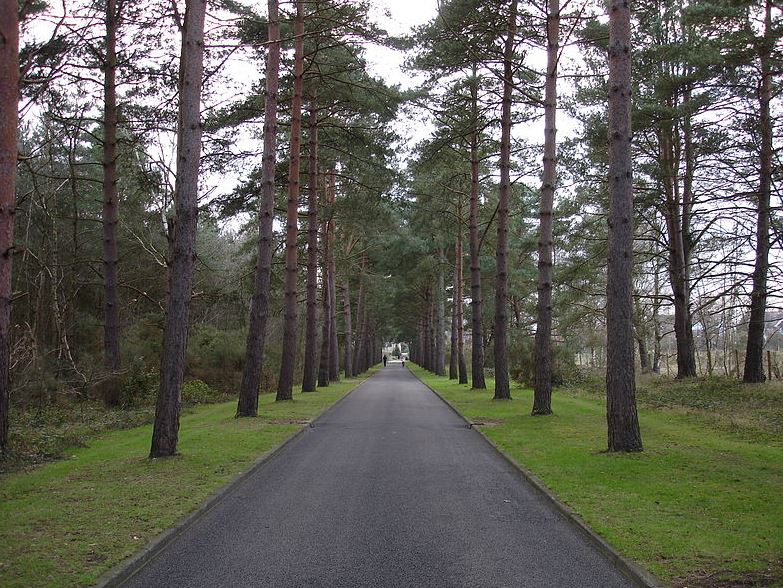
A peaceful avenue through Brookwood Cemetery (image: Wikipedia)
Although the new cemetery lay some distance from the capital the LNMC intended to maintain a firm connection with a unique innovation…the ‘Necropolis Railway’; a private transport link scheduled to operate out of London’s Waterloo.

The Waterloo to Brookwood Necropolis route.
Waterloo was chosen due to its proximity to the Thames (sites at Battersea and Nine Elms were also considered for the same purpose); the idea being that bodies could be delivered easily to the station via river from most parts of the metropolis.
After being unloaded from the boat, coffins would be placed upon a horse-drawn hearse for the short trot to the Necropolis station which, although incorporated into Waterloo, was kept distinctly separate from the rest of the terminal with discretion considered the utmost priority.

The Necropolis terminal tucked away at Waterloo…
Once at the private station, coffins would be transferred up to platform level via a steam-powered lift and loaded onto an awaiting funeral train.
Mourners of the deceased would also board the service, taking time to grieve in special waiting rooms before embarking on the 45 minute journey to Surrey.

‘Professional’ Victorian mourners.
Like other rail services at the time, passengers- both living and dead- had a choice of three classes.
Whilst first and second class mourners travelled in comfort and had a say in the funeral’s arrangements, third class carriages were designated for paupers whose cheap tickets and flimsy caskets were paid for by their local parish.

As well as class, the carriages for both coffins and passengers were also segregated along religious lines- with separate coaches for Anglicans and Nonconformists.
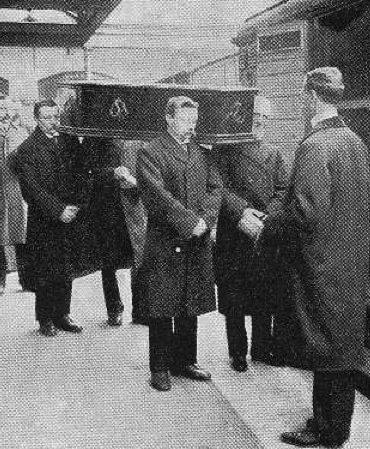
Pallbearers placing a casket onto one of the Necropolis Railway’s coffin carriages.
Upon arrival at Brookwood, the funeral train would shunt onto a branch line which ran directly into the cemetery. Two stations served the necropolis; the north terminal for Nonconformist burials and the south terminal for Anglicans.

Map of Brookwood Cemetery’s two internal stations (image: Wikipedia)
As with Waterloo, each station at Brookwood contained segregated waiting areas… and licenced refreshment rooms, which could prove rather tempting for railway staff as they awaited the return journey- there is at least one recorded occasion of an engine driver becoming so drunk his fireman had to drive the train back to London!

Brookwood North Station (for Nonconformists) pictured in 1907.
*
On the 7th November 1854 Brookwood Cemetery was consecrated by the Bishop of Winchester and the Reverend L. Humbert of St Olave’s, Southwark who travelled to the ceremony on-board one of the new state of the art services.

A Necropolis Railway engine hauling mourners and coffins.
Several days later, on the 13th November 1854, the Necropolis Railway was ready for its first booking- a tragic pair of baby twins who had been stillborn to a Mr and Mrs Hore of Ewer Street, Borough.

Necropolis Railway platform at Waterloo- distinctly separate to the main terminal.
Although the Necropolis Railway was contracted to take the bodies of London’s paupers it was a duty which the company approached with typical Victorian disdain towards the poor; an attitude which led to considerable controversy during the railway’s early days…
With first and second class burials taking priority, problems arose as bodies of society’s less fortunate began to pile up.
As a quick solution, the company decided to stash the surplus corpses inside a series of arches stretching from beneath Waterloo station up to Westminster Bridge Road- a viaduct which, at the time, cut through the most densely populated area in Lambeth.

An old arch- now in use as a car wash- close to the location of the Necropolis Railway’s former Waterloo base.
When this grim practice was exposed concerns were raised that the corpses, languishing “in the last stage of decomposition” and “heaped up together like so many bales of worthless goods,” would potentially spread disease within the neighbouring community and would send a foul “effluvium” wafting up through Waterloo’s platforms.
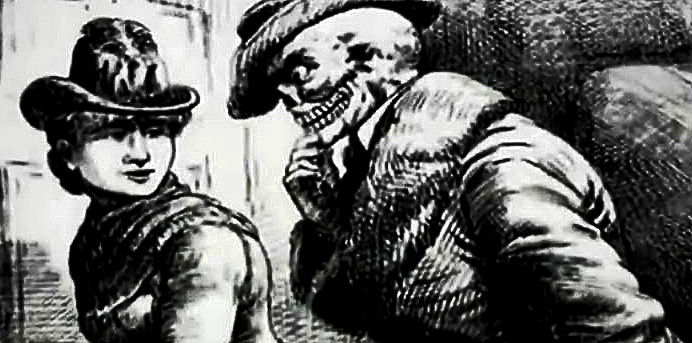
The Times also voiced the opinion that local businesses would suffer as people- “especially ladies”- would be inclined to avoid the area…
*
At the turn of the 20th century Waterloo station underwent a large expansion which required the Necropolis Railway terminal to relocate a short distance away to Westminster Bridge Road.

Location of the Necropolis Railway’s second location superimposed onto a 1930s map (image: AZ)
Although the first Necropolis site has been swept away leaving no trace, part of its successor, which opened in 1902, can still be seen today. The remaining building is now an unassuming office block known as Westminster Bridge House.

Remaining section of the Necropolis Railway’s second home, now renamed Westminster Bridge House.
Like its predecessor, the second Necropolis station was furnished with a coffin lift and waiting rooms divided by class and religious belief. An oak panelled chapel was also incorporated where mourners not wishing to catch the train to Brookwood could pay their final respects.
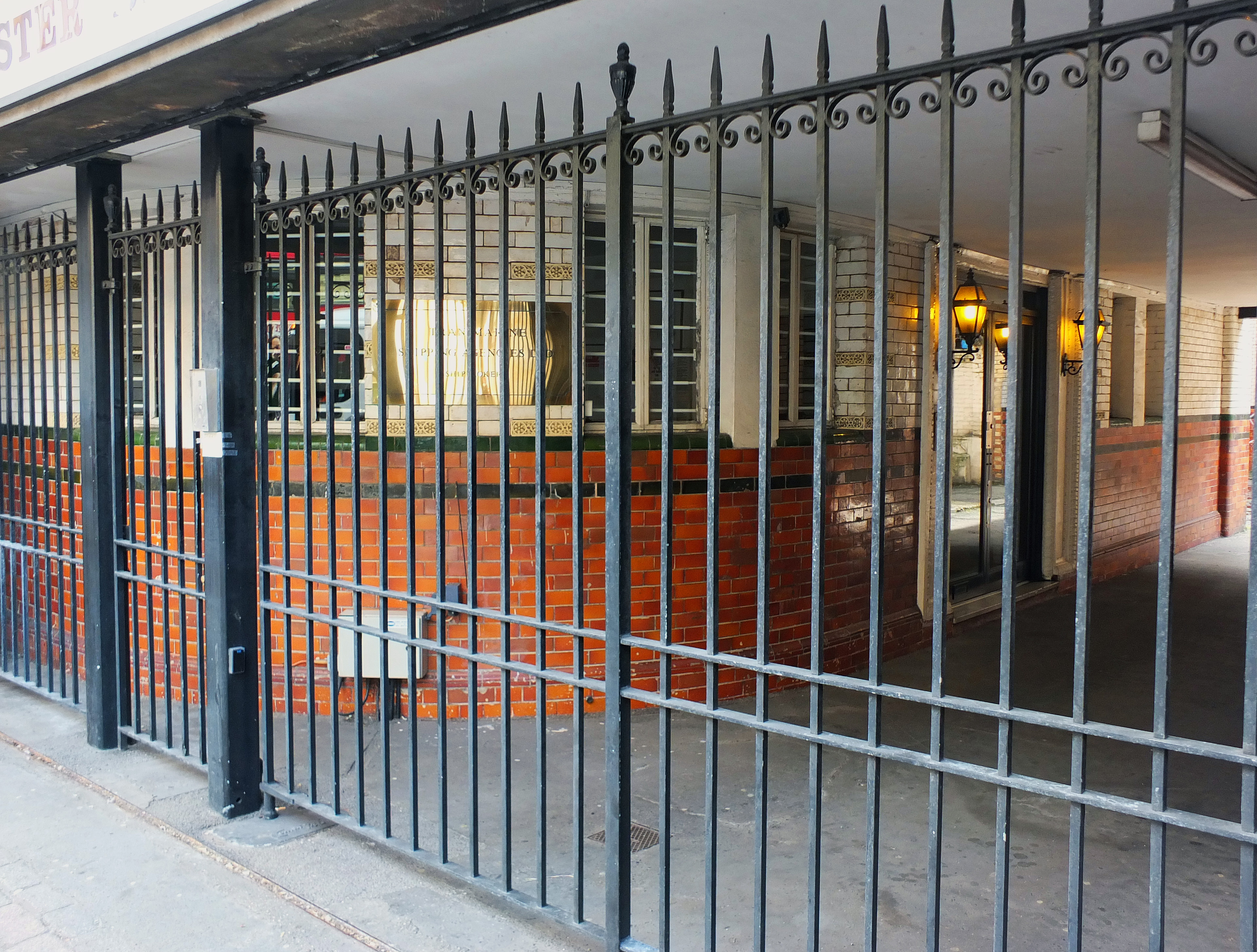
Peeking into the former Necropolis reception area.
*
When first conceived, it was forecast that Brookwood Cemetery would take up to 50,000 burials per year.
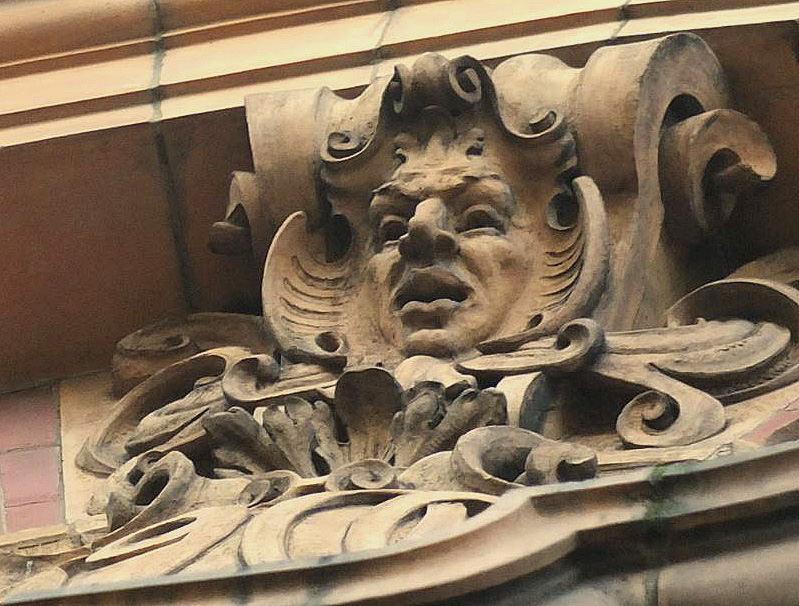
Architectural detail from the Westminster Bridge Road station.
However, as large cemeteries within London such as Kensal Green, Tower Hamlets and West Norwood developed, ‘passenger’ numbers on the Necropolis Railway dwindled- the figures no doubt also affected by improvements in London’s sanitation and the formal introduction of cremation in the late 19th century.
In the end, the railway dealt with 203,041 burials during its 87 years of service, a figure way short of the original estimate.
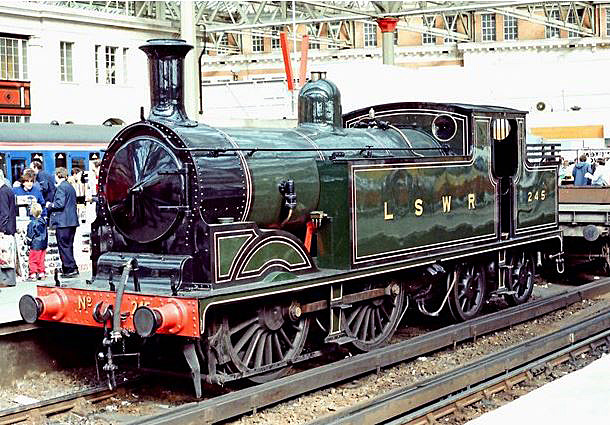
A London South Western tank engine- the type of model used on the Necropolis Railway during its final years (image: PL Chadwick via Geograph).
The final nail in the coffin (so to speak…) came on the night of 16th April 1941 when the Westminster Bridge Road depot was pounded by a massive air-raid.
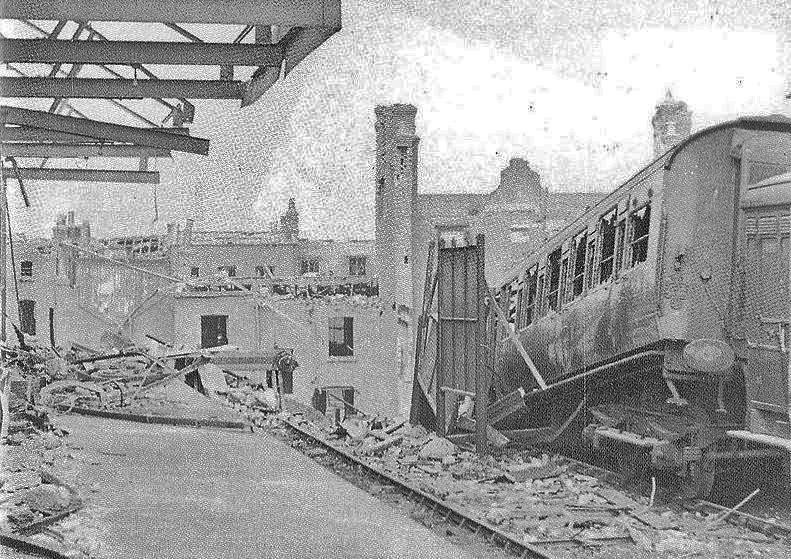
Aftermath of the air-raid which struck the Necropolis depot.
Tracks were shattered beyond repair and the funeral carriages (which had originally been designed as coaches for the Royal Family in the early 20th century) were smashed and consumed by flames.

Street level view of the destruction, April 1941.
The business limped on, switching to the main platforms at Waterloo, but it soon became clear it was not cost-effective to repair and maintain the service.
The Necropolis Railway carried its final body- that of 73 year old Chelsea Pensioner, Edward Irish in May 1941 and was officially dissolved at the end of the war.

A memorial to the Necropolis Railway erected at Brookwood Cemetery in 2007 (image: Wikipedia)
* * *
Tales From the Terminals: Waterloo Station (Part 3…The Waterloo & City Line)

Waterloo seeks another deep link
After failing to achieve their goal of establishing a link to Trafalgar Square (please see Waterloo Part One) , the board of the London & South Western Railway consoled themselves in the belief that their station at Waterloo was merely temporary and hoped in time to bridge their line towards another vital London hub- the financial Square Mile.

Bank Junction during the Victorian period… goodness knows where the LSWR thought they’d be able to squeeze in a major railway terminal! (image: Victorian London.org)
When this ambition also failed the company once again sought to reach their desired destination with an underground link- this time with far greater success…. giving us the ‘Waterloo & City Line’ which, with just two stations- one beneath Waterloo and the other beneath Bank Junction, is the London Underground’s shortest line…. “1 mile, 4 furlongs and 680 chains in length” as proposed in 1891.

The Waterloo & City Line… London Underground’s shortest.
Work on what was originally dubbed the ‘Waterloo & City Railway‘ commenced on the 18th June 1894 with the sinking of piles near Blackfriars Bridge; the line’s approximate mid-point.

Original map of the Waterloo & City Railway, tracing its path beneath Stamford Street and Queen Victoria Street.
Construction was carried out by John Mowlem & Co Ltd, whose other London works include Admiralty Arch, Battersea Power Station and Tower 42 (formerly the NatWest Tower).
Pioneering Tunnelling
The Waterloo & City Railway was London’s second deep level tube line- the first being the City & South London Railway (now part of the Northern Line) which had opened shortly before in 1890.
Both of these pioneering lines could not have been tunnelled without the aid of the ‘Greathead Shield’; a tunnelling system named after its South-African born inventor, James Henry Greathead.

Airlock leading into the Greathead Shield (image: Wikipedia).
Essentially an updated version of an earlier system devised by Marc Isambard Brunel, the Greathead Shield consisted of a sturdy metal tube which allowed workers to burrow at a far deeper level, pushing through London’s clay at an average of 10ft a day and installing the tunnel lining behind them as they went.

The Greathead Shield in action (images: Wikipedia).
Sadly, James Henry Greathead died in 1896 aged just 52 and never lived to see the completion of the Waterloo & City Railway.
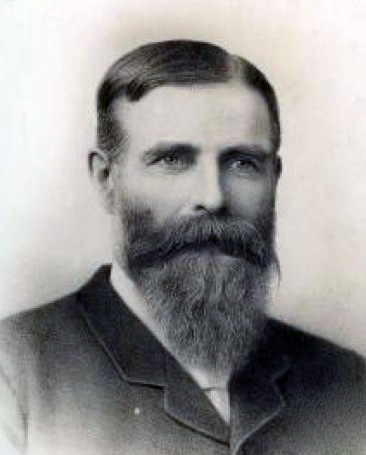
James Henry Greathead… the man who enabled the creation of London’s deep tube lines.
A statue of the great engineer was placed outside the Royal Exchange in 1994 directly above Bank Station. The plinth upon which Greathead’s figure stands acts as a ventilation shaft for the tunnels below.

James Henry Greathead’s statue (image: Geograph).
During the construction of the Docklands Light Railway in 1987, part of Greathead’s shield was discovered buried deep in the earth beneath Bank. This surviving piece can be seen today at Bank station, having been incorporated into a pedestrian subway linking the DLR to the Waterloo & City Line- just look for the distinctive red arch…

Section of Greathead’s shield which was buried and lost for decades… (image copyright TFL).
*
London’s New Tube
At 1pm on July 11th 1898 the Waterloo & City Railway was officially opened by the Duke of Cambridge whom the board of directors treated to a grand luncheon in the new railway’s Waterloo booking hall- which was described as being “capacious enough to afford ample accommodation to the whole of the assembled company.”
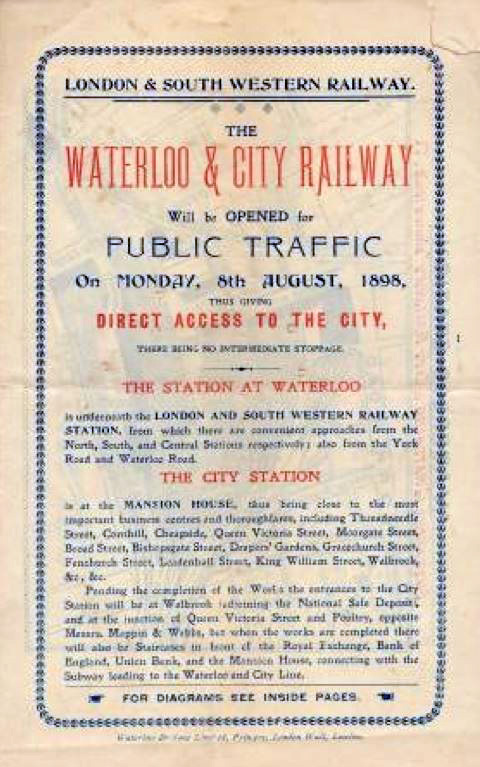
An 1890s leaflet advertising the opening of the Waterloo & City Railway (image: London Transport Museum).
The earliest trains to serve the Waterloo & City Railway were built by the Jackson and Sharp Company of Rochester USA, requiring them to be shipped across the Atlantic.

One of the Waterloo & City Line’s early American trains.
Although derided by The Times as being “decidedly ugly”, the wooden carriages were praised for affording the “maximum accommodation consistent with the diameter of the tunnel- namely 12ft 2inches.”
The American cars remained in use for over 40 years by which point they were beginning to look decidedly shabby. In 1937, one disgruntled commuter described the rolling stock as “antique and uncomfortable”, “musty and dingy” with “lighting arrangements 25 years behind the times.”
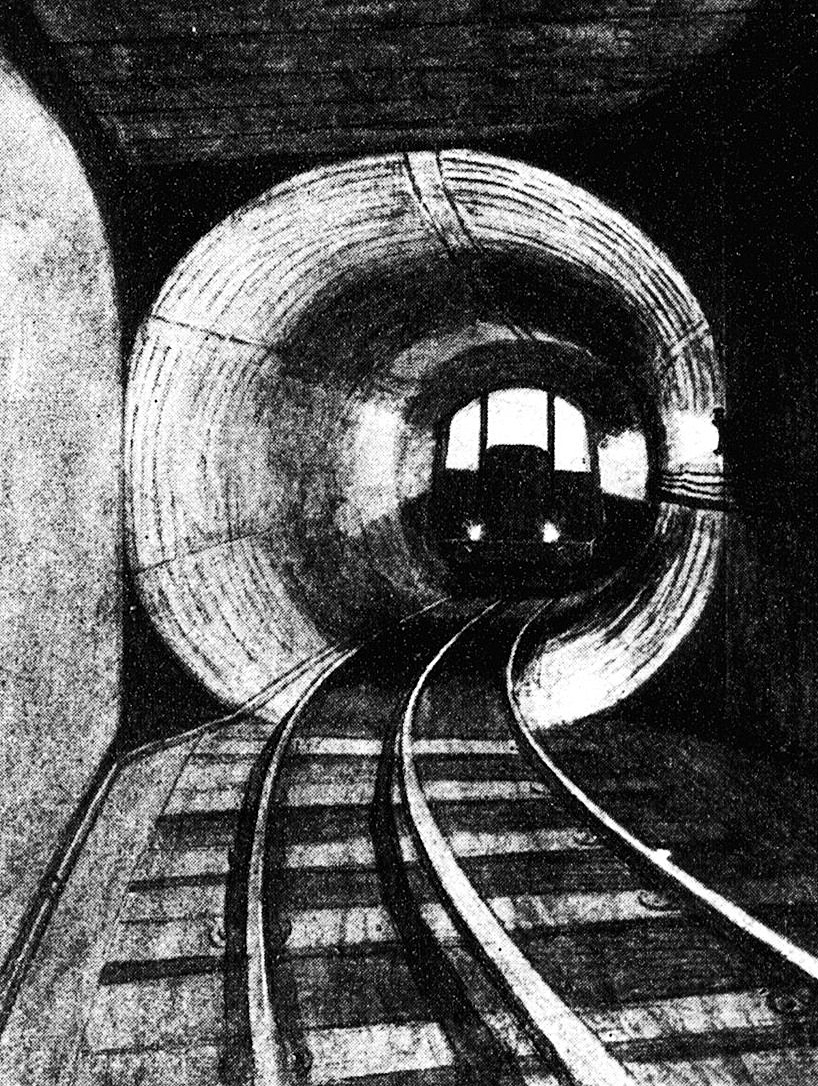
Victorian sketch depicting the “entrance to one of the iron tunnels.”
The ageing coaches were finally replaced in 1940 by sleek, Art-Deco style metal carriages which were ultra-modern for their time and remained in service well into the 1990s. Archive footage of the new carriages arriving (and the old ones departing) can be viewed below:
Up until the 1990s, the Waterloo & City Line- which has been nicknamed ‘The Drain’ since its earliest days- was run separately from the rest of the tube, first by the South Western Railway and then by British Rail. This set-up made it something of an anomaly, best illustrated by the livery of the carriages which were painted to match their larger, above-ground counterparts.

The Waterloo & City Line in ‘British Rail Blue’, used from the 1960s to the 1980s (image: Wikipedia).

Waterloo & City carriage appearing in an open day above ground in 1988. The livery here is of ‘Network South East’ used from the 1980s to the 1990s (image: Geograph).
The Waterloo & City shuttle service was finally absorbed by London Underground in 1993 with the 1940s rolling stock replaced by trains similar to the ones now used on the Central Line.
*
Because the Waterloo & City Line exists entirely underground, carriages requiring maintenance above ground are winched in and out by a specially designated crane which can be seen beside Waterloo station’s Baylis Road entrance.

The Waterloo & City Line crane, located near Baylis Road.
During the delivery of the 1940s stock, the winch (which was originally situated where the now defunct Eurostar terminal stands) snapped sending one of the carriages smashing down to the depths…
A peek over the crane pit allows train-buffs a glimpse into the Waterloo depot…

All Change
As well as the Victorian carriages the entire infrastructure of ‘the drain’ was also beginning to look very dilapidated by the 1940s and was described in one meeting at the Guildhall a being a “public disgrace.”

Early view of the Waterloo & City Line’s Waterloo stop.
Of particular concern was the main pedestrian link at Bank Station.
Unlike other underground stations served by lifts and escalators, Bank’s main link to the deep platform was a long, steep, dusty tunnel of incremental steps, notorious for being a dangerous, crushing bottleneck in which “hundreds of people meet head on and often collide….in the rush hour complete chaos reigns in the tunnel.”
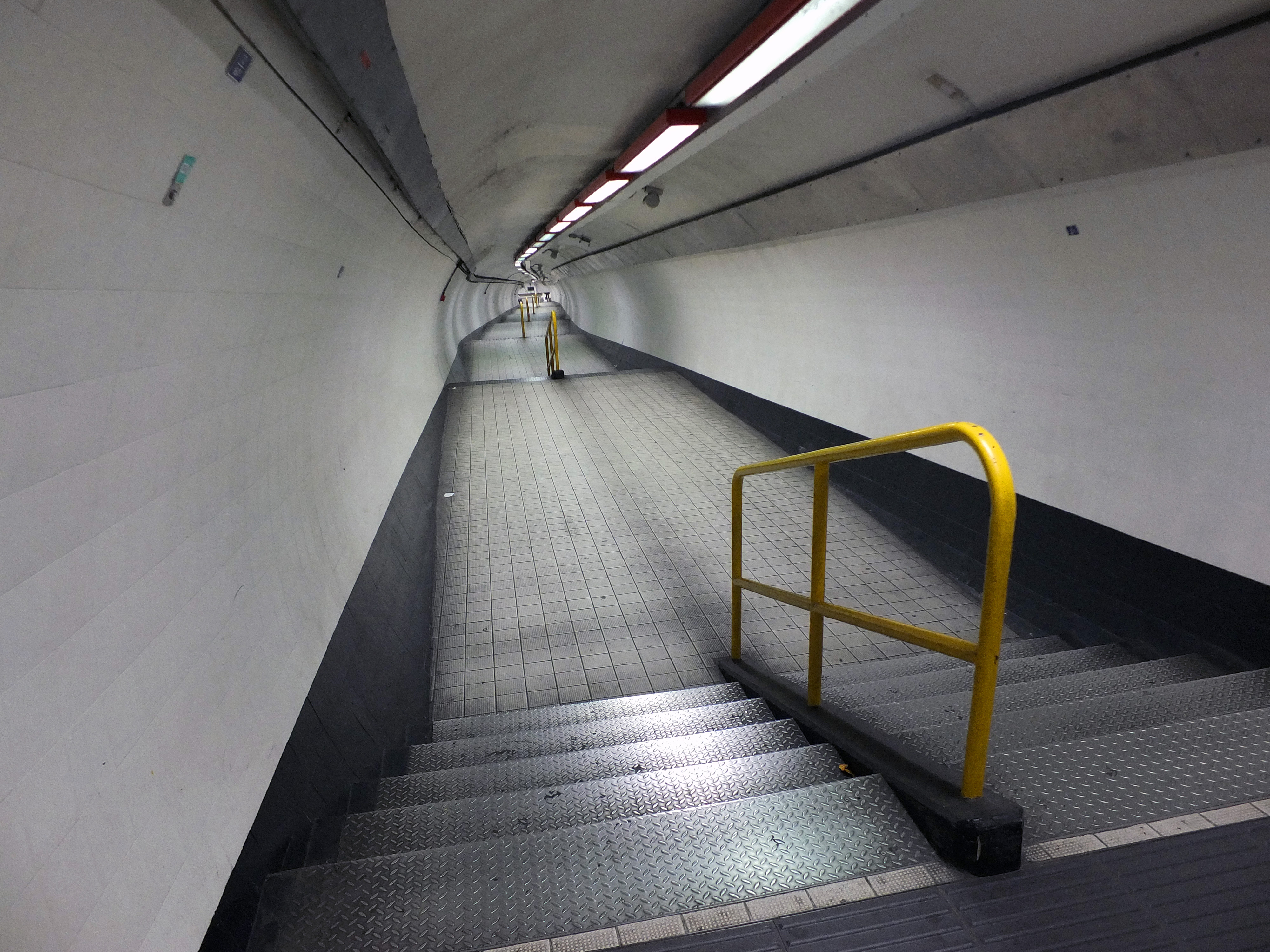
Bank’s Waterloo & City pedestrian tunnel today.
So strenuous was the passage to negotiate that those of a more mature age were advised to avoid the link altogether, the steep tunnel at Bank being “quite an effort for elderly men and not without danger to anyone suffering from a weak heart.”
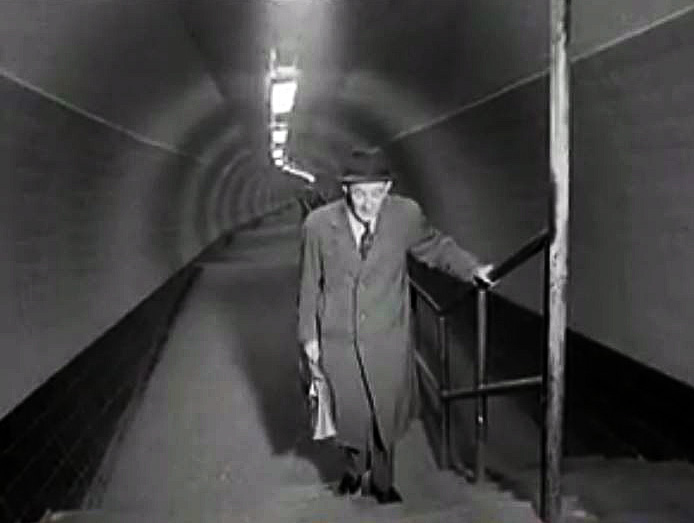
An elderly gentleman reaches the top of the walkway in 1960 (image: Pathe News).
Although an escalator was proposed as early as 1931 the plan never went through and further attempts at modernization were halted by the onset of WWII.
The Waterloo & City Line finally received a drastic update in autumn 1960 with the introduction of a ‘Travelator’; Britain’s very first major moving walkway.

The ‘Travelator’ today.
Taking three years to construct, the pioneering design was built to whisk 10,000 commuters per hour to and from the trains… and no doubt led many Londoners in the early 1960s to dream of an exciting new future in which moving pavements across the capital would become the norm!
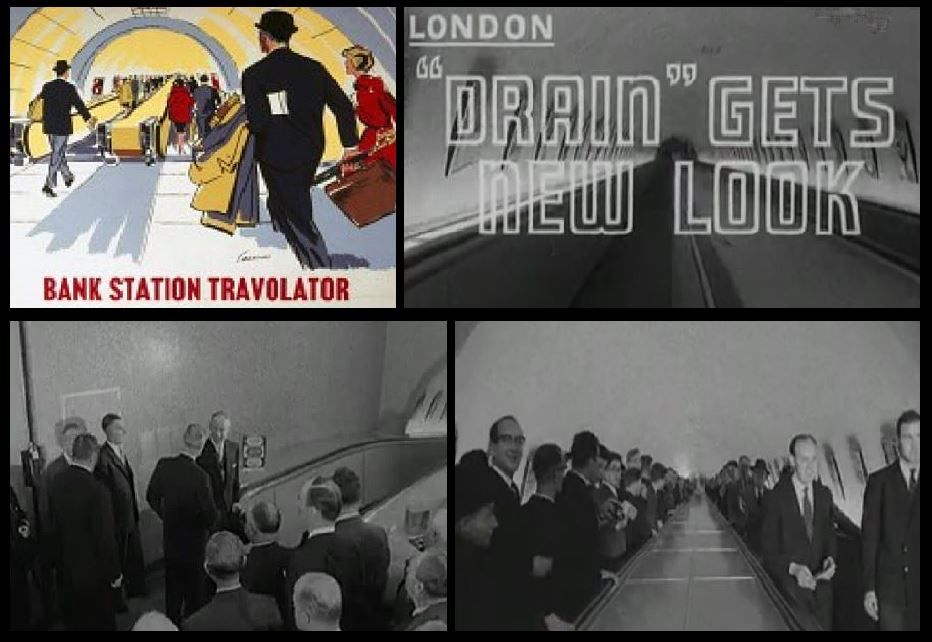
Images from Pathe News depicting the opening of the Travelator in 1960.
*
The Waterloo & City Line on Film
Due to being primarily aimed at weekday commuter traffic, the Waterloo & City Line has always been closed at weekends (although a Saturday service has recently been introduced).

Waterloo and City Line’s platform at Waterloo. Take a train on a Saturday and you’ll pretty much have the place to yourself.
Because of this regular closure, the line has often proved popular with filmmakers, most notably in the 1998 romantic drama, Sliding Doors starring Gwyneth Paltrow in two parallel storylines which split as she attempts to board a Waterloo & City Line train.

1998 publicity shot for ‘Sliding Doors’.
Eagle-eyed viewers will notice that Gwyneth enters the system at Bank but boards her train at Waterloo on the opposite side of the line! (Please click below to watch a clip):
The line has also been used for sci-fi T.V classics such as Adam Adamant, The Tripods and Survivors.

Shoot-out on the Waterloo & City Line… from ‘Survivors’; ‘The Lights of London’, 1976.
In 1962, wannabe cop, Norman Wisdom found himself in a particularly sticky situation on the Waterloo & City Line after attempting a misdirected citizen’s arrest in his film, On the Beat (please click below to view)…
*






 View from the Mirror