Tales from the Terminals: Waterloo Collection
Over the past few months, View From the Mirror has been taking a detailed look at the history of Waterloo station.
In case you missed any instalments, the full series can be accessed below- please click the boxes for each link.






First Train to Paris (Waterloo Station, Final Instalment)
In the 1990s, Waterloo station expanded further when it became home to London’s first Eurostar terminal, connecting the capital to Paris and Brussels via the Channel Tunnel (or Le tunnel sous la Manche as it is in French).

The former Waterloo International Eurostar terminal (image: Wikipedia)
The idea of linking Britain and France via an underwater route has a surprisingly long history, the first crossing being suggested by French mining engineer, Albert Mathieu way back in 1802.

The earliest Channel tunnel proposal from 1802
Very much ahead of its time, Monsieur Mathieu’s concept envisioned a tunnel lit by oil lamps (surely a serious affront to health and safety by today’s standards!) through which continental travellers would have been conveyed via horse drawn carriages. The proposal also included the creation of an artificial island in the middle of the Channel to provide an important rest stop.
One year later, Englishman Henry Mottray came up with a similar scheme to create a crossing by submerging and connecting a string of pre-fabricated iron tubes.
Sadly, these pioneering visions were cast aside by the onset of the Napoleonic Wars (which concluded in 1815 with the Battle of Waterloo… after which Waterloo Bridge and, consequently, Waterloo station are named).
*
The idea of building a railway beneath the Channel was first suggested in the 1830s by Aime Thome de Gamond who, like Albert Mathieu was a French mining expert.
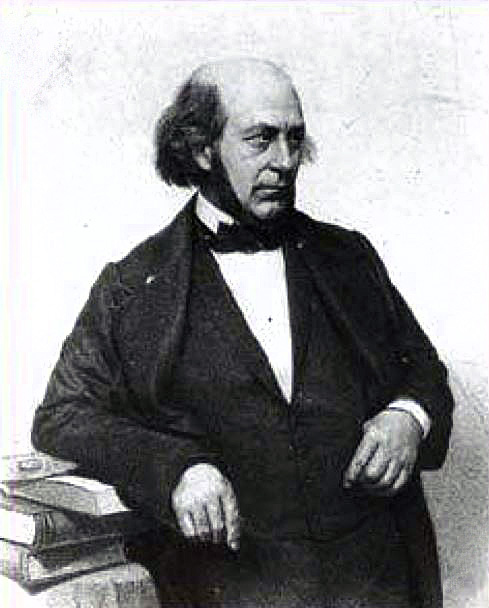
Aime Thome de Gamond
Thome de Gamond spent over 30 years and lost most of his wealth pursuing his idea (which, in the even grander scheme, aimed to extend the link all the way from London to Calcutta).
As testament to his determination, Thome de Gamond made a number of dives to the bottom of the Channel to collect geology samples… and he did so without a specialist suit, taking only a rope, 160lbs of pebbles to act as ballast and pig bladders to help him ascend. Whilst in the murky depths, Thome de Gamond gained some unwelcome attention from the Channel’s Conger Eels…

Thome de Gammond plunging beneath the Channel… (image: tunnel-sous-la-manche-skyrock.com)
During these terrifying expeditions, Thome de Gamond was rowed out into the channel by the person who believed in him the most- his daughter, Elizabeth.
In 1856, Thome de Gamond pitched his idea to Napoleon III, Queen Victoria and Prince Albert, informing them that “I have carried my studies to the limits of my personal powers…” The heads of state gave their blessing to his proposal and support was also voiced by esteemed engineers, Isambard Kingdom Brunel and Robert Stephenson.

Sketch of Thome de Gamond’s proposal which included a harbor in the middle of the Channel
Sadly, despite this encouragement the project was scuppered by the outbreak of yet another war- this time the Franco-Prussian conflict.
Exhausted and penniless, Aime Thome de Gamond died in 1876. Despite his tragic demise, he is now widely regarded as the ‘Father of the Tunnel’.

Cross section of Thome de Gamond’s vision
*
At around the time Thome de Gamond died, the Anglo-French Channel Tunnel Company was established, bringing together a collection of canal and railway engineers who carried out serious research into the creation of a tunnel. In 1880, test bores were dug at Shakespeare Cliff, Dover and at Sangatte in France.

The 1880s tunneling attempt
Unfortunately, with past wars still in mind, it was figured that such a connection would make it all too easy to mount a future invasion so the project was abandoned.

‘Hopes and Fears’; an 1882 cartoon from ‘Punch’ magazine, commenting on early Channel tunnel attempts
*
It wasn’t until 1974 that a further tunneling attempt was made. Initially quite promising, this endeavor was quickly ditched after just one year thanks to grave financial concerns triggered by the oil crisis.

The 1974 attempt… (image: kent-history.co.uk)
Despite this, the idea of forging a link between London and Paris remained a tempting concept.
In 1982 British Rail approached Lambeth Council with plans for a possible terminal at Waterloo should the idea be revived in the future… although in 1984 they also looked into the possibility of establishing a helicopter terminal on top of Waterloo in the hope that choppers capable of ferrying 200 people between the two capital cities would soon be developed!
This idea may not have sounded as far fetched as it seemed- for a brief period in the 1950s, a helicopter terminal was indeed based at Waterloo, acting as a shuttle service to and from London airport. The Shell Building now stands on the site.
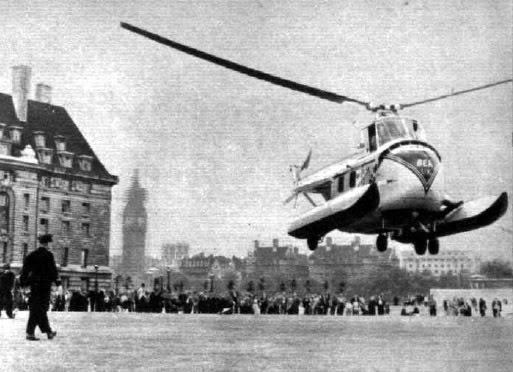
Waterloo Air Terminal, 1950s. In the 1980s, British Rail toyed with the idea of re-establishing a helicopter service.
A newsreel from 1953 featuring a helicopter test-run from Waterloo to Paris can be viewed below:
*
In 1985 things were once again set in motion when the governments of Britain and France invited private companies to come up with proposals for a channel crossing.
This resulted in four schemes being shortlisted:
Eurobridge: A vast suspension bridge for cars, with the traffic lanes contained in an enclosed tube suspended 70 meters above the Channel. The estimated cost of the bridge was £5.9 billion.

Cross-section of the tube containing road decks which would have hung from the proposed Eurobridge (image: London Illustrated News)
Euroroute: A £5 billion road built across a series of tunnels and bridges which would have been linked by artificial islands.

Euroroute… which would have linked Britain and France with a combination of bridges and tunnels (image: crd.co.uk)
Channel Expressway: A large tunnel for both cars and trains with ventilation shafts jutting out in the middle of the Channel. Cheaper at £2.1 billion, the tunnel would have seen road and rail sharing the same space- the idea being that traffic would alternate, with cars being halted ever hour to let trains through. One can only imagine the tailbacks such a set-up would have created!

Euroroute… road and rail combined (image: London Illustrated News)
Eurotunnel: A straight-forward railway tunnel… which, of course was the idea eventually chosen, mainly due to concerns that a road tunnel would pose too many problems with fumes and accidents. In 1985, the estimated cost for the Eurotunnel was £2.3 billion.

The Channel Tunnel as imagined in 1985 (image: London Illustrated News)
On July 29th 1987, Margaret Thatcher and Francois Mitterrand ratified the Treaty of Canterbury, granting Eurotunnel the green-light. Construction began in December of the same year and the two sides finally met deep beneath the Channel on the afternoon of December 1st 1990 (please click below to view):
Meanwhile back in London, construction of Waterloo International was underway.

Waterloo International construction site, 1991 (image: Chris Hogg)
Designed by Sir Nicholas Grimshaw (who also created the very modern looking branch of Sainsbury’s supermarket in Camden Town), the challenge was quite unique- to essentially squeeze an airport-style building with customs, security and other facilities into a relatively small, central London area.

The former Waterloo International Eurostar terminal, as seen from the junction of Addington Street and Westminster Bridge Road
With its curved roof reminiscent of the undulating waves beneath which the trains would run, the £120 million terminal bolted onto the existing Waterloo station was a resounding success and won numerous awards.
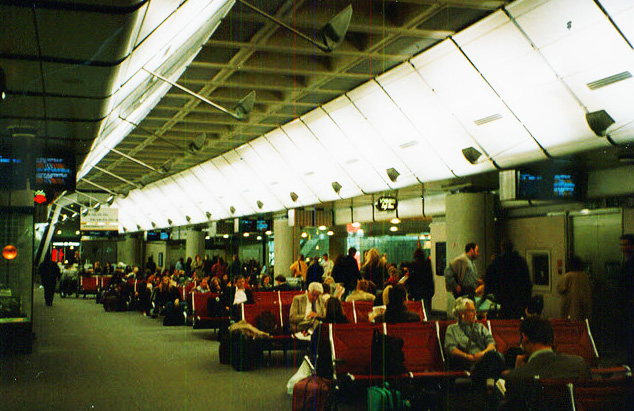
Waterloo International’s departure lounge (image: Geograph)
Waterloo International was completed on schedule in May 1993… but had to lie dormant for over a year whilst the rest of the Channel Tunnel works caught up!
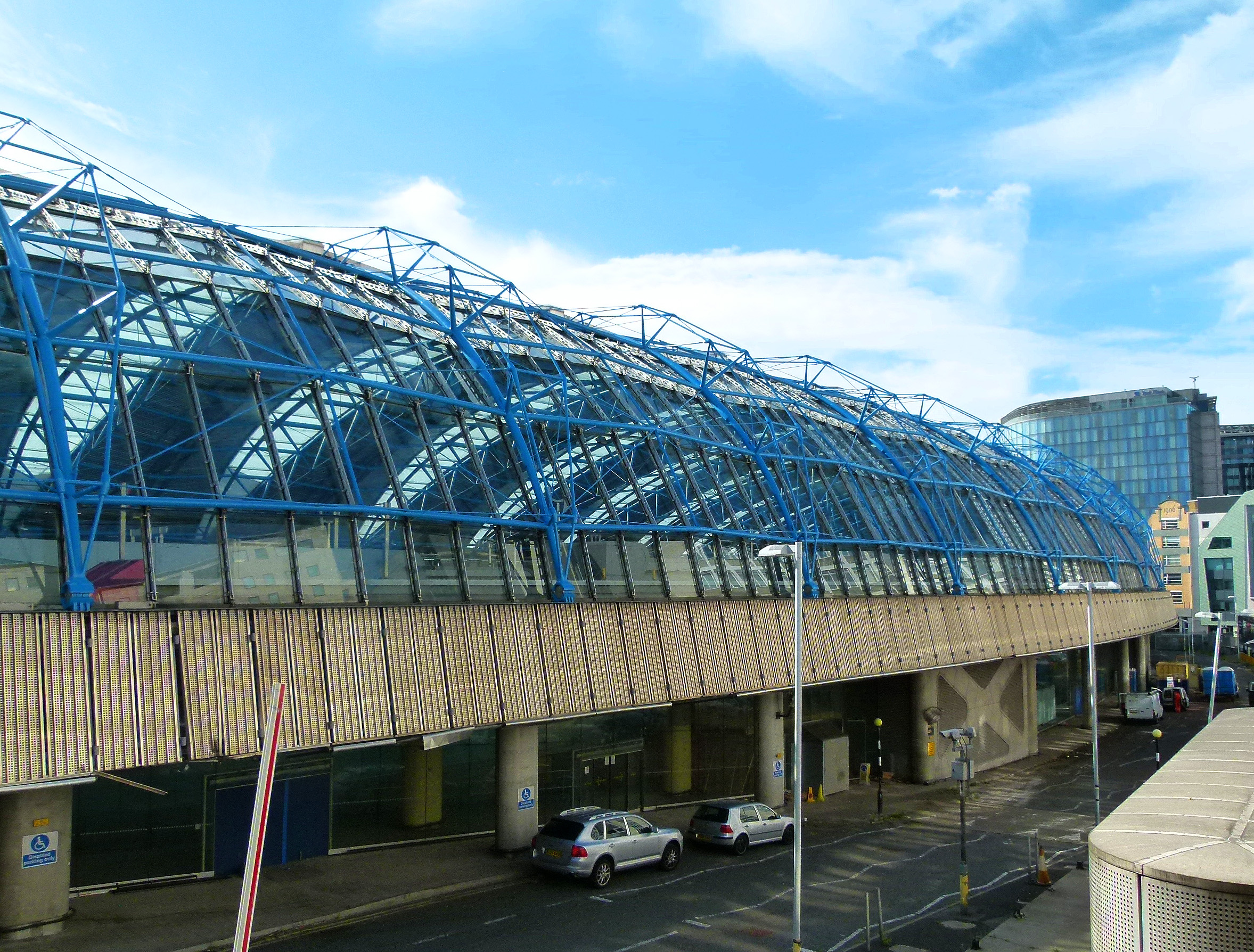
The northern end of the former Eurostar terminal
The first passenger train to the continent departed Waterloo on 11th November 1994.
When it first opened, the crossing was popularly known as the ‘Chunnel‘. Although seldom heard today, a reminder of this nickname can still be glimpsed on Lower Marsh, just outside Waterloo station:

The Chunnel Bar, Lower Marsh, Waterloo
Despite its popularity, the international terminal at Waterloo remained in use for just 13 years…
The main problem with the Eurostar operating out of Waterloo was that the fast, modern trains on the way to and from Folkestone had to use a route which had essentially been designed for steam engines many decades before.

Before transferring to St Pancras, Eurostar trains had to trundle through London’s southern suburbs. Here a Eurostar passes Brixton station (image: Wikipedia)
Because of this, Eurostar trains had to travel far slower on English soil than they did on the continent; an anomaly which impacted the efficiency of the service.
As early as 1996, plans were in place to construct HS1; the high speed line which would re-route the service to the present terminal at St Pancras. The switch was finally made in November 2007, leaving Waterloo International looking rather empty and forlorn…


In 2011 the former international station was used to stage a production of E Nesbit’s 1906 novel, The Railway Children.

Poster for ‘The Railway Children’, a unique production staged on Waterloo International’s former platforms
Thanks to the tracks and platforms, this meant that a fully working steam engine from York’s National Railway Museum, along with a carriage used in the 1970 film adaptation were able to be involved in the performance.

‘The Railway Children’ at Waterloo (image: Theatre Thoughts)
There are now plans (albeit very slow moving ones) to bring the redundant Eurostar terminal back into use, this time for commuter trains… which would be most beneficial as, despite losing its international role, Waterloo today remains the UK’s largest, busiest station.

Waterloo station… an integral part of London
* * *
Waterloo’s Dark Side (Waterloo Station Part 9)
Over the years, Waterloo station and its cluster of surrounding streets have seen more than their fair share of life’s darker side…
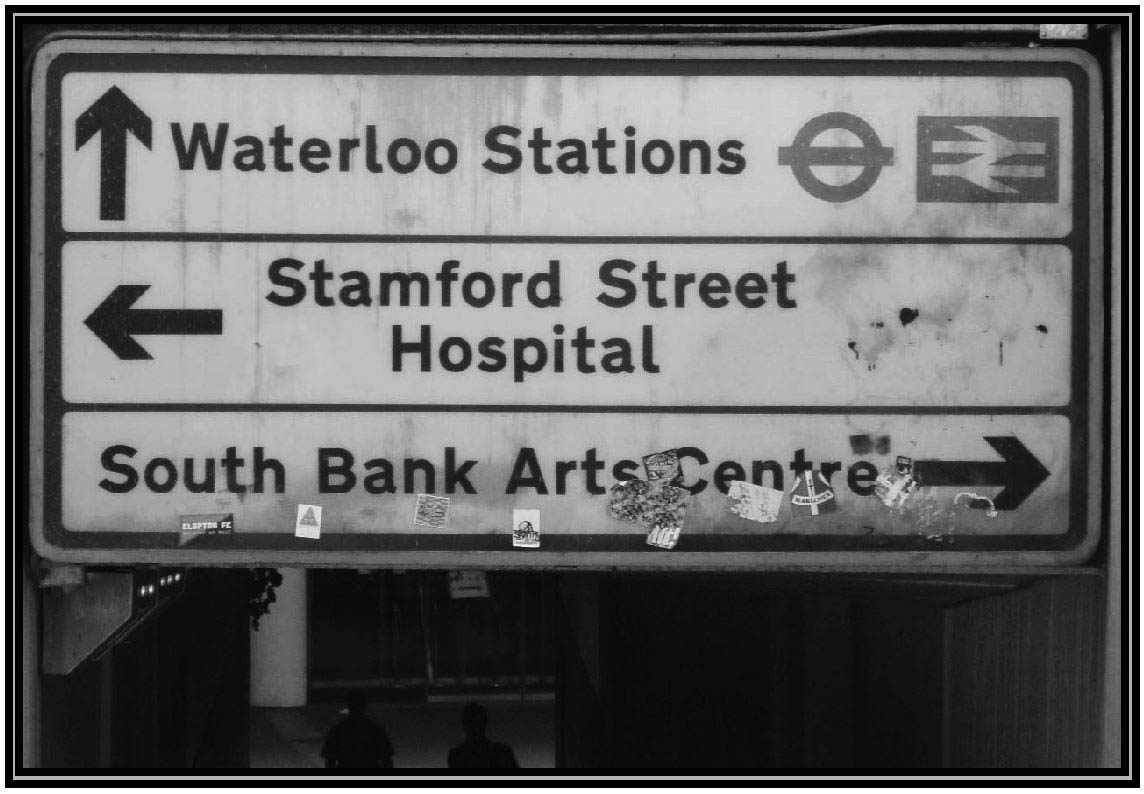
The Lambeth Poisoner
In the autumn of 1891, the area around Waterloo was stalked by Dr Thomas Neill Cream, a Glaswegian born physician and surgeon who’d spent much time in Canada and Chicago running decidedly dubious clinics.
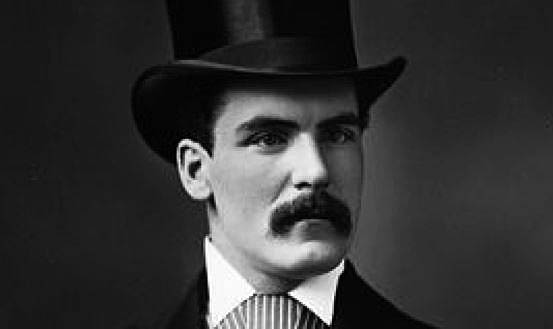
Dr. Thomas Neill Cream
Following the mysterious deaths of several of his patients and a 10 year stint in Chicago’s Joliet prison, Dr Cream headed for London where he secured lodgings at 103 Lambeth Palace Road.
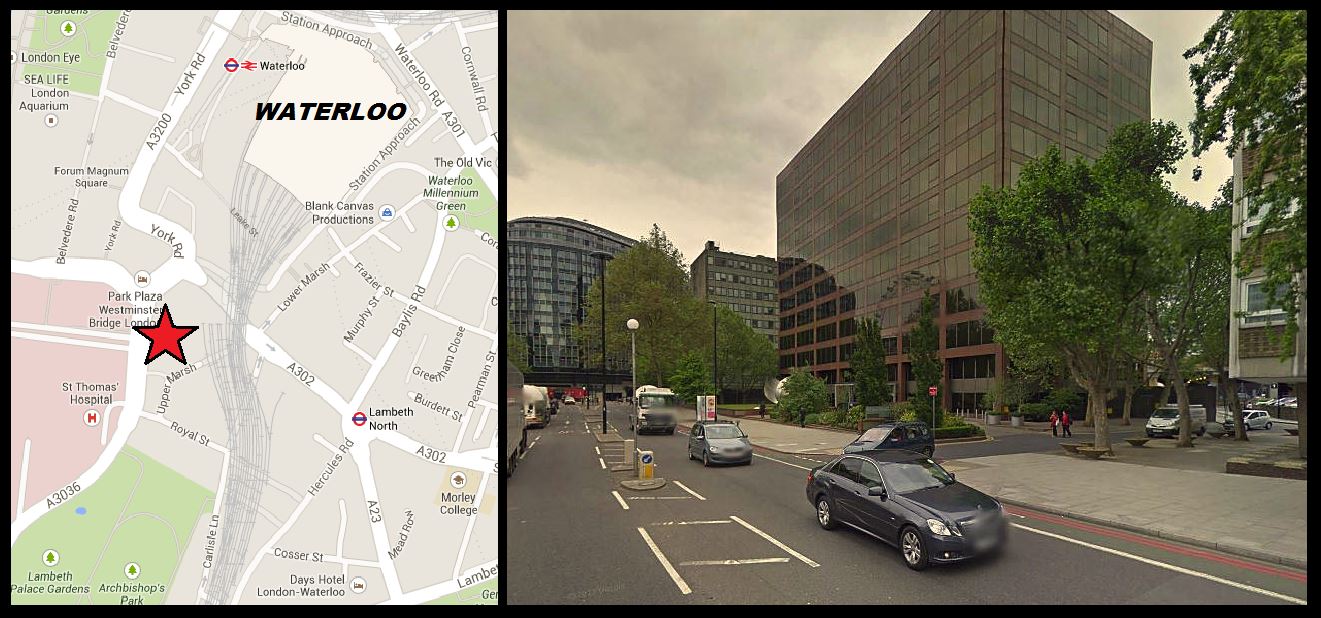
Approximate location of Dr Cream’s lodgings and Lambeth Palace Road today (please click to enlarge map)
Shortly after his arrival, the Doctor popped into the Wellington pub on Waterloo Road and got chatting to a 19 year old prostitute named Ellen Donworth.
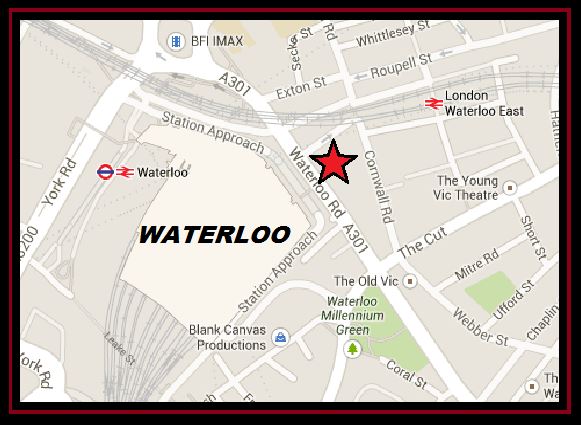
Location of the Wellington pub
Ellen accepted a drink from Dr Cream… and later that night, she collapsed outside the pub.
Trembling and in great pain, she claimed she’d been poisoned.
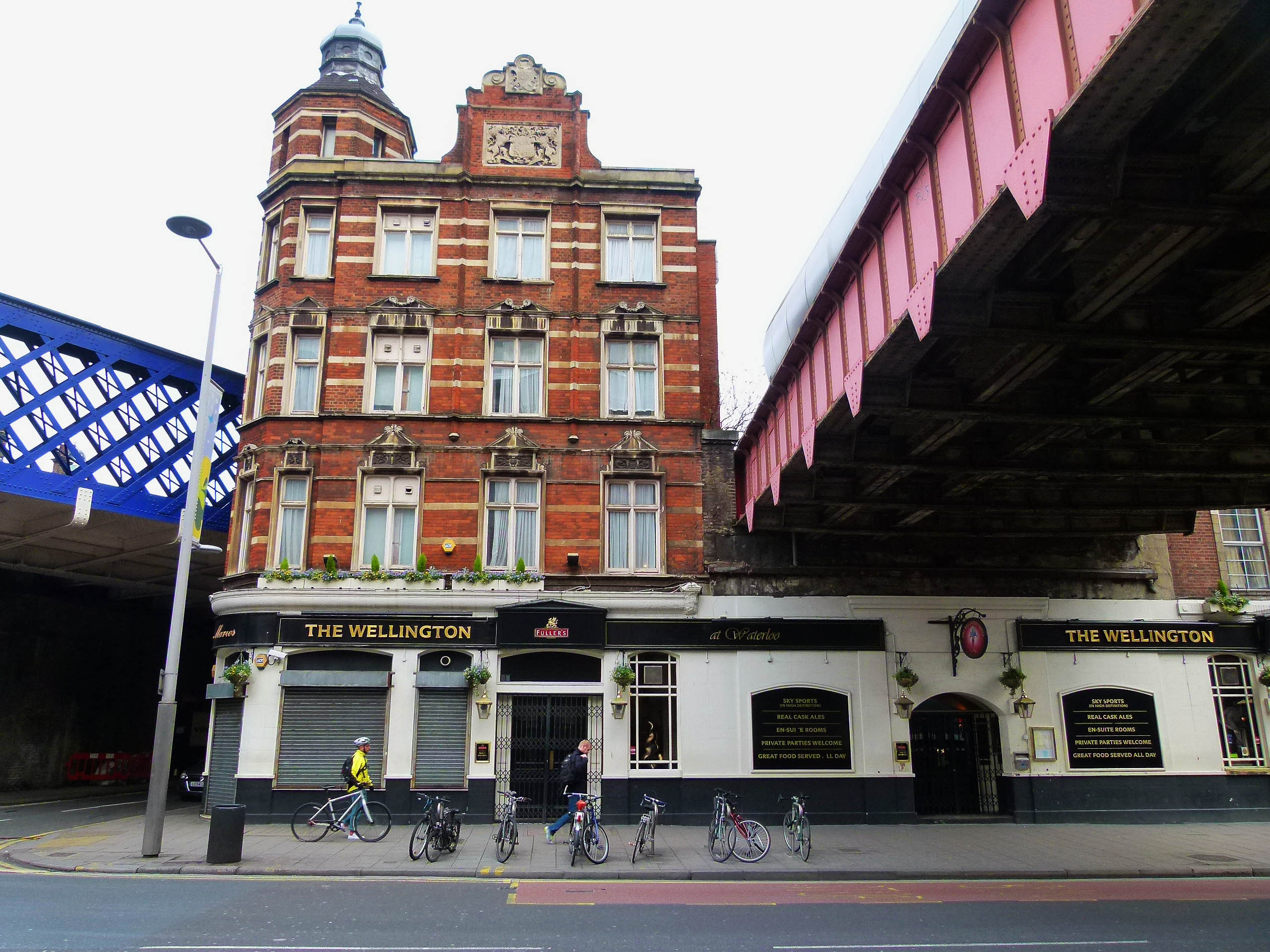
The Wellington pub today
Dr Cream’s next targets were Alice Marsh and Emma Shrivell, two young women who lived together on Stamford Street, just north of Waterloo station.
After plying the pair with bottles of Guinness, the doctor handed the women some globule like tablets which, when swallowed, led the victims to suffer painful, fatal convulsions.
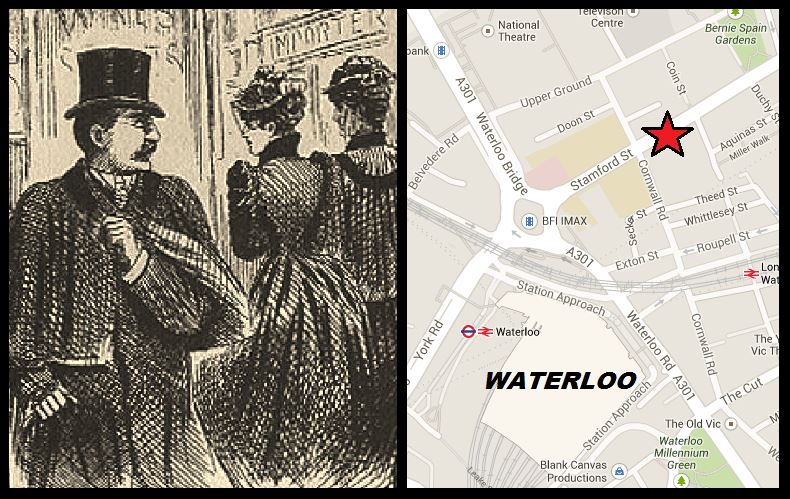
Map of Stamford Street and Victorian magazine sketch depicting Dr Cream stalking Alice and Emma
Creams’ final victim was Matilda Clover, a young mother who lived on Lambeth Road.
As she lay screaming and dying on her bed, Matilda managed to tell her landlady, “that wretch has given me some pills and they have made me ill…”
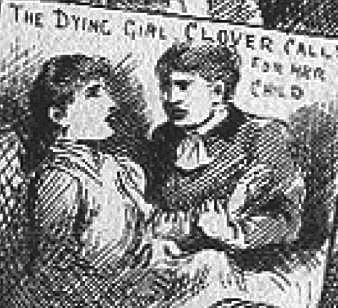
Sketch of Matilda Clover on her death bed
In each case, the killer never hung around to witness the terrible results of his gruesome handiwork.
Dr Cream was captured after befriending an American tourist…who happened to be a New York cop.
After listening to Cream speak in revealing detail about the crimes, the American voiced his concerns to Scotland Yard. Following the tip off, Dr Cream was put under surveillance… and his behaviour soon confirmed the New Yorker’s hunch, leading to the suspect’s arrest.
Tried at the Old Bailey, Dr Cream was found guilty and executed at Newgate in November 1892.
Curiously, it is said that his final words, uttered as the trap door sprang, were, “I’m Jack the…”
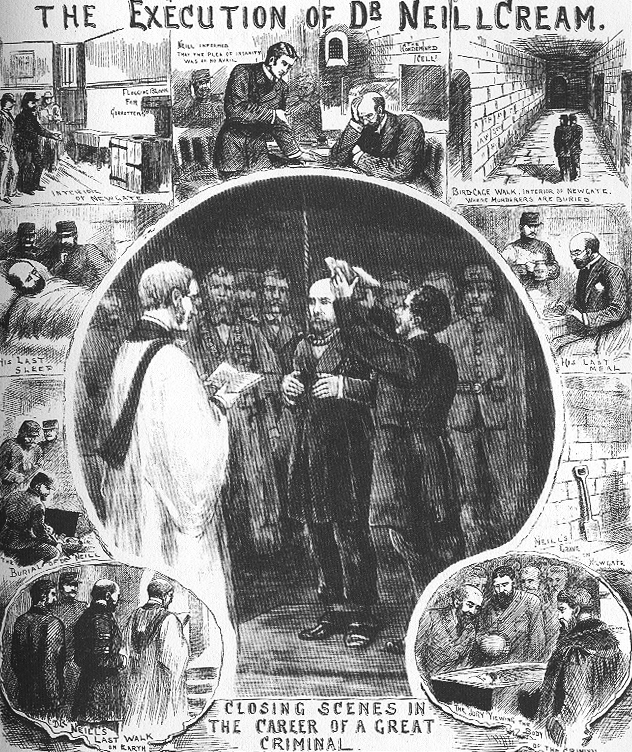
Magazine detailing the execution of Dr Thomas Neill Cream…
*
Killed in a carriage
On the evening of 11th February 1897, Elizabeth Camp– 33 year old manageress of the ‘Good Intent’ pub, on East Street, Walworth– was found battered to death in a carriage shortly after it pulled into Waterloo station.
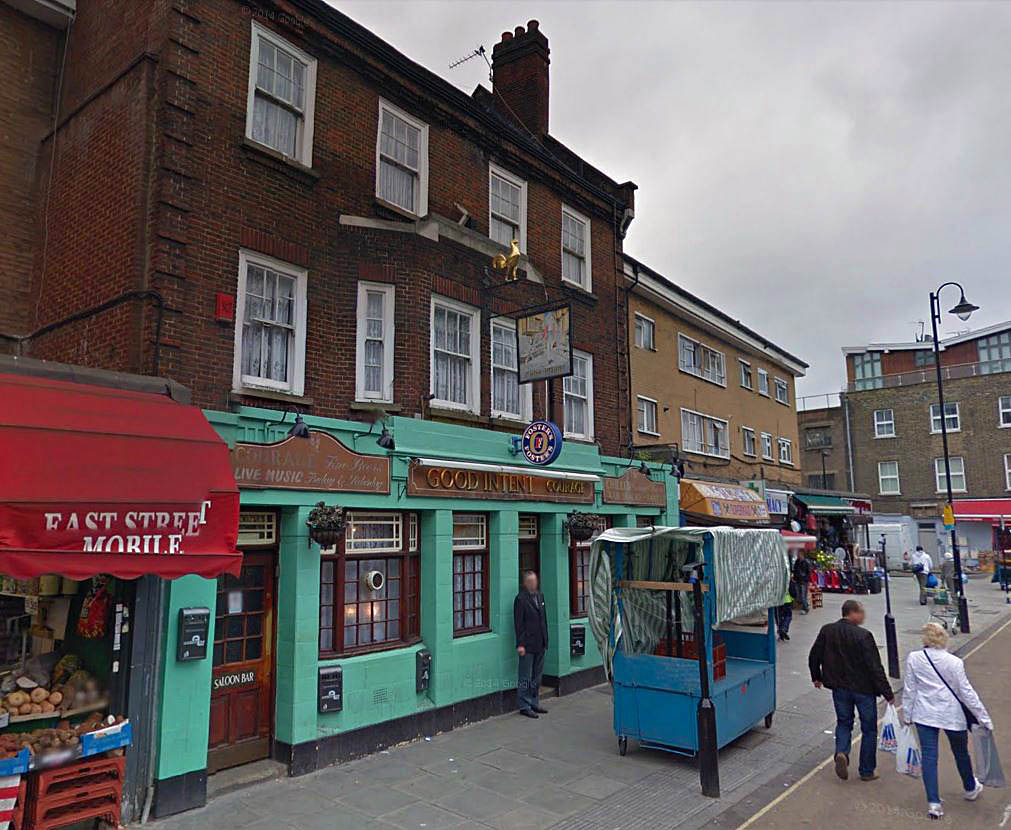
East Street’s ‘Good Intent’ pub today (image: Google)
Tragically, Elizabeth’s fiancé, Edward Berry was waiting on the platform to meet his lover and witnessed the ghastly commotion as the body was discovered.
It was believed that the main motive had been robbery and Elizabeth, who was described as a large, “formidable” woman, had put up a tough fight.
The apparent murder weapon- a chemist’s pestle caked in blood and hair– was soon discovered on a nearby railway embankment, leading investigators to suspect that the killer had boarded the train at either Putney or Clapham Junction.
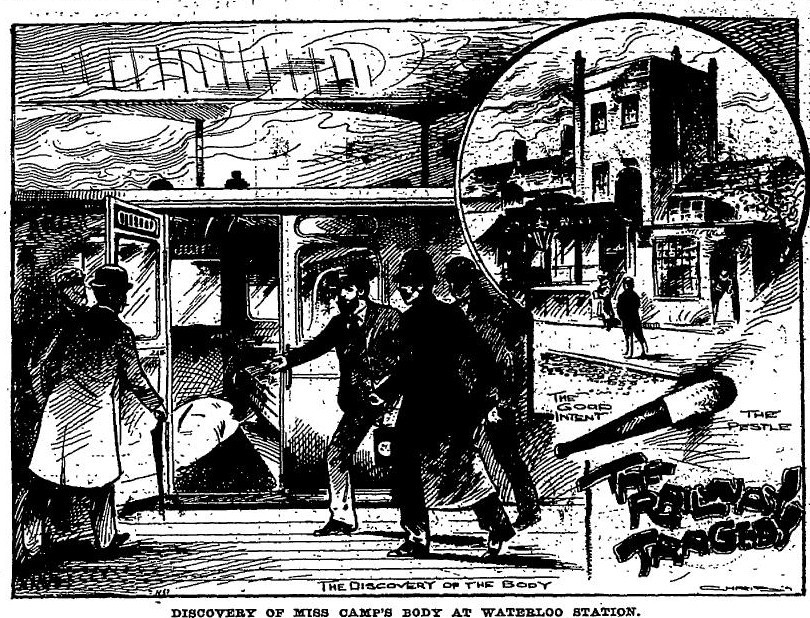
Images depicting Elizabeth’s murder (from the Victorian ‘Penny Illustrated’ magazine)
Despite this, along with reports of a mysterious, flustered man nervously ordering a drink at a tavern in Vauxhall, the killer was never caught…
*
A disturbing discovery
In February 1935 a large, brown parcel was found stuffed beneath a seat in a carriage at Waterloo station which, when opened, gave railway staff a terrifying shock… for the package contained a pair of human legs, neatly severed from the knee down.

The following month, three young boys playing beside the Grand Union Canal in Brentford towards the west of London, spotted a sack floating in the water. Their curiosity got the better of them and they dragged the object towards them for a nosy peek…only to find that it contained a headless, legless torso…
The parts were examined by pathologist, Sir Bernard Spilsbury who declared that they were part of the same body.
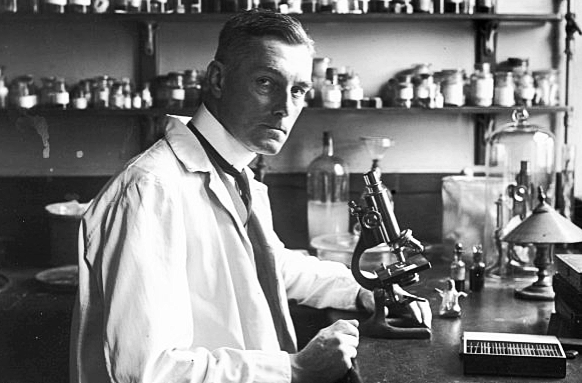
Pathologist, Sir Bernard Spilsbiry
Sir Spilsbury believed that the victim had been a healthy young man, aged between 20-30. He also noted that the victim may have been a dancer as the toes on the chopped off legs appeared to have been slightly contracted by tight-fitting shoes.
However, like the murder of Elizabeth Camp years before, the case remains unsolved…
*
Modern fears
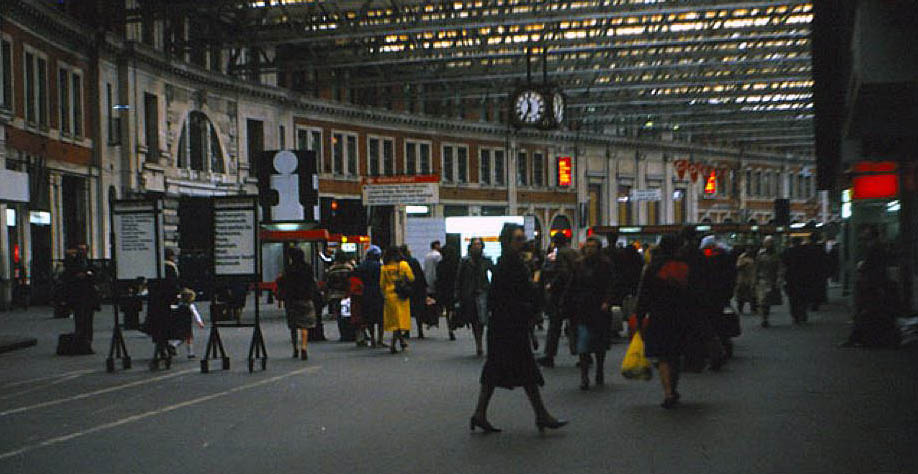
Waterloo station concourse, 1979 (image: Age of Uncertainty website)
By the 1970s the streets and walkways surrounding Waterloo station had gained a reputation as a grimy and increasingly crime ridden area.
One evening in August 1973, 68 year old widower and retired railway worker, Graham Arthur Hills was returning home after an evening at the theatre. On a raised walkway linking the Shell Centre to Waterloo station, he was confronted by three youths aged 15, 16 and 17 who mugged the elderly gentleman.
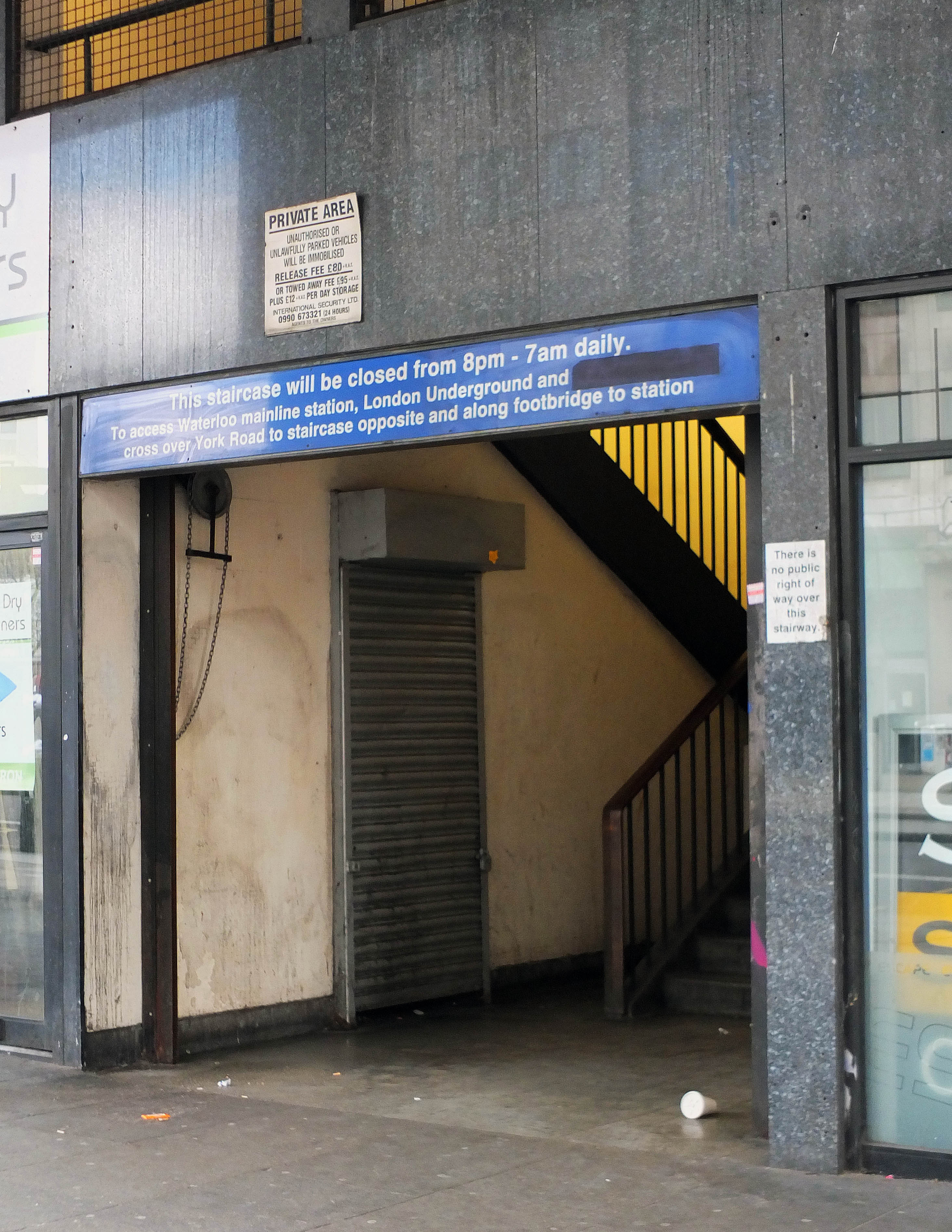
Entrance to Waterloo walkway
After a struggle, Mr Arthur Hills was stabbed in the heart and killed… his briefcase, which contained no more than a single prayer book, was found discarded close by.
*
The murder of PC Frank O’Neill
On the 10th October 1980 two police officers- PC Frank O’Neill and WPC Angela Seeds– were called to a disturbance at a Boots chemist shop on Waterloo’s Lower Marsh where Josun Soan, a drug addict from Wembley, was attempting to acquire drugs with a forged prescription.
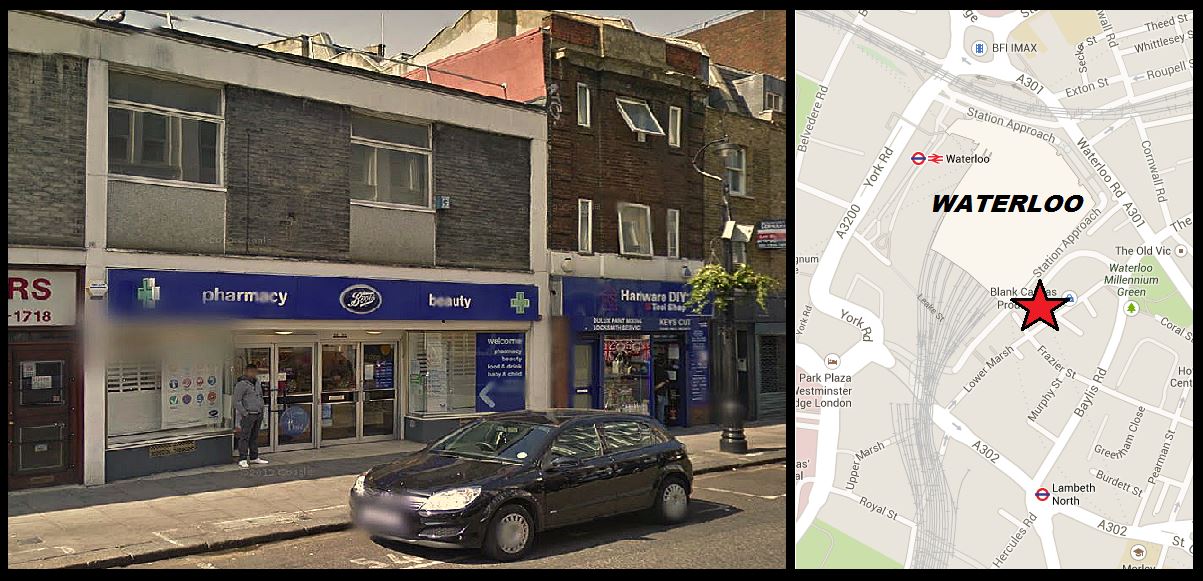
Boots on Lower Marsh today (image: Google, please click to enlarge map)
Suspicions had initially been raised when the chemist queried the note’s handwriting… saying it was far “too neat for a doctor.”
As PC Frank O’Neill approached, Soan lashed out and stabbed the officer in the stomach- he would later claim in court that he’d been hallucinating and mistook the policeman for a “big brown bear… I saw it out of the corner of my eye, which scared the living daylights out of me…I got a knife out and slashed in that direction and then ran out of the shop.”
PC O’Neill gave chase but collapsed to the pavement and later died. He was 32 and father to four children.
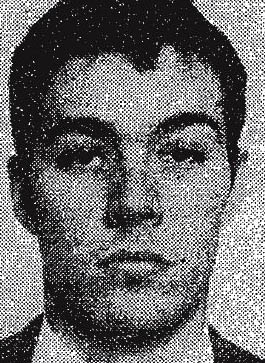
PC Frank O’Neill (image: The Guardian)
His colleague, 25 year old WPC Seeds bravely continued the pursuit, finally cornering the killer on a platform at Lambeth North tube station.

WPC Angela Seeds and a colleague at Frank O’Neill’s funeral, November 1980 (image: The Guardian)
Josun Soan was tried at the Old Bailey in May 1981. At the time he was 23 and had been a drug addict since the age of 14. He was found guilty and sentenced to life imprisonment.
Following the crime, donations for Frank’s widow and children poured into police stations across London.
‘Frank O’Neill House’ on Clapham Road, is named after the fallen officer.
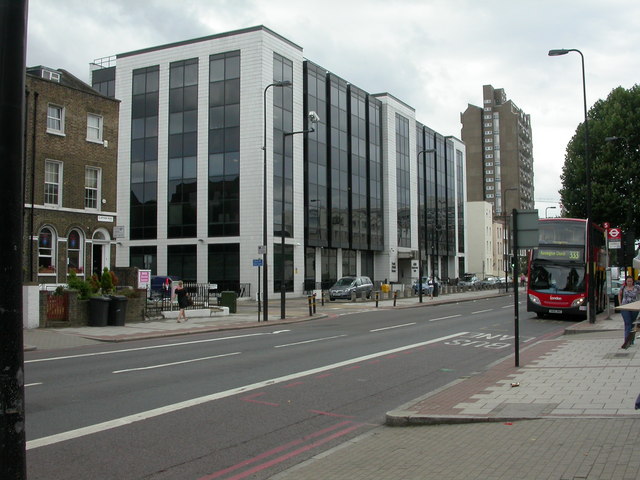
Frank O’Neill House (image: Geograph, copyright Mike Faherty)
*
Ward 5’s Medical Horror
Just across the road from Waterloo station stands the former ‘Royal Waterloo Hospital for Children and Women’ which was founded in 1816 (the current building was constructed between 1903-1905).

Royal Waterloo Hospital for Children and Women (image: Wikipedia)
Between the 1960s and 70s the hospital was home to the notorious ‘Ward 5’; a unit where some 500 women suffering from depression and anorexia were subjected to horrendous experiments, completely disproportionate to their condition.
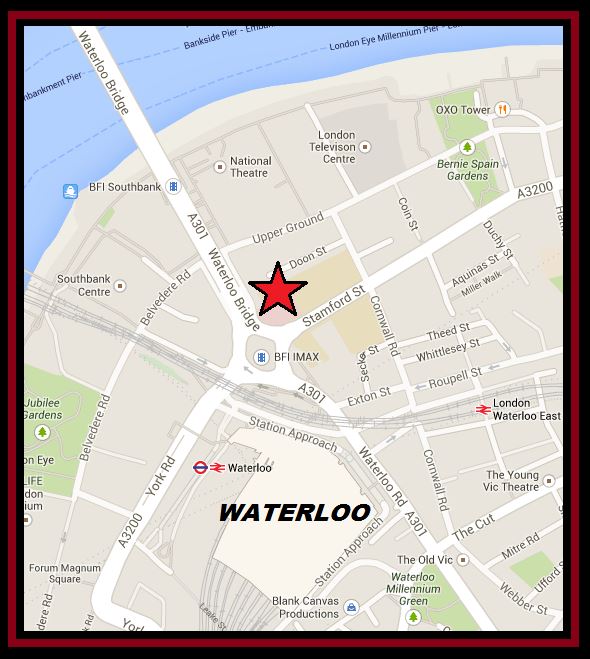
Location of the former Royal Waterloo hospital
Ward 5 was under the charge of William Sargant, a cold, imposing man who described himself as a “physician in psychological medicine.”
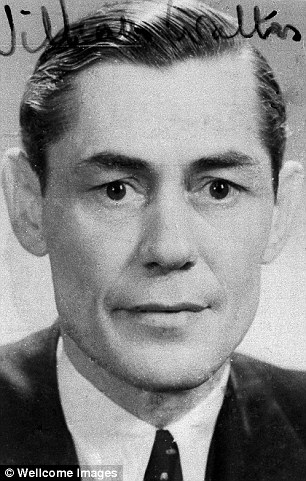
William Sargant (image: The Wellcome Collection)
Rejecting psychotherapy, Sargant approached the treatment of mental illness as if he were dealing with a physical ailment, believing it was possible to rewire the brain.
In his quest to achieve this, Sargant treated the unfortunate women who passed through Ward 5 as guinea pigs, subjecting them to high drug doses, frequent sessions of electroshock therapy and, in some cases, lobotomies.
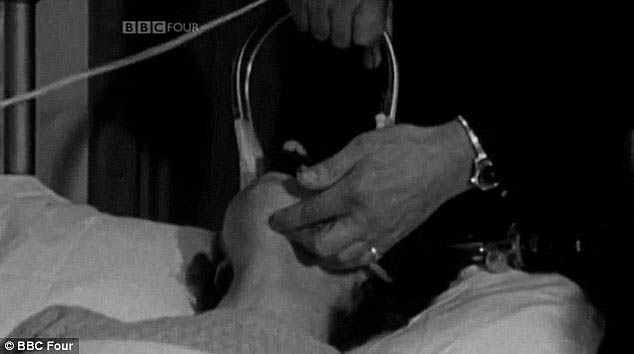
Electroshock Therapy (image from a BBC documentary)
A windowless chamber on the top floor of the hospital was set aside as a ‘Narcosis Room’ where many female patients were drugged into deep sleeps for weeks on end.
One patient, Elizabeth Reed (who was admitted to the hospital when she was just 22), recently gave a disturbing account of the room;
“Women there were occasionally woken to be taken to the toilet or fed. We were like zombies… the worst times was when I started not to be asleep. I was awake but couldn’t move or speak. It was torture lying there for hours in the darkness.”
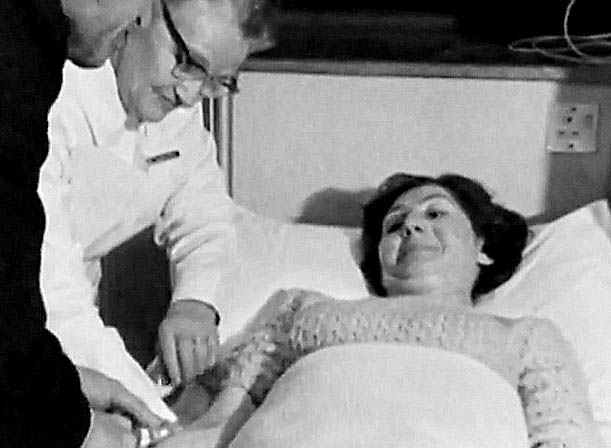
A patient being prepared for Narcosis treatment
The Narcosis Room remained in use until 1973 (despite the death of four women whilst in their induced comas) and the hospital closed in July 1976.
Sargant continued to work at nearby St Thomas’s Hospital until his death in 1988. He personally destroyed all of his records.
The former Waterloo hospital is now a student hall of residence.
*
Cardboard City
For much of the 20th century, Waterloo station and its surrounding walkways became synonymous with London’s homeless who congregated in the area to sleep rough.
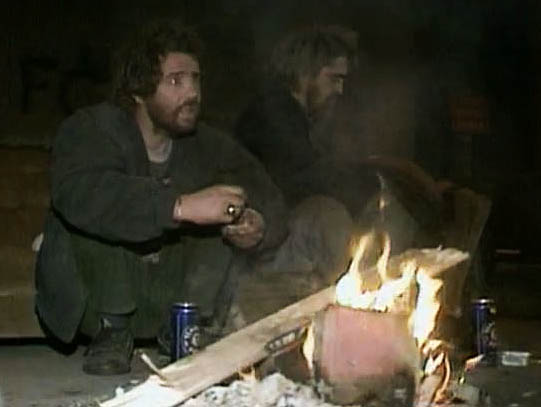
Cardboard City in the 1990s (image BBC)
By the early 1980s an entire community- dubbed ‘Cardboard City’- had developed beneath the ‘Bullring’; a concrete roundabout at the foot of Waterloo Bridge.
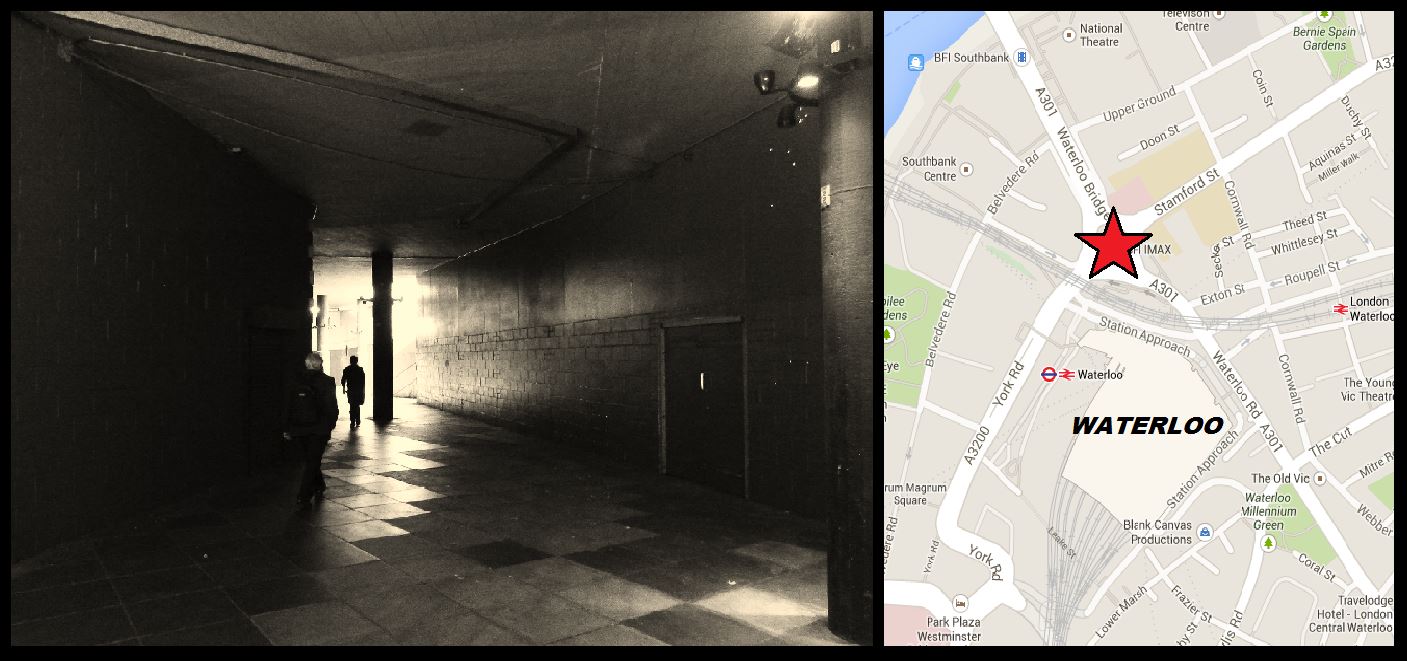
Location of the Bullring and view beneath the roundabout today (please click to enlarge map)
By the middle of the decade, up to 200 people were living in the subterranean area.
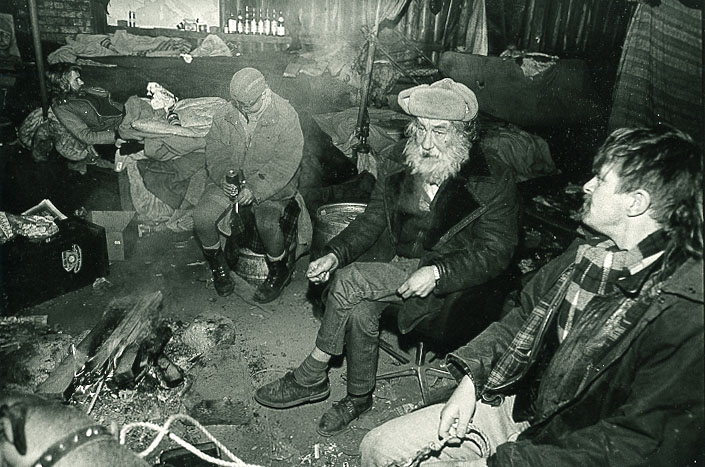
Cardboard City in the 1980s (image copyright Liz Hamlyn)
Conditions in the concrete complex were harsh to say the least. In 1988 for example a broken sewer unleashed a colony of rats which crawled over the inhabitants as they slept.
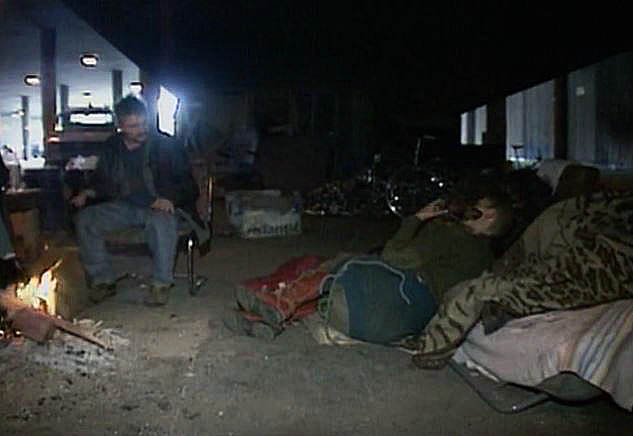
Cardboard City in the the 1990s, shortly before eviction (image: BBC)
In 1998, the High Court granted an eviction order against the 30 destitute people who remained in the makeshift community… so that the area could be prepared for the construction of the huge IMAX cinema.
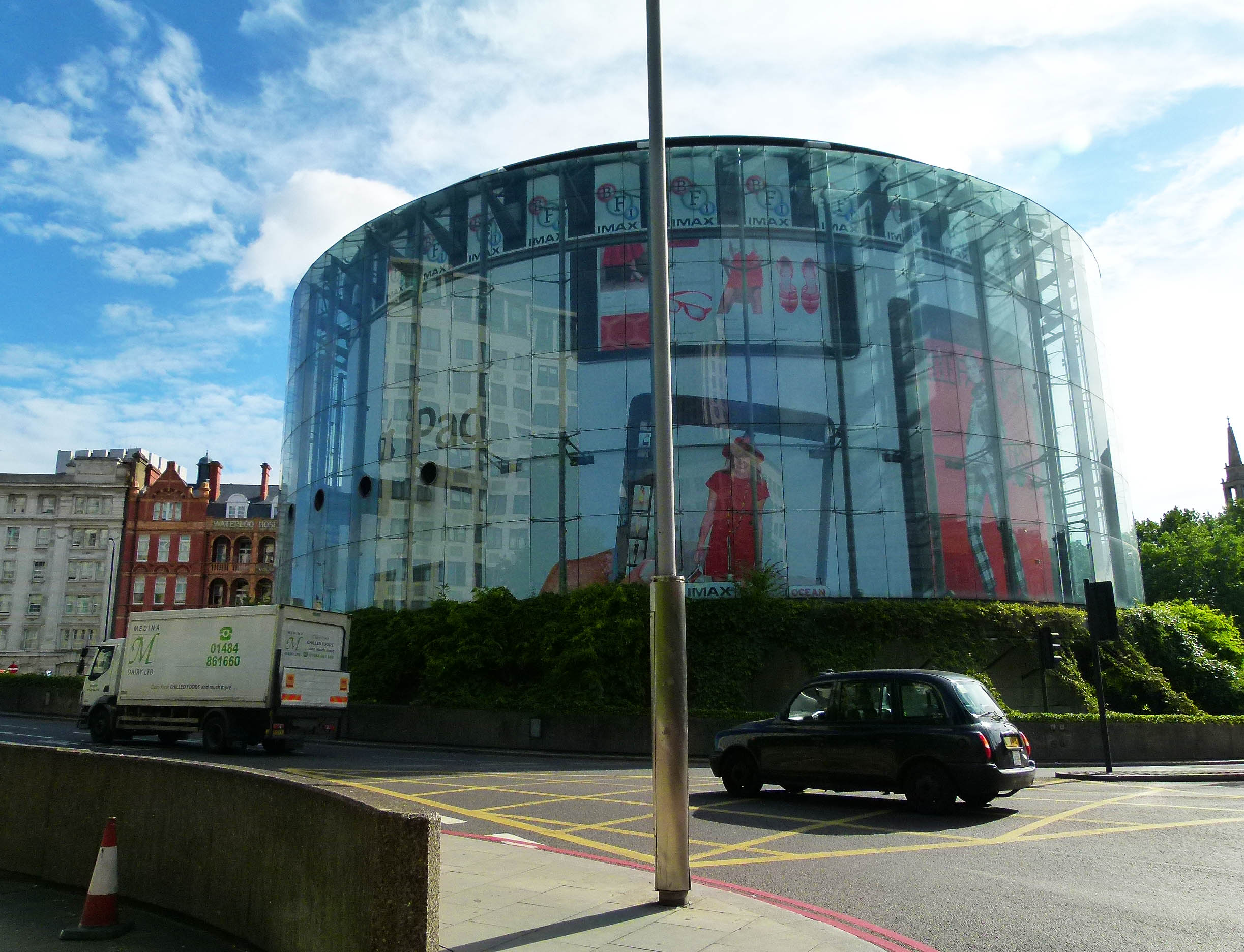
The IMAX cinema which now occupies the Bullring
I wonder how many visitors to the imposing venue realise that Britain’s largest cinema screen stands on the site of what was once the nation’s largest homeless community…
A slideshow of the area as it appears today can be viewed below.









 View from the Mirror