Cabbie’s Curios: Battersea Peace Pagoda
The picture of the Pagoda below is not a holiday snap (unfortunately, I have not yet been lucky enough to visit the Far East!)
Believe it or not, this beautiful structure is in none other than London’s Battersea Park…

Officially known as the ‘London Peace Pagoda’, this sacred place was unveiled in 1985, its construction being undertaken by monks, nuns and followers of ‘Nipponzan Myohoji’; a Buddhist religious order dedicated to promoting world peace.
This order of Buddhism was founded by The Most Venerable Nichidatsu Fujii.
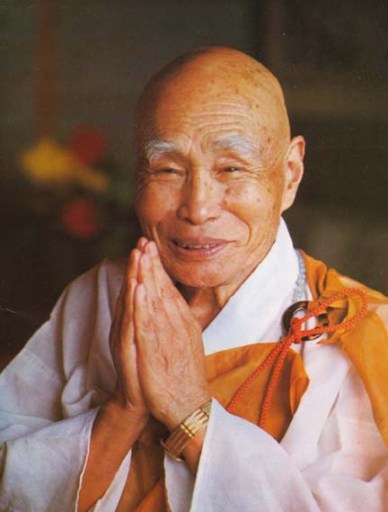
The Most Venerable Nichidatsu Fujii (also known as ‘Guruji’)
Born on a remote Japanese island on 6th August 1885, Nichidatsu Fujii embraced peace from an early age, becoming a Buddhist monk at the tender age of 19 and shunning the military career which was expected of him.
During the 1930s, he travelled to India, where he became friends with Mahatma Gandhi.
Gandhi, who with his doctrine of non-violence, proved to be a huge influence on the Buddhist Monk, bestowed his wise friend with the gracious nickname, ‘Guruji’; Guru or course meaning teacher, and ‘ji’ being a term which people in India attach to names and titles in order to denote respect.

Mahatma Gandhi, an indirect influence on Battersea’s Peace Pagoda
It was a name which stuck, with Nichidatsu Fujii’s followers happily referring to their mentor as Guruji for the rest of his life.
*
On the 6th August 1945, Guruji, Nipponzan Fujii turned 60. However, this milestone would prove to be a fateful anniversary for a far different reason…
That same August day, the world changed forever when the atomic-bomb known as Little Boy was exploded over the Japanese city of Hiroshima. This event was followed a few days later on the 9th August by a second nuclear blast; this time over the city of Nagasaki, forcing a rapid but horrific conclusion to WWII.
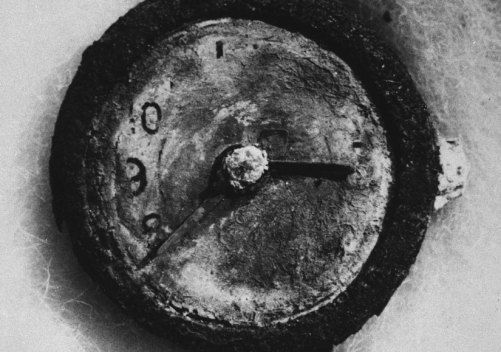
A pocket watch from Hiroshima, the hands melted at the time the atomic bomb detonated… 8.15am
As the Cold War set in, Guruji was horrified by these terrifying new weapons and, like many others across the globe, he believed the arms-race posed the gravest ever threat ever to civilisation. The venerable Buddhist’s view on the issue was summed up with the following words:
“Civilisation is not to kill human-beings, not to destroy things, nor to make war; civilisation is to hold mutual affection and to respect each other.”
As a response to the nuclear age, Guruji initiated a programme in which he endeavoured to build Peace Pagodas (also known as ‘Stupas’) all over the world; monuments intended to unite all of humankind, regardless of race, creed or nationality.
The first of the Peace Pagodas appeared in 1969, its location being Rajgir in India; a city of great importance to Buddhists, as it is believed this is where Buddha preached the influential, Lotus Sutra.

The first of the ‘Peace Pagodas’, located in Rajgir, India (photo: Wikipedia)
In Britain, there are two Peace Pagodas.
The first- a hauntingly elegant structure- was erected at Milton Keynes in 1980:

The UK’s first Peace Pagoda at Milton Keynes (photo: Geograph)
The second of course is the one in Battersea Park.
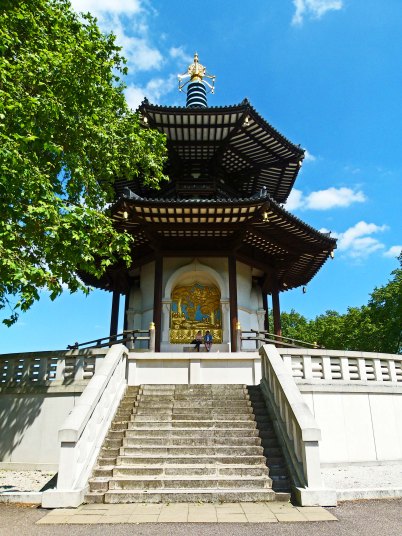
Battersea Park’s Peace Pagoda
This very special gift to Londoners, which stands at an impressive 33.5 metres tall, was inaugurated in May 1985, its purpose defined as being to “further humanity’s quest and prayer that the world may be saved from nuclear annihilation.”
In a sad and profound coincidence, Guruji died just 12 weeks before London’s Peace Pagoda was opened.
He was 100 years old…
The very last recorded words of Guruji; The Most Venerable Nichidatsu Fujii, were in relation to the Battersea Peace Pagoda as it neared its completion:
“I am delighted with the appearance of the precious stupa in London. May it assemble every effort to create peace. My wish has been accepted without question by the people of London and the world… nothing gives me greater happiness than this in my whole life”…

The Most Venerable Nichidatsu Fujii; Guruji in later life
*
The Peace Pagoda in Battersea Park features four sacred, gilt-bronze statues which chronicle the most significant stages in Prince Siddhartha’s (the Supreme Buddha’s) life… birth, contemplation leading to enlightenment, teaching and death.

The first two stages; birth and contemplation

Stages three and four… teaching and passing away…

The four stages of Buddha’s life, as represented by an illustrated plaque beside Battersea’s Peace Pagoda
*
Thanks to the influence of Guruji, there are currently 80 Peace Pagodas spread across the world.
Today, the Peace Pagoda in Battersea is in the care of Wandsworth Council… and, on a far more involved level, the Buddhist Reverend, Gyoro Nagase, who arrived in London from Japan in 1978 and participated in the Pagoda’s original construction.
Mr Nagase has much a huge task in caring for the sacred site- you can read more about his commitment here.
The Pagoda is open to the public all year round.
Its raised level in particular provides beautiful views over the Thames and across to Chelsea Embankment, making it a wonderful place to stand and contemplate; a true oasis of peace and calm in our often chaotic city.
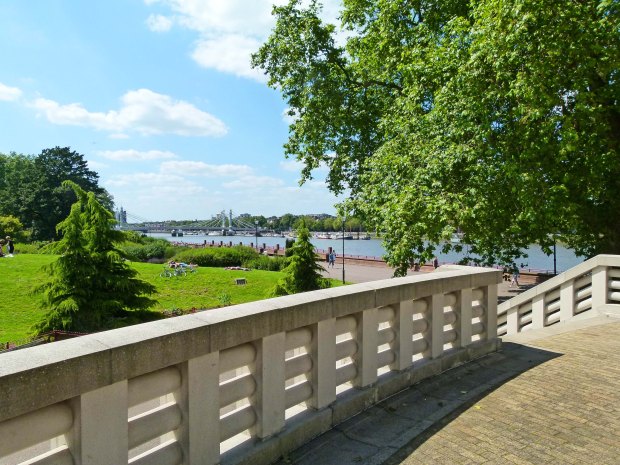
Looking towards Albert Bridge from the Pagoda
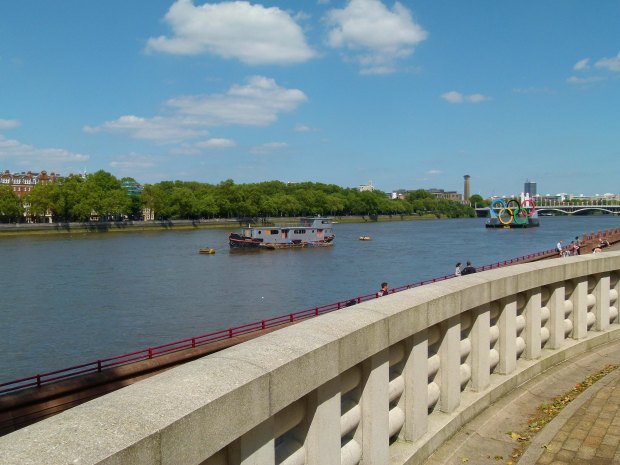
Looking towards Chelsea Bridge from the Pagoda
If you do wish to visit the Pagoda, please bear in mind that the statues of Buddha, which rest in the upper alcoves, are sacred objects, and it is forbidden to climb upon them; something which many visitors in their enthusiasm fail to realise.
The Pagoda also plays host to a number of ceremonies throughout the year; the main ones taking place every June, in which Buddhists from many different backgrounds gather to offer prayers for peace, and on the 9th August (Nagasaki Day) when, at dusk, a floating lantern ceremony takes place, commemorating all victims of war.

Cabbie’s Curios: The Elfin Oak
Situated in the north-west corner of Kensington Gardens, not too far from Bayswater Road and right next door to the Diana Princess of Wales Memorial Playground, you’ll find this gnarly but precious old tree, securely enclosed in a protective cage.

The Elfin Oak
This is The Elfin Oak; a large, weathered stump which originally sprouted in Richmond Park and is estimated to be approximately 900 years old.
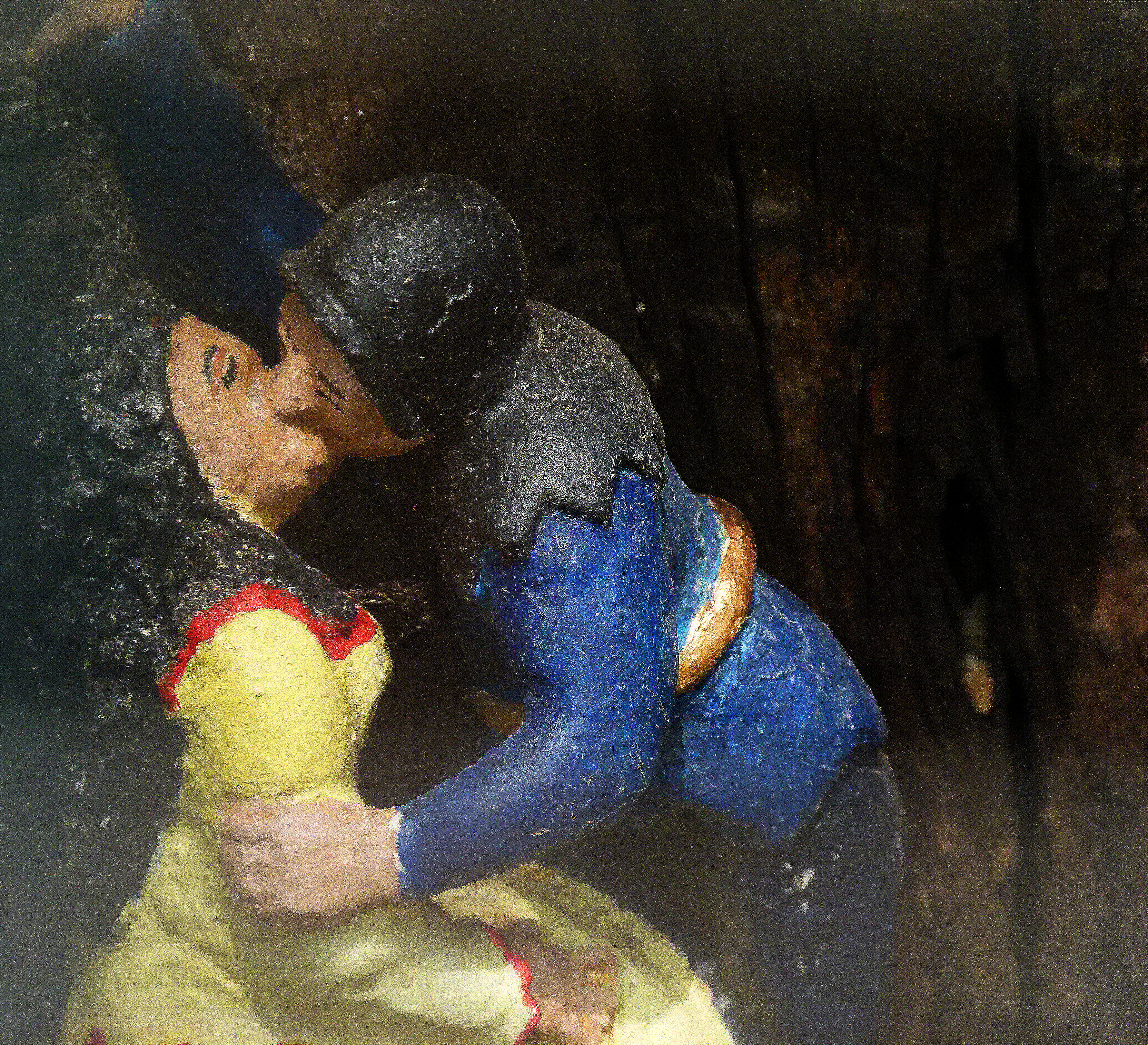
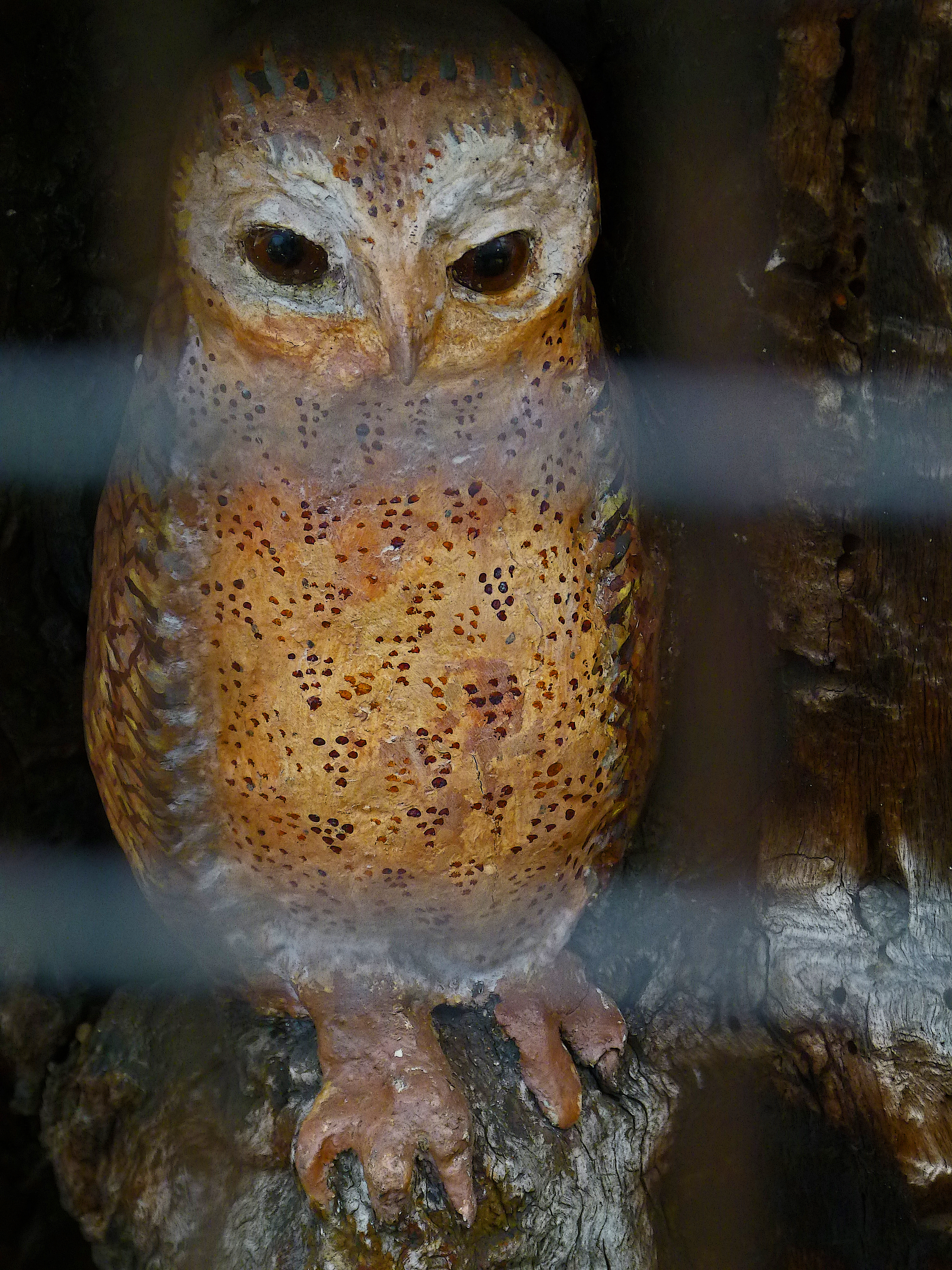
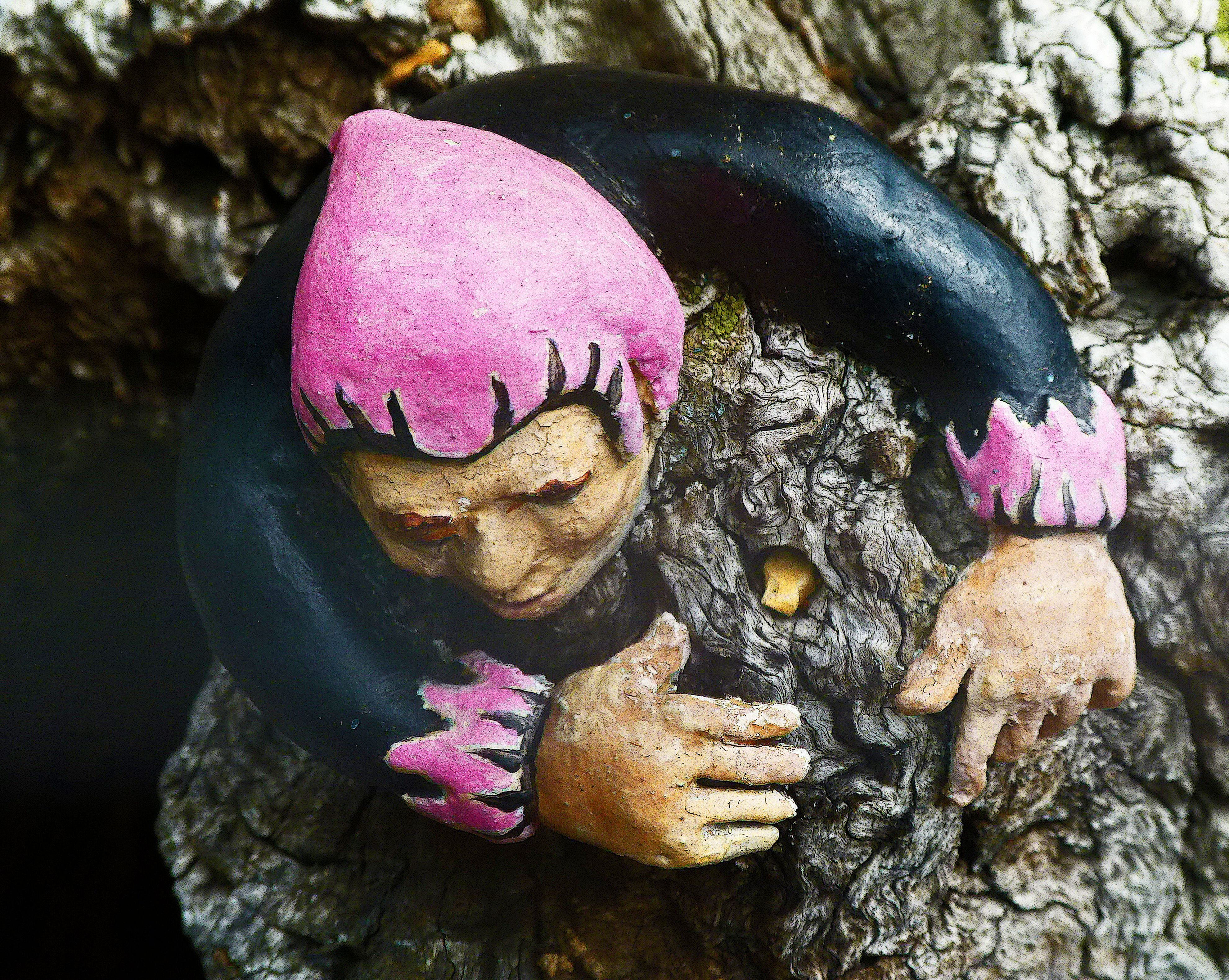
Move in closer and you’ll discover that the old tree holds a special secret… that the gapes and grooves in the weathered old bark are home to an array of fairies, imps, elves and gnomes along with their little forest friends.
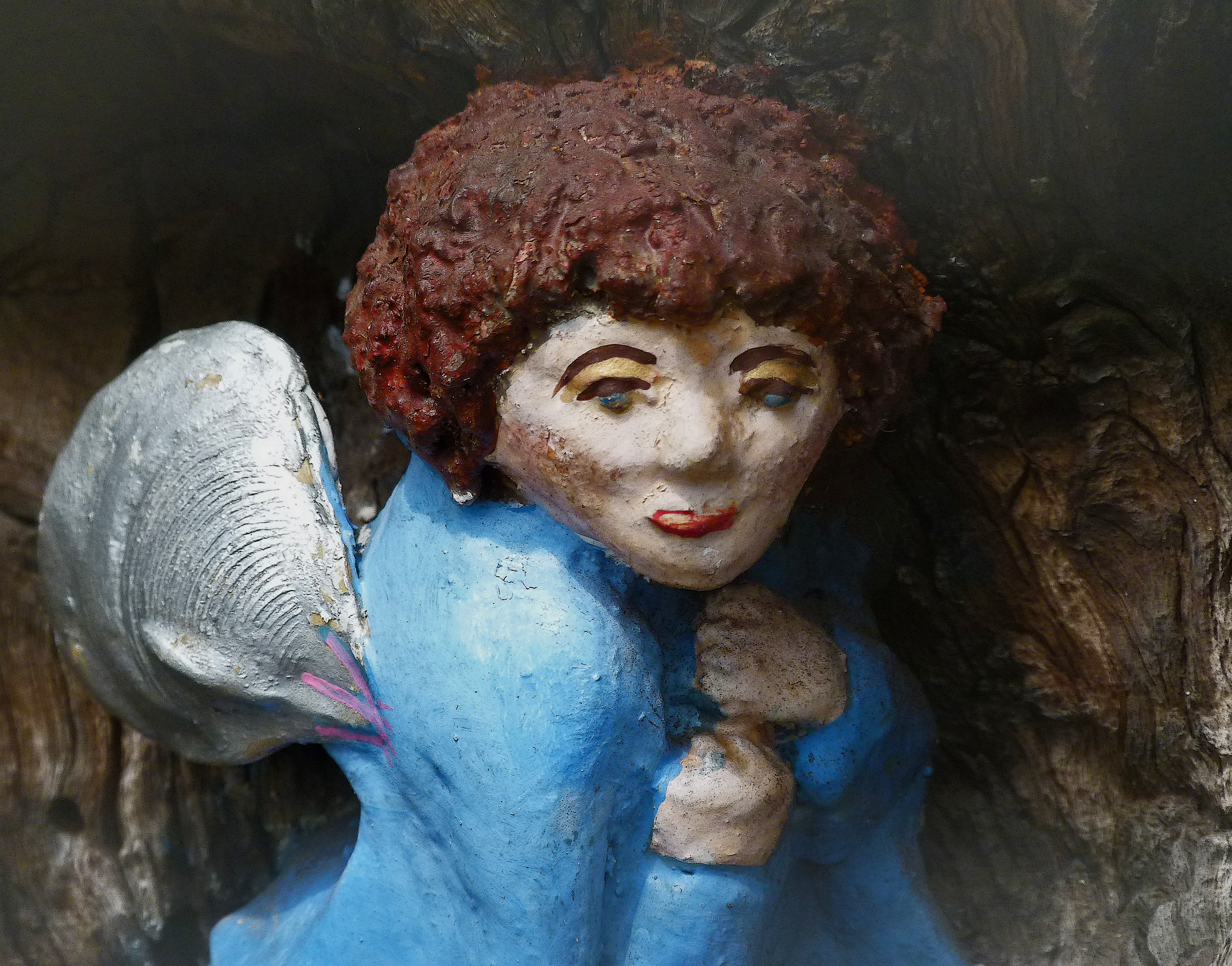
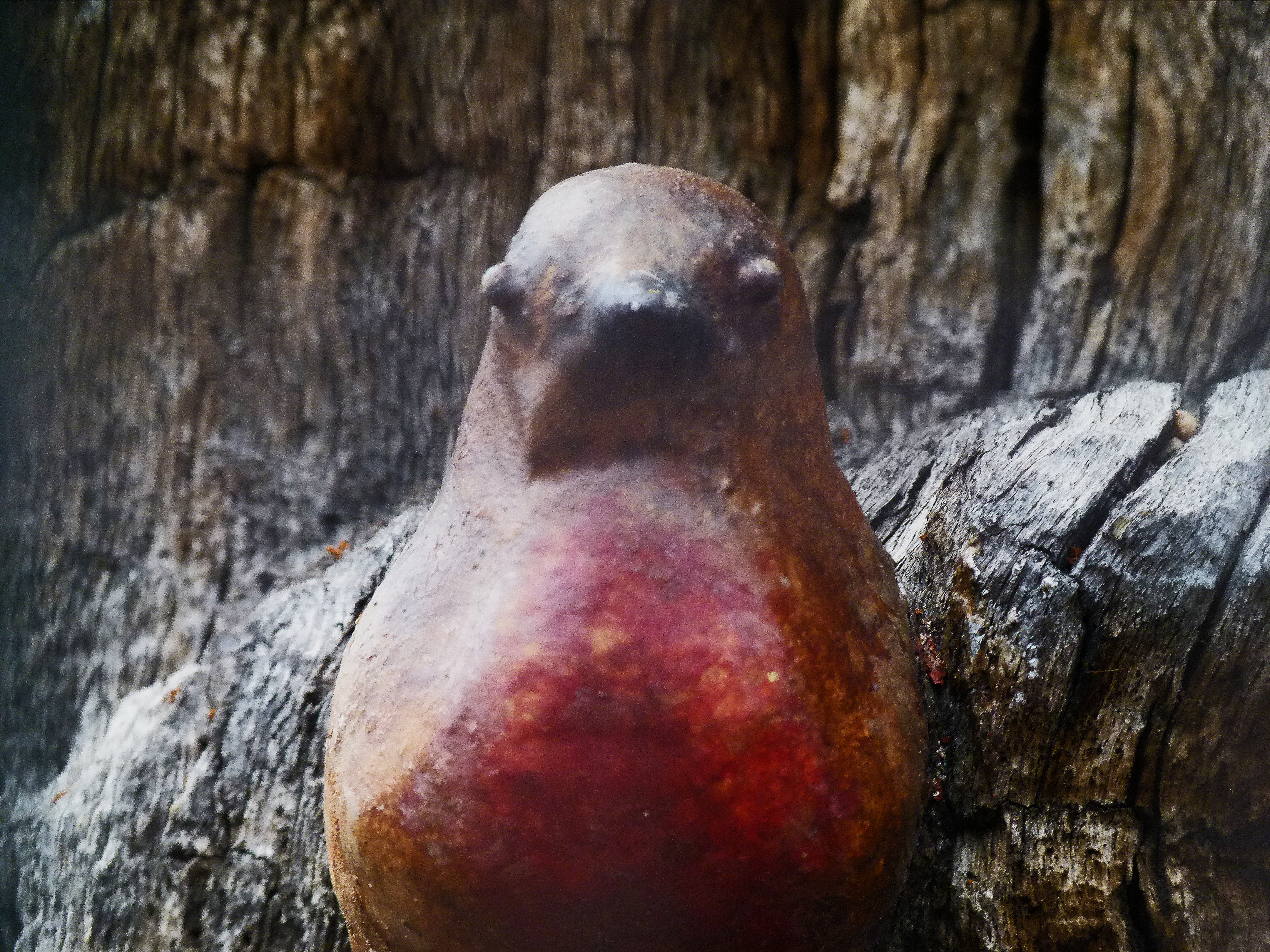
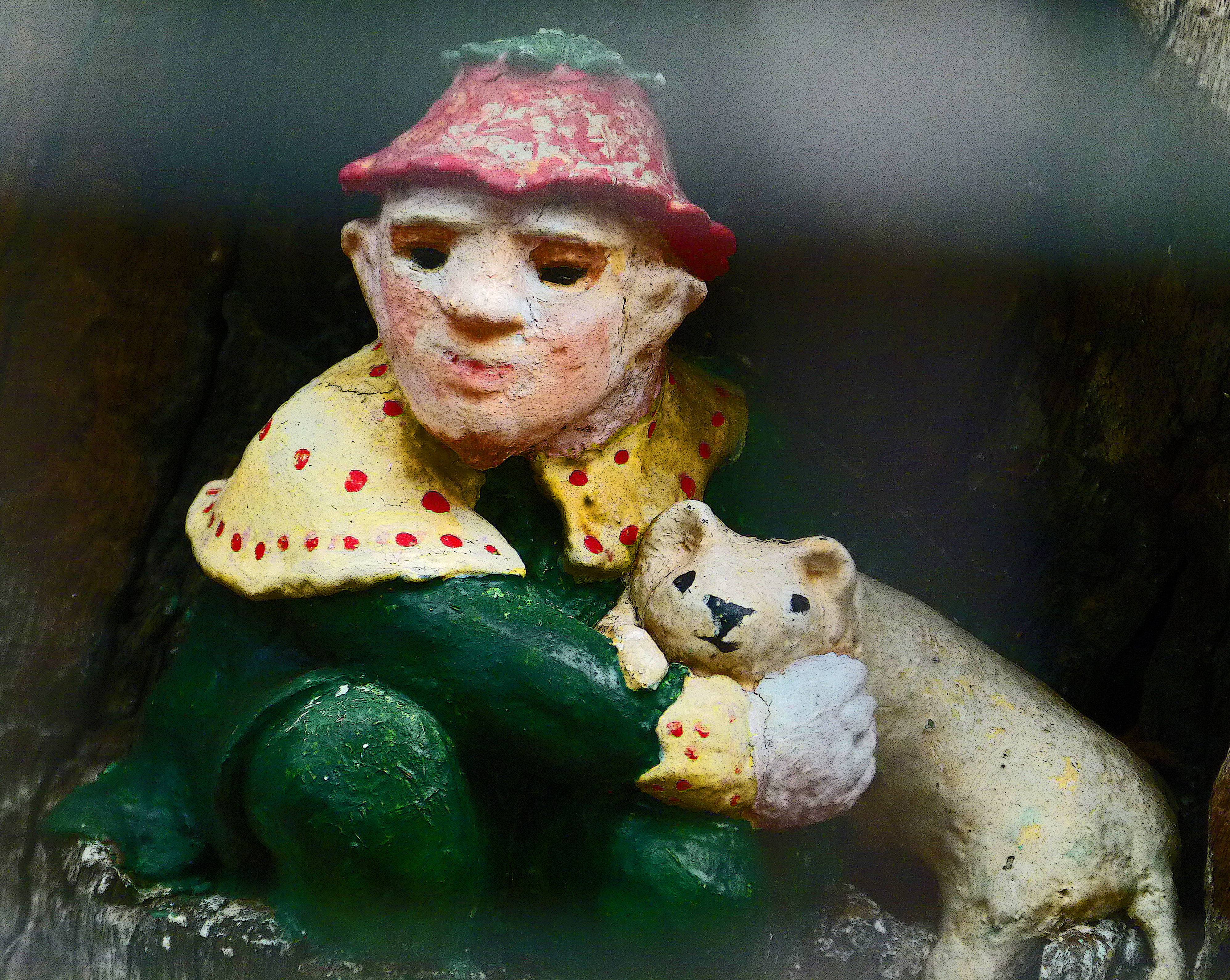
The Elfin Oak’s tiny inhabitants were crafted in the late 1920s by Ivor Innes; a children’s illustrator and, in 1930, the artwork was accompanied by a book; ‘The Elfin Oak of Kensington Gardens’ which was written by his wife, Elsie.
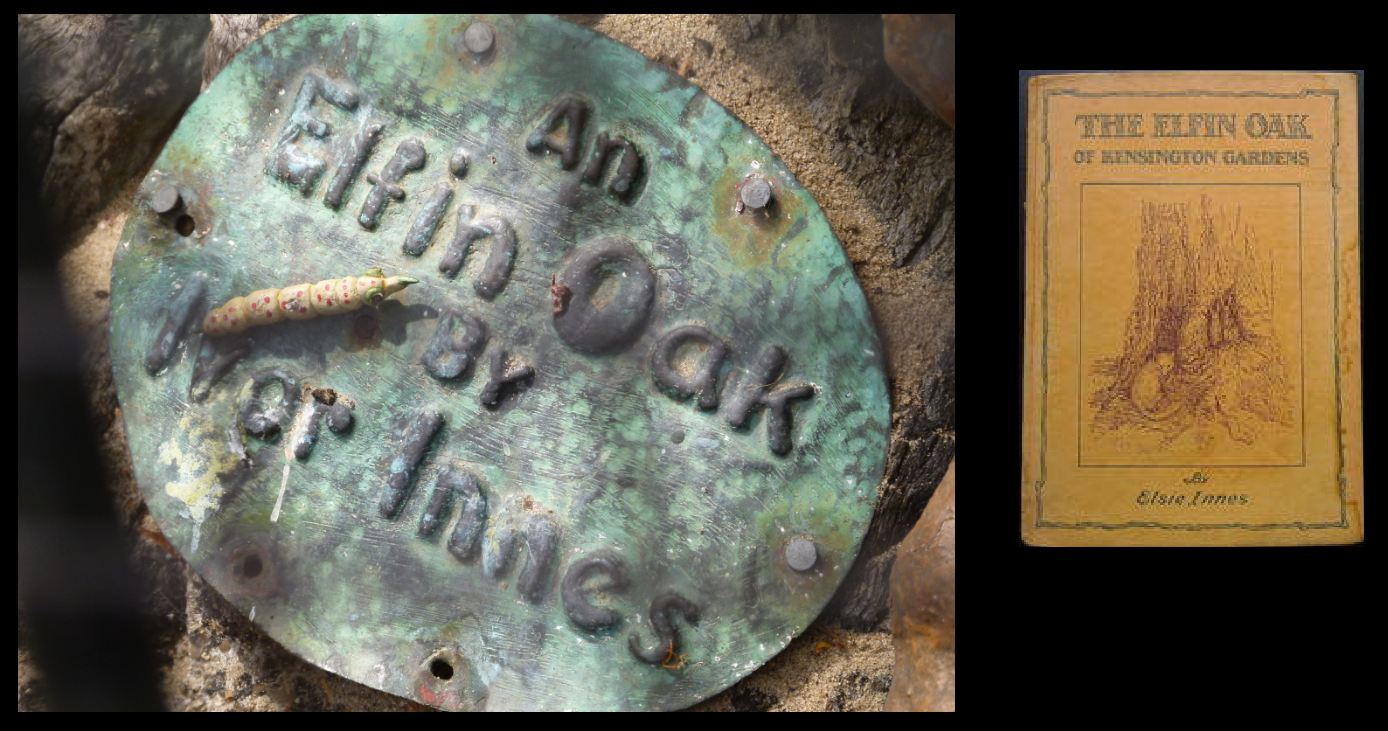
The book provided a magical background to the tree’s long history, describing how it has been home to mystical woodland creatures for centuries; beings that still live “in the nooks and crannies… it is their hiding place by day, their revelry place by night.”
*
The relocation and modification of the tree owed much to the politician, George Lansbury (grandfather to none other than Angela Lansbury; star of the 1971 Disney film, Bed knobs and Broomsticks…and of course the gentle detective show, Murder She Wrote!)
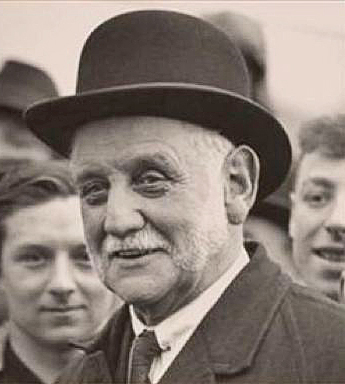
George Lansbury
George Lansbury was a man with heart, striving throughout his career to improve the appalling conditions under which London’s poor lived, especially in the East End where he served as the mayor for Poplar (the Lansbury Gardens Estate on East India Dock Road was named after him as were various other small streets and communal buildings).
Whilst in government during the 1920s and 30s, George Lansbury was made the ‘First Commissioner of Works’, a role which led him to initiate the ‘Brighter Britain’ scheme; a programme which, at the height of the Great Depression, strove to make London as pleasant as possible for its inhabitants, creating parks, lidos, children’s playgrounds… and of course, The Elfin Oak.
By the 1960s, the old tree was starting to look a little tatty. Luckily, it had an influential and equally eccentric fan- Spike Milligan who, in 1966, successfully campaigned to have The Elfin Oak restored.
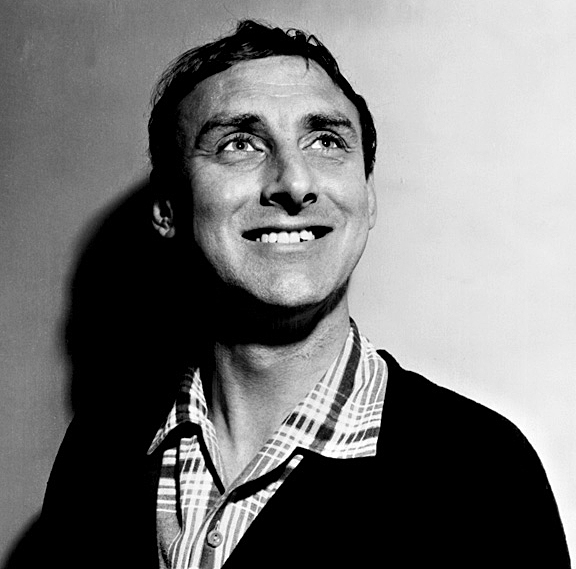
Spike Milligan. savior of The Elfin Oak, pictured in 1958 (photo: BBC)
A few years later, in 1969, The Elfin Oak could be spotted looming behind musician, David Gilmour on the inside sleeve of the Pink Floyd album, ‘Ummagumma’.
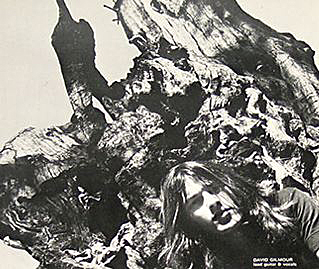
The Elfin Oak- once again with help from Spike Milligan- received further tender loving care in 1997, after which it was awarded Grade II listed status by the then Heritage Minister, Tony Banks who stated that “The Elfin Oak is a wonderful curiosity, loved by Londoners and visitors alike.”
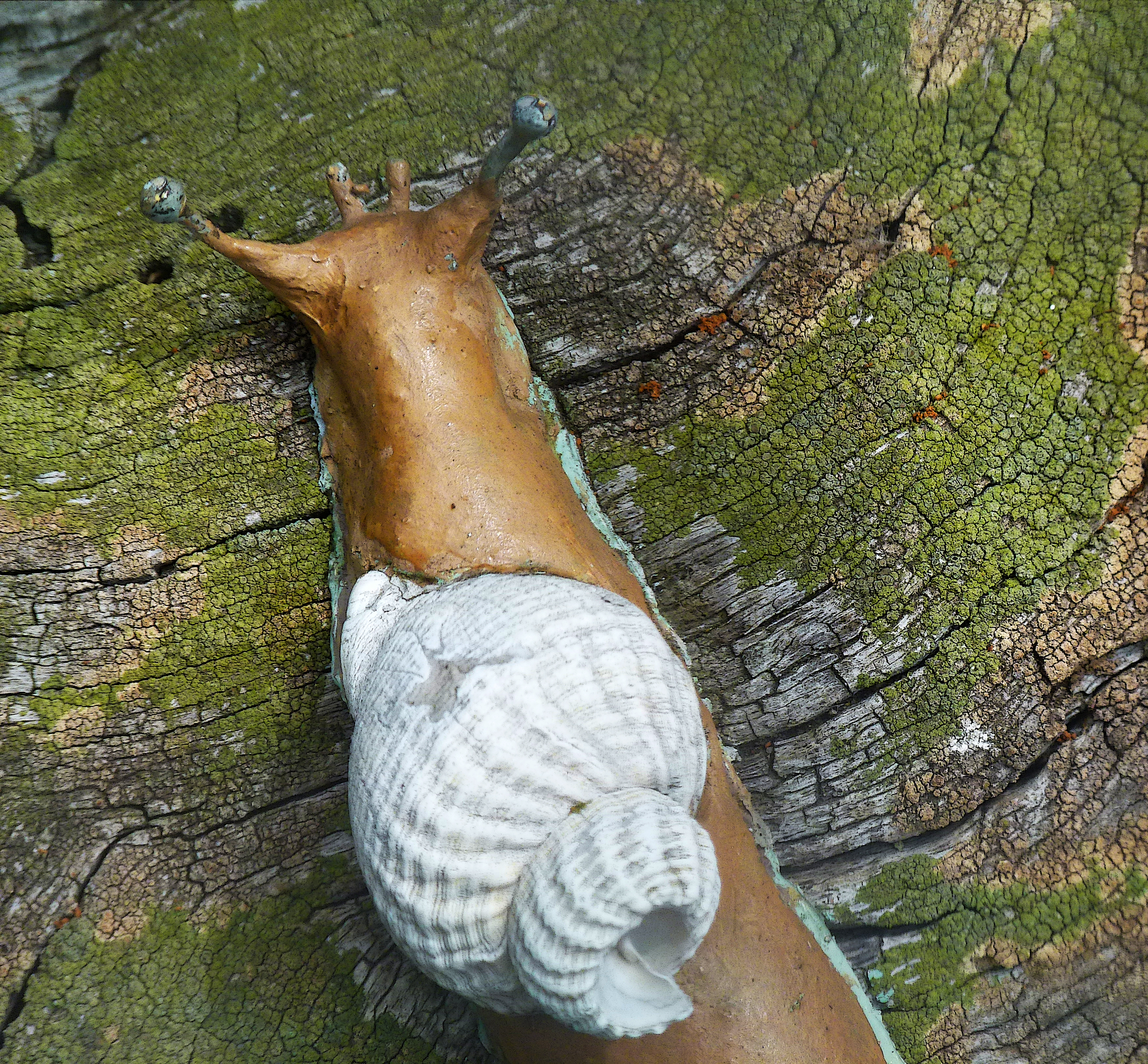
The pictures I have included here represent only a tiny portion of the tree’s lively wee characters… why not pop along yourself and see how many woodland folk and fauna you can find?!
Cabbie’s Curios: London’s Secret Runway…
For some time now, there has been considerable debate over whether of not Heathrow Airport should build a third runway.
What many people involved in these discussions don’t realise is that there may already be an extra runway in London ready for use… and it’s right in the city centre!
This is of course all based on hearsay and secrecy, but if the rumours are to be believed, this covert runway lies on the western edge of Kensington Gardens…. a wide, tarmacked path more commonly known as the ‘Broad Walk’; a popular thoroughfare through the park.

The Broad Walk marked in pink (image from A-Z imaging)
The belief that Broad Walk may be a secret runway dates back to the mid-1950s when a large number of trees were uprooted and re-planted 25 yards back, thus making the Broad Walk wider and clearer, without obstruction.

The wide, Broad Walk today
Some say that this overhaul was carried for a specific reason- to enable the Broad Walk to act as an emergency base where, in the event of a national crisis (specifically a Soviet nuclear attack), a small aircraft could land and take off- thus enabling the Queen to be evacuated from the capital.
Although this rumour remains strictly unconfirmed, it certainly fits in with the history of the period. By the 1950s, the world was firmly in the icy grip of the Cold War and governments were quickly having to think up contingency plans to deal with the consequences of the terrifying new atomic weapons.
The era is well portrayed in the following short clip from 1958, which shows how RAF crews were required to get their Vulcan nuclear bombers into the skies within a nail-biting four minutes:
If the Broad Walk had been utilised as a platform to flee London, it would have been just one component of a wider evacuation plan. In the early days of the Cold War, the Royals would have been taken to a bunker in the West Country or possibly transferred to Canada.
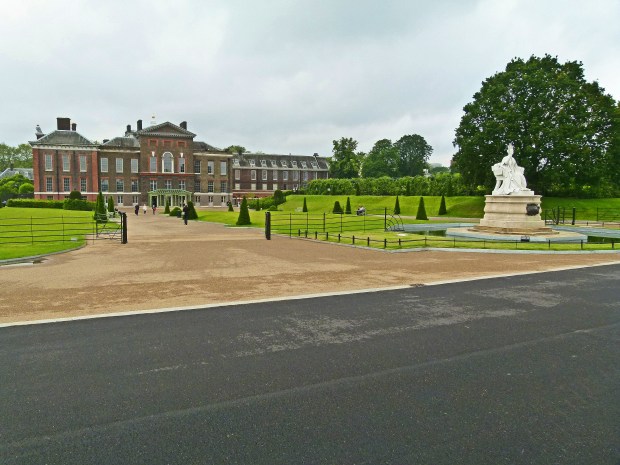
Kensington Palace which sits right opposite the Broad Walk
A new course of action drawn up in the late 1960s and known as the ‘Python Plan’ would have seen the Queen taken to Scotland where, on the Royal yacht, Britannia she would have been kept on the move; transferred to a different Scottish loch each night, the Highland mountains providing sound cover from Soviet detection.
The Python Plan continued to be updated right up until the early 1990s…
If you’d like to know more about London’s Cold War connections, I have written two previous articles on the subject which can be found under the following links:
London & the Cold War: The Spying Game
London & the Cold War: Bunker Mentality
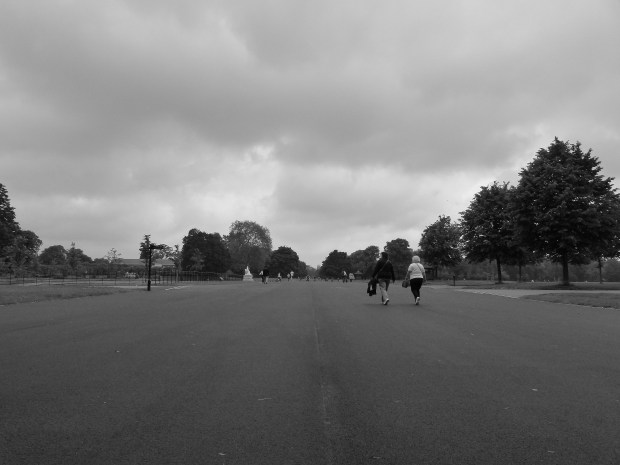
The Broad Walk… all ready for take off!





 View from the Mirror