‘Terminus’… Waterloo in the early 1960s (Waterloo Station Part 8)
I would like to introduce you to a very special film…
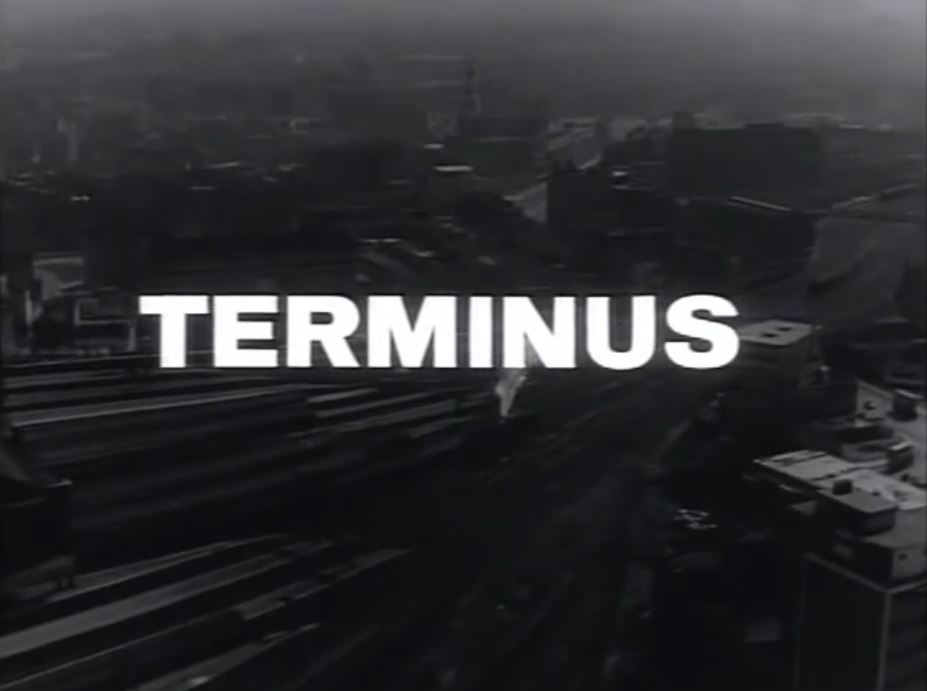 Shot in 1961, ‘Terminus‘ provides an intriguing insight into Waterloo station and the London of the early 1960s- as the gallery of snapshots below demonstrates…
The documentary- an early example of the ‘fly on the wall‘ genre- was directed by John Schlesinger, a born and bred Londoner who died in 2003 aged 77.

John Schlesinger
Schlesinger’s other works include Billy Liar, Midnight Cowboy and Marathon Man.
Terminus is perhaps most famous for a controversial scene in which a five year old lad called Matthew is led to believe he has become separated from his mummy!
Don’t worry… everything works out ok in the end!

Matthew looses his mum…
The entire 30 minute film (which is now free from copyright) can be viewed below…enjoy.
Waterloo Trivia (Waterloo Station: Part 7)
As Britain’s largest railway station it is not surprising that Waterloo has developed an interesting catalogue of trivia and curiosities over the years.
Here’s a selection…

Panorama of Waterloo station’s concourse (please click to enlarge)
Meet me under the clock…
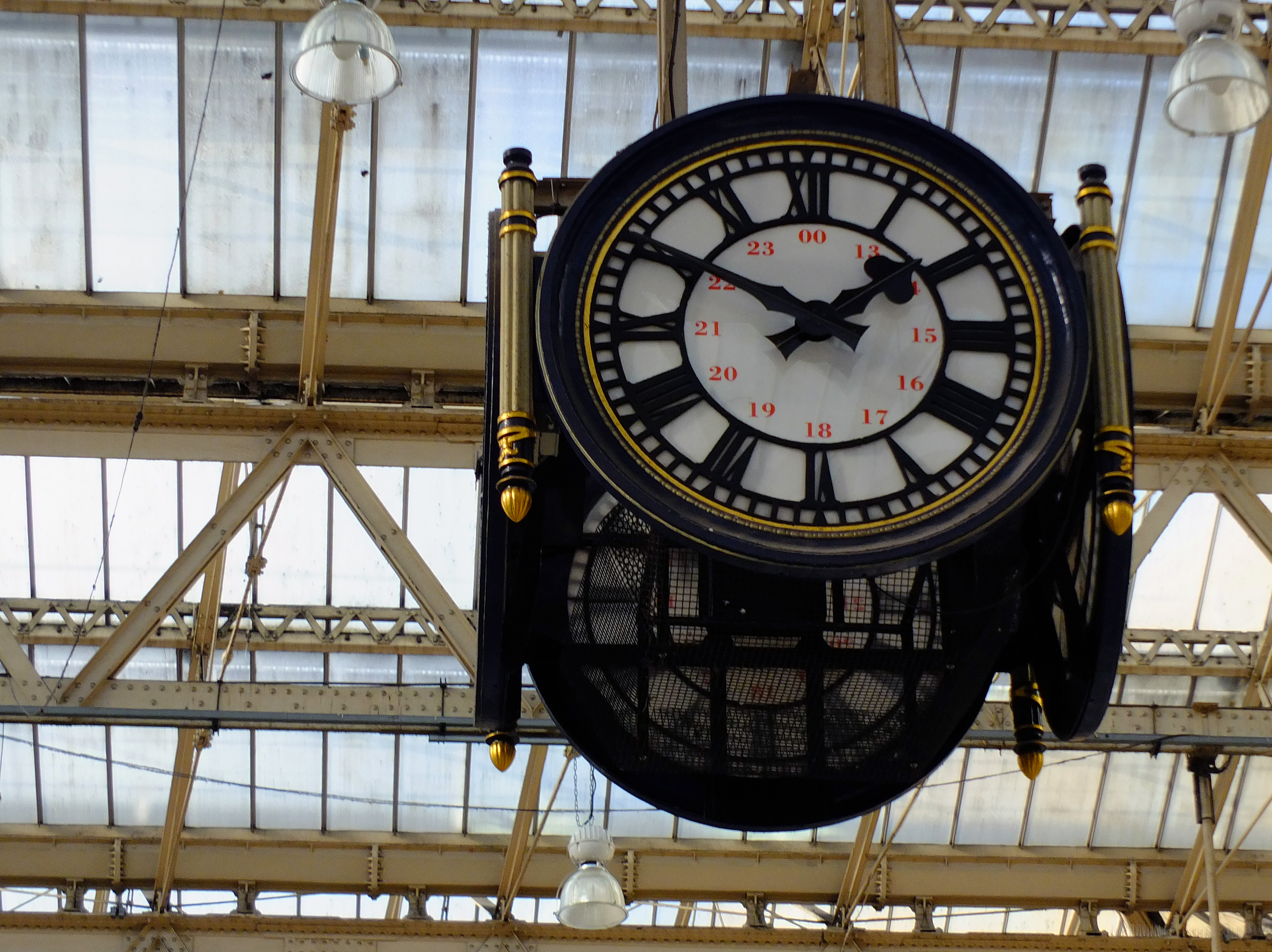
Waterloo’s main clock
Manufactured by Gents of Leicester and hanging high over the main concourse, Waterloo’s huge four-sided clock has been a popular meeting point for Londoners (especially those on a romantic rendezvous) since the early 1920s.

Hanging high… Waterloo’s main clock
Although not mentioned directly, it is perhaps safe to assume that The Kinks had the clock in mind when writing their 1967 hit, Waterloo Sunset… which includes the lyric, “Terry meets Julie, Waterloo station every Friday night.”
Please click below to listen to this quintessential London song…
Waterloo’s clock played an important part in the much loved BBC comedy, Only Fools and Horses.

‘Only Fools and Horses’, Christmas 1988
In the feature length episode, ‘Dates’ first broadcast on Christmas day 1988, it is beneath the Waterloo clock that esteemed Londoner, Del Boy first meets his future wife, Raquel (although Del was worried about the rendezvous point at first- “the last girl I met at Waterloo station got mugged on the escalator”!)
Please click below for the clip:
Waterloo News Cinema
For 36 years Waterloo Station boasted its very own cinema.

Waterloo News Cinema pictured in 1934 (image: Cinema Treasures)
Opened in the summer of 1934, the cinema stood opposite platform 1 and was originally run by ‘Capitol and Provincial News Theatres’ who also operated a similar venue at Victoria.
As the company’s name suggests, the station based cinemas were devoted to screening news reels. Here, commuters eager to catch up on current events could pop in daily between 9am and 11pm to mull over the looped bulletins.

Waterloo Cinema auditorium, 1934 (image: Cinema Treasures)
Cartoons were also included on the bill; these being the days when classic characters such as Mickey Mouse and Tom and Jerry ruled the silver screen!
Mickey Mouse… a regular sight at Waterloo during the 1930s and 40s
By the 1960s news-reels were in demise thanks to the growth of television.
Consequently, Waterloo’s cinema was rebranded the ‘Classic Cinema Waterloo’ and switched to screening double bills of vintage Hollywood flicks.
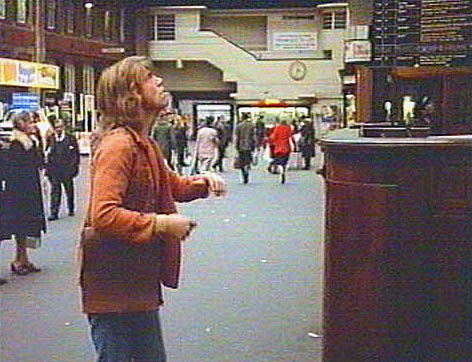
A screenshot from the 1973 budget movie, ‘Horror Hospital’- Waterloo’s old cinema can be seen in the background…
The cinema screened its final show (an Alfred Hitchcock double bill) on 14th March 1970 and then lay empty before being sadly demolished in 1988.
However, some of the picture house’s art-deco curves can still be spotted outside the station on the junction of Approach Road and Cab Road.

Remnants of the old cinema today (on the corner of Approach Road and Cab Road)
Footage of the cinema, as it appeared in the 1940s, can be viewed later in this post.
Waterloo Celebs
During its news reel days, Waterloo’s cinema would’ve screened plenty of topical reels that were filmed within the station itself- with stories of celebrities, newly arrived from the USA via boat-train, proving especially popular.
A good example is Charlie Chaplin’s return to London via Waterloo in 1952… please click below to view:
Plenty of other celebrities have been snapped at Waterloo too as the gallery below demonstrates…
A robber reformed…
Between the 1970s and 1990s, Waterloo was the place to go if you wished to meet a somewhat shadier type of celeb…in this case, a chap called Ronald Christopher Edwards; aka Buster Edwards… one of the rogues involved in 1963’s infamous ‘Great Train Robbery‘.

Buster Edwards (image: BBC)
Born in Lambeth in 1931, Buster grew up close to Waterloo Station.
Unfortunately, he fell into a life of crime, his crooked career famously culminating in the robbery of the Glasgow to Euston Royal Mail train in August 1963.

Scene of the crime….a Royal Mail carriage which was at the centre of the 1963 theft (image: Associated Press)
Following the heist, Buster fled to Mexico with his family but soon found himself homesick and strapped for cash.
He negotiated his return back to the UK but the plan didn’t work out as he’d hoped and the train robber found himself sent down for a 15 year stretch.
When Buster was granted early release in 1975 he decided to go straight- by establishing a flower stall outside Waterloo station, close to the junction of Waterloo Road and Mepham Street.

The site of Buster’s former flower stall
In 1988 Edwards’ story was immortalised in the film, ‘Buster’ starring Phil Collins in the lead role and Julie Walters as his long suffering wife.

The final scene of the film showing Buster as a reformed florist was shot on the Southbank, a short distance from Waterloo station (please click below to watch).
Despite the gentle nature of the film, the real life Buster Edwards was heading for tragedy as he grew older.
A severe alcoholic, he sunk into depression and, on the 28th November 1994, aged 63, Buster committed suicide by hanging himself from a girder in a garage on Greet Street, a short distance from his Waterloo flower stall.
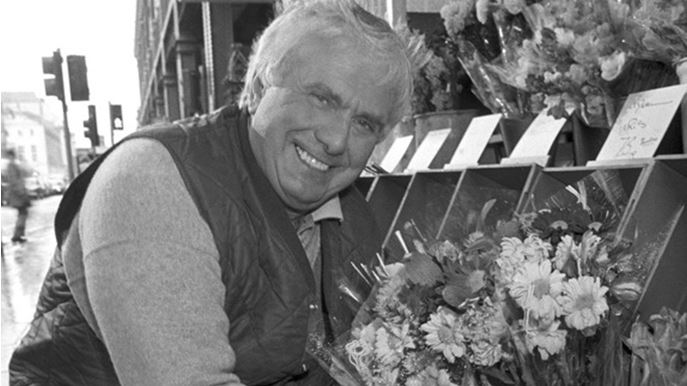
Buster Edwards with his Waterloo flower stall (image: ITV)
Waterloo on Film
Waterloo station has appeared on film many times. Here are a few examples…
London Terminus (1944)
Made towards the end of WWII, this 15 minute documentary follows a young couple as they head for Waterloo’s news cinema, where they settle down to catch a film about the workings of the station.
Rush Hour (1970)
A quirky short made by British Transport films to showcase Waterloo’s chaotic nature.
Harry’s Game (1982)
In the opening scene to this dark drama, IRA hit-man Billy Downes (played by Derek Thompson) – exits Waterloo station and heads for the tube as he embarks upon his mission to assassinate a Cabinet minister…
West End Girls (1985)
Part of the music video to the Pet Shop Boys’ classic synth hit, ‘West End Girls’ was filmed in and around Waterloo station.
The Bourne Ultimatum (2007)
In this typical Hollywood scene action, Jason Bourne (played by Matt Damon), helps whistle-blowing Guardian journalist, Simon Ross (Paddy Considine) evade the CIA’s prying eyes through Waterloo’s rush hour…
Jhoom Barabar Jhoom (2007)
In the opening sequence to romantic comedy, Jhoom Barabar Jhoom, legendary Indian actor, Amitabh Bachchan (referenced to western audiences in Slumdog Millionaire) brings the dazzle of Bollywood to Waterloo’s concourse!
The Last Days of Steam
Waterloo was one of the last major terminals to operate steam-hauled services, with the powerful coal driven engines chugging in and out of the station right up until 1967.
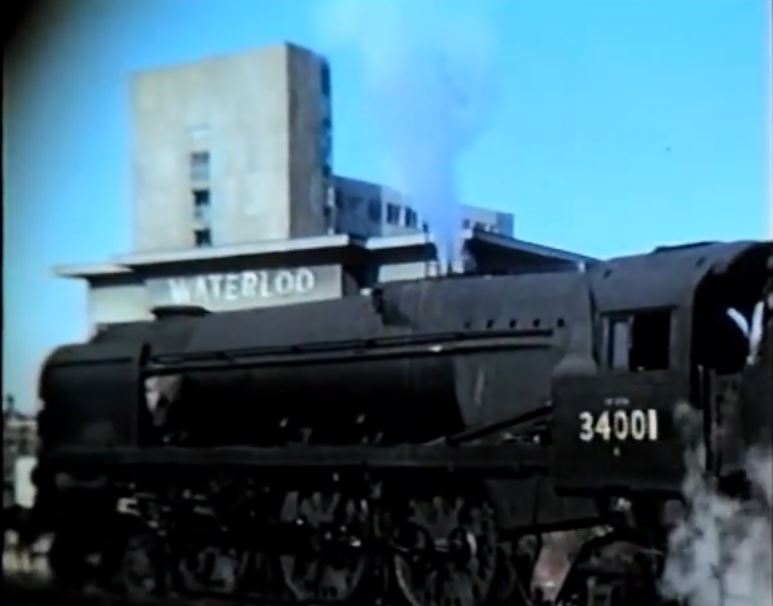
A steam engine at Waterloo, 1967
Footage of steam trains in and around Waterloo during their very last days can be viewed below; a sight which is rather surreal when modern office blocks such as the Millbank Tower can be glimpsed in the background…
Waterloo Wildlife (Waterloo Station: Part 6)
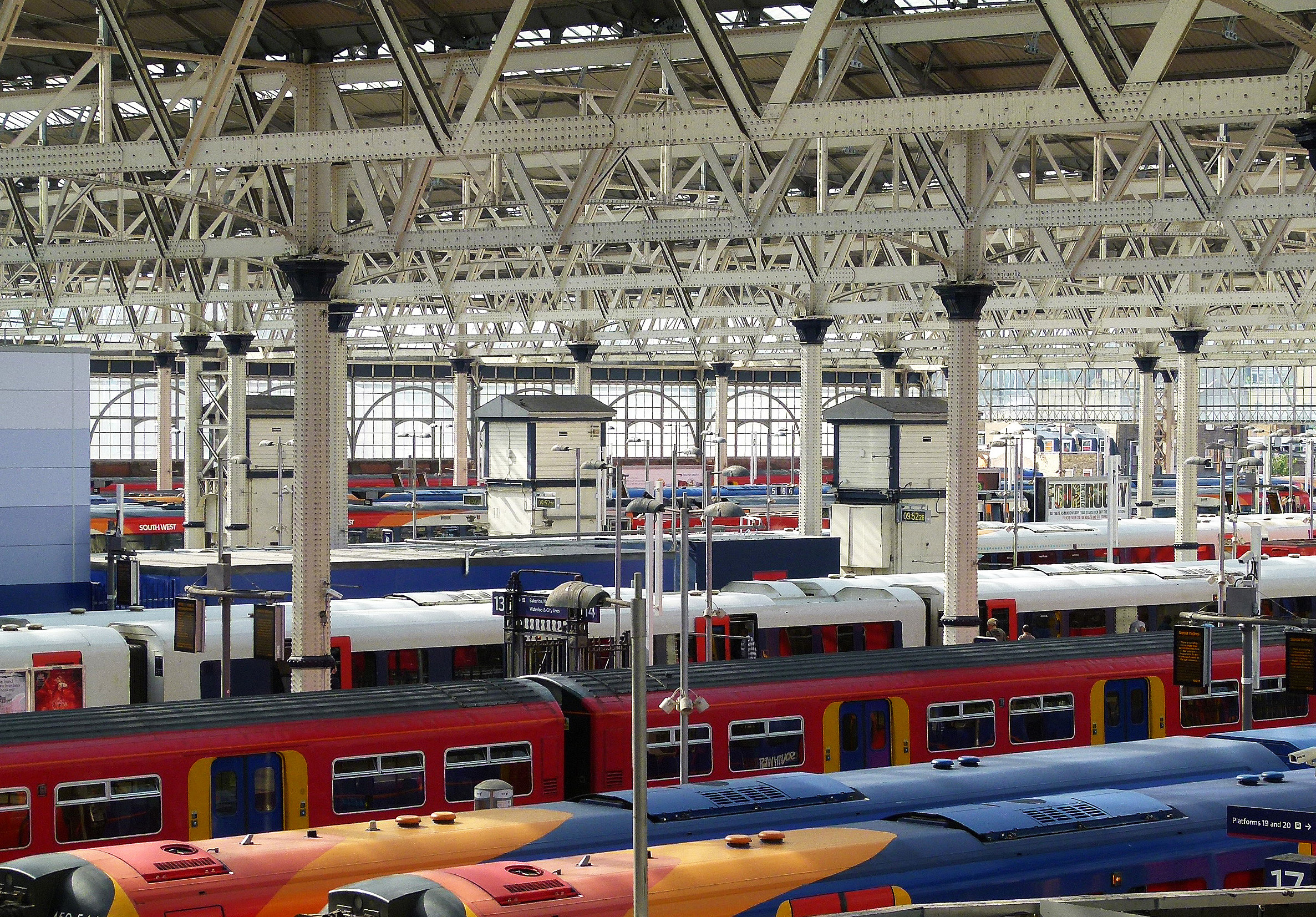
Trains at Waterloo
Despite being a thriving commuter hub, Waterloo station harbours a surprising number of quirky links with the animal kingdom…

Waterloo signal box cat, 1961
Diligent Dogs
During the first half of the 20th century Waterloo was home to a succession of ‘Railway Collection Dogs’; faithful hounds who padded around the station’s concourse with money boxes strapped to their backs, into which charitable members of the public could pop a few pennies.

‘Handsome Boy Prince’; a charity dog who once collected at East Croydon station (image: Old Southeronians Association)
Waterloo’s most celebrated charity dog was ‘Laddie’, an Airedale Terrier who was introduced to Waterloo in 1949 to raise cash for a retired railway workers’ home in Woking, Surrey.

A young passenger at Waterloo pops money into Laddie’s collection tin (image: Old Southeronians Association)
Laddie patrolled Waterloo until his retirement in 1956, by which point he’d raised over £5,000; a very handsome sum for the time (approximate to £87,000 in today’s money).
The faithful dog spent his final years at the Woking retirement home amongst the elderly railwaymen he’d done so much for.

Woking’s retirement home for former railway employees
When Laddie passed away in 1960 he was stuffed and put on display in a glass cabinet at Wimbledon station where he remained until 1990.
Today, he is kept by the National Railway Museum in York, complete with an original collection box.

Laddie today… (image: National Railway Museum)
Waterloo Buzz
As well as dogs, Waterloo was once also home to approximately 40,000 bumble bees… whose hives were located 200ft up on the station’s roof!

One of Waterloo’s bee hives
The bees were kept in the 1950s and 60s by Mr Wilfred Green, a railway worker who used the hives to make jars of honey for the Southern Railway’s Children’s Home in Woking (allied to the home for which Laddie the dog raised money).

Youngsters at the Southern Railway Children’s Home in Woking, 1960 (image: Pathe)
A video of the hives being tended by Wilfred in 1958 can be viewed below (note the complete lack of protective gear!)
Waterloo Pride…the Coade Stone Lion
For almost 180 years, a fearsome, stone lion has roamed the vicinity of Waterloo…

The Coade Stone Lion
Weighing 13 tonnes, the lion dates back to 1837 when it was created by Warwickshire born artist, William Frederick Woodington as a grand mascot for the ‘Lion Brewery’; a distillery which once stood on the Southbank’s Belvedere Road.
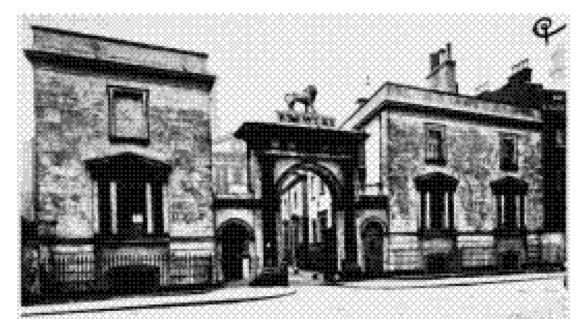
The Coade Stone Lion at its first home; the Lion Brewery, pictured here in 1930 (image: British History.ac.uk)
The lion is forged from ‘Coade Stone’; an artificial material which was perfected by Eleanor Coade in the late 18th century.
Fired in a kiln over a period of several days, Coade stone is a very tough substance, famously immune to the onslaught of pollution… which means it always looks sparkling clean.

Coade Stone… as good as new
Like the Lion Brewery, Eleanor Coade’s factory was also located on the Southbank- the site today is now occupied by the Royal Festival Hall.
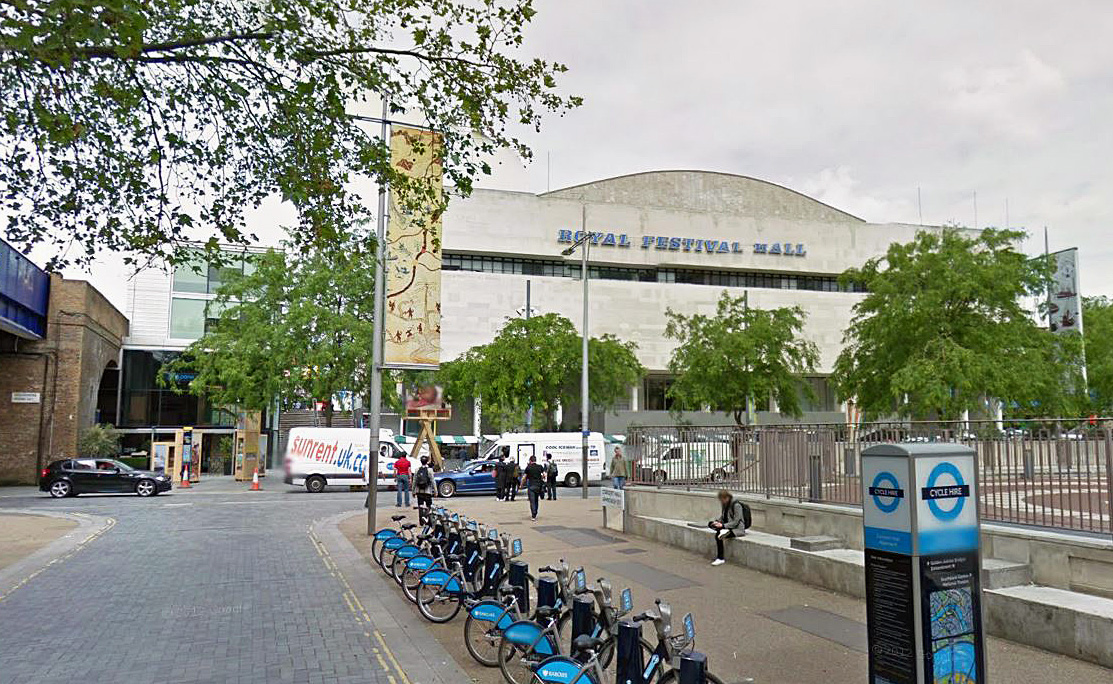
The Royal Festival Hall… where Eleanor Coade’s factory once stood
Holding pride of place above the brewery’s main entrance, the mighty lion was originally painted red as the mock-up image below illustrates…

The Coade Stone Lion, back in red as it once appeared…thanks to the wonders of photo manipulation!
An early admirer of the sculpture was French writer, Emile Zola who was delighted to see the hefty statue “poised in mid-air” atop its high arch.
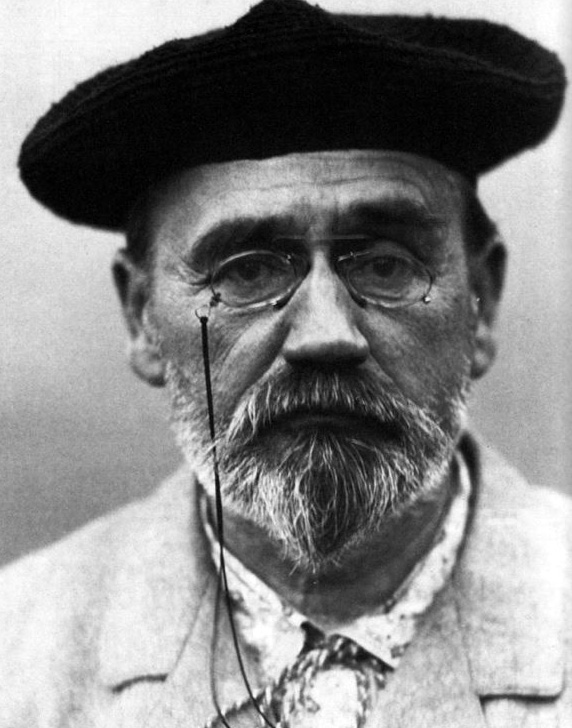
Emile Zola, the legendary French writer who was a great admirer of the Coade Stone Lion
Years later, Zola made a special return visit to the site to view the statue- which he affectionately referred to as “my lion”- one last time.
*
In 1949, the Lion Brewery was demolished and the land passed over to the development of the 1951 Festival of Britain.
At the request of King George VI himself the lion was saved… and adopted by Waterloo Station where, with its red coat (the colour then associated with the newly nationalised British Railways) it was able to continue as a corporate mascot.
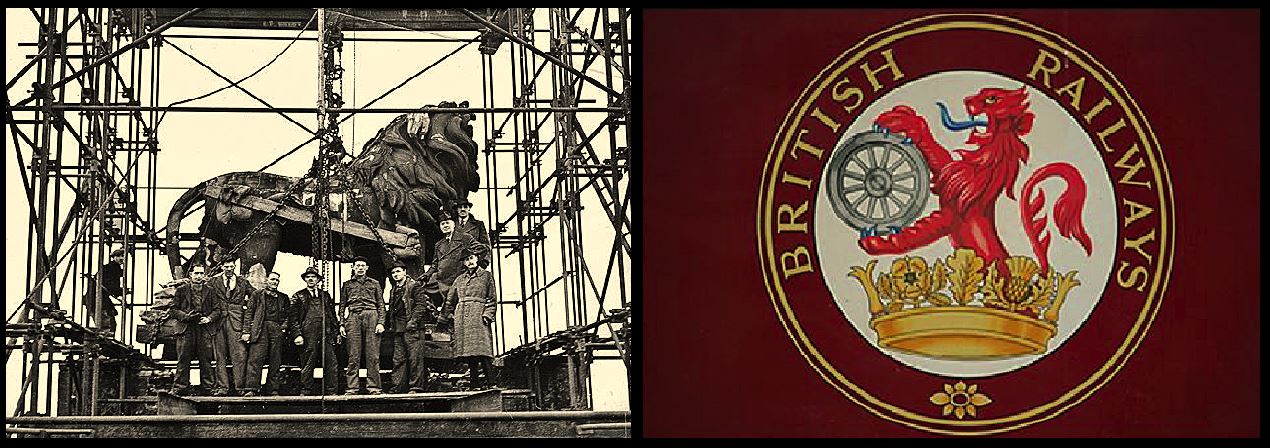
The Coade Stone Lion being removed from the brewery in 1949 (left) and the symbol for British Railways (right)
During its time at Waterloo, the lion stood outside the York Road entrance, a short distance from the station’s Victory Arch entrance.

The Coade Stone Lion at its second home- outside Waterloo station, pictured here in 1958 (image: copyright Lambeth Government)
The lion guarded the station until 1966 when it was sadly forced to make way for the ‘Tower Building’; a looming 1960s office block which squeezes right up to Waterloo’s 1920s façade in a pretty thuggish way…

The 1960s Tower Building which stands on the site of the Lion’s second home
After being displaced by the modernist office slab, the Coade Stone Lion (also known today as the ‘Southbank Lion’) had its red paint removed and was shifted to its current site… the north-eastern foot of Westminster Bridge, right between the Houses of Parliament and the London Eye.

The Coade Stone Lion being moved to Westminster Bridge in 1966 (left) and the sculpture today (right)
The lion has a twin which once also adorned the former brewery… this partner can now be found at Twickenham rugby stadium’s west gate, standing proud in a coat of gold paint.

The Southbank Lion’s twin at Twickenham Stadium (image: Geograph)
Elephant in the Room
Looming above the escalators that lead down to Waterloo’s connection with the Jubilee Line stands this rather fine elephant:

Waterloo’s Elephant
The piece was created in 2000 by Kendra Haste, a renowned artist who specializes in creating animal sculptures from wire.
Cheeky Mice

A cheeky wee mouse…
The little fellow pictured above can be found hiding behind a cheerful statue of the artist Terence Cuneo which stands close to Waterloo’s Victory Arch entrance.

Terence Cuneo statue, Waterloo station
Born in London in 1907, Terence Cuneo studied at the Slade School of Fine Art and began his career as an illustrator for books and magazines.
In WWII, he served with the Royal Engineers and also carried out work for the War Artists’ Advisory Committee, creating a number of works depicting scenes from the conflict.

War scene by Terence Cuneo, 1944
Cuneo was an expert at capturing fleeting moments in painstaking detail, a skill which led to him being appointed the official artist for Queen Elizabeth II’s coronation in 1953.

Coronation Luncheon at London’s Guildhall, Terence Cuneo, 1953 (image: Cuneo Estate)
As well as his wartime paintings and Royal commissions, Terence Cuneo was especially renowned for his paintings of railways… a selection of which can be viewed in the slideshow below.
Terence had a very playful personality and crafted many fine toys for his two beloved children- including a full-size roundabout and a miniature railway which trundled around the garden.
His sense of mischief extended to his paintings, which are famous for their inclusion of a trademark little mouse, often very well hidden….rather like an early version of ‘Where’s Wally?’… hence the wee rodent included in the Waterloo statue.
Spotting the mice within his paintings can be quite a challenge!
Terence Cuneo passed away in 1996 and his statue, sculpted by Philip Jackson, was unveiled at Waterloo station in 2004.
A short film documenting Terence at work in 1960 can be viewed below:







 View from the Mirror