Metro Blog: How the Olympics Broke My Heart
My latest blog for ‘Metro’ takes a look at the unprecedented struggle to earn a living during the Olympic period…
Please click the logo below to read the full article:

Baker Street (Part Two) Sleuths, Spies & Scoundrels
In this second instalment on the history of Baker Street, we’ll be taking a look at the famous road’s many connections with detectives, spies and criminals… some fictitious, others very much real…
Sherlock Holmes
Of course, no piece on Baker Street would be complete without considering literature’s most famous sleuth… Sherlock Holmes.

Statue of Sherlock Holmes which can be seen outside Baker Street Underground station
Sherlock Holmes, the ‘consulting detective’ who resided at 221b Baker Street between the years 1881 to 1904, has been a cultural icon for well over a century.

Plaque above the Sherlock Holmes Museum on Baker Street
Holmes was the brainchild of Sir Arthur Conan Doyle, a Scotsman who, having originally trained as a physician, was blessed with scalpel-sharp intelligence.

Sir Arthur Conan Doyle
Sir Conan Doyle’s time spent working in medicine also resulted in the discovery of the inspiration for Holmes himself.
According to the author, he based his famous detective upon Dr Joseph Bell; a highly respected lecturer at the University of Edinburgh’s medical school who was famous for his acute attention to detail. So revered was Dr Bell, that Queen Victoria entrusted him as her personal physician whenever she was in Scotland.

Dr. Joseph Bell; the man who inspired Sherlock Holmes
*
Running his detective agency from Baker Street, Sherlock Holmes was a haphazard, eccentric character whose brilliant mind often resulted in his personality wavering towards arrogance.
Tall, slender and with distinctive features, he was a habitual user of drugs, including cocaine and morphine- both of which were perfectly legal in Victorian Britain.
In his more civilised moments of course, Holmes turned to the violin as an aid to his mind, the sound of which no doubt would have trickled out of the window and down across Baker Street…
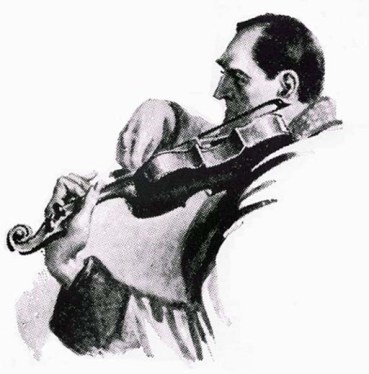
Holmes on the violin (vintage illustration by Sidney Paget)
Another unorthodox method Holmes sometimes used to facilitate his work was the casual hiring of the ‘Baker Street Irregulars’; a gang of local streetwise urchins who were more than happy to track down elusive clues for the odd shilling or two.
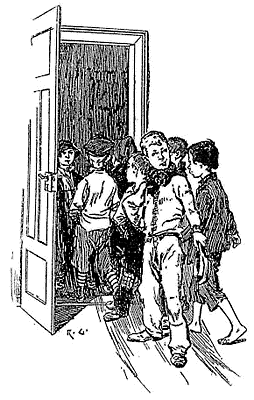
The Baker Street Irregulars, as seen in ‘The Sign of Four’
*
Holmes’ very first published case was 1887’s A Study in Scarlet; a short tale which involved a suspicious death in leafy Brixton and the introduction of Holmes’ faithful colleague, Dr Watson- the long suffering former army doctor through whom the vast majority of Holmes’ stories were narrated.
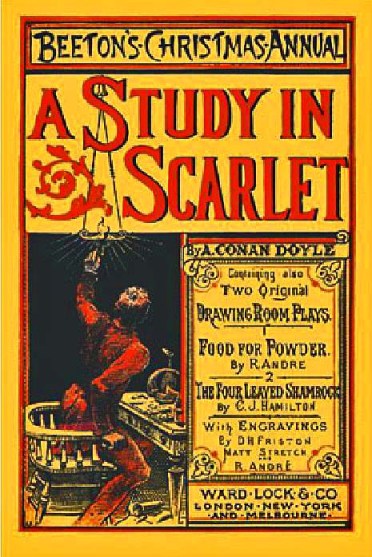
‘A Study in Scarlet’, rare first edition
Although A Study in Scarlet passed by pretty much unnoticed, it wasn’t long before Sherlock Holmes become a national phenomenon.
So popular was he that when Sir Conan Doyle decided to kill Holmes off in 1893’s The Final Problem, there was public outrage!

Holmes fighting his arch-enemy, Professor Moriarty in ‘The Final Problem’ (illustration taken from ‘Look and Learn’, 1975)
Eventually, after an eight year hiatus, the Scotsman was persuaded to resurrect the detective, a task which he accomplished with The Hound of the Baskervilles.
Altogether, over the course of forty years (1887 to 1927), Sir Conan Doyle wrote 56 short stories and 4 novels for his distinctive character, all of which continue to attract new fans to this day.
*
Throughout the decades, Sherlock Holmes has appeared in countless television, radio and film adaptations and a list of actors who’ve played him- including Peter Cushing, John Cleese, Charlton Heston, Sir Christopher Lee… even Peter cook- would probably stretch the length of Baker Street itself!
The very first actor to play Sherlock Holmes was William Gillette; an American from Connecticut who portrayed the great detective in a 1900 stage adaptation.

William Gillette, the first actor to portray Sherlock Holmes
William Gillette had a profound impact upon Sherlock’s image, for it was he who introduced the famous deerstalker cap and curved pipe; two iconic symbols which are now forever associated with the character. Even the platforms and corridors of Baker Street tube station are adorned with William Gillette’s influential vision:

The distinctive Sherlock look, as featured on the many tiles of Baker Street tube
The most famous actor to portray Holmes on film is undoubtedly the South-African born, Basil Rathbone, who appeared in 14 film adaptations during the 1930s and 1940s.

Basil Rathbone as Sherlock Holmes (photo: Wikipedia)
More recently, Sir Conan Doyle’s intriguing adventures have been adapted and modernised in the highly popular BBC series, Sherlock starring Benedict Cumberbatch as Holmes and Martin Freeman as the frequently exasperated Dr. Watson.

Sherlock Holmes, 21st century style (photo: BBC)
Despite being set in the modern day with mobile phones and internet access thrown into the mix, the BBC’s modern adaptation certainly maintains the original spirit and atmosphere of the original stories.
Trivia buffs may be interested to know that the flat used in the BBC’s Sherlock isn’t actually on Baker Street- the road nowadays being far too busy to carry out filming!
The substitute apartment used can be found above Speedy’s sandwich shop (which I heartily recommend!) on North Gower Street; just under a mile from 221b Baker Street and a stone’s throw from Euston station.

Location of the flat on North Gower Street used in the BBC series, ‘Sherlock’ (photo: Google Earth)
Back on the real Baker Street, the Sherlock Holmes Museum can be found at 221b.
The popular tourist attraction is housed within an 1815 townhouse and has been decked out to resemble the apartment as described in Sherlock’s adventures. Even the staff are in period costume!
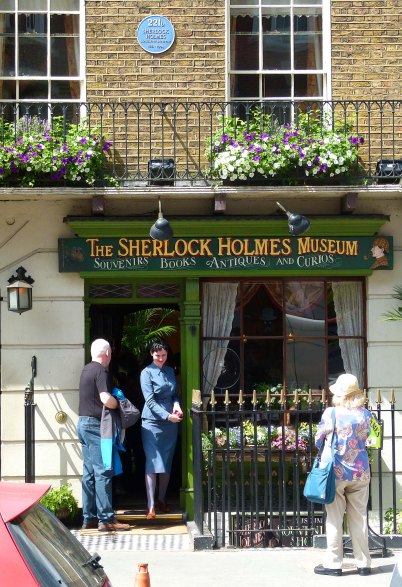
The Sherlock Holmes Museum
Sexton Blake
Sherlock Holmes was not the only detective to claim Baker Street as his base… another sleuth; the lesser known, Sexton Blake, also resided on the famous London thoroughfare…

Sexton Blake
Sexton Blake first appeared in 1893, just six years after Holmes’ debut.
Sexton went on for a lot longer though- his adventures, written by some 200 authors throughout the years, were far more prolific and kept going right up until the late 1970s
Over 4,000 Sexton Blake stories were composed, appearing in various pulp magazines, annuals and comic strips. Television and radio adaptations were also conceived.
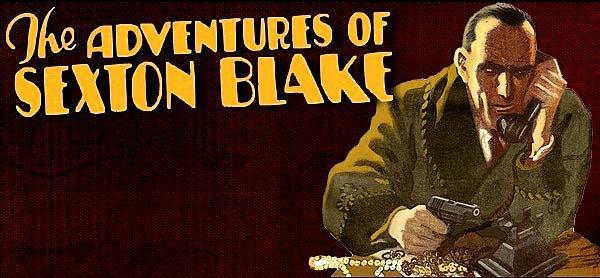
Although Sexton shared many deliberate similarities with Sherlock, there were one or two notable differences.
His assistant, ‘Tinker’ was a lot younger than Holmes’ accomplice, Dr Watson, and was also a lot more rough and ready, referring to his partner as the “guv’nor.”
Sexton also had a second faithful pal- a grand bloodhound called Pedro who proved most useful when it came to sniffing out clues.

Sexton Blake with Tinker and Pedro
Personally speaking, I do have childhood memories of Sexton Blake- although not particularly of his stories. My recollections are related to the fact that my father used the character’s name as a rhyming slang term for ‘cake’!
The Walkie Talkie Robbery
One case I’m sure Sherlock and Sexton would’ve loved to have gotten involved in was an audacious bank robbery which took place at the Baker Street branch of Lloyds bank during September 1971.
To this day, the crime- which became known as the ‘Walkie Talkie Robbery’ is steeped in intrigue…

Lloyds on Baker Street, the branch targeted in the 1971 robbery
No guns were brandished in the heist, nor were any alarms triggered… instead, the crime was conducted on a quiet weekend via a craftily burrowed tunnel…
The tunnel in question was 40ft long and 5ft deep, and was dug via the basement of a leather goods shop called Le Sac (an estate agent’s shop today) which the crooks had leased for the purpose.
Work on the cheeky subterranean passage was carried out during the dead of night, the excavations having to pass beneath the Chicken Inn restaurant (a branch of Pizza Hut today) which was sandwiched between the bank and handbag shop.
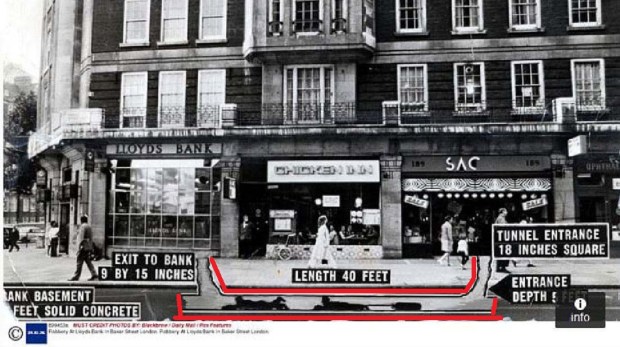
1971 diagram of the secret tunnel… (photo from crimeandinvestigation.co.uk)

The parade of shops today
The final section of the break-inn was conducted with the help of a powerful thermic lance, which blasted through the bank vault’s thick, concrete floor…

A thermal lance in action (photo: realmagik website)
*
Late one evening , at around 11pm when the gang were busy chiselling away beneath Baker Street, Robert Rowlands- a radio ham who lived approximately half a mile away on Wimpole Street, was spinning his radio dial in an attempt to contact a friend in Australia.
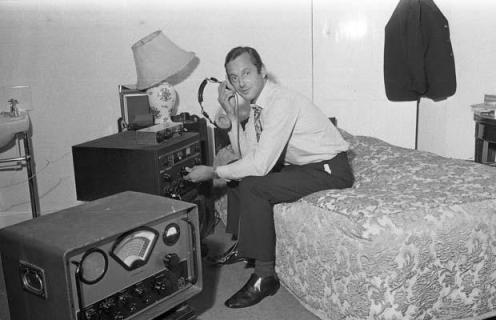
Robert Rowlands in 1971 (photo: The Telegraph)
As Robert sifted through the many frequencies, he came across a crackling, local interruption- a conversation being conducted on walkie-talkies.
Going by the words used, it didn’t take Robert long to work out that the voices belonged to a bunch who were clearly up to no good; the conversation apparently taking place between those tunnelling and a lookout stationed up on the target’s roof.
Although the mysterious voices were clearly nearby, the conversation gave absolutely no clue as to the precise location.
Knowing he was onto something of great interest, Robert managed to capture much of what he heard…. The actual recording of the robbers can be heard in the clip below:
Robert Rowlands contacted the police who, at first, found the radio-ham’s story rather risible.
It was 2am by the time a senior police officer decided to take the matter seriously and ordered detector-vans to the area… however, it turned out that this urgent request was out of hours- no such operators were available and, by the time they were, the communications had long since ceased.

The Metropolitan Police telegraph office in Lambeth, early 1970s (photo: ITN News archive)
Without any further clues to go on, the Met were now forced to conduct an intensive search of 750 banks across London- a very tall task indeed.
When they checked out the Baker Street branch of Lloyds on the 12th September 1971, it was a Sunday afternoon- the vault was secured with a time-lock and everything appeared to be in order with no signs of interference…. Little did the cops know that, by this point, the thieves were already at work on the other side of the thickset door…
The following Monday morning, the bank staff arrived at work… and discovered that their supposedly impenetrable vault had been ransacked.
The contents of 268 safe deposit boxes had been swiped; the missing cash and valuables amounting to some £3million- £31.7 million in today’s money.
A bold bit of graffiti had also been scrawled upon the vault’s wall- “Let Sherlock Holmes try and solve this”!
The hole which had been blasted from the tunnel into the vault’s floor was just inches wide, suggesting that either a slender woman or a child had been part of the team. Back at Le Sac, rubble from the tunnel’s excavation was discovered- 8 tons in all.
From this point on, the Walkie Talkie robbery starts to become even more mysterious…
For a day or so, the robbery was understandably big news… but then, without any explanation, it suddenly vanished from papers and bulletins.
The following year, an extremely brief article was tucked away in The Times reporting that four men had been found guilty at the Old Bailey in connection with the crime. But, apart from that, there is scarcely any more information about the audacious robbery- and almost none of the stolen property was ever recovered.
It is believed the media silence following the heist was supposedly due to the issuing of a ‘D-Notice’- a government order which prohibited any further coverage of the event.
Issuing such an order in relation to a bank robbery was most unusual, and rumours abound that the silence was encouraged by M15… the theory being that one of the pinched safe-deposit boxes contained scandalous photographs relating to a member of the Royal Family…
Many conspiracy theorists believe that these images (if they ever did indeed exist), were most likely of the Queen’s younger sister, Princess Margaret who, at the time, was closely linked to John ‘Biffo’ Bindon; an infamous actor and bodyguard who held many murky links with London’s underworld….

Princess Margaret pictured with John Bindon in the Caribbean, 1970s
In 2008, a film based upon the puzzling events at Baker Street was released in cinemas.
Entitled The Bank Job, the adaptation was written by Dick Clement and Ian La Frenais; the creative team behind such classics as The Likely Lads, Porridge and Auf Widersehen Pet.

Poster for ‘The Bank Job’; a film based on the events which occurred at Lloyds on Baker Street in 1971
WWII… Baker Street & The Special Operations Executive
Baker Street played a vital role during WWII when a collection of buildings on and around the famous road provided a base for the Special Operations Executive– otherwise known as the ‘SOE’; the organisation charged with the task of setting Nazi occupied Europe “ablaze”.

Plaque outside the former ‘SOE’ HQ, 64 Baker Street
The SOE was informally known as ‘Churchill’s Secret Army’- and the great-war leader himself referred to the organisation as the ‘Ministry of Ungentlemanly Warfare’.
Those in the SOE had their own personal nickname – they called themselves the ‘Baker Street irregulars’; a humorous reference to the gang of rascals who’d tracked down clues for Sherlock Holmes.
Responsible for recruiting, training and supporting secret agents who were sent deep into Nazi territory, the SOE was ultra-clandestine.
Totally immersing themselves amongst the enemy, SOE agents would carry out acts of sabotage; disabling fleets of military vehicles, de-railing trains, destroying bridges and even assassinating high-profile Nazis.
During the war, over 13,000 people were recruited by the organisation.
Because of their top-secret nature, the SOE couldn’t simply advertise for recruits. Potential agents had to be tracked down and interviewed using the most unorthodox means.
Firstly, SOE bosses had to find people who had the desired level of intelligence for undercover work.
Much of this was achieved by studying lists of all of those who had sent in the correct solution for the Daily Telegraph crossword during the past few years!
A humble crossword… who knows where completing it may lead!
Once filtered, potential agents would be asked to attend an interview at the Metropole hotel on Northumberland Avenue, just off of Trafalgar Square (today, the hotel is known as The Corinthia).
During the interview, which took place in a barren room with two chairs and a single light bulb, the candidate would be given very few details about the meeting’s true purpose.
At one point during the session, as an acid test to check out the candidate’s nerve and language skills, the questioner would suddenly switch to speaking in French or German. Those who flustered were dismissed instantly.
*
The SOE’s main HQ was at 64 Baker Street; an unassuming building which gave no outward clues as to what was going on inside.

The former SOE HQ, 64 Baker Street
It was here that authentic costumes and disguises were created for those going into the field.
Documents- such as passports and foreign ration books- were also forged… with a little help from specially recruited criminals who were known to possess a knack for fakery.
An interesting example of this trickery can be seen below- a moody passport from 1941 bearing Hitler’s name!
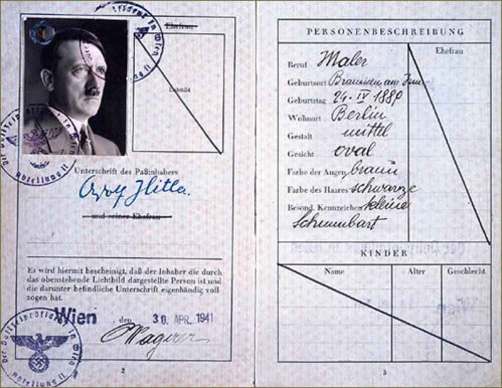
An SOE faked passport in Hitler’s name
Not released until 2002, no details exist as to the true nature of this decidedly dodgy paperwork.
It’s most likely that the hoax was created partially as a welcome, wartime joke and partly as a means of practicing forgery. However, it may also have been intended as a means of spreading disinformation.
In true British humour, the passport describes Hitler as having “a little moustache” and his occupation as “painter”!
*
A few doors up, at 82 Baker Street, the SOE’s code-cracking team set up shop above St Michael House– the former head office for Marks and Spencer.

The former ‘St Michael House’- once HQ for ‘Marks & Spencer’… and the SOE’s code-cracking department (photo Google Streetview)
Here, enemy signals were deciphered and systems were devised for communicating with agents over in Europe who’d been equipped with their own special radios.
Some of the covert messages were snuck into BBC news broadcasts- seemingly innocent stories which actually contained vital information for those in the know.

BBC Broadcasting House pictured in the 1940s. During the war, secret SOE messages devised on Baker Street were sent here for broadcast
Other broadcasts were sent out on obscure short-wave frequencies. Random lists of numbers would be recited; the meaning of which would be meaningless to all but those intended to receive them.
The undercover agent had the necessary chart to decipher the mysterious codes printed on a silk cloth which could easily be concealed if searched.
Known as ‘numbers stations’, these baffling broadcasts have been used by spies for decades.
To this day, if you slowly browse through short-wave radio frequencies , it is possible to pick up the odd numbers station here and there; mysterious, mechanised voices, reciting digits which only a very select few know the true meaning of.
So that spies know they have the correct station, the peculiar channels usually play a distinct jingle before sending out their information.
An example of such a recording can be heard below…
Known as The Lincolnshire Poacher, this numbers station was broadcast on a regular basis for many years and is generally believed to have been run by M16; the organisation responsible for setting up the SOE during WWII:
Other Baker Street buildings related to the SOE included Chiltern Court (where the Scandinavian section was based) and Number 1 Dorset Square, which is parallel to the northern end of Baker Street and was home to the SOE’s French branch.

The former SOE French section on Dorset Square. This building played a vital role in aiding the French Resistance
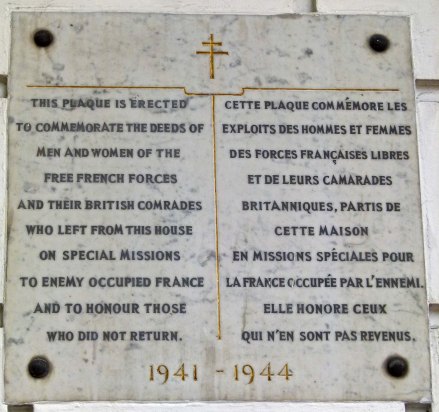
Plaque outside the former SOE French section, commemorating the comradeship between French and British agents during WWII
On Taunton Place (also just to the north of Baker Street) is Ivor Court; an apartment block which acted as an assembly point where the specially elected agents would gather before starting their journey across to enemy territory.

Ivor Court, just north of Baker Street, which acted as a departure point for many British SOE agents
*
The sheer courage of the SOE was enshrined in one of their most famous agents- Violette Szabo.

Violette Szabo. 1921-1945
Daughter to a French mother and English father (who happened to be a cabbie), Violette was living on Burnley Road, Stockwell in South London at the time of her enlistment.
After a series of daringly intense missions, Violette was captured, tortured and later executed by the enemy.
At the time of her death, she was just 23 years old.
Violette’s story was famously recounted in the 1958 film, Carve Her Name with Pride.

Poster for ‘Carve Her Name With Pride’, 1958
*
Danger mouse
On a far lighter note and returning to the realms of pure fiction, another Baker Street resident who was the bane of evil was none other than cartoon hero, Danger Mouse.

In the show, Danger Mouse- whose theme tune famously described him as being the “greatest secret agent in the world”, resided with his trusty assistant, Penfold in a red pillar box on Baker Street… which the narrator describes as being in Mayfair, even though Baker Street actually falls under Marylebone.
Must’ve been a deliberate ruse to throw his enemies off the scent!

Danger Mouse’s home… a Baker Street pillar box
With its wonderfully British sense of humour, Danger Mouse was a cartoon created by Manchester-based Cosgrove Hall; the animation studio who were also responsible for many other classic children’s shows, including Jamie and the Magic Torch, Chorlton and the Wheelies, Count Duckula and a beautiful rendition of The Wind in the Willows.
The cracking intro to Danger Mouse can be viewed in the clip below:
Danger Mouse himself was voiced by David Jason… famous for playing that other great Londoner; Del Boy, the wheeler-dealer from Only Fools and Horses!

Danger Mouse and Del Boy… very much one and the same!
The dashing rodent’s arch nemesis was Baron Von Greenback; a particularly wicked toad, whose evil HQ was said to be 99 km to the east of Willesden Green tube station.

Baron Von Greenback
The cartoon debuted in 1981 and ran until 1992.
161 episodes were made and, during its heyday, Danger Mouse averaged an audience of 3.5 million viewers per episode, proving that it was just as popular with grown-ups as it was with children. As the show’s creator, Mark Hall (who sadly died of cancer in 2011) said, “the adults watched because of the anarchy.”
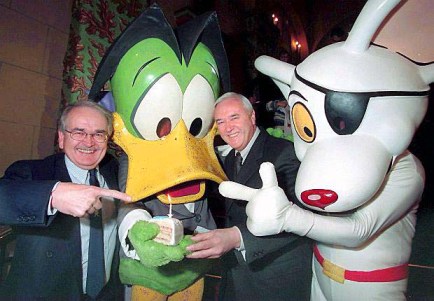
Brian Cosgrove (left) and Mark Hall (right) with two of their most famous creations (photo: Manchester Evening news)
Over the years, Danger Mouse has been broadcast in 80 countries, a feat which has no doubt helped to introduce many youngsters to Baker Street… one of London’s most exceptional roads.
Baker Street (Part One) Tubes, Beatles & Lost Property
There’s no doubt about it… Baker Street, which stretches from the south-western corner of Regent’s Park, down to Portman Square (just north of Oxford Street), is one of London’s most famous roads.

View of Baker Street, looking north
Baker Street is Born
Descriptive as it may sound, the name of the road has nothing to do with buns, cakes or loaves of bread… the name actually refers to William Baker, an entrepreneurial builder who originally began laying out the street in 1755.
The strip of land upon which William built was (and still is) part of the ‘Portman Estate’; a substantial plot which was first acquired by Sir William Portman of Somerset; a 16th century Lord Chief of Justice who died in 1557.
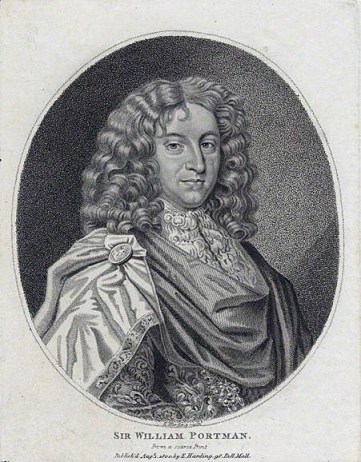
Sir William Portman
In those long-gone days, the area would have been open fields, and it is believed Sir Portman kept goats here to provide milk for his poorly wife. He also used the land as a resting point to facilitate the transfer of cattle between London’s markets and his numerous estates in the West Country.
Baker Street Underground
At the northern tip of the famous road- just up from Sherlock Holmes’ supposed home (more of which later) we have Baker Street tube station which was opened in January 1863 by the Metropolitan Railway.
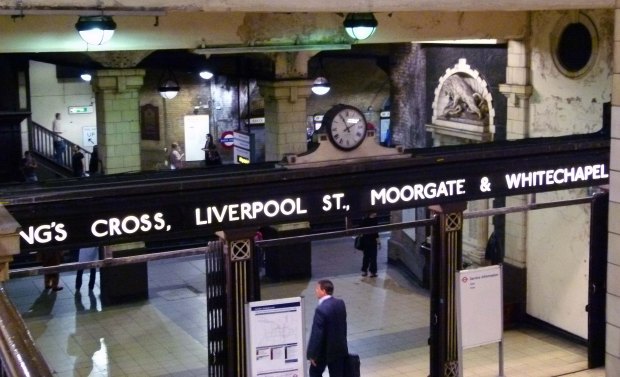
Entrance to Baker Street Station’s oldest section
The section of the Metropolitan Line which Baker Street station serves is the oldest underground railway in the world, the earliest trains being steam-driven, puffing and belching their way beneath the streets of Victorian London.
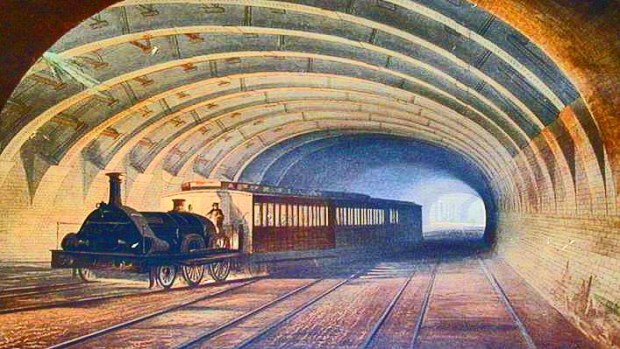
The London Underground’s earliest days
Construction of the pioneering route was rapid, taking just two years to complete. However, it also involved horrendous levels of disruption. Homes in slum areas were ruthlessly swept away and some 12,000 Londoners- all of whom lay at the bottom of the social ladder- were made homeless, with zero compensation being offered.
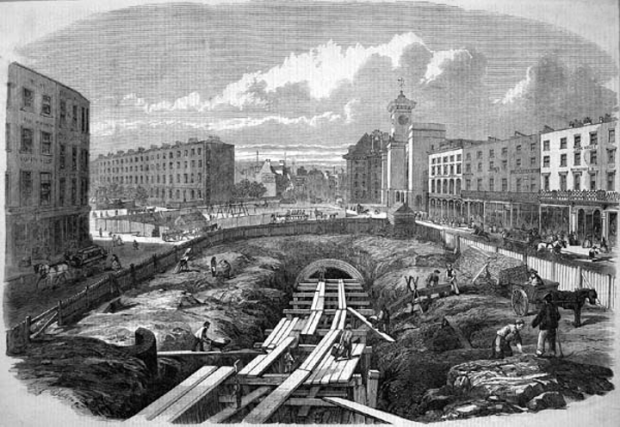
The Metropolitan Railway under construction in 1861
Despite being some 150 years old, Baker Street station today remains one of the system’s most important interchanges. To celebrate its 120th anniversary in 1983, its oldest platforms were restored to make them look as close as possible to their original 1863 incarnation.
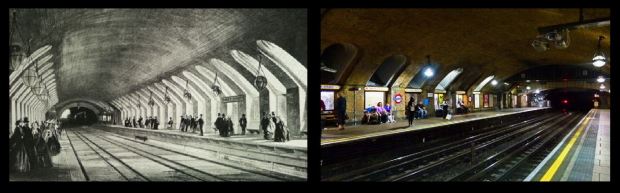
Baker Street then and now… 1863 & 2012
Electric trains finally appeared on the Metropolitan line in 1905.
A few years later in 1912, the Metropolitan Railway built themselves an impressive new headquarters on Allsop Place; a quiet backwater off of Baker Street, overlooking the bowels of the station.
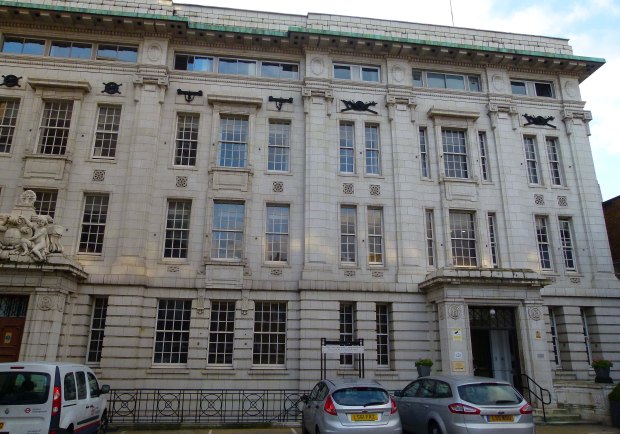
Metropolitan Railway HQ
Still in use as offices today, this old HQ is now grade II listed… and contains one or two surprises.
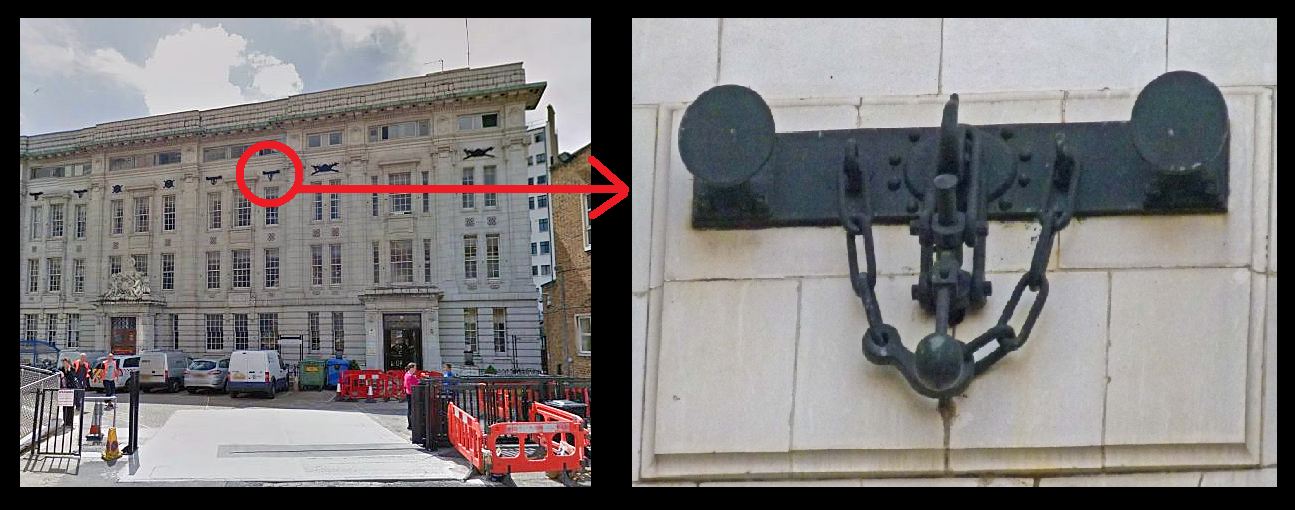
If you look towards the building’s upper floors, you’ll spot some authentic railway paraphernalia bolted onto the façade- including buffers and coupling chains!
As the 20th century and the wonder of electricity progressed, Baker Street became a vital hub for the concept known as Metroland; the process which saw the rapid development of suburbs such as Wembley, Harrow, Uxbridge and Rickmansworth, all of which burgeoned during the inter-war period thanks to the Metropolitan Railway’s ever expanding tracks.
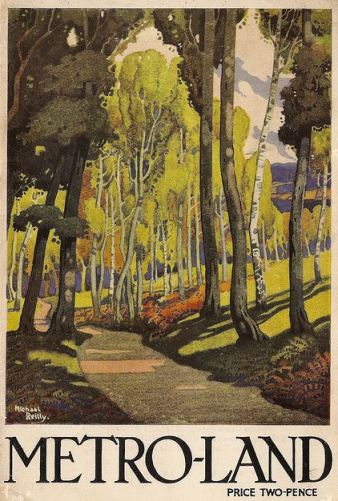
Early 20th century guidebook to Metroland
Out in leafy Metroland, smart new homes (typically in the mock-Tudor style) were built for the City’s commuters, who now had the means to work in the capital’s heart by day and retire to the quieter outskirts by night. Metroland had a huge impact on the capital, forging much of what is now modern-day North-West London.
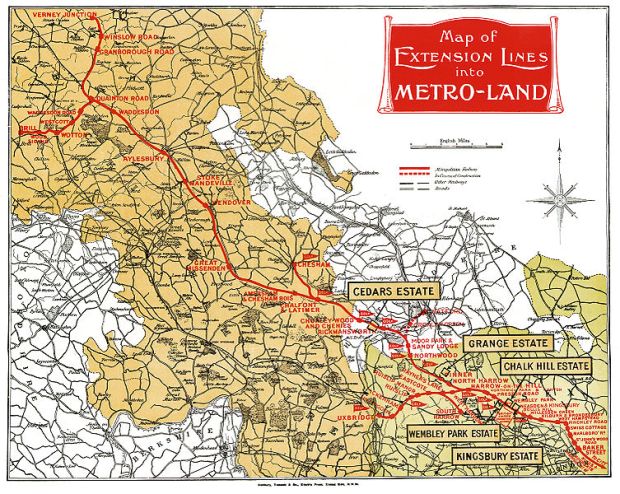
Map displaying Metroland’s extent
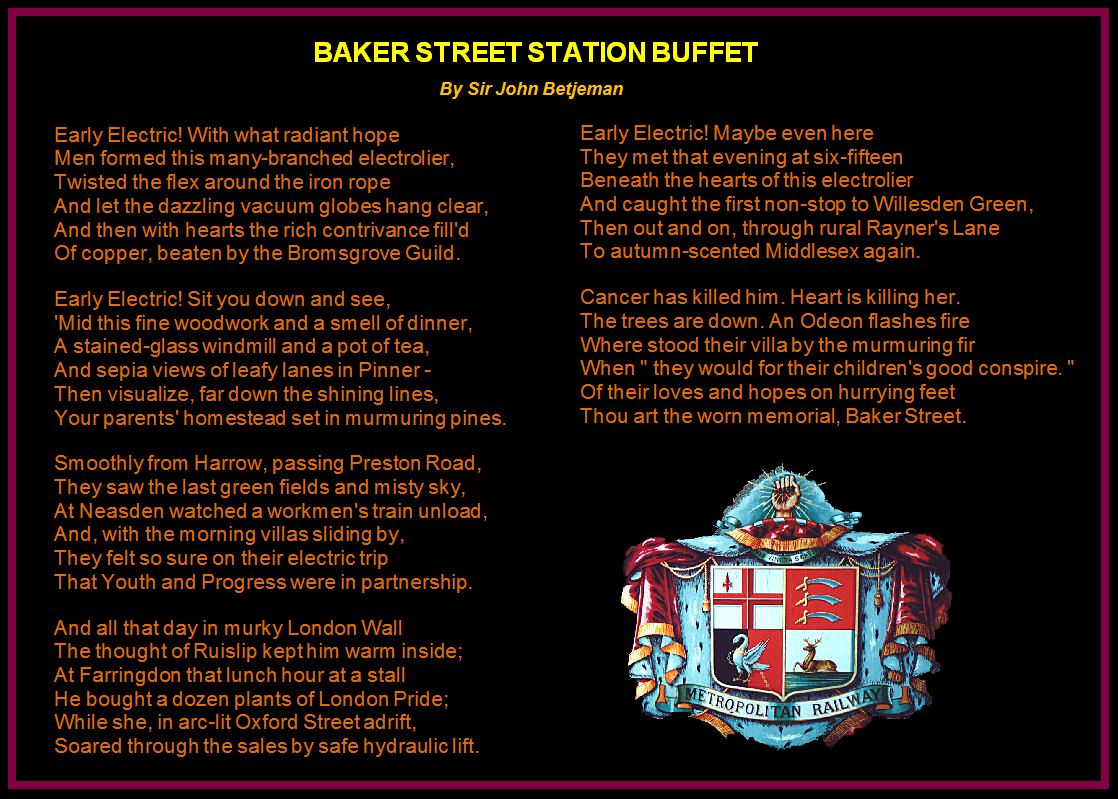
The great poet laureate, Sir John Betjeman was heavily influenced in his work by a yearning nostalgia for Metroland- his following poem, Baker Street Buffet being a perfect example (please click to enlarge and read)
Lost and Found
Adjoining Baker Street station there sits a real treasure trove of quirkiness… London Transport’s Lost Property Office which has been at the location since 1933.
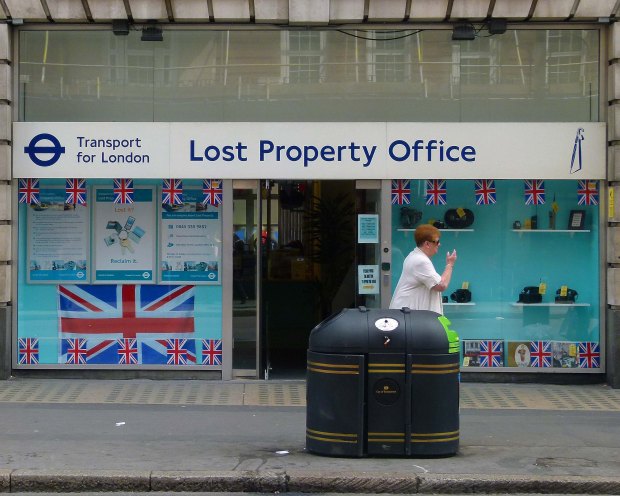
London Transport Lost Property Office, Baker Street
Anything left behind by those travelling on London’s trains, tubes, buses or taxis eventually ends up here (providing somebody honest hands it in to the nearest TFL employee of course).
As a London cabbie, one of my duties is to take a quick glance into the passenger compartment every time a customer exits the vehicle- you’d be surprised how often people forget their precious belongings.
Usually, a quick check and a toot of the horn is sufficient enough to reunite passengers with their forgotten wares. Sometimes however, lost property may not be noticed immediately or its unfortunate owner may disappear before you have a chance to call them back.
When this happens, we cabbies have to present the property to the nearest police station as soon as possible, where it is logged and passed onto the Baker Street office (to date, the most valuable item which has been left behind in my own cab was an Apple laptop!)
Over at Baker Street, using a specially designed programme called Sherlock, staff at the lost property office catalogue each item and carefully stow it away amongst the labyrinth of shelves.
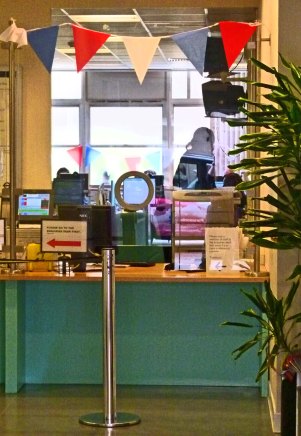
Lost Property Office Reception
The system works well, often re-uniting owners with their goods… inevitably however, many things are never collected and, over the years, an incredibly bizarre collection of forgotten items has accumulated!
A park bench, a lawnmower, urns containing ashes, false teeth, a theatrical coffin, voodoo masks, WWII gasmasks, a puffer fish… even human skulls can all be found languishing in the depths of Baker Street’s lost property office. The following short clip from a recent BBC documentary provides an insight into the institution’s packed basement:
Outside the Lost Property Office, the windows of the depository act as a kind of mini-museum, displaying some of the more interesting finds. Most of the objects are from very distinct eras, their appearance providing an interesting insight into the recent social history of London’s inhabitants.
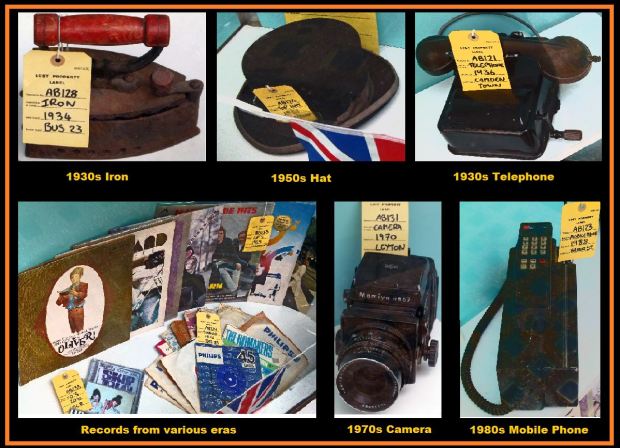
Lost Property Gallery (please click to enlarge and view)
Working at the Lost Property Office sounds like it can often be quite a surreal experience. In his excellent 2011 book, Londoners Craig Taylor interviewed Craig Clark; one of the office’s administrators who had this nugget to share:
“We occasionally get drunks come in, or crack heads… once these two guys came in and said they had lost a swan. I think they were hallucinating”…
*
Baker Street & The Beatles
Another famous Baker Street building stocked with quirky items- but now sadly demolished- was the Beatle’s Apple Boutique.
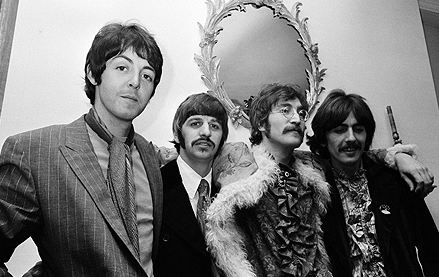
The Beatles in 1967; the same year they opened their own shop on Baker Street
Opened in December 1967, the Apple Boutique stood at 94a Baker Street, on the corner with Paddington Street.
By this point of course, the Beatles had achieved immense fame and wealth, providing them with the freedom to pursue other business interests outside of their music.
The Apple Boutique was a rather bohemian store which Paul McCartney summed up as being “a beautiful place where beautiful people could buy beautiful things.”
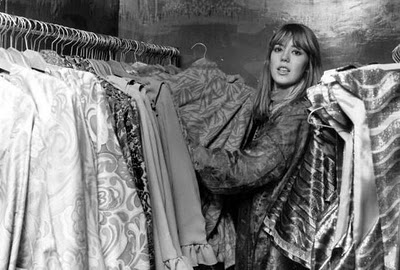
An Apple Boutique assistant
Responsibility for designing the shop’s stock (which mainly consisted of fashionable clothes and accessories), fell to three Dutch designers who’d formed a creative collective known as ‘The Fool’. The entrepreneurial Fab Four handed The Fool £100,000 for the project and also commissioned them to paint a psychedelic mural on the building’s exterior.
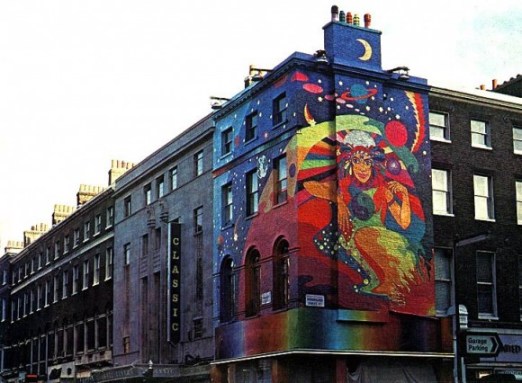
The controversial mural which adorned Baker Street for a short time during the late 1960s
No planning permission was granted for this vivid painting however, and many of Baker Street’s more traditional shopkeepers quickly kicked up a fuss. Consequently, the mural was painted over a few months later and replaced with a minimalist, white colour scheme.
Unlike their music and record sales, the Beatle’s Apple Boutique proved to be an utter financial disaster…
The main problem was shoplifting. With the shop’s groovy vibe and laid-back attitude, many visitors and staff treated the premises like a hippie commune, where the concept of actually handing cash over to ‘The Man’ just wasn’t considered cool!
During its short life, the boutique lost some £200,000 through theft.
Such losses were unsustainable and in July 1968, after just seven months, the shop closed down. By this point, the Beatles simply couldn’t be bothered anymore- and decided to give all of the remaining stock away for free in a last minute bonanza- even the shop’s fittings and carpet were considered fair game!
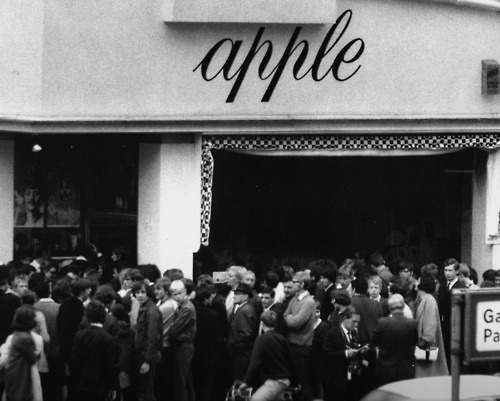
The Apple Boutique’s last day… a true free for all
A rare insight into the Apple Boutique can be seen in the following clip from the 1968 film, Hot Millions, staring Maggie Smith:
Today, at the opposite end of Baker Street, a distant cousin of the Apple Boutique can be found in the Beatles Store which sells merchandise and memorabilia related to the Fab Four.… and is clearly a lot more efficiently run than its 1960s predecessor!
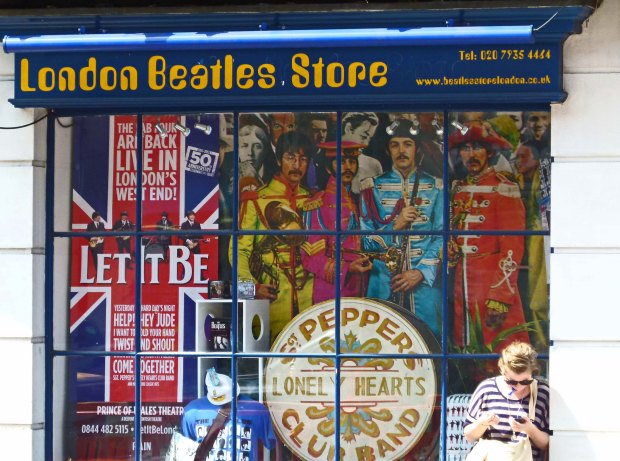
The London Beatles Store, Baker Street
Notable Dwellers
Being such a renowned address, Baker Street has attracted many illustrious residents over the years.
One of the earliest to set up home was William Pitt the Younger who, in 1783 at the tender age of 24, became Britain’s youngest ever Prime Minister.
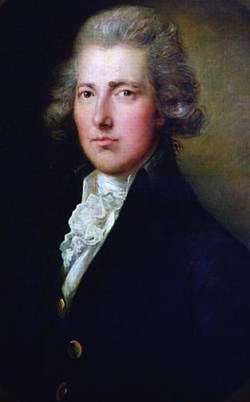
William Pitt the Younger
Despite his young age, William proved a popular and extremely able leader- so much so that, twenty years later in 1804 and in the face of the growing threat from the Emperor Napoleon, he was asked to step in as Prime Minister for a second term.
Once Pitt accepted the offer, removal wagons turned up at his Baker Street home to cart his property off to another famous London address- 10 Downing Street.
Pitt the Younger died in office two years later, aged just 46 and now lies in Westminster Abbey.
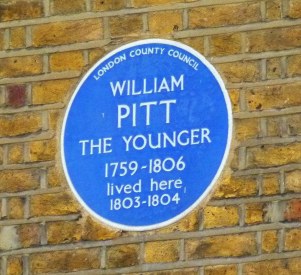
Pitt the Younger plaque, Baker Street
*
Another famous Baker Street inhabitant was Sarah Siddons.
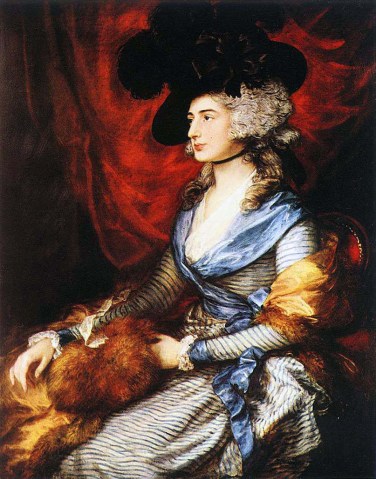
Sarah Siddons
Born in Brecon, Wales in 1755, Sarah Siddons first came to London in 1775 at the age of 20.
After several years of struggle, she managed to establish herself as an actress, first appearing at Dury Lane as Isabella in ‘Fatal Marriage’. Sarah’s acting abilities quickly gained her great fame- her most noted role being that of Lady Macbeth in 1812.
In the 1920s and bearing the famous Baker Street resident in mind, the Metropolitan Railway named one of their handsome new electric locomotives after the actress.
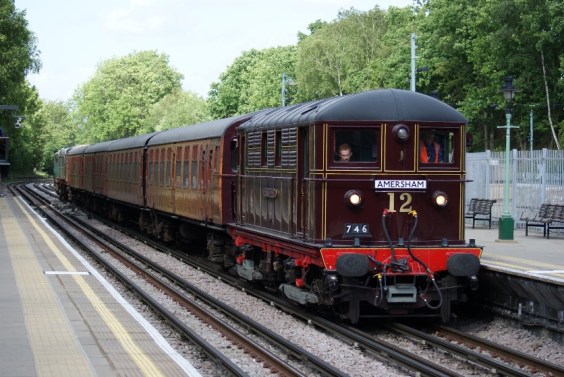
The ‘Sarah Siddons’; one of London Underground’s early electric trains (photo: rail.co.uk)
When this engine first began running, it pulled luxurious Pullman carriages to and from the suburbs and even boasted a dining car… classy commuting indeed!
Today, the Sarah Siddons locomotive can occasionally be spotted in use at special events on the Metropolitan Line.
*
During the first half of the twentieth century, Baker Street was home to the grandfather of science fiction- Herbert George Wells…
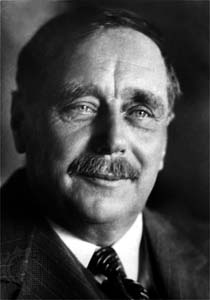
H.G Wells- Baker Street resident and grandfather of modern Science Fiction
During his long career, H.G Wells penned many classic, often ground-breaking tales, envisioning everything from Invisible Men to an alien invasion of Victorian England.
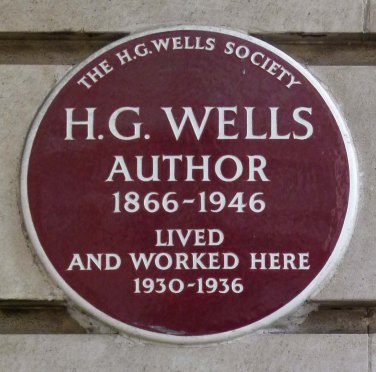
H.G Wells plaque at Chiltern Court, Baker Street
H.G Wells lived at Baker Street’s Chiltern Court between 1930 and 1936, during which time he wrote his prophetic book, The Shape of Things to Come; a work which accurately predicted the outbreak of WWII and makes prophecies which stretch way into the distant future; all the way up to 2106.
In 1936, H.G Wells’ chilling predictions were adapted into a bold film.
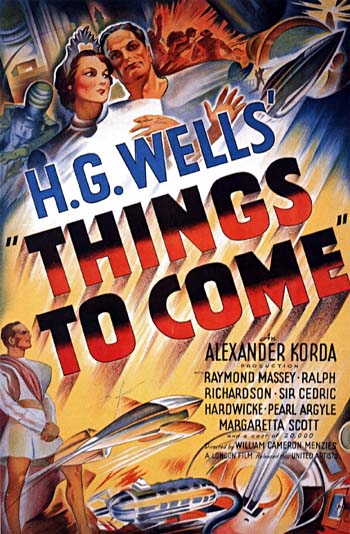
Poster for ‘Things to Come’; a film adaptation of the book written by H.G Wells whilst living on Baker Street
*
An Ode to Baker Street… Gerry Rafferty and one of London’s Greatest Songs
In the 1970s, a small flat on Baker Street was home for a time to Gerry Rafferty; a Scottish-born musician who had spent part of his early musical career busking on the London Underground.
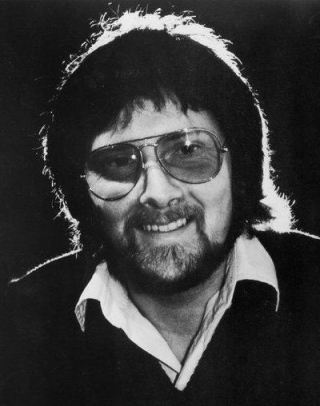
Gerry Raffety
Gerry’s experiences of the area led him to write one of the most famous songs ever inspired by London… Baker Street, which was released in 1978.
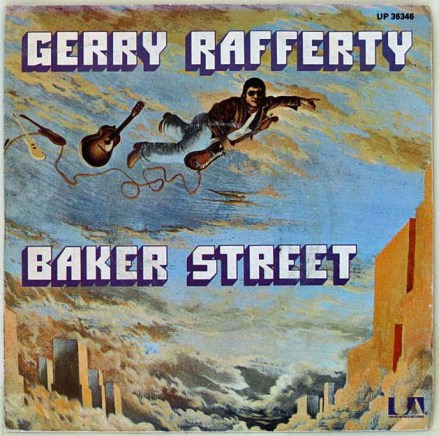
‘Baker Street’ single, 1978
A shy, reclusive man, Gerry was plagued by severe alcoholism throughout his life- a battle which he sadly lost in 2011 when his life was taken by liver failure.
His tragic addiction to drink was described up by his Italian partner, Enzina Fuschini…. “he felt he was under some sort of evil spell. He felt crippled by it… I saw a man in despair.”
In hindsight, Gerry Rafferty’s ode to Baker Street, with its lyrics alluding to drinking to forget and attempting to give up the booze is a melancholy insight into the great musician’s troubled soul.
Gerry’s masterpiece, along with images of Baker Street as it appeared in the late 1970s, can be viewed in the clip below:






 View from the Mirror