The Christmas Truce, December 24th 1914
In early January 1915 and with conflict raging in Europe, The Illustrated London News carried the following cover depicting a moving scene in which a German soldier, in a brave gesture of peace, approaches British troops with a little, lit tree on Christmas Eve.

Drawn by an artist on the frontline, the image was accompanied by the following caption:
“On some sections of the battle-front the Germans decorated their trenches with Christmas-trees and paper lanterns, and invited our troops to stop shooting and come over to smoke and have a palaver. With one accord a truce for the night was arranged, and the compliments of the season were passed with much enthusiasm between friend and foe.
The cessation of hostilities continued all the next day. Both sides fraternised and spent a Happy Christmas.”
Another image from the same issue depicted German and British troops swapping headgear and enjoying a good laugh and smoke together:
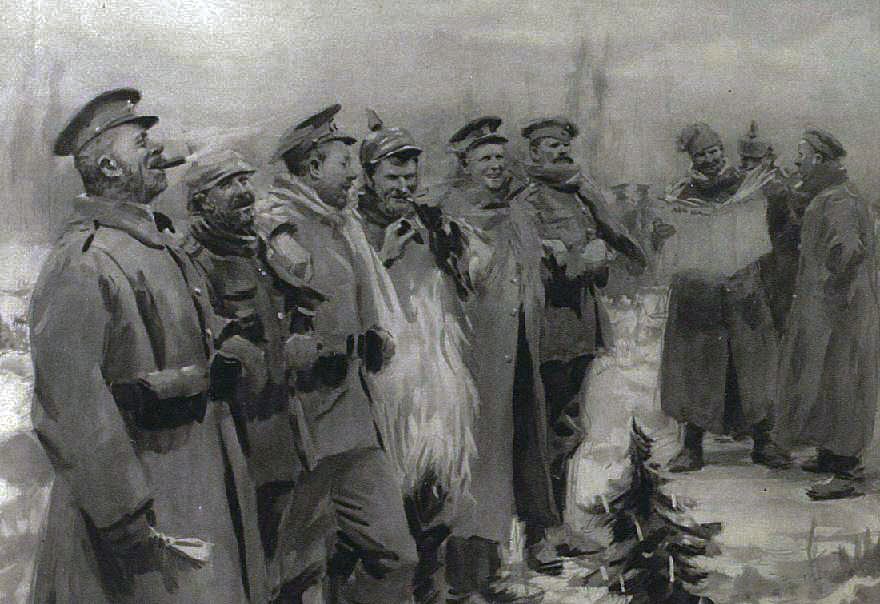
German and British troops together, Christmas 1914
Although it may sound tenuous of me to say, these are stories and images which I can relate to.
As a London Cabbie, I have the pleasure of meeting passengers from all over the world; people from a vast array of creeds, races and backgrounds…. and the one thing which always shines through is humanity; the ability of most people, no matter where they’re from, to display friendliness, a polite nature and a good sense of humour.
Peace to you all & a very merry Christmas
WWI 100: London’s Memorials… The London Troop Monument
The London Troops Monument
The Royal Exchange

The London Memorial (aka the London Troops Monument) outside the Royal Exchange
It is estimated that around 900,000 men from London fought in the Great War, approximately 300,000 of who were killed or injured.
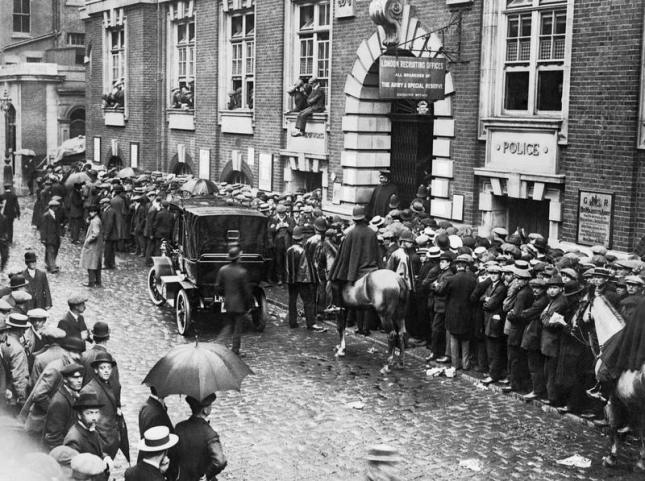
Recruiting office at Great Scotland Yard, August 1914
Standing outside the Royal Exchange in the heart of the financial district, the ‘London Memorial’ lists all of the regiments from the capital involved in the horrendous conflict and commemorates the countless Londoners who lost their lives.
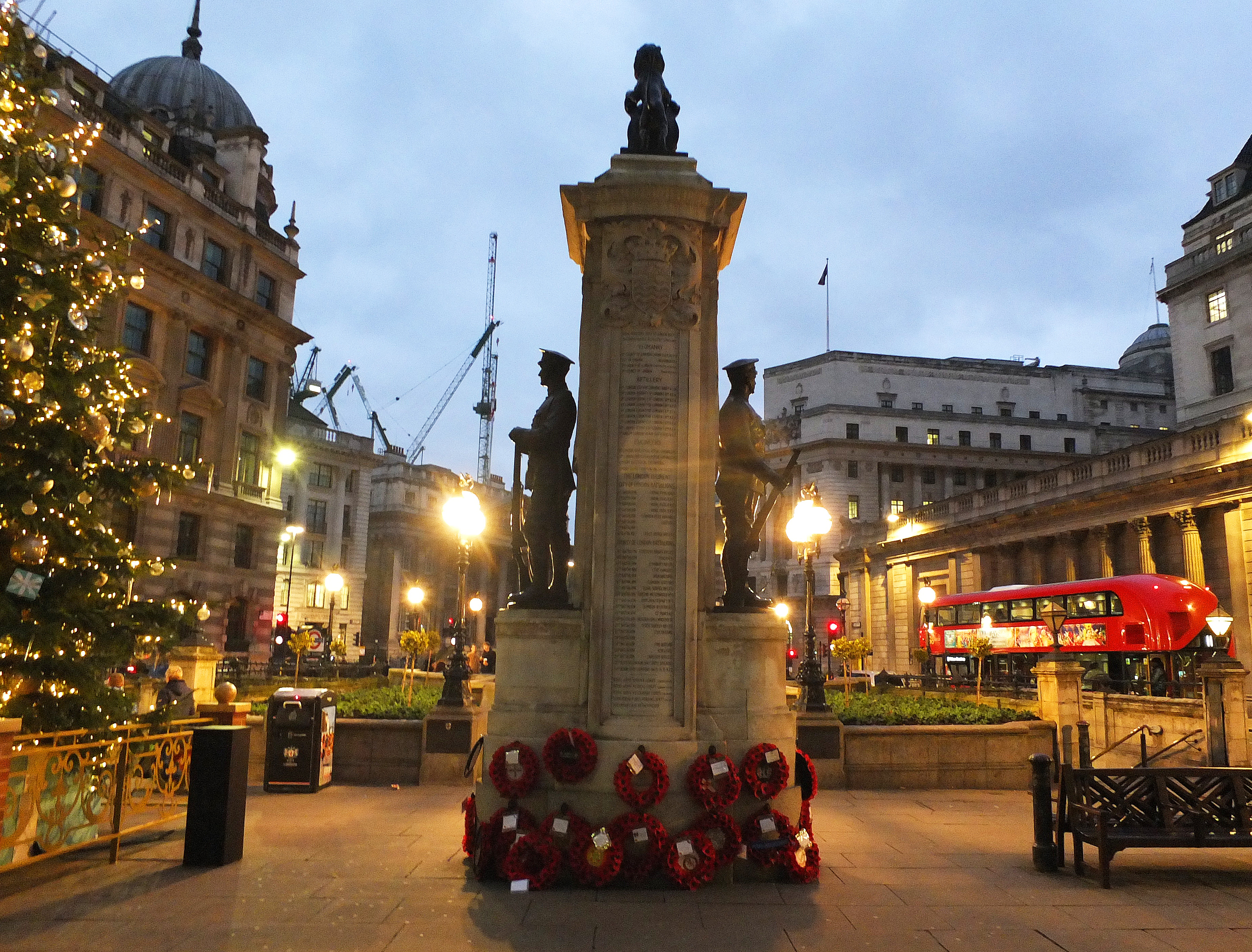
The London Memorial as seen looking towards Bank junction
The memorial’s Portland stone plinth was designed by the then President of the Royal Academy, Sir Aston Webb (who was also responsible for Admiralty Arch and the Queen Victoria Memorial outside Buckingham Palace), whilst the two figures standing either side were created by Alfred Drury.
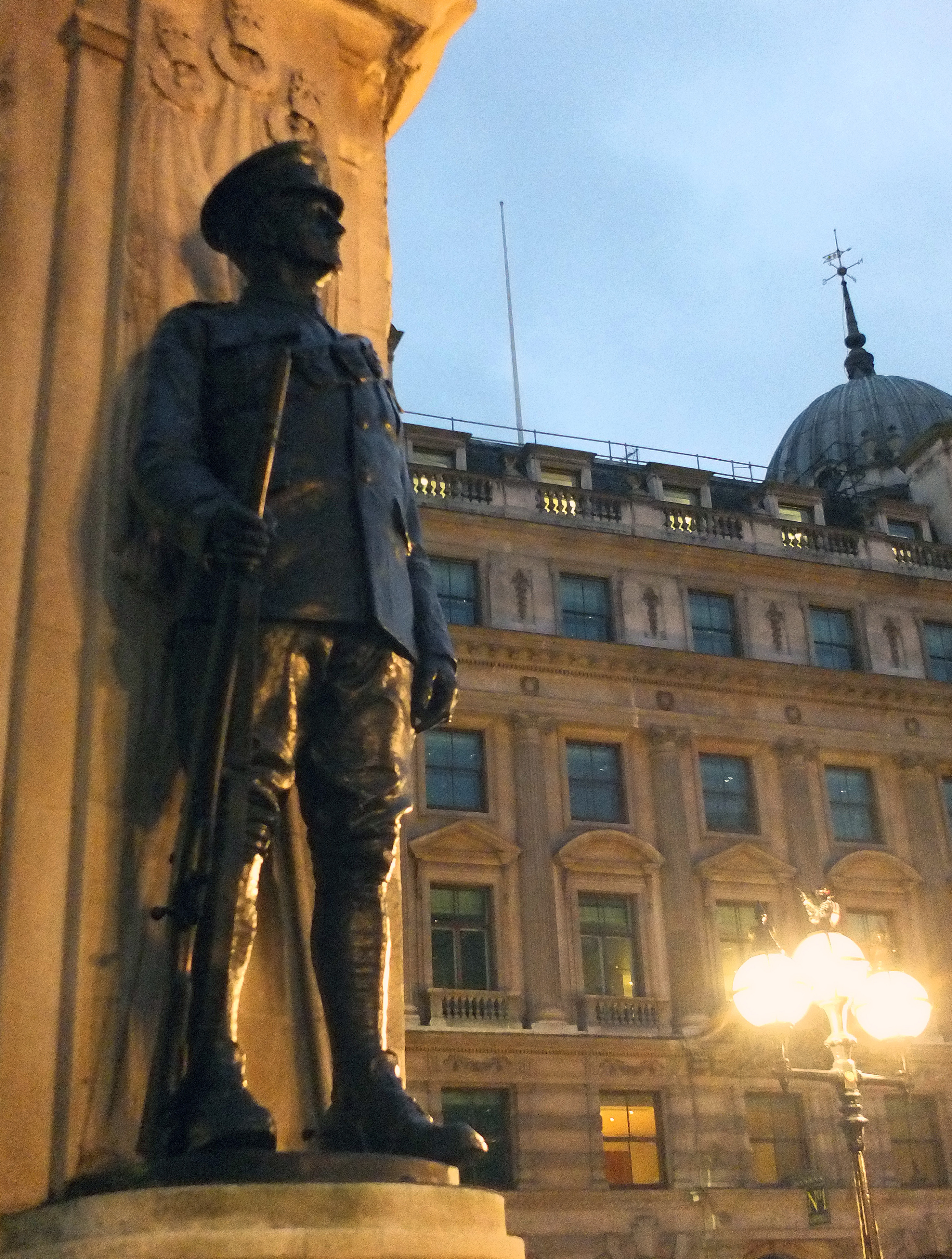
One of Alfred Drury’s life-sized figures
The memorial is topped with a small lion, bearing a shield adorned with St George and the Dragon.
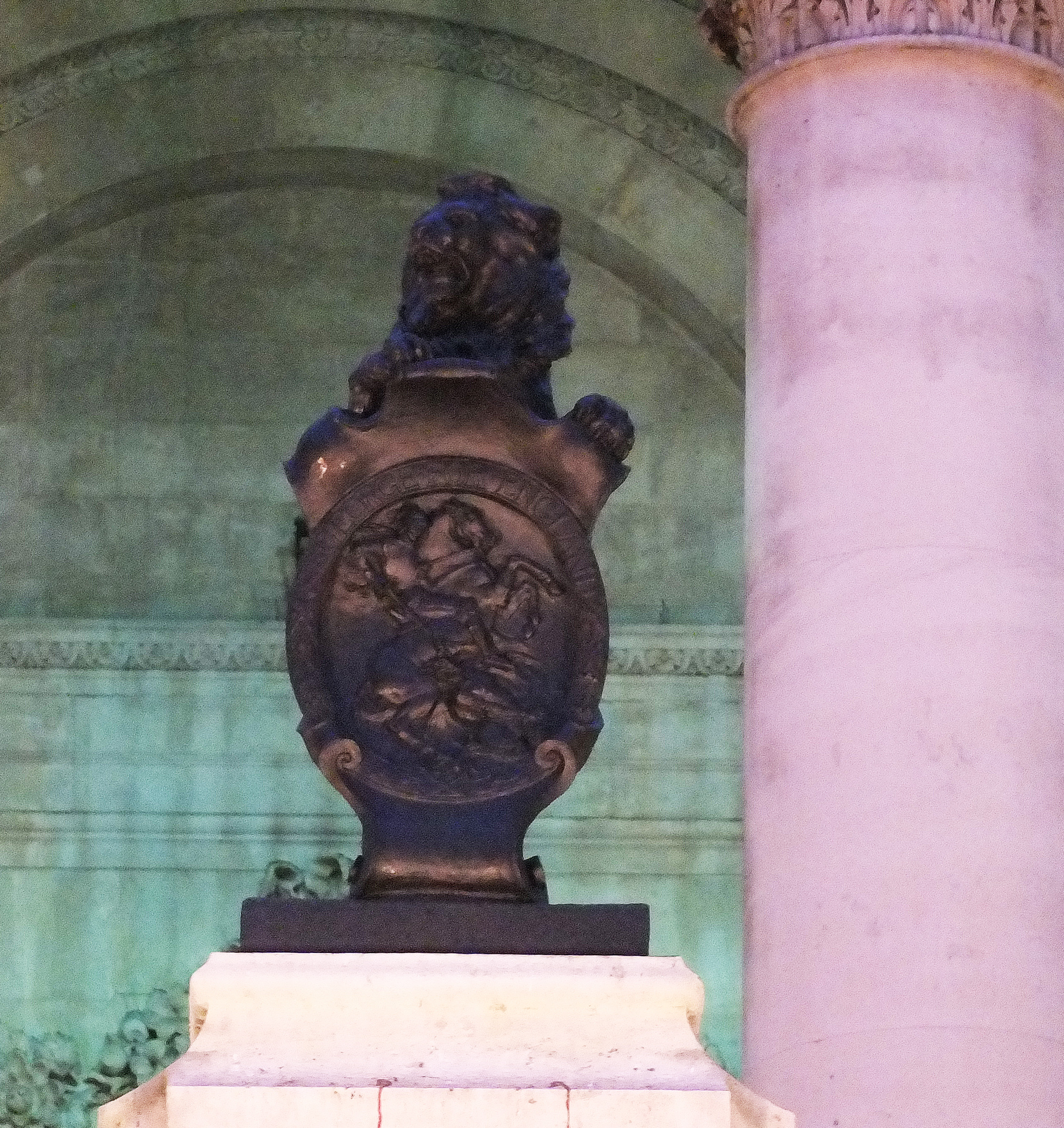
The memorial’s lion figurehead
The memorial is Sir Aston Webb’s second design– his first idea was quite different, consisting of two 75 ft. tall flag poles at the base of which would have been statues of Victory and Peace.

Sir Aston Webb, chief architect behind the London Memorial
Costing £7,000 (around £150,000 in today’s money), the monument was funded by public donations.
In order to make room for the memorial, a fountain topped by a statue of Temperance- which had been on the site since 1861 after being presented by the philanthropist, Samuel Gurney, required removal. It was relocated and can be seen today at the northern end of Blackfriars Bridge.
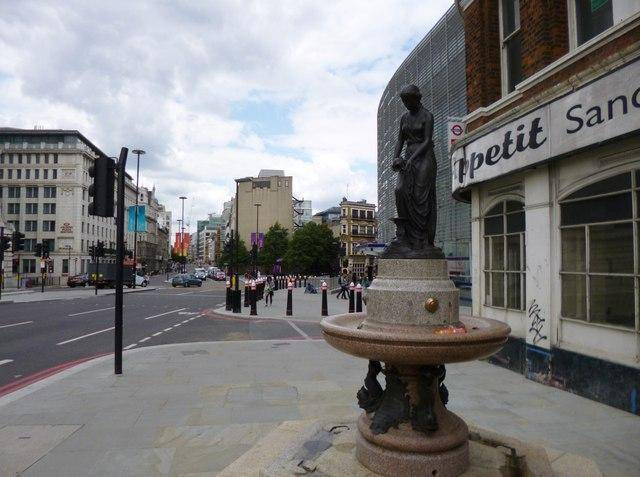
The fountain at Blackfriars which once stood outside the Royal Exchange and was relocated to make way for the London Memorial (image: Geograph)
The London Troops Memorial was unveiled in foggy conditions on the afternoon of the 12th November 1920 by the Duke of York who was accompanied by the Lord Mayor and the Bishop of London.

The London Memorial on Armistice Day in 1937 (image: London Illustrated News)
The Duke of Connaught (the King’s Uncle) was also due to participate but had to bow out due to bronchitis. He sent a telegram which was read out at the ceremony;
“While deeply regretting that I cannot unveil the memorial to London’s splendid soldiers, my thoughts and feelings are with you at today’s interesting occasion and I hope the memorial will always recall the gallant services rendered by London’s sons…”

Two young men contemplate the London Memorial, November 2014
*
The Salters Return (Part 2)
Three years after it was desecrated by callous scrap metal thieves, I am delighted to announce that the ‘Dr Salter’s Daydream’ installation is now proudly back in place at Bermondsey Wall East.

The new Dr Salter statue glimpsing at an image of his late daughter, Joyce
In the first half of the 20th century, Dr Alfred Salter and his wife, Ada were Bermondsey legends; a deeply committed couple who devoted their lives to helping improve the lives of the poor by providing free healthcare (unheard of at the time) and improving local housing and amenities.

Dr Alfred and Ada
Working together as a team the couple lived alongside the folk of Bermondsey, amongst whom they were fondly known as Ada and Alf. Their daughter and only child, Joyce was also adored by locals, earning her the nickname; “Our little ray of sunshine.”
Tragically, Joyce contracted Scarlet Fever and died aged eight.

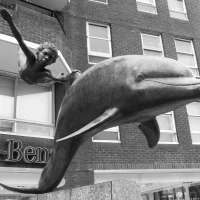
Statue of Joyce
*
First created by artist, Diane Gorvin in 1991, ‘Dr Salter’s Daydream’ portrayed an elderly Dr Salter sitting on a bench, wistfully waving at an image of his daughter, imagining happier days, long gone by.

Diane Gorvin with her original Dr Salter sculpture in 1991
On the night of the 20th November 2011, the statue of Dr Salter was stolen (luckily the culprits didn’t manage to get their hands on the statue of Joyce and her little, pet cat which were quickly placed into safe storage by Southwark Council).

Joyce and her cat in November 2014, back where they belong
The anger felt in the aftermath of this cruel crime rapidly transformed into a campaign to reinstate the statues and within just three years enough money had been raised to recreate the sculpture- as well as a new one of Ada Salter, thus bestowing London with the first public statue of a female politician.

Ada Salter’s statue being unveiled by her grandniece, Janet
At 2pm on 30th November 2014, the new installation- by the same artist, Diane Gorvin– was unveiled in the presence of relatives of the Salters and the Rt Hon Simon Hughes MP for Bermondsey and Old Southwark.
Welcome back, dear friends.


My previous articles on the Salters can be read here and here.








 View from the Mirror