
Of the many WWI memorials in London, one of the more unusual is that of the Imperial Camel Corps which can be found close to the Thames in Victoria Embankment Gardens.
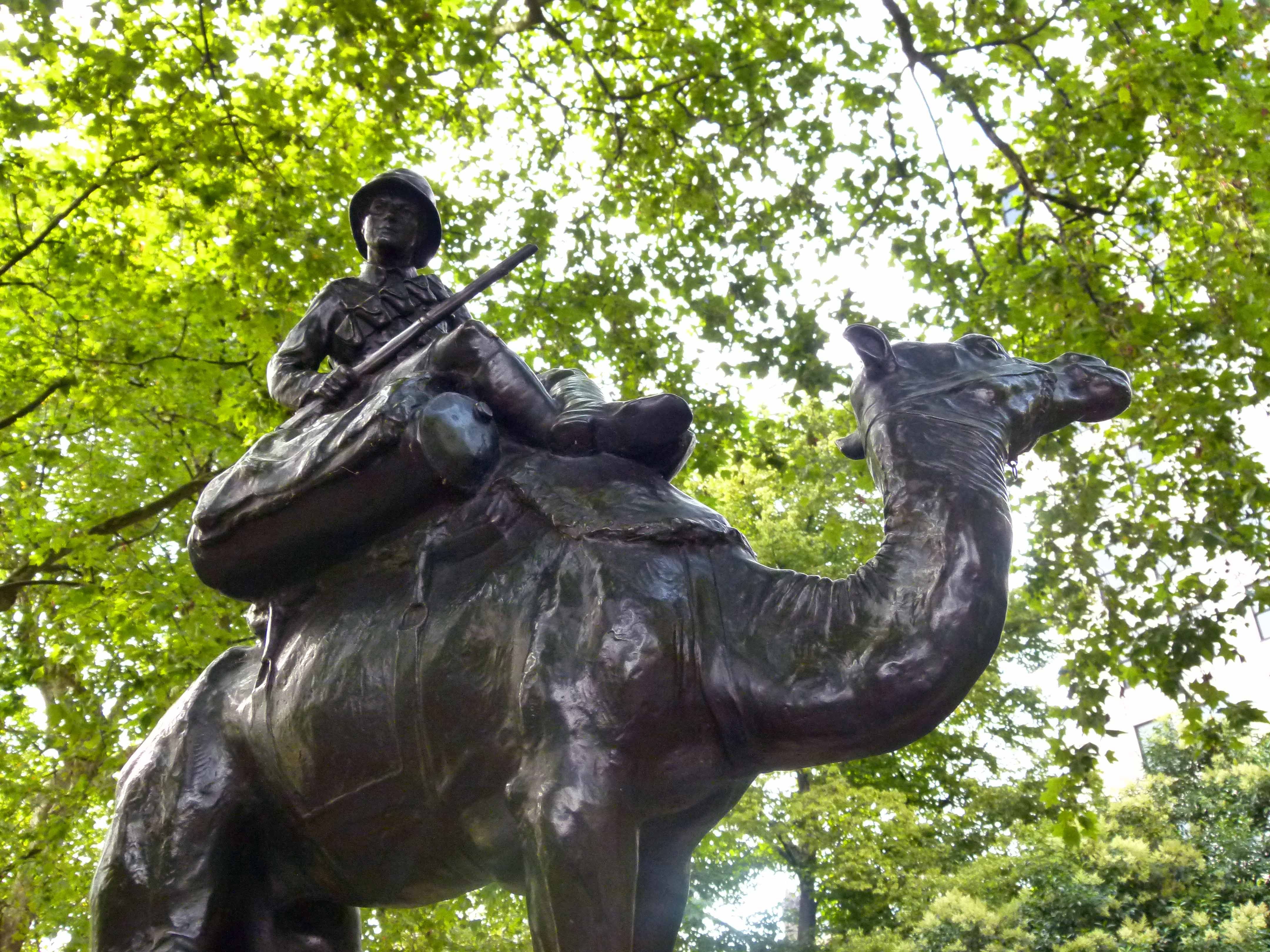
The Imperial Camel Corps Memorial, Victoria Embankment Gardens
Raised in December 1916 the Camel Corps was, unsurprisingly, established for desert warfare.
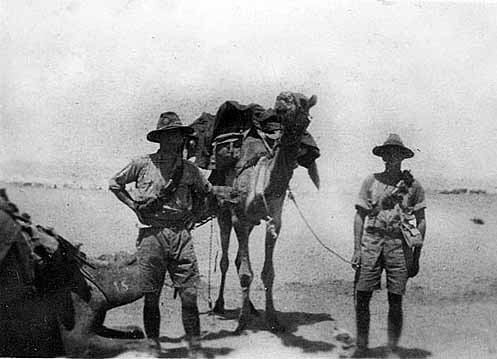
Troops in the desert
The first men to join the Corps were Australian troops, recently returned from the hellish Gallipoli campaign. The Aussies were soon joined by comrades from Britain, New Zealand, Hong Kong, Singapore and India.
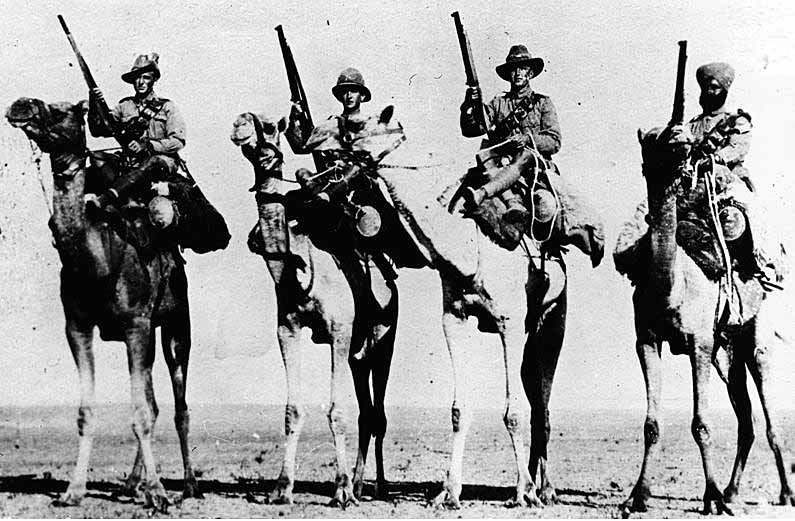
Band of Brothers: Imperial Camel Corps troops from Australia, Britain, New Zealand nd India (image: Imperial War Museum)
At its height the Corps, which fought in numerous campaigns throughout the Middle East, comprised of 4,150 men and 4,800 camels. Thanks to their humped steeds, the soldiers were able to travel long distances across remote desert terrain, carrying machine guns, mountain artillery and medical support.

An Australian soldier with his loaded camel
346 troops from the Imperial Camel Corps lost their lives.
The small memorial, which was sculpted by Major Cecil Brown who himself had served with the Corps, was unveiled in July 1921 in the presence of the Prime Ministers of Australia and New Zealand. The statue is now grade II listed.

The unveiling, July 1921 (image: Manchester Guardian)
A gallery featuring images of the Imperial Camel Corps Memorial can be viewed below:
*







 View from the Mirror
Thanks. Truly fascinating. Learning much visiting you here. Regards from Thom at the immortal jukebox.
Thank you, Thom much appreciated.
Nice post about a little-known and unusual memorial. Having been on a camel for an hour in Egypt, I wouldn’t have liked to have to spend the war on one. Then again, I suppose it was better than walking!
Best wishes, Pete.
That’s fascinating. As a New Zealander living in Australia – where the centenary of the Gallipoli campaign is big news right now – I’ve never heard of the Camel Corps. I’ve also lived in London and never seen this. Great post – thanks!
Many thanks… and my heartfelt respect for the Kiwis and Aussies who fought at Gallipoli.
[…] From: WWI 100: London’s Memorials … The Imperial Camel Corps […]
The 15 on your second photo means the NZ 15 company. How do I know this? Because the photo was taken by my grandfather. Very happy for you to use it.
That’s brilliant, many thanks for sharing 🙂
Hi
Yes both my grandfather and great uncle served in the NZ Mounted Rifles. The NZ equivalent of the Australian Light horse.
My great uncle was older and had actually also served in the Boer war. He was at Gallipoli and was wounded twice. After the the last time he was no longer fit for active service and spent the rest of WW1 in England in a stores unit.
My grandfather was younger and on his way to Gallipoli when they pulled out. So he became one of the reinforcement units that formed the 15 NZ Company of the Camel Corps in mid 1915 at Suez I think. He stayed in the Corp until 1918 and then was moved to the 2nd NZ Machine Gun Squadron that rode with the Australian 5 th Light Horse Brigade that captured Damascus at the same time as Laurence of Arabia. The Australian 5 th Light Horse Brigade was a very strange unit that included Australian, New Zealand and French horsemen under one command. The only time these three countries have been united in one fighting unit.
My grandfather took lots of photos. Most have been lost but several can be seen at the NZ Mounted Rifles site where I think you probably found the ” 15 ‘ photo. My brother has the original.
I get to visit London occasionally these days so I will take a look at the rest of your website
Regards
John Anderson.
On Mon, Oct 3, 2016 at 10:10 PM, View from the Mirror wrote:
> View from the Mirror commented: “That’s brilliant, many thanks for sharing > :-)” >
Many kind thanks, John.
I am looking for information on my grandfather Field, Robert Palmer, Serv No 945 who was in the 5th Reinforcements of the 6th Australian Light Horse from the 21.05.1915 and transferred to the Camel Corp 22.03.1916, he was then granted discharge to take up a temp commission with the Egyptian Camel Transport Corp 16.01.1917 and returned to Australia on the Hungarian 31.05.1919. How do I find out information of the 2 years he was with the Camel Corps.
Hello Sandra, thanks for your message. Unfortunately I have little idea how you would go about such a task. All I can recommend is that you try the National Army Museum; they may be able to direct you. Best of luck.
[…] One of the more unusual of London’s WWI memorials is that to the Imperial Camel Corps in Victoria Embankment Gardens, just along from Embankment tube station, by the Thames. Raised in December 1916 the Camel Corps was, as one might guess, established for desert warfare. The first men to join the Corps were Australian troops who had recently returned from the horrors of the Gallipoli campaign; they were quickly joined by troops from Britain, New Zealand, Hong Kong, Singapore and India. The Corps fought in many of the Middle East campaigns and at one time numbered 4,150 men and 4,800 camels. Thanks to the camels the soldiers could travel long distances across remote desert terrain, carrying machine guns, mountain artillery and medical support. 346 troops from the Imperial Camel Corps lost their lives during WWI. The small memorial was sculpted by Major Cecil Brown who had himself served with the Corps; it was unveiled in July 1921 in the presence of the Prime Ministers of Australia and New Zealand. From: WWI 100: London’s Memorials … The Imperial Camel Corps […]