Cabbie’s Curios: The Elfin Oak
Situated in the north-west corner of Kensington Gardens, not too far from Bayswater Road and right next door to the Diana Princess of Wales Memorial Playground, you’ll find this gnarly but precious old tree, securely enclosed in a protective cage.

The Elfin Oak
This is The Elfin Oak; a large, weathered stump which originally sprouted in Richmond Park and is estimated to be approximately 900 years old.
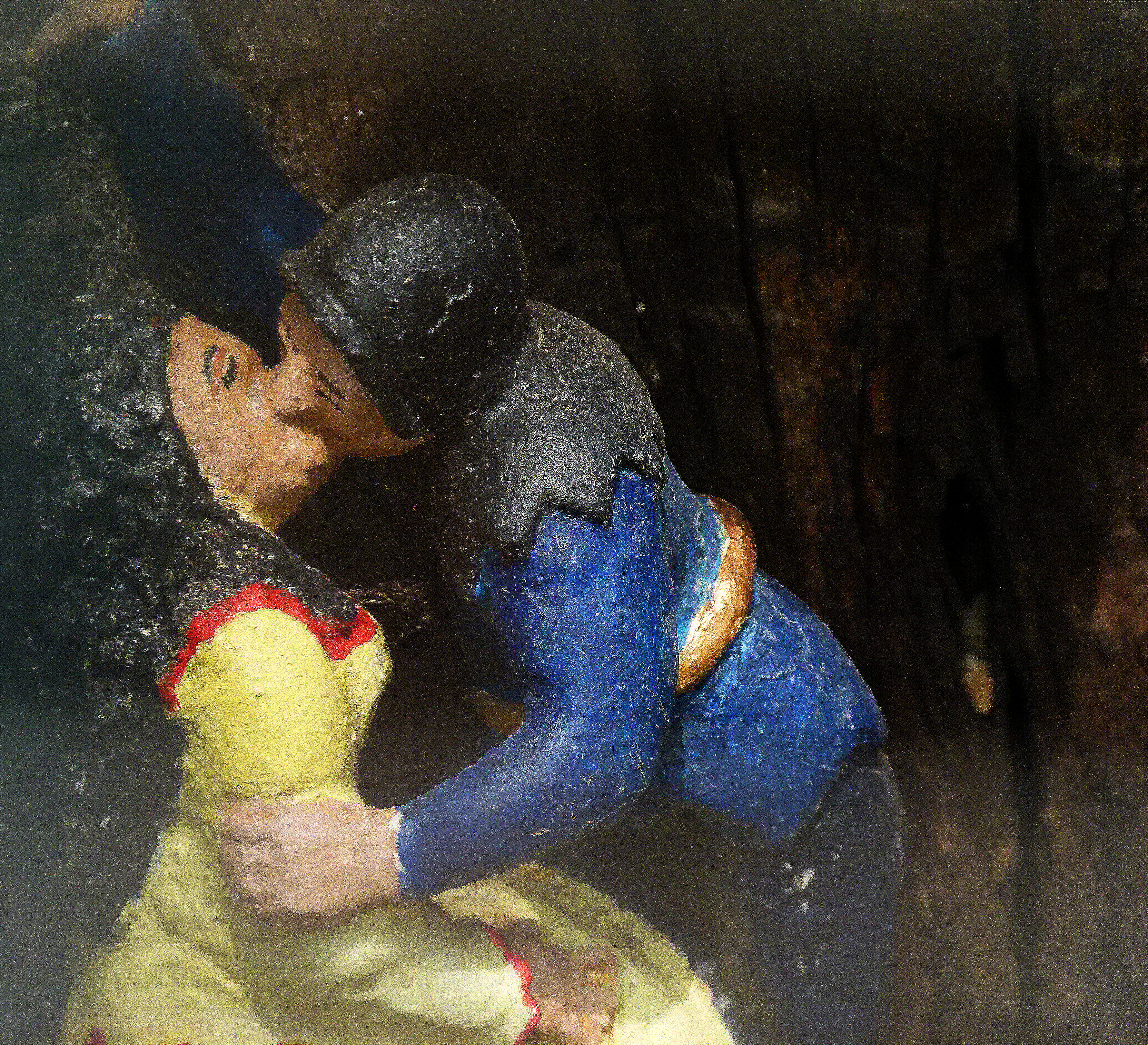
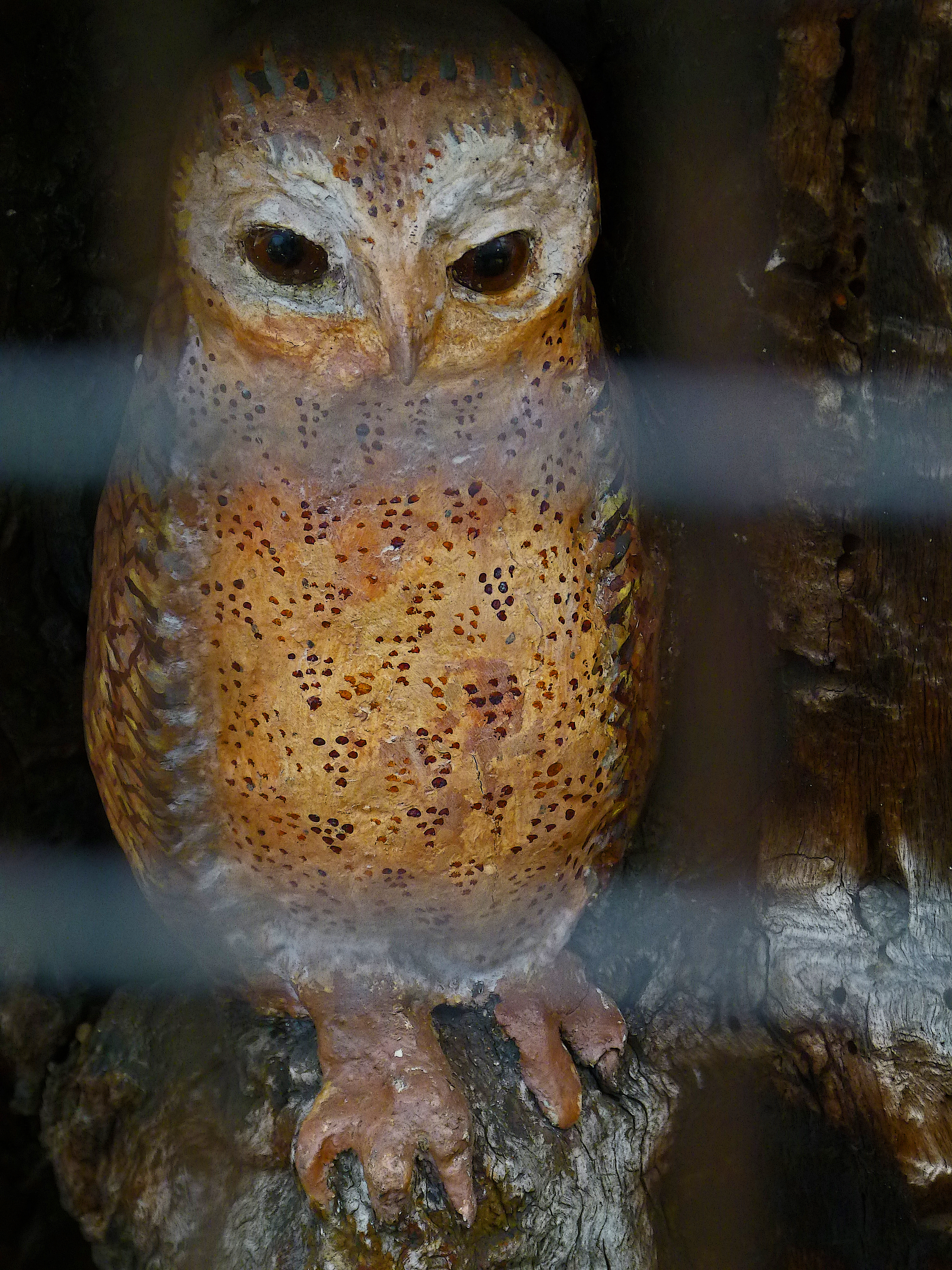
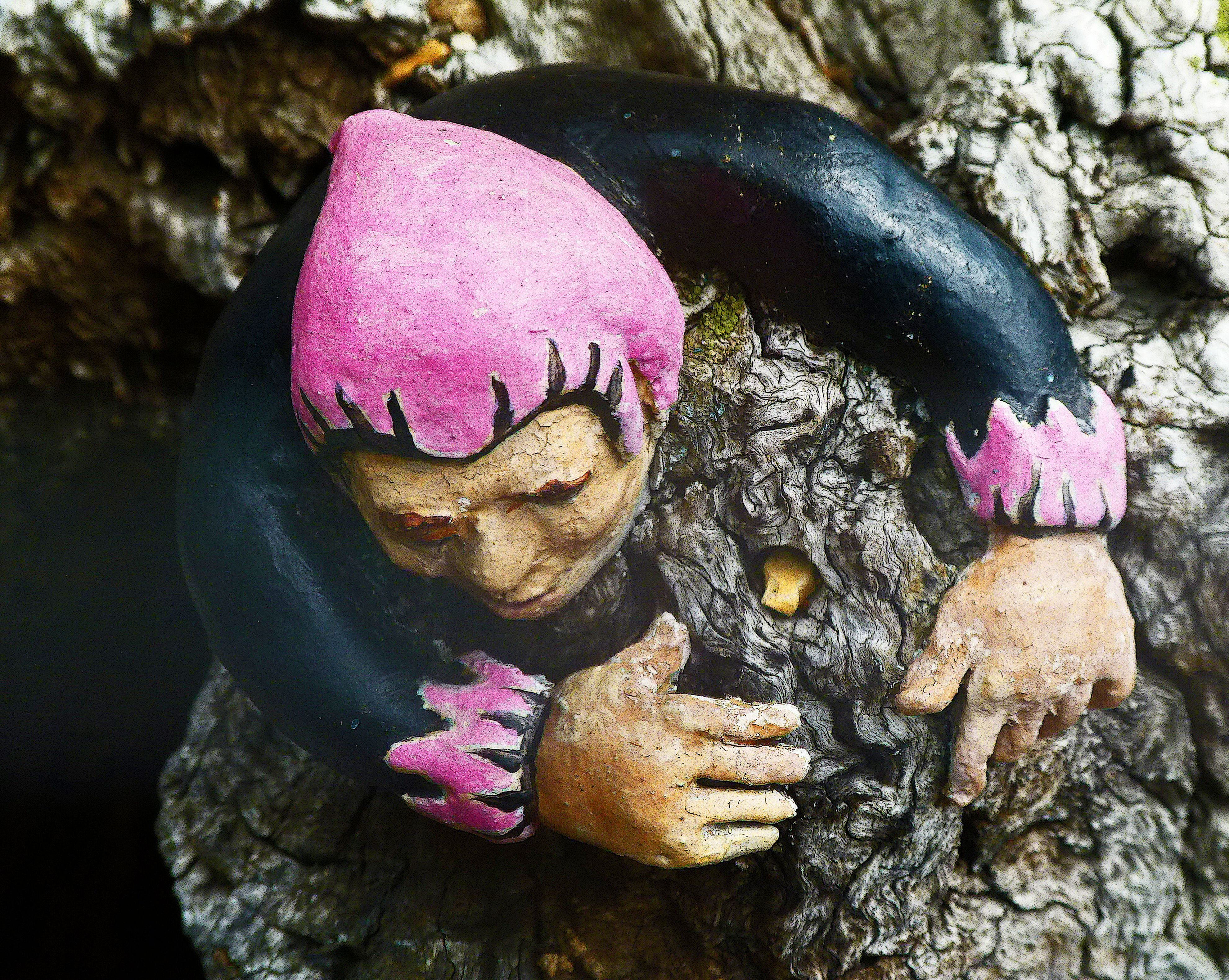
Move in closer and you’ll discover that the old tree holds a special secret… that the gapes and grooves in the weathered old bark are home to an array of fairies, imps, elves and gnomes along with their little forest friends.
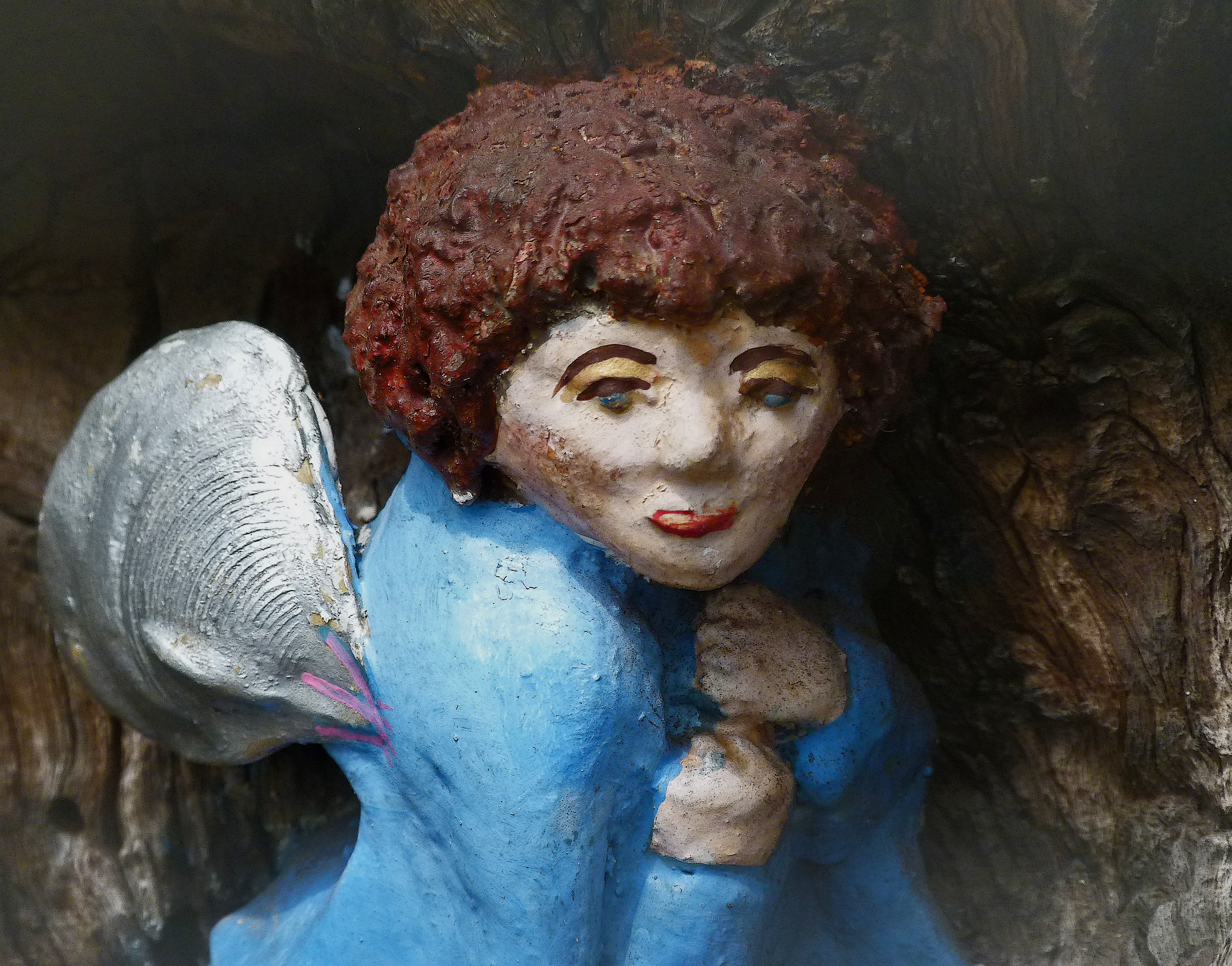
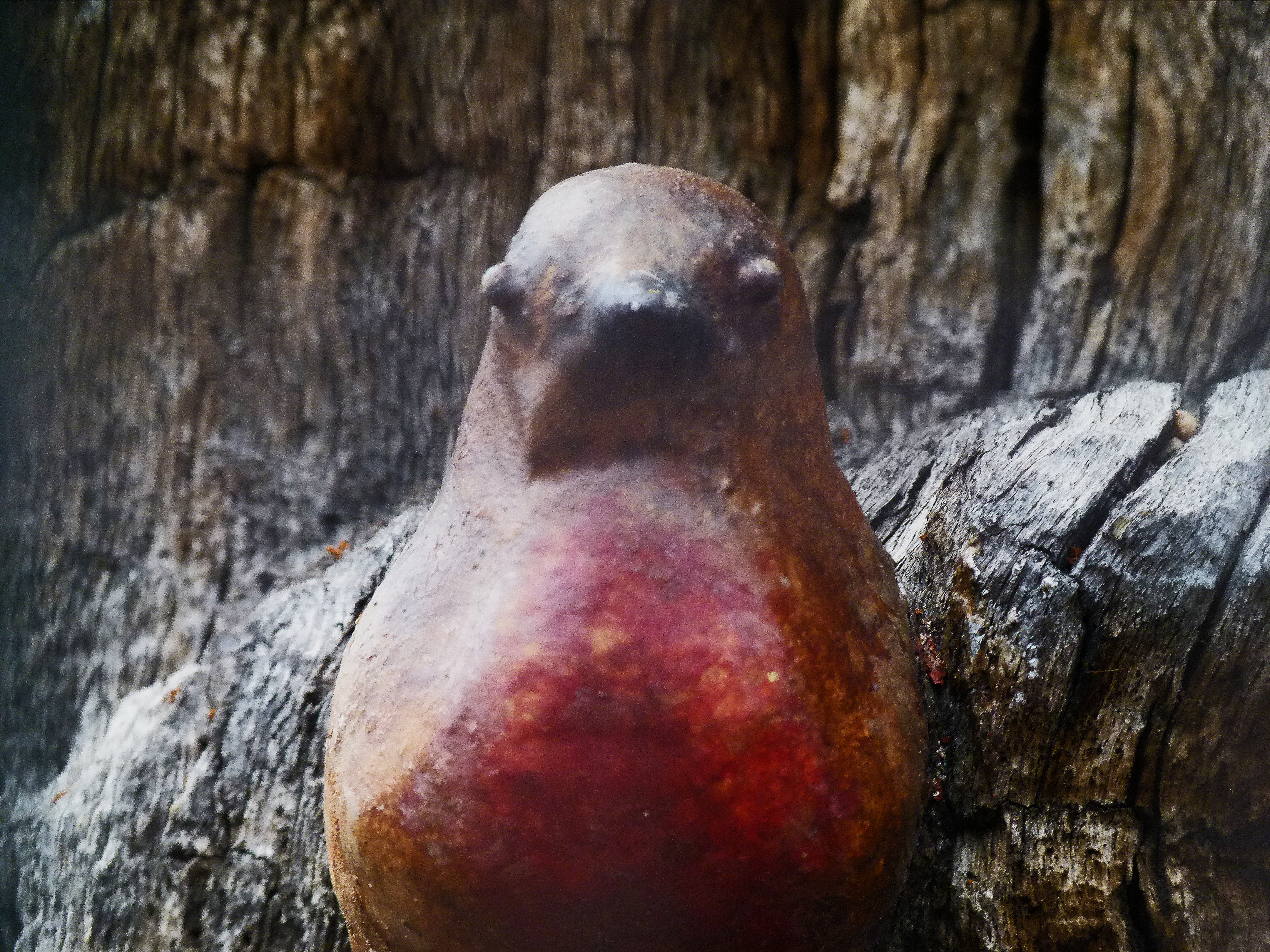
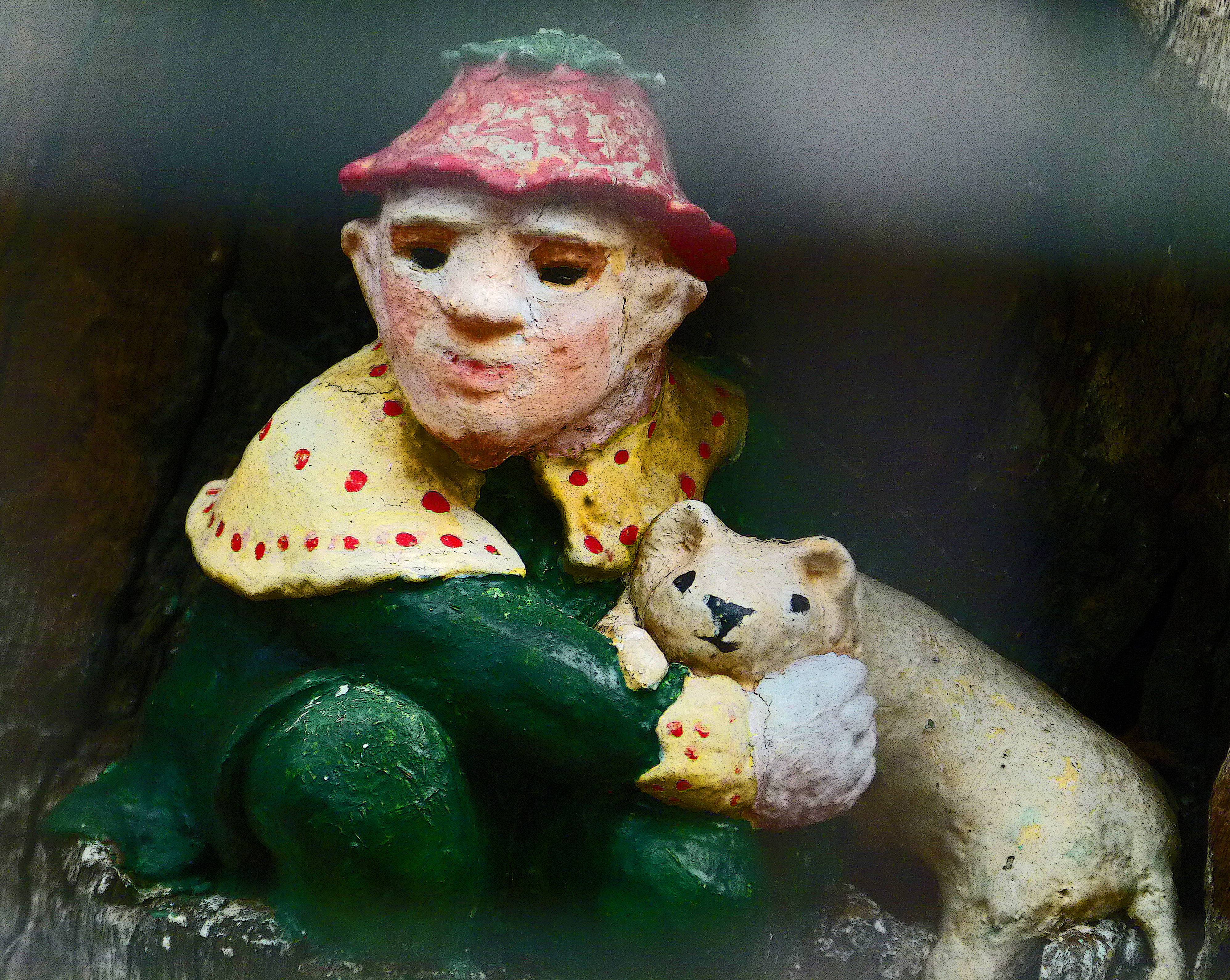
The Elfin Oak’s tiny inhabitants were crafted in the late 1920s by Ivor Innes; a children’s illustrator and, in 1930, the artwork was accompanied by a book; ‘The Elfin Oak of Kensington Gardens’ which was written by his wife, Elsie.
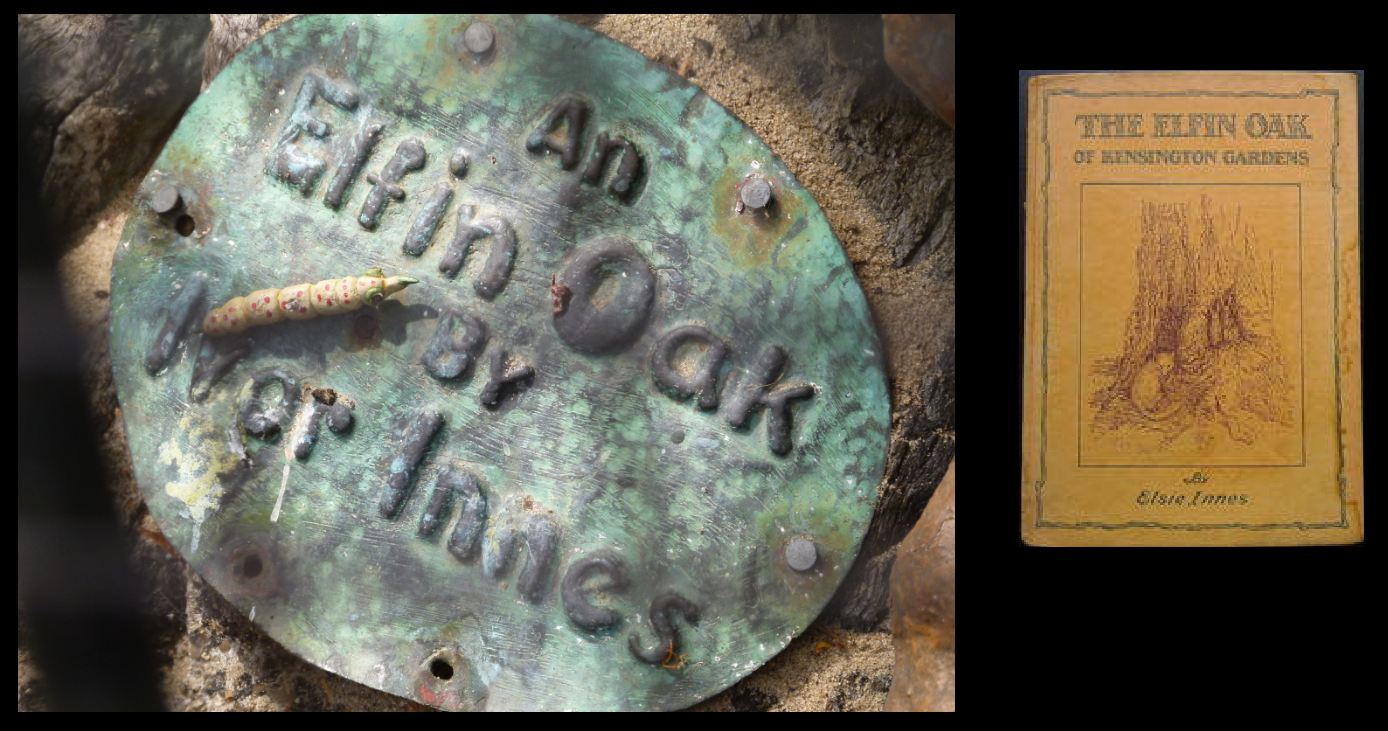
The book provided a magical background to the tree’s long history, describing how it has been home to mystical woodland creatures for centuries; beings that still live “in the nooks and crannies… it is their hiding place by day, their revelry place by night.”
*
The relocation and modification of the tree owed much to the politician, George Lansbury (grandfather to none other than Angela Lansbury; star of the 1971 Disney film, Bed knobs and Broomsticks…and of course the gentle detective show, Murder She Wrote!)
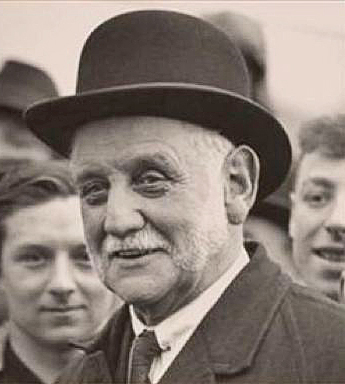
George Lansbury
George Lansbury was a man with heart, striving throughout his career to improve the appalling conditions under which London’s poor lived, especially in the East End where he served as the mayor for Poplar (the Lansbury Gardens Estate on East India Dock Road was named after him as were various other small streets and communal buildings).
Whilst in government during the 1920s and 30s, George Lansbury was made the ‘First Commissioner of Works’, a role which led him to initiate the ‘Brighter Britain’ scheme; a programme which, at the height of the Great Depression, strove to make London as pleasant as possible for its inhabitants, creating parks, lidos, children’s playgrounds… and of course, The Elfin Oak.
By the 1960s, the old tree was starting to look a little tatty. Luckily, it had an influential and equally eccentric fan- Spike Milligan who, in 1966, successfully campaigned to have The Elfin Oak restored.
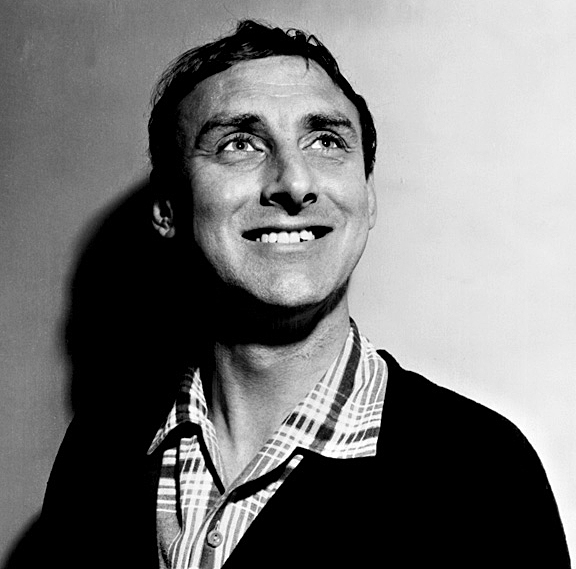
Spike Milligan. savior of The Elfin Oak, pictured in 1958 (photo: BBC)
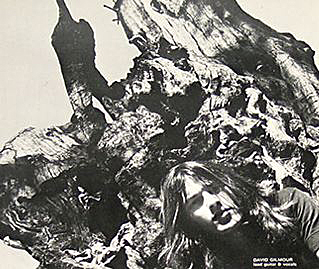
A few years later, in 1969, The Elfin Oak could be spotted looming behind musician, David Gilmour on the inside sleeve of the Pink Floyd album, ‘Ummagumma’.
The Elfin Oak- once again with help from Spike Milligan- received further tender loving care in 1997, after which it was awarded Grade II listed status by the then Heritage Minister, Tony Banks who stated that “The Elfin Oak is a wonderful curiosity, loved by Londoners and visitors alike.”
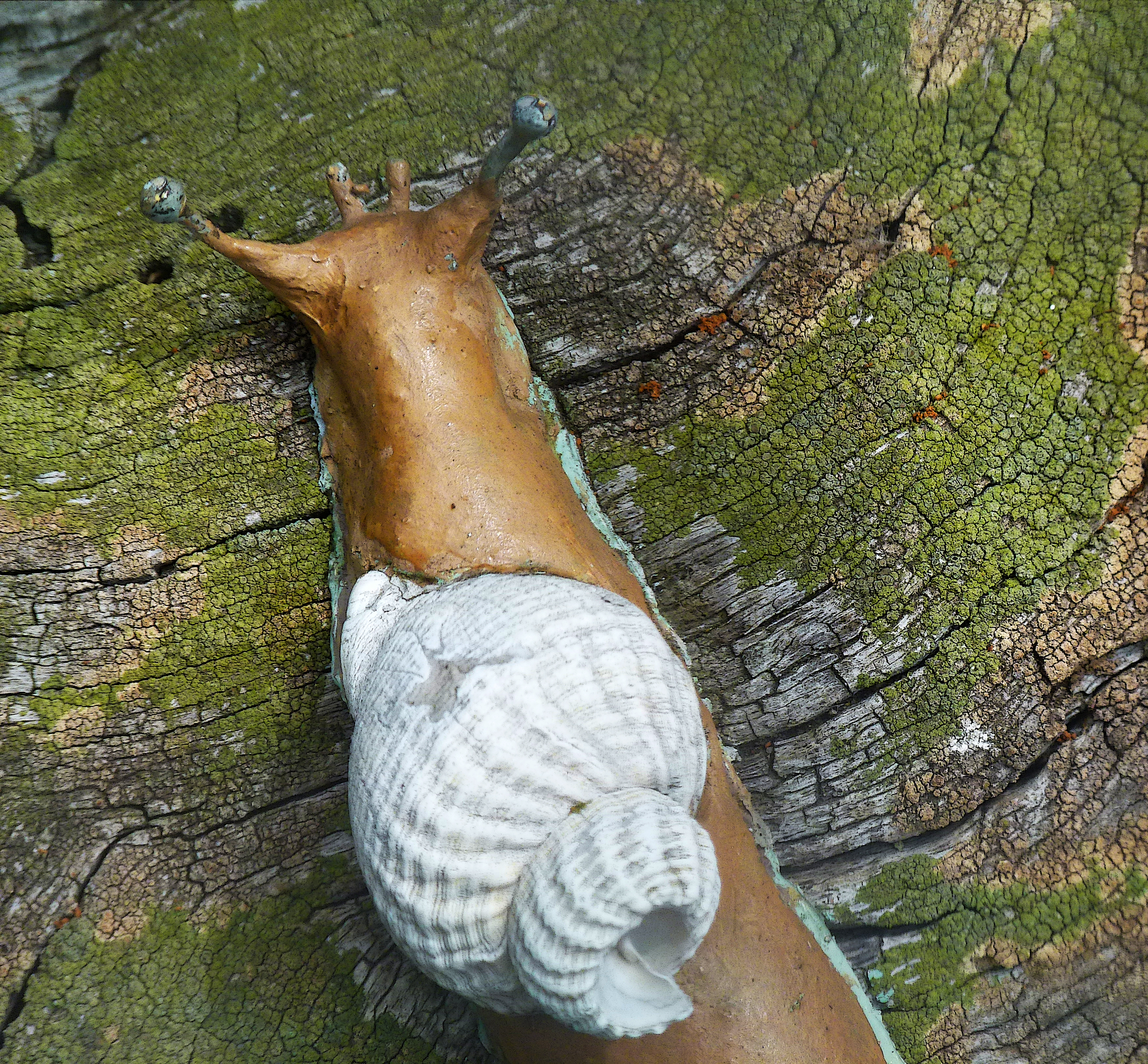
The pictures I have included here represent only a tiny portion of the tree’s lively wee characters… why not pop along yourself and see how many woodland folk and fauna you can find?!
Snakehips at the Cafe De Paris
This is the entrance to the Café de Paris, a famous London nightclub on Coventry Street near Leicester Square, which first opened to partygoers way back in 1924 and is still going strong today.

The dance-floor of the Café de Paris was originally designed to resemble the ballroom of the fated Titanic and, in its earliest days, one of the club’s most frequent regulars was Edward, Prince of Wales (Prince Harry’s wild nights out at Boujis and Chinawhite are clearly nothing new!)

Edward VIII… renowned party animal and abdicator
This particular Prince of course went onto become King Edward VIII in 1936… but he didn’t stick the throne for very long. Shortly after taking on the crown, he decided to chuck it in; abdicating so that he could pursue a relationship with U.S socialite, Wallis Simpson. I wonder if the hedonism of the Cafe De Paris had a corrupting influence on him?…
*
Shortly after it opened, the Café De Paris was the venue for the UK’s first performance of the famously hip and energetic, Charleston dance. This spontaneous debut was carried out by the American model and showgirl, Louise Brooks- a bold act which pulled London firmly into the ‘Roaring 20s’.

Louise Brooks, the woman who introduced the Charleston to Britain (photo: Wikipedia)
In 1929, the club hit the silver screen when it appeared in the silent film, Piccadilly
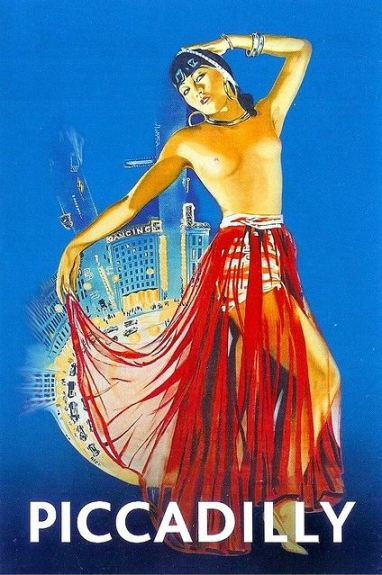
Promotional poster for the 1929 film, ‘Piccadilly’
Starring Anna May Wong- the film industry’s first ever Chinese-American actress, the plot of Piccadilly involved jealousy, betrayal, forbidden love, murder.. and, above all, dancing as demonstrated in the following excerpt!-
*
A decade later saw the outbreak of WWII and the subsequent Blitz on London- during which time the Café De Paris was considered to be one of the safest places in the West End, due to the fact that the bulk of the club was located several floors underground.

Downstairs at the Cafe De Paris
For those who had the money and style to gain entry, the assumed safety of the Café De Paris was clearly far more attractive than spending the night sleeping on a stuffy, crowded tube platform or huddled in a dank Anderson Shelter at the bottom of the garden.
*
During the Blitz, the biggest attraction at the Café De Paris was the nightly entertainment provided by Kenrick Reginald Huymans Johnson; more commonly known as Ken ‘Snakehips’ Johnson, leader of his specially put together, ‘West Indian Orchestra’ who were the club’s resident band.
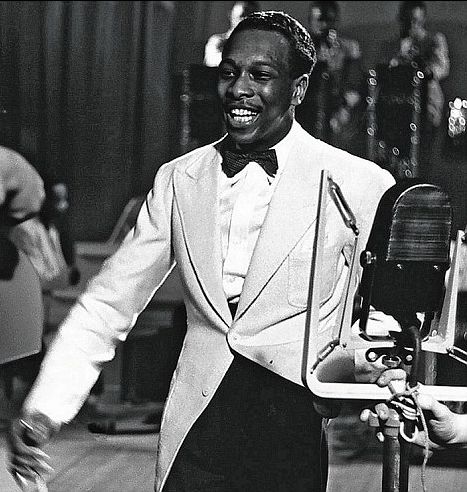
Ken ‘Snakehips’ Johnson
Ken was born in British Guyana, South America in 1914.
During the 1920s, he rose to become an acclaimed dancer, coached by Buddy Bradley who had also taught Fred Astaire.
Ken’s smooth moves quickly earned him his famous ‘Snakehips’ nickname, paving the way for appearances in a number of American cabaret acts, as well as leading to Hollywood and a role in the 1934 film, Oh Daddy.

Ken showing off his snake-like hips!
During his time in America, Ken visited New York’s Harlem where he got to witness jazz greats such as Cab Calloway practicing their craft.

The legendary, Cab Calloway (1907-1994) who would prove to be a major influence on Ken Johnson
Such experiences enticed Snakehips, encouraging him to move on from dancing and to go about establishing his own band who would soon become known as the aforementioned ‘West Indian Orchestra.’
*
By 1940, Ken and his team of musicians were in London and were already so acclaimed that the Café De Paris snapped them on a permanent basis.
Upon being hired, Ken announced that he was determined to make Londoners “like swing at the Café… or die in the attempt”…
It wasn’t just the rich and famous who got to hear the West Indian Orchestra’s exciting music- Snakehips and his talented line-up were regulars on the BBC’s Wartime Service, giving Brits a welcome and uplifting diversion from the conflict and misery which was consuming the world.

A family gather around their wireless set during WWII (photo: BBC)
*
On the evening of Saturday 9th March 1941 Ken and his gang took to the stage as per usual.
Shortly into their performance, the air-raid sirens cranked into action, sending their eerie banshee howl wailing across the capital.
It was a situation Ken and the orchestra were used to and, being the accomplished entertainers they were and safe in the knowledge that the Café De Paris was deep underground, the band played on…
It was during a rendition of “Oh Johnny” that the unthinkable happened.
A bomb hurtled down from the sky and somehow managed to pinpoint an airshaft, sending the sinister device tumbling down into the very heart of the Café De Paris where, in a blue flash, it exploded on the dance floor.
34 people- including Snakehips Johnson- were killed instantly and a further 80 were seriously injured.
A number of those killed perished as the powerful blast sucked the air out of their lungs; a deadly phenomena which caused the victim to display no outward signs of injury, but instead left them statue-like; frozen in the pose they’d been in on the moment of impact.

The aftermath of the Cafe De Paris bombing
One of the first to rush to the scene was a police officer called Ballard Berkeley… who would later go onto become an actor, playing the character of Major Gowen in the much loved sitcom, Fawlty Towers.
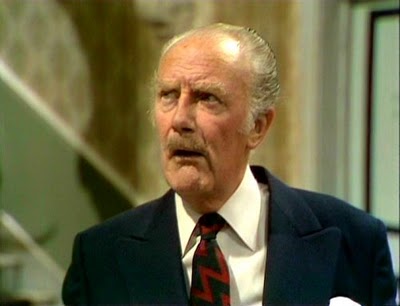
Ballard Berkeley, one of the first on the scene after the Cafe De Paris blast and who would later go onto become an actor after the war
Watching him act in such a well-known comic role, it is difficult to imagine the horrors which Ballard witnessed in the aftermath of that dreadful bombing.
Ken Johnson, whose once beautifully agile body was severely ravaged in the blast, was cremated at Golders Green Crematorium.
He was just 26 years old.
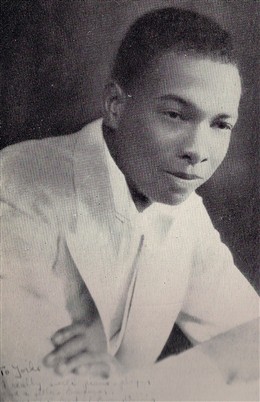
Ken Johnson 1914-1941
The loss of the great Snakehips and his band was felt deeply. When The Times reported on the disaster, they deliberately avoided mentioning the band by name for fear of damaging public morale.
The devastated Café De Paris remained closed until after the war, finally re-opening in 1948.
Below is a rare recording (made approximately two months before the Café Des Paris disaster) of Ken and his West Indian Orchestra preforming ‘I’m in Love for the Last Time’, the distinctive sound which, for an all but too brief period, lifted spirits during one of Britain’s most devastating periods.






 View from the Mirror