Cabbie’s Curios: Mind Your Head!
Over the centuries, there have been several versions of ‘London Bridge’ and, from the original, wooden structure built by London’s ingenious Roman founders, to the present day span which opened in the early 1970s, the crossings have all- give or take a few yards- stood on the same site.
Perhaps the most famous London Bridge was the one built by church chaplin, Peter de Colechurch, which served the city for over 600 years; from approximately 1176 to 1831.
Although it was demolished during the reign of William IV, the old London Bridge is a familiar icon today; famed for being the Thames crossing which boasted 19 arches and a huge array of shops and houses.

For decades (until a second crossing opened at Westminster in the 18th century), London Bridge was the city’s only Thames crossing.
As such, it was also a major route into the capital for travellers approaching from the south; a fact which remains to this day (follow the A3 road directly south from London Bridge, and you will eventually end up in the important maritime city of Portsmouth).
*
In days gone by, the historical City of London was technically a gated community; surrounded by a lofty wall and controlled entry and exit points. Keeping in line with this, the Southwark end of the bridge was fortified with a gatehouse and drawbridge.
The southern tip of London Bridge also had a more sinister way of dissuading potential scallywags…
For many years, the top of the gatehouse was home to a collection of vicious spikes; long, sharp poles upon which were stuck the heads of executed criminals.
Whenever a fresh head was brought along for display, one of the bridge’s gatekeepers would first parboil the unfortunate noggin, before proceeding to dip it in tar; a tried and tested recipe which ensured the decapitated head would persevere for a while; offering it some protection from London’s biting weather, and the unwanted pecking of pesky birds.
After a few weeks or months, when said head lost its charm and began to give off a stench that was noticeably stronger than the surrounding piles of mouldering rubbish and animal dung, the gatekeeper would simply climb up, pluck it off the spike and toss the rotting remains into the Thames.
*
The very first head to be exhibited in this grim way belonged to a very famous historical figure indeed; Scotsman, William Wallace.
Following his gruesome execution at West Smithfield (where a memorial can be found today) in 1305, the Scottish nobleman’s decapitated head, which had once played host to patriotic notions, was hoisted above the bridge, kick-starting the morbid custom.
Other famous bonces to displayed above the old London Bridge belonged to Jack Cade (ringleader of a huge, 15th century rebellion) and Sir Thomas More; the unfortunate political figure who happened to fall foul of the tyrannical King Henry VIII, and was put to death in 1535 (it is said that More’s daughter, Margaret Roper, managed to retrieve her father’s head from London Bridge, and had it buried at St Dunstan’s church in Canterbury).
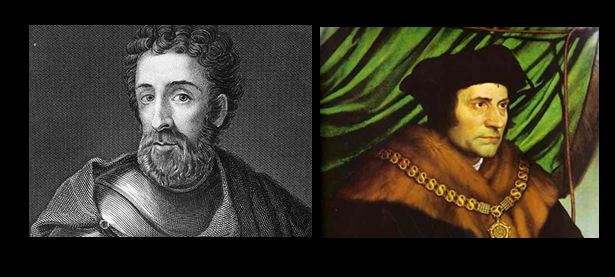
William Wallace and Sir Thomas More; the heads of whom ended up being displayed on London Bridge
Countless heads were plonked above the entrance to London Bridge over the years.
In 1598 for example, one German visitor noted that there were over 30 on display; a truly gruesome gaggle.
Similarly, in 1616, Dutch engraver, Claes Jansz Visscher, created his stunning panorama of London; a beautiful and historically priceless etching which provides us with a view of London, prior to the Great Fire of 1666.
Sketching his masterpiece from a perch close to London Bridge, Claes was able to observe the open-air gallery of heads, and jotted them down accordingly:

The custom of exhibiting chopped off heads on London Bridge continued for 355 years; the last victims being aired in 1660.
*
Today, the gruesome ritual is commemorated via a simple, yet elegant sculpture; a towering spike which stands outside the modern office block known as ‘Number One, London Bridge.’

In a way, the grisly practice is also recalled- albeit unintentionally (or maybe subconsciously…)- by the soon-to-be completed ‘Shard Tower‘; a spike-shaped 1,012 ft. tall skyscraper which stands a short distance from the present day London Bridge, and will be Western Europe’s tallest building when it finally opens…

Tales From the Terminals: Marylebone
Continuing my exploration of the history, trivia and hidden stories which lie behind London’s major railway terminals. We now arrive at:
MARYLEBONE STATION

Opened in 1899 and tucked away in a quiet backwater to the west of Regent’s Park, Marylebone is the youngest of London’s major railway terminals.
It is also one of the smallest; factors which ensure the station remains relatively peaceful and unspoilt. Trains from Marylebone run out to Hertfordshire, Buckinghamshire and on into the West Midlands.
*
Marylebone Station was originally constructed by the Great Central Railway; an evolution of the Manchester, Sheffield and Lincolnshire Railway which changed its name in anticipation of the London extension.
As the route ran particularly close to Lords Cricket Ground, the Marylebone Cricket Club were strongly opposed to the project and did their very best to prevent the railway’s progress, as the following Punch cartoon entitled ‘Lords in Danger’, from December 1890 illustrates:
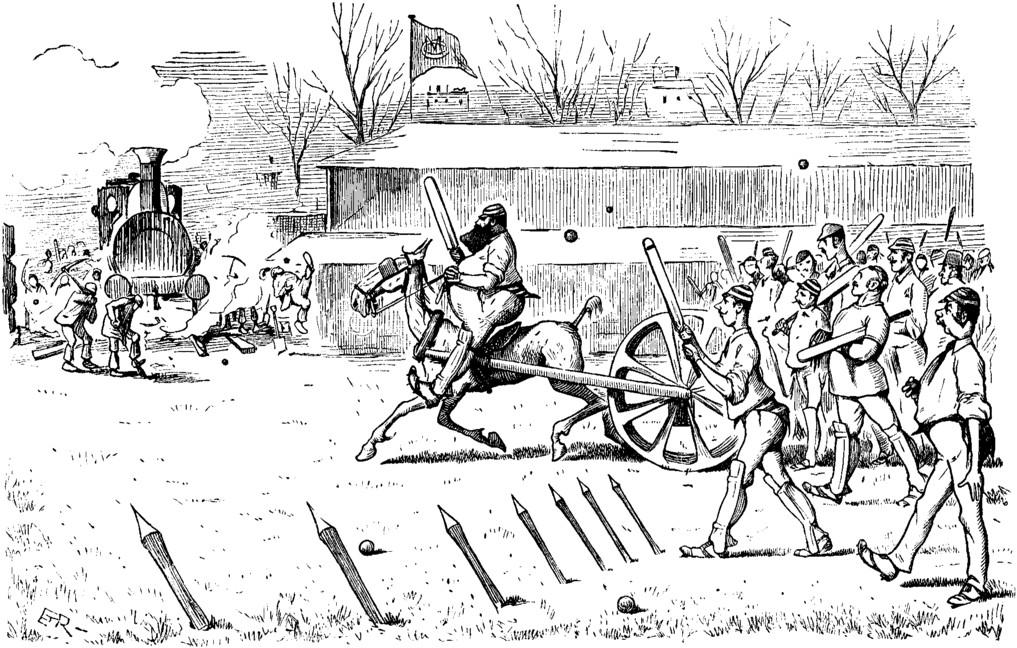
Due to this rather sophisticated opposition, the Great Central Railway Company were required to fork out huge sums of money in order to fight their corner and, by the time the line reached Marylebone, they were pretty hard up!
Consequently they did not have much left to spend on the station building, hence its diminutive size and unpretentious nature.
When the terminal was unveiled in 1899, so too was the Grand Central Hotel, which stands opposite the station and is linked via a canopied walkway.
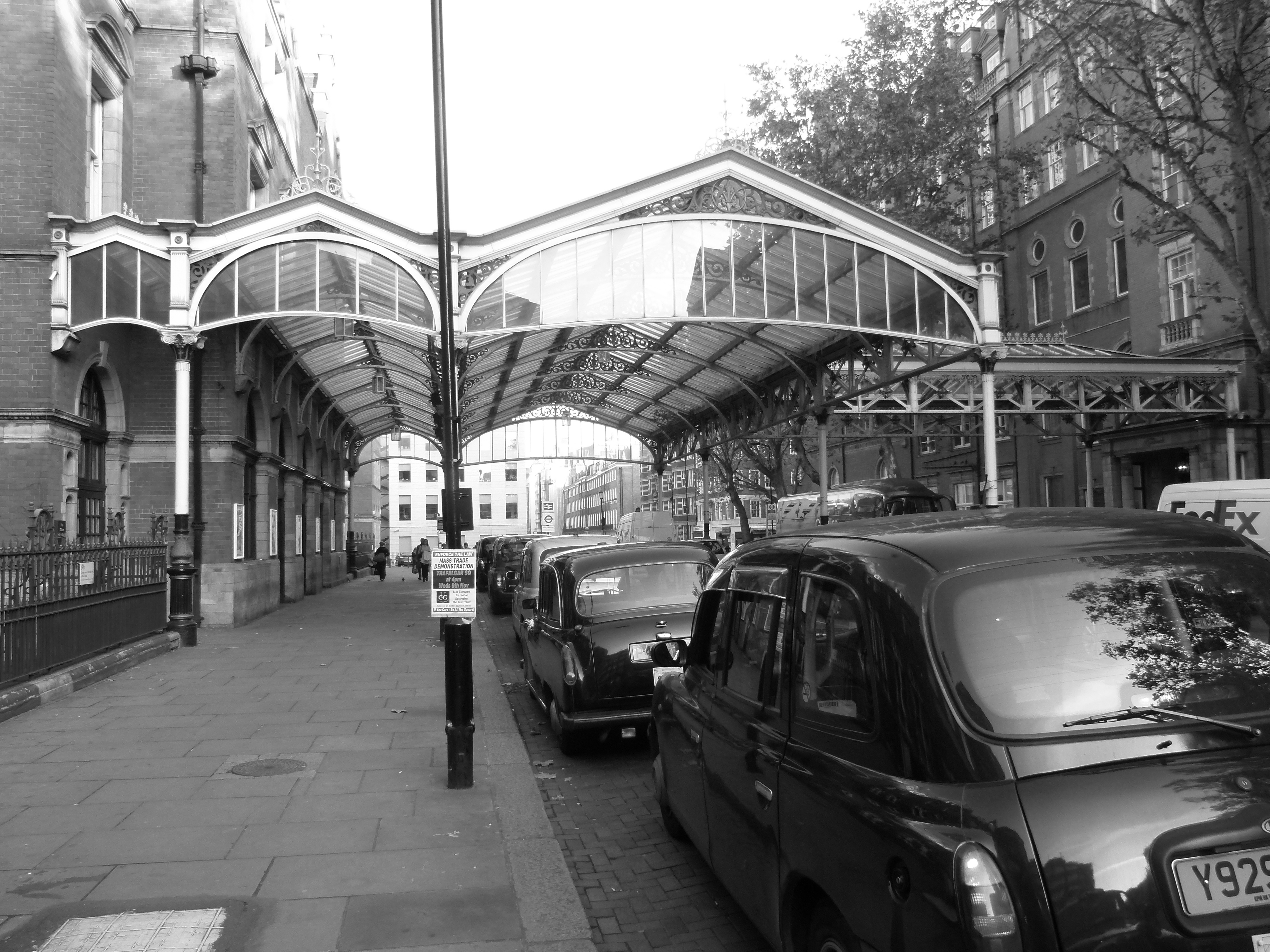
Today, the hotel is known as The Landmark and is one of the finest in London.
However, despite the five-star luxury, it is not without controversy.
In February 2010, a vicious murder took place in one of the hotel’s exclusive suites, when a Saudi Arabian prince beat his man-servant to death. After being tried at the Old Bailey, the prince was found guilty, and sentenced to a minimum 20 years in jail.
*
The line into Marylebone was the brainchild of Salford-born, Sir Edward William Watkin; an industrialist who devoted his life to the business of railways, both at home and abroad. As well as serving on the boards of several UK rail companies, he also become involved in the rail networks of Greece, Canada, the USA, India and the Belgian Congo.
By the time the Great Central Railway was being constructed, Sir Watkin was rather elderly. However, this proved no hindrance to his entrepreneurial spirit.
Initially, he’d envisioned the Great Central as a railway linking Sheffield, Leeds and Manchester to London… and then onto France. In other words, Watkins was one of the earliest advocates of a Channel Tunnel!
Perhaps inevitably, this overall plan never came to fruition, mainly due to economic and political reasons. Sir Watkin’s vision would have to wait 95 years, with London and Paris finally being joined by rail in 1994.
*
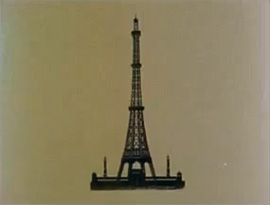
Sir Watkin wasn’t one to rest on his laurels and, whilst his Great Central Railway was being constructed, he had another project on the go- the ‘Watkin’s Tower’.
Also known as the ‘Wembley Tower’ and the ‘Metropolitan Tower’, Sir Watkin’s vision was inspired by the newly built Eiffel Tower (before this was decided upon, previous ideas mooted for the spectacle included a ‘Tower of Pisa’ inspired design, and a scale model of the Great Pyramid at Giza!)
Construction on the folly began in 1892, in the Wembley Park Area. It was hoped that the tower, which was a short train ride from Marylebone Station, would prove to be a popular attraction and sound revenue earner.

The planned design was grand to say the least.
The proposed eight-legged tower was earmarked to contain restaurants, theatres, ballrooms, exhibition rooms and a Turkish bath.
Standing at 1,200 feet tall, Watkin’s Tower would have been higher than the Parisian version (which is 894 feet high). In fact, Gustave Eiffel himself was invited by Sir Watkin to become the project’s chief engineer. The Frenchman graciously refused, stating that, if he accepted, the French people “would not think me so good a Frenchman as I hope I am!”
After Monsieur Eiffel’s refusal, the role was handed to Sir Benjamin Baker; the designer of Scotland’s magnificent Forth Railway Bridge.
Of course, if Watkin’s Tower had seen completion, it would now be a major London landmark, as famous as Buckingham Palace and St Paul’s Cathedral, and visible from all over the city.
Sadly, as its present day absence suggests, the construction was doomed to fail.
As well as the inevitable financial problems which seemed to plague Sir Watkin, the only section which was built experienced difficulties. Built on marshy ground, the foundations began to shift and, when the design was downgraded from eight legs to four legs, the extra pressure exerted led to subsidence.
The maximum height the Tower reached was a pithy 154 ft. (the Parisians could rest easy!) and, although people were initially drawn to view the construction, visitors soon began to dwindle. Watkins died in 1901 and, a year later, the tower was condemned and labelled unsafe.
The folly faded into obscurity, disappearing for good in 1923, when Wembley Stadium was built over the site. In 2000, when the new stadium was being prepared, the concrete foundations of Watkin’s Tower were discovered beneath the pitch…
The magnificent arch of the new Wembley can be seen all over London- so, next time you get a glimpse, why not take a moment to imagine a huge, Parisian-style tower in its place!
*
Although the area around Marylebone Station is pleasant and peaceful, the tranquillity was shattered in December 1975 with the ‘Siege of Balcombe Street.’
Balcombe Street is a quiet, residential road which runs parallel to the station. The siege which took place upon it was carried out by Hugh Doherty, Martin O’Connell, Edward Butler and Harry Duggan; members of an IRA cell who were carrying out a bombing campaign on the British mainland at the height of the Northern Ireland troubles.
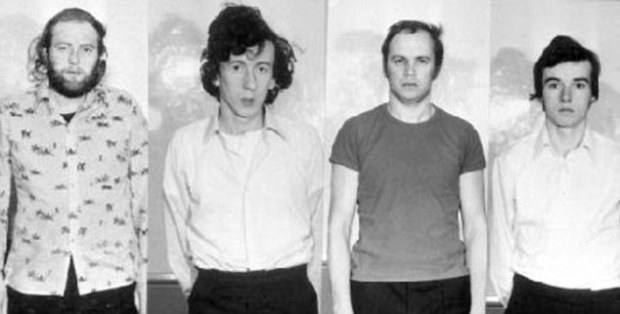
The Balcombe Street Gang
The event began in Mayfair; at Scotts Restaurant on Mount Street; an exclusive eatery which the IRA considered to be a ‘ruling class’ establishment, and therefore a plausible target.
The terrorists had already attacked the restaurant the previous month; hurling a bomb through the window- an act which resulted in one death and fifteen injuries.
On their second attack, the gang used a stolen Ford Cortina to carry out an audacious drive-by shooting; firing gunshots through the window of Scotts.
Plain clothes officers, who had anticipated the attack, were lying in wait. However, they had no means of transport, and had to flag down a taxi in order to give chase (quite possibly the most alarming case of ‘follow that car’ that a cabbie has ever been asked to do!)
The pursuit sped for several miles across the West End, before the IRA members abandoned their vehicle and fled on foot; firing at the police as they continued their chase.
The terrorists eventually found themselves on Balcombe Street; a stone’s throw from Marylebone Station, and they proceeded to force their way into a block of council flats.
The apartment in which they sought refuge was home to an elderly couple; John and Shelia Matthews. Apparently, the pair were engrossed in an episode of the popular 1970s detective drama, Kojack, at the time, and didn’t realise that the echoing gun shots were coming from the street outside- they thought the noise was emanating from their TV set!
John and Shelia were held prisoner in their own home for the next six days, whilst the IRA demanded a plane to fly them to Ireland. However, the siege began to take its toll and, along with a number of psychological tactics employed by the police (including deliberate misinformation being broadcast on the BBC), the IRA cell surrendered, releasing the hostages unharmed.
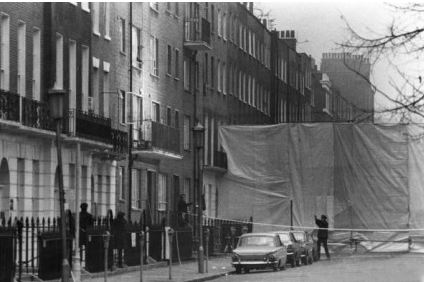
It transpired that O’Connell, Butler, Duggan and Doherty had been responsible for a large number of attacks across London; strikes which resulted in the deaths of 15 people.
The IRA gang also claimed responsibility for the notorious 1974 Guildford Pub Bombing, and instructed their lawyers to draw attention to the fact that a number of innocent people (i.e. ‘The Guildford Four’) were serving “massive sentences” for the bombing. Despite this, the Balcombe Street gang were never charged in relation to the Guildford blast, and the innocent parties remained in prison.
In 1977, the Balcombe Street Gang received hefty life sentences for their actions, but were released in 1999 as part of the Good Friday Agreement.
*
On a lighter note, Marylebone Station has been used many times over the years as a filming location for both film and television.
Episodes of Spooks, Gavin and Stacey and Dr Who have all utilised Marylebone as a set… as has the U.S, Tom Selleck vehicle, Magnum P.I!
In a 1985 episode of the detective show, Dempsey and Makepeace, Marylebone was used for a rather macabre scene, which reminds us how, in the old days of ‘slamdoor’ trains, with their compartments and corridors, sharing an isolated booth with a creepy looking stranger was always a hazard…
A similar sinister event occurs at Marylebone in the brooding, 1965 espionage movie, The Ipcress File (starring Rotherhithe’s very own Sir Michael Caine).
During the film’s opening scene, a government scientist is driven to Marylebone Station to board a train. However, once on board, he is kidnapped (in order to have his mind wiped), and his bodyguard killed.
But by far the most famous movie to be filmed at Marylebone Station is undoubtedly the 1964 Beatles comedy, A Hard Day’s Night.
In the film’s opening credits, the Fab Four are chased by fans along Boston Place (a road sandwiched between the station and Balcombe Street), before diving into Marylebone in an attempt to board a train.
With their ‘Beatle-Mania’ crazed fans in hot pursuit, the loveable scousers are forced to employ all manner of deceptions and dodging around Marylebone in order to make their train in time.
The famous scene, with its images of milk-vending machines and bee-hive haired waitresses is a wonderful depiction of the station as it appeared during the era of ‘Swinging London.’
Next time on Tales From the Terminals– Euston
Friday Night on Old Street
(Please note; although I have used stars to block them out, this post contains some offensive words)
As I often say, the vast majority of people I meet in my cab are polite, friendly and pose no hassle whatsoever.
However, every now and then, you will encounter the sort of job which made you wish you’d driven on by.
*
January is always quiet in the taxi trade; so much so that, in London Taxi driver slang, it is known as the ‘Kipper Season.’
The origins of this phrase are uncertain, but the two main theories are that it either refers to the amount of work being ‘flat’ (i.e. like a kipper), or that kippers, being a relatively cheap food, is all a cabbie can afford to feed himself with during the slow months.
Anyway, the kipper season is a pretty desperate time (made even worse at the moment of course due to the current, dire economic climate which is having a negative impact on many), and passengers are very difficult to come by.
During the slow season, it is not uncommon to drive around for well over an hour or two; cab empty and hair being torn out as you strive to locate a fare; your precious reserve of diesel being roasted in the process.
A way of conserving diesel of course is to find a taxi rank, but these are always chock-full. A few days ago, I saw the rank at Waterloo stretching right around the station; approximately ¼ of a mile.
Bearing this in mind, when you see a hand go out during the Kipper season, you don’t hesitate to snap the job up with little rational thought.
*
Such a job happened last Friday evening.
I was driving along Old Street and, although a piercing headache was throbbing away over my right temple, I was happy that I had at least covered my costs for the week, so was no longer working at a loss.
Suddenly, on the other side of the road, a hand went up, accompanied by a whistle. The hailer was a short, young man, smartly dressed. He twirled his hand around in the air; a signal often made when people require you to spin the cab around and head in the other direction.
Quickly checking my mirrors and blind spot, I put the wheel lock on and spun around accordingly. The young fellow came to the window and appeared polite enough.
“Cheers for that, mate.”
“No problem. Where do you want to go?”
His polite nature vanished suddenly as he ignored the question and watched his four mates jog over. Apparently, they’d been a few yards away, trying to hail a cab to no avail. In they piled; their laughter and rowdiness making the intercom strain, whistle and rattle.
The door slammed and they chatted and laughed amongst themselves. The taxi was pulled over, hazard lights blinking, but still in the way of traffic.
“Where are we going?” I ask again.
“Huh?”
They continue to jostle each other.
“Lads, I need a destination” I say a little more sharply.
“Oh… hang on…”
“Ha ha! Where…where are we going?” slurs one of the group.
Out comes the I-phone, his thumb scrolling the portable internet. A blended stench of beer fumes, tobacco breath and an array of various aftershaves wafts through the Perspex divide, the combination of which does my headache no favours.
“Erm… do you know Browns, mate?”
“Yep, no problem.”
The drunkest member pipes up again.
“That’s it! Yeah! Browns!” he slurs, “Browns– the strip joint! We wanna’ go and see the slags dancing! Those f****** slags, ha ha!”
The young gentleman was indeed right as to the nature of the club- Browns is one of London’s seedier entertainments; a famous and long-established lap-dancing club, spilling garish pink and blue neon flashes across the junction of Hackney Road and Shoreditch High Street.
Four of the passengers appear to be relatively sober and chat boisterously amongst themselves with good humour.
It is the scrawny, heavily inebriated young fellow sitting directly behind me who is the real pain in the proverbial.
I hear the various switches, located on the passenger door, being clicked and snapped as he strives to wind the window down.
“What is this?” he slurs… “Why can’t you get a proper f****** vehicle?!”
He then drunkenly turns towards his chuckling mates and makes further, charming comments about the women who dance in Browns and their various assets.
Now that the window is finally down, he starts to shout abuse at the public.
“Bus w******!” he laughs, actively encouraged by his pals.
“Bus w******!” he shouts again, passing a line of people waiting in the cold at a bus stop.
“Ha ha! You know that dontcha’?” he manages to ask the others, “that scene in the Inbetweeners!”
(For those unaware, The Inbetweeners is a popular Channel 4 comedy, about a group of teenage misfits at sixth-form college.
In one episode, they drive to London, seeking nightlife and excitement. Boastful that they have the privilege of a car, one of the group decides to shout out the insulting phrase, “bus w******” at a group of innocent bystanders waiting by a bus stop.
The joke backfires when their car is abruptly made to stop at a set of red-lights- and two, burly looking men from the bus-stop walk over to teach the group a lesson. It is funny of course, because it is fiction, and the joke is on the boys themselves; their pathetic immaturity and the consequences which follow.
Sadly, in this real-life re-enactment, no such humour is generated, although the drunk’s mates seem to find it funny and laugh uproariously).
Bringing his head back in from the open window, the little troublemaker surveys the road ahead.
“Where is this bloke going? For f**** sake? We want Browns.”
I’m not sure exactly what route he wants, but Old Street to Browns lap-dancing establishment is the simplest route I’ve had all week; straight all the way. In Knowledge speak it would be described thus: ‘forward Old Street, comply Old Street roundabout, leave by Old Street continued, forward Hackney Road… set down Browns on left.’ Simple!
I can only imagine that the drunk’s head is spinning, a symptom which has lead him to believe he is been driven around all over the place. Quite how someone can be so intoxicated at 8.15pm in the evening I do not know.
The drunk then brushes the seat on which he’s sitting and mutters loudly to himself… “it’s clean… clean in here… ha ha! Bet this ****’s never had anyone drunk in here before.”
Of course I’ve conveyed drunks before, but this is the first time I’ve ever had anyone complain about my cab being clean.
In cases such as this, many cabbies would feel obliged to pull over and politely ask the rowdy bunch to vacate the vehicle. However, we are very close to our destination and to ask such a thing would certainly create confrontation and a ‘scene’; things I don’t need with my already aching head. Best to just get them there and have done with it.
As we approach, I hear further banter; a line both clichéd and tiresome which is commonly employed by those out on the binge:
“You know we haven’t got any money, dontcha, cabbie?! Ha ha! Don’t expect us to be paying ya!”
Even as I pull up outside the club, the drunkest of the group is barking at me, “No! It’s on HACKNEY ROAD… Hackney Road…. We want Hackney Road!”
One of his friends tells him that we are in fact here, and to shut up. The drunk waves off his scolder and fumbles for his wallet. The digital meter, with its little, glowing red numbers, states that the total fare is £5.40.
“It’s ok, I’ve got this…”
His mates pile out, leaving the heavily drunk fellow alone in the back.
As he tries to stand, he tumbles around, rather like a toddler in a playpen. Gripping a yellow handle by the door, he steadies himself and stuffs a £20 onto the pay-tray. A little way up the kerb, a young street-sweeper has paused to watch the spectacle, smiling and shaking his head in disbelief.
“There you go, mate,” he burps.
I hand him back a £10 note and start to count out the remaining change- but he staggers off after his pals, arms held aloft like a gibbon, before I have time to hand it over. I’ll assume that’s a tip then!
Driving off, I feel immense pity for the lap-dancing girls who have to put up with such characters in even closer quarters… then again, I’m certain the club’s bouncers, decked out in their long, black Crombie coats and smart-bow ties, will have plenty to get their teeth into later on…







 View from the Mirror