Euston Films’ Greatest Hits… Cult TV From the Streets of 1970s and 80s London
Towards West London, on Hammersmith Road as you approach the traffic-noose that is the Hammersmith one-way Gyratory, there is a rather grand old building called Colet Court.
Fashioned from traditional, red brick, Colet Court was originally part of St Paul’s Boy’s school.

Colet Court, Hammersmith Road
After the school moved out in 1968 (to larger premises in nearby Barnes), Colet Court quickly found itself adapting to a new and unexpected purpose- it became a television production base.
The company who moved in were Euston Films; a newly established team who had been set up to create programmes for Thames Television; a subsidiary of the ITV network.
The logos for Thames Television & Euston Films
Between 1971 and 1994, Euston Films were responsible for many popular, critically acclaimed television series and films.
Shows which were made by Euston are very distinctive; their key feature being that they were filmed entirely on location around London. The capital was their stage.
Because of this, I have a personal fondness for work produced by Euston Films. It is great fun to watch these old shows and see how many streets and landmarks one can recognise… and, in many cases, take note of how much they’ve changed. In my opinion, they are also important records of recent social history.
Here is a selection of some of the most notable pieces created by Euston Films….
The Sweeney (1975-1978)
The Sweeney is by far one of the most famous shows created by Euston.
A ground-breaking police drama, The Sweeney takes its name from the Cockney rhyming slang phrase, “Sweeney Todd”- which translates as Flying Squad; the Flying Squad being a wing of London’s Metropolitan police force who deal with serious violent crimes such as armed robbery.
http://www.youtube.com/watch?v=iHkdVHqrkWw
The Sweeney’s two central characterswere Jack Regan (played by John Thaw) and George Carter (Dennis Waterman) who tore around London in their bronze, Mark I Ford Granada.
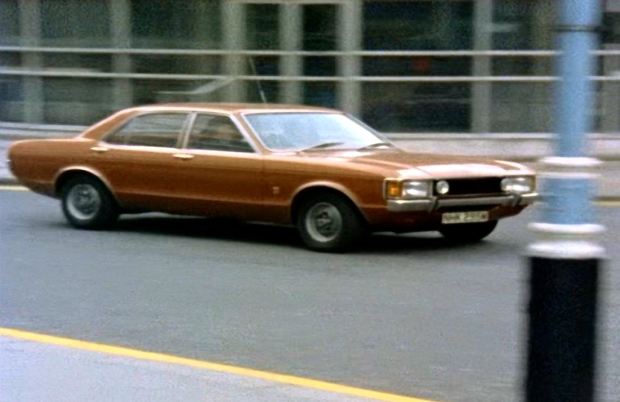
Regan and Carter’s famous Ford Granada, speeding into New Scotland Yard
Both chaps are very much of their time; hard drinkers and heavy smokers, who are quite content to administer their criminal foe with a few well-placed slaps if it gets the job done (especially if they’re in a rush to get to the canteen for their dinner!)
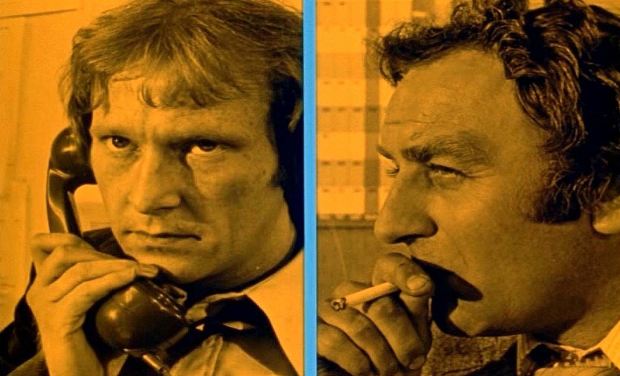
George Carter and Jack Regan
When it was first shown, The Sweeney was revolutionary, introducing a bold new realism and levels of violence which had previously been unknown in more vintage cop shows such as Z –Cars and Dixon of Dock Green.
It also demonstrated that life is full of grey areas. The ‘good guys’ certainly had their flaws- and didn’t always win the day.
So popular was the series, that two big-screen adaptations were made in 1977 and 1978 respectively.
Filming of The Sweeney (an episode of which generally took a mere 10 days to complete) took place all over London and, at the Colet Court studio in Hammersmith, a set representing the Flying Squad offices was constructed in what used to be the old school’s gymnasium.
In later series, episodes of The Sweeney featured this sequence as part of the closing credits, filmed around London’s West End at a time when the area was at its seediest.
http://www.youtube.com/watch?v=vrb3djQbz20
Danger UXB (1979)
Danger UXB was a period drama, set during WWII and the Blitz on London.
‘UXB’ stands for unexploded bomb, and the series followed the terrifying work of a bomb disposal team; men from the army’s Royal Engineers, who would often have to rely on luck, hunches and the barest of information when disarming unexploded Nazi bombs.
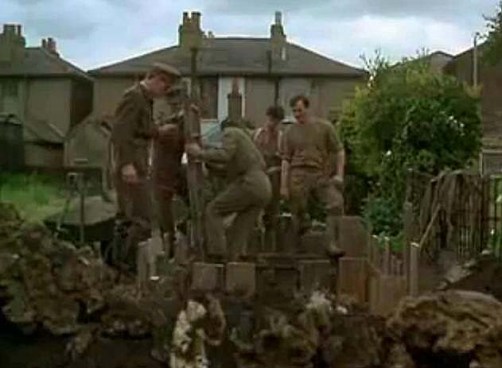
Disarming an unexploded bomb in a South London garden…
13 episodes of Danger UXB were made, with much of the filming taking place around South West London; namely Tooting, Streatham and Clapham.
Out (1978)
Out was a brooding, six part serial about Frank Ross, an ex-bank robber who has just been released from prison after an eight year stretch.
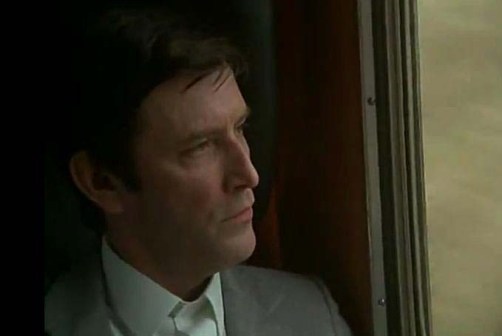
Frank Ross… fresh out of prison and on a train to London’s Paddington Station
Returning home to his native London, he discovers that the lives of his wife and son have sunken to a desperate low during his time away.
Consumed by hate and an urgent desire for revenge, Frank sets out to track down the informer who had him sent down in the first place…
The following is a short clip from the first episode, which sees Frank arrive home, fresh out of jail.
He has travelled by Taxi from Paddington Station to Tulse Hill (just south of Brixton) – a fare which, in 1978, apparently cost the princely sum of £4!
Luckily, as the Taxi driver demonstrates, we cabbies do have a heart!
http://www.youtube.com/watch?v=t_EEZEF0Mak
Fox (1980)
Taking a year to make, Fox was an epic drama about a large, Clapham-based family. So complex were the themes and structure of the story, that it has sometimes been likened to the Godfather set of films.
The head of the Fox clan is Billy Fox (played by noted actor, Peter Vaughn), a former Covent Garden market porter and staunch community figure, who has held his family together throughout the years.
However, when Billy dies, the cracks and tension in the family begin to show…
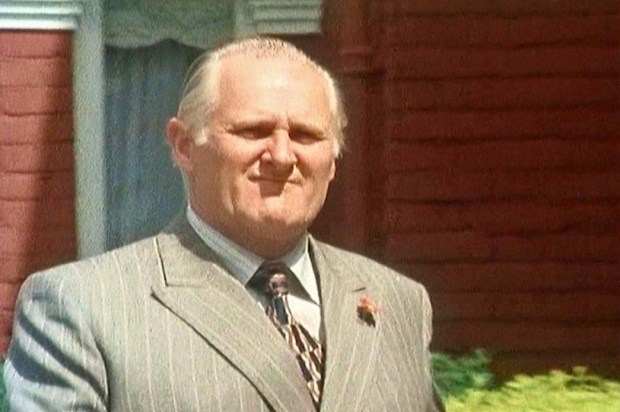
Billy Fox, marching around the streets of Clapham
Fox was notable for featuring the actors Ray Winstone and Bernard Hill (who, in 1982, would go onto portray the infamous ‘Yosser Hughes’ in Alan Bleasdale’s brilliant, Liverpool-based drama, Boys From the Blackstuff).
Quatermass (1979)
Quatermass (taking its name from the programme’s main protagonist, Professor Bernard Quatermass), is a science-fiction franchise, first conceived by the BBC in the 1950s.
In late 1979, the series was taken on by Thames Television, and Euston Films were given the task of producing the expensive show.
ITV’s Quatermass was set in the final days of the 20th century, a horrifying near-future in which civilisation seemed poised on the abyss.
In the first episode, Professor Quatermass travels to London and witnesses first-hand how far the capital has plunged into a dystopian nightmare.
One example of this is the taxi which the Professor arrives in.
Seen in the serial’s opening sequence, and as the screenshot below illustrates, the Black Cab is heavily fortified, Mad Max style, in order to guard against marauding gangs!
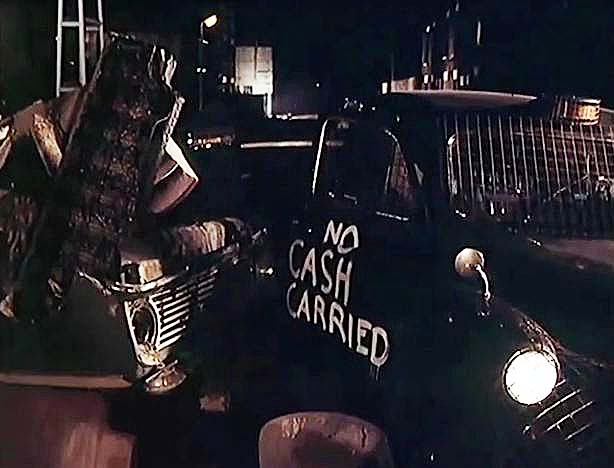
Cabbing in the dystopian future…
To add to humankind’s woes, a joint effort between the USA and USSR to link up two spacecraft, which Professor Quatermass has been invited to discuss on television, is destroyed by a mysterious alien force.
Despite this aggression, some people- especially those of the younger generation- believe the aliens are here to provide a gateway to a better life, and so gather at ancient, Neolithic sites where they believe the mysterious visitors will be beam them up. However, when the aliens cast their light over these groups, the unfortunate victims are vaporised.
In one episode, a crowd of thousands gather at a rather decrepit looking Wembley Stadium (the site being chosen, we are told, because, in years gone by, football was followed by some like a religion; the pitch itself being nicknamed the ‘hallowed turf’!)
Consequently, many thousands who are naïve enough to put their trust in the aliens, are killed by a powerful death-ray, which illuminates and consumes the stricken stadium…
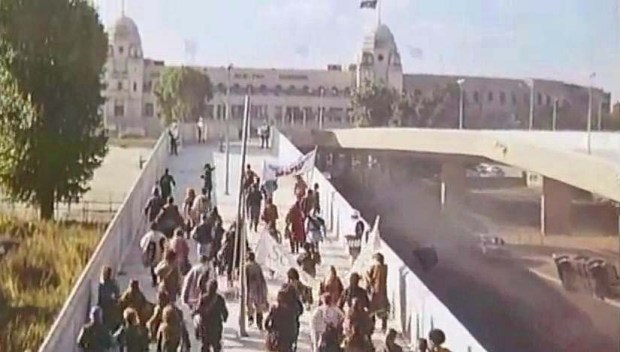
On the Wembley Way…
The Nation’s Health (1983)
The Nation’s Health was a series of four plays, made for Channel 4 which, at the time, had only been broadcasting for one year and was keen to prove itself as a provider of controversial, challenging output.
The drama, which is told through the eyes of Jessie Marvill, a junior doctor, aimed to reveal the true state of the NHS at the time which, unsurprisingly, was pretty grim.
Frustrated by increasing levels of bureaucracy and a general lack of humanity, Jessie, becomes rather jaded. Each episode of The Nation’s Health was followed by a live studio debate.
http://www.youtube.com/watch?v=8DCY0NqbSm4
Widows (1983-1985)
Widows, penned by prolific crime writer, Lynda La Plante, was a gritty series, putting a feminine spin on a genre usually regarded as being the domain of the masculine.
The widows in question were married to a gang of armed robbers; a ruthless bunch who we see in the drama’s prologue as they attempt to pull off an audacious hijack in the heart of London.
This particularly striking scene was filmed around London’s Southbank; not far from the Royal Festival Hall and National Theatre.
After passing the Tennison Way, bull-ring roundabout (where the huge IMAX cinema now stands),the subsequent chase then heads over Waterloo Bridge, reaching its explosive finale in the Strand Underpass tunnel, deep beneath Aldwych…
http://www.youtube.com/watch?v=S9J0NImR94g
Following the fatal accident which took the lives of their spouses, the three widows- Dolly, Shirley and Linda decide to adopt their late husbands’ criminal careers…
Minder (1979-1994)
Along with The Sweeney, Minder was the most famous series to emerge from Euston Films. It was also their most profitable and longest-running franchise.
The huge success of Minder owed much to the excellent casting of veteran, comic-actor, George Cole and the younger, Dennis Waterman, who was already popular with audiences thanks to his recent stint in The Sweeney.
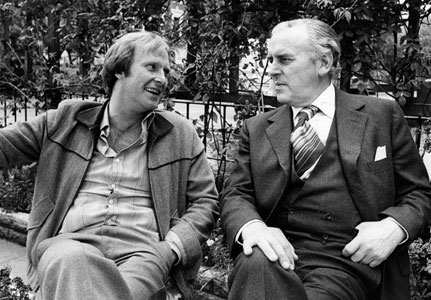
Publicity photo of Terry and Arthur
The premise of the series was simple. Terry McCann (Dennis Waterman) was a small-time crook and ex-boxer who has just finished a stretch in Wormwood Scrubs prison. Despite his criminal past, Terry is an affable character who always had the viewers on his side.
Arthur Daley (George Cole) is a roguish personality; a second-hand car salesman and general wheeler dealer, whose shady business dealings often land him in all sorts of bother.
In need of work after coming out of jail, Terry has agreed to be Arthur’s bodyguard; a ‘Minder’, thus setting the scene for all sorts of scrapes and criminal run-ins.
A secret to the success of Minder was that it mixed many elements; drama, pathos, comedy and, of course the Euston Film staple of gritty, London locations.
It also featured the immensely catchy tune; “I Could Be So Good For You” in its opening and closing credits.
Written by Dennis Waterman and his then wife, Patricia, the song proved so popular that it reached number 3 in the charts in November 1980.
The London locations used throughout Minder’s entire run are far too numerous to detail here. However, an idea of how much the city featured can be garnered from the famous end credits which can be viewed below.
Here is a guide to the locations featured in Minder’s end-credits sequence:
1) The cabin on Arthur Daley’s second-hand car yard, which was located on Blythe Road, in Shepherds Bush. Today, this plot has been built over.
2) Hammersmith Bridge
3) The Royal Albert Hall, Kensington
4) The Blue Anchor Pub, Lower Mall, Chiswick. This pub has also been used in the more recent BBC detective show, ‘New Tricks‘- also starring Dennis Waterman (and yep, he sings the theme tune for that too!) The Blue Anchor is still going strong today… why not pop along for a pint? Their website can be found here.
5) The wonky lamppost was on Newman Passage, off of Newman Street (just north of Oxford Street). Sadly, this quirky, little London landmark has now been replaced by a boring, straight version!
6) The ‘Winchester Club’; Arthur and Terry’s favourite drinking den. This was on Adelaide Road, just behind Chalk Farm tube station. Today, the location is pretty much unrecognisable.
7) Leicester Square
8) The final picture was taken outside Fulham Police Station (Heckford Place, near Fulham Broadway).
The Knowledge (1979)
Last but not least, we have The Knowledge, a one-off play written by the late, great Jack Rosenthal.
Broadcast during the Christmas of December 1979, the play follows a group of four men who have decided to undertake the gruelling process known as ‘The Knowledge’; the intense training course which you must undertake and pass in order to drive a London Black Taxi.
The process is well explained in the candidates’ ‘acceptance interview’, in which the frightful Mr Burgess (wonderfully played by Nigel Hawthorne) lays down the rules:
http://www.youtube.com/watch?v=XNOUOtaKjqY
Having of course undergone the The Knowledge myself, I can confirm that Jack Rosenthal’s treatment of this process is very true to life indeed!
Filming of the scenes featured on this page took place at the Public Carriage Office; a 1960s building on Penton Street in Islington which, until recently, was the HQ for the Knowledge. Just thinking about Penton Street is enough to stir up the fear in my stomach!
Today, the process is handled at the modern ‘Palestra’ building, opposite Southwark tube station.
Mr Burgess was based on an actual examiner who, in real life, was in fact a Scotsman who took great delight in laying on his accent in order to bamboozle the poor students! I have spoken to a number of older cabbies, who encountered this individual during their training, and they all remember him with great dread!
Everything to do with learning The Knowledge is included in the play; the frustration, the nagging doubts, the suspension of one’s social life and of course, the terror of ‘appearances’- the regular verbal examinations which test what students have learnt so far (as well as subliminally assessing your personality and ability to deal with tricky members of the public).
Personally, I had to undergo 27 of these ordeals before I was considered good enough to drive a cab…
http://www.youtube.com/watch?v=OpEbtYmnjtM
Because it is so lovingly and accurately portrayed, The Knowledge has a special place in the hearts of just about every London Cabbie, and also of those who are training to be.
*
If you would like to know more about my own personal experiences of learning The Knowledge and training to be a London Cabbie, please follow the links in the ‘On the Rank‘ side bar, or alternatively, click here.
Cabbie’s Curios: London’s Smallest Statue
Not far from the northern end of London Bridge, in the capital’s historic centre, you’ll find a short street called ‘Philpot Lane.’
Named after Sir John Philpot (Lord Mayor of London between 1378-1379), Philpot Lane links Eastcheap and Fenchurch Street.
It is also home to London’s tiniest public statue; ‘The Two Mice Eating Cheese.’
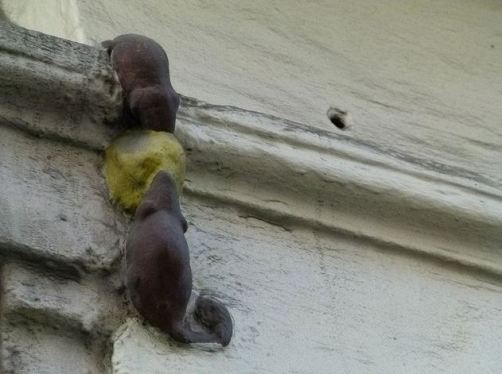
Two Mice Eating Cheese, Philpot Lane
These two small fellows can be found half-way up a building which sits on the south-eastern corner of Philpot Lane, just by the junction with Eastcheap.
Details of who created these critters, and when they were placed here are pretty much non-existent. However, one thing is certain- these two wee mice are a memorial to two builders who died nearby…
The builders in question were working on ‘The Monument’; a towering column which stands on the junction of Fish Street Hill and Monument Street, about 400 ft. away from Philpot Lane.

Built between 1671-77, the Monument was designed to commemorate the Great Fire of London, which had destroyed a vast part of the City a few years before.
Its architect was one of London’s finest; the incredible Sir Christopher Wren. Testament to Sir Wren’s genius, the Monument, to this day, remains the tallest, isolated stone column in the world.
*
At some point during the Monument’s construction, the two builders mentioned earlier sat down to enjoy their packed-lunch of bread and cheese.
Clearly having a head for heights, the two men- who were sound friends by all accounts- were content to sit at their workplace; perched on a high scaffold (in those days of course, health and safety was unheard of. Workers on the Monument weren’t even required to wear hard-hats and hi-vis jackets!)
However, something was amiss… one of the men’s sarnies had been nibbled away to almost nothing!
For some reason, the victim of this food theft immediately blamed his mate sitting beside him and a fight broke out- not wise when you’re poised so high up.
Trading punches, the unfortunate pair lost their footing and plunged to the ground, both being killed instantly.
It was only later, after similar disappearances of bread and cheese, that the real culprits were discovered:
An infestation of tiny mice.
*
So small is the sculpture of Mice Eating Cheese, that it can be quite a headache to find! If you’re interested in seeing it for yourself, I’ve circled it in the image below, courtesy of ‘Google Maps.’

The Mice Eating Cheese memorial… where to find it!
Tales From the Terminals: King’s Cross (Part 1, History & Film)
In the previous instalment of Tales From the Terminals, we had a look around St Pancras International Station.
We now move onto its next door neighbour; King’s Cross.

Overlooking the roar of Euston Road, King’s Cross is located in the midst of one of London’s busiest areas.
However, before the tentacles of the city crept this far, the area we now know as King’s Cross was in fact a pastoral locale known by the completely different name of ‘Battle Bridge.’

‘Battle Bridge’- King’s Cross before the railways arrived….
Fights, Duels and Spas
One of the most popular legends connected to the area is that Queen Boudicca, Celtic Queen of the Iceni and leader of a blood-thirsty revolt against the occupying Roman forces around AD60, had her final stand here; a ferocious battle in which it is believed some 80,000 Britons were slaughtered.

Boudicca, Queen of the Iceni
Finally defeated and slain here by her Roman foe, it is said that the warrior-queen’s body is buried somewhere deep beneath platform 9 or 10 of King’s Cross Station. Sadly, no evidence exists to back up this age-old rumour!
*
Some say that the name Battle Bridge was connected to Boudicca’s grisly skirmish with the Romans.
Although this has never been proven, one thing is certain; a bridge did exist here; a short, rickety crossing which once spanned the now submerged River Fleet.
For centuries, Battle Bridge remained a wild, rural area whose isolated nature made it a popular spot for chaps wishing to duel and highwaymen seeking to rob.

Two gentlemen prepare for a duel…
One of the highwaymen who stalked this patch was John Everett; a notorious character who, in the 18th century, carried out robberies all over London and the surrounding countryside.
In 1731, Everett held up a stagecoach at Battle Bridge; a crime which led to his capture and eventual execution.

Contemporary etching of John Everett, pictured robbing a stage-coach at Hounslow, West London
By the 18th century, the area was starting to become a popular destination thanks to the existence of a spa (a by-product of the Fleet River).
Known as ‘St Chad’s Well’, the sparkling clean watering hole attracted hundreds of people every day, all of whom were keen to come here and sip beautiful, fresh water, uncontaminated by the filth and stench of the city.
Today, this well is remembered in the area by the small roads, ‘St Chad’s Place’ and ‘St Chad’s Street.’
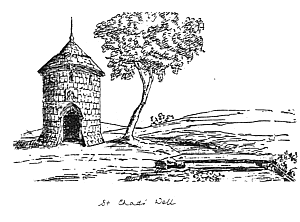
St Chad’s Well
Battle Bridge’s association with health continued when a hospital for smallpox sufferers was established in 1746. It stood for exactly 100 years, closing in 1846. King’s Cross Station itself now stands upon the site.

The Smallpox Hospital which stood upon the site now occupied by King’s Cross Station
A Change of Name
Battle Bridge changed its name to King’s Cross in 1836 when a statue of King George IV (who reigned from 1820 to 1830) was placed here.
Perched on top of an 18ft high column, this monument stood on the triangle which is now formed by Pentonville, Gray’s Inn and Euston Road

The early 19th century monument from which King’s Cross takes its name
With his life and reign characterized by unreliability, selfishness, greed, weak leadership and chronic overspending on pet projects, George IV had never been a popular character… and Londoners still bore a grudge.

George IV; a.k.a ‘The Prince Regent’, the chap whom we have to thank for King’s Cross (portrait by Sir Thomas Lawrence, 1820)
The oversized memorial to the pompous king attracted so much negativity that it was removed a few years later in 1842.
*
The Station Arrives
The birth of King’s Cross as we know it today occurred between 1851-1852, when the Great Northern Railway moved in and constructed their London terminal in the vicinity.
The station’s architect was Lewis Cubitt; brother of Thomas Cubitt (another noted Victorian architect) and William Cubitt who went onto become Lord Mayor of London.

The three Cubitt brothers (from left to right; Lewis, Thomas and William)
Straightforward, practical and forged from London Brick, King’s Cross received much praise when it first opened.
At first (as with Euston), there were only two platforms; one for departures and one for arrivals. However, it did not take long for the terminal to expand; its popularity quickly necessitating the spread of further platforms.
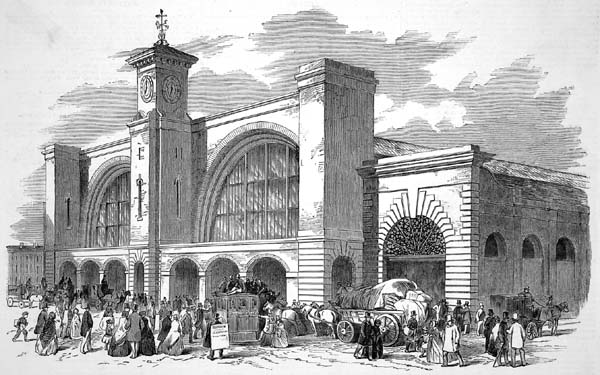
An etching of King’s Cross from 1852
The fine clock, which takes pride of place in the purpose built tower, was built by Dent of London; the same company who were responsible for Big Ben’s timepieces and the two clocks which have graced St Pancras.
Two years after the station opened, Cubitt built the Great Northern Hotel just behind the terminal; the first purpose-built hotel in London.

The Great Northern Hotel; London’s first purpose built hotel
The Great Northern finally closed its doors in 2001 and now stands derelict… although there are currently plans to renovate the building and turn it into a ‘boutique’ hotel.
*
I’ll tak’ the low Road
One of the most famous trains to operate in and out of King’s Cross is of course, The Flying Scotsman.
Still running today, this early morning service provides an important link between London and Edinburgh.
The service first began in 1862, hauled by a class of engine known as the Stirling.
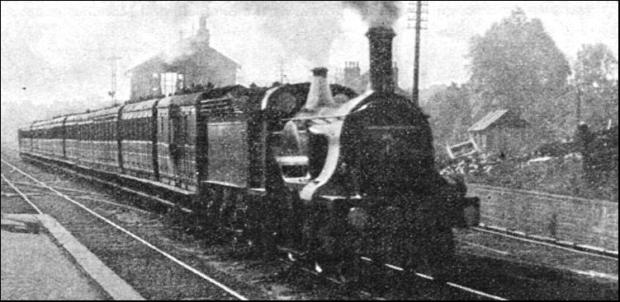
A ‘Stirling’ class engine; the first of the Flying Scotsmen
In their day, the Stirlings were amongst the fastest trains in the world. However, the journey between the two capitals still took some 10 ½ hours!
With the London to Edinburgh route proving so lucrative, railway operators were constantly striving to make the trip as fast as possible.
As a number of steam engines, each faster and more powerful than the last, were developed, the journey time between the two capitals declined steadily.
In 1924, the record stood at 8 ¼ hours and by 1938, it had dropped even further to 7 hours and 20 minutes.
By far the most famous of the Flying Scotsman to serve King’s Cross was the LNER Pacific class; a much celebrated engine which, when it was brand-spanking new, had been paraded before the public at the 1924 British Empire Exhibition, held beside Wembley Stadium.
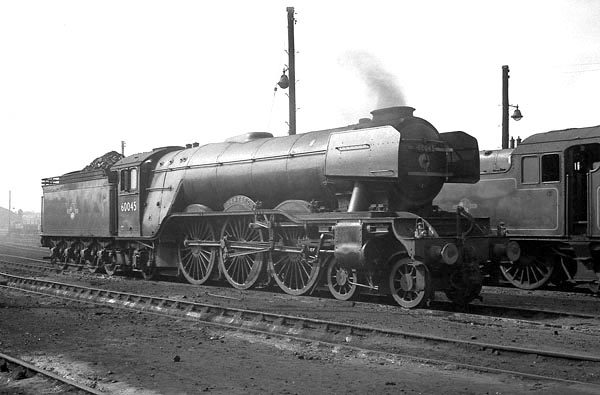
An ‘A3 Pacific’; the most famous class of the Flying Scotsmen
This wonderful machine enjoyed a long career; remaining in service until 1963.
When thundering between the two capital cities, this powerful steam locomotive was capable of reaching speeds of up to 100mph.
Needless to say the engine’s boiler was ravenous; each journey between London and Edinburgh required an amazing 9 tonnes of coal to be continuously fed into the billowing furnace. The firemen who shovelled such colossal amounts were tough fellows indeed… you probably wouldn’t have wanted to challenge them to an arm wrestle!
*
As steam was phased out in the 1960s, the Flying Scotsman service was handed over to the even more powerful British Rail Deltic locomotives which, with a nod to their purpose, were christened with names such as The Royal Scots Grey, The Royal Highland Fusilier and The Gordon Highlander.

A Deltic waiting to depart King’s Cross, November 1978. (Many thanks to David Hayes for this great picture; please click the image to view more of David’s work)
Designed for service between London and Edinburgh, these mighty machines were the most powerful diesels to have ever operated on the UK rail network, remaining in service until the early 1980s.
A journey on-board a Deltic hauled train can be seen in the opening credits to the cult 1971 film, Get Carter.
Travelling from King’s Cross to Newcastle-Upon-Tyne, a London-based gangster (played by Sir Michael Caine) is heading north on a quest to learn about- and ultimately avenge- his brother’s death.
The crew filmed the journey on board the actual train… and the clip is included below, simply because it is just so darn cool (especially when the music kicks in!)
Today, the Flying Scotsman lives on; now operated by East Coast Mainline. The journey time between London and Edinburgh now stands at approximately 4 ½ hours; quite an improvement on the early days!
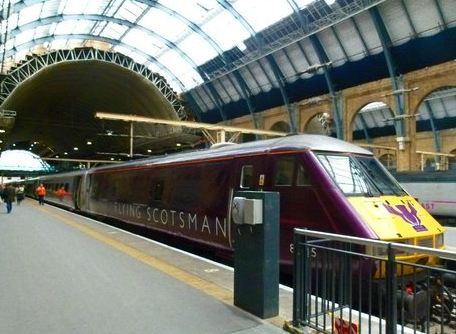
The current ‘Flying Scotsman’
Kings Cross as a Film Set
Over the years, King’s Cross has proven to be a popular location with film makers and has appeared on celluloid many times. Some of the most notable movies in which King’s Cross has played a starring role include:
The Ladykillers
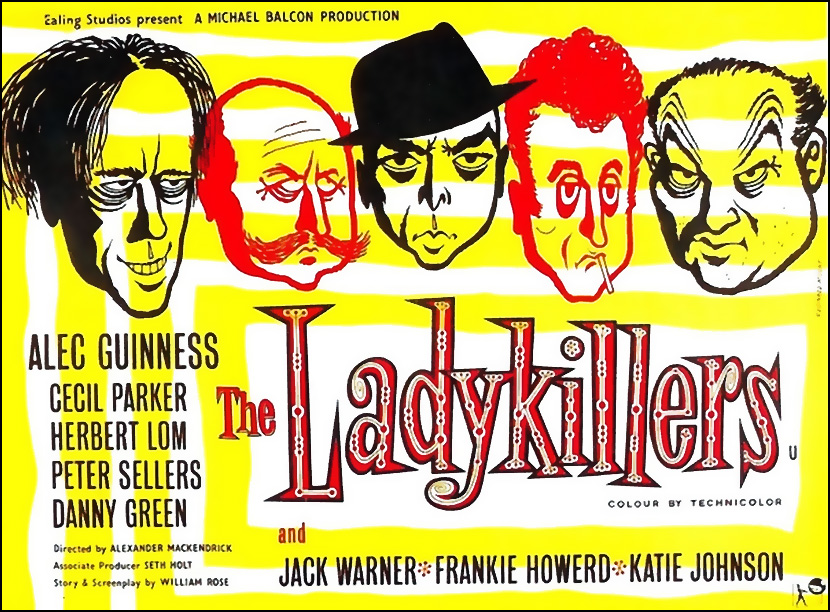
Released in 1955, this much-loved Ealing Comedy is truly ingrained within the King’s Cross area.
The plot focuses on a motely gang of armed robbers, who are planning to hold up and rob a security van as it stands within the station itself.

Publicity snap for ‘The Ladykillers’
Posing as travelling musicians in search of a rehearsal space, the crooks- led by a ‘Professor’ Marcus (played by Sir Alec Guinness)- rent out a room in a local house to act as a base for their heist.
The house, which is perched over a railway tunnel leading into King’s Cross Station, belongs to Mrs Wilberforce, a sweet, elderly and supposedly unassuming widow who susses out her the true intentions of her guests, resulting in havoc and disaster amongst the gang!
Filming took place all around the area; including York Way, Argyle Street and St Pancras Road; streets with traffic levels that look gloriously quiet when compared to today! An excellent site listing all of the locations used, along with plenty of pictures, can be found here:
www.martinunderwood.f9.co.uk/Ladykillers/
Mona Lisa
The area around King’s Cross had never been prosperous but, by the 1980s, it had become one of London’s most notorious locales; a seedy hotbed of crime, drugs and prostitution.
The atmosphere of the area around this time was chillingly captured in the 1986 film, Mona Lisa.

Made by Hand Made Films (a company which had been founded by ex-Beatle, George Harrison), Mona Lisa tells the tale of George (Bob Hoskins), an ex-con who has just completed a stretch in prison.
Looking for legitimate work, he ends up securing a job as a chauffer for Simone (Cathy Tyson); a high-class call girl who learnt the tough rules of her trade on the ‘meat rack’; the red light district centred around the depraved streets of King’s Cross.

‘Mona Lisa’ publicity shot
As the story progresses, we learn that Simone has become obsessed with finding a girl called Cathy; a teenage prostitute whom she once knew. Urging George to help her, the pair plough deep into King’s Cross’s sordid underbelly…
When portraying the red light district, certain scenes of Mona Lisa were in fact shot on Pindar Street behind Liverpool Street station, probably because King’s Cross at the time was simply too intense to carry out location filming.
The Harry Potter Series
In more recent years, King’s Cross has famously featured in the Harry Potter franchise.
Its first role was in the very first instalment; Harry Potter and the Philosopher’s Stone.
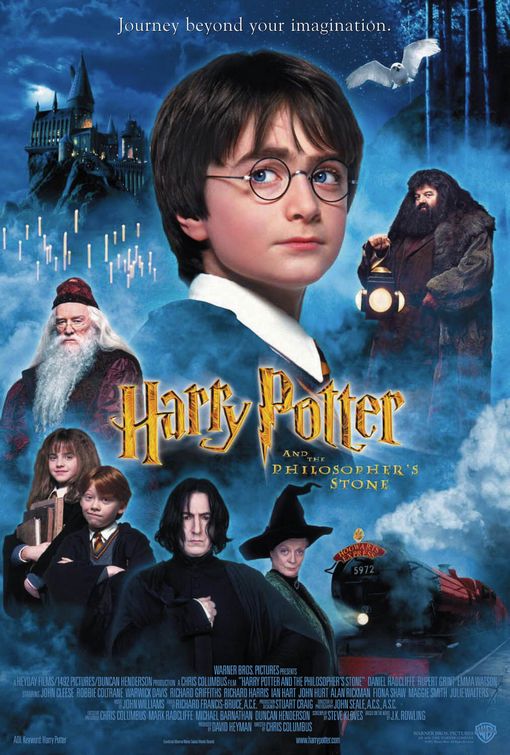
Upon discovering that he’s a wizard and is to therefore attend Hogwarts School of Witchcraft and Wizardry, Harry goes to King’s Cross station to catch the Hogwarts Express; the mystical train, hauled by a beautiful, red steam engine, which conveys pupils to the boarding school (apparently located somewhere deep within the Scottish Highlands).
Once at the station, Harry- not yet used to the magical way of doing things- is unable to find ‘Platform 9 ¾’, the departure point for his journey.
With help from the Weasely family, Harry soon realises that he has to run through what appears to be a brick wall!
The famous scene was actually filmed on a wall between platforms 4-5. Today, King’s Cross Station has paid homage to the famous scene by embedding a luggage trolley into the brickwork!

Platform 9 and 3/4…
The station then appeared at the beginning of the next instalment; The Chamber of Secrets.

In this episode, Harry and his best friend, Ron miss the Hogwarts Express, and are forced to improvise by commandeering an old Ford Anglia… which flies! As they take off, the outside of King’s Cross is cheekily portrayed as being St Pancras Station; the gothic masterpiece which stands next door!
*
In the 2007 instalment, The Oder of the Phoenix, the tone becomes far darker when Harry, waiting to depart King’s Cross, is overcome by a nightmare-like sequence in which he spots his arch enemy, Voldermort, standing like an apparition on the platform.

Harry Potter’s arch enemy… Voldermort appears at King’s Cross
Shortly after his hallucination, Harry is met by his godfather, Sirius Black (played Gary Oldman; the greatest actor to come out of south-east London’s New Cross). Before Harry’s departure, the pair meet in a King’s Cross waiting room, where Sirius departs some words of wisdom.
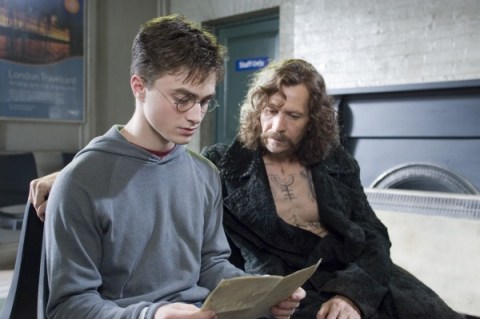
Harry Potter and Sirius Black in a King’s Cross waiting room
The final chapter in the Harry Potter series is the two-part, Deathly Hallows.
At the very end of the last film, King’s Cross station (the outside once again craftily portrayed as St Pancras!) appears in the very last scene.
Set years later, Harry is now all grown up, and we see him escorting his own children to Platform 9 ¾ as they prepare for wizzarding school. The appearance of King’s Cross in this epilogue therefore makes it the very last location and scene to feature in the series.

The final scene in the Harry Potter series; filmed at King’s Cross





 View from the Mirror