Baker Street (Part One) Tubes, Beatles & Lost Property
There’s no doubt about it… Baker Street, which stretches from the south-western corner of Regent’s Park, down to Portman Square (just north of Oxford Street), is one of London’s most famous roads.

View of Baker Street, looking north
Baker Street is Born
Descriptive as it may sound, the name of the road has nothing to do with buns, cakes or loaves of bread… the name actually refers to William Baker, an entrepreneurial builder who originally began laying out the street in 1755.
The strip of land upon which William built was (and still is) part of the ‘Portman Estate’; a substantial plot which was first acquired by Sir William Portman of Somerset; a 16th century Lord Chief of Justice who died in 1557.
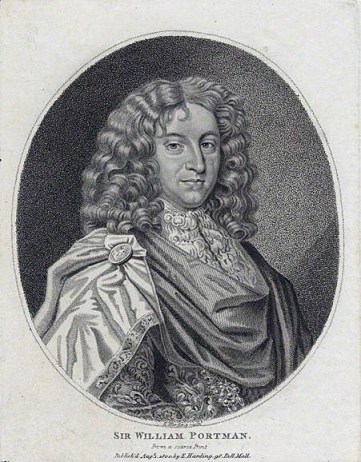
Sir William Portman
In those long-gone days, the area would have been open fields, and it is believed Sir Portman kept goats here to provide milk for his poorly wife. He also used the land as a resting point to facilitate the transfer of cattle between London’s markets and his numerous estates in the West Country.
Baker Street Underground
At the northern tip of the famous road- just up from Sherlock Holmes’ supposed home (more of which later) we have Baker Street tube station which was opened in January 1863 by the Metropolitan Railway.
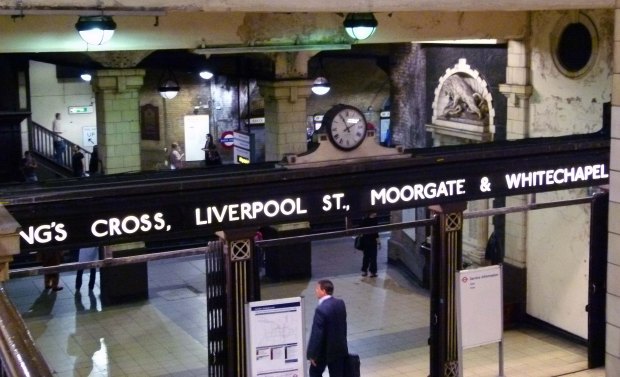
Entrance to Baker Street Station’s oldest section
The section of the Metropolitan Line which Baker Street station serves is the oldest underground railway in the world, the earliest trains being steam-driven, puffing and belching their way beneath the streets of Victorian London.
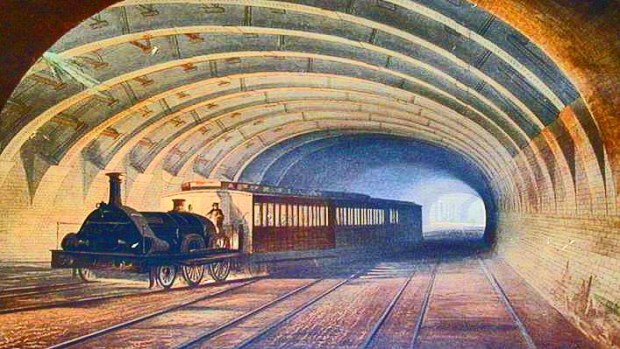
The London Underground’s earliest days
Construction of the pioneering route was rapid, taking just two years to complete. However, it also involved horrendous levels of disruption. Homes in slum areas were ruthlessly swept away and some 12,000 Londoners- all of whom lay at the bottom of the social ladder- were made homeless, with zero compensation being offered.
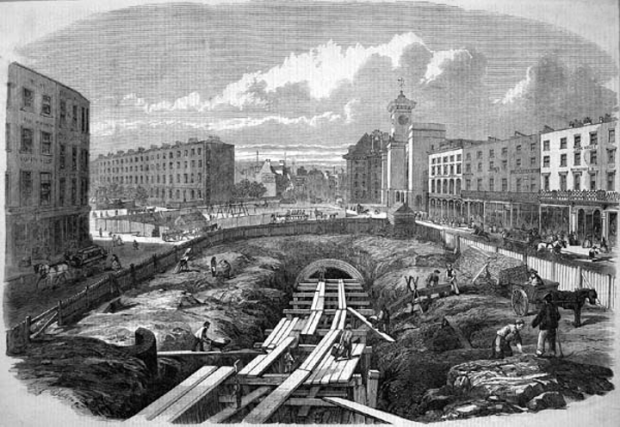
The Metropolitan Railway under construction in 1861
Despite being some 150 years old, Baker Street station today remains one of the system’s most important interchanges. To celebrate its 120th anniversary in 1983, its oldest platforms were restored to make them look as close as possible to their original 1863 incarnation.
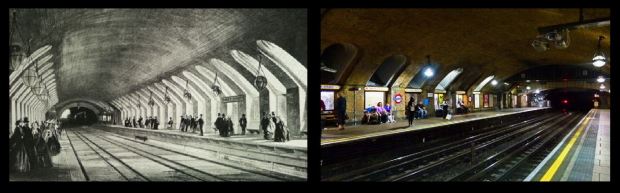
Baker Street then and now… 1863 & 2012
Electric trains finally appeared on the Metropolitan line in 1905.
A few years later in 1912, the Metropolitan Railway built themselves an impressive new headquarters on Allsop Place; a quiet backwater off of Baker Street, overlooking the bowels of the station.
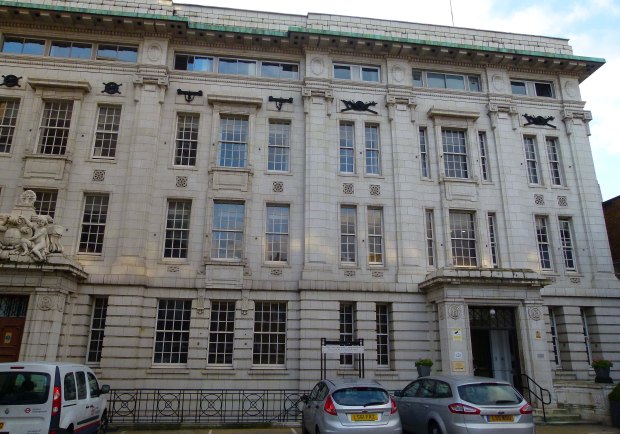
Metropolitan Railway HQ
Still in use as offices today, this old HQ is now grade II listed… and contains one or two surprises.
If you look towards the building’s upper floors, you’ll spot some authentic railway paraphernalia bolted onto the façade- including buffers and coupling chains!
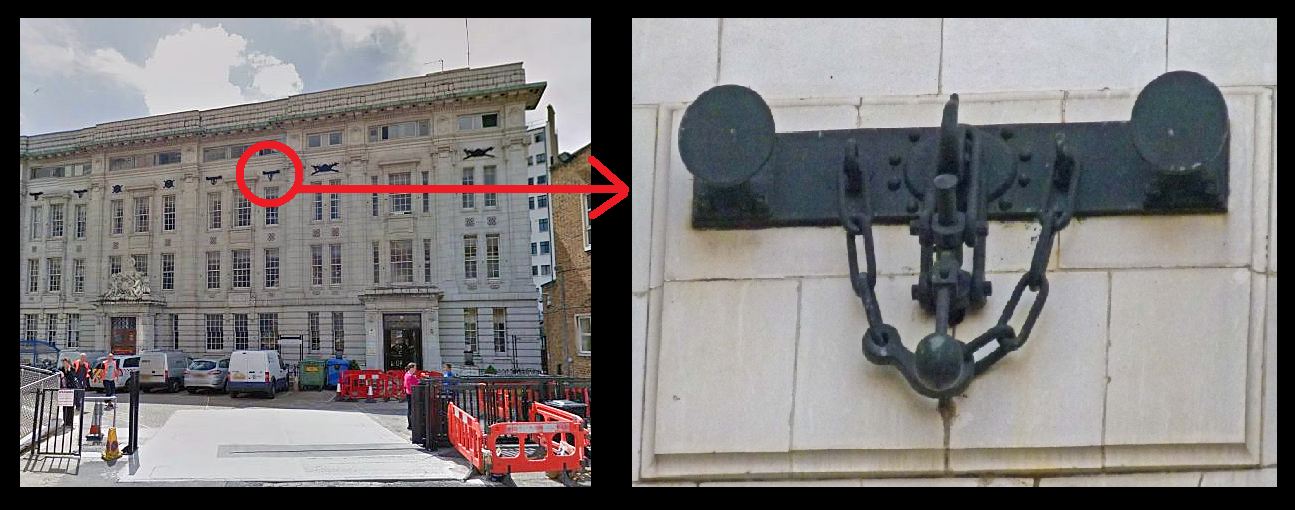
As the 20th century and the wonder of electricity progressed, Baker Street became a vital hub for the concept known as Metroland; the process which saw the rapid development of suburbs such as Wembley, Harrow, Uxbridge and Rickmansworth, all of which burgeoned during the inter-war period thanks to the Metropolitan Railway’s ever expanding tracks.
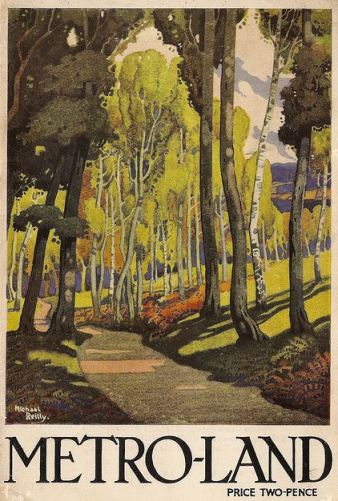
Early 20th century guidebook to Metroland
Out in leafy Metroland, smart new homes (typically in the mock-Tudor style) were built for the City’s commuters, who now had the means to work in the capital’s heart by day and retire to the quieter outskirts by night. Metroland had a huge impact on the capital, forging much of what is now modern-day North-West London.
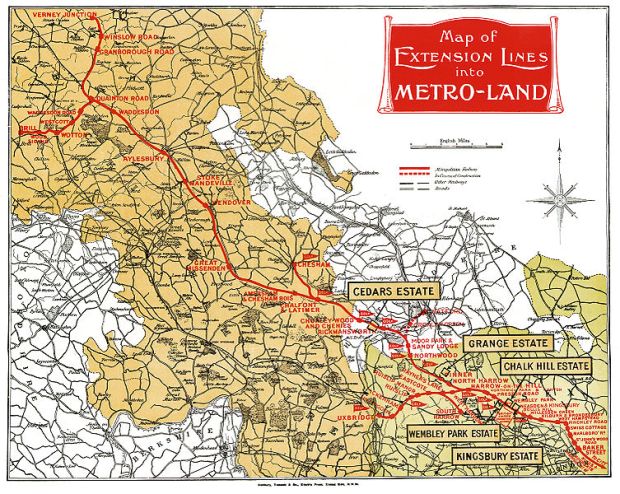
Map displaying Metroland’s extent
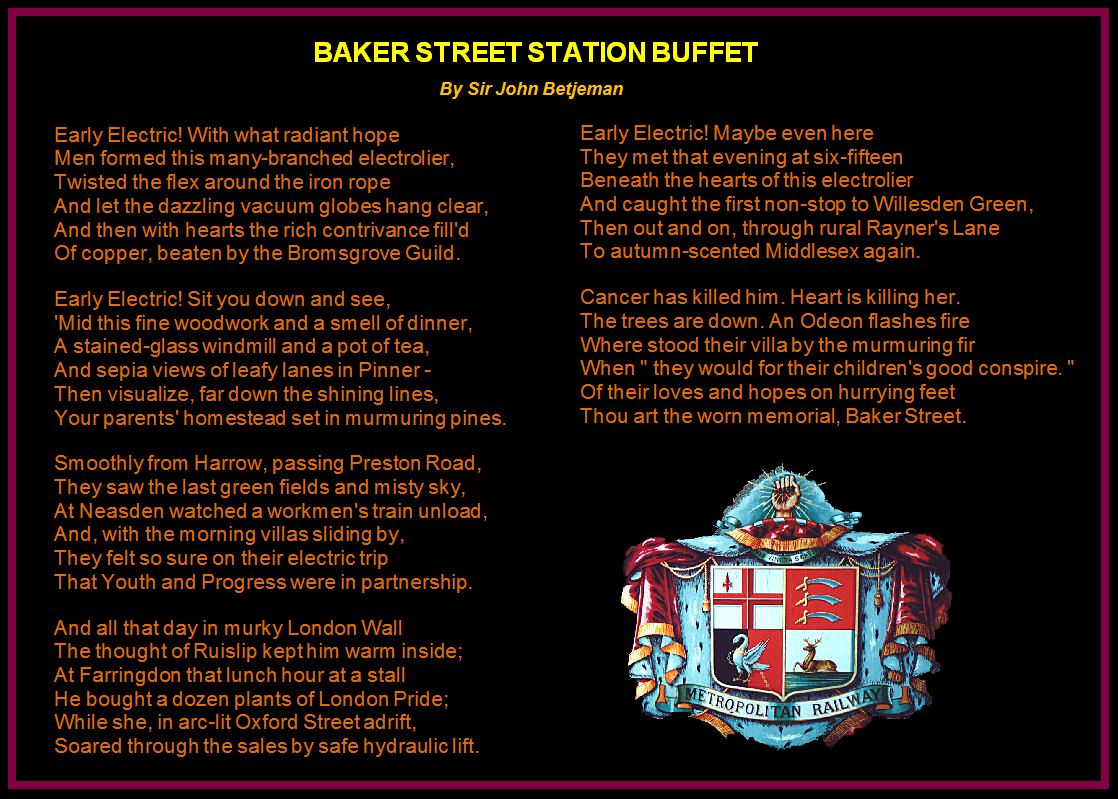
The great poet laureate, Sir John Betjeman was heavily influenced in his work by a yearning nostalgia for Metroland- his following poem, Baker Street Buffet being a perfect example (please click to enlarge and read)
Lost and Found
Adjoining Baker Street station there sits a real treasure trove of quirkiness… London Transport’s Lost Property Office which has been at the location since 1933.
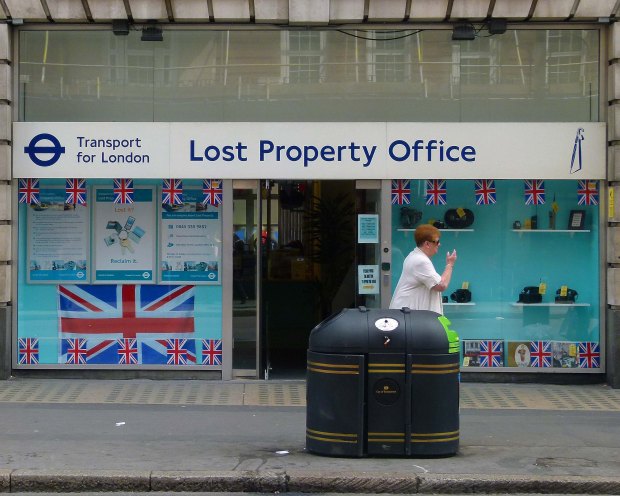
London Transport Lost Property Office, Baker Street
Anything left behind by those travelling on London’s trains, tubes, buses or taxis eventually ends up here (providing somebody honest hands it in to the nearest TFL employee of course).
As a London cabbie, one of my duties is to take a quick glance into the passenger compartment every time a customer exits the vehicle- you’d be surprised how often people forget their precious belongings.
Usually, a quick check and a toot of the horn is sufficient enough to reunite passengers with their forgotten wares. Sometimes however, lost property may not be noticed immediately or its unfortunate owner may disappear before you have a chance to call them back.
When this happens, we cabbies have to present the property to the nearest police station as soon as possible, where it is logged and passed onto the Baker Street office (to date, the most valuable item which has been left behind in my own cab was an Apple laptop!)
Over at Baker Street, using a specially designed programme called Sherlock, staff at the lost property office catalogue each item and carefully stow it away amongst the labyrinth of shelves.
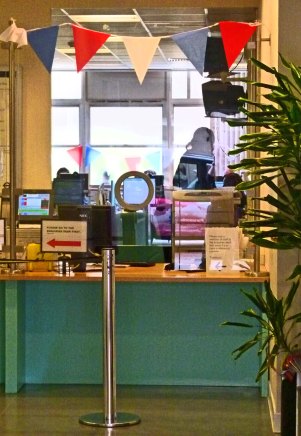
Lost Property Office Reception
The system works well, often re-uniting owners with their goods… inevitably however, many things are never collected and, over the years, an incredibly bizarre collection of forgotten items has accumulated!
A park bench, a lawnmower, urns containing ashes, false teeth, a theatrical coffin, voodoo masks, WWII gasmasks, a puffer fish… even human skulls can all be found languishing in the depths of Baker Street’s lost property office. The following short clip from a recent BBC documentary provides an insight into the institution’s packed basement:
Outside the Lost Property Office, the windows of the depository act as a kind of mini-museum, displaying some of the more interesting finds. Most of the objects are from very distinct eras, their appearance providing an interesting insight into the recent social history of London’s inhabitants.
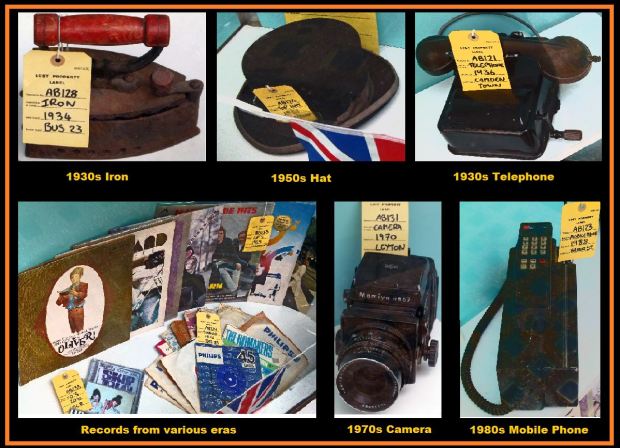
Lost Property Gallery (please click to enlarge and view)
Working at the Lost Property Office sounds like it can often be quite a surreal experience. In his excellent 2011 book, Londoners Craig Taylor interviewed Craig Clark; one of the office’s administrators who had this nugget to share:
“We occasionally get drunks come in, or crack heads… once these two guys came in and said they had lost a swan. I think they were hallucinating”…
*
Baker Street & The Beatles
Another famous Baker Street building stocked with quirky items- but now sadly demolished- was the Beatle’s Apple Boutique.
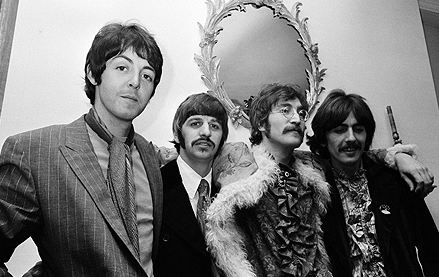
The Beatles in 1967; the same year they opened their own shop on Baker Street
Opened in December 1967, the Apple Boutique stood at 94a Baker Street, on the corner with Paddington Street.
By this point of course, the Beatles had achieved immense fame and wealth, providing them with the freedom to pursue other business interests outside of their music.
The Apple Boutique was a rather bohemian store which Paul McCartney summed up as being “a beautiful place where beautiful people could buy beautiful things.”
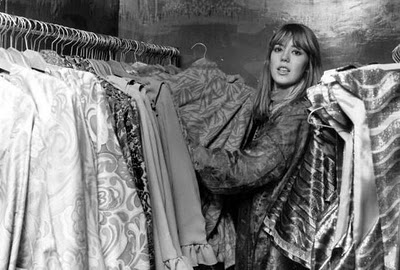
An Apple Boutique assistant
Responsibility for designing the shop’s stock (which mainly consisted of fashionable clothes and accessories), fell to three Dutch designers who’d formed a creative collective known as ‘The Fool’. The entrepreneurial Fab Four handed The Fool £100,000 for the project and also commissioned them to paint a psychedelic mural on the building’s exterior.
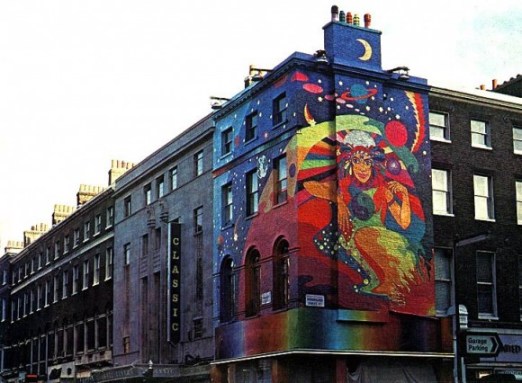
The controversial mural which adorned Baker Street for a short time during the late 1960s
No planning permission was granted for this vivid painting however, and many of Baker Street’s more traditional shopkeepers quickly kicked up a fuss. Consequently, the mural was painted over a few months later and replaced with a minimalist, white colour scheme.
Unlike their music and record sales, the Beatle’s Apple Boutique proved to be an utter financial disaster…
The main problem was shoplifting. With the shop’s groovy vibe and laid-back attitude, many visitors and staff treated the premises like a hippie commune, where the concept of actually handing cash over to ‘The Man’ just wasn’t considered cool!
During its short life, the boutique lost some £200,000 through theft.
Such losses were unsustainable and in July 1968, after just seven months, the shop closed down. By this point, the Beatles simply couldn’t be bothered anymore- and decided to give all of the remaining stock away for free in a last minute bonanza- even the shop’s fittings and carpet were considered fair game!
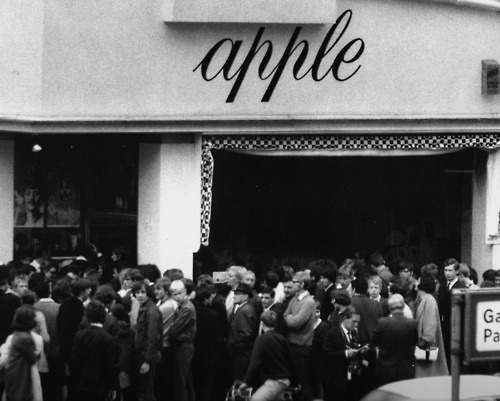
The Apple Boutique’s last day… a true free for all
A rare insight into the Apple Boutique can be seen in the following clip from the 1968 film, Hot Millions, staring Maggie Smith:
Today, at the opposite end of Baker Street, a distant cousin of the Apple Boutique can be found in the Beatles Store which sells merchandise and memorabilia related to the Fab Four.… and is clearly a lot more efficiently run than its 1960s predecessor!
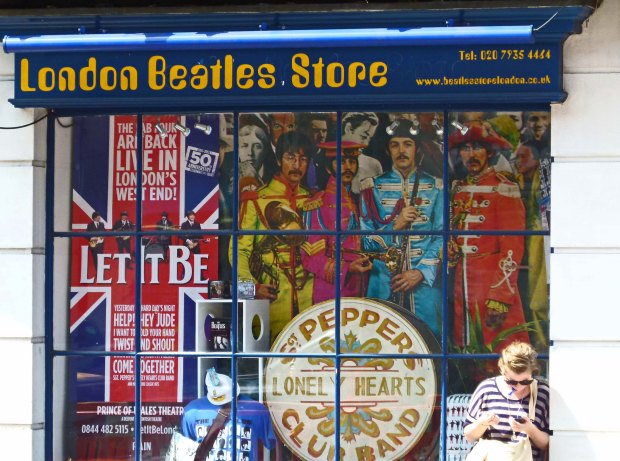
The London Beatles Store, Baker Street
Notable Dwellers
Being such a renowned address, Baker Street has attracted many illustrious residents over the years.
One of the earliest to set up home was William Pitt the Younger who, in 1783 at the tender age of 24, became Britain’s youngest ever Prime Minister.
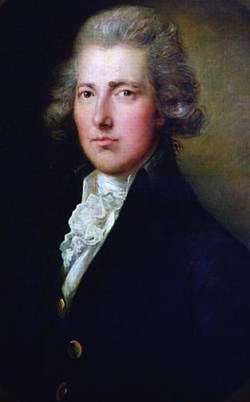
William Pitt the Younger
Despite his young age, William proved a popular and extremely able leader- so much so that, twenty years later in 1804 and in the face of the growing threat from the Emperor Napoleon, he was asked to step in as Prime Minister for a second term.
Once Pitt accepted the offer, removal wagons turned up at his Baker Street home to cart his property off to another famous London address- 10 Downing Street.
Pitt the Younger died in office two years later, aged just 46 and now lies in Westminster Abbey.
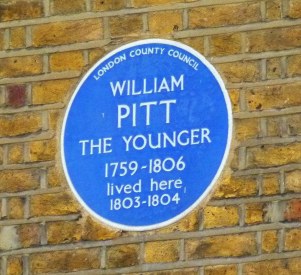
Pitt the Younger plaque, Baker Street
*
Another famous Baker Street inhabitant was Sarah Siddons.
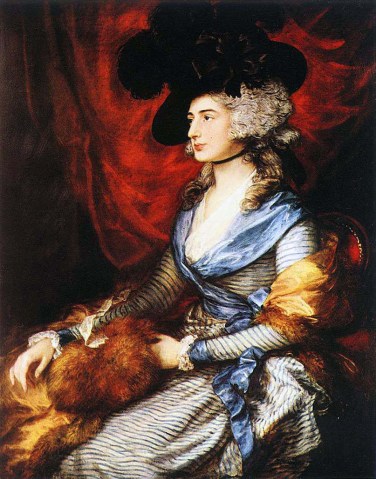
Sarah Siddons
Born in Brecon, Wales in 1755, Sarah Siddons first came to London in 1775 at the age of 20.
After several years of struggle, she managed to establish herself as an actress, first appearing at Dury Lane as Isabella in ‘Fatal Marriage’. Sarah’s acting abilities quickly gained her great fame- her most noted role being that of Lady Macbeth in 1812.
In the 1920s and bearing the famous Baker Street resident in mind, the Metropolitan Railway named one of their handsome new electric locomotives after the actress.
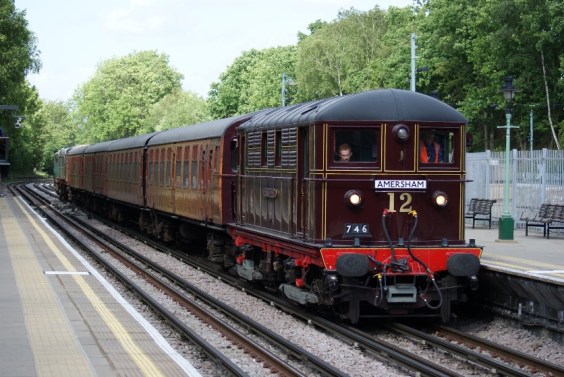
The ‘Sarah Siddons’; one of London Underground’s early electric trains (photo: rail.co.uk)
When this engine first began running, it pulled luxurious Pullman carriages to and from the suburbs and even boasted a dining car… classy commuting indeed!
Today, the Sarah Siddons locomotive can occasionally be spotted in use at special events on the Metropolitan Line.
*
During the first half of the twentieth century, Baker Street was home to the grandfather of science fiction- Herbert George Wells…
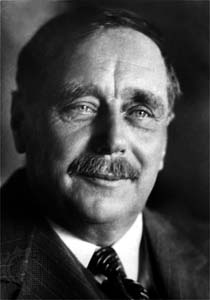
H.G Wells- Baker Street resident and grandfather of modern Science Fiction
During his long career, H.G Wells penned many classic, often ground-breaking tales, envisioning everything from Invisible Men to an alien invasion of Victorian England.
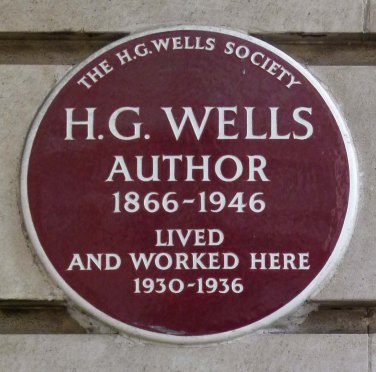
H.G Wells plaque at Chiltern Court, Baker Street
H.G Wells lived at Baker Street’s Chiltern Court between 1930 and 1936, during which time he wrote his prophetic book, The Shape of Things to Come; a work which accurately predicted the outbreak of WWII and makes prophecies which stretch way into the distant future; all the way up to 2106.
In 1936, H.G Wells’ chilling predictions were adapted into a bold film.
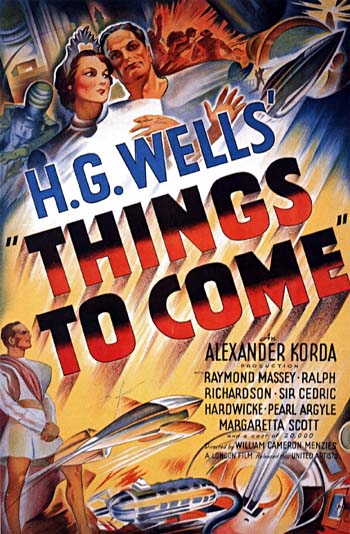
Poster for ‘Things to Come’; a film adaptation of the book written by H.G Wells whilst living on Baker Street
*
An Ode to Baker Street… Gerry Rafferty and one of London’s Greatest Songs
In the 1970s, a small flat on Baker Street was home for a time to Gerry Rafferty; a Scottish-born musician who had spent part of his early musical career busking on the London Underground.
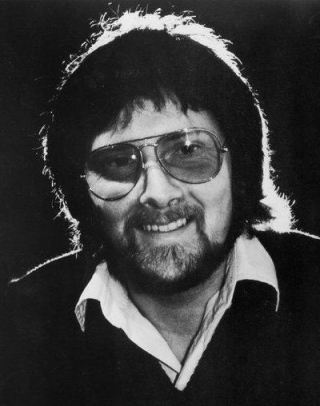
Gerry Raffety
Gerry’s experiences of the area led him to write one of the most famous songs ever inspired by London… Baker Street, which was released in 1978.
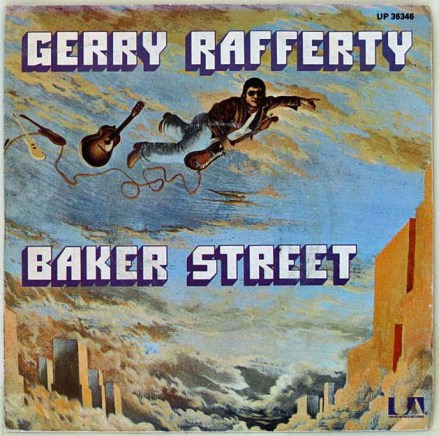
‘Baker Street’ single, 1978
A shy, reclusive man, Gerry was plagued by severe alcoholism throughout his life- a battle which he sadly lost in 2011 when his life was taken by liver failure.
His tragic addiction to drink was described up by his Italian partner, Enzina Fuschini…. “he felt he was under some sort of evil spell. He felt crippled by it… I saw a man in despair.”
In hindsight, Gerry Rafferty’s ode to Baker Street, with its lyrics alluding to drinking to forget and attempting to give up the booze is a melancholy insight into the great musician’s troubled soul.
Gerry’s masterpiece, along with images of Baker Street as it appeared in the late 1970s, can be viewed in the clip below:
Please click here for Part Two
Cabbie’s Curios: Achilles’ Willie
In the south-eastern corner of Hyde Park, gazing across the constant din of traffic roaring between Park Lane and Hyde Park Corner, there towers this mighty effigy… the Achilles Statue:

The monument was unveiled in 1822 as a tribute to Arthur Wellesley- aka the Duke of Wellington; the politician and Field Marshal who led the coalition armies to victory at the Battle of Waterloo in June 1815; a monumental clash which marked the end of Napoleon Bonaparte’s increasingly tyrannical reign.

The Duke of Wellington, painted by Sir Thomas Lawrence shortly before the Battle of Waterloo
The 18ft tall figure was forged by the renowned sculptor, Sir Richard Westmacott at his workshop in Pimlico.

Sir Richard must’ve had trouble reading his tape-measure because when the monumental artwork came to be installed, it transpired that it was far too big to squeeze through Hyde Park’s gates! This problem was quickly overcome however by knocking a great big hole in a nearby wall!
The bronze used to create the statue was obtained by melting down twenty-two French cannons which had been seized at the battles of Salamanca, Vittoria, Toulouse and Waterloo.
Construction cost a hefty £10,000- approximately £490,000 in todays money, the cash being raised solely by the ‘women of England’.
The unveiling ceremony was carried out by King George III; the monarch who famously suffered from poor mental health throughout his life.

Achilles in full glory. Combined together, the statue and plinth reach an impressive height of 36 ft.
In Greek mythology, Achilles was the powerful warrior from Homer’s Iliad, a hero of the Trojan War who liked a good scrap and was practically invincible (except of course, for the small matter of his troublesome heel).
It was this grand reputation, which the Georgians believed was comparable to their own victorious Duke, that led to the statue sharing the ancient hero’s name.

An Ancient Greek representation of Achilles
However, on closer inspection the powerful character turns out to be more Roman than Greek.
As a young man, Richard Westmacott had spent four years in Rome where he was taught his craft by the Italian sculptor, Antonio Canova.
Westmacott’s statue of Achilles is actually based on the two ‘Horse Tamer’ statues (known as ‘Castor’ and ‘Pollux’) which stand on Rome’s Quirinal Hill and with which the Pimlico based sculptor would’ve been most familiar.
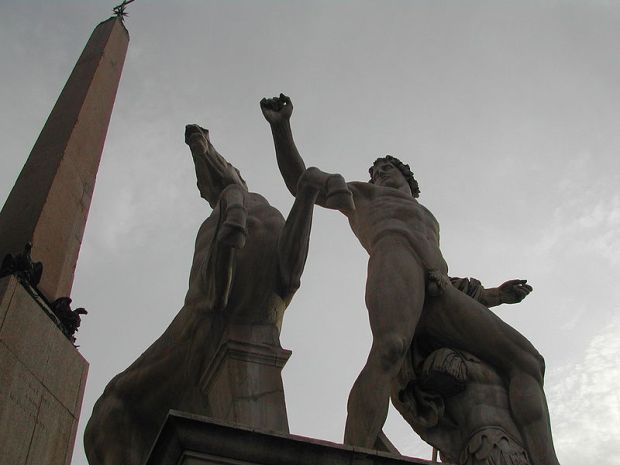
One of Rome’s ‘Horse Tamers’, upon which London’s Achilles statue was based (photo: Wikipedia)
It is also said that the head of the Achilles statue is based upon that of the Duke of Wellington himself. What do you think?…

Of course, the most important fact about the Achilles statue is this:
It was London’s first public, nude statue…
At the time, this was something which caused quite a stir (especially considering the generous financial contribution from the nation’s ladies as mentioned above!)
A fig leaf was later added to cool down the flustered Georgians… and so far there have been two incidents (in 1870 and 1961) in which several cheeky Londoners have attempted to chisel off the organic codpiece.

Georgian censorship…
Shortly after being revealed in 1822, the saucy statue was lampooned in a cartoon by George Cruikshank entitled, ‘Making Decent!’ in which the politician, William Wilberforce is depicted holding his top hat over Achilles’ privates!
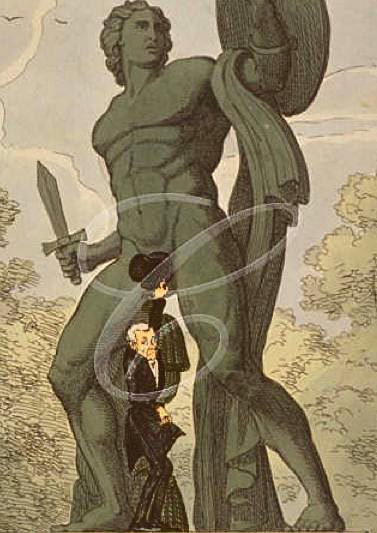
‘Making Decent!’ (image from cityoflondon.gov)
Cabbie’s Curios: Battersea Peace Pagoda
The picture of the Pagoda below is not a holiday snap (unfortunately, I have not yet been lucky enough to visit the Far East!)
Believe it or not, this beautiful structure is in none other than London’s Battersea Park…

Officially known as the ‘London Peace Pagoda’, this sacred place was unveiled in 1985, its construction being undertaken by monks, nuns and followers of ‘Nipponzan Myohoji’; a Buddhist religious order dedicated to promoting world peace.
This order of Buddhism was founded by The Most Venerable Nichidatsu Fujii.
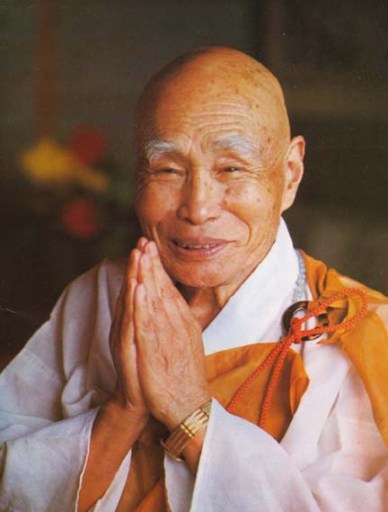
The Most Venerable Nichidatsu Fujii (also known as ‘Guruji’)
Born on a remote Japanese island on 6th August 1885, Nichidatsu Fujii embraced peace from an early age, becoming a Buddhist monk at the tender age of 19 and shunning the military career which was expected of him.
During the 1930s, he travelled to India, where he became friends with Mahatma Gandhi.
Gandhi, who with his doctrine of non-violence, proved to be a huge influence on the Buddhist Monk, bestowed his wise friend with the gracious nickname, ‘Guruji’; Guru or course meaning teacher, and ‘ji’ being a term which people in India attach to names and titles in order to denote respect.

Mahatma Gandhi, an indirect influence on Battersea’s Peace Pagoda
It was a name which stuck, with Nichidatsu Fujii’s followers happily referring to their mentor as Guruji for the rest of his life.
*
On the 6th August 1945, Guruji, Nipponzan Fujii turned 60. However, this milestone would prove to be a fateful anniversary for a far different reason…
That same August day, the world changed forever when the atomic-bomb known as Little Boy was exploded over the Japanese city of Hiroshima. This event was followed a few days later on the 9th August by a second nuclear blast; this time over the city of Nagasaki, forcing a rapid but horrific conclusion to WWII.
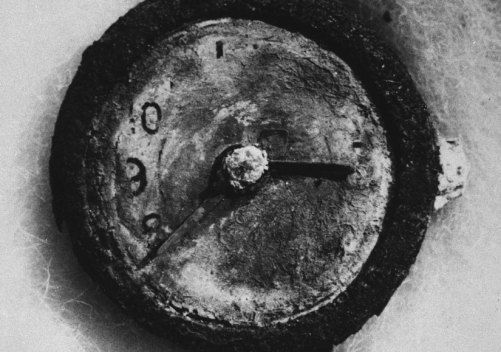
A pocket watch from Hiroshima, the hands melted at the time the atomic bomb detonated… 8.15am
As the Cold War set in, Guruji was horrified by these terrifying new weapons and, like many others across the globe, he believed the arms-race posed the gravest ever threat ever to civilisation. The venerable Buddhist’s view on the issue was summed up with the following words:
“Civilisation is not to kill human-beings, not to destroy things, nor to make war; civilisation is to hold mutual affection and to respect each other.”
As a response to the nuclear age, Guruji initiated a programme in which he endeavoured to build Peace Pagodas (also known as ‘Stupas’) all over the world; monuments intended to unite all of humankind, regardless of race, creed or nationality.
The first of the Peace Pagodas appeared in 1969, its location being Rajgir in India; a city of great importance to Buddhists, as it is believed this is where Buddha preached the influential, Lotus Sutra.

The first of the ‘Peace Pagodas’, located in Rajgir, India (photo: Wikipedia)
In Britain, there are two Peace Pagodas.
The first- a hauntingly elegant structure- was erected at Milton Keynes in 1980:

The UK’s first Peace Pagoda at Milton Keynes (photo: Geograph)
The second of course is the one in Battersea Park.
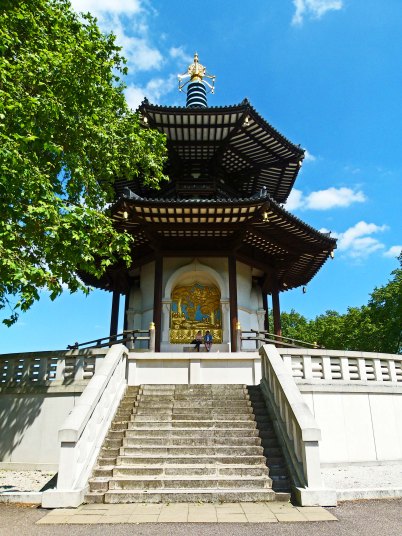
Battersea Park’s Peace Pagoda
This very special gift to Londoners, which stands at an impressive 33.5 metres tall, was inaugurated in May 1985, its purpose defined as being to “further humanity’s quest and prayer that the world may be saved from nuclear annihilation.”
In a sad and profound coincidence, Guruji died just 12 weeks before London’s Peace Pagoda was opened.
He was 100 years old…
The very last recorded words of Guruji; The Most Venerable Nichidatsu Fujii, were in relation to the Battersea Peace Pagoda as it neared its completion:
“I am delighted with the appearance of the precious stupa in London. May it assemble every effort to create peace. My wish has been accepted without question by the people of London and the world… nothing gives me greater happiness than this in my whole life”…

The Most Venerable Nichidatsu Fujii; Guruji in later life
*
The Peace Pagoda in Battersea Park features four sacred, gilt-bronze statues which chronicle the most significant stages in Prince Siddhartha’s (the Supreme Buddha’s) life… birth, contemplation leading to enlightenment, teaching and death.

The first two stages; birth and contemplation

Stages three and four… teaching and passing away…

The four stages of Buddha’s life, as represented by an illustrated plaque beside Battersea’s Peace Pagoda
*
Thanks to the influence of Guruji, there are currently 80 Peace Pagodas spread across the world.
Today, the Peace Pagoda in Battersea is in the care of Wandsworth Council… and, on a far more involved level, the Buddhist Reverend, Gyoro Nagase, who arrived in London from Japan in 1978 and participated in the Pagoda’s original construction.
Mr Nagase has much a huge task in caring for the sacred site- you can read more about his commitment here.
The Pagoda is open to the public all year round.
Its raised level in particular provides beautiful views over the Thames and across to Chelsea Embankment, making it a wonderful place to stand and contemplate; a true oasis of peace and calm in our often chaotic city.
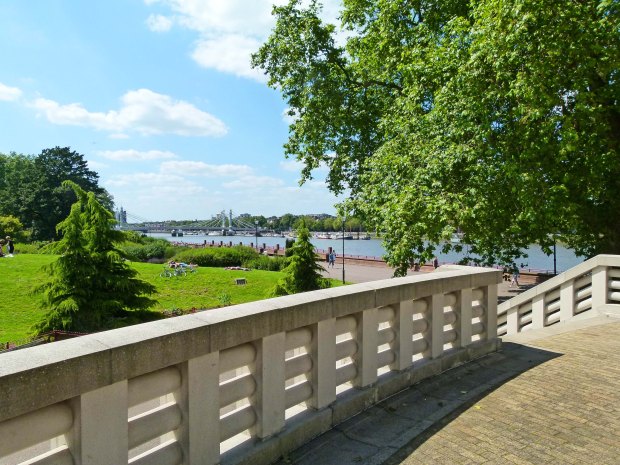
Looking towards Albert Bridge from the Pagoda
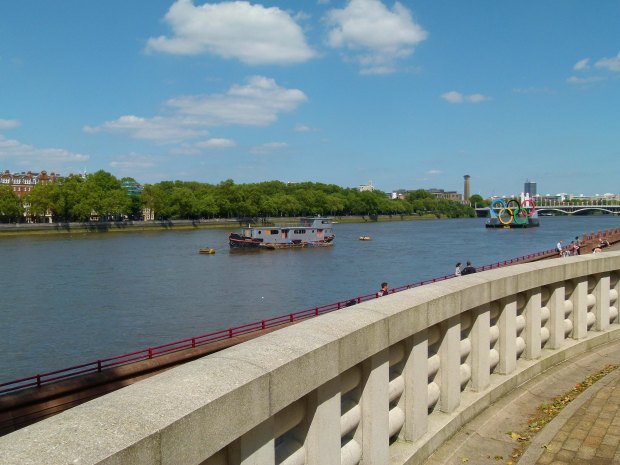
Looking towards Chelsea Bridge from the Pagoda
If you do wish to visit the Pagoda, please bear in mind that the statues of Buddha, which rest in the upper alcoves, are sacred objects, and it is forbidden to climb upon them; something which many visitors in their enthusiasm fail to realise.
The Pagoda also plays host to a number of ceremonies throughout the year; the main ones taking place every June, in which Buddhists from many different backgrounds gather to offer prayers for peace, and on the 9th August (Nagasaki Day) when, at dusk, a floating lantern ceremony takes place, commemorating all victims of war.




 View from the Mirror