When Walt came to Southwark
Some years ago, a sage old cabbie told me about a mysterious photo which he’d claimed to have never seen himself but was sure existed somewhere; an image apparently depicting legendary American animator and entrepreneur, Walt Disney posing beneath a street sign on Borough’s aptly named Disney Street…

Disney Street- and its little offshoot, Disney Place– are two thoroughfares which form a small dogleg between Marshalsea Road and Redcross Way.
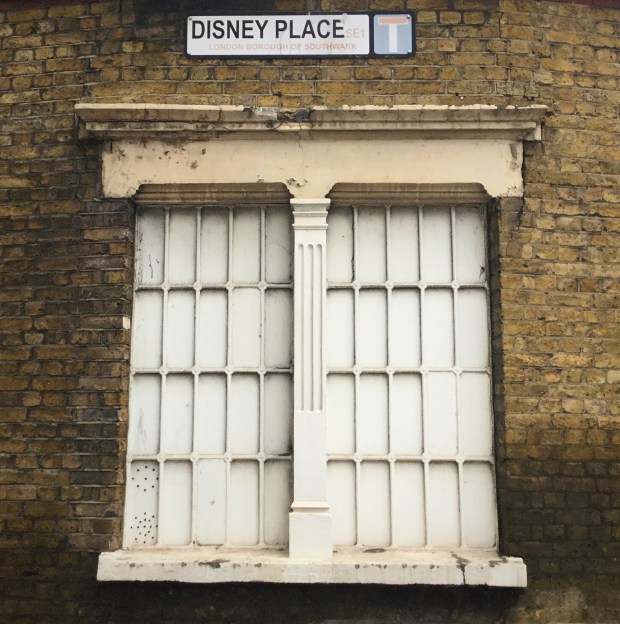
‘Disney’ is in fact an extremely old name of Norman origin, deriving from d’Isigny; a surname historically used by folk from the town of Isigny-sur-Mer in north-western France.
The name has been borne by these two Borough streets since at least the 1860s- a quick search of The Times newspaper archive reveals a handful of vicious crimes taking place here, including numerous stabbings and an appalling incident in 1902 when a drunken woman was arrested after “ill-treating a baby by swinging it round” along with a verbal threat to “dash the child’s brains out by throwing it on the pavement.”
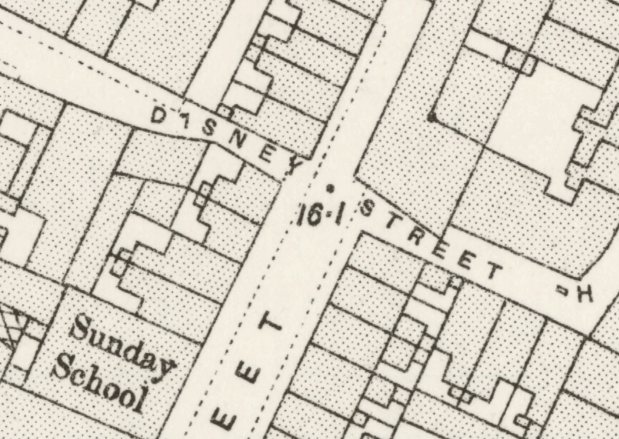
Late Victorian map depicting Disney Street (image: nls.uk)
In short, the name ‘Disney’ was being used in London long before Walt’s first flick- the jovial ‘Steamboat Willie’- hit screens in 1928… quite a relief really considering the rather brutal connotations with the two roads.

Going even further back in time when the area had a more rural vibe, the two paths, which have evolved over many decades, were known by completely different names- Bird Cage Alley (which really did refer to local artisans who made said pet accessories) and Harrow Street; an offshoot of which was ‘Harrow Dunghill’ which would no doubt have had quite a literal meaning back in the 18th century.

Original map depicting Harrow Street, Bird Cage Alley and Harrow Dunghill
*
Returning to the cabbie’s fable with which I started this piece, I was told that, at some point in the mid-1960s, Walt Disney was on a visit to London with is wife, Lillian.
The pair hailed a taxi and, upon recognising his passenger’s face, the driver couldn’t resist telling his famous fare about the existence of Disney Street and Disney Place.
Unsurprisingly Walt was intrigued and asked be taken there, whereupon he and Lillian had their photos snapped.
For a long time I thought this was nothing more than a cabbie’s urban legend.
Until recently when I happened to discover the images…
The first is of Walt and Lillian:

Walt and Lillian Disney, Disney Street, Southwark, 1965
The second depicts Walt on Disney Place with his business partner, Arthur Allighan; a born Londoner who apparently confessed to having no prior knowledge of the streets which bore his colleague’s infamous surname.

Walt Disney and Arthur Allighan, Disney Place, Southwark 1965
These two images were taken in 1965 and were published in a 1966 edition of ‘Disney World Magazine’.
Sadly, they were amongst the last photos taken of Walt who died shortly after in December 1966 aged 65.
*
Candid Capital: Nelson’s Column at Dusk
Nelson’s Column at Dusk

Snapped on a chilly late afternoon in January 2016
*
Two Minutes to Midnight
Since 1947, The Bulletin of the Atomic Scientists have maintained the ‘Domesday Clock’; a symbolic timepiece whose minute hand is tweaked back and forth in the moments before midnight as a visual metaphor for illustrating how close they believe the world is to a civilisation ending catastrophe; primarily nuclear war.

The Domesday Clock (image: abc news)
On the 25th January 2018 the clock was moved forward to stand at just two minutes to midnight; the closest it’s been since 1953 when both the USA and then USSR acquired the hydrogen bomb.

Two Minutes to Midnight… (image: Bulletin of Atomic Scientists)
According to The Bulletin, the reason for this recent, alarming advance is due to the complete failure of world leaders to address current threats to humanity; something no doubt inflamed by the crisis on the Korean Peninsula and U.S President, Donald Trump’s penchant for bragging about America’s nuclear arsenal.
Tensions have also been strained further in recent weeks with Hawaii and Japan suffering false missile alerts.
*
In the early 1980s when the globe was still gripped by the Cold War, the Domesday Clock also stood perilously close to midnight, nudging 11.57pm in 1984.
Around this time, the BBC produced several documentaries looking at the potential consequences of nuclear war which, despite looking decidedly dated to today’s audiences, now seem as relevant ever in the current climate.
The first was a Panorama documentary entitled ‘If the Bomb Drops‘, which aired in March 1980 and was presented by a young Jeremy Paxman who took to the streets of Shepherds Bush to ask people what they’d do in the event of hearing sirens sound the Four Minute Warning; the famous time in which it was estimated the public would be warned of an incoming nuclear attack.
The no-nonsense cockneys interviewed by Paxman summed up the futility of preparing for such an event (please click below to view):
Later in the documentary Paxman takes to to the air in a helicopter to describe the impact a 1 megaton nuclear device would have if detonated high above the Houses of Parliament (please click below to view)…
‘If the Bomb Drops’ also featured a terrifying sneak-peak of the government’s ‘Protect and Survive’ public information films.
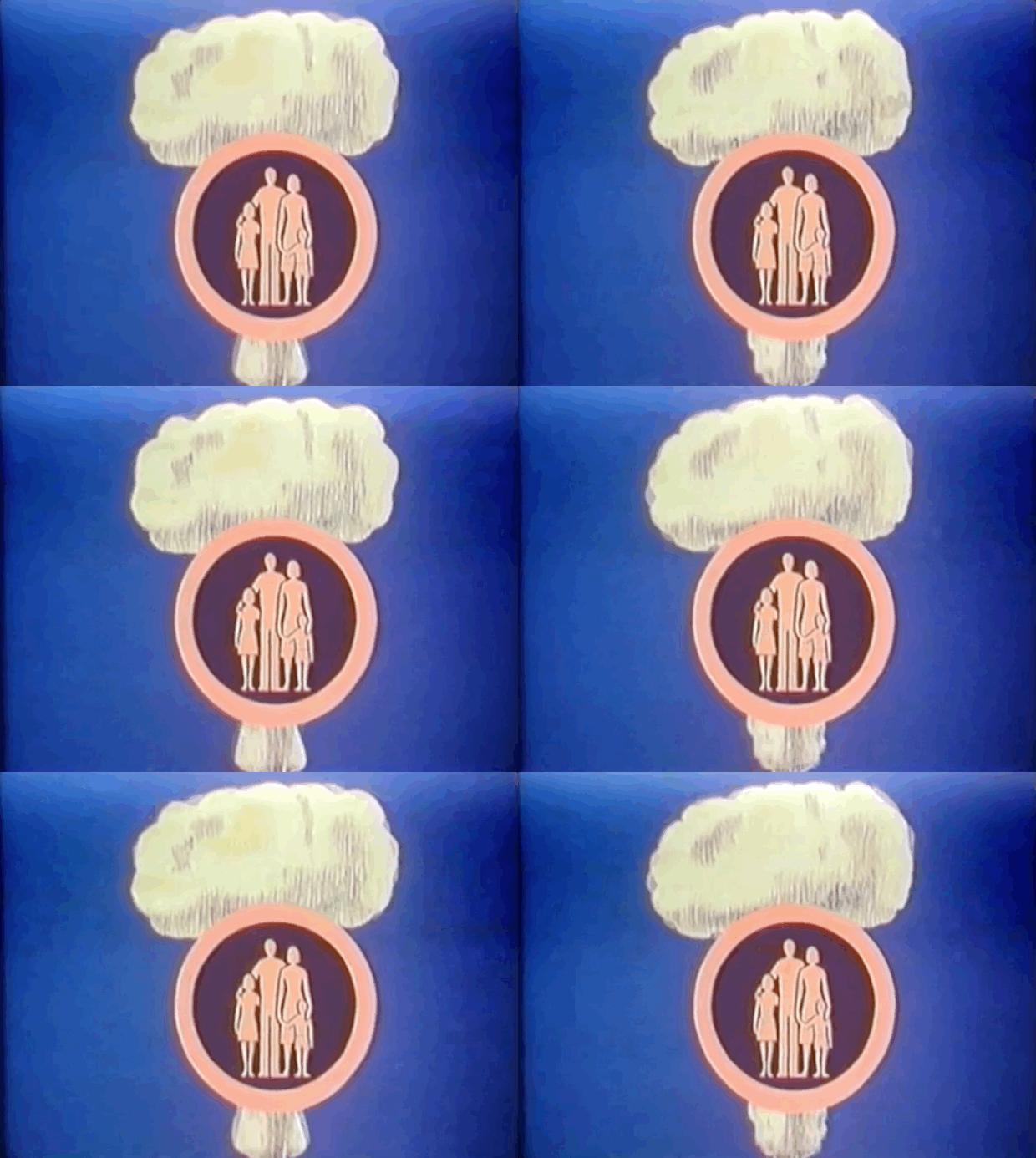
Produced by the now defunct Richard Taylor Cartoons -who were once based on Great Portland Street and are perhaps better known for creating the far more charming ‘Crystal Tipps and Alistair‘ –these films were top secret at the time and Panorama achieved quite a coup in obtaining them.

In the event of an international crisis that looked set to trigger a war, it was intended that the UK’s TV stations would go off air and be replaced by the BBC’s Wartime Broadcasting Service– on which these short films, of which there are 20, would be played on a continual loop.
Although Paxman rather chillingly predicts that these films “Won’t be seen again until nuclear war is imminent”, they are all now available on Youtube and unsurprisingly make very unsettling viewing.
Particularly eerie is the jarred, electronic jingle which concludes each segment; a product of the former BBC Radiophonic Workshop who were based at the Maida Vale Studios on Delaware Road and are best known for creating the theme tune to Dr Who
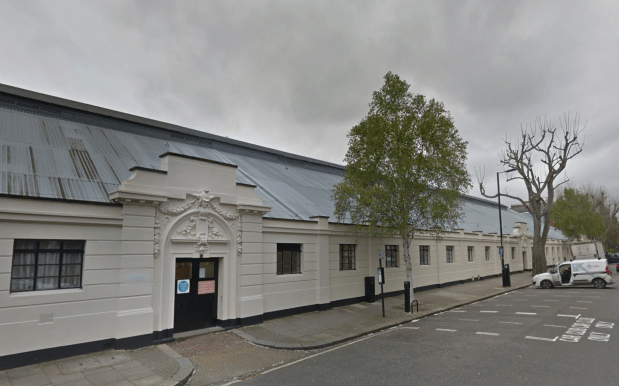
BBC Maida Vale Studios (image: Google Streetview)
Considering this link with the Time Lord, it may come as no surprise to hear that the attack warning itself (which was intended to alert the British public had a nuclear launch been detected in the 1970s/80s) is rumoured to have featured flashing lights and ‘Dalek‘ sounds. This chilling recording remains unseen to this day.
To view the entire catalogue of the Protect and Survive films- which includes advice on how to recognise warnings, how to construct a shelter and even how to dispose of the dead- please click below….
*
It didn’t take the BBC long to put out another documentary presenting the dire consequences of nuclear war.
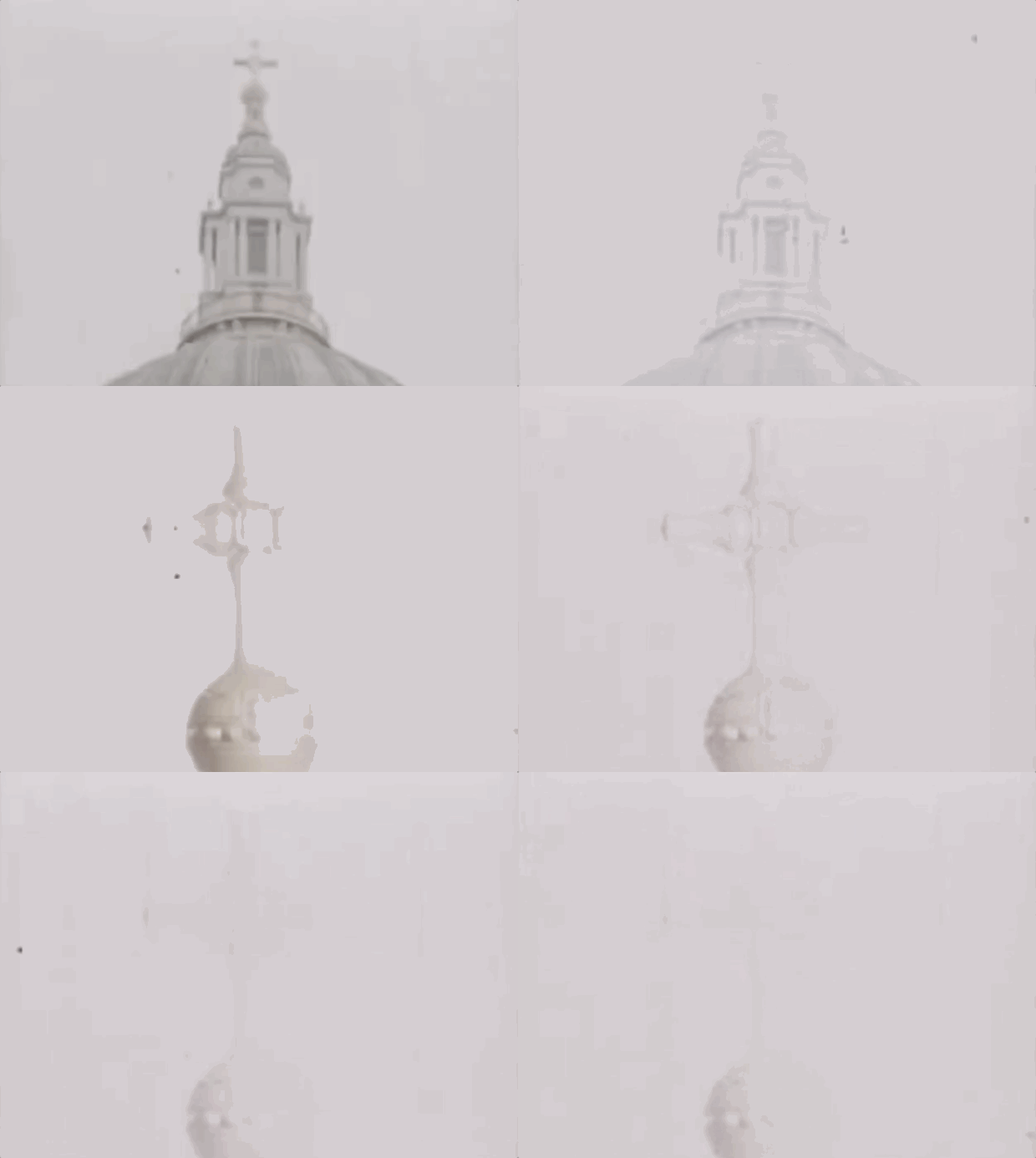
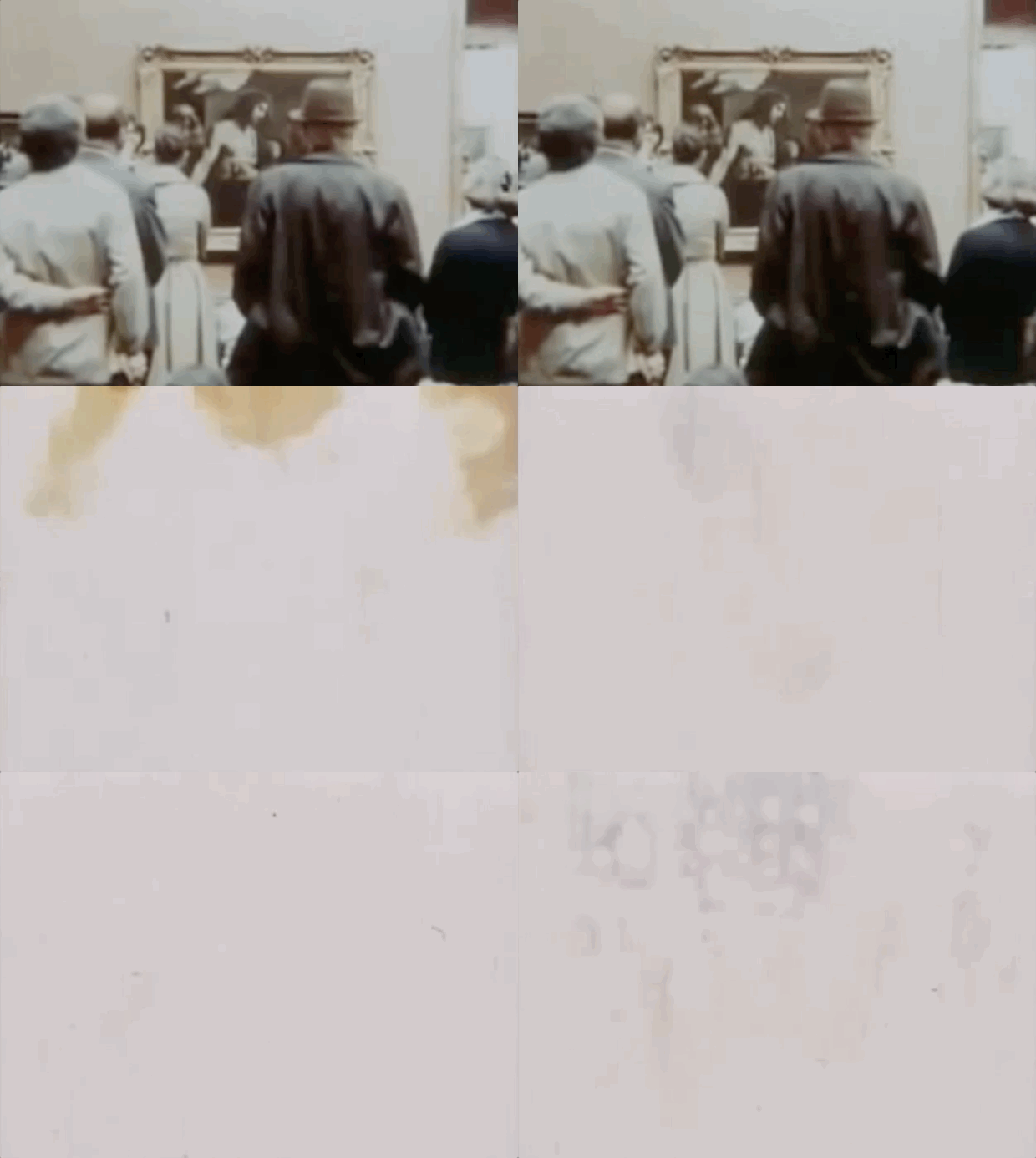
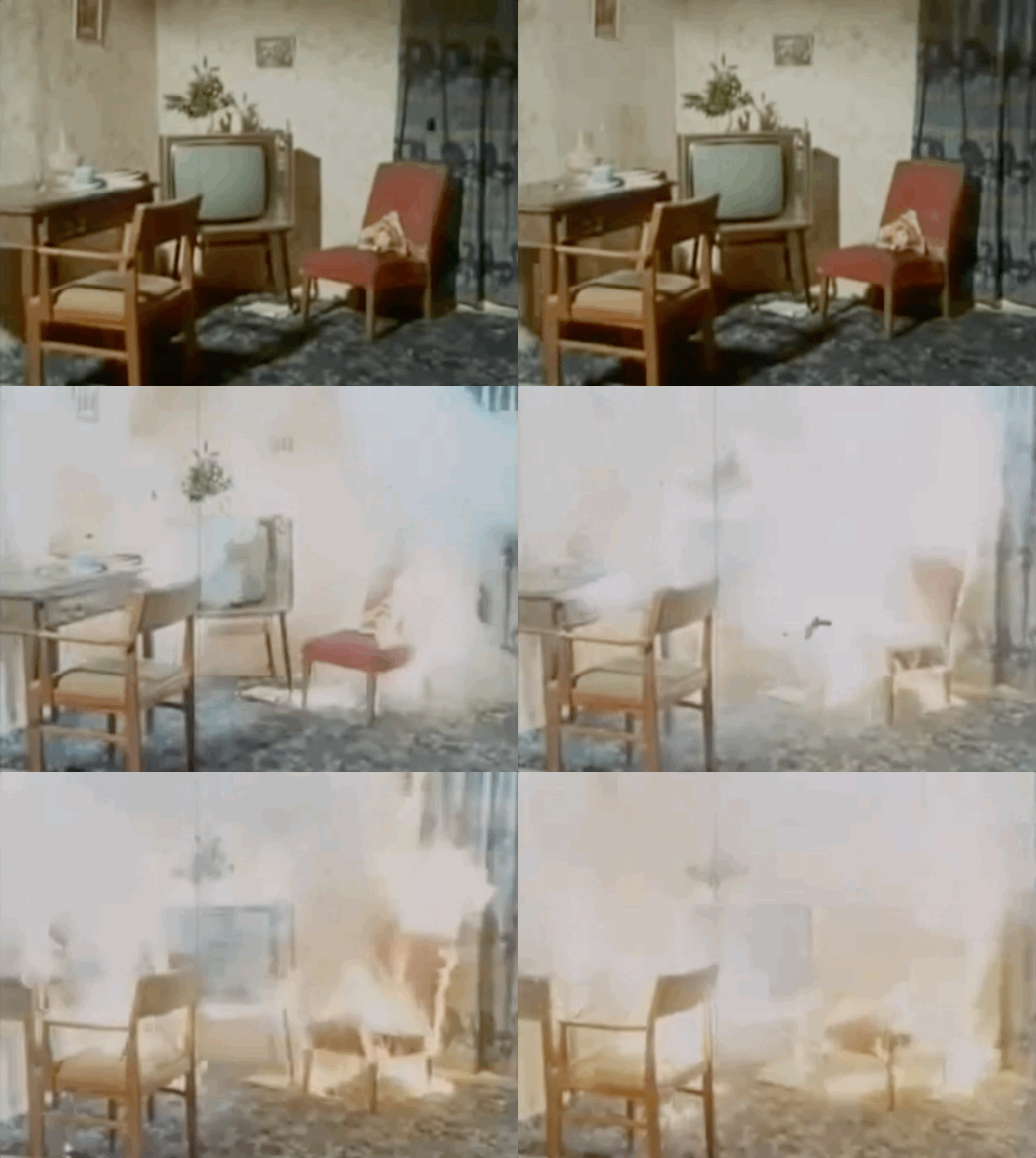
In the summer of 1982, the science strand, QED broadcast ‘A Guide to Armageddon’ which, narrated in the stern tones of Ludovic Kennedy, speculated on what fate would befall London if a nuclear warhead was detonated 1 mile above St Paul’s Cathedral.
According to the documentary, this would involve:
The vaporisation of St Paul’s mighty gold cross:
The annihilation of priceless artworks:
Cabs and double deckers set ablaze:

The combustion of homes as far aways as Battersea:
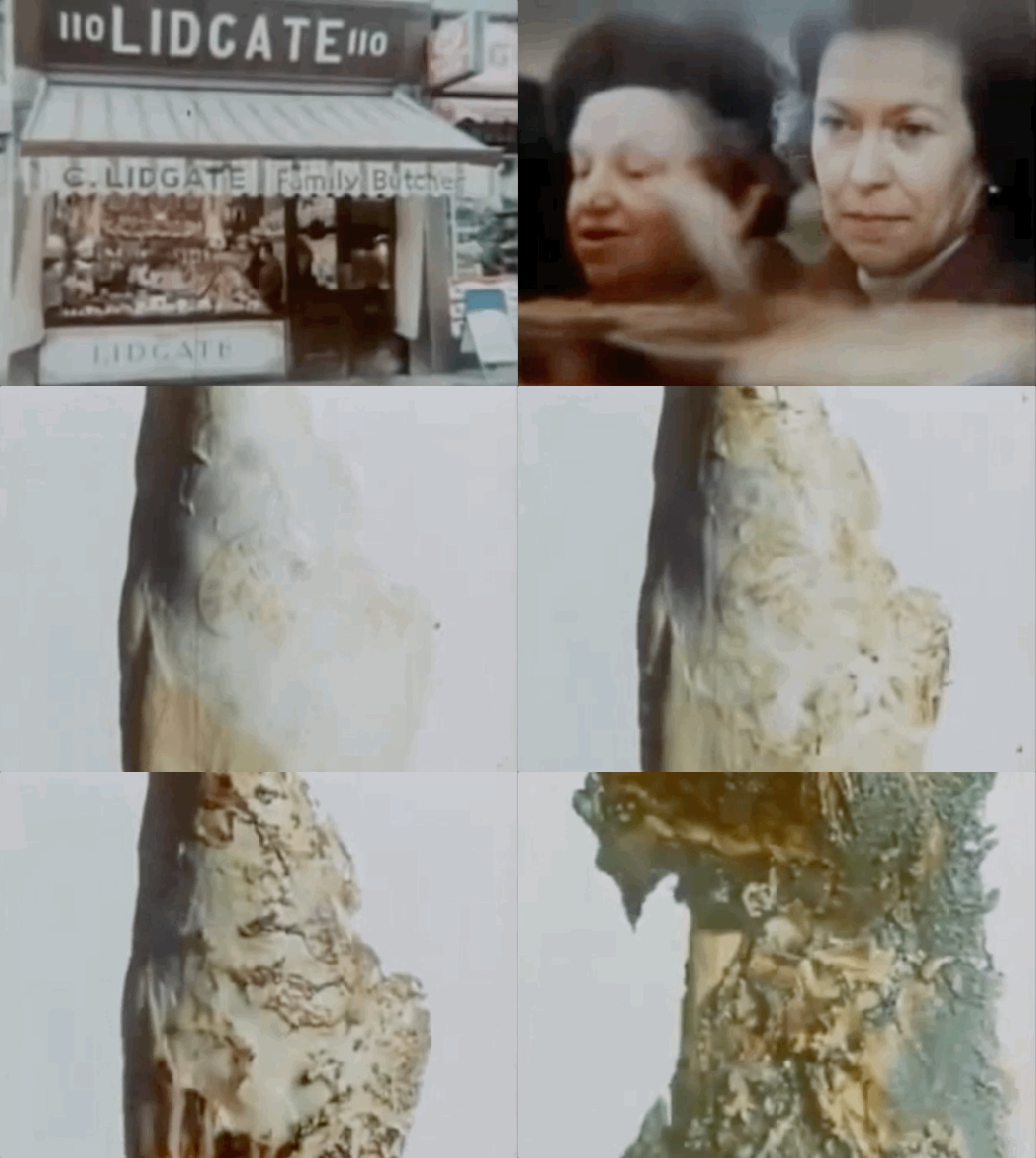
The charring of meat in Lidgates Butchers, Holland Park (used by QED as a grim metaphor for the impact on human flesh):
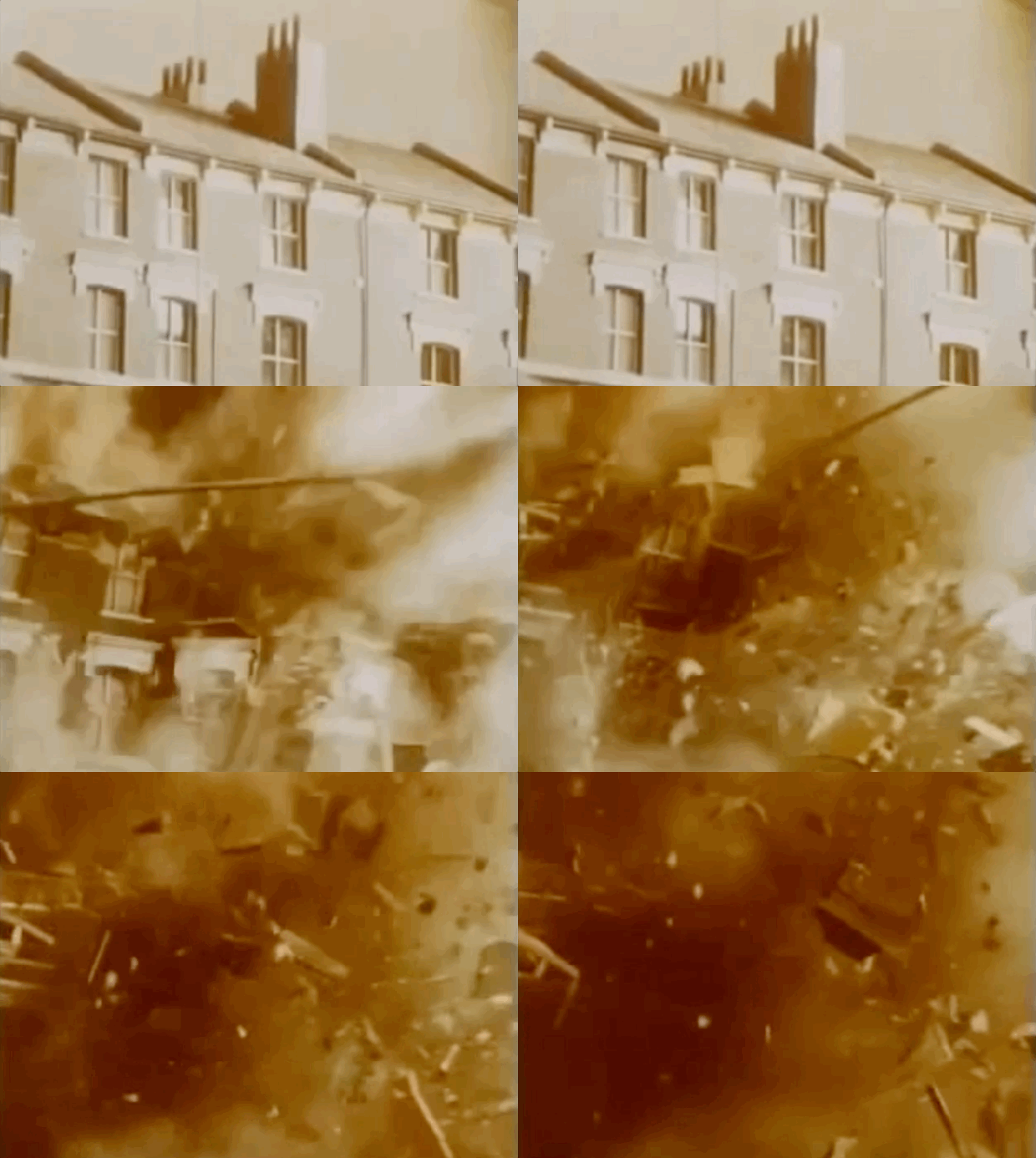
The total destruction of buildings under pulverising blast-waves:
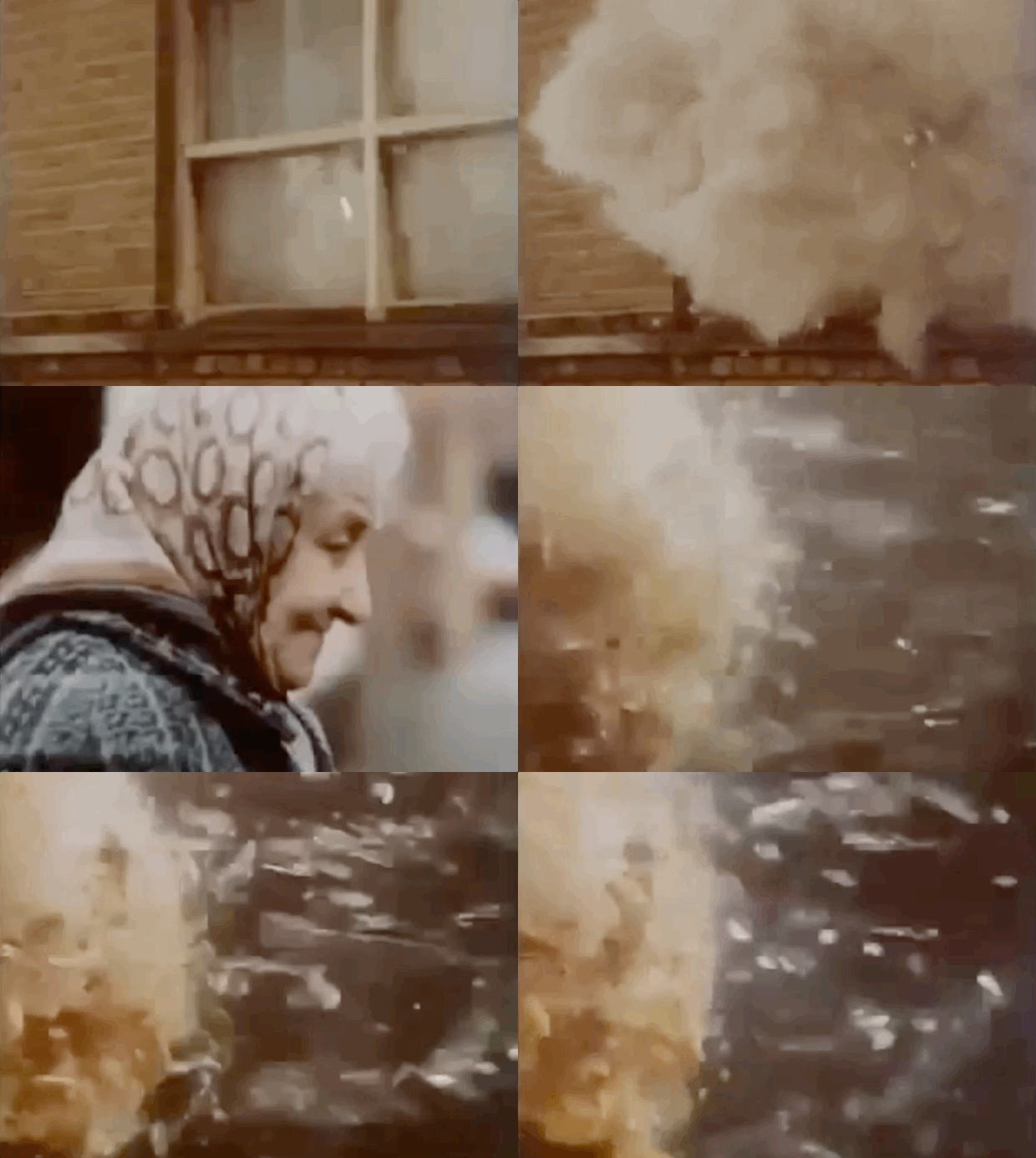
A tidal wave of deadly flying glass (demonstrated here on the skin of an unfortunate pumpkin):
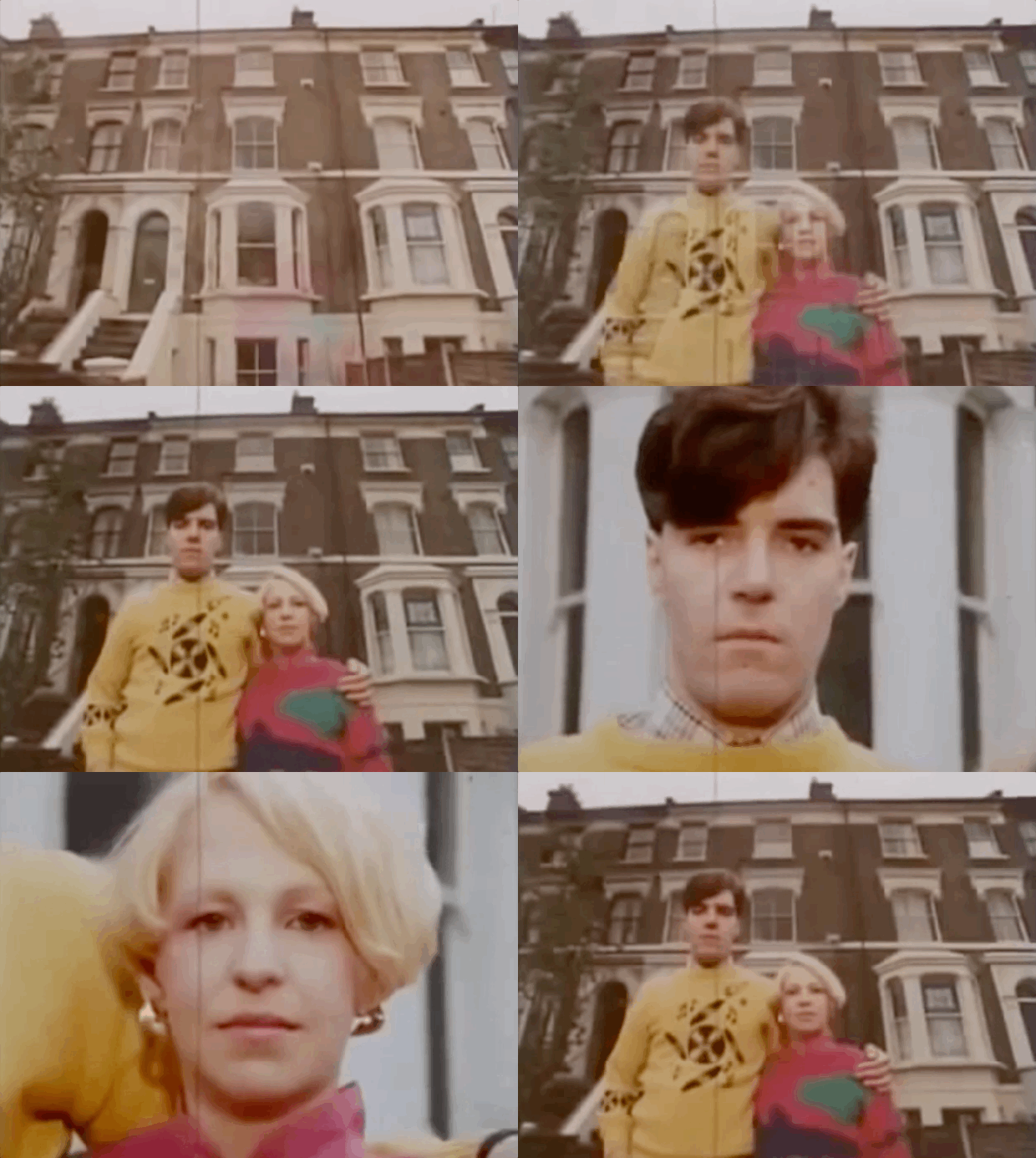
And some pretty scary fashion choices!
Modelled here by Joy and Eric, a Finsbury Park couple who attempted to build various nuclear shelters for the documentary.
Joking aside, ‘A Guide to Armageddon’ is very scary stuff- particularly the doom-laden end sequence in which famous London locations are depicted as ruins in a post-apocalyptic wasteland.
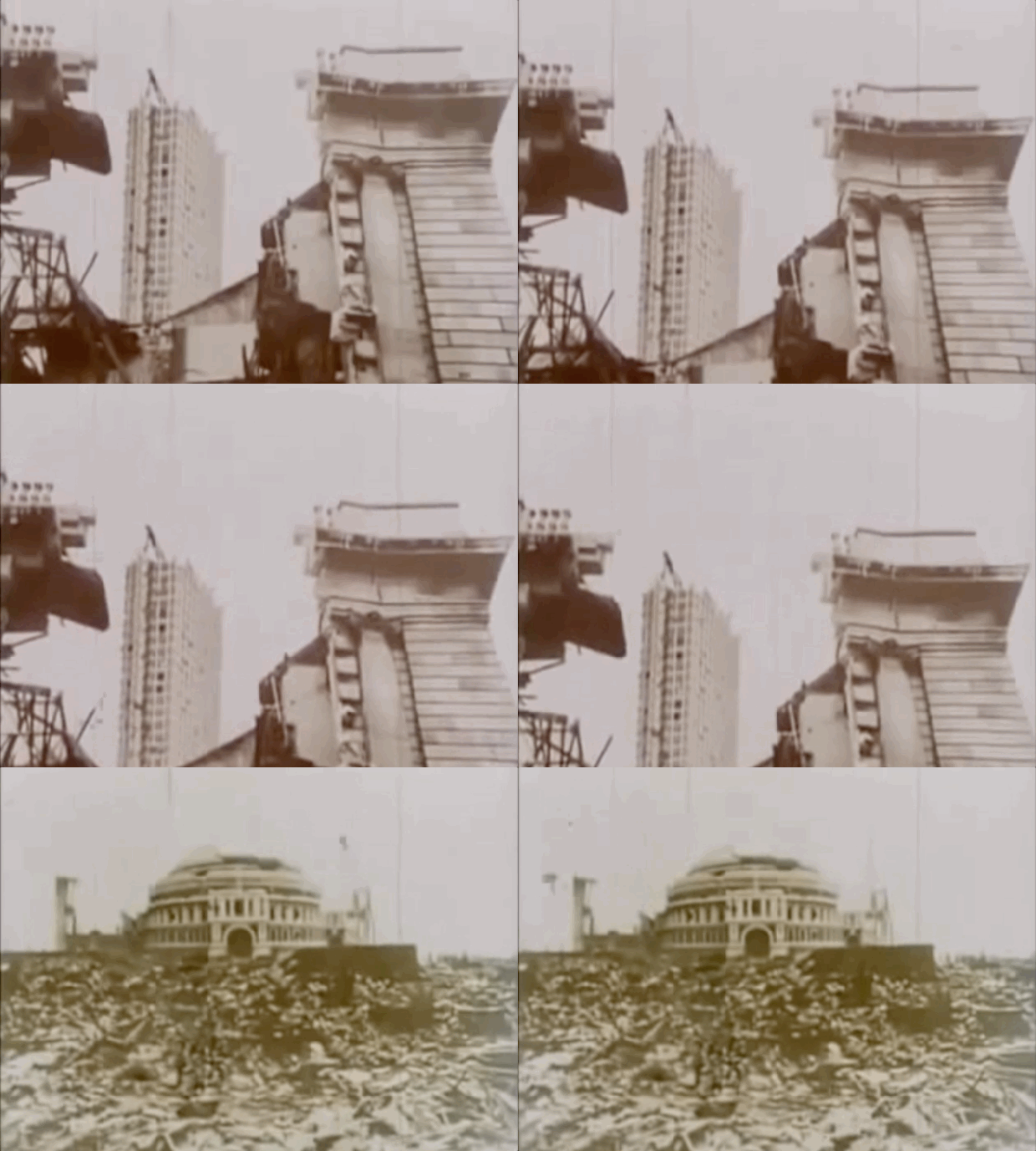
To watch the entire episode of this QED documentary, please click below:
‘A Guide to Armageddon’ was produced by Essex born Mick Jackson who, shortly after, drew upon the experience to direct the 1984 drama, ‘Threads’ which was written by Barry Hines (author of ‘A Kestrel for a Knave’ which had been adapted as the heart-breaking 1969 film, ‘Kes’) and portrayed the consequences of a nuclear war as experienced by the people of Sheffield.
Threads is arguably one of the most disturbing dramas ever broadcast by the BBC and can be viewed here in its entirety- although please be aware, viewer discretion is highly advised.
Here’s hoping the Domesday Clock ticks back soon…








 View from the Mirror