Craig’s Court: A Curious Cul-de-sac
Pictured below is Craig’s Court, a tiny dead-end street tucked away off of Whitehall.

Craig’s Court
Although located just yards from Trafalgar Square, this cramped little cul-de-sac is often overlooked by the thousands of tourists and commuters who stream past every day, completely unaware of the site’s quirky history.
*
Little is known about the origins of Craig’s Court, other than it was laid out at some point in the 1690s by Joseph Craig, a vestryman of St Martin’s. When inaugurated, Craig’s Court lay at the northern tip of the Palace of Whitehall, a vast royal residence which had been expanding ever since Henry VIII pinched it from Cardinal Wolsey in the 16th century.

The Palace of Whitehall
The palace was destroyed by a huge fire in 1698. Today, only the Banqueting House on the corner of Horseguards Avenue remains.

Banqueting House, the only remaining section of Whitehall Palace (image: Wikipedia)
Folly
As the remains lay smouldering, one William Stanhope, 1st Earl of Harrington convinced himself that the palace would be rebuilt and so, not wishing to miss out on the opportunity to shack up beside the royal family, purchased a plot of land on Craig’s Court and built the splendid Harrington House which was completed in 1702.
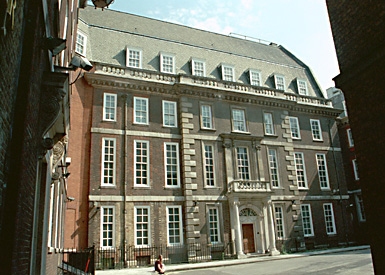
Harrington House, Craig’s Court (image copyright Stephen Hodgson)
Unfortunately Whitehall Palace was never reconstructed. The royals migrated westward, depriving Stanhope of the opportunity to call the monarch his neighbour and rendering his grand home an isolated white elephant (although the family remained there until 1917).
Today, the 18th century building houses a telephone exchange…and allegedly harbours an entrance shaft to a large, top-secret government bunker dubbed ‘Q Whitehall‘- although you didn’t hear that from me…
Paving the way
Despite its diminutive size and association with folly, Craig’s Court can be thanked for blessing London with a major innovation.
In the mid-18th century, the then speaker of the house, Arthur Onslow decided to pop by Harrington House for a visit.
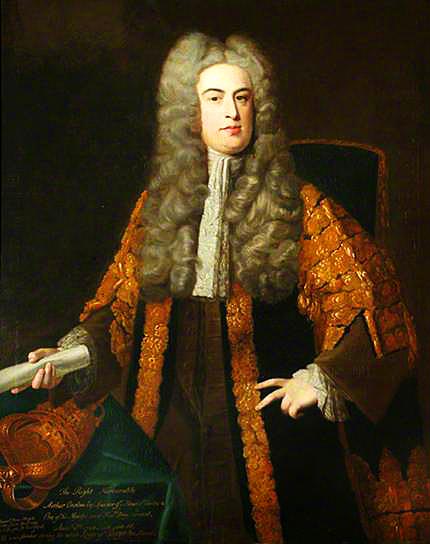
Speaker of the house, Arthur Onslow
In those days London’s streets were not paved, leaving many thoroughfares boggy and treacherous.
Craig’s Court was no exception and the sodden road, coupled with the dead-end’s narrowness resulted in Onslow’s coach becoming lodged as he approached Harrington House. So tight was the squeeze that a hole had to be cut in the coach’s roof so that the flustered and infuriated speaker could drag himself out.
When he returned to Parliament, Arthur Onslow pushed through a bill which required London householders to ensure kerbstones were laid outside their door- thus giving birth to ordered pavements.
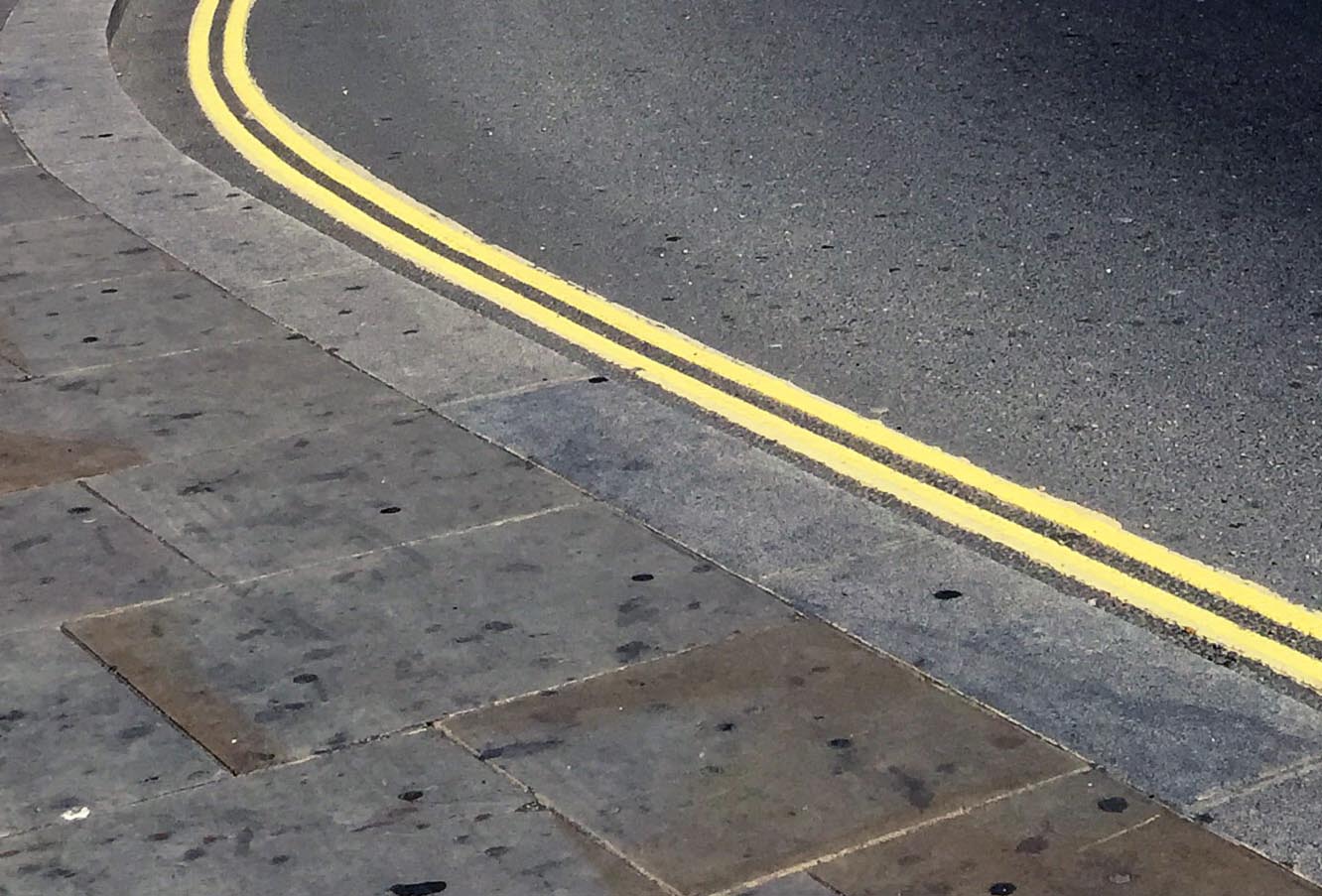
London paving
Scandal
Craig’s Court was also once home to Teresia Constantia Phillips, a woman who caused great scandal in the 1740s when she published shocking series of accounts detailing her numerous affairs.
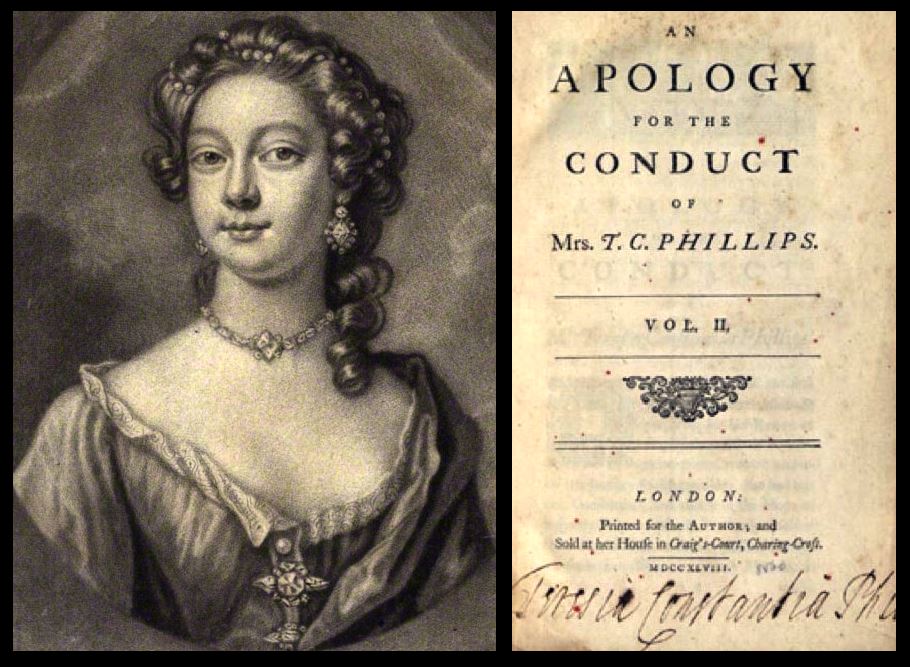
In the 1760s, a fashionable artist named George Romney also set up house here.
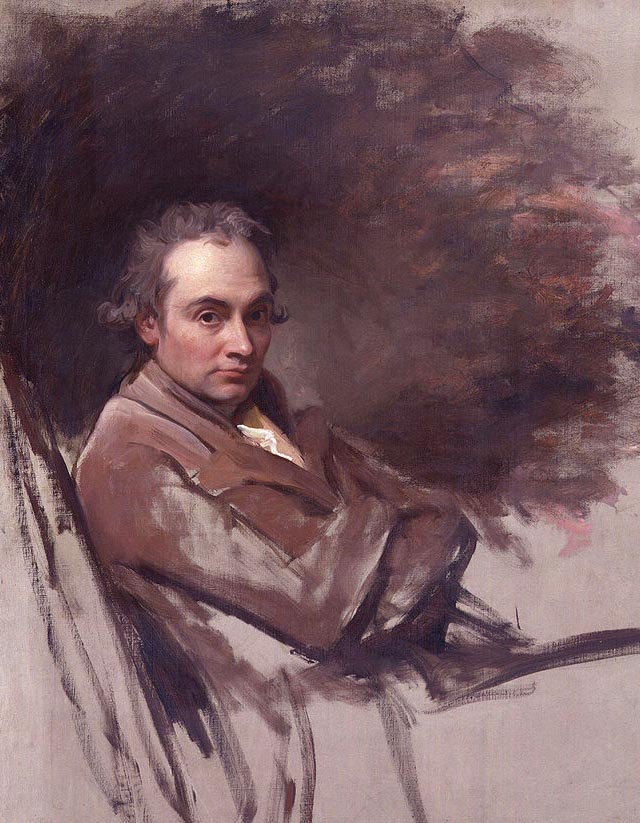
George Romney self portrait.
Romney was noted for his relationship with Emma Hart- the woman who would later become Lady Hamilton and mistress to Lord Horatio Nelson, the celebrated admiral whose infamous memorial stands just around the corner on Trafalgar Square…


*
Cabbie’s Curios: St Alban’s Tower
Pictured below amongst the jumble of modern office blocks is the St Alban Tower which stands on an island in the middle of Wood Street, close to the Guildhall.

St Alban’s Tower, Wood Street
Dedicated to the Christian martyr, Saint Alban this isolated spire is all that remains of a church created by Sir Christopher Wren in the 1680s as a replacement for an earlier design by Inigo Jones.

Inigo Jones and Christopher Wren, two great architects associated with St Alban’s, Wood Street
There have been several churches in honour of St Alban on this ancient thoroughfare. The earliest reference dates back to 1085, although it is believed the association goes back a lot further.

Contemporary image of Wren’s Wood Street church
Sadly, Wren’s design was badly bombed during WWII causing severe damage to much of the church.

The ruins of St Alban’s, Wood Street in 1952
The blitzed ruins were eventually pulled down in 1955, but the relatively undamaged tower was maintained. In the 1980s the surviving section was converted into residential space and is now off limits to the public.

The tower today, now a private residence
*
Candid Capital: Marble Arch Art Deco
Marble Arch Art Deco

An early 20th century relief featuring a double decker bus and a representation of Marble Arch. Evelyn Court, Edgware Road, October 2014







 View from the Mirror