Candid Capital: Marble Arch Art Deco
Marble Arch Art Deco

An early 20th century relief featuring a double decker bus and a representation of Marble Arch. Evelyn Court, Edgware Road, October 2014
Cabbie’s Curios: The Policemen’s Wall
Pictured below is Myddelton Passage, a quiet road which pops out behind Sadler’s Wells Theatre.

Myddelton Passage, EC1
Initially a narrow footpath, the street was widened in the early 19th century as an estate of homes developed around nearby Myddelton Square, Claremont Square and Amwell Street.

Historic image looking across Inglebert Street towards Myddelton Square. Myddelton Passage leads off to the right, just before the church (image: British History.ac)
Despite the expansion Myddelton Passage was considered to be a dark and dangerous alley throughout the Victorian era; a reputation making it notorious enough to feature in George Gissing’s 1889 novel, The Nether World as the setting for a violent assault on a character named Pennyloaf Candy:
“Pennyloaf…turned into Myddelton Passage. It is a narrow paved walk between brick walls seven feet high…the branches of a few trees hang over; there are doors seemingly never opened, belonging one to each garden; a couple of gas-lamps shed feeble light…

Myddelton Passage today…
“There came running from the other end of the Passage a girl whom Pennyloaf at once recognised. It was Clem Peckover…who was now springing out of ambush. She rushed upon Pennyloaf who for very alarm could not flee, and attacked her with clenched fists.
Pennyloaf could not even ward off the blows that descended upon her head; she was pinned against the wall, her hat was torn away, her hair began to fly in disorder…Pennyloaf’s hysterical cries and the frantic invectives of her assailant made the Passage ring.”

A 19th century scrap
*
Today, Myddelton Passage has cleaned up its act; you can certainly walk along it of an evening without fear of attack.
However, look closely at the wall running along its southern perimeter and you’ll discover a secretive hint of its shadier Victorian past…


This large collection of seemingly random numbers were mostly carved around the mid to late 19th century by an array of police officers– with each set of digits representing the respective bobby’s collar number.
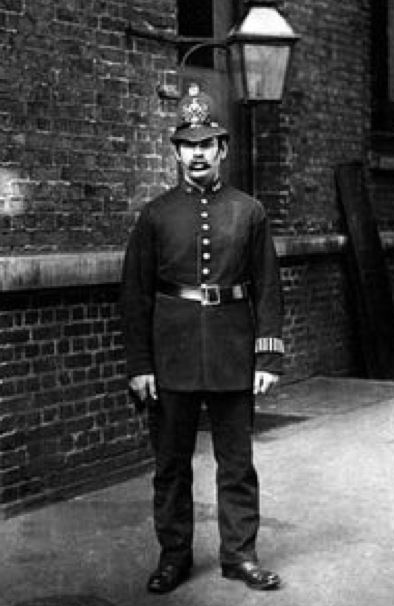
A Victorian Police Officer
Most of the numbers feature a ‘G’ linking them to ‘Finsbury Division’; the team who operated out of the former King’s Cross police station.

359 G… denoting an Officer of the Finsbury Division…
Quite why so many Victorian coppers chose to create this swathe of graffiti in this particular location remains something of a mystery…

The policemen’s numbers can be seen carved across much of the Myddelton Passage wall…
*
Cabbie’s Curios: Victorian Relief

Just off of Fleet Street,tucked between Chancery Lane and St Dunstan in the West church runs a little alley named ‘Clifford’s Inn Passage’.

Northern entrance to Clifford’s Inn Passage
Now overlooked by streams of commuters this quiet thoroughfare once held a greater purpose in that it formed the main entrance to Clifford’s Inn of Chancery, one of several institutions which, until the 17th century, provided a centre for training barristers.

Clifford’s Inn hall pictured in September 1934, shortly before its demolition (image: London Illustrated News)
By the 19th century the lane leading to this forgotten relic had morphed into a dark and claustrophobic little haunt… exactly the sort of place where a Londoner, having made merry in the surrounding multitude of taverns and gin palaces, would drunkenly stagger for a pee.

‘Sunday in London’… the debauched capital in 1834 by George Cruickshank
Back then of course London’s sanitary arrangements were grim to say the least and folk relieved themselves wherever they could– especially in the city’s labyrinth of alleyways which provided some discretion.

Clifford’s Inn Passage, 2015
More often than not though the walls forming such passageways were private property, the owners of which did not take too kindly to having their cherished brickwork eroded by copious flows of steaming urine.
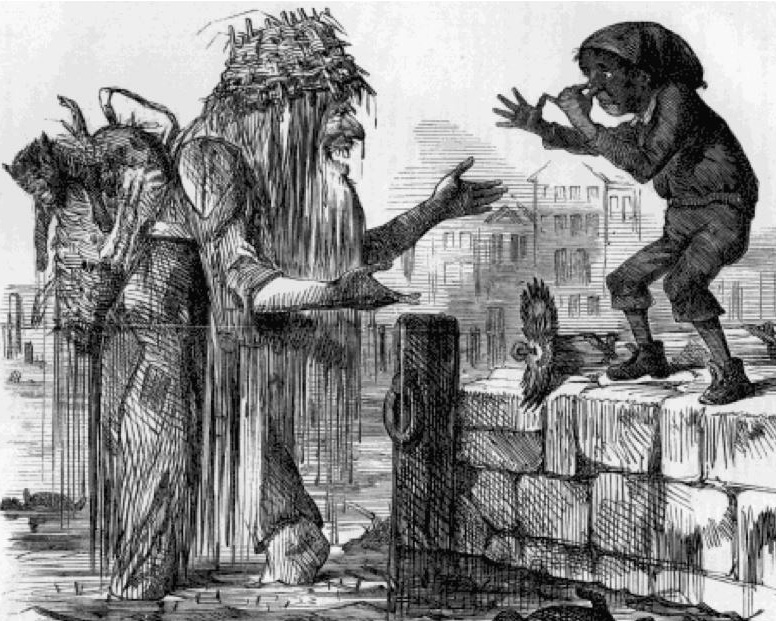
‘London Bathing Season’; cartoon from ‘Punch’ magazine, 1859
One way to overcome this problem was to bolt a deflector shield to the wall; an angled length of metal which would guide pollutions into the gutter rather than the grouting.
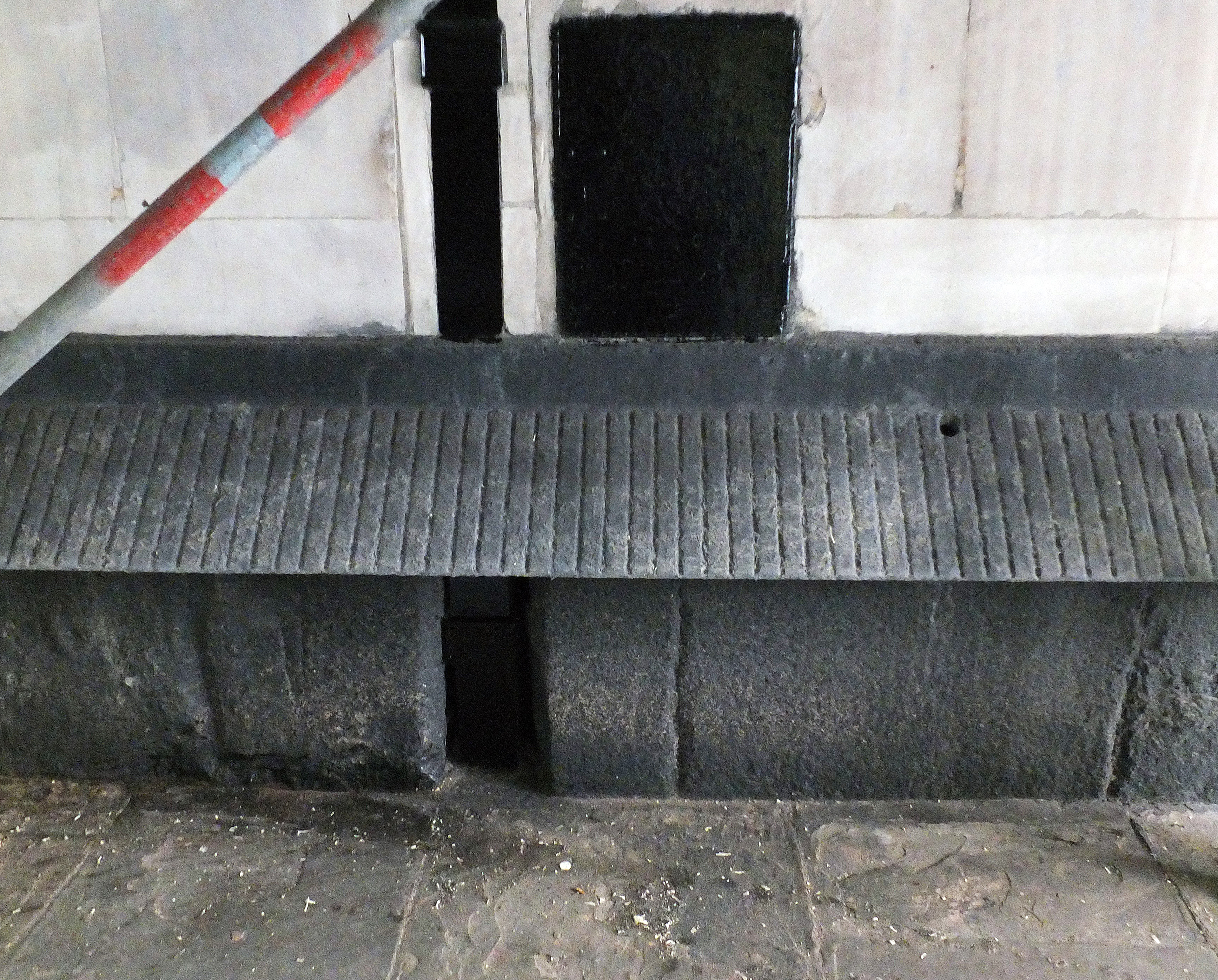
An old Victorian urine deflector running along Clifford’s Inn Passage
During the Victorian era such shields were a common sight across London but, as public lavatories were built and sanitation in general improved, they began to disappear.

A somewhat ironic sign attached to a door within Clifford’s Inn Passage
The sturdy urine deflectors on Clifford’s Inn Passage are the best remaining example of these early sanitary attempts… just make sure you don’t mistake them for a bench!

Please note, ‘blackcablondon.net’ does not endorse relieving one’s self here…there are perfectly adequate facilities a short walk away, right outside the Royal Courts of Justice (although they do charge 50p for the privilege!)








 View from the Mirror