Tales From the Terminals: St Pancras (Part One)
Tales From the Terminals now moves onto one of London’s most celebrated examples of architecture- St Pancras Station… or, as it’s been known since 2007, St Pancras International.
A Roman Martyr
It is all too easy to confuse ‘Pancras’ with the word, ‘Pancreas’… i.e., the gland organ which forms part of the digestive system!
In fact, St Pancras takes its name from a derivation of ‘Pancratius’; a 3rd century martyr who was born in Phrygia (now part of modern-day Turkey).
Orphaned at an early age, Pancratius was taken under the wing of his uncle, Dionysius.
The pair decided to travel to Rome and, whilst there, they converted to Christianity; a dangerous thing to do in those days.
Even more daring, Pancratius and Dionysius publically proclaimed their faith… an act of bravery which quickly led to their arrest. Dionysius died in jail and Pancratius- aged only 14- was beheaded for his beliefs.
The two early Christians later gained martyrdom and were made into saints.

Saint Pancratius
It is believed that a church dedicated to St Pancras the Martyr has existed in the vicinity where the railway station now stands since the 7th century.
Today, there are two churches in the area; St Pancras Old Church (which sits a short distance behind the station) and the later St Pancras Church; a far grander affair which was built in 1822 and can be found on Euston Road
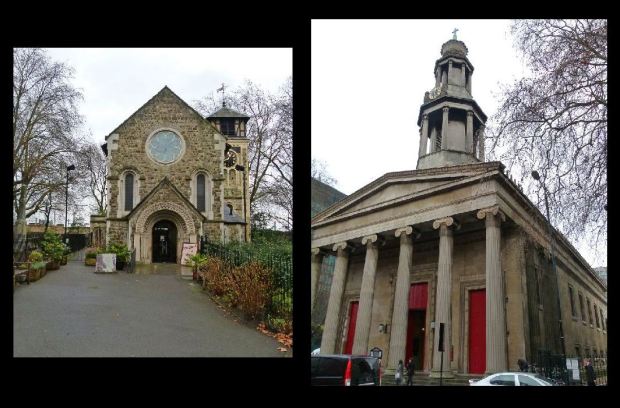
St Pancras Old and New Churches
*
A Station is born
St Pancras Station dates back to 1863, when the Midland Railway decided to construct a terminal of their own. Up until that point, they’d shared space with The Great Northern Railway; based next door at Kings Cross Station.
With their plans for a new station in mind, bosses from the Midland Railway purchased land in the area known as ‘Agar Town’ which came under the parish of Old St Pancras church.
The land upon which Agar Town stood had once been open fields, belonging to wealthy landowner, William Agar.
When William Agar died in 1838, his widow began to lease the land at cheap rates… as a result, Agar Town- essentially a shoddily built shanty community, began to spring up.

Map of Agar Town
The settlement was horrendously poor and, by the early 1860s, Agar Town was considered to be one of the worst slums in London. In 1851, Charles Dickens paid a visit to the area, describing it as:
“A complete bog of mud and filth with deep cart-ruts, wretched hovels, the doors blocked up with mud, heaps of ashes, oyster shells and decayed vegetables. The stench on a rainy morning is enough to knock down a bullock.”

Disruption
When construction of St Pancras Station and its sprouting rail tracks began, Agar Town, being inconveniently in the way, required complete flattening.
Although the landlady received a handsome £19,500 through the sale of the land, the residents of Agar Town- of whom there were approximately 5,000- were unceremoniously kicked out with no compensation offered.
The demolition of St Luke’s- an Agar Town church- was also required but, being rather pious people, the Victorians re-built the place of worship a little further north in Kentish Town at a cost of £12,000. The relocated church still stands today, and can be found on Osney Crescent.

St Luke’s Church, Kentish Town (from Google Street View)
The disruption didn’t end there though.
Old St Pancras Church also lay very close to the worksite, and the need to dig a tunnel near the new station caused major disruption to the church’s graveyard.
The cemetery belonging to Old St Pancras was the final resting place for 1,000s of people (many of whom had been refugees. who had fled to London during the French Revolution) and, although it had been closed to burials for some 30 years, there was public outcry at the railway’s interference with the burial ground.
Many of the bodies had to be exhumed and re-buried but, rather than giving the corpses fresh plots, the authorities simply dug a 40 ft. deep pit, into which 7,000 cadavers were hastily placed.
One of the officials employed to oversee this morbid task was none other than Thomas Hardy- a young apprentice architect who later went onto become one of Britain’s most celebrated authors; penning novels such as The Mayor of Casterbridge, Jude the Obscure and Tess of the d’Urbervilles.

Thomas Hardy
In 1882, nearly 20 years after taking part in the St Pancras dig, Hardy summed up the grisly mass grave in his poem, The Levelled Churchyard; with one of the verses reading thus:
“We late lamented, resting here
Are mixed to human jam,
And each to each exclaims in fear
I know not which I am!”
Today, the burial pit has been built over and, perhaps quite appropriately, St Pancras Coroner’s Court now sits on top of it.

St Pancras Coroners Court (from Google Street View)
A number of tombstones from the torn up graves were retained by the Victorian planners, and grouped around a tree. This memorial of sorts is known as ‘Hardy’s Tree’ after the famous author who unhappily took part in the desecration.
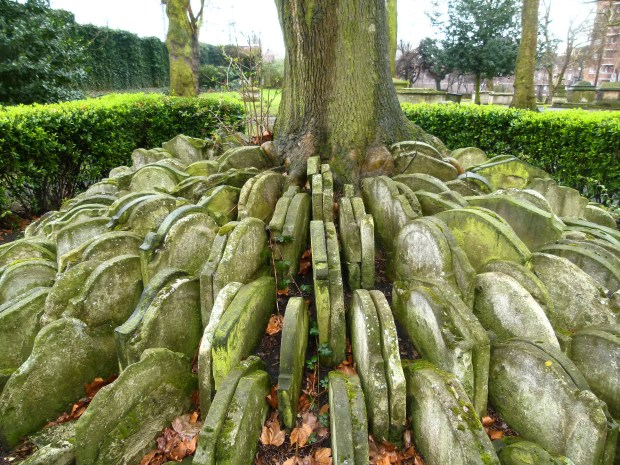
Hardy’s Tree
*
St Pancras Station Opens
By 1868, St Pancras Station was ready for business.
The new station was a true marvel of Victorian engineering, frequently drawing comparisons to a cathedral.
The Midland Railway’s directors had clearly done their homework; taking note of earlier stations and incorporating the best bits from them into their own terminal… the grandeur of old Euston, the soaring iron and glass roof at Paddington and the practicality of Kings Cross all played their part in influencing St Pancras.
The mighty roof of the train shed was designed by William Henry Barlow, a seasoned engineer who had been involved in many projects- including the task of completing Bristol’s Clifton Suspension Bridge following Isambard Kingdom Brunel’s death.
Barlow’s roof is 210 metres long, 73 metres wide and sits 30.5 metres above the rails; all supported by hefty iron ribs weighing 55 tonnes a piece.

The roof under construction, 1864
When it first opened, this breath-taking canopy boasted two records; being both the largest single span construction and the largest enclosed space in the world.

Believe it or not, St Pancras station owes much of its immense size to… beer!
When the station was built during the 1860s, ale brewing was big business.
One of the major centres of this industry was the midland town of Burton-on-Trent, which had forged close links with the Midland Railway.
So huge was the industry in Burton-on-Trent, that the town’s brewers built their own, private railway specifically for moving their product around.

‘The Crossing’ (1961) by Lowry, depicts Burton’s private beer railway
As part of this system, the brewers secured storage space at St Pancras; the new station being specifically designed to incorporate a vast network of cellars for the purpose. At its height, the vaults beneath St Pancras were able to store over a million barrels of booze, most of which went onto be shipped all over the world.
Gothic Splendour
St Pancras’s main façade, which faces the Euston Road, is in fact a hotel; the Midland Grand (now called the St Pancras Renaissance).
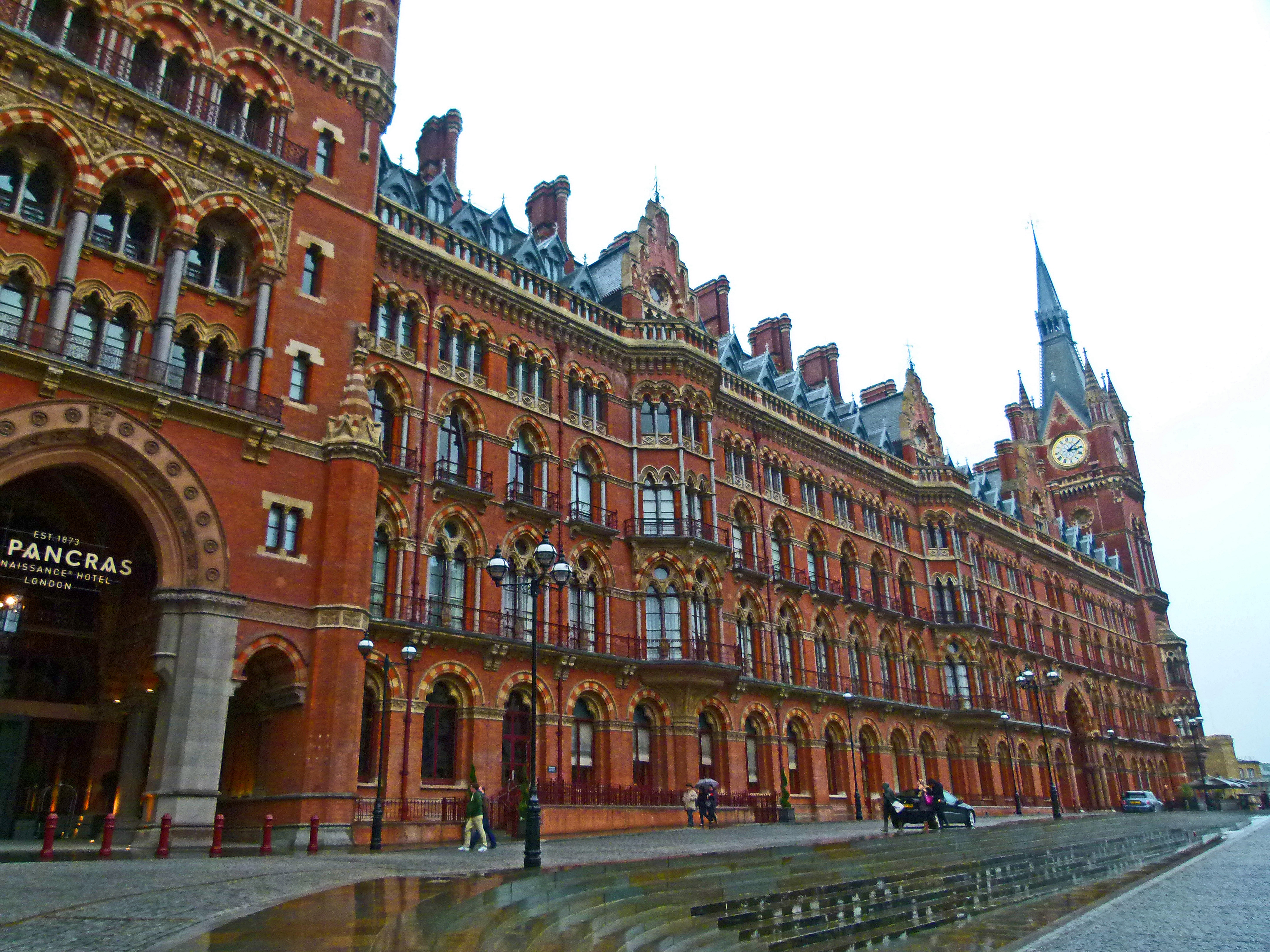
It was built between 1868-1872, following a competition held by the Midland Railway to find an architect for the ego-boosting project.
The contest was won by Sir George Gilbert Scott (father of Giles Gilbert Scott who followed in his father’s footsteps; becoming an architect and designing the iconic red telephone box, Battersea Power Station and the Bankside Power Station which now houses Tate Modern).

Sir George Gilbert Scott
It is perhaps surprising that Scott’s design proved victorious- because, out of the 11 plans entered, his was by far the most expensive!
However, it was no secret that the Midland Railway were out to impress. They wanted their new combined hotel-station frontage to be the biggest and boldest in the British Empire. Their wallets were deep and cost was no object.
*
Much of Scott’s soaring gothic design for the Midland Grand Hotel was actually based upon plans which he’d originally drawn up for Government offices in Whitehall.
However, unlike the board of the Great Midland Railway, parliament were not willing to bankroll such frivolity! The government’s rejection hurt Scott, but the opportunity to carry out similar work at St Pancras eased his upset somewhat. As he later recalled:
“It is often spoken of to me as [St Pancras being] the finest building in London; my own belief is that it is possibly too good for its purpose, but having being disappointed through Lord Palmerston of my ardent hope of carrying out my style in the Government offices…I was glad to be able to erect one building in that style in London.”
*
When the Midland Grand opened its doors in 1873, it was with the boast that the hotel was “the most perfect in every possible respect in the world”, and it did indeed remain at the height of luxury for the remainder of the century.
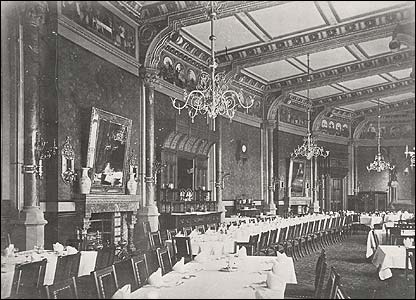
The Grand Midland’s Dining Room
The hotel was a hive of mod-cons, including flushing toilets, electric bells, hydraulic lifts (or ‘ascending chambers’ as the Victorians liked to call them) and Britain’s first revolving door.
In 1896, a ladies’ only smoking room was opened at the hotel… this liberal move proved rather scandalous at the time, as giving the ok for women to have a puff in public just wasn’t the done thing!
Beds were priced at 14 shillings a night; over £60 in today’s money. Arthur Conan Doyle (creator of Sherlock Holmes), was bowled over by the hotel, commenting that “nothing in fact or fiction can match this wonder…”
*
Decline
By the 1930s, the opulent hotel had become sadly outdated.
The main reason for its faded eminence was that the hotel had been constructed in an era when en-suite bathrooms were unheard of.
As the twentieth century wore on, concerting guests at the Midland Grand were still having to ask for jugs of hot water to be brought to their room; a once gentlemanly custom which had rapidly become uncomfortably outdated.
The management introduced more gimmicks- namely an in-house orchestra and Moroccan style coffee room- in an attempt to boost the flagging numbers, but they were fighting a losing battle.
Unable to incorporate the required plumbing or space for en-suites, the hotel closed down in 1935.
The hotel building was later renamed ‘St Pancras Chambers’, and was converted into office space for use by British Rail.
Despite the hotel’s closure, St Pancras Station continued to play its part as an important railway terminal.
During WWII, the station was a major departure point for both troops marching off to war and for 1,000s of London youngsters being evacuated to the safety of the countryside.
In August 1942, the station was heavily bombed; badly damaging tracks, rolling stock and the once magnificent roof. But, in the typical wartime spirit, it did not take long for railway workers to get St Pancras up and running again.

St Pancras war damage, August 1942
*
St Pancras Station’s greatest fight
By the 1960s, a threat far greater than a lack of plumbing or fascist bombing was presenting itself to St Pancras station…
Whilst the 1960s gave much to the world in terms of music, fashion and social advancements, its record on architecture leaves much to be desired.
As mentioned in a previous post, the old, Victorian Euston station, along with its much celebrated Doric Arch, had been smashed to pieces in the early 1960s.
As work got under way building the new, somewhat boxy Euston, nearby St Pancras was the next grand railway terminal to swing into the developers’ sights….
Planners from the mid to late 20th century were a ruthless, unsentimental bunch, with little time or appreciation for Victorian architecture.
St Pancras Station was regarded in such circles as a vulgar, over-blown building from a bygone era which warranted wiping out.
As with Euston Station, it was agreed that the old St Pancras should be demolished and replaced with structures of the utmost modernity.
The plan envisioned sweeping away Scott and Barlow’s masterpiece and plonking a towering office block, leisure centre and social housing on the vacated site; a development that would not have looked out of place in Soviet Moscow.
As part of this plan, the routes running into St Pancras would have been re-directed to next door’s Kings Cross, also earmarked for a major overhaul.
Thankfully, St Pancras found a saviour in the form of Sir John Betjeman, the noted writer, broadcaster and poet laureate from 1972 to 1984.
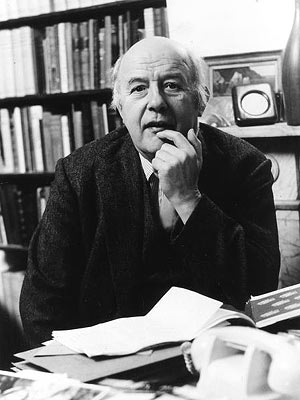
Sir John Betjeman
Born in Highgate, North London in 1906, Sir John Betjeman was a strong advocate of Victorian architecture and its preservation; a passion which, in the 1960s, seemed to be something of a lost cause.
Sir Betjeman had campaigned to save Euston and the Doric Arch in the first half of the decade but, despite popular support, had sadly failed.
In 1966, a British Rail employee who shared Betjeman’s love of Victorian architecture, leaked the proposed but hushed St Pancras demolition plans to the writer. The act of kindness from this mysterious benefactor granted the writer and his contacts at the Victorian Society valuable time to mount a large campaign to rescue the station from its fate.
Sir Betjeman branded the demolition plans a “criminal folly” and the campaign he fronted involved the constant insistence to bureaucrats that the station had a special place within the hearts of Londoners.
As the poet romantically summed up;
“What the Londoner sees in his mind’s eye is that cluster of towers and pinnacles seen from Pentonville Hill and outlined against a foggy sunset, and the great arc of Barlow’s train shed gaping to devour incoming engines, and the sudden burst of exuberant Gothic of the hotel seen from gloomy Judd Street…”

St Pancras seen from Pentonville Road
Unlike the earlier Euston campaign, the attempt to rescue St Pancras was successful… but it was a still a close call…
The station was saved when the government bowed to pressure and blessed St Pancras with a ‘Grade 1’ listing, thus making it untouchable.
This rating was decreed on the 2nd November 1967… a mere 10 days before demolition was due to begin…
Please click here for Part Two
Tales From the Terminals: St Pancras (Part Two)
Smashed!
Although the shell of St Pancras had been saved, the interior was in a rather sorry state. It had been deteriorating for some time, and would continue to do so for several decades.
An effective indicator of this decaying state could be found in the form of the station’s grand clock.
Perched high over the station’s entrance and facing the platforms, the mighty clock- which was 18ft in diameter- had informed generations of travellers of the all-important time, as they hurried to and from their trains.
The clock had been crafted by ‘Dent of London‘ ; major purveyor of luxury timepieces whose craftsmen had also provided the faces for Parliament’s clock tower (aka Big Ben), as well as equipment for Charles Darwin and David Livingstone.
By the late 1970s, the clock was peering out over a dark, smelly station; the once grand timekeeper now nothing more than a magnet for cobwebs, pigeons and bird muck.
In 1978 and in need of cash, wheeler-dealers at British Rail agreed to flog the St Pancras clock to an American collector.
The sum paid was huge- £250,000… so it must have been quite shock when, in the process of taking the clock down, the workmen fumbled their task… and dropped the valuable timepiece!
The clock plummeted to the ground, smashed to smithereens and lost its high price tag in a nanosecond-an expensive catastrophe which bears quite a similarity to one of the most famous scenes from the legendary comedy, Only Fools and Horses!….
In their shattered state, the clock pieces were now deemed to be worth only £25… and a new buyer came forward- Roland Hoggard, a train driver who was shortly due to retire.
After transporting the jigsawed clock back to his home in Nottinghamshire (a task which took over a week), Roland managed to painstakingly piece the 18ft wide clock back together, attaching his labour of love to the side of a barn on his farmland.

Roland Hoggard with his masterfully repaired, original St Pancras clock
*
The photo below depicts St Pancras in 1984 (note the obvious absence of the clock, which used to hang in the middle of the rear arch) and shows just how gloomy and dilapidated the terminal had become.
Although it had survived demolition 17 years before, the station looked positively ready to crumble and rot by its own accord.

St Pancras Station, 1984
To make matters worse, towards the end of the 1980s, the St Pancras Chambers offices (which had been converted from the old Midland Hotel) were deemed a death-trap by inspectors, who refused to grant the complex a fire safety certificate.
As a result, the offices were forced to shut down, thus transforming a vast slice of St Pancras into abandoned dereliction.
*
Renaissance
By the late 1990s, St Pancras Station was in an appalling state.
I personally remember the station around that time as being most grotty, with grimy, sticky floors and a strong odour hanging in the air; a mixture of rotting food and smoky diesel fumes.
The station was dark and forlorn, mainly because the once gleaming roof was now a patchwork of botched repairs and glass panels which had been coated in paint.
It was also surprisingly quiet, as the level of railway traffic in and out of the terminal had been steadily declining over the years.
In short, the station was a shadow of its former self; a grimy, cavernous mausoleum to a long bygone era.
However, St Pancras was about to be reborn…
At the turn of the 21st century, it was decided that St Pancras should become the new terminal for Eurostar services to and from Paris and Brussels.
At the time, the station employed for this purpose was Waterloo; a role which the station south of the Thames had been playing since the Channel Tunnel opened in 1994.
However, the line connecting Waterloo to the coast was old, twisty and torturously slow; especially embarrassing as the French tracks on the other side of the channel were sleek and hair-raisingly fast.
A new, high speed line was needed for the UK leg; one which would make the journey to the Continent as fast and efficient as possible.
Labelled ‘High Speed One’, the new route was designated to link up with St Pancras.
In line with this new project, the dilapidated terminal was expanded and given an unprecedented makeover; polishing it to a standard which exceeded all expectations and made it befitting of a major European transport hub.
The re-build took place between 2004-2007 and cost £800 million.
*

Branded as St Pancras International, the once chronically neglected station is now one of the largest railway terminals in Europe; a beautiful building, bursting with light and energy, transforming the station from crumbling backwater into what is now one of London’s most celebrated landmarks.
The former Midland Grand Hotel, which stretches across the front of the station, has also been given a new lease of life

Main entrance to the St Pancras Renaissance Hotel
Fittingly renamed the ‘St Pancras Renaissance’, the once long empty, rotting rooms have been breathtakingly restored.
Today, the hotel is a five star affair; one of London’s most luxurious destinations- and with prices to match… although prices start at £205 per night, you can always go for the ‘Royal Suite’- a 3 bedroomed apartment which will set you back a cool £10,000 per night….

Part of the Royal Suite
The new hotel contains a number of bars and restaurants- including of course the ‘Hansom Lounge’, a glamorous meeting place which incorporates the station’s old, horse-drawn taxi rank (you can find us modern cabbies ranked up around the corner; on Midland Road).
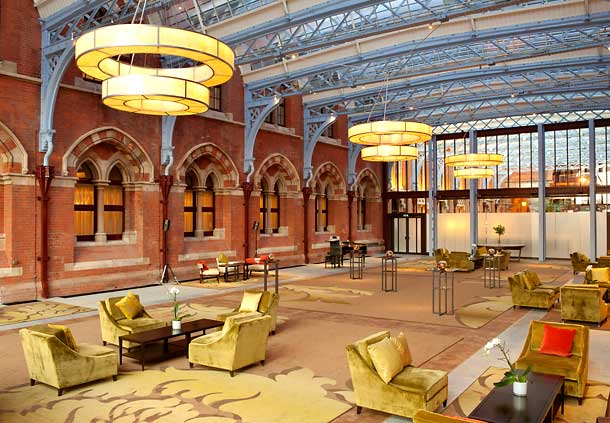
The Hansom Lounge
*
Back out on the main station concourse, St Pancras is now unrecognisable when compared to images of its former, sorry state. The station today is light, airy and enjoys all the buzz of a major European gateway.
The metalwork of the vast, restored roof has been painted an appealing sky-blue. At first, this may seem like a nod to modern tastes, but this shade is in fact the same colour used way back in 1868 when the station first opened.
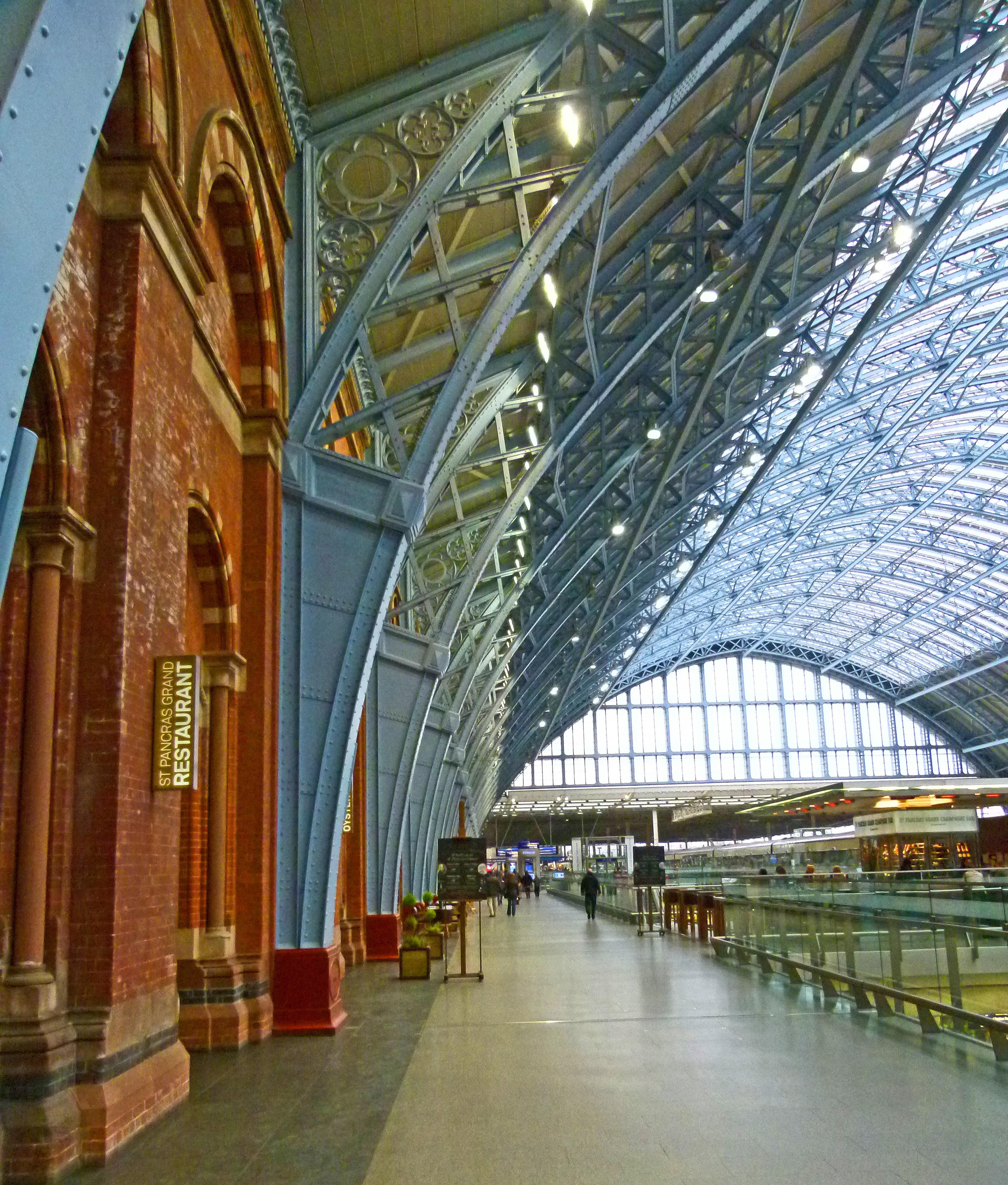
The expansive labyrinth of cellars below, once hidden and used for squirreling away beer barrels, have been thrown open and converted into a bustling shopping arcade, linked to the station’s upper decks by gleaming escalators and glass walled elevators.
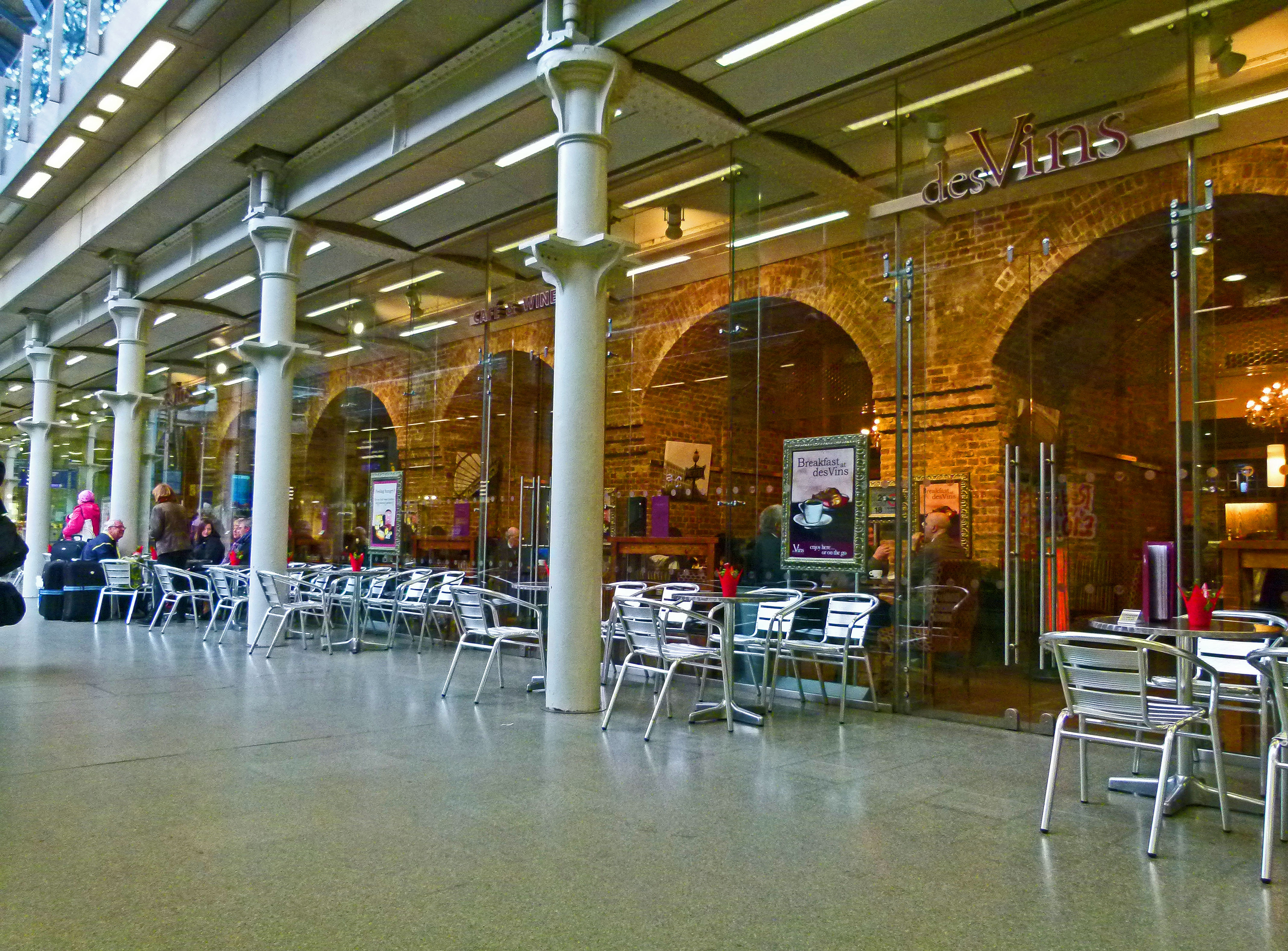
Upstairs, parallel to the Eurostar platforms, you’ll find Searcy’s St Pancras Champagne Bar– the longest of its kind in Europe.

St Pancras Champagne Bar
If you’re the sort of person who can afford the £10,000 per night price tag for the St Pancras Renaissance’s Royal Suite, then the Taittinger Brut Reserve which comes in at a mere £1,500 should pose no problem to your bank balance.
For those of us without our own personal jet though, the champagne bar’s cheapest bubblies start at £8.50…
*
As part of St Pancras Station’s overhaul, the famous clock, which had been embarrassingly destroyed in the late 1970s, was recreated by Dent of London; the very same company who had produced the original so many years before.
In order to construct the replica, clockmakers from Dent paid a visit to Roland Hoggard; the train driver (by now well into his 90s) who had purchased and repaired the smashed original.
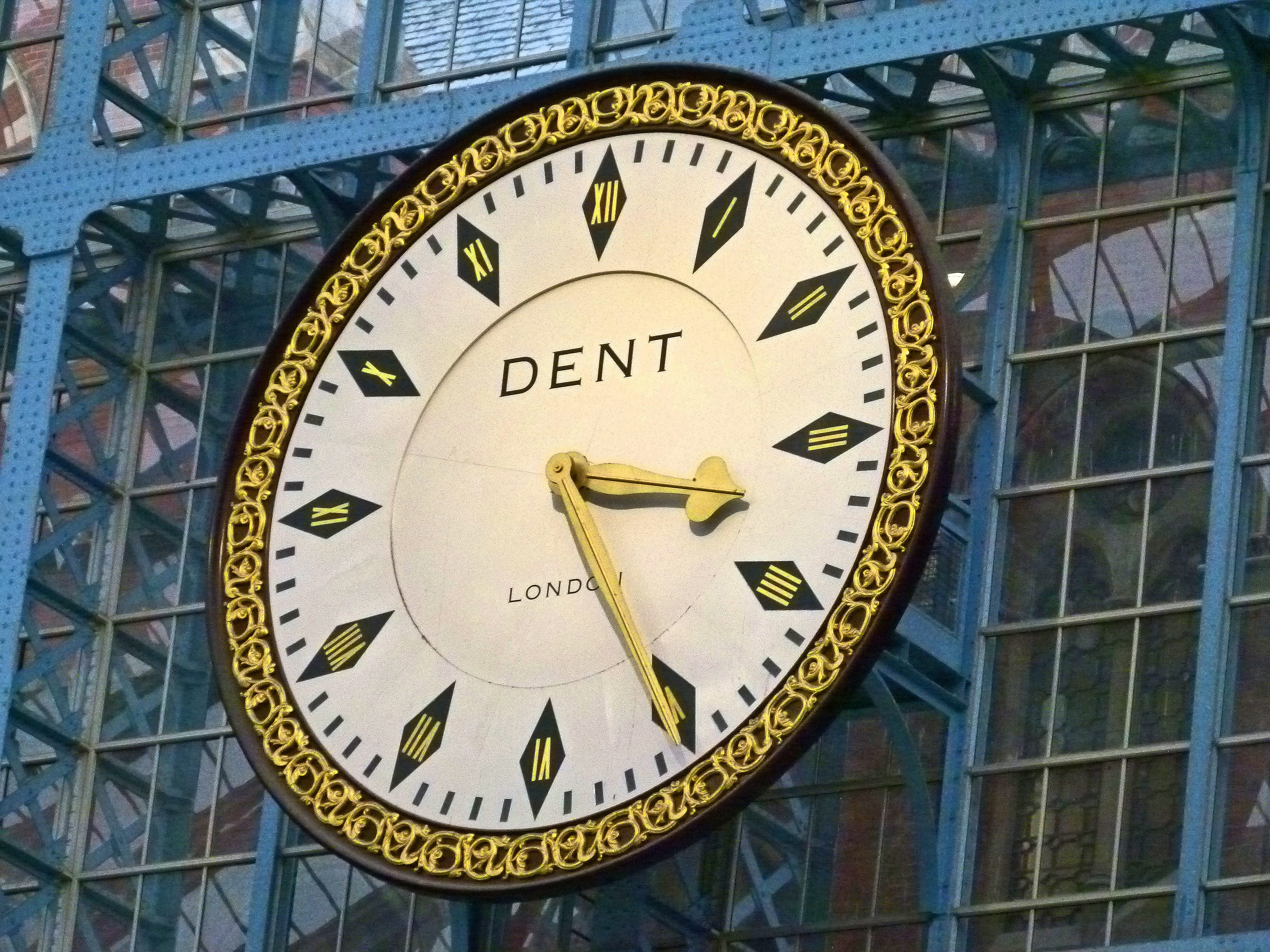
Thanks to Roland’s admirable reconstruction, the craftsmen were able to re-create an extremely accurate replica of the original. As a way of thanks, Roland Hoggard was invited to the grand opening of the remodelled St Pancras International.
*
Below the reinstated clock there stands a new, huge sculpture of a couple embracing.
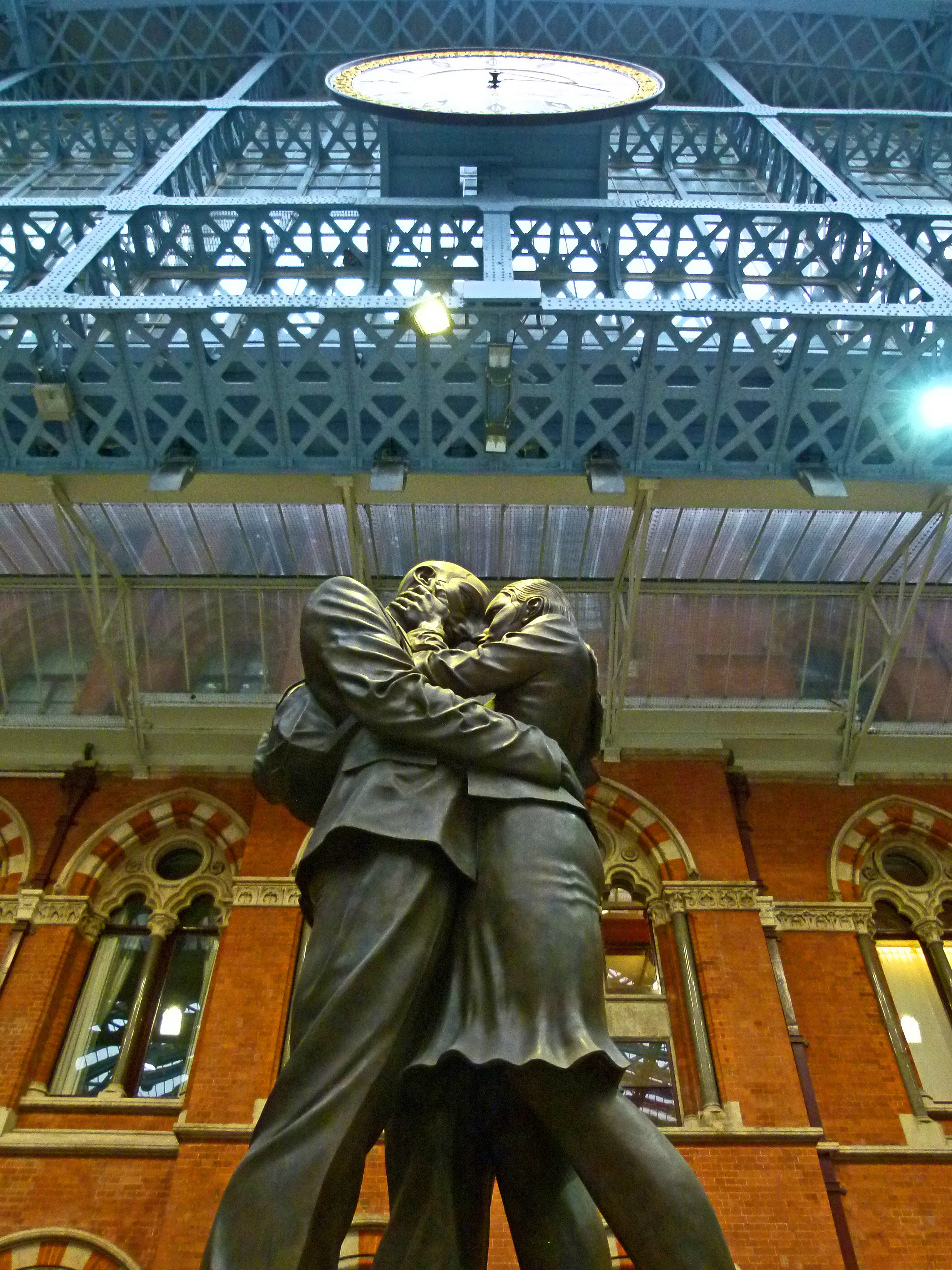
This 9 metre tall sculpture is entitled ‘The Meeting Place’ and was created by Paul Day.
The couple are intended to represent England and France, and the close bond which the Channel Tunnel has forged between the two nations. On the plinth below, there are a set of detailed friezes, representing scenes from history and everyday London life:

A short distance away from this towering sculpture, there is a far smaller, more profound statue crafted by Martin Jennings… an affectionate representation of Sir John Betjeman, peering up in awe at the beauty and resurgence of the station he loved and fought to save.

Next time: Kings Cross
Joseph Merrick… ‘The Elephant Man’ (Part One)
(Please note, this article contains images of ‘The Elephant Man’; Joseph Merrick and his deformities which some readers may find upsetting)
Earlier this month, the Royal London Hospital in Whitechapel unveiled its recent £650 million redevelopment.
An East-End landmark, the hospital has original buildings dating back to the 18th century, so the expensive revamp was very much needed.
Covering an area equivalent to 40 football pitches, the Royal London employs 3,000 staff and contains no less than 26 operating theatres.
During the re-fit, three tall towers were added; two being 16 storeys in height, the other 10 storeys.
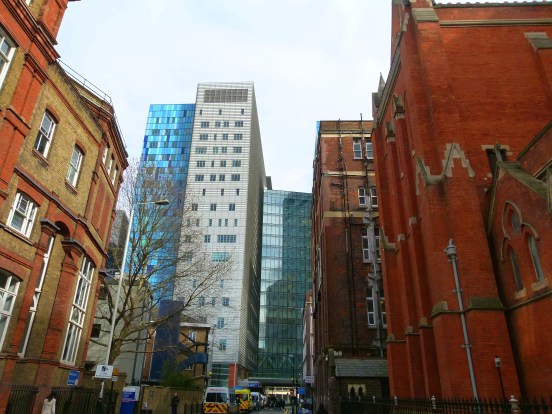
The Royal London’s three new towers, tucked amongst the existing buildings.
Constructed mainly from glass, the towers are state-of-the-art; designed to maximise light and provide beautiful views over the City, thus ensuring that the environment is as pleasant as possible for the patients being treated within.
The Royal London is also home to London’s Air Ambulance, and the roof of one of the 16 storey towers contains a helipad for this purpose.
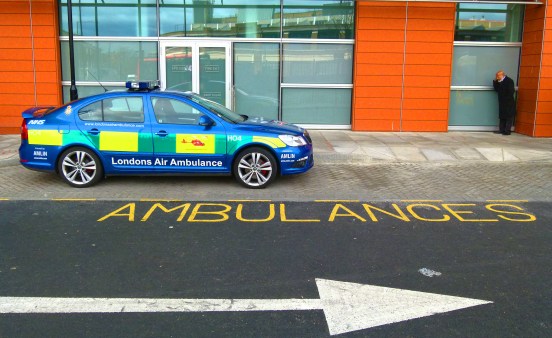
London Air Ambulance Support Vehicle
In short, the extensive updates have ensured that the Royal London is now an ultra-modern, cutting edge facility which can continue to treat patients as it has done for 100s of years.
*
Over the years, countless patients have passed through the Royal London.
But perhaps the most famous person to spend time there was Joseph Merrick; a young man from the late Victorian era who suffered from horrendous disfigurements.
Most people will have heard of Joseph Merrick (also mistakenly called ‘John’ in some accounts- including the 1980 movie version of his life) at some point in their lives… although it is usually by his more descriptive moniker:
‘The Elephant Man.’

Joseph Merrick, photographed at the Royal London Hospital, c. 1889
Early Life
Born in Leicester in August 1862, Joseph Carey Merrick was a healthy baby, displaying absolutely no sign of the terrible disease which would come to define his life.
However, symptoms began to develop in early childhood.
At 21 months old, swellings began to develop on Joseph’s lips and, by the time he was 5 years old, his skin had roughened and loosened. A bony lump had also developed on his forehead.
To add to his woes, Joseph also suffered an accident at some point in his boyhood, causing damage to his left hip; a mishap which left him with a limp for the rest of his life.
Despite his poor medical condition, Joseph still managed to attend school as a regular child.
*
Joseph was very close to his mother, Mary Jane Merrick; a stable figure in his early life who provided him with much needed love and affection.
Tragically, in 1873 when Joseph was 11 years old, Mary contracted pneumonia and died.
Just over a year later, Joseph’s father re-married a woman named Emma Wood Antill, and the new family moved in together.
Sadly, neither his father nor new step-mother displayed any sympathy towards the deformed child, constantly chiding him for being a burden.
Joseph himself would later describe the unhappy situation in a brief autobiography:
“The greatest misfortune of my life… the death of my mother, peace to her, she was a good mother to me. After she died my father broke up his home and went to lodgings: unfortunately for me, he married his landlady; henceforth I never had one moment’s comfort, she having children of her own, and I not being so handsome as they, together with my deformity, she was the means of making my life a perfect misery…”
As a result of these conditions, Joseph ran away from home on several occasions, but was always quickly tracked down by his father.
*
At the age of 13, Joseph secured a job rolling cigars in a factory, but this employment only lasted for two years as increased swelling on his right hand made the work practically impossible.
Frustrated by his inability to earn his keep, Joseph’s father secured a hawker’s licence for his son; thus permitting him to sell items of haberdashery door to door.
However, this calling also proved unsuccessful.
Due to his increasing facial deformities, many people were horrified by Joseph’s appearance, so much so that potential customers wouldn’t even answer the door. Those who did found it difficult to understand the young salesman, as the growths around his face and mouth were having an impact on clear speech.
As he shuffled his unprofitable days around Leicester, Joseph found himself being increasingly followed and harassed by onlookers who were only too keen to stare and taunt.
Through no fault of his own therefore, Joseph Merrick was unable to maintain stable employment… and finally ended up resigning himself to that much dreaded Victorian institution- the workhouse.
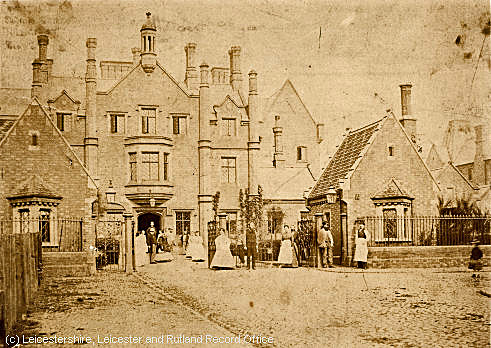
Leicester Union Workhouse
On to London
Joseph remained in the Leicester Union Workhouse for four years.
As he turned 20, it began to dawn upon him there was perhaps money to be made from his deformities, via one of the more dubious Victorian pastimes- the ‘Freak Show’.
With this in mind, the young Merrick wrote to Sam Torr; a local comedian and owner of Leicester’s ‘Gladstone Music Hall’, which was situated a mere 50 yards from where Joseph had grown up.
After receiving the letter, Sam Torr visited Joseph and, upon seeing his appalling deformities, agreed that there was indeed cash to be made.
A consortium of three managers was quickly put together and it was this group who gave Joseph his now infamous pseudonym; ‘The Elephant Man.’
*
In August 1884, Joseph Merrick finally departed the workhouse, his new career as a showpiece quickly taking him on tour.
During his time in the travelling show, Joseph befriended a fellow ‘freak’; Harry Bramley, who was a midget.
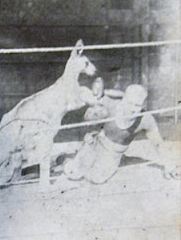
A rare photo of Harry Bramley; one of Joseph Merrick’s earliest friends… seen here fighting a Wallaby!
Although small in stature, Harry was a noted boxer. He was also fiercely protective of his new pal.
Apparently, on a visit to Northampton, a gang of local hooligans began to harass Joseph in the market square…. needless to say, wee Harry was on hand to promptly lay the ring leader out!
*
In November 1884, ‘The Elephant Man’ was brought to London, where his management was transferred to Tom Norman; a seasoned showman in charge of a number of East-End based ‘Penny Gaffs’; cheap places of theatrical entertainment specifically aimed at the lower classes.
Tom Norman had also operated similar venues in Islington and Hammersmith.

Tom Norman
One of 18 children, Tom was a flamboyant character who knew how to keep on his toes.
Nicknamed ‘The Silver King’ (on account of the numerous medallions and American coins which he sported upon his braces), Tom was always looking for a quick way to make money. He once lost his entire life savings at Royal Ascot, forcing him to walk all the way back to London!
*
The East End of London into which Joseph Merrick arrived was at the height of its Victorian notoriety; a vast slum and by-product of the booming Industrial Revolution.
Overcrowding had reached epic proportions, and this was coupled with dreadful sanitation, rampant disease, widespread, casual violence, chronic alcoholism and depressingly high rates of mortality.

A Whitechapel ‘Penny Gaff’
The East End’s infamous ‘Jack the Ripper’ murders were only four years away- indeed, Joseph Merrick was resident at the Royal London Hospital when the nearby, bloody spree occurred, and would have been very much aware of the sensation surrounding the serial killings.
*
On Show in Whitechapel
The Elephant Man was exhibited in a run-down building on Whitechapel Road.
Joseph Merrick also slept at the location, and thus came to call the place home for several months.
The premises are still in existence today, although nowadays the building facilitates the much calmer business of selling sarees to the local Bangladeshi community.
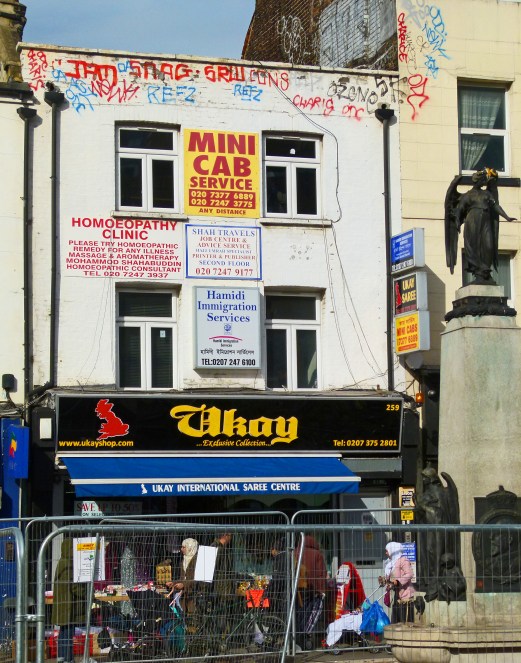
The building where ‘The Elephant Man’ was put on show
On the crowded pavement outside this East End building, Tom Norman would hustle for business, aided by a large, painted canvas which had been provided by Merrick’s previous managers:

Reproduction of Victorian poster advertising ‘The Elephant Man’
Tom actually found the wild slant of this advertisement rather distasteful, especially as he’d quickly noted how gentle-natured Joseph Merrick actually was.
But, for the moment it was all he had to work with, and overcame his dislike for the poster’s sentiment by putting a twist on the words; adopting the cry that the Elephant Man was here “not to frighten you… but enlighten you”
Once a large enough crowd of punters had been assembled, the showman would lead the gathered group into the shop where, towards the back, Joseph Merrick sat hidden behind a curtain.
Before revealing the Elephant Man, Tom would spin out his well-rehearsed spiel:
“Ladies and gentlemen…. I would like to introduce Mr Joseph Merrick, the Elephant Man. Before doing so, I ask you please to prepare yourselves- brace yourselves up to witness one who is probably the most remarkable human being ever to draw the breath of life.”
The curtain would then be drawn aside and Joseph subjected to the stares, shrieks and gasps to which he had become so sadly accustomed.
*
The freak show was situated directly opposite the Royal London- one of the largest hospitals in the UK, and the main source of treatment for the poverty-stricken East End, typically dealing with cases involving injuries from vicious machine accidents and drunken brawls.

Royal London Hospital, Whitechapel Road entrance
At the Royal London Hospital there worked one Frederick Treves; a doctor who, at the age of 31, was already a major force in his field.

Dr Frederick Treves
A number of employees at the Royal London had ventured across the road in their spare time to witness the Elephant Man and, upon hearing their reports, Dr Treves’s instinctive medical curiosity was instantly aroused.
Contacting Tom Norman, Dr Treves arranged a private viewing one morning before the show opened up to the public.
Years later, Dr Treves recorded his blunt reaction upon first seeing the horrendously deformed young man, describing what he saw as;
“The most disgusting specimen of humanity that I had ever seen… at no time had I met with such a degraded or perverted version of a human being as this lone figure displayed.”
Dr Treves suggested that a medical examination should be carried out, and both Joseph and Tom agreed.
*
Although the journey to the hospital was barely a two-minute walk, Dr Treves was able to observe the great lengths to which the Elephant Man had to go in order to convey himself in public- Joseph possessed a set of clothing which was able to cover him from head to toe; a huge, black- almost theatrical- cloak and a custom-made cap, large enough to cover the huge swellings upon his head.
Attached to the cap was a simple mask; essentially a hessian sack, which covered Joseph’s face entirely, but had a slit cut out for his eyes. His feet were swathed in large carpet slippers.

Joseph Merrick’s custom made cap and mask
In 1980,‘The Elephant Man‘; the much acclaimed film version of Joseph Merrick’s life was released in cinemas.
Directed by David Lynch and with the role of Joseph brilliantly acted by John Hurt, the film gave a very accurate portrayal of the way in which Joseph Merrick dressed; the image also being famously displayed on posters promoting the movie:

For his short trip to the Royal London Hospital, Joseph also used a cab- during his time in the city, he would in fact become a regular customer of London’s Hansom cabs thanks to the privacy which they afforded.

Horse drawn Hansom-Cab; predecessor to the modern motor Taxi
At the Royal London, Dr Treves measured and examined Joseph’s various abnormalities, also noting that the patient was “shy, confused, not a little frightened, and evidently much cowed.”
These traits, coupled with Merick’s great difficulty in speaking clearly, initially led Dr Treves to conclude that the Elephant Man was also an “imbecile”- an assumption which he would later discover to be grossly untrue.
Shortly after this examination, Joseph agreed to be presented as a living specimen to the ‘Pathological Society of London‘, which was located on Berners Street in Bloomsbury; a plush world away from the poverty-riddled East End.
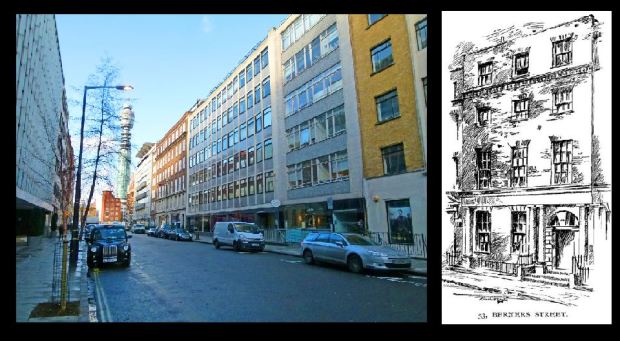
Berners St today… & the Royal Pathological Society’s old building
This event was depicted in The Elephant Man film:
After several more examinations, Joseph decided to stop his visits.
According to Tom Norman, Merrick stated that he did not like being stripped naked; the process making him feel like “an animal in a cattle market.”
Despite this sentiment, he maintained Dr Treves’s calling card.
*
Mainly due to the nature of his business, some historical accounts have been unkind to Joseph Merrick’s London manager, Tom Norman.
However, although the nature of the freak show business inevitably necessitated Joseph being exploited, it seems that Joseph and Tom maintained a good working relationship, each holding a mutual respect during their few months together.
Tom split all of the takings 50/50, allowing Joseph to earn more money than he’d ever done in his life.
Tom also grew rather protective of his partner. Early on in their relationship, the showman was dismayed to see that Joseph wasn’t even able to lie down and sleep properly.
This was a problem which plagued Joseph throughout his life; to lie down like a ‘normal person’ would risk death, the sheer weight of his head being liable to either suffocate him or break his neck.
Instead, he had to either prop himself up, or sleep with his head on his knees.
This unorthodox style of sleeping was demonstrated in John Hurt’s portrayal of the Elephant Man:
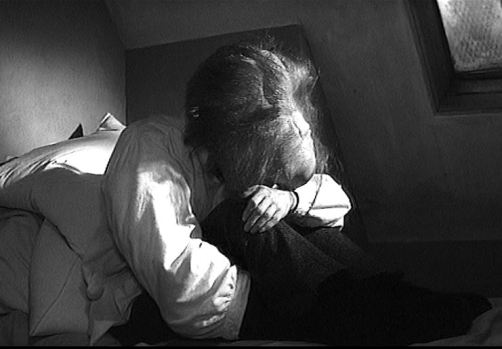
John Hurt as The Elephant Man
Attempting to solve this uncomfortable problem, Tom Norman employed a carpenter to construct a special frame, which it was hoped would be able support Joseph’s head whilst he slept.
Although the attempt was sadly unsuccessful, it demonstrates that an intention of care and concern was evident.
Robbed and Alone
Despite the apparent popularity of the freak shows, overall public attitudes to such displays were in fact beginning to take a turn.
Considered vulgarities, many of the shows were starting to get shut down by police, leading Tom Norman to become anxious that his ‘half-man, half-elephant’ show would be next.
Merrick’s management team therefore decided to send the exhibition to Continental Europe.
*
However, once out of the UK, it transpired that freak shows abroad were also on the wane, and the Elephant Man experienced the same increasing hostility which was brewing back home.
Joseph’s show ended up in Belgium, where he was granted yet another manager. Although the identity of this individual is unknown, one thing is certain- Joseph’s new administrator was a heartless crook.
Whilst on show in Brussels, this mysterious character, realising that the Elephant Man display was losing profit, abandoned his protégé.
Even worse, he stole Joseph’s life savings; essentially all of the money which he’d earned whilst under Tom Norman’s wing. The sum- £50- was a considerable amount, equivalent to some £4,000 in today’s money.
Alone in a foreign land, unable to speak clearly- let alone in an alien language- and with no friends and no currency, Joseph was left to fend for himself, his only protection coming from huddling himself within his large cloak and mask.
Somehow managing to pawn the few items he owned, Joseph made his way to Ostend, where he attempted to board a ferry to Dover… however, the ship’s captain refused to let bedraggled figure onboard.
Joseph was now forced to make a further trek to Antwerp.
Here he had more success, managing to secure a place onboard a ferry (known as a ‘Railway Steamer’) to Harwich in Essex.
Arriving back on British soil on 24th June 1886, Joseph quickly progressed to the next stage of his journey; a connecting train ride from the port to London’s Liverpool Street station… and it was here, by now utterly demoralised, that he was about to encounter one of the most distressing events in his turbulent life…
Mobbed at Liverpool Street
The train from Harwich steamed into the huge, London terminal on a Thursday morning; rush hour. As Joseph disembarked, his mask and large cloak immediately drew attention, with people pointing and loud comments being muttered.
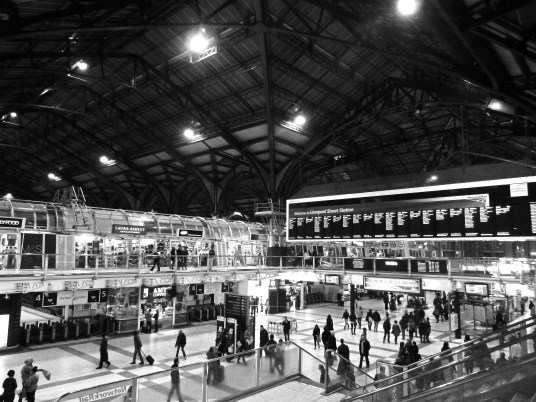
London Liverpool Street Station today
Like a snowball effect, the crowd grew larger, people curious to see what all of the commotion was.
Before long, Joseph was swamped with unwanted attention, cowering and terrified in the midst of it all.
He was rescued by two police officers, who barged their way through the deluge and pulled him towards the safety of a third-class waiting room.
Once inside the barren cubicle, the policemen had to barricade the doors, as the crowd continued to swell, pressing up against the windows, eager to catch a glimpse of the supposed strange creature.
By now, utterly dejected and exhausted, Joseph simply couldn’t face anymore, and collapsed in a corner of the waiting room.
In David Lean’s film, Joseph’s nightmare at Liverpool Street was a key moment and, although a dramatized version, the famous scene is an effective depiction of the mob mentality which hounded him that awful morning.
The following clip was filmed on location at Liverpool Street station itself which, in 1980, had yet to be modernised, and still retained the same Victorian aura through which Joseph himself had been pursued decades before:
The police attempted to help further, but the two kindly bobbies were unable to understand what the stranger was saying, especially as Joseph was now also suffering from bronchitis; the gasping from which did little to help his already tortured speech.
Amazingly, salvation came in the form of Dr Treves’s calling card- which, along with the small and much cherished portrait of his mother, was one of the only items Joseph had managed to cling onto during his travels across Europe.
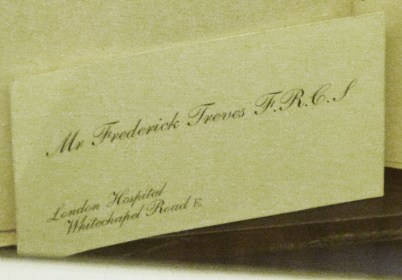
Dr Frederick Treves’s Business Card
Seeing the name and address, the police quickly sent word to the Royal London, requesting the doctor attend.
When Dr Treves arrived at Liverpool Street, the inquisitive crowd had grown so large, that he had considerable difficulty in forcing his way through.
Upon re-discovering the Elephant Man, the doctor assured the police that he would assume full responsibility for the unfortunate fellow.
Joseph was led to a hansom cab and promptly rushed back to the Royal London Hospital in Whitechapel, where the next stage of his tumultuous life was about to begin.






 View from the Mirror