Lower Robert Street… a Ghostly Tunnel in the Heart of London
Mere moments away from the very centre of London there lies a quiet, almost secret little road called Lower Robert Street.
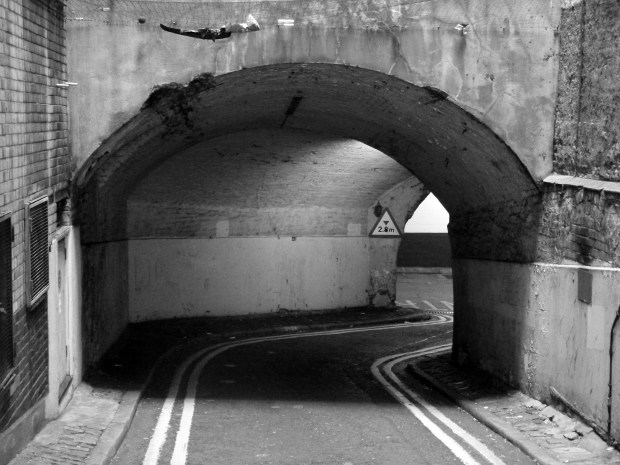
Entrance to Lower Robert Street…
Sandwiched between the Strand and Victoria Embankment and running through a twisting tunnel, Lower Robert Street is a covert cut-through we cabbies sometimes like to use if in the area and wishing to make a quick exit down to Victoria Embankment.
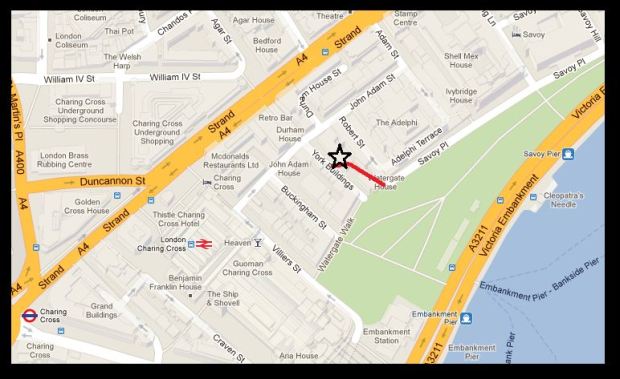
Map showing the location and approximate path (marked in red) of Lower Robert Street
Apart from the echo of the odd Taxi or bike courier, the archaic lane is pretty much devoid of any other traffic or people…
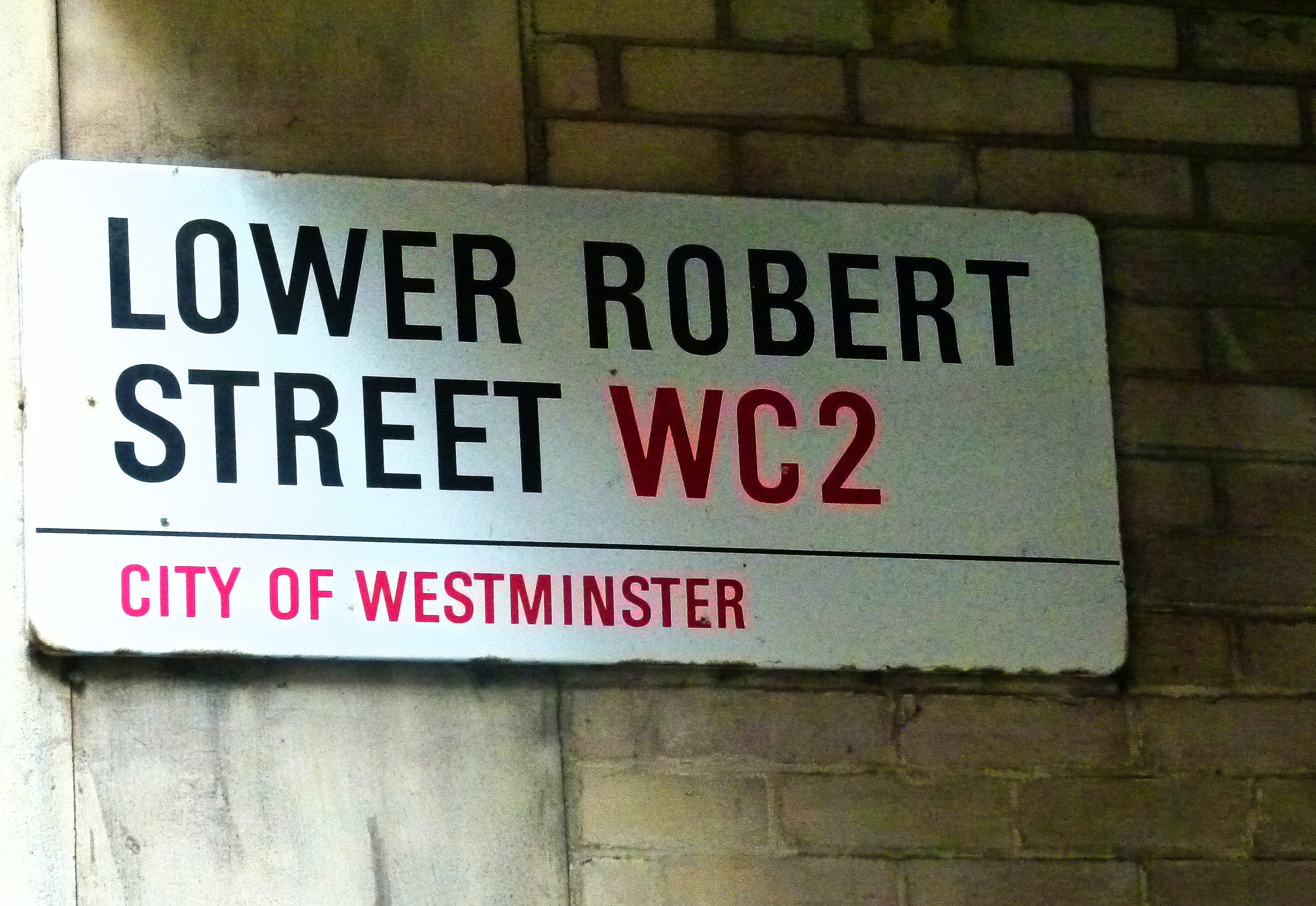
In recent years, Lower Robert Street’s grotto like appearance has gained it a nickname: the ‘Bat Cave‘!

Going underground… the modern extension of Lower Robert Street
Lower Robert Street dates back to the late 18th century, created as a by-product of ‘The Adelphi’; a large housing development consisting of 24 grand, terraced houses.
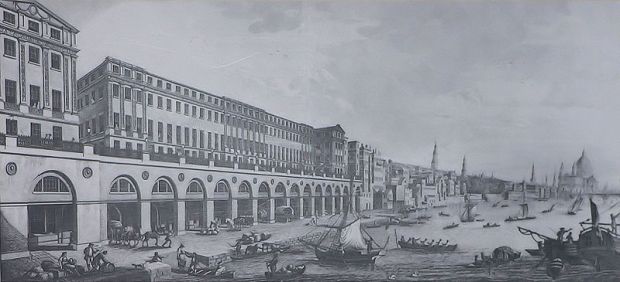
The Adelphi
The project was developed by four Scottish brothers; John, Robert, James and William Adam, whose fraternal bond blessed the scheme with its name- ‘Adelphi’ being the Greek word for brothers.
Construction began in 1772, with many of the labourers who worked on the project also being Scottish.
Nowadays of course you’ll often hear battered radios crackling away on building sites, but when the Adelphi was being built, music for the toiling workers was provided by a group of specially employed bagpipers!
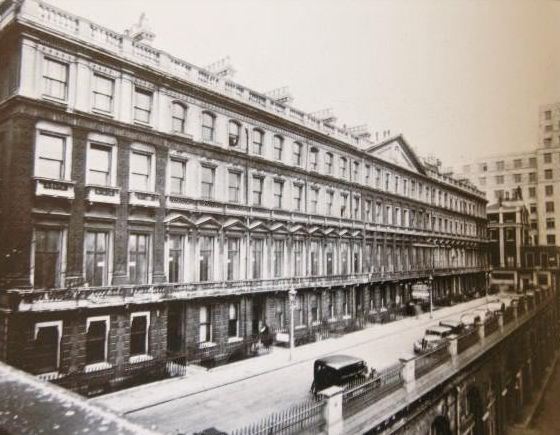
The Adelphi in later life, shortly before its demolition in the 1930s
Because it was so close to the river Thames, the Adelphi was located on a slope.
The main building – the row of ornate houses- remained level with the Strand, jutting out over the incline.
To fill in the large void below, a complex of vaulted arches and subterranean streets were created- of which Lower Robert Street is now the only remaining example in practical, public use.
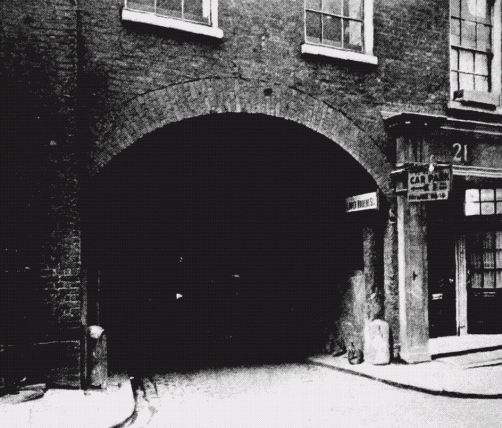
Vintage photo of the entrance to Lower Robert Street (image: British History website)
One other vault does exist it can be found in the rather more protected environment of the Royal Society of Arts on nearby Durham House Street:
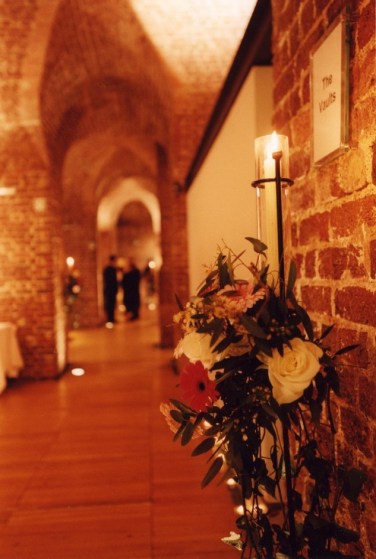
Remaining Adelphi arches incorporated within the Royal Society (image: Royal Society)
Many famous people lived in the grand apartments above including the actor David Garrick, Richard D’Oyly Carte (founder of the nearby Savoy hotel), Charles Booth (the great, Victorian social reformer) and a number of notable literary figures including George Bernard Shaw, Sir J.M Barrie and Thomas Hardy.
The Adelphi- and in particular the subterranean lair which lurked beneath- was also mentioned in Charles Dickens’ 1850 masterpiece, David Copperfield;
“I was fond of wandering about the Adelphi, because it was a mysterious place, with those dark arches. I see myself emerging one evening from some of these arches, on a little public-house close to the river, with an open space before it, where some coal-heavers were dancing; to look at whom I sat down upon a bench. I wonder what they thought of me!”
*
In the late 1860s much of the Thames in central London was reclaimed as part of a vast engineering program to improve the city’s sanitation, the waters pushed back as the wide Victoria Embankment was built.
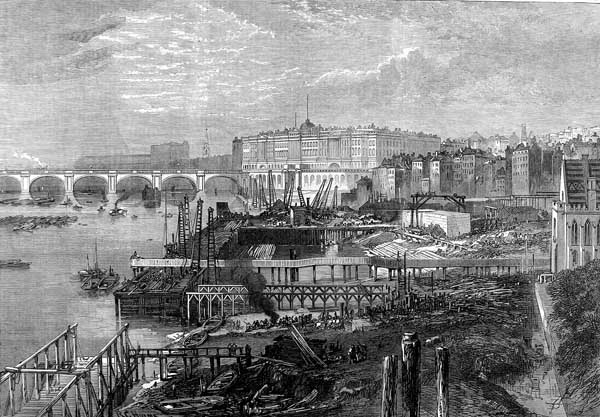
Victoria Embankment under construction, 1865 (image: Wikipedia)
This major road (which to do this day still conceals a vital sewer) was built right in front of the Adelphi’s lower vaults and roads, robbing them of their tranquil riverside location.
Once cut off from the Thames, the area beneath the Adelphi sank into decline, rapidly becoming a gloomy, foreboding place.
In line with much of Victorian London, the twisting underground roads became a haven for beggars and criminals. As one historian noted; “the most abandoned characters have often passed the night” beneath the Adelphi, “nestling upon foul straw.”
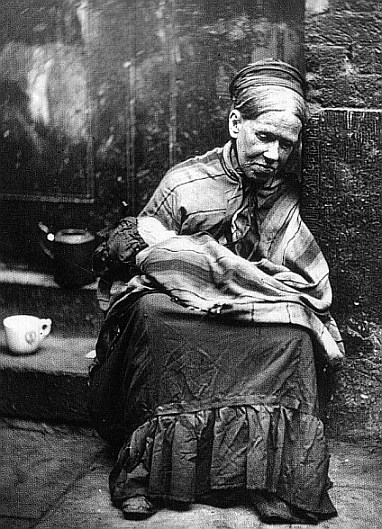
A famous image depicting the appalling conditions in which London’s Victorian poor existed. Such a sad sight would have been common place beneath the Adelphi.
Unsettlingly (and, perhaps unsurprisingly), Lower Robert Street, which was once an ingrained part of this depressing area, has its own resident ghost….
The phantom is known as ‘Poor Jenny’; a prostitute who lived and worked in the depths of Lower Robert Street, the bed upon which she languished being no more than a grotty pile of rags.
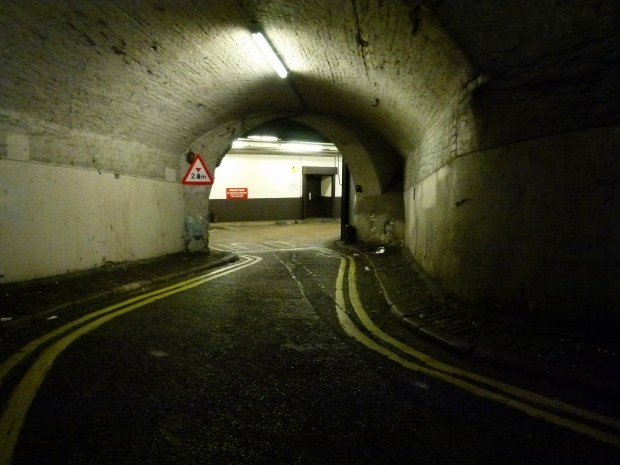
Deep within Lower Robert Street…. the haunt of ‘Poor Jenny’…
It is said that late one night, Jenny was throttled by one of her clients… today, her screams and gasps can be heard echoing through Lower Robert Street, the awful noise accompanied by a rhythmic tapping; the sound of Jenny kicking the floor as she fights against the strangulation…
Perhaps that’s why the powers that be choose to close the road every night between midnight and 7am…
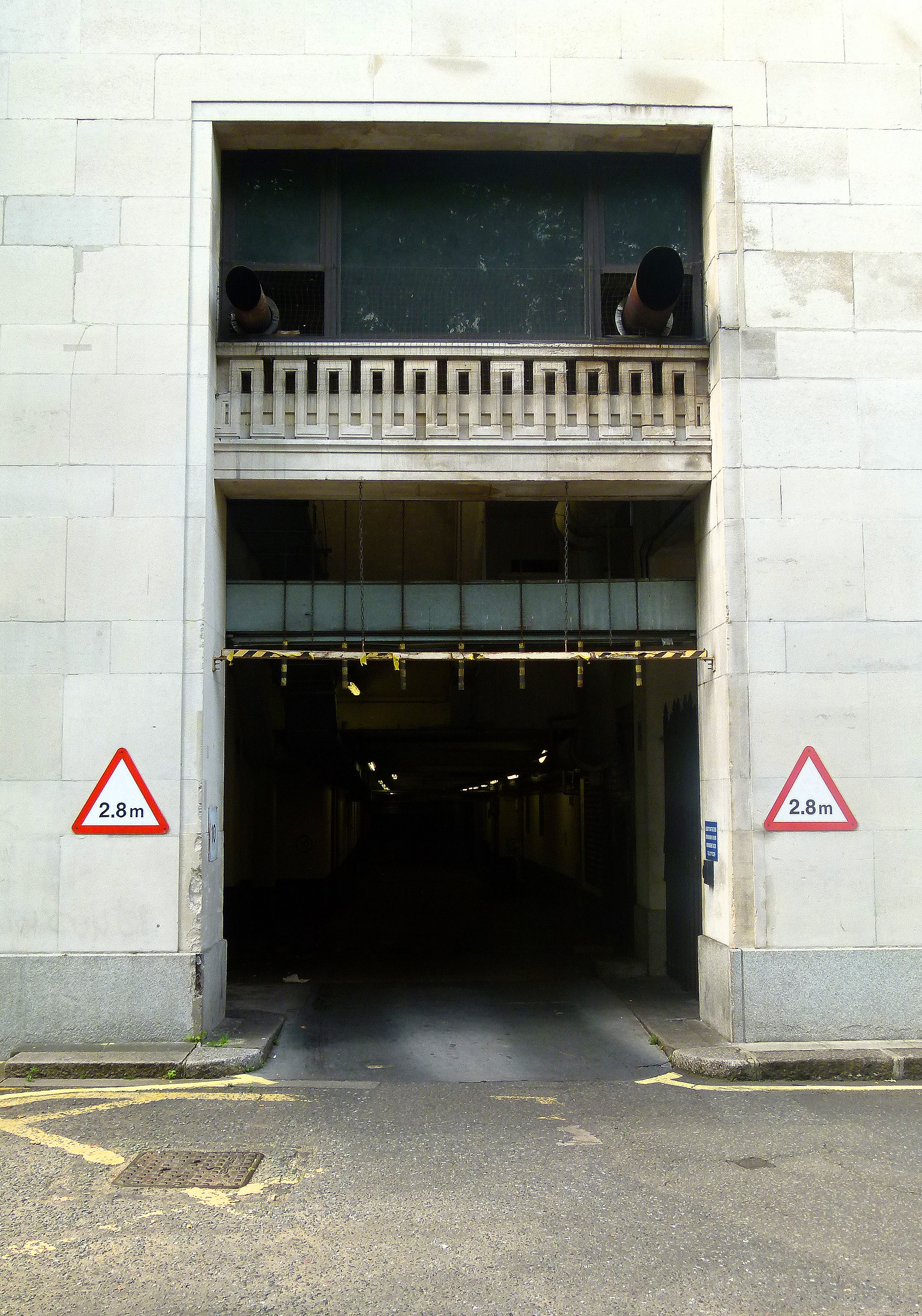
The exit to Lower Robert Street, located on Savoy Place
Cabbie’s Curios: In & Out the Eagle
Pictured below is The Eagle, a popular pub located on Shepherdess Walk in Hoxton, North London.
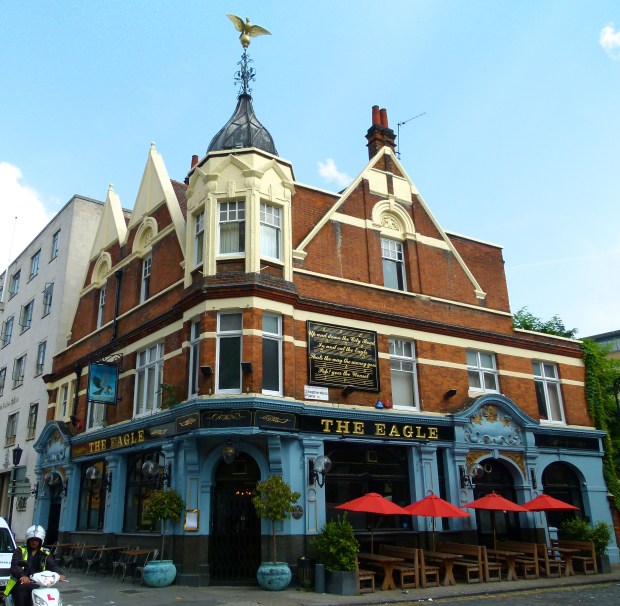
The Eagle Pub, Shepherdess Walk
The Eagle has a long history.
Over the years, several buildings going by the bird of prey’s name have stood on the site, all of which have served differing purposes.
Originally, the Eagle served a far more civilised purpose… it opened as a tea garden with not a drop of booze in sight!
In 1825, the premise was turned into a music hall in order to provide a varied programme of entertainment for the ever increasing population of London.

The Eagle Music Hall, Shepherdess Walk (Image: Bishopsgate Institute)
The Eagle Music Hall quickly became a popular haunt- so much so that Charles Dickens saw fit to include it in one of his earliest works, Sketches by Boz; a series of vignettes about London life first published between 1833-1836.

The sketch in which the famous haunt appeared was entitled, Miss Evans and the Eagle, and it described the music hall in considerable detail:
“There was an orchestra for the singers, all paint, gilding and plate-glass; and such an organ!
Miss J’mima Ivins’s friend’s young man whispered it had cost ‘four hundred pound,’ which Mr Samuel Wilkins said was ‘not dear neither’, an opinion which the ladies perfectly coincided.
The audience were seated on elevated benches round the room, and crowded into every part of it; and everybody was eating and drinking as comfortably as possible… “
*
The Eagle also provided a platform for a young Marie Lloyd; a famous Londoner from the music hall era.

Marie Lloyd
Born locally in 1870, Marie Lloyd first performed at the Eagle in 1884 when she was just 14 years old.
By the time Marie was born, Hoxton had become one of London’s toughest districts, characterized by violence and poverty, making the Eagle a rough destination.
Marie’s songs were inspired by the harsh surroundings in which she’d grown up, often reflecting the pathos and tribulations of working-class life.
She was also notorious for being rather lewd; a reputation which led to her being refused entry to the United States in 1913 on the basis of ‘moral turpitude’!
In 1922, Marie collapsed on stage whilst performing at Edmonton (an area just north of Tottenham). She died shortly afterwards, her funeral drawing 100,000 mourners.
She is buried in Hampstead Cemetery.
*
By the time Marie Lloyd was preforming, the Eagle (also referred to during this period as the Grecian Theatre) had gained a rather dubious reputation. As well as the booze and general raucousness, the gardens outside had become a well-known red-light area.
The grip which the Eagle held over the local population was summed up in the jaunty tune… Pop Goes the Weasel.
There have been numerous variations on the lyrics involving everything from treacle and rice to monkeys and chicken coops, but the original words (first recorded in 1855) ran thus:
“Up and down the City Road,
In and out the Eagle,
That’s the way the money goes.
Pop! goes the weasel”
These lyrics allude to pawning items in order to gain money for alcohol and loose living.
As mentioned earlier, The Eagle is on Shepherdess Walk, which sits just off of the City Road mentioned in the ditty.

Map showing the location of ‘The Eagle’ on Shepherdess Walk, just off of City Road
A ‘weasel’ when used here is slang for a tailor’s iron and ‘pop’ means to ‘pawn’.
One can only guess how this bawdy number morphed into a popular children’s nursery rhyme!
Today, the catchy rhyme is proudly displayed on a board outside the present day building:
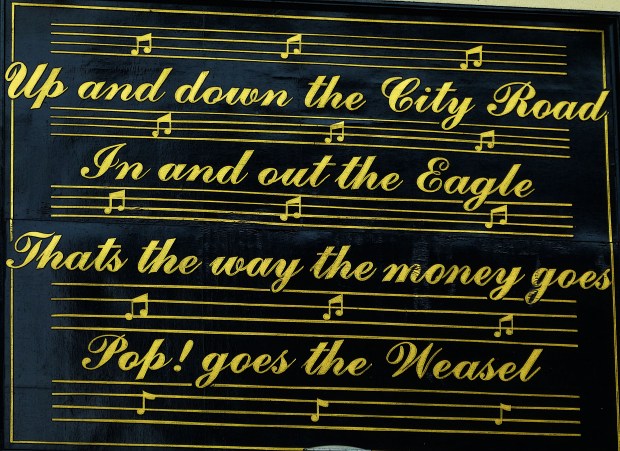
‘Pop Goes the Weasel’… on display outside the present day Eagle tavern
*
Thanks to The Eagle’s seedy nature, the Salvation Army thought it would be a good idea to move in and cleanse the place of its sin.
Knowing that premises was being offered for lease, the organisation’s newly installed general, William Booth stepped in to purchase and ‘occupy’ the Eagle.

General William Booth, who ushered in a new phase for the Eagle… (photo: Salvation Army)
The Eagle’s new role as a centre for the Salvation Army proved most unpopular; the locals being pretty miffed that their favourite place for a wild night out had been swapped for more spiritual purposes.
When attempting to sing, the Salvation Army choir would often be drowned out by the jeers of a surly mob. Drunks and pimps refused to move on; many of whom issued violent threats towards General Booth himself. The situation was so bad, that the police were required to intervene and restore order.
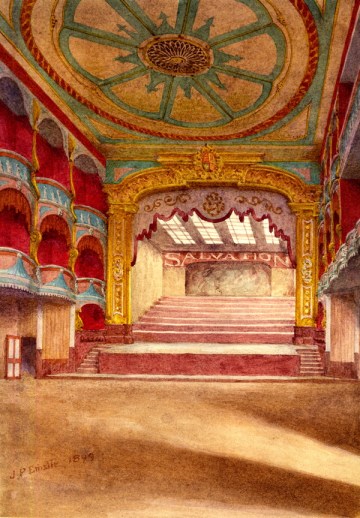
The Eagle in its Salvation Army days- note the banner towards the rear of the building (image: Bishopsgate Institute)
In line with their ethos of military-esque organisation, the Salvation Army created a medal to commemorate their taking over of The Eagle; the words stamped upon the broach stating that they “occupied” and “captured” the former den of iniquity.
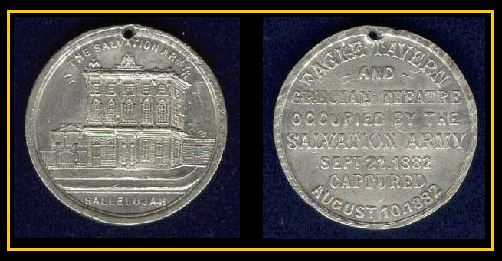
Medallion commemorating the ‘capture’ of the Eagle music hall (photos: Salvation Army)
The Eagle’s more pious role did not last for very long… in 1901, the Salvation Army centre and former music hall was demolished and a pub was built- the boozer which still stands today.

Eagle crest above the present day building
If you wish to visit the Eagle, their official website can be found here
Christian the Lion: A Big Cat in Chelsea
Recently, there have been a number of somewhat alarming reports that a lion is on the loose in the Essex countryside….
Whether or not this turns out to be true, it’s certainly makes a dull bank holiday a little more interesting… I wonder if the scary carnivore will manage to find its way into the centre of London…
*
During the 1960s, one place you would certainly have been able to spot a real, live lion was within one of the capital’s most prestigious department stores: Harrods.

Harrods Department Store (photo: Wikipedia)
In those carefree days, the world famous shop on Brompton Road boasted its very own Zoo department.
First opened in 1917, the exotic floor space sold all manner of beasts; everything from chickens to goats to alligators and elephants. (Today, the area has now been handed over to the far tamer ‘Pet Kingdom’).
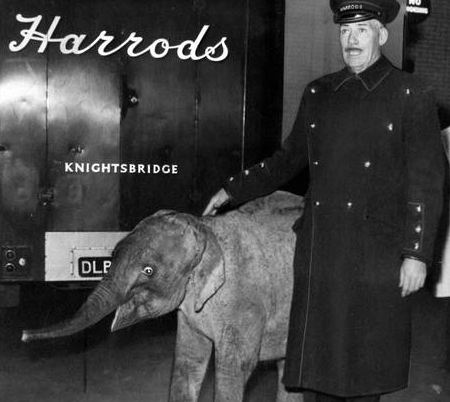
A baby elephant, purchased from Harrods’ Zoo Department in 1967
In November 1969, two young Australians- Anthony Burke (nicknamed ‘Ace’) and John Rendell– arrived in London.
As part of their obligatory sightseeing tour, the excited newcomers popped into Harrods where they were amazed to discover the store’s commercial menagerie.
What most caught their eye was a small cage… in which there sat a forlorn looking lion cub. Saddened to see the creature confined to such cramped conditions, the two Aussies vowed to rescue the lion, whom they would soon name ‘Christian’.
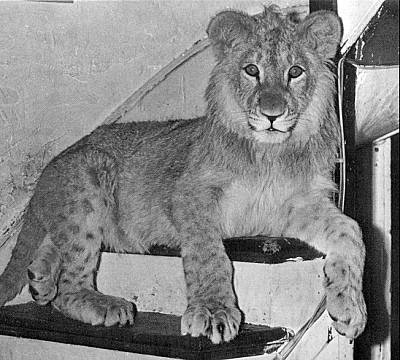
Christian the Lion
Boasting a price tag of 250 guineas (£3,500 in today’s money), Christian didn’t come cheap. However, this didn’t deter Anthony and John and they quickly managed to raise the necessary cash.
It turned out that the staff at Harrods were more than happy to see the back of Christian- the night before the pair came to collect him, the cheeky young lion had escaped from his cage and run amok through the carpet department, ripping apart several valuable goatskin rugs in the process!

Christian with Anthony Burke and John Rendell (photo: Evening Standard)
By now, Anthony and John were living in a small flat on the King’s Road, down in swinging Chelsea and, in a unit below their apartment, they ran a pine furniture shop called Sophiste-Cat.
Once Christian moved in, the little lion cub quickly became a local celebrity, attracting a number of 1960s luminaries such as Dina Rig and Mia Farrow to the shop.

Map showing approximate location of the ‘Sophiste-Cat’ shop on the King’s Road, which was home for a time to Christian the Lion. Today, the shop has been replaced by a modern parade of buildings.
Fed on raw meat, bone-meal and eggs, Christian quickly made himself at home. As Anthony and John said in their book, ‘A Lion Called Christian‘, their new pal was pretty demanding:
“We had to buy him hardy toys, for the average life of a normal teddy bear was about two minutes… He demanded our constant attention and it was impossible to ignore him. If one of us was reading a newspaper, or on the telephone, Christian would immediately climb up on to his lap.”

During Christian’s time in Chelsea, a documentary was made entitled, ‘The Lion at World’s End’ which was released in 1971. (The title refers to the southern part of the King’s Road which, taking its name from a local pub, is known as the ‘World’s End‘).
During his time in Chelsea, a local church allowed Christian to be exercised every morning on one of their cloisters which had once been an ancient Moravian burial ground.
The ground is located between Milman’s Street and Beaufort Street and Christian can be seen frolicking there in the following clip:
Within four months, Christian had grown so much that his size was becoming a hindrance.
No longer a cute, wee cub, his more mature appearance was beginning to scare customers away.
Anthony and John knew that it would soon become impossible for Christian to stay with them in London.
One couple who were not intimidated by Christian’s blossoming size were Bill Travers and Virginia McKenna; an acting couple who had starred in the 1966 film, Born Free, a true story in which they played George and Joy Adamson; the pair of British conservationists who had cared for Elsa, an orphaned lioness.
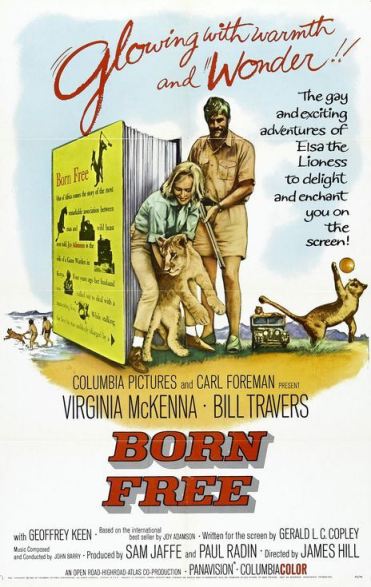
Poster for ‘Born Free’, 1966
Using their connections, Bill and Virginia helped the two young Aussies arrange for Christian to be flown out to Kenya, the departure from Heathrow taking place in the summer of 1970.
Once in Africa, Christian was taken under the wing of George Adamson who was now working at the Kora National Reserve. George’s Swahili nickname was ‘Baba ya Simba’; which translates as the father of lions.
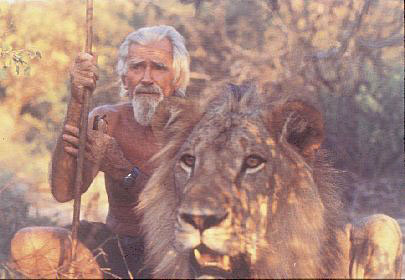
George Adamson whose life and work was portrayed in ‘Born Free’
*
Once on the reserve the urban cub was introduced to a natural pride of lions, leaving Anthony and John to bid a sad farewell to their extraordinary pet.
Unsurprisingly, the two Australians could never forget Christian and were given regular updates by George Adamson. A year later, in July 1971, the pair decided to return to Kenya to have a peek at how their old feline flatmate was faring in his new terrain.
Escorted by George Adamson, the pair were taken out into the Savannah where Christian’s pride were roaming… the recording of what happened next has become the stuff of legends:
Tragically, George Adamson, who had overseen Christian’s return to nature, was murdered by poachers in 1989.
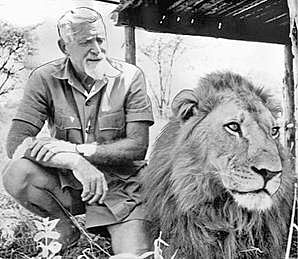
George’s last recorded sighting of the famous lion was in 1974, by which point Christian had fathered cubs of his own… who knows, maybe today the descendants of the lion cub from Harrods are out there somewhere in Kenya, still roaming free….





 View from the Mirror