Disturbing Daubs: Francis Bacon’s London

Crucifixion, 1933- an early example of Francis Bacon’s work
With the evenings growing darker and Halloween in the air, I think now would be a suitably atmospheric time to take a look at the London of Francis Bacon; one of the 20th century’s most celebrated artists, whose dazzlingly eccentric brain gave life to many disturbing, gruesome… and, in some cases, downright petrifying images…

Francis Bacon, pictured in 1976
Francis Bacon was born on Lower Baggot Street in Dublin, Ireland on 28th October 1909.
Emotionally, his childhood was a fraught one, the young Francis often finding himself locked in a cupboard whenever his natural inquisitiveness became too bothersome for his mother.
Unsurprisingly, being confined in the claustrophobic darkness would induce terrified bouts of screaming. As an adult, Bacon is once said to have remarked; “that cupboard was the making of me…”

Study for a portrait, 1952
At the tender age of 16, Francis left home and embarked upon a number of adventures across Europe, starting with London where he arrived in the autumn of 1926.
During his first encounter with the capital, Francis secured work in a women’s clothes shop on Poland Street in Soho.

Poland Street, Soho (image: Google)
However, his young and carefree attitude didn’t sit with such a conventional business and, after insulting the store’s owner, he was promptly sacked.
Bacon then tried his luck in Berlin which, in those days before the spectre of Nazism erupted, was a liberal hotbed of art, literature and creative thought.
He then ventured onto Paris, where he was especially taken with French culture, quickly discovering a passion for good food, wine and the latest trends in art.
*
In 1928, Bacon returned to London where he soon established himself as an interior designer.
His new business was based was in a tiny flat on Queensbury Mews West in South Kensington… a location he perhaps picked thanks to the small French community which continues to flourish around the area to this day.

Queensbury Mews West. Francis Bacon’s apartment was on the top floor of the right hand block.
Bacon left the mews in 1931 and spent several years drifting in and out of accommodation around Chelsea, Fulham and Hampshire.
*
Upon the outbreak of war in 1939, he presented himself for military service but was rejected on medical grounds due to his asthma.
Following this refusal, Francis volunteered as an air-raid warden; a role which would have brought him into regular contact with the carnage wrought by the nightly shower of bombs, the dust from rubble only serving to make his breathing even more troubled.
There can be little doubt that bearing witness to the bodies of civilians torn and mutilated by the horror of modern warfare would later have a profound impact on Bacon’s artistic vision…

Devastation, 1941: An East End Street. This painting was created by Graham Sutherland, a friend of Francis Bacon.
*
In 1943, Francis Bacon moved to new digs in the ground-floor flat of 7 Cromwell Place, a stone’s throw from the Natural History Museum.

7 Cromwell Place
At the time, the building was rather draughty having suffered considerable bomb damage. This didn’t bother Francis though; he was more concerned in blacking out the windows… not as an air-raid precaution, but as cover for an illegal gambling den he’d set up!
Throughout his life, having a high-stakes flutter proved to be one of Bacon’s true vices.
It was a mind-set which also influenced his work. Having received no formal art-training, he frequently viewed the practice of trying out risky new techniques as a gamble… when it didn’t pay off, the offending canvas would be slashed and destroyed.

The basement of 7 Cromwell Place
Betting aside, it was at Cromwell Place that Francis Bacon’s career as an artist really took off when, in 1944, he set about painting Three Studies for Figures at the Base of a Crucifixion….

Three Studies for Figures at the Base of a Crucifixion, created in Bacon’s Cromwell Place studio.
This ‘triptych’ of grotesque creatures, which could be seen as representing the torment of war, the baying mouths reminiscent of the fascist dictators who’d plunged Europe into darkness, were first displayed at the Lefevre Gallery in 1945 on Mayfair’s Bruton Street.
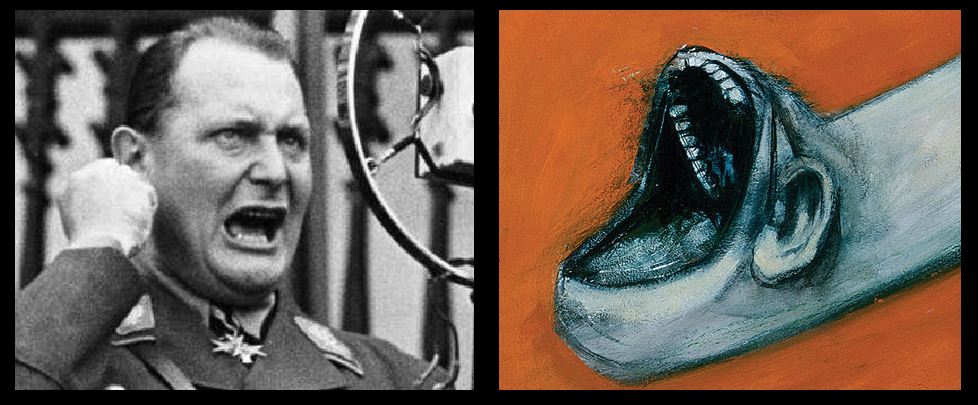
The face of hatred… two barking mouths… Hermann Goering and one of Bacon’s surreal creatures.
After thoroughly unsettling the public, the trio of disturbing images were acquired by the Tate Gallery in 1953.
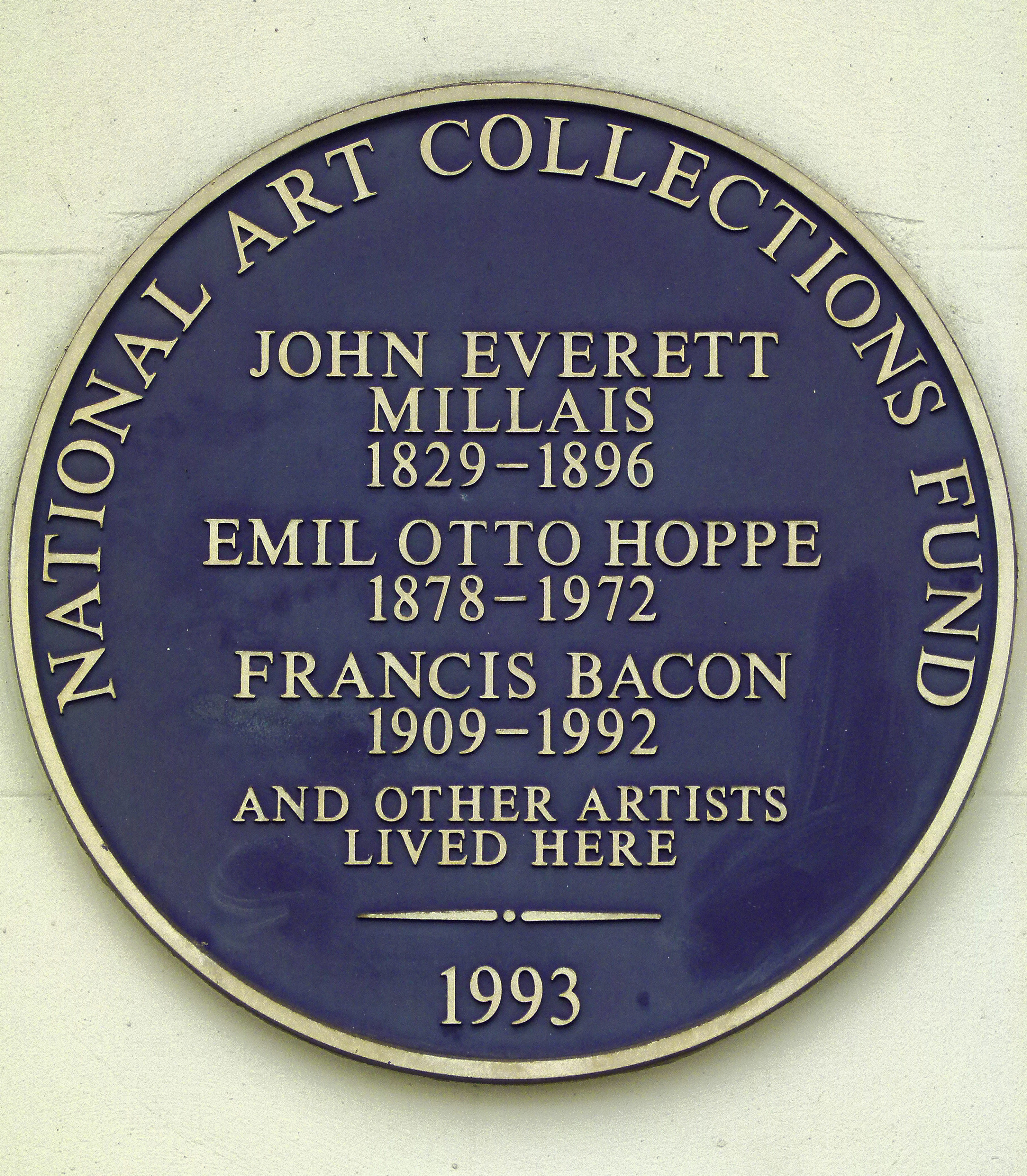
Plaque at 7 Cromwell Place… which demonstrates Bacon was in good, historic company!
The next startling piece to emerge from the Cromwell Place studio was another surreal work simply entitled, Painting which was unveiled in 1946.

‘Painting’, 1946
Painting was displayed at the Redfern Gallery on Cork Street and was promptly purchased by a dealer for £200; approximately £6,700 in today’s money.
Once the art-world had discovered Francis Bacon there was no stopping him, and for the next 47 years he provided galleries with a regular stream of challenging and deeply unnerving works.
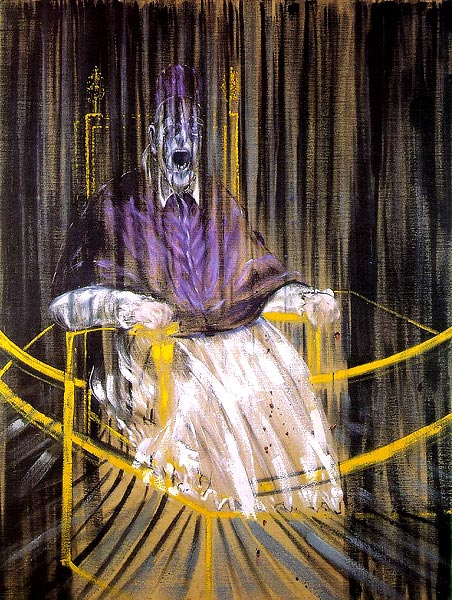
Study after Velzaquez’s Portrait of Pope Innocent X, 1954… one of Bacon’s most iconic and terrifying visions…
In 1961, Francis Bacon moved to a new studio on Reece Mews, moments away from South Kensington junction and his former premises on Cromwell Place.

7 Reece Mews; Bacon’s studio from 1961 to 1992
Converted from a former horse stable, Bacon would maintain the studio for the rest of his life.

The discreet entrance to 7 Reece Mews
Despite his wealth and fame, the Reece Mews property remained starkly simple.
The artist occupied only the upper level, which was reached via a dangerously narrow staircase (presumably, his large canvases were hoisted through the upper balcony door).

Francis Bacon in his studio, 1984 by Bruce Bernard. © Estate of Bruce Bernard.
The toilet was squeezed out on the landing, as was the kitchen… which also contained a bath! During the colder months, Francis would light the cooker’s gas hob and use it to heat the room up whenever he took a dip!
Francis Bacon’s studio was notoriously messy and the artist himself can be seen describing the chaotic environment in the following clip from a 1985 episode of The South Bank Show:
Essentially, the South Kensington studio was for working and sleeping in only.
When he wasn’t painting, Francis Bacon could be found out and about in London’s West End, a regular face and much loved character amongst the bohemian bars and restaurants of Soho.

A candid shot of Francis Bacon drinking in Soho’s ‘French House’, December 14th 1984. (Image: Neil Libbert, via ‘The Guardian’)
It was in the West End that Francis Bacon splashed around much of his fortune; gambling heavily and showing great generosity towards friends when it came to paying the bill for many a large meal; especially at his favourite restaurant, Wheelers on Mayfair’s St James’s Street.
In 1948, Francis Bacon became one of the founding members of The Colony Room on Dean Street; a Soho institution and legendary hang out for the unorthodox which sadly closed in 2008.

Francis Bacon at the Colony Room, Dean Street with Muriel Belcher; the club’s original owner. Francis painted Muriel on a number of occasions. (Image from alexalienart)
*
On 28th April 1992, whilst visiting a friend in Madrid, Francis Bacon suffered a heart attack, and passed away at the age of 82.
His famously scruffy studio, in which he still had a number of works in process, lay undisturbed for a number of years…. That was until 1998, when the Hugh Lane gallery in Dublin decided that the workshop of one of the city’s most famous sons deserved preserving.
For three years, a team from the gallery carefully catalogued and noted the position of every single item in the haphazard South Kensington studio; thousands of books, photographs and other materials.
The items were then carefully packed away and taken to the Dublin gallery where they were painstakingly reassembled into their original layout. Even the paint-splattered walls were transported to the Irish capital.
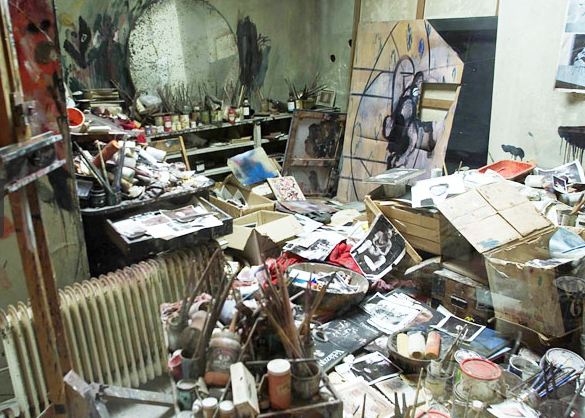
Francis Bacon’s studio, encapsulated as it appeared in 1992 and now transplanted to Dublin’s Hugh Lane Gallery (image: Conde Nast Traveller)
The result is an extraordinary, protected time capsule which is now a popular tourist attraction. To find out more about the relocated space, please click here.
*
To this day, Francis Bacon’s paintings, with their mysterious distortions and numerous, tormented jaws locked in perpetual, frozen screams, remain intriguing and unsettling.

‘Head’, 1948
However, when once asked what he thought of people regarding his work as visions of horror, Francis’ reply was rather sobering:
“What horror could I make that could compete with what goes on every single day? If you read the newspapers, if you look at television, if you know what’s going on in the world… what could I do that competes with the horrors going on?”…
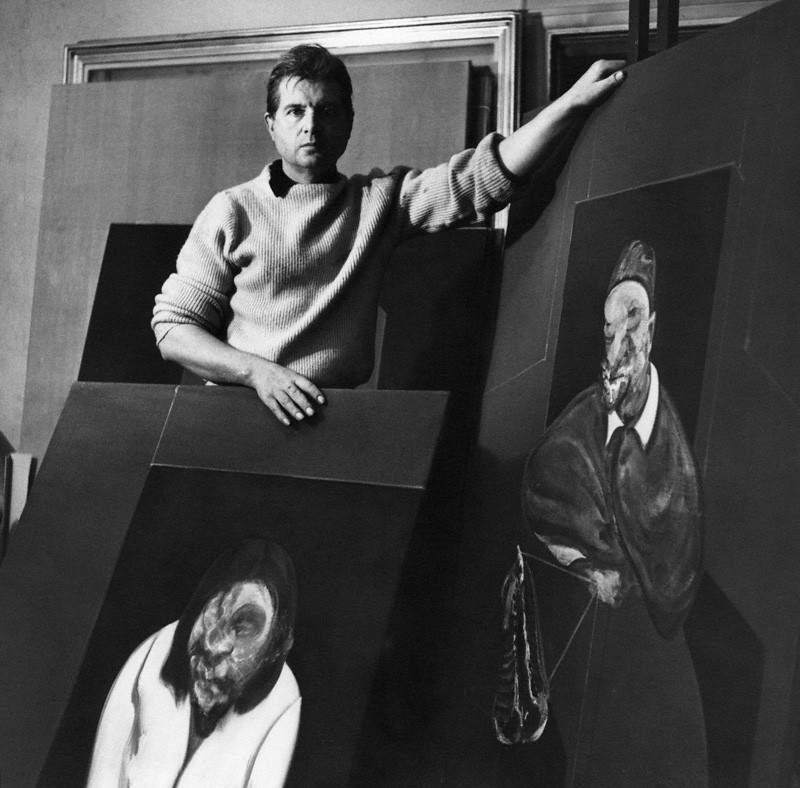
Francis Bacon, 1909-1992
(image by Cecil Beaton)
A History of the Elephant & Castle (Part Two)
This is the second part looking at a history of the Elephant and Castle area of south London. To read the first instalment please click here
The Elephant at war
Being a major transport hub with a large civilian population, the Elephant and Castle was bombed heavily during World War Two.

Londoners sheltering at Elephant and Castle tube station during the Blitz.
The worst raid to hit the area took place on the 10th May 1941, when bombers deliberately targeted the south London district in order to create a ferocious firestorm which rapidly engulfed the Elephant.

A painting depicting the night in which the Elephant was consumed by flames.
After the war much of the Elephant lay in ruins, a shadow of its pre-war days when Londoners had flocked there to indulge in its many shops and places of entertainment.

Bomb damage at the Elephant, 1941. The destroyed building had been a branch of ‘Woolworths’.
A concrete renaissance
For over a decade, the Elephant remained pretty much in tatters, pitted by numerous bomb craters which provided exciting playgrounds for local kids.
In March 1958, the down-at-heel area received a welcome dash of American glamour when rock and roll star, Buddy Holly played to a huge audience at the Elephant and Castle’s Trocadero.

Buddy Holly, backstage at the Elephant & Castle Trocadero, March 1958. (Image by Bill Francis, from Patrick Sweeney website)
To read more about Buddy Holly’s time in London, please click here.
*
Meanwhile, behind the scenes, town planners were hard at work, drawing up plans for a massive redevelopment of the area… for Elephant and Castle was about to become a huge canvas for some of London’s most prominent post-war architecture.

Model of the Elephant & Castle proposals from 1956 (image: Thecarandtheelephant)
The importance of the vast rebuild was summed up in 1956, when the London County Council stated:
“The Council regards the Elephant and Castle as one of its most important comprehensive reconstruction projects. A unique opportunity is presented for creating a new shopping, business and recreational centre for south London, for effecting major traffic improvement and for realising fine, civic design.”
The new road-layout was the first part of the scheme to be implemented, with two huge roundabouts stamped down during the 1950s.
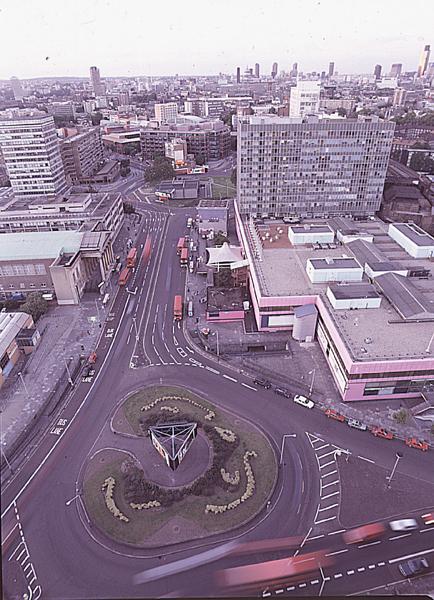
The Elephant & Castle road system circa 1990s (image: Knowledge Rush)
This prominent road system was highly representative of the mood of planners at the time, who envisioned a future in which the motor car would be king.
Consequently, little thought was given to those who had to traverse the Elephant on foot and, to this day, pedestrians are forced to cross the area via a series of gloomy, narrow subways.
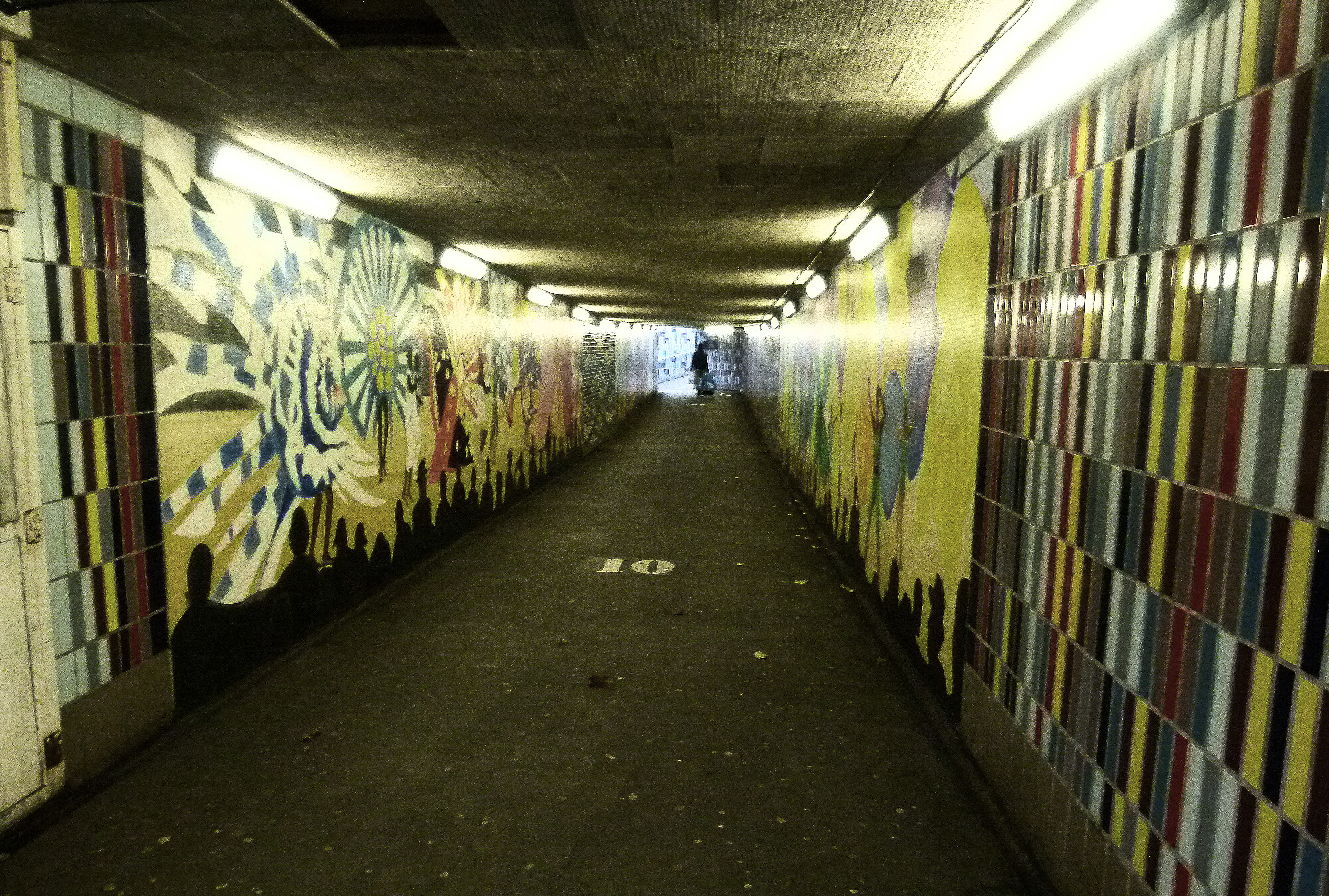
Subway beneath the Elephant’s northern roundabout.
It was during the 1960s that the majority of the Elephant was rebuilt; the architects’ love affair with concrete and stark urban planning resulting in the heart of the district evolving into a landscape more akin to communist East Berlin…
The very first building to be completed at the new Elephant was the Faraday Memorial; an avant-garde electricity sub-station, clad in stainless steel and plonked in the middle of the northern roundabout.

The Faraday Memorial
Unveiled in 1961 as a taste of things to come, the Faraday Memorial can still be seen in its original location, un-disturbed by the many millions of vehicles which have roared around it during the past fifty years.

The Faraday Memorial, overlooking the northern roundabout.
Next to pop up was Alexander Fleming House which opened in 1963.

Alexander Fleming House. Now known as ‘Metro Central Heights’, the exterior of this 1960s development has since been fitted with blue and white cladding. (Image- Design Museum)
Originally designed as a triple set of office blocks, Alexander Fleming House has since been converted into luxury apartments and renamed Metro Central Heights (or, as some like to jokingly call it, Metro Sexual Heights; a reference to the many young, urban professionals who now reside there!)
The modern trio of towers was designed by Erno Goldfinger, the infamous architect noted for his bold, uncompromising buildings… and egotistically fierce temper!
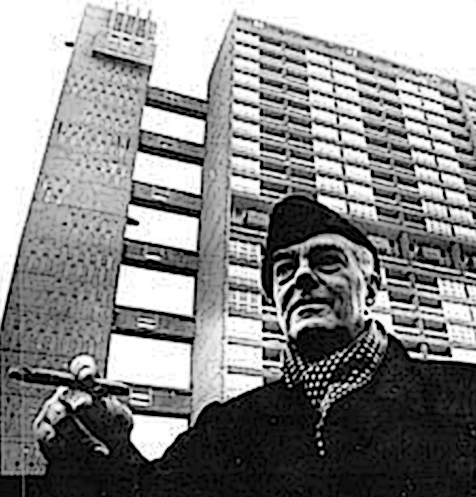
Erno Goldfinger, who was highly influential in London’s post-war architecture.
To find out more about the curmudgeonly Goldfinger, please click here for my earlier post on the ‘Trellick Tower’ which is widely regarded as his true masterpiece.
*
Lost cinemas
Goldfinger would go onto wield great influence over the Elephant and Castle.
In 1966, he incorporated an Odeon cinema into Alexander Fleming House… which was rather fitting considering the complex was built on the site of the former Trocadero which had been demolished a few years after Buddy Holly’s celebrated visit.
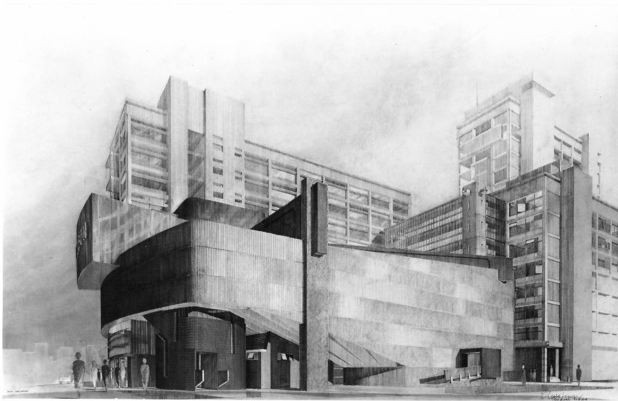
Goldfinger’s 1960s design for the Odeon cinema (image: Cinema Treasures)
Designed in the Brutalist style, the modern Odeon contained seats for over 1,000 movie-goers.
Sadly, the cinema was demolished in 1988 which is a real shame as, given current trends, I have a feeling it would have found a new lease of life as an independent picture-house had it been allowed to remain.

The Odeon at Elephant and Castle in 1983- by which point it had been renamed the ‘Coronet’ (many thanks to flickr user dusashenka for this rare image)

The Odeon’s foyer in 1988, shortly before demolition (many thanks to flickr user, dusashenka).
*
Tickled pink
In 1965, yet another Goldfinger creation was unveiled in the area… the Elephant and Castle Shopping Centre.

The Elephant & Castle Shopping Centre in 2012
At the time, this new building was revolutionary; the first covered shopping complex in Europe.
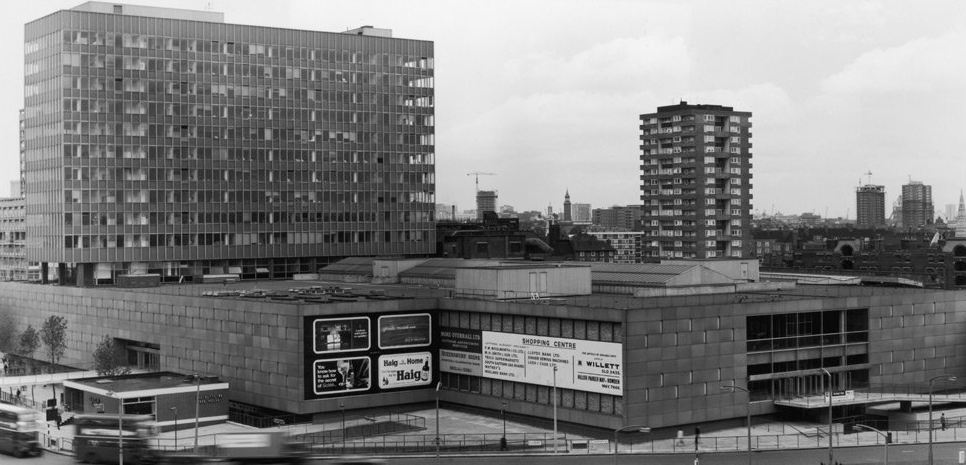
The Elephant and Castle Shopping Centre, 1960s (Image- BBC)
Locals however who, for generations had patronized traditional local shops and markets, were slow to embrace the new concept.
When the shopping centre first opened, trade was painfully slow with just 29 out of 120 shop units being occupied.

Inside the Elephant Shopping Centre, 2012
Originally providing three floors for trade, it quickly became clear that this was one floor too many.
In 1978 the centre was purchased by Ravenseft Properties who promptly converted the third level into office space. As a spokesman for the company said at the time, “one has to do something when one has inherited such a horrible asset!”
In 1990, the powers that be thought it would be a good idea to paint the Elephant and Castle shopping centre bright pink, a colour which remained on the building until very recently.

The shopping centre during its pink phase (image- Evening Standard)
I’ve often wondered what the idea behind this lurid scheme was. Not that I have anything against pink, but I was under the impression that a ‘pink elephant’ was something one only saw after a few to many sherries!
Some rather creepy pink elephants can be seen in the following excerpt from the 1941 Walt Disney classic, Dumbo, in which the lovable little elephant hits the booze rather too hard…
The Heygate Estate
By far the largest post-war project to grace the Elephant and Castle was the vast Heygate Estate, which was completed in 1974 and provided homes for 3,000 people.
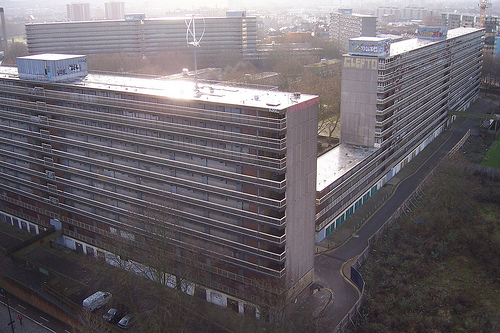
The Heygate Estate
Designed by Tim Tinker, the Heygate Estate was very much a product of its time; a huge housing scheme conjured on an incredibly ambitious scale, and designed with the best of intentions in mind.

They Heygate Estate under construction, early 1970s (image- ideal homes.org)
Aiming to make the estate an oasis of calm away from Elephant’s characteristic roar of traffic, Tim Tinker placed the tallest of the tower blocks around the perimeter, encircling and shielding smaller accommodation and areas of greenery within the middle.
When viewed from above, it is indeed surprising just how much greenery the Heygate encompassed.

Bird’s eye view of the Heygate Estate (image- Google)
However, as with many estates, the utopian ideal quickly became sour, with the modern innovations having quite the opposite effect of their intended purpose.
The towering apartment slabs isolated their inhabitants, slicing off communities rather than drawing them together, whilst the windswept walkways and secluded communal areas provided fertile breeding ground for crime and anti-social behaviour.
Unfortunately, unlike other examples of London Brutalist architecture- such as the Trellick Tower, National Theatre and Barbican Centre- the Heygate has received no revival and is currently undergoing demolition.
Thanks to the large amounts of asbestos present, the destruction is a slow process, not expected to be completed until 2015.
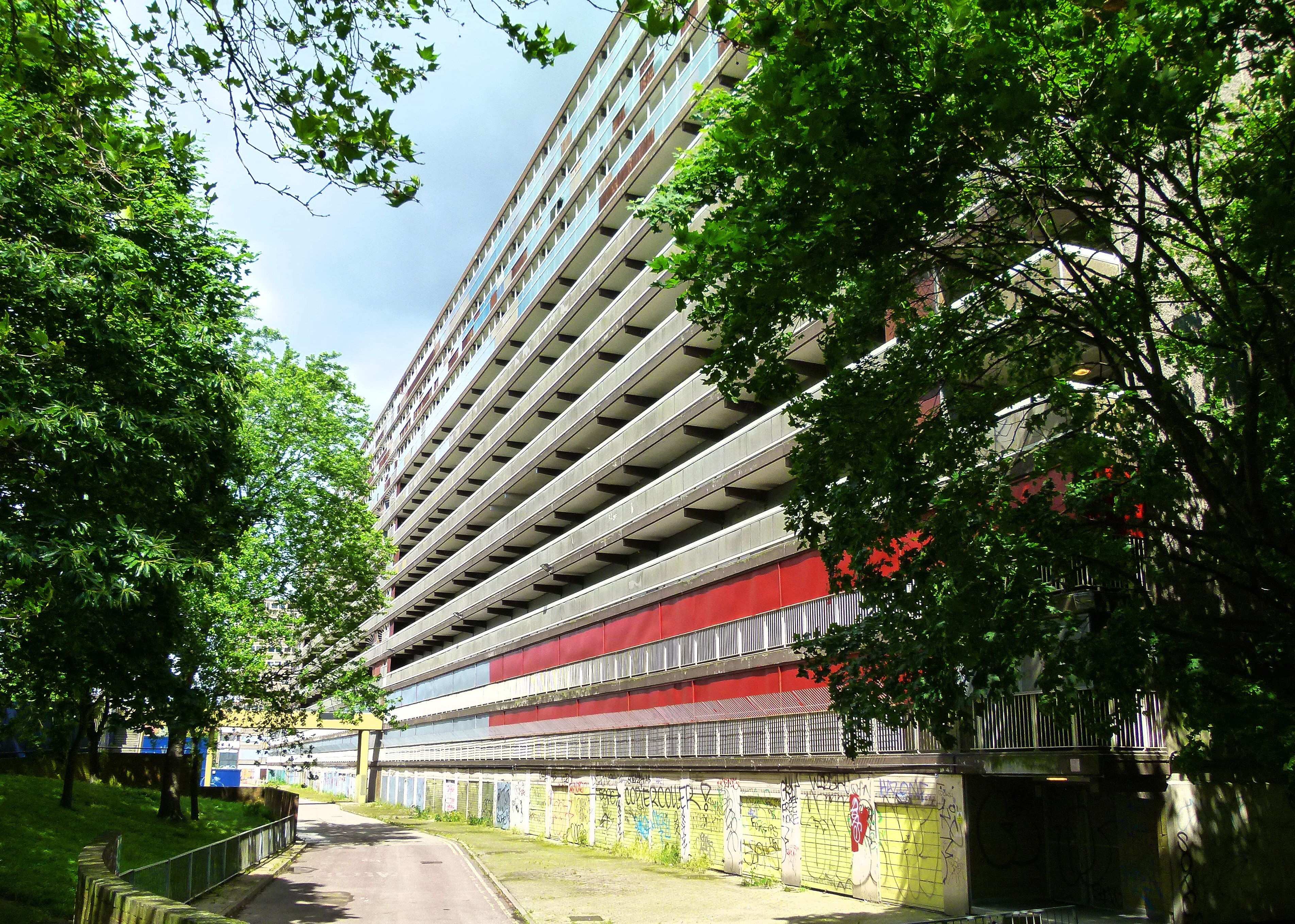
One of the large Heygate blocks, empty and boarded up…
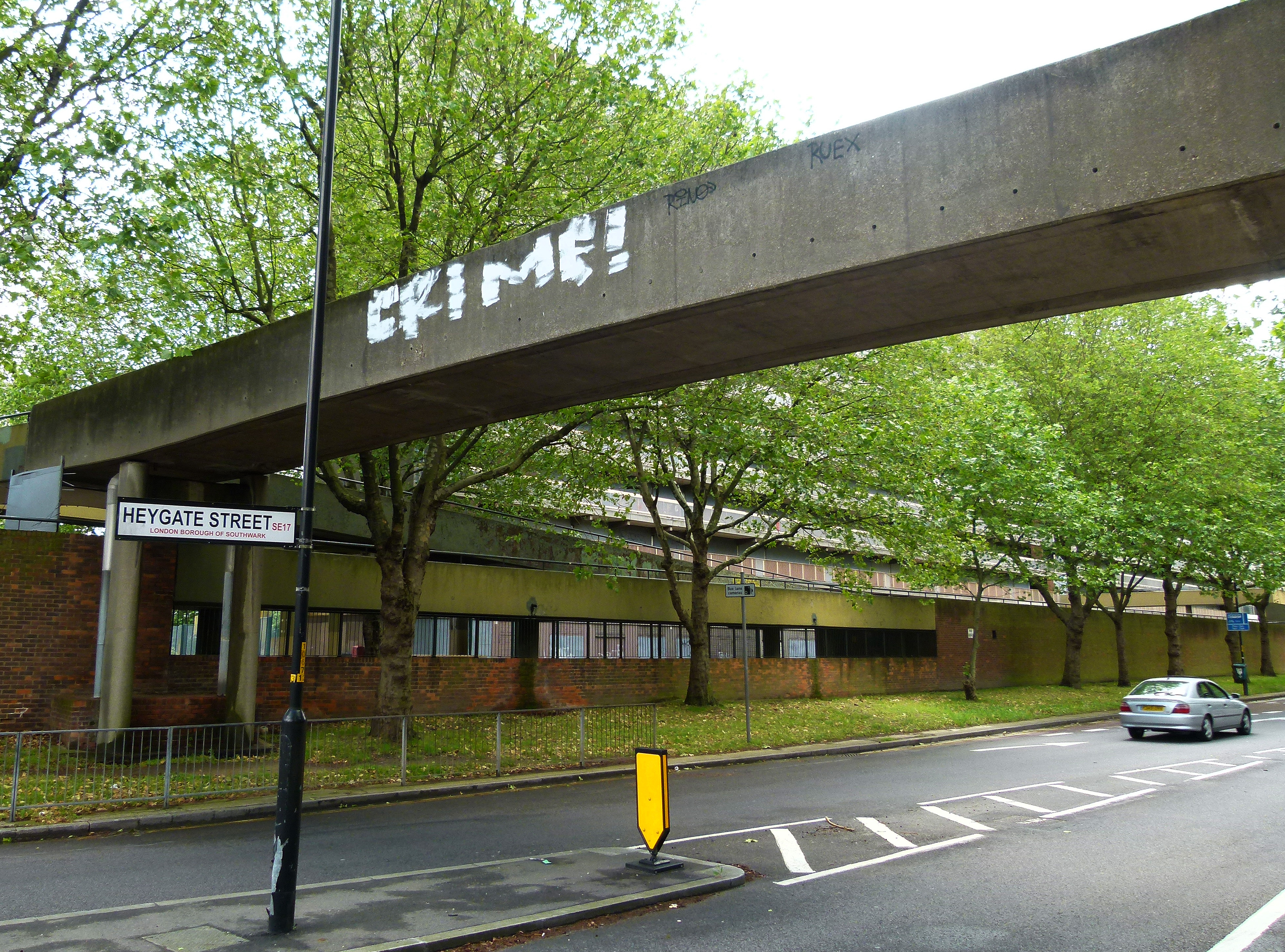
An abandoned Heygate bridge.
At present, the drawn out wrecking of the Heygate has made the old estate quite an atmospheric place; a vast, inner-city chunk of quiet decay, rather like something out of a post-apocalyptic film.

A deserted service road…

One of the Heygate’s low-rise homes… now in a rather sorry state.
Despite being eerily deserted, at the time of writing, a tiny handful of residents are refusing to leave their homes on the Heygate in protest at Southwark council’s compulsory purchase order.

A traditional phone-box, looking just as dilapidated as the estate behind it…
This small but hardy bunch include an elderly couple with a leasehold… both of whom are in their 80s and, like their small band of remaining neighbours, see the Heygate as their rightful home…

Graffiti on the moss-ridden garages.
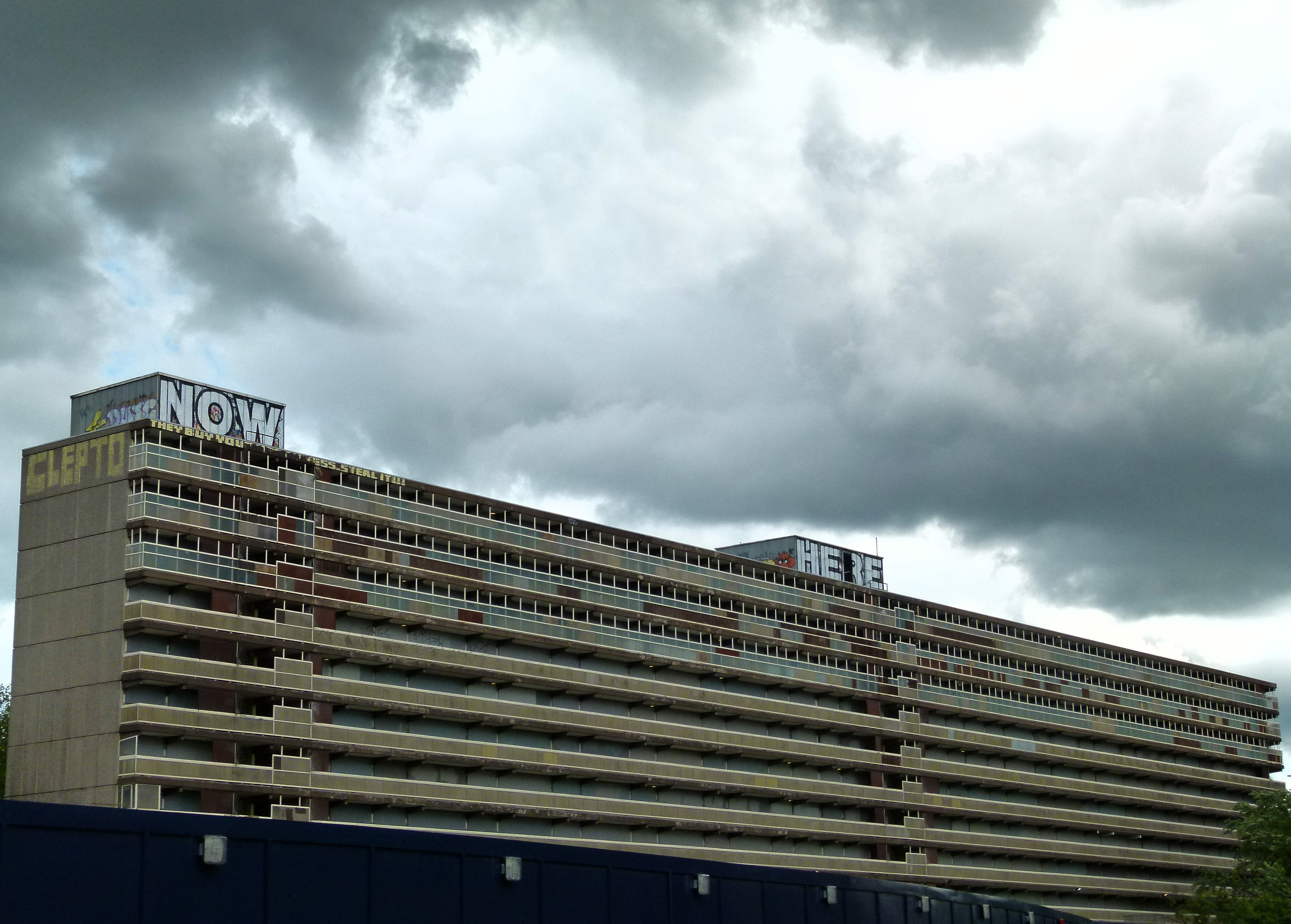
A large, decaying block…
*
The Elephant on Film
Thanks to its present state, the Heygate has proved a popular location for movie makers in recent years, with Southwark Council raking in a substantial £91,000 in filming fees since 2010.
Two films to make substantial use of the estate are Harry Brown and Attack the Block.
Released in 2009, Harry Brown stars Sir Michael Caine who, just like Sir Charles Chaplin a generation before, spent his tough working-class childhood in the Elephant and Castle area.
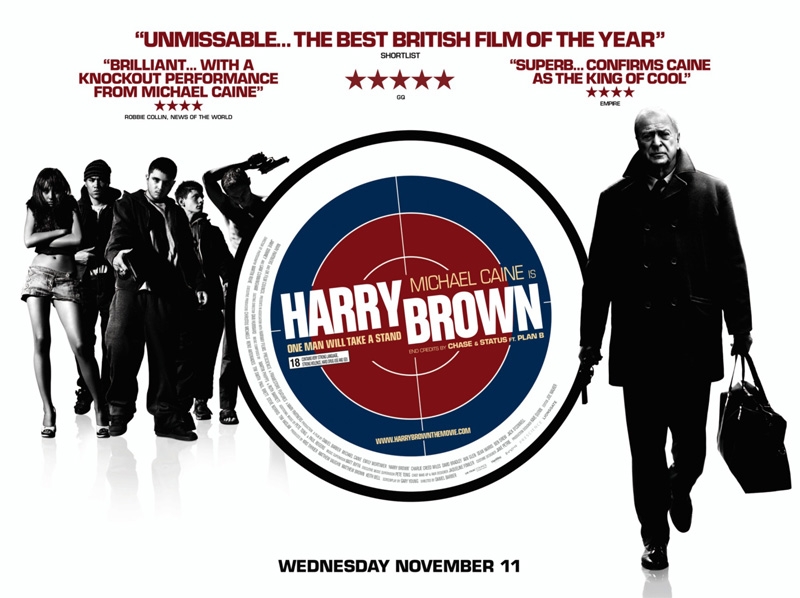
In Harry Brown, the popular actor plays a pensioner after whom the film is named; an ex-soldier living out his twilight years on a hellish council estate.

Sir Michael Caine on-set at the Heygate Estate (image: Le Cool London)
One night, Harry has to rush to hospital, where his wife is dying.
Despite the emergency, he is too terrified to take a short-cut as the subway in question is plagued by gangs and drug-fuelled violence. His failure to take the shorter route means that he is unable to be at his beloved wife’s bedside when she passes away…
This, coupled with the murder of his friend who also resided on the estate, leads the pensioner to turn vigilante…a very grim film indeed.
*
Being a comedy, Attack the Block is one of the more cheery films to emerge from the Heygate Estate.

Released in 2011, this movie centres on a gang of youths… who find themselves having to defend their turf against an alien invasion!
As can be seen in the following trailer, the Heygate Estate played an integral part in the story:
More recently, the Heygate has been used as a backdrop for World War Z; a horror film in which the world is gradually taken over by zombies.
Due for release in 2013, the film stars Brad Pitt, who spent time on the estate filming some rather terrifying looking night scenes…

World War Z… the zombie apocalypse comes to Elephant and Castle…
*
The Heygate is not the only the only area of the Elephant and Castle which has been used as a filming location.
In the 2011 film, The King’s Speech, Iliffe Street, just south of the junction towards Kennington, was used to represent a road in fashionable West London.

Iliffe Street, used in the award winning film, ‘The King’s Speech’ (image- Google Streetview)
In 1968, the then brand new shopping centre featured in The Strange Affair which starred Michael York.
In 1987’s gangster film, Empire State, the young protagonist and his moll live in Draper House, their balcony overlooking the Elephant’s large twin roundabouts.

Looking out over the Elephant… screen shot from the 1987 film, ‘Empire State’.
In 1982, the Elephant loaned its streets to the music industry when Brook Drive– which lies just west of the junction behind the Metropolitan Tabernacle, was used to film the video to the much-loved hit, Come on Eileen by Dexy’s Midnight Runners.
Please click below to view:
In the past year, I have had two fares to Brook Drive and, in both cases, each of the passengers stated how chuffed they were to live on the same street where this hit, which seems to be played at every single wedding reception, found a home for its video!
Below is a photo of the Brook Drive newsagent as it appears today:
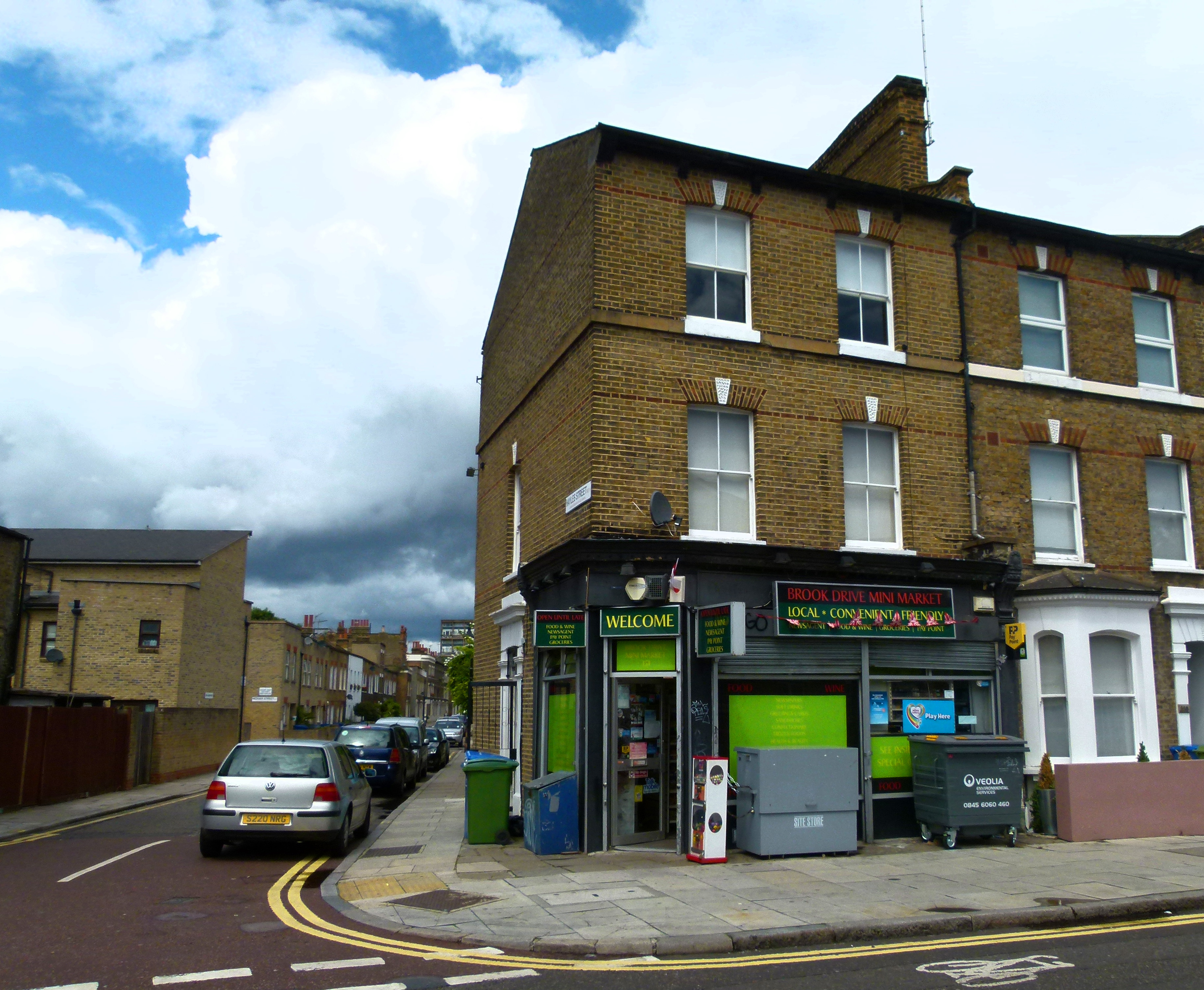
Brook Drive, junction with Hayles Street where the famous music video was filmed.
Also in 1982, Dexys Midnight Runners released The Celtic Soul Brothers which was filmed on the other side of the Thames at the Crown Pub in Cricklewood- please click here to read more).
*
All change at the Elephant
Today, the Elephant and Castle is undergoing its biggest change since WWII.

A smashed up information board outside the Elephant shopping centre. Hopefully, such ugly scenes will soon be a thing of the past…
As part of a £1.5 billion scheme, the 1960s shopping centre is due to be demolished and replaced with a pedestrianized market square and green open spaces.
As for the Heygate Estate, once that has been fully knocked down, the empty land will be replaced with 2,500 new homes, of which it is sad 25% will be “affordable”… I suppose that means the other 75% will be unaffordable then…

Visions of the new Elephant
Overall, the change at the Elephant is estimated to take some 15 years.
At present, the most prominent sign of this slow evolution is the Strata Building; a new tower which replaced Castle House and has been nicknamed by some Londoners as the ‘Lipstick’ building.
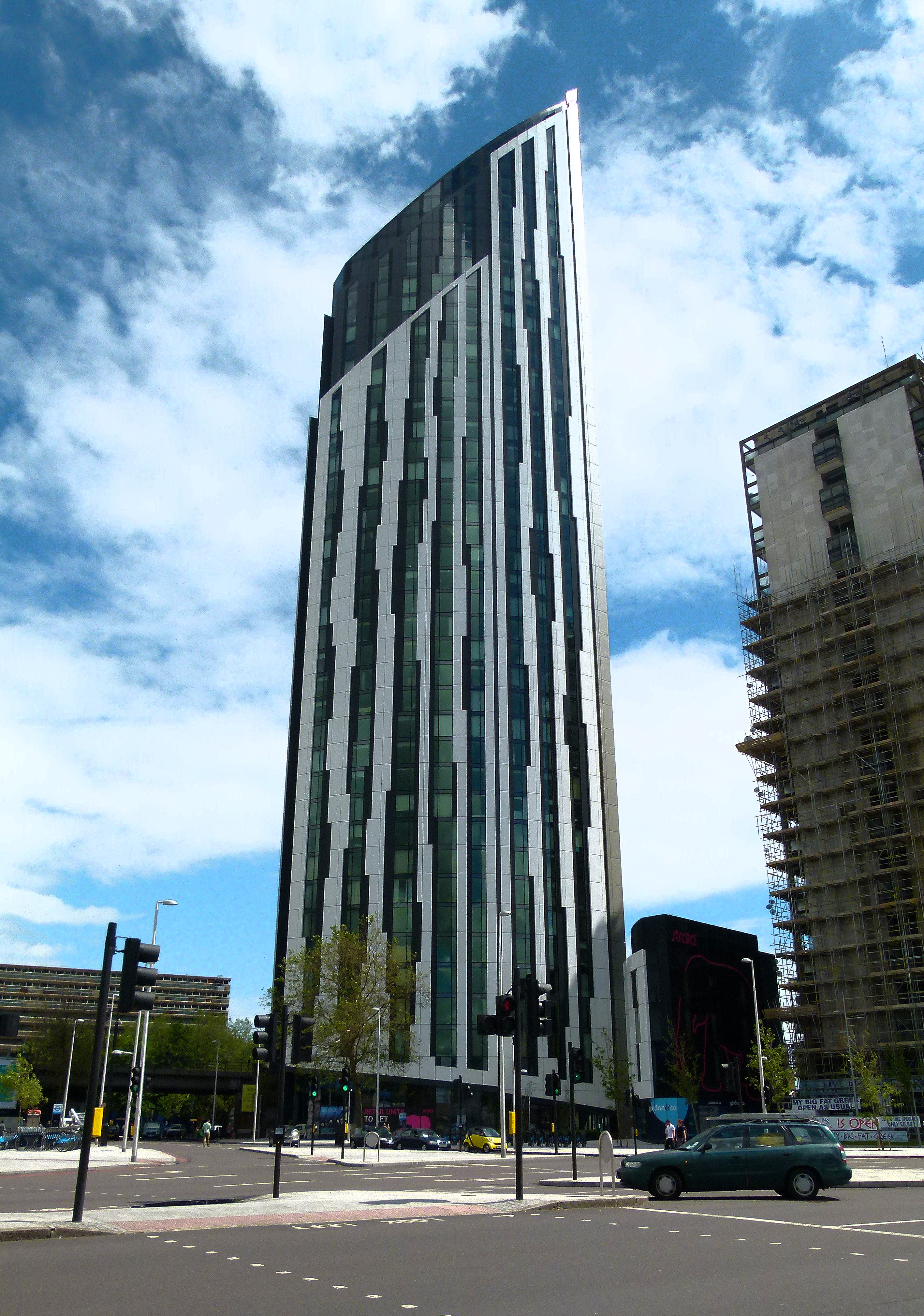
The Strata Tower, which stands across the road from the Elephant’s 1960s shopping centre
The Strata contains 310 luxury housing units, retail space at ground level and, most famously, three wind-turbines on its roof which are used for powering a small percentage of the tower’s utilities.
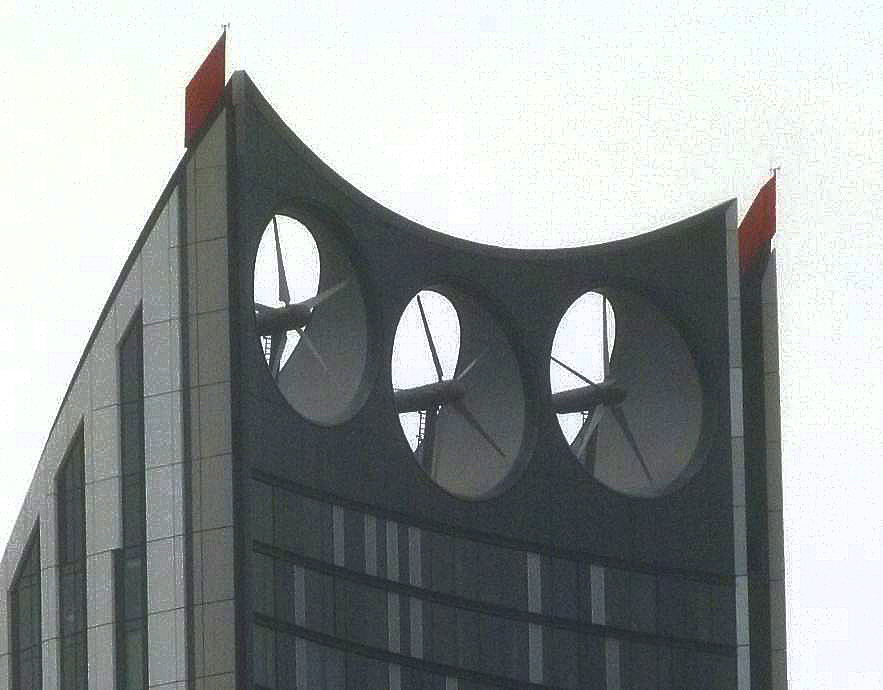
The Strata’s wind turbines
Wether of not these new developments will last longer than their 1960s predecessors remains to be seen… however, one thing is for sure- they are merely the next stage in the long and varied history of the Elephant and Castle.
***
A History of the Elephant & Castle (Part One)

A south London landmark… the Elephant and Castle statue
As well as being one of London’s major transport hubs, the Elephant and Castle (or, more simply, the ‘Elephant’ as locals like to call it) is one of the capital’s more peculiarly named areas.

A typical Elephant and Castle scene
Thanks to its post-war jumble of tower blocks, roaring traffic and gloomy pedestrian subways, Elephant and Castle has become rather unloved over the years… which, when you consider the area’s long and fascinating history, is a sentiment nothing short of travesty.
*
Before the Elephant
Before acquiring its unique name, the land which would eventually become the Elephant and Castle was occupied by a village known as Newington which came under Walworth; a manor listed in the 1086 Domesday Book as being part of the Archbishop of Canterbury’s portfolio.
Today, the name of the early settlement lives on in two roads- Newington Causeway and Newington Butts which lie either side of the present day junction.

Roads named after Newington (A-Z imaging)
Many historians believe that ‘Butts’ is a reference to archery butts; a strip of land dedicated to practising bow and arrow firing.

Medieval archery butts where weekly practice was compulsory
During the Medieval era, such exercise grounds existed all over the kingdom thanks to a law drawn up in 1252 which stated all Englishmen between the ages of 15 and 60 were required to own a bow and to practice their shooting skills every Sunday!
*
The Elephant stomps in
The Elephant and Castle eponym evolved thanks to a tavern which established itself in the area (to this day, a pub by the same name operates on the junction’s northern roundabout).

The most recent incarnation of the Elephant & Castle pub
Although the image of an elephant partnered with a castle was fairly common at the time, what the pub’s owner was precisely referring to when they named their boozer remains a mystery.
Perhaps it was an allusion to a heraldic symbol? Or an early chess piece?

Elephant & Castle imagery on a chess piece and as a symbol of heraldry
Then again, the landlord may have been aligning the tavern with the Worshipful Company of Cutlers; the guild responsible for regulating the manufacture of weapons and cutlery who, for many years, incorporated ivory into the handles of their wares- hence their coat of arms bearing the Elephant and Castle icon:
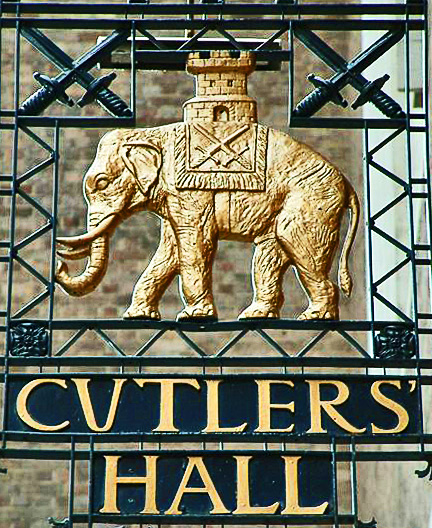
Elephant and castle imagery on the sign for Cutlers Hall, Warwick Lane.
Or perhaps the unusual name was a reference to the time when Louis IX of France presented King Henry III with an elephant as a gift; the donated jumbo being gladly received and placed in the Royal Menagerie which, in those days, was housed in the Tower of London.
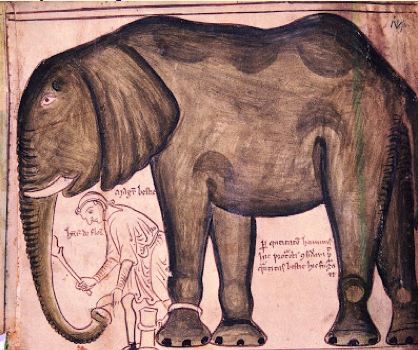
A mid 13th century sketch of King Henry’s elephant, drawn by a monk called Matthew Paris (Image: University of Cambridge)
Sadly, this celebrated pachyderm somehow managed to wangle its trunk into a large rake of wine… an indulgence which evidently killed the sorry beast after three years spent in the tower.
At least it died happy…
*
A very early reference to the district’s now famous name can be found in Shakespeare’s comedy, Twelfth Night, penned circa 1601.
In the play, Antonio informs Sebastian that a good place to lodge for the night is “in the south suburbs, at the Elephant.”
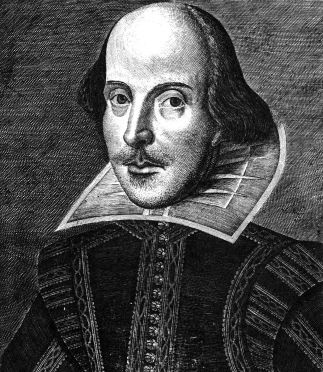
William Shakespeare, one of the first writers to refer to the Elephant and Castle by its current name.
Although Twelfth Night is set nowhere near London (or even England), it is likely that Shakespeare slotted the name in as a cheeky local reference which most of the audience would have understood- the Bard’s Globe Theatre being situated just under a mile away from the area.
It is also possible that the allusion may have been included as an early form of advertising for the tavern, especially as it was within staggering distance of sinful Southwark’s playhouses and debauchery!
*
The area begins to boom
In 1760, a blacksmith’s workshop in the village was enlarged and converted into a tavern which adopted the Elephant and Castle title.
The newly established premises gradually developed into an important coaching inn, with traffic and trade boosted by the opening of nearby Westminster Bridge (in 1751) and Blackfriars Bridge (in 1769).
With London’s road network expanding around these two new and vital river crossings, the Elephant and Castle quickly became an important hub in the capital’s burgeoning transport network.

Early traffic at the Elephant
In 1861 and encouraged by the Elephant’s growing prominence, the Reformed Baptist church decided to build their main place of worship in the area- the Metropolitan Tabernacle.

The Metropolitan Tabernacle, 1861 (image: Grosvenor Prints)
As well as the growing importance of the Elephant and Castle, the Reformed Baptists also chose the location as it marks the approximate site where the ‘Southwark Martyrs’ (a group of Protestants executed during the reign of Mary I for their faith) were suffered the brutal fate of being burnt at the stake.
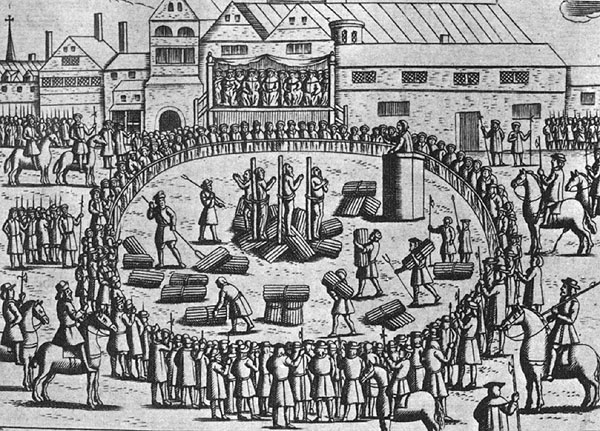
Religious dissenters about to be burned alive…
When it first opened, the Metropolitan Tabernacle had a congregation numbering over 5,000 people.
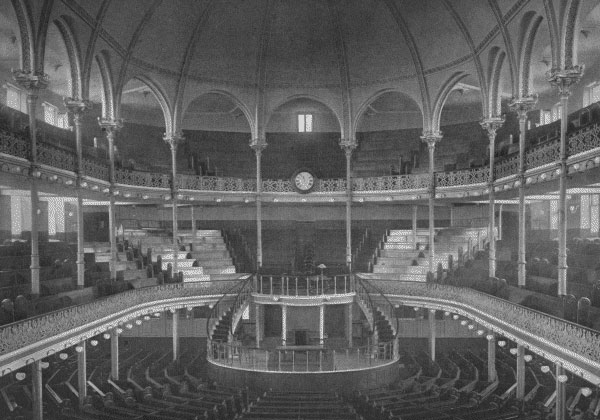
The Metropolitan Tabernacle’s original interior (image: Wikipedia)
Despite being destroyed by fire in 1898 and Nazi bombs in 1941, the main front portico survived and remains a prominent Elephant and Castle landmark.
Rebuilt in 1957, the interior now hosts religious sermons which are broadcast on Sky Television every Saturday afternoon.
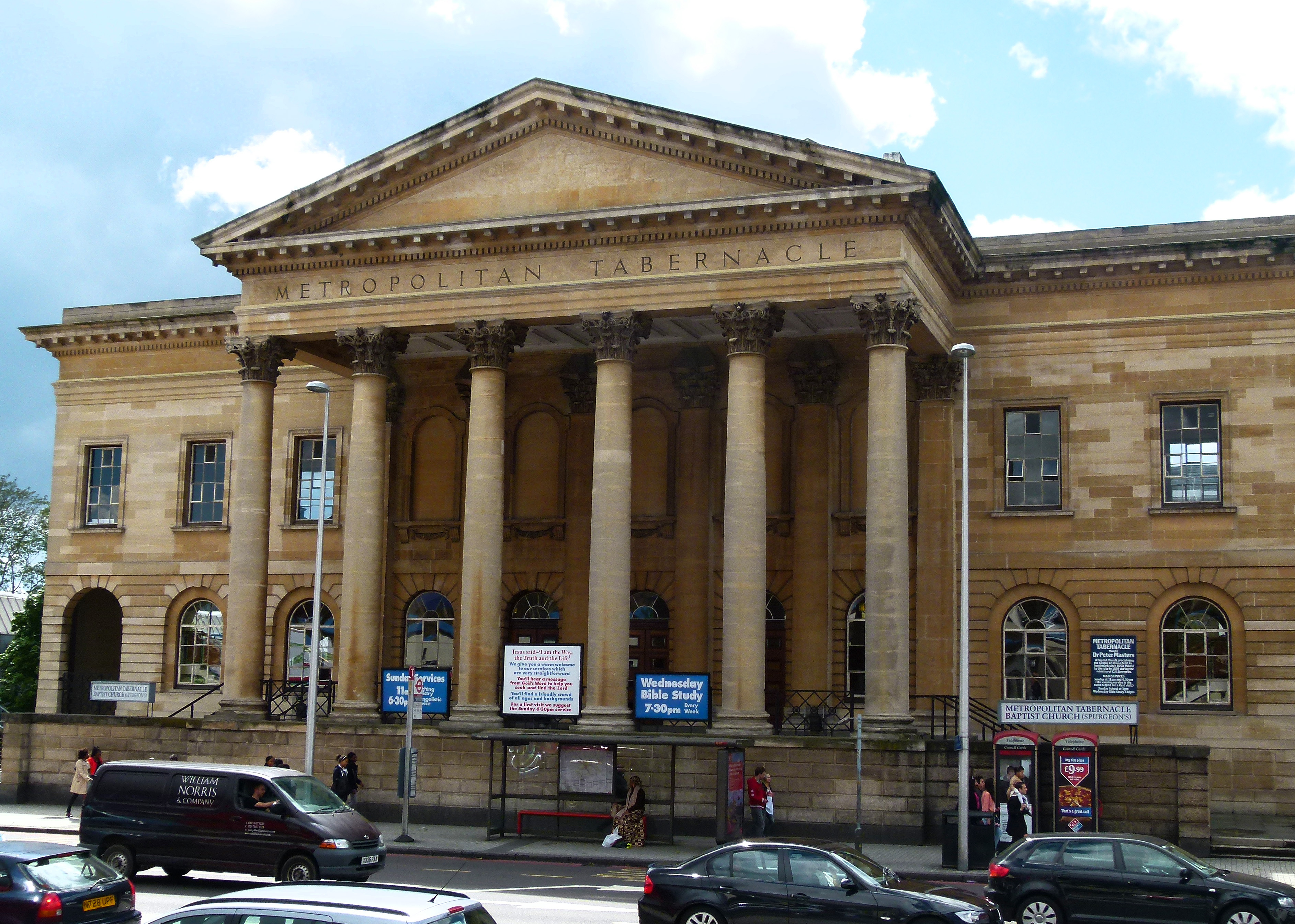
The Metropolitan Tabernacle today
*
The role of Elephant and Castle as a major transport hub developed even further with the arrival of the railways (in 1863) and the Underground in 1904- with the Bakerloo line making the Elephant their southern terminal.

Elephant and Castle tube station, southern terminal for the Bakerloo Line
The Elephant also became a vital cog in London’s sprawling tram network.

Elephant and Castle bustling with trams in the 1920s (image: BBC)
Thanks to its multitude of transport links, Elephant and Castle grew into a major shopping and entertainment destination during the early 20th century, earning it the nickname; the ‘Piccadilly of South London.’
A short, moving film from the early 1950s entitled ‘The Elephant Will Never Forget‘ which details the end of tram services in London can be viewed below:
*
Glamour at the Elephant
Two of the most popular destinations in the Elephant’s glitzy heyday were the large department store, William Tarn and Co, and the mighty Trocadero cinema.

The Trocadero at Elephant and Castle, 1931
Opened in 1930, the Trocadero (which stood on the present site of the modern Elephant and Castle pub), was a glorious picture-house, capable of seating 3,000 movie-goers.
It also boasted Europe’s largest Wurlitzer organ.

Inside the Trocadero; a true film palace (image: Cinema Museum)
In 1932, the Trocadero was joined by a second cinema; the Coronet; an art-deco 2,000 seater picture house which opened up on the opposite side of the road after being converted from the Victorian built, Theatre Royal.
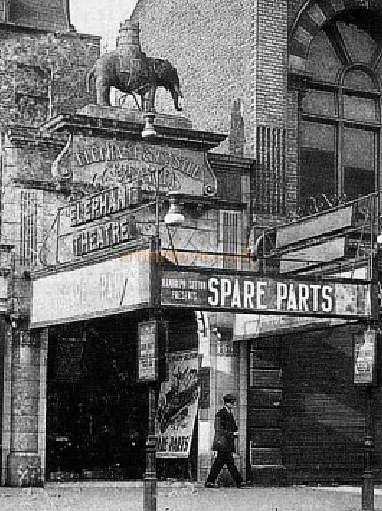
The Theatre Royal (aka the Elephant Theatre), originally built in 1882 which later went onto become the Coronet cinema. (Photo: The Coronet website)
The theatre (known then as the ‘Elephant Theatre’) can be seen in the following 1920s clip, London at Night, filmed a few years before its conversion to a cinema:
Despite the glitz, the Elephant was still home to many of London’s impoverished, including a large number of down and outs, footage of whom was also included in London at Night:
Although the Elephant’s colossal Trocadero has long since vanished, the Coronet is still going strong, now employed as a venue for many varied events ranging from club nights to boxing.

The Coronet today (image: Google Streetview)
*
A very famous resident
Despite being no longer able to provide an evening out at the pictures, Elephant and Castle is now home to The Cinema Museum which can be found on Dugard Way.
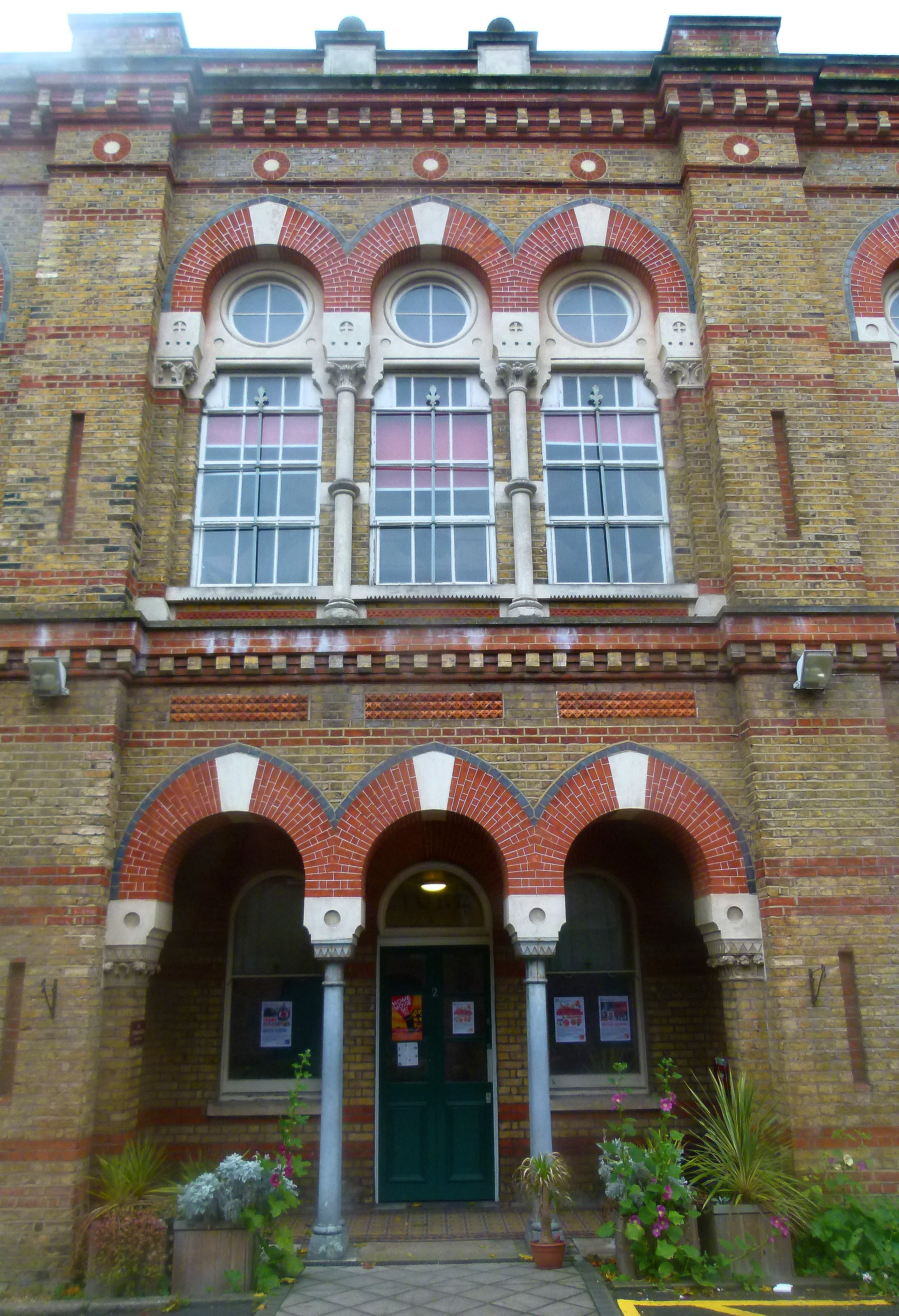
The Cinema Museum
Although discreet (at present, if you wish to visit, a tour must be booked), this museum maintains a vast collection of historical cinematic artefacts ranging from the 1890s to the present day; everything from usher’s uniforms and vintage cinema fittings, to publicity shots and rare celluloid reels.
The Cinema Museum is housed within a rather extraordinary building… it was once the administration block for Lambeth’s former Victorian Workhouse.

Wider view of the former Lambeth Workhouse
In the late 1890s, one of the many poor Londoners to spend time within this depressing institution was a young child called Charles Spencer Chaplin.
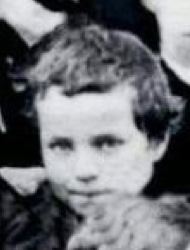
Charles Spencer Chaplin
A few years later, and under the more informal version of his name, this former young workhouse inmate would go onto become the world’s first movie superstar… Charlie Chaplin.

Charles Spencer Chaplin, 1889-1977 (photo: Wikipedia)
Charlie was very much a local lad, born less than half a mile away from the Elephant on East Street which, to this day, is still home to a popular market.
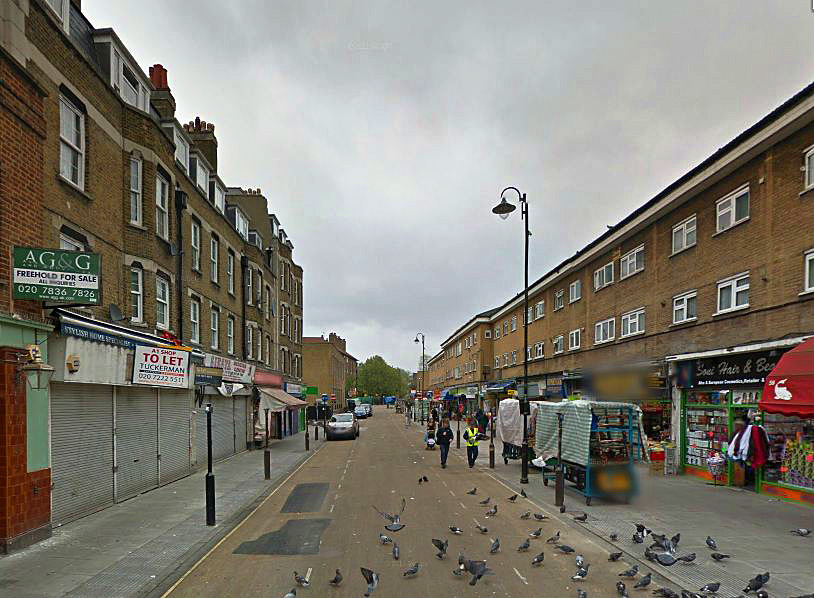
A quiet East Street today, the road which saw the birth of Charlie Chaplin in 1889. (Image: Google Street View)
Growing up in South London, Charlie’s childhood was defined by crushing poverty.

Women inside Lambeth Workhouse.
Along with a chronic lack of cash, his mother, Hannah Chaplin, also suffered from poor mental health; a condition which led to her spending time in the Bedlam Lunatic Asylum.

Hannah Chaplin; Charlie’s tormented mother
Today, you can still visit the hospital in which Charlie’s mother was incarcerated… it is now the Imperial War Museum, a short walk away from the heart of Elephant and Castle.

The Imperial War Museum, Lambeth- the former Bedlam mental asylum where Charlie Chaplin’s mother was interned (image: Wikipedia)
Charlie Chaplin’s childhood experiences of growing up in the area would later influence his famous film work which was characterized by a mixture of working-class humour and heart-breaking pathos, with those in authority often portrayed as bullying jobsworths.
This influence is well demonstrated in his 1921 masterpiece, The Kid.
In this feature length silent film, Charlie’s ‘Little Tramp’ has raised an abandoned child from infanthood, the pair very much becoming father and son.
However, when the authorities discover the pair living in hardship , they see fit to cart the child away…

Promotional photo for ‘The Kid’, 1921
Although filmed in Los Angeles, the following famous sequence contains profound and deeply moving echoes of Chaplin’s south London childhood, especially the desperation he would have experienced whilst being forcefully parted from his mother at the gates of Lambeth workhouse.




 View from the Mirror