Down and Out in London
This is Tom and Francis with their dog, Milo.

I met them and stopped for nice chat recently on Denman Street; a location just off of Shaftesbury Avenue, behind the flashing altar to advertising that is Piccadilly Circus.
Tom and Francis are both Scottish, but have been in London for over twenty years. They’re both ‘Big Issue’ vendors, and have formed a solid friendship with each other on the streets of the capital.
When I met them, they were waiting outside a noodle bar, the owner being kind enough to give the pair a piping-hot noodle-fix every day for a knock-down price. If you look carefully, Tom (on the left) has his own chopsticks, which he produced from his jacket. Francis on the other hand hasn’t mastered the art of Far-Eastern cutlery (I know how he feels), and prefers to dig out his snack with a fork. As he said, in his broad Glaswegian accent;
“Och! It all goes in and doon’ the same way!”
Tom and Francis were exceptionally friendly, and I wish some of the stressed passengers I have in my taxi every now and then were able to adopt the same, laid-back attitude!

*
Cabbing around London, one of the saddest things I see on a daily basis are the large numbers of homeless people.
London is a city of immense wealth. Even in these thrifty times, it is possible to see people out enjoying themselves. West-End restaurants and bars are often heaving, large crowds pour out of glittering theatres every night, and towering office blocks continue to sprout up in the financial districts.
Amongst this however, there are still people sleeping rough.
Walk through any major area in London, and you’ll see examples of destitution; homeless people either begging or sleeping; huddled up in filthy, foul-smelling doorways with nothing more than a grubby sleeping bag or a few sheets of flimsy cardboard to keep themselves warm.
Sadly, the psychology of the human mind tends to make homeless individuals invisible.
Embarrassment, awkwardness, shame and, unfortunately with some people, disgust, leads passers-by to avert their gaze and walk on as quickly as possible. This is something I’ve been guilty of myself on many occasions.

Sometime ago, I remember seeing a beggar walk past a pub on Villiers Street; a crowded thoroughfare tucked alongside Charing Cross Station.
Being summertime, most of the drinking was being conducted outside, the boozers taking advantage of the warm evening air.
The beggar approached the crowd asking for change and, to a small degree, was successful in procuring a few coins.
However, one of the pub’s patrons decided a violent lecture was in order.
“You make me f***ing SICK. Why don’t you get a f***ing job, you low-life piece of ****.”
The mouthpiece who barked out this tirade was a huge bloke; over six foot tall with a massive gut and powerful arms. A typical bully, with an attitude so stereotypical, it was almost laughable.
As demonstrated above, when not being ignored, the homeless can be subjected to great hostility. Over the years, it has not been unbeknown for rough sleepers to be physically attacked and, in some cases, even murdered.
In 1999, the pop-group ‘Madness’ released a single entitled ‘Johnny the Horse.’ The song told the life-story of a tramp (known by his friends as Johnny the Horse) who was beaten and killed. As the lyric goes;
“Johnny the horse was kicked to death,
He died for entertainment.”
*
On a happier note, a few years ago, whilst learning ‘The Knowledge’ and studying the streets of London, I saw an extremely heart-warming sight.
It was a cold evening, a few days before Christmas, and I’d stopped at red lights on Oxford Street, just before Marble Arch. Being the festive season, Oxford Street was buzzing, packed with late-night shoppers. Shop displays glowed invitingly and, overhead, the traditional Christmas lights sparkled away their electric magic.
My attention was soon drawn though to a taxi, which had pulled up on the opposite side of the road (on double red-lines no less- an action which would lead to the driver being fined if he lurked there for too long).
Out of this cab climbed a short, stout cabbie who looked to be in his mid-late 60s. In his hand, he clutched a supermarket carrier bag.
Halfway between a walk and a run, he dodged across Oxford Street towards a souvenir shop. There, in the doorway, sat a West-Indian man; a down-and-out, with long, natty dreads. He was wrapped in a well-worn, grey coat, the window behind displaying cheap trinkets; plastic flags, tacky ashtrays and little Big Ben statues.
The cabbie approached the homeless fellow and knelt down beside him. The two appeared to be about the same age and were clearly familiar with each other. As he crouched on the tiled floor, the cabbie quickly took items out of the bag, showing them to his transient friend. The goods were all food-stuffs; packets of biscuits, crisps, tins of soft drink and so on.
The traffic light then turned green, and I had to drive off. I’ve never forgotten that scene though, and I often find myself wondering what story and history lay behind that bond.
*
One down and out I do know a bit more about is Clefrin Frederick, also known as ‘Mad Fred’ or ‘Fred the Tramp.’
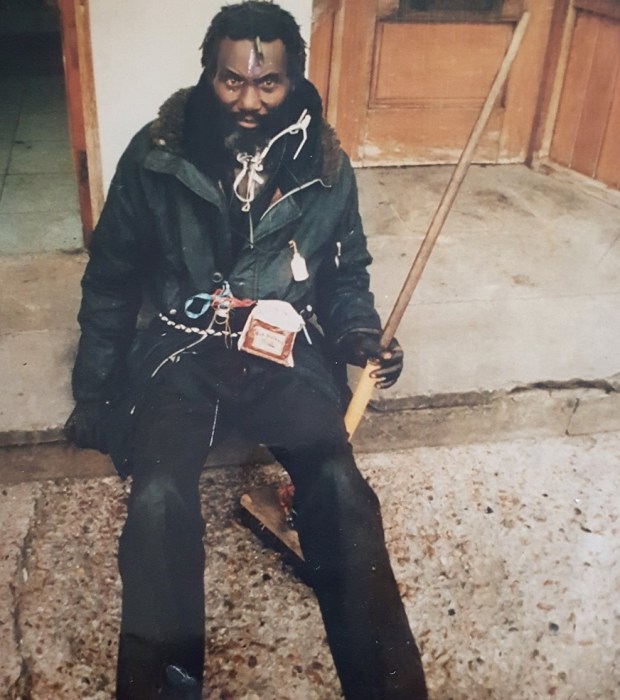
Clefrin Frederick
I grew up in South Harrow in the 1980s and, at that time, Fred the Tramp was a well-known, local figure.
Originally from the island of Grenada, Fred had swapped the Caribbean’s lush beauty for the grey suburbs of North-West London.
To a child, Fred the Tramp could be a terrifying figure. His sported a huge, bristling beard (which would have given any cut-throat pirate a run for their money), and always wore rustling supermarket bags on his feet, often in varying states of decay.
Opposite the tube station, there was a small communal area, constructed from worn stones and containing wooden benches and a collection of bushes. Fred had commandeered this as his pitch, and he would hold court there, hoarding rubbish, knocking back Special Brew (he was a chronic alcoholic), talking to himself and shouting every now and then at passers-by.
His makeshift home was also opposite the area’s toughest pub; ‘The Constellation’ (aka ‘The Con’), where Fred no doubt managed to scrounge the odd pint.
Although we lived in a flat and had no garden, the Council provided my parents with a pitch on the nearby allotments. Fred could often be seen here too, loitering amongst the long, muddy strips. He even introduced a dartboard to the allotments; attaching it to the Council’s fading blue rules and notices sign.
At other times, I’d peer through the living-room’s net curtains, and see Fred tramping across the estate’s car-park in his improvised footwear, muttering away to himself.
Although ‘Mad Fred’ initially appeared an intimidating character, he was in fact rather popular amongst those adults who took the time to chat and get to know him.
He was also something of a philosopher, and would leave shabby, improvised signs lying around for all to see- rather like an early prelude to Banksy. Amongst his written wisdom was this gem, which I assume was a reference to the then current Cold War.
“All good things must come to an end, but there’s no use pushing the wrong button in this computer.”
My father often spoke to Mad Fred. He first came to know him when his van once broke down. Fred approached my Dad and, after a look under the vehicle’s bonnet, he located the problem and soon had the van running again.
It turned out that Fred was a gifted mechanic.
Before turning to the streets, he’d been employed by the London Fire Brigade, working as a mechanic on their fire engines.
Fred also had a wife and children, but sadly this relationship was destroyed. Laden with heart-ache, he’d turned to the streets and alcohol, gradually morphing into the shambling, bearded figure whom the public came to regard as the crazed tramp of Northolt Road.
Luckily, Frederick’s story has a happy ending; one which is quite unbelievable, and a classic example of ‘you couldn’t script it.’
In the mid-1970s, Fred had owned a house, which was repossessed by the building society. They sold the house ten years later, for a tidy profit. However, they refused to hand over Fred’s share, claiming that he was “incapable of handling his own affairs.”
Whilst he was living rough, Fred was in fact owed some £50,000.
He would often approach the building society but, with bags on his feet and an alcoholic haze surrounding him, he would be sent right out.
Fred finally managed to secure his cash in the early 1990s, with the help of a kindly local shop keeper, who contacted his solicitors and spent seven months fighting his corner. The building society finally handed over £50,000 plus £6,000 in interest.
But the story does not end there.
Suited and cleaned up, Mad Fred was now able to afford a trip back to his native Grenada.
It was there that he discovered his father, who had passed away whilst Fred was living rough 1,000s of miles away, had left his son a home and a large plot of land.
After years of heartache, alcoholism and hard-living, Fred had gained his very own slice of paradise.
I don’t know what the solution is for London’s homeless population. Nor am I naïve enough to believe that many vagrants do not carry extremely complex issues with them
However, as Mad Fred’s story demonstrates; never be judgemental.
The people we see huddled in London’s doorways, subways and stairwells are all individuals.
Alcohol and drug abuse, depression, leaving the army and being unable to cope with civilian life, financial problems, loosing loved ones, escaping violence; these are all possible causes of homelessness, and each and every down-and-out sleeping rough in London tonight will have their own separate tale to tell.

Cab Grumps
I was recently ranked up at the Tower of London, one of the most famous sights within the City.
Dating back to 1078, a few years after the Norman Conquest, the Tower is one of those locations in London that is saturated in history. As such, it is a main draw for tourists and, because of this, the Tower of London cab rank is one of my favorites. The customers are nearly always visitors from abroad, and they often want to go onto another London attraction.
For example, a wonderful customer I once picked up here was an ambassador at the Indian High Commission, who had invited some of his family over from New Delhi. Being his day off, he was taking the time to show the group around London, and he was quick to point out and celebrate the merits of London’s famous Black Taxis!
One of the most joyful aspects of the job is meeting tourists; having a friendly chat with them, giving them mini-tours and learning about the history and culture from the places they themselves are from.
The Tower of London cab rank is often full to capacity and, as such, you can sometimes find yourself waiting there for quite a while. Cabbies take this time to pop to the cafe opposite the rank, nip to the nearby toilet, and to climb out of the driving seat for a chat and a much needed leg-stretch. You also have to look smart when ranked at the Tower of London- you’re always guaranteed to end up in a couple of visitor’s snapshots!
Well, the other day I finally found myself at the front of the queue. As I anticipated the next job, a group of three came towards me, appearing to be an elderly couple and their middle aged daughter. As they approached, the elderly gentleman, who was dressed in a long, beige coat and hat of the same colour, gave a slight wave of the hand, indicating that he wanted to hire me.
My windows were down, but they walked straight past without greeting me, or stopping to tell me where they wished to go. When parked up on a rank with the engine off, I prefer it when people tell me their destination before they get in, but I’m not offended if they choose not to.
The doors clicked as I released the lock, and the group climbed in, huffing and puffing. Once they were seated, I said “hello” to them, but received no response. The two women sat on the main, rear seat, whilst the husband/father sat on the flip down seat situated behind me. Here they perched, quietly muttering amongst themselves. There were cabs waiting behind me, so I thought it was about time I took the initiative.
“Hello” I repeated, “where would you like to go today, folks?”
The beige-coated gentleman peered at me through the perspex divide, his heavy breath rasping through the intercom.
“We want the, ahh…. the Noon Inn” (*Please note, I’ve made this hotel up; I never use real names!)
It was a chain hotel, with many locations in London.
“Which Noon Inn is it, Sir?”
The gentleman looked slightly flustered, with the ‘I thought London Cabbies knew every location” look crinkled on his face.
“Well, it’s the.. ahh…”
“Waterloo” piped up his wife; “the Noon Inn, Waterloo.”
The gentleman paused, turned to his wife and, with rather blatant fury, barked:
“WIlL YOU SHUT UP?!”
So loud was the fellow’s outburst, that it made the intercom speakers rattle, and a smothering atmosphere suddenly dropped over the cab like a shroud.
“The Noon Inn, Waterloo” the gentleman growled, repeating his wife’s words.
Doing my best to combat the “you could cut the air with a knife” sentiment, I smiled and said that I knew that particular hotel, and it was no problem.
After a few minutes, the group were once again quietly talking amongst each other. Nor the wife or daughter had mentioned their husband’s/father’s outburst; their decision to gloss over it suggesting that it was something they were accustomed to. In a fruitless attempt to clear the air further, I glanced in the rear-view mirror and asked whereabouts they were from. Upon doing so, the wife frowned.
“What’d he ask?”
“He asked where we were from.”
“What’s he wanna’ know that for?”
“Texas” replied the daughter, who seemed a little more tranquil.
(Before I go on, I must insist that Americans are often some of the loveliest people I meet in my job. Nearly 100% of the time, they are decent, cheerful, extremely friendly people with a passion for London which I find infectious. The group whom I describe here stuck in my mind because they were grumpy Americans…. an extremely rare thing indeed!)
My Grandfather is actually American, linked to the UK thanks to his long career spent in the United States Airforce. I often mention this fact when meeting friends from the States.
“Texas? Fantastic… My Grandpa’s American too- he’s from Vermont.”
The group look unimpressed.
“Yeah?”
No further comment.
The group continue to chat amongst themselves, and I hear whispered gripes about my failure to immediately recognise the location of their chain hotel (which sports some 40 locations London-wide).
“D’ya remember that taxi-cab we took that time in New York?” asks the wife.
“Yeah… yeah, I do” responds the husband in his gruff tone. “You went to give the guy a tip… and I took it out of your hand.”
The daughter’s eyes slip back and forth as she listens to her parents’ thrifty tale.
“That’s right; you did… we used that money to go to a movie-theatre. Chitty Chitty Bang Bang we saw, wasn’t it?”
“Did you have enough money for popcorn too?” asks the daughter. Her query is a serious, non-ironic one.
Sadly, her parents cannot remember whether or not they had enough change to purchase a sweet, maize snack.
After a fairly brief journey, we arrive at the requested hotel without any problems. Despite the hostile nature of my passengers, I decide to remain polite and gentlemanly. After applying the handbrake, I quickly get out of the cab and open the passenger door. The women climb out and walk towards the hotel lobby; a process which they manage to complete without looking at me.
I sit back in the driver’s seat and pick up my change float. The husband pays me and I hand the remaining coins over. As he clutches them and counts them in his palm, he turns his beige-coated back to me and shuffles away without a further word.
I put the cab in gear and spin the steering wheel, hoping that my next passengers will be a little more civil!
When Cab becomes Ambulance
When out prowling the streets of London for a fare, you generally expect to pick up people on business, tourists enjoying the wonders of London, or those who’ve had one-too-many, and need to be taken home so they can slump into their beds with a pounding head.
However, on the odd occasion, you’ll come across a job in which the general rules of being a cabbie are turned completely on their head.
A few months ago, I was driving along West End Lane; a fairly long road which winds through West Hampstead, boasting lots of fancy apartments, bars, shops and restaurants. Just off of West End Lane, there’s a road called ‘Broadhurst Gardens‘ where, in 1962, Decca Records had a studio. It was at this studio that a little known group of Liverpudlians named The Beatles failed an audition. After their disappointment in West Hampstead, the cheeky Scousers managed to sign a deal with Parlaphone instead, and the rest is history.
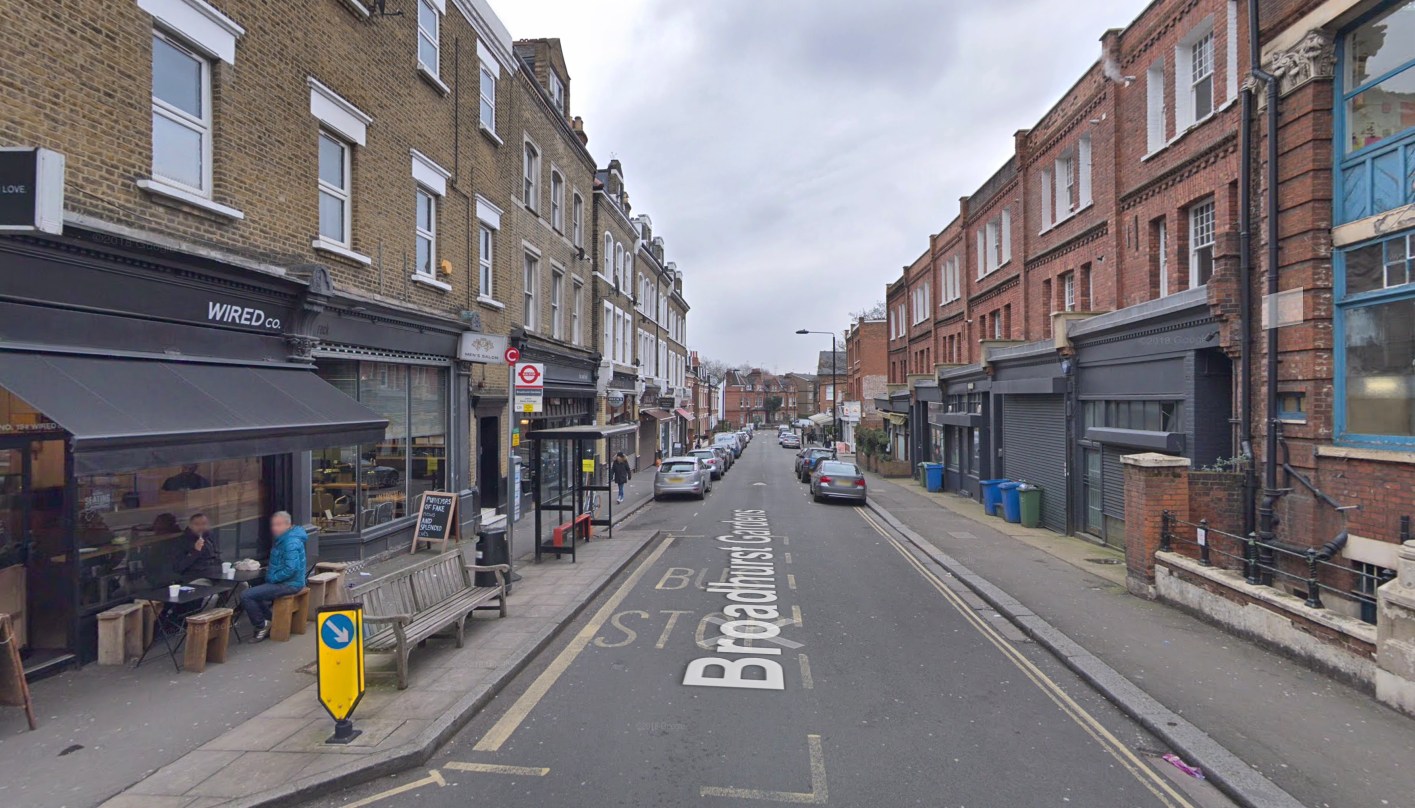
Broadhurst Gardens (image: Google)
Anyway, a few months ago, I’d just passed the junction with Broadhurst Gardens, when I was flagged down by a rugged looking man in his early 40s. The gentleman was wearing a black t-shirt, his arms boasting a formidable gallery of tattoos. In these art-clad arms, he clasped a young girl in a pink jacket, no older than two.
As he climbed in, I could tell that the man was stressed, but amicable.
“Royal Free Hospital, please mate.”
“Is it for her?” I ask, nodding towards the girl- his daughter.
The young girl is clearly upset; she looks woozy and tear traces are smeared down her cheeks.
“Yeah,” replies the father as we set off. “We were in the play-park there, she fell of a climbing frame and bashed her head… I’m really worried about her; she’s gone all quiet.”
Despite his obvious and understandable worry, the passenger is very friendly, with a strong London accent. I try to help him relax by asking him a little about himself. It turns out that he met and married a Norwegian woman, and now lives there (and, consequently, is learning the language). His young daughter was born in Norway. As I drive, we both become increasingly concerned about her; her eyes keep slumping shut, and she looks increasingly ‘out of it.’
This was a journey during which I found myself cursing the road system of London profusely. West Hampstead to the Royal Free Hospital is a relatively short distance. However, as we strove to get the young girl to a medical expert, we were plagued by infuriating obstacles at every turn.
First off were roadworks- the frustrating ‘temporary lights’ which seem to stay red for an eternity, and only allow cars through in 30-second bursts of green. We had to queue for ages, and I found my fingernails biting into the steering wheel. How I longed for a flashing blue emergency light to stick on my roof. As it was, despite having a sick little girl on board, I had to stew in the traffic like everyone else.
After nudging through the temporary lights, I decided to take a shortcut. Although this was traffic-free, the privilege came at a cost- the route was a speed-bump hotspot. Every few feet, I had to slow the cab and crunch over high mounds of brick and tarmac; not good when you’ve got a youngster on board with a suspected head-injury.
As the journey progressed, the concerned father kissed his daughter on the head and glanced at me in the rear view mirror. “She’s very sleepy” he said in a tone; calm yet worried in equal measure. I could see what he meant’ the child was eerily quiet, and I was becoming rather concerned about her wellbeing.
“It’s OK; we’re not far at all now” I reply.
However, moments after uttering this promise, we hit a snag. Although the road I’d chosen to take is cluttered and narrow, it’s usually very quick and easy to ply thorough. I’ve never encountered problems along here…. until now.
At the top of the road, there’s a hotel. As we approach the junction, a Luton lorry, decked out in the hotel’s colourful livery, swings out of the driveway, probably completing a food delivery or beginning a laundry pick-up. The manoeuvre is sharp and dangerous, and even my passenger remarks that was “well dodgy.”
I can sense what is going to happen next… at the top of the road, a passenger car has appeared and is now heading towards the lorry. With parked cars on both sides, there is absolutely no place for the vehicles to pass each other. The passenger car keeps going…. and before long, the van in front of us has ground to a halt.
We wait…
And wait…
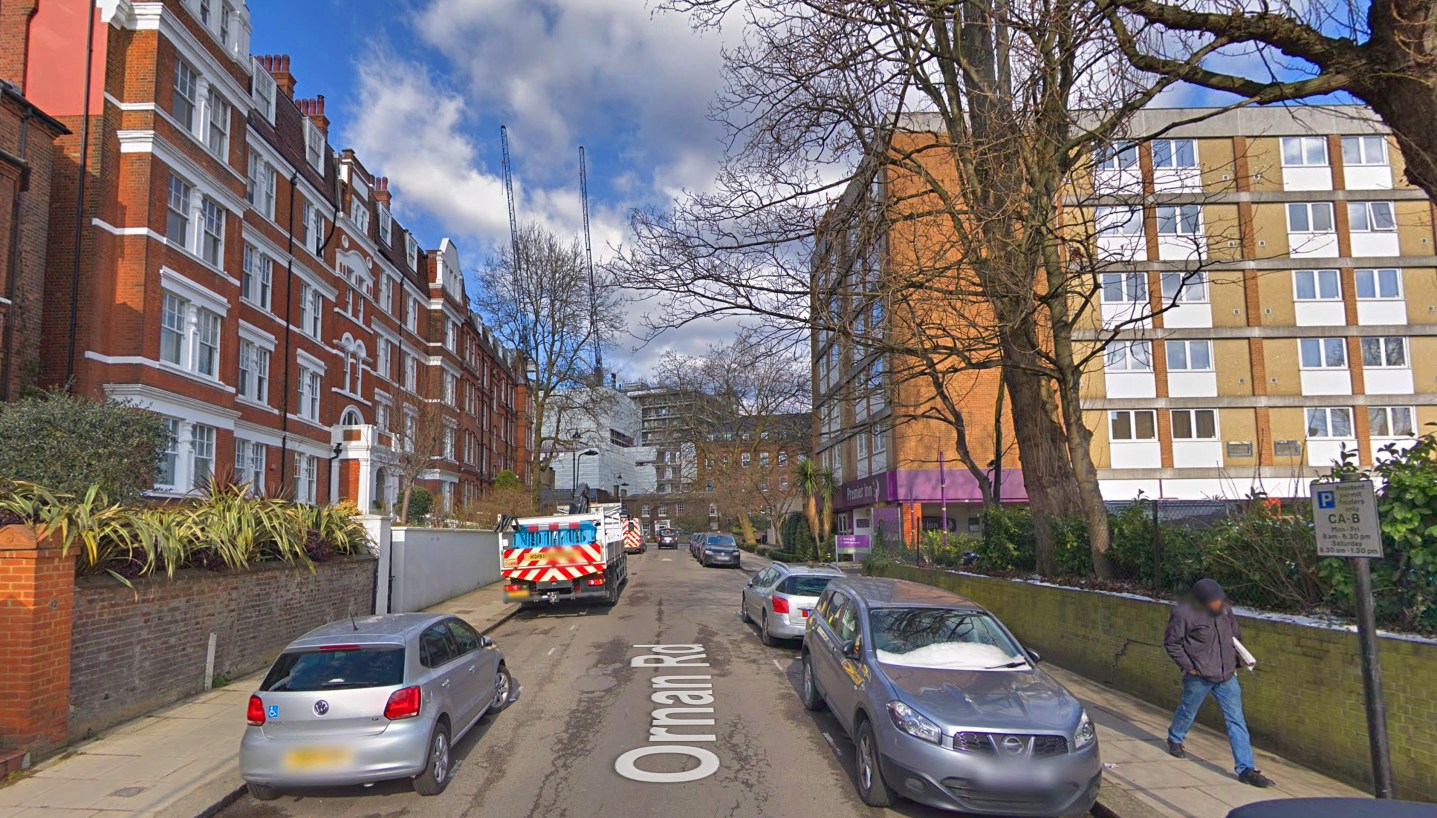
Where the incident occurred…
The man in the back bites his lip and holds his daughter, looking down at her with increasing worry. Although I’m normally a very passive person, I decide that enough is enough. With a strange mixture of panic and anger, I jump out of the cab and walk up to the van-driver’s window.
“What the hell’s going on?” I ask.
The van driver shrugs his shoulders.
“He just got out; says he won’t move.”
As the bemused driver says this, I look towards the passenger car- and notice that it’s empty, the driver’s door wide open. It takes me a few seconds to register what’s happening.
I look around the other side of the van and see a man in his late 50s pacing up and down.
“Oi! Is that your car?” I ask.
“Yes.”
“You’ve got to move it. Now.”
The man ignores me. He puts his hands into his pockets and continues to pace, shuffling towards the front of the van where he walks back and forth in defiance.
“I’ve got a sick child in my cab” I explain, “move the car, NOW! Or I’ll move it myself!”
The car’s driver looks up at me through round spectacles.
“That’s your taxi?”
“YES! I’m trying to get a child to the Royal Free Hospital, MOVE THE CAR!” The frustration is becoming unbearable.
The driver slowly looks again at the taxi. He seems to have a moment of clarity, whereupon the absurdity of the situation he’s placed himself in becomes apparent.
“Oh… er… good for you” he exclaims. With his head down, he returns to his car and reverses backwards. As he clears the path, the van moves forward and I leap back into the cab.
“Thanks for doing that, mate” says my passenger.
“There was no choice” I reply, “We’d have been there all day if that bloke had his way.”
Minutes later we pull up outside the hospital’s Accident and Emergency department. I tell my passenger that there’s no charge, “Just get your daughter in there.” The man quickly grips my hand in thanks, and tells me his mother’s London address if I ever want to pop around for a cup of tea!
As I leave the hospital, I reflect upon the vexations of the journey; roadworks, speed humps, near-misses and the crazed stubbornness of the public. It takes me a while to calm down, but as time passes I can smile at the farcical nature of it all. Just as well, because if I let it get to me too much, I’ll be needing a trip to hospital myself!

***






 View from the Mirror